
@WellcomeTrust Sir Henry Dale Fellow based at @HumanGeneticsOx, interested in chromatin disruption in human disease. He/him. Mastodon: rbeagrie@qoto.org
Joined June 2013
- Tweets 675
- Following 740
- Followers 605
- Likes 426
8 Photos and videos


Pinned Tweet

13 Aug 2024
🚨 Job alert
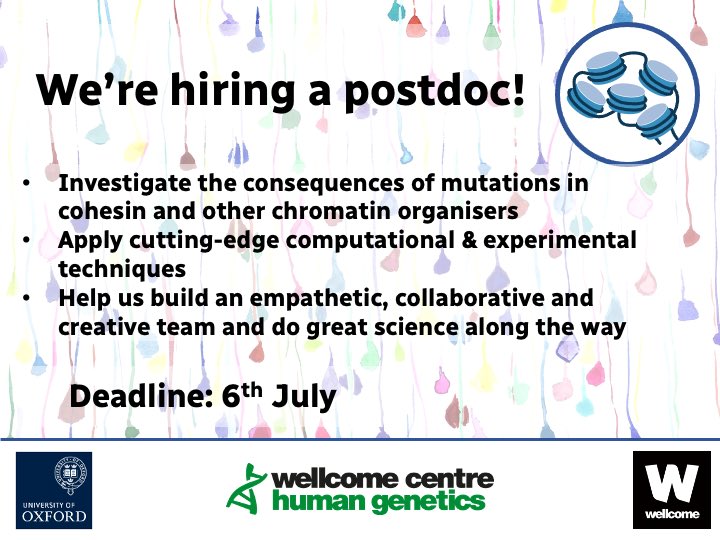
Hiring a postdoc (comp or wet lab) to work on chromatin & genetics 🧬
Come work with us @HumanGeneticsOx in the beautiful @UniofOxford
🗓️ Closing September 13th
Details at beagrielab.com/join
Pls share and RT!
#PostdocJobs #GeneticsJobs #genomics #cohesin
21
21
5,412
22 Aug 2024
Very happy to have been able to help out with this one - some very cool work! #genomics
21 Aug 2024

Great collaboration between the @FoldingGenome and Watkins labs, reporting the first Gain of Function de novo enhancer causing Mendelian disease (ST Depression Syndrome), defining a multidisciplinary path with ML to solving non-coding clinical genetics.
medrxiv.org/content/10.1101/…
4
409
Rob Beagrie retweeted

28 Feb 2024
Calling all rare disease researchers and clinicians who have a variant of uncertain significance... 🧬
The @MRCMouseNetwork & @NMGN_CongAnom (co-led by our PI @srftwigg) are currently looking for VUSs to model in mice! 🐭
(1/2)
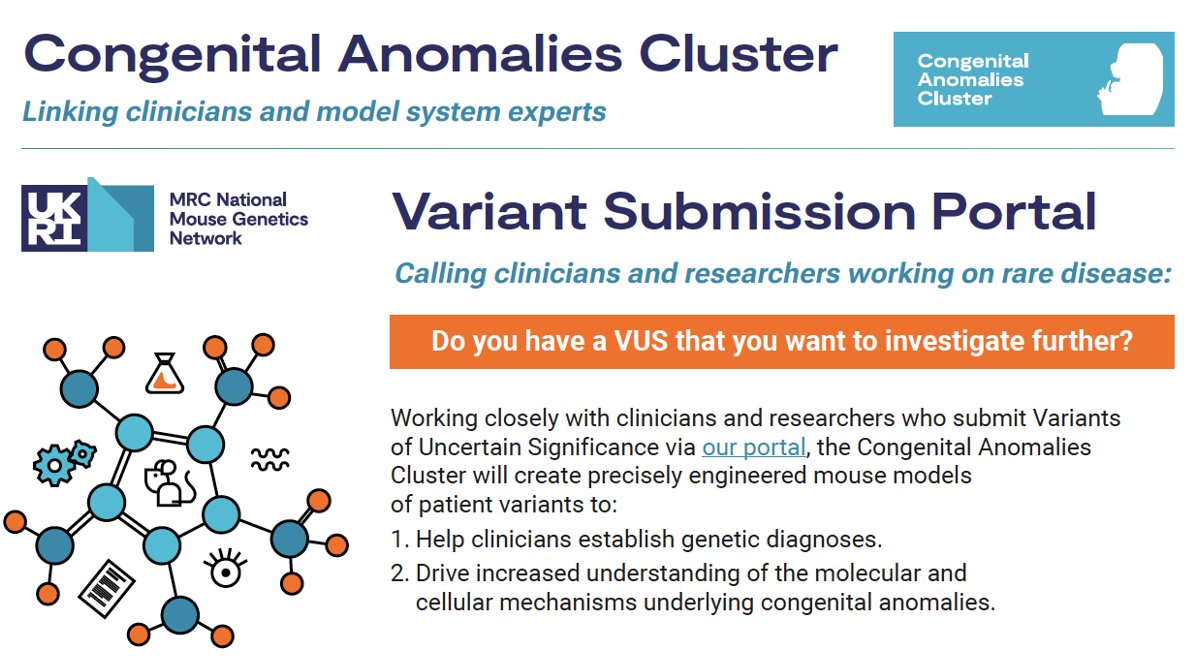
ALT A flyer advertising details of the call for variants of uncertain significance.
1
13
11
2,662
Rob Beagrie retweeted

27 Feb 2024
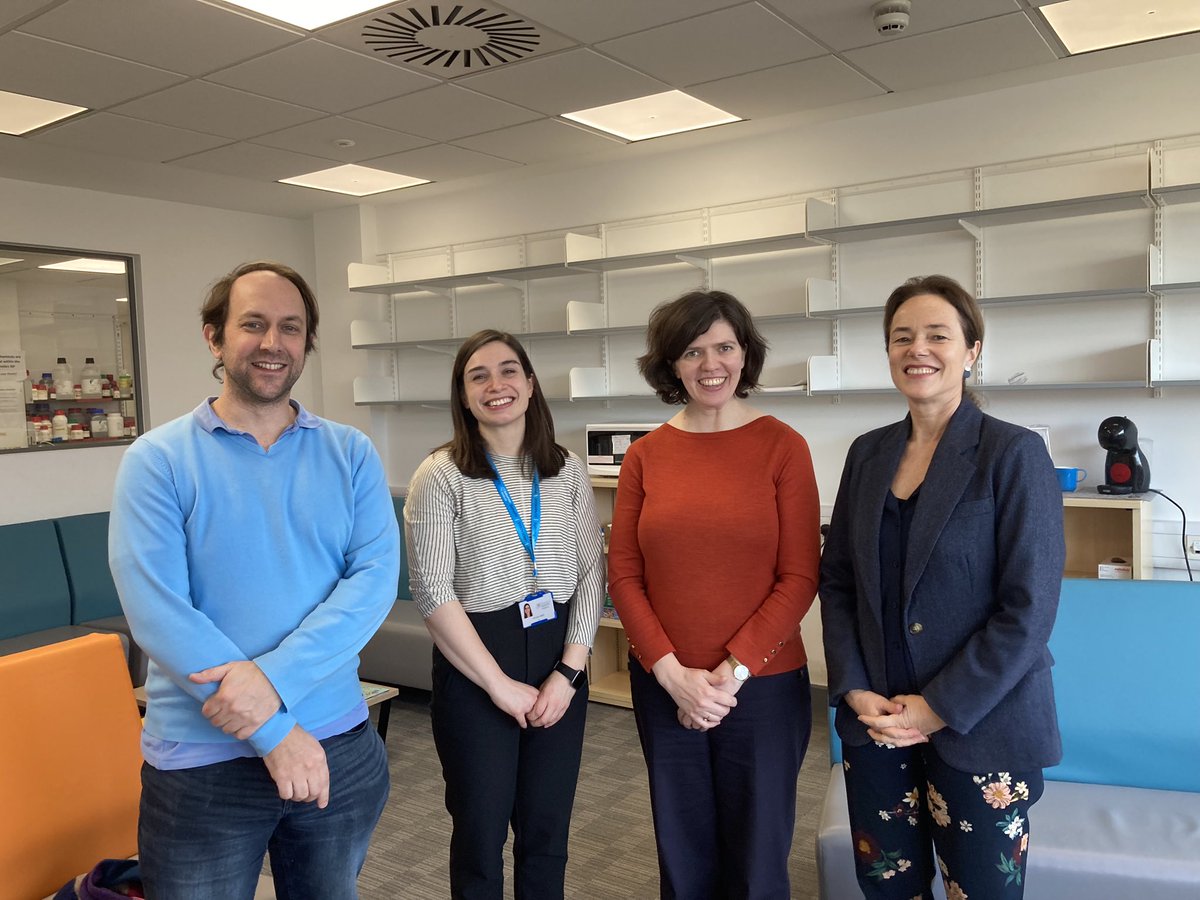
And it’s #PhDone! Rachel Kimber, first PhD student in my lab @BabrahamInst, has brilliantly defended her thesis today. Thanks to @carovinuesa and @viropractor for examining Rachael’s thesis. Well done, Dr. Kimber 🥳 🎉🥂
11
1
49
3,505
Rob Beagrie retweeted

6 Feb 2024
Fantastic day talking science @BigDataIns. Thanks for the invitation to share our research @RobBeagrie - it was great to see some familiar faces (the lovely Yang Shi!), put some faces to names/emails, and meet some new!
1
9
693
Rob Beagrie retweeted

29 Jan 2024
If you are willing to learn low input techniques to explore the chromatin of your favourite organism, don't hesitate to apply to this hands-on course! We'll be teaching you Low-C, ATAC-seq, CUT&RUN, and its bioinformatic pipelines.

🔊 Applications are open for our Low Input #Epigenomics course! #LowInput24
Learn how to apply the latest experimental and #computational approaches for studying #ChromatinBiology at both the gene and #genome-wide levels
📩Apply by 14 February 2024
🌐bit.ly/3ta7HeD
ALT A group of scientists standing in a training laboratory. They are all wearing lab coats and safety gloves. Text reads: Low Input Epigenomics 2024 Course dates: 10-17 May 2024 Location: Wellcome Genome Campus, UK Application and bursary deadline: 14 February 2024
11
19
3,028
22 Jan 2024
Applications are now OPEN for an internship in my group at Oxford University. Open to UK undergraduates from under-represented and disadvantaged backgrounds – apply by Wednesday 21 February 2024 to join us this summer: ox.ac.uk/admissions/graduate…
8
11
2,508
Rob Beagrie retweeted

16 Jan 2024
Very excited to share that our work reconstructing chromothripsis has now been published in @CellGenomics! We reconstructed chromosomes with up to 800 rearrangements on a single allele and queried epigenetic and transcriptomic consequences. Thread below!
cell.com/cell-genomics/fullt…
8
46
173
27,396
Rob Beagrie retweeted

5 Jan 2024
Submissions for technology track presentations are also open - go to iscb.org/ismb2024/submission… and apply by May 10th to showcase your bioinformatics/molecular biology software or hardware to the community #Bioinformatics #ComputationalBiology #ISMB2024
1
3
435
Rob Beagrie retweeted
5 Jan 2024
You can now submit your new, unpublished work for publication as a proceedings paper at ISMB 2024! Full details are available at iscb.org/ismb2024/submission… - the deadline is January 25th #Bioinformatics #ComputationalBiology #ISMB2024
1
1
492
Rob Beagrie retweeted
2 Nov 2023
Applications are now open for a fully funded @SoCoBioDtp PhD project with myself (@sotonbiosci ) and Jerome Swinny (@portsmouthuni) … please get in touch to discuss the project! Deadline Jan 8th.
9
15
1,724
Rob Beagrie retweeted

11 Oct 2023
Is anyone here using the UKBiobank 200k genomes dataset? We are having some weird issues and are trying to troubleshoot if data vs code 😬 Anyone else seeing anything odd?
Either way, please share! 🧬
2
6
9
5,481
Rob Beagrie retweeted

8 Sep 2023
How cis-regulatory elements interact to regulate gene expression-role of CTCF and cohesin- check out our pre-prints @MRC_WIMM @jrmmhughes @FoldingGenome @RobBeagrie @JefBoeke @MolecularCell @NAR_Open @CTCF_Papers @generegulation
biorxiv.org/content/10.1101/…
biorxiv.org/content/10.1101/…
13
32
4,270
28 Sep 2023
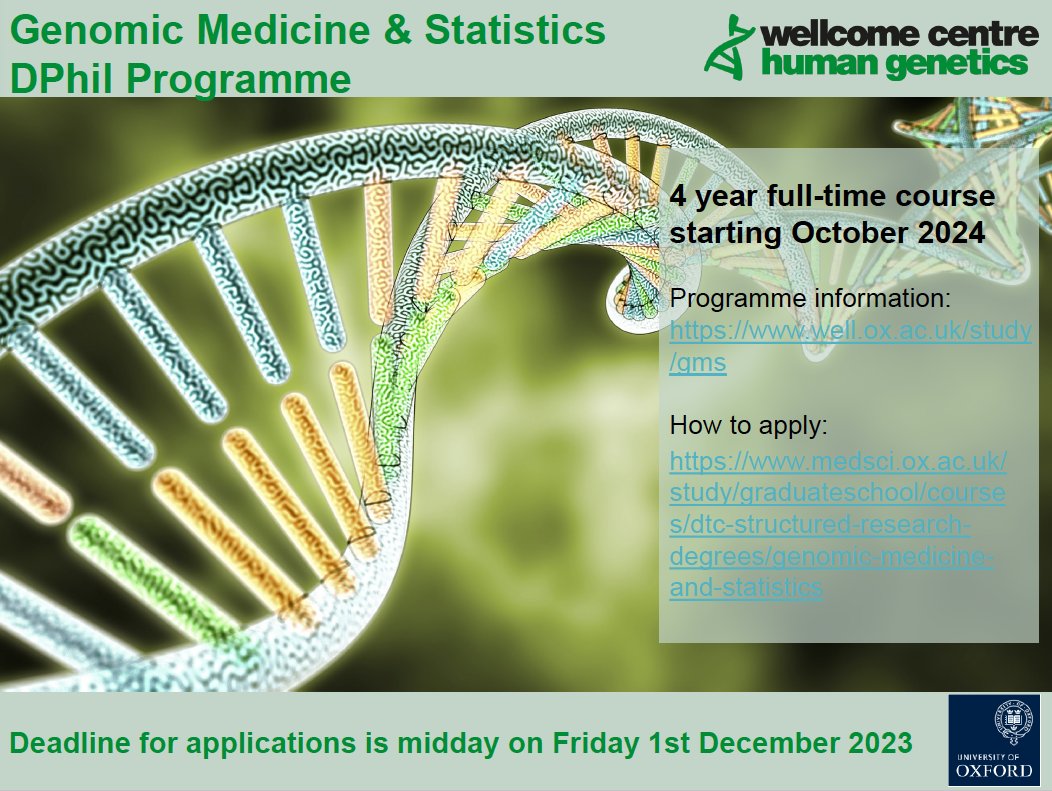
Looking to do a PhD in 2024? Interested in gene regulation, chromatin and disease? Applications are now open so come join beagrielab.com at the @HumanGeneticsOx ! Further details below but if you're interested DM me to talk about possible projects. Deadline Dec 1st 1/3
1
17
36
6,511
28 Sep 2023
There are two different DPhil programs you can apply to: if you want first-year rotations and more of a focus on computational biology then you might be interested in our DPhil in Genomic Medicine and Statistics well.ox.ac.uk/study/gms 2/3
2
2
282
28 Sep 2023
If you know what you want to do and are ready to jump straight into a project, you might be interested in a DPhil in Clinical Medicine ox.ac.uk/admissions/graduate… - happy to talk through the differences with any interested candidates 3/3
1
216
Rob Beagrie retweeted

19 Jun 2023
19 Jun 2023

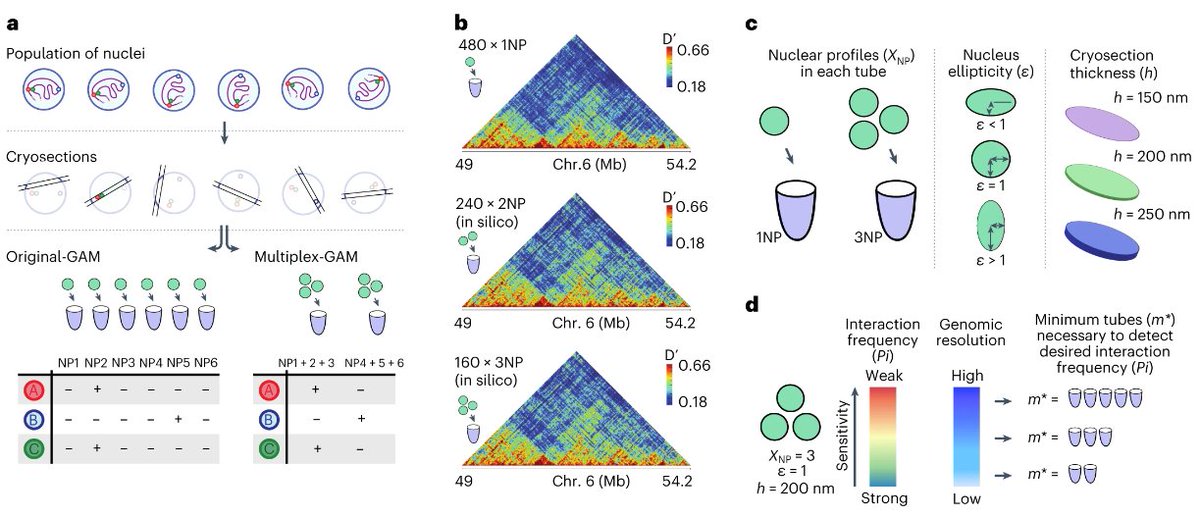
Multiplex-genome architecture mapping (multiplex-GAM) facilitates rapid, unbiased and ligation-free determination of chromatin interactions, as compared to Hi-C.
@apombo1 @RobBeagrie @anto_scial @LonnieRWelch @LabPombo @helmholtz_de
nature.com/articles/s41592-0…
3
9
1,756
Rob Beagrie retweeted

22 Jun 2023
Multiplex GAM is out! Congrats @LabPombo @apombo1 !!
Coming to a brain near you!!
nature.com/articles/s41592-0…
2
3
335
Rob Beagrie retweeted

19 Jun 2023
Multiplex-genome architecture mapping (multiplex-GAM) facilitates rapid, unbiased and ligation-free determination of chromatin interactions, as compared to Hi-C.
@apombo1 @RobBeagrie @anto_scial @LonnieRWelch @LabPombo @helmholtz_de
nature.com/articles/s41592-0…
1
32
90
17,396
Rob Beagrie retweeted

12 Jun 2023
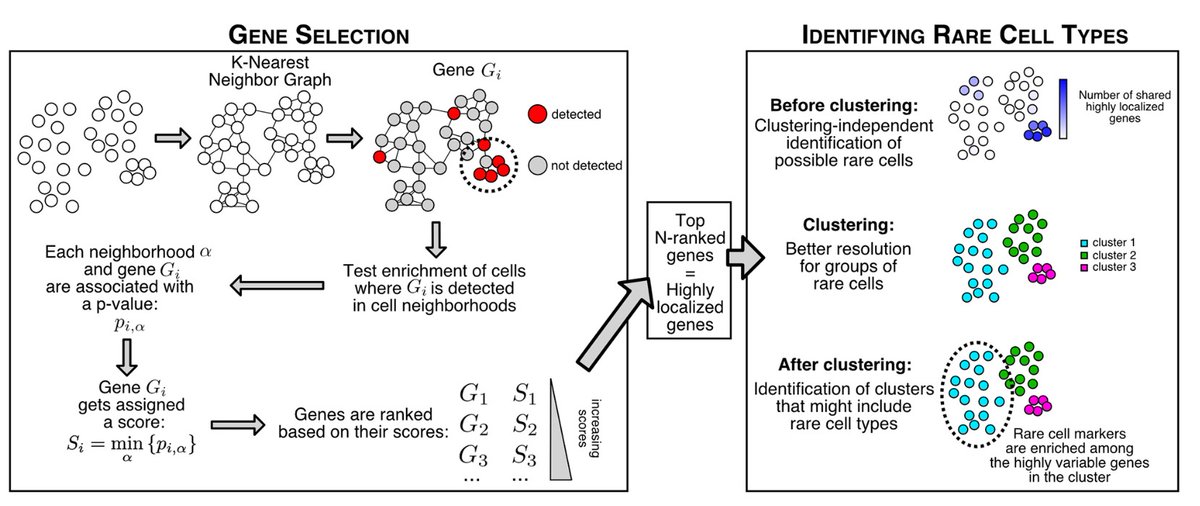
The paper about CIARA - our method to find rare cells in scRNAseq data - is now published in Development!
One of the major additions to the preprint is the analysis of scATAC-seq datasets, showing how CIARA can find rare cells in other types of single-cell omic datasets too.
12 Jun 2023

CIARA: a cluster-independent algorithm for identifying markers of rare cell types from single-cell sequencing data
Read this Techniques and Resources Article by Gabriele Lubatti, Marco Stock, Ane Iturbide, @anto_scial & colleagues @HelmholtzMunich:
journals.biologists.com/dev/…
3
16
50
15,158