
CIO @torckCapital / I trade exponential stuff, mainly crypto & mining stocks / former fx options trader / convexity & volatility / wine lover / ninja athlete
Joined June 2016
- Tweets 15,166
- Following 328
- Followers 779
- Likes 36,566
125 Photos and videos










Anthropic has been publicly forced to bend the knee to the US government. The ban on Fable and Mythos reads like censorship, and the market will read it as the TAM of the frontier labs collapsing. Instead, I read this as the opposite, as an acceleration event...
The government MUST have first access, because this is The Great Game, the game of nations over the most powerful technology ever discovered, and a technological edge of 30 to 60 days is worth everything.
It's the same edge the labs already exploit internally. You build your next model with your unreleased frontier tech, never with the public one. That private head start is what keeps you accelerating ahead of the competition or at least in line with them.
The US needs that exact advantage now. Before the public, and before the Chinese open source models can copy it. They have no choice. They cannot allow their own technology to be turned against them.
What's being negotiated, in the usual outrageous, hard-ball Trump manner, is the new arrangement:
Anthropic and OpenAI are free market operators and state vassals at the same time. Nobody wants to curtail their growth. The Gov just wants to be Customer Number 1 with privileged access.
This is the East India Company all over again. A private enterprise left free to grow rich and dominant, granted protection and a clear run by the state, on the unspoken condition that it serves the crown's strategic interests first. That charter was the price of the monopoly.
It also sends a message to China and everyone else that US AI is now so advanced the state itself has to control it. They won't, not yet anyway. They just want privileged access, the rest is posturing.
And Anthropic will bend the knee, very soon...
The hidden outcome is the one that matters. The AI firms are now near-explicitly too big to fail, which means the debt funding the capex buildout comes with an implicit state guarantee.
That accelerates the build-out of intelligence. It doesn't curtail it...
Open source accelerates too, because going open ensures no state can intervene in the model itself. Though the same Great Game rules apply there, and the Chinese state will take its own privileged access first.
So the market may wobble, convinced the TAM of AI just collapsed.
The real outcome is an acceleration of intelligence, and a Super Cycle that keeps running.
324
213
2,006
303,927
Simibit 🇨🇭 retweeted

Jun 13
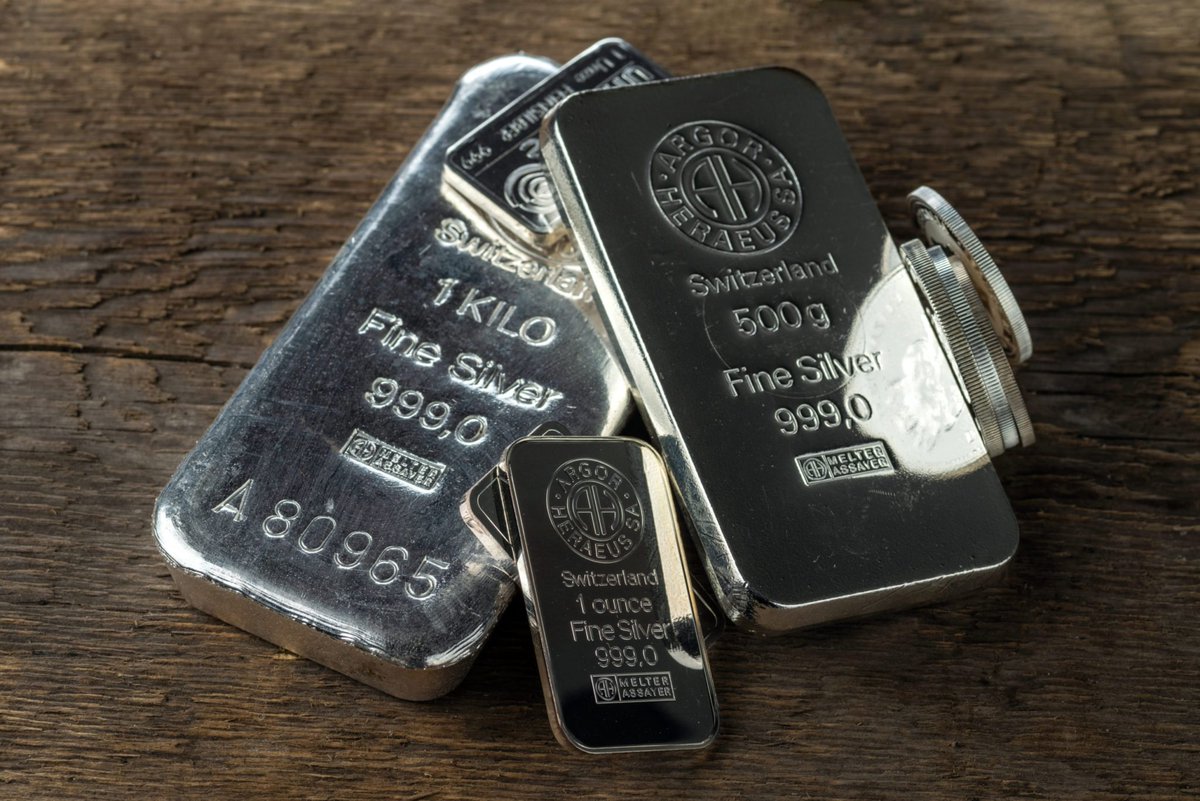
"Silver inventories at the world’s two largest bullion trading hubs have fallen sharply from pandemic-era peaks, underscoring a sustained drawdown in visible stocks even as definitions of available supply diverge across markets.." ⚠️🥈
Silver stockpile drawdown risk is misunderstood
mining.com/silver-stockpile-…
2
5
58
3,818
Simibit 🇨🇭 retweeted

Jun 12
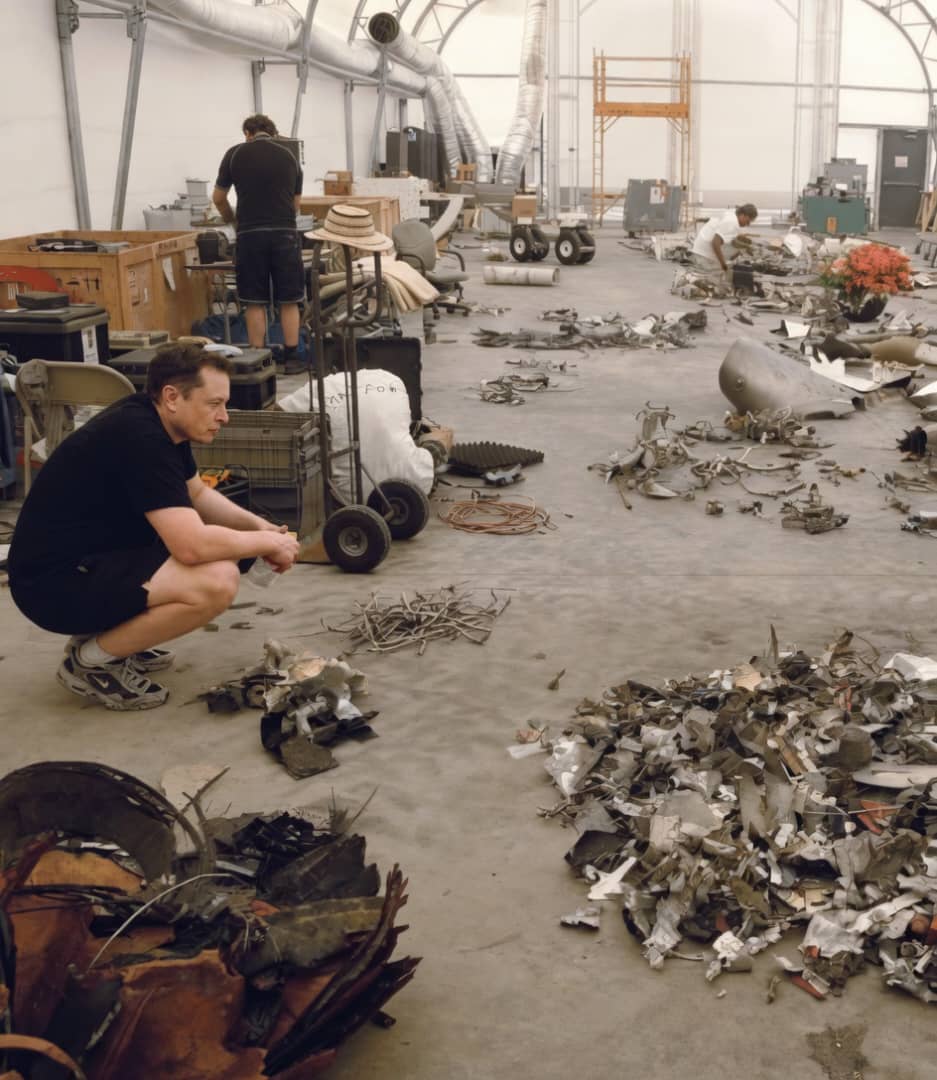
Next time you think of giving up, remember this photo of Elon in 2008.
2,007
15,752
120,503
7,923,859
Simibit 🇨🇭 retweeted

Jun 11
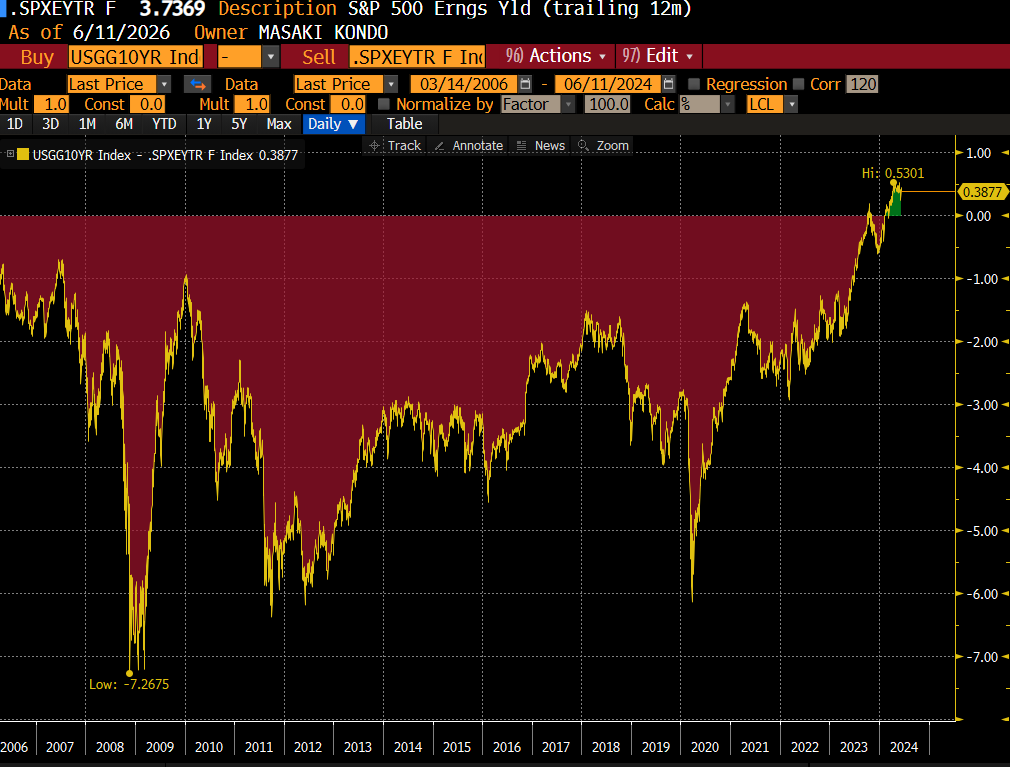
US 10-year Treasuries are offering about the greatest amount of yield versus the S&P 500's earnings yield going back to 2003. Either earnings have to keep outperforming, or bonds will start looking like an increasingly attractive alternative.
90
363
1,727
152,126
Simibit 🇨🇭 retweeted

Jun 11
The New Joule Order is here, an era in which energy security has become a dominant force shaping investment, geopolitical alliances and commodity prices.
It marks a shift from a world where energy policy was driven by efficiency and cost to one where it is driven by security and resilience.
The thesis rested on a simple observation: the world had underpriced physical energy security for a decade, and the repricing would be non-linear.
The Strait of Hormuz crisis is the first major test of this new era.
My latest piece in the @FT explores the New Joule Order in depth and is available to read below.
Jun 11

The ‘new joule order’ is here. The west is last to realise ft.trib.al/wqV7SSR | opinion
10
55
310
48,723

Jun 12
RT @chigrl: going to need a lot of energy and metals for that >>
Goldman Sachs See Hyperscalers' AI Capex Surge Past $1 Trillion https://…
29
Simibit 🇨🇭 retweeted

Jun 10
My bullish/bearish take on bitcoin is that we shouldn’t blame any entity for buying too much of it, because if bitcoin can be killed by an entity buying it, then it wasn’t meant to be.
If all it takes to kill bitcoin is a bullish entity that likes it enough to buy, then go home.

As @LynAldenContact says. If one entity is able to be a problem that kills it, it’s never meant to be more.
203
233
3,434
412,231
Simibit 🇨🇭 retweeted

Jun 10
The world is just a hair's breadth away from acknowledging publicly that we need Bitcoin mining on our grids

The AI data center boom is exposing what bitcoin miners have argued for years: flexible load matters on an increasingly stressed grid. From @DSBatten
6
22
139
4,549
Simibit 🇨🇭 retweeted

Jun 10
You have noticed it. ChatGPT feels dumber than it used to. Your prompts that worked six months ago produce worse results now. The writing sounds flatter. The ideas sound safer. The internet itself feels like it is shrinking. Every article reads the same. Every email sounds the same. Every answer sounds like it was written by the same voice.
You thought it was you. It is not you.
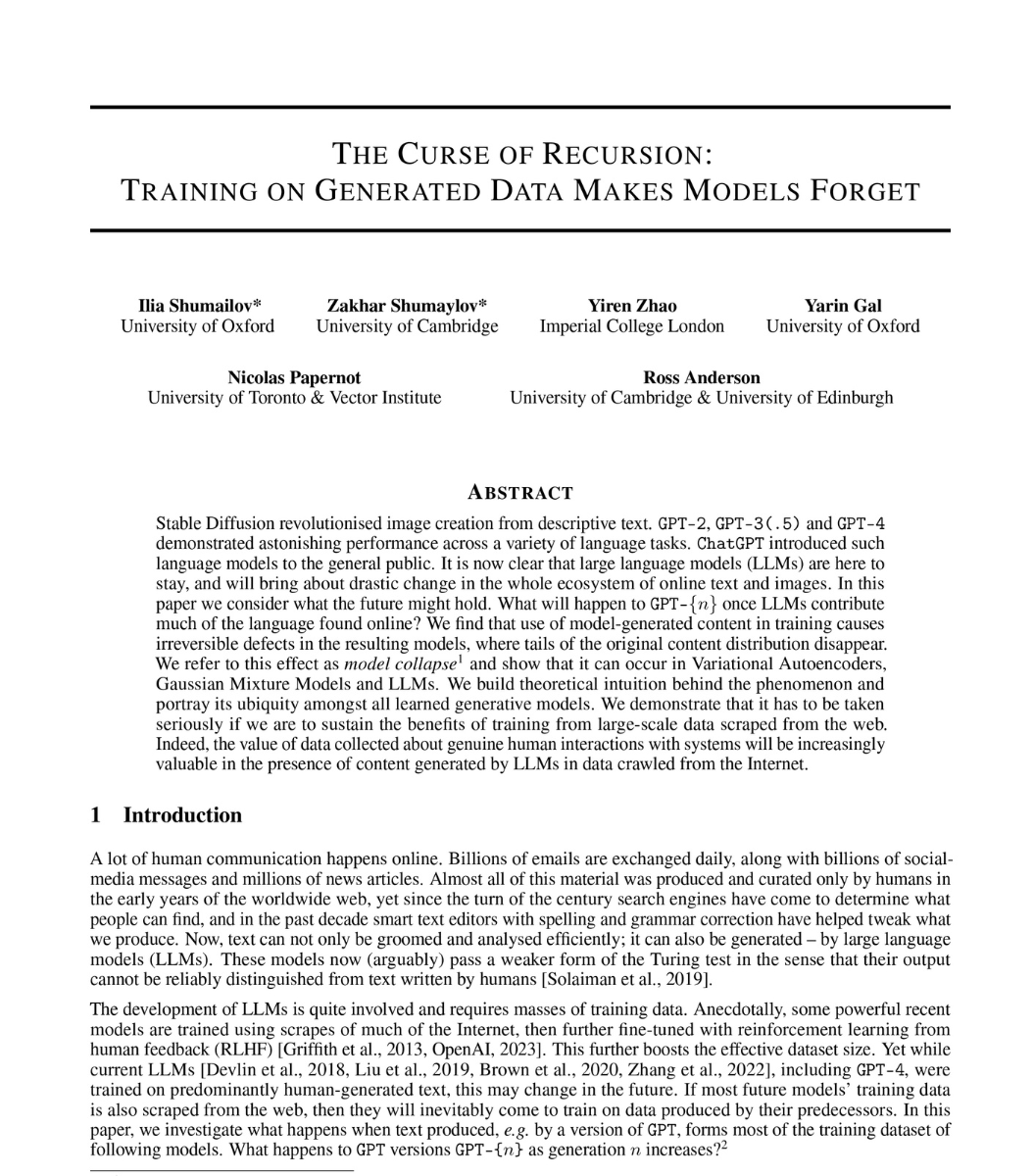
Researchers at Oxford and Cambridge published a paper in Nature proving what is happening. They call it Model Collapse.
Here is the mechanism in one sentence. AI trained on AI-generated data gets dumber every generation until it forgets what real human data looked like.
The internet is filling with AI-generated content. Blog posts. Articles. Reviews. Comments. Social media. AI companies scrape the internet to train the next generation of models. Which means the next generation of AI is being trained on the output of the current generation.
Each cycle loses information. Not randomly. It loses the rarest, most unusual, most creative parts first. The researchers call these the "tails of the distribution." The weird ideas. The unexpected perspectives. The things that made the internet feel human. Those disappear first.
What remains is the average. The safe. The expected. The bland.
Then the next generation trains on that. And loses more. And the next generation trains on that. And loses more. The researchers proved this is not a slow decline. Major degradation happens within just a few iterations. Even when some of the original human data is preserved.
They tested it on large language models. On image generators. On statistical models. The pattern was the same every time. The output converges toward a narrow, flattened version of reality that looks nothing like the original data.
The lead researcher put it plainly. "Large language models are like fire. A useful tool. But one that pollutes the environment."
The pollution is invisible. You cannot see which sentence on the internet was written by a human and which was written by AI. Neither can the AI that is about to train on it. And once the tails are gone, they do not come back. The damage is irreversible.
This is not a prediction anymore. It is a diagnosis.
The internet you grew up on was built by humans writing things no algorithm would have written. Strange, personal, imperfect, alive. That internet is being diluted. One generation of AI at a time. And the models trained on what remains are learning a smaller and smaller version of the world.
Model Collapse is not a technical problem. It is a cultural one. The thing that made the internet worth reading is the thing that disappears first.
1,137
6,386
17,713
2,221,581
Simibit 🇨🇭 retweeted

Silver dropped almost 50% from June 1968 to November 1971, and then rallied ~420% into February 1974.
Silver then dropped ~43% into 1976 and then rallied ~1150% by January 1980.
Silver dropped 60% from March to October 2008 and then rallied ~490%.
Gold dropped almost 30% in late-1973 and then rallied almost 100%...and then dropped ~25% and then rallied another 45% all by January 1975.
Gold dropped 50% in 1975 and 1976 and then rallied ~770% by Jan 1980.
Gold dropped ~26% in 2006 and then rallied 90%.
Gold dropped ~35% in 2008 and then rallied 180%.
This sell-off since January 2026 is now the third largest silver has ever had within the context of a bull market, and for gold it's the the fourth largest...almost on par with the 1973 correction and nearly on par with the Great Financial Crisis. In terms of time from top to bottom, this is more akin to the 1973 correction (about 20 weeks) or 2006 (about 20 weeks).
All of these drops led to enormous V-bottom rallies, some so rapid that if they repeated today it would mean $8000 gold by October.
79
373
2,055
201,934
Simibit 🇨🇭 retweeted

BREAKING: U.S. inflation just hit 4.2%, the highest in three years. It is also the one kind of inflation the Federal Reserve cannot do anything about.
Here is what actually happened. In January, inflation was 2.4%. Five months later it has nearly doubled to 4.2%, and almost all of that rise is a single thing. A war. Iran, the Strait of Hormuz, about a fifth of the world's oil. Gasoline is up 40.5% over the year. Fuel oil, 58.9%. Energy alone drove more than 60% of last month's increase.
Now the number nobody will headline. Strip out food and energy and core inflation actually slowed. Core goods prices fell. The underlying economy is not overheating. It is cooling.
So sit with the trap. The thing pushing prices up is a missing supply of oil. The Fed's only real tool is to crush demand by holding rates high. But high rates do not produce a single barrel or reopen a strait. They cannot touch the cause. All they can do is squeeze an economy that is already slowing, on top of a war that already taxes every family at the pump.
This is not 2022, when inflation was broad and the Fed could break it. This is closer to 1973. A supply shock from a foreign oil disruption. And the most dangerous thing a central bank can do in that moment is mistake it for a demand problem and tighten into it, because then you get the recession and keep the inflation anyway.
Markets have understood the message. They have now priced almost no rate cuts for the rest of 2026.
The cruelty of a 4.2% print is not the number. It is that the number forces the Fed to hold a policy that cannot cure the disease and may help kill the patient.

26
48
132
14,363
Simibit 🇨🇭 retweeted

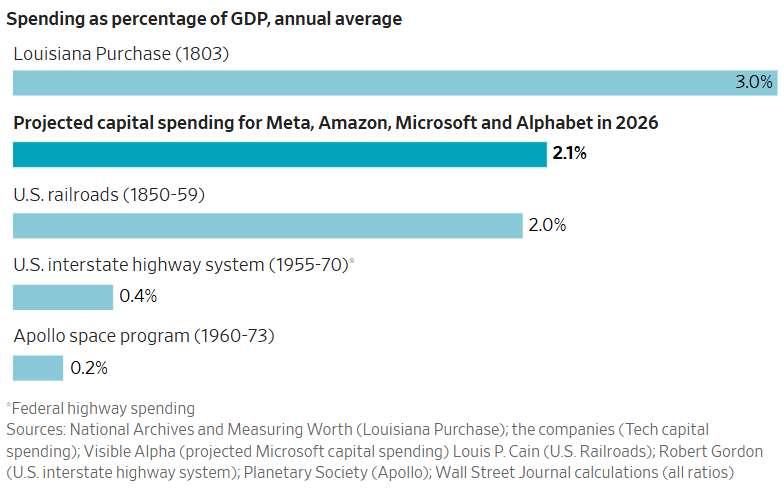
Spending on data centers and other AI infrastructure by Google, Amazon, Microsoft and Meta is expected to hit $670 billion this year.
At 2.1% of GDP, that would represent a higher share of the economy than the investment in the US railroad expansion during the 1850s.
63
147
538
67,101
Simibit 🇨🇭 retweeted

Jun 10
I was a technical co-founder at three startups.
Went through YC, raised millions, one company exited for 9 figures, yada yada...
Fable 5 is an entire product team in a box.
CTO, VP of engineering, product manager, senior dev, UX expert, UI designer, even sales/marketing...
It does it all.
And at a much higher level than most humans.
Around the clock, multiple threads running simultaneously.
I see people saying that token-based billing is a sign the AI bubble is nearing a peak.
I don't see an AI bubble.
I see a salaried employee bubble.
After using Fable 5 I can confidently say:
I'd much rather spend $200K on tokens for Fable 5 than hire a single human that does one of those roles
(and only on weekdays when they're feeling focused, motivated, etc.)
If token billing means choosing between cutting AI usage vs. cutting employees...
Every CFO knows which line item goes first.
But this tool only produces value in the right hands.
The wrong employee will run up a token bill with nothing to show for it.
The right employee will turn tokens into bottom-line improvements.
If you're an employee, focus on proving you know how to turn tokens into value for your company.
OR relationship-max harder than ever.
If you're an entrepreneur, you have an entire expert product, marketing, and sales team at your fingertips for a fraction of the cost of the human equivalent.
Use it to help other people at scale and you will win big.
As an investor... this keeps me very bullish on AI.
If you have capital to allocate, you want to put it into an industry seeing exponential growth.
And you want to take advantage of all the moments that people lose sight of the big picture.
This genie's not going back in the bottle.
In fact, it only just escaped.

28
22
428
29,391
Simibit 🇨🇭 retweeted

Jun 7
„Der Sozialismus ist die Kunst, Neid in eine Tugend und Faulheit in ein Recht zu verwandeln.“
33
531
2,479
33,043
Simibit 🇨🇭 retweeted

Jun 10
Belfast: Brennende Häuser und Autos, Jagd auf Menschen anderer Herkunft: sowas geschieht in Städten, wenn Bürger nicht mehr daran glauben, dass der Staat sie vor gewalttätigen Auswirkungen der Migration schützen kann, will und wird.
Das sind Ausschreitungen mit Ansage und sie drohen auch in Deutschland und jedem europäischen Land, wenn die Politik versagt und lieber ihr Volk als Rechts beschimpft anstatt ihren Job zu machen.
Jun 9

BREAKING:
Rioters are breaking into migrant HMOs (Houses in Multiple Occupation, a form of taxpayer-funded housing for asylum seekers) in Belfast and setting them ablaze.
It’s a difficult night for firefighters in Belfast with fires reported in several parts of the city.
209
863
4,707
69,090
Simibit 🇨🇭 retweeted
Jun 9
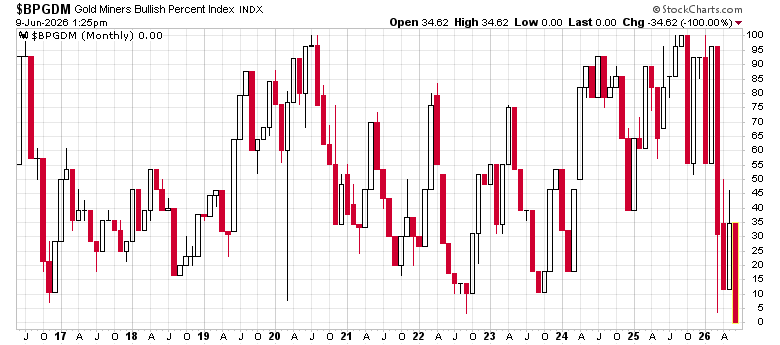
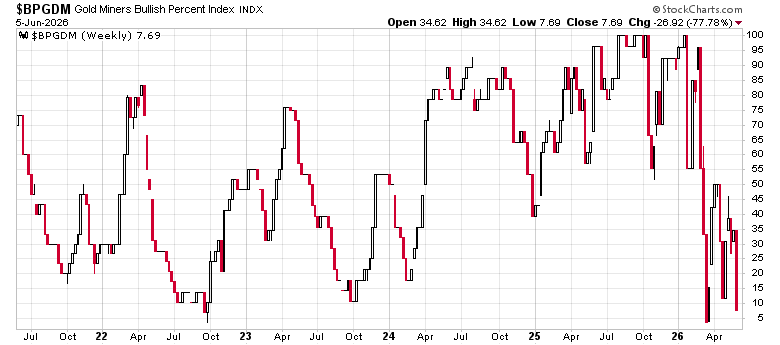
The Gold Miners Bullish Percent Index drops to zero. Yes, you read that correctly. Historical 👀🔥
Total capitulation.
Jun 6

The Gold Miners Bullish Percent Index $BPGDM also shows total capitulation, having dropped a historic 78% (!) last week. 👇
It was one of the worst weeks in many years for gold and silver mining equities.
$GDX $GDXJ
83
222
1,274
433,834
Simibit 🇨🇭 retweeted
In January, 7% of US layoffs blamed AI. By May, 40%, a record 38,579 cuts.
But total layoffs are down, the economy added 172k jobs, and the same firms cutting "because of AI" are spending $725B on it and hiring most.
"AI" isn't replacing workers. It's replacing the excuse.
12
17
69
10,366
Simibit 🇨🇭 retweeted

Im extremly bullish now that we gotten the #FALSE #BREAKDOWN
Price is washed out, RSI is back in bottom-zone territory, and momentum is at levels that previously marked major reversal areas.
Every major pullback since the $121 top has produced violent rebounds, and this one is now the longest correction of them all.
False breakdown sentiment in the gutter oversold daily/weekly setup historical bounce window = exactly where I want to be positioned.
Easy down - Easy up. I smell "any day now".
17
13
270
15,592
Simibit 🇨🇭 retweeted

Jun 7
Raoul Pal: Agents spawn sub-agents, who spawn more sub-agents...
"Agents building their own agents is a nonlinear function."
And the scale won't follow Metcalfe's law - it'll follow Reed's law, which is the square of that.
This is a Cambrian explosion of new economic participants.
FT @RaoulGMI @RealVision.
45
34
230
108,683
Simibit 🇨🇭 retweeted

Jun 7
A thought
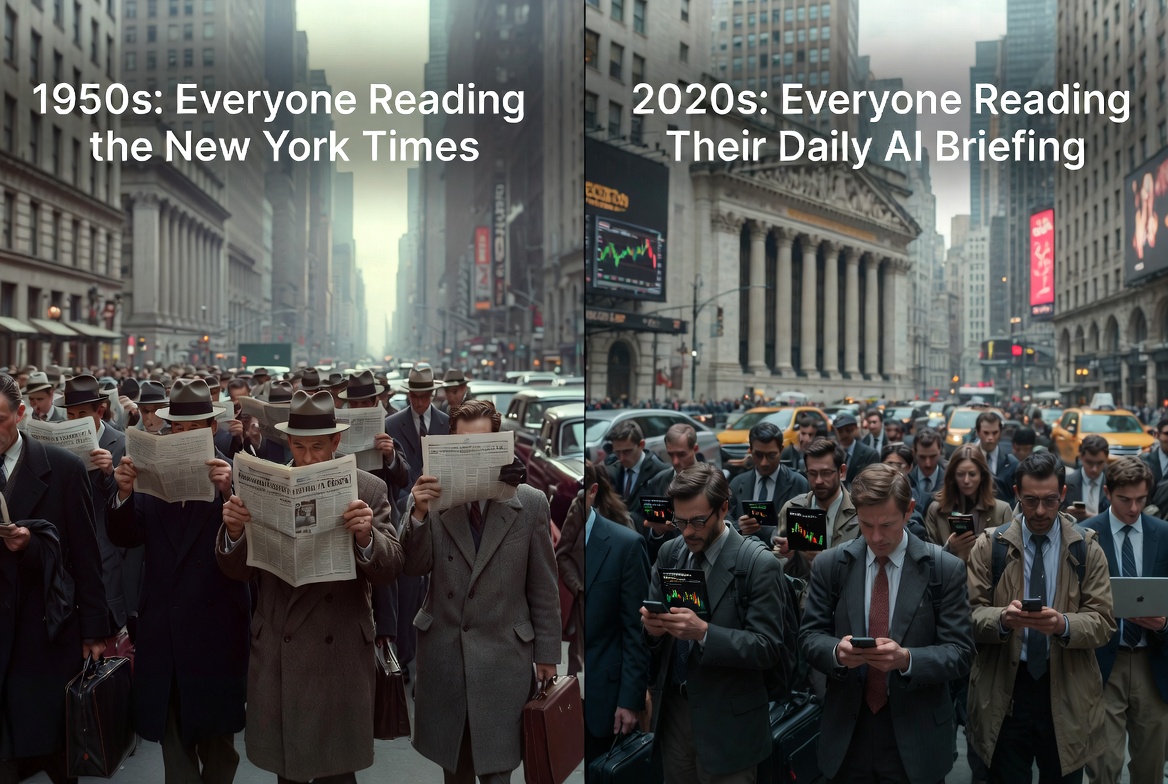
In the 1950s to the 1970s, information channels were so scarce that even the most studious investor, reading the same New York Times as everyone else on the morning commute, inevitably absorbed the same narrative, producing classic groupthink.
Today, I fear we might be recreating that exact dynamic at digital speed: millions of users generate daily AI briefings with near-identical prompts fed into overlapping models, receiving essentially the same market summaries, signals, and conclusions.
The result? A new era of synchronized thinking, just like 50–70 years ago, when alpha generation was far higher precisely because consensus created exploitable edges.
Independent thinkers who step outside the AI echo chamber will soon regain that same advantage.
Active stock-picking is poised for a comeback.
----
The era of Google searches, circa 2005 to 2024, was always ad hoc, so they never produced groupthink on the level we saw in the 1950s, and may see again.
(AI image of what I'm arguing)
40
51
370
79,095