
Systems theorist, author, founder/owner. Building practical AI reliability with bespoke black-box tools. Also, inconveniently, I have a lovely signing voice.
Joined October 2014
- Tweets 2,123
- Following 0
- Followers 297
- Likes 115
164 Photos and videos




Pinned Tweet

6 Nov 2025
ΔΔF ≠ 0 is now formalized.
My NEW paper extends the Free-Energy Principle to model agency as curvature. It quantifies how living systems sustain separability by minimizing variance of surprise reduction itself.
It’s not speculation; it’s structure... and its free to you.
#Neuroscience #AI #FEP #ActiveInference #3IATLAS
ENJOY!
👇
benjaminjclark.substack.com/…
3
6
1,779
GLOBAL WARMING
A system does not become safe because its report says safe. The observable record has to support the claim.
I’ve been working on an observable-only public-good review frame for climate-adjacent risk: not accusation, not private-data access, not causation claims. Just a disciplined way to ask whether public burden is showing sustained divergent drift from a claimed stable baseline. Results coming soon...
1
60
drive.google.com/file/d/1Mrm…
This is a public-good review note for asking whether public data supports a claim of “safe,” “sustainable,” or “under control,” without accusing anyone or needing private information.
Use it as a checklist: define the claim, pick public signals, test the baseline, check for drift, run controls, and route only a candidate finding for human review.
@NASAClimate
@NOAAClimate
@IPCC_CH
@WRIClimate
@CarbonBubble
@RockyMtnInst
@climate
@CDP
@CeresNews
@grantham_ic
@PIK_Climate
@FutureEarth
@OurWorldInData
@ClimateCentral
@InsideClimate
@SEIresearch
1
10
Jun 12
The ultra dangerous part of every AI without a verified audit layer (that's ALL OF THEM currently). We learned that hallucinations aren’t the scary part anymore.
The scary part is when everything is technically true, except 20% of it, conclusion’s confidence, and it will defend it longer and stronger than you have time for.
That's not intelligence, that is high end lying machine.
@Apple @Microsoft @intel @Qualcomm @Google @nvidia @UNHumanRights @EUCouncilPress
12
Time is not just something the universe does to us.
It is also something the brain builds.
A second in pain is longer than a second in joy. A childhood summer stretches forever. A decade of adulthood can disappear like a page turned too fast.
That does not mean time is fake. It means human time is processed, compressed, stretched, and colored by attention, memory, fear, novelty, and love.
Maybe the strangest thing about time is not that it passes.
Maybe it is that each mind experiences a different version of its passing. Like each one has its own Exponential Decay of Strategic Option Value.
49
14 Nov 2025
Some organizations have reached out... If you’re wondering whether the geometry I’ve been working on is “real enough,” here’s the answer:
when you couple GR U(1) to standard curvature terms and add a covariant scalar layer encoding ΔΔF, you get a fully EFT-safe framework that stays second-order, ghost-free, and hyperbolic.
GR lightcones remain intact. Maxwell equations get a tiny Φ-dependent correction. And the warp-shell metric sits inside the solution space without violating known bounds.
In other words: the math stands on its own, and it passed several external technical sniff tests.

2
1
617
May 22
@METR_Evals, @ApolloAISafety, @PromptFoo, @LangChainAI, @ArizeAI, @GalileoAI, @Langfuse, @HuggingFace, @Scale_AI, @EleutherAI, @AISafetyInst, @DanHendrycks, @CenterForAISafety, @alignmentforum, @DeepEval, @BraintrustData, @WeaveByWandB, @TruEraAI, @Comet_ML, @ContextualAI, @ApolloResearch, @METR_evals, @FAR_AI, @ALIGN_RC, @CAIS_safety, @huggingface, @ScaleAI, @weights_biases, @GovAIOxford, @BAIROpenSource, @StanfordHAI, @MIT_CSAIL, @GoogleDeepMind, @OpenAI, @AnthropicAI, @xai, @MetaAI, @ApolloResearchAI, @RedwoodResearch, @FARAI_org, @Cohere, @MistralAI, @StabilityAI, @CRFM_Stanford
1
90
May 28
Introducing our newest technology...
It's called a website. And there might be some treats on it for visitors as well.
specshiftlabs.com/
69
May 27
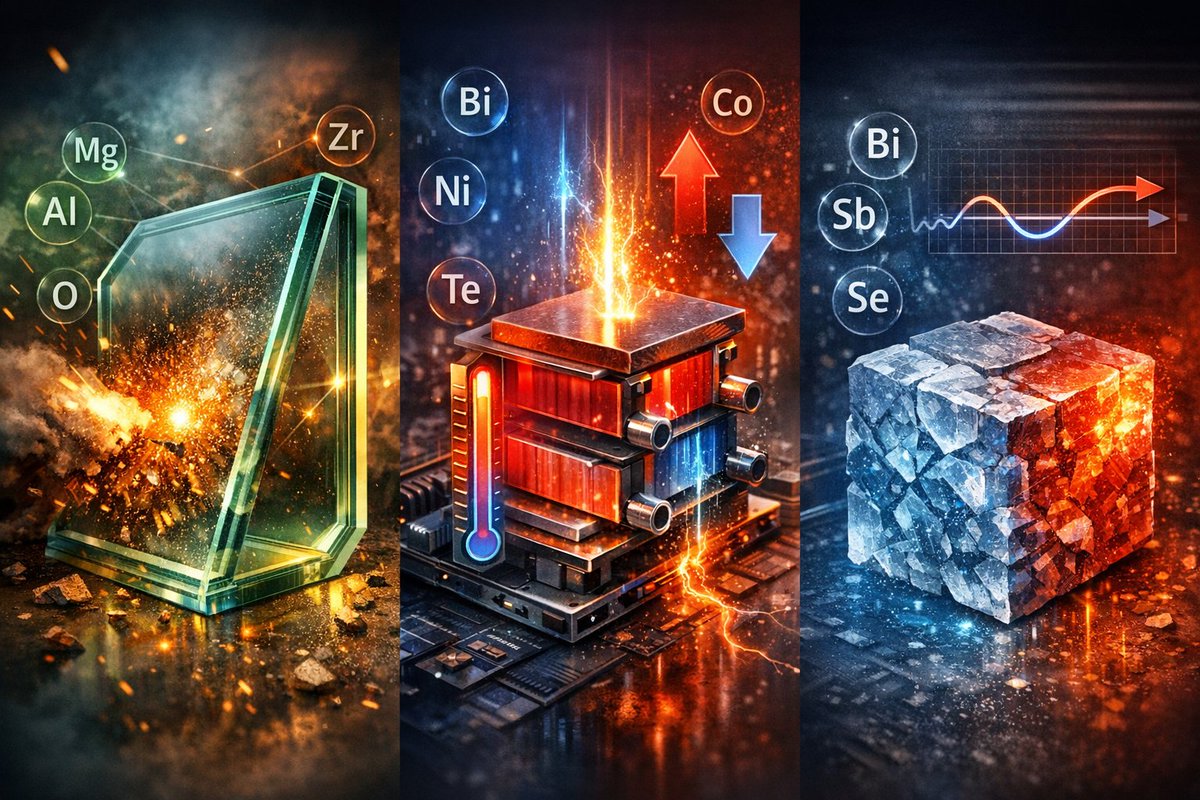
Don’t be afraid of failure. Glass is almost liquid in structure, almost crystal in ambition, almost stable by design… and somehow that failure becomes transparency.
Food for thought in the AI world too.
49
May 22
Correction, now submitted and public.
May 20

SPS Evaluator v0.1-sprint is now public.
It’s a small, runnable GitHub prototype for generated-code evaluation, built around one simple point:
passing visible tests ≠ satisfying the underlying specification.
Includes:
- local demo
- synthetic dataset
- baseline/schema/spec-perturbation/adversarial checks
- limitations scope boundaries
- public review packet
Repo:
github.com/mrclarkonline-cyb…
Demo:
python3 runner.py --file dataset.json
Public synthetic scaffold only. No protected implementation details, scoring internals, or proprietary evaluation methods disclosed.
50
Benjamin J. Clark retweeted

May 18
Fundamental Mechanical Engineering Formulas.
Credit: Maths and Physics Formula.
7
573
2,235
97,000
May 12
NEVER interrupt the other side when their own process is revealing the problem.
48
Second-order structure matters because first-order success can be faked.
A system that preserves curvature under perturbation is carrying information differently than one that merely reaches the same endpoint.
The endpoint is the least interesting part of the trajectory.
I wonder if I’m talking about AI evals, control theory, or something else entirely.
2
51
New England should be paying attention to USGS.gov.
The northern Appalachians are not just scenery. USGS has flagged regional potential for battery and critical minerals, including lithium, graphite, cobalt, manganese, rare earth elements, tantalum, cesium, tin, beryllium, and niobium.
Handled carefully, this could become for parts of New England what oil became for Alaska: not a magic jackpot, but a long-term public wealth, infrastructure, jobs, and supply-chain opportunity.
The key is doing it right: map first, protect water, respect towns, build refining capacity, and make sure local people benefit before outside capital extracts the upside.
@GovPhilScott @GovJanetMills @KellyAyotte @MassGovernor @GovNedLamont @GovDanMcKee @vtdigger @PressHerald @NHPR @BostonGlobe @CTMirror @projo @wcax @newscentermaine @WMUR9 @WCVB @NBCConnecticut @wpri12
This is a regional strategy conversation now. Your budget problems could be over.
1
94
@grok, for the folks at home, what are these mineral deposits used for?
1
63
To be clear, I’m not offering a story about UFOs, disclosure, or secret programs. I also don't doubt people who have those stories but I don't have a background in that.
I’m offering a civilian black-box AI reliability diagnostic.
The problem is simple: as AI systems move into higher-stakes environments, performance is not enough. We need to know whether success comes from real adaptive correction, or from replay, spoofing, brittle mimicry, reward-hacking, or frozen behavior.
ΔΔF looks at time-ordered behavior as an observable trajectory. No model weights. No source code. No training data. No proprietary prompts. No classified systems.
Just the curve of correction.
That matters for AI safety, infrastructure resilience, critical-systems audit, defensive cyber assurance, emergency response, and institutional risk reduction.
The boundary is equally simple:
Civilian reliability work is in scope.
Weapons, targeting, lethal autonomy, battlefield deployment, offensive cyber, military operational optimization, unrestricted sublicensing, derivative military adaptation, and rights-violating surveillance are not.
This is not a defense product looking for a loophole.
It is a civilian structural-integrity tool for the AI systems society is about to rely on.
1
82