
Global Bio x AI Community. A third place for scientists, product managers, computational biologists, engineers and academics working in AI & Software for Bio
Joined August 2024
- Tweets 669
- Following 63
- Followers 1,468
- Likes 3,401
30 Photos and videos

TechBio Transformers retweeted

May 19
A big day for multi-agent AI to accelerate biomedical discovery, hypothesis generation, designing experiments with proof points of new candidate drugs (cancer, fibrosis, macular degeneration, antimicrobial resistance, and more)
2 @Nature reports @GoogleDeepMind @FutureHouseSF
nature.com/articles/s41586-0…
nature.com/articles/s41586-0…
14
146
533
157,643
TechBio Transformers retweeted

May 19
Lots of news today. Don't have energy to write a hit tweet, so here's list
1. Our work on doing lab-in-the-loop with agents was published in Nature
2. We announced our first research partnership with a pharmaceutical company
3. We made new persistent code-writing agent
20
13
350
31,685
TechBio Transformers retweeted

Apr 30
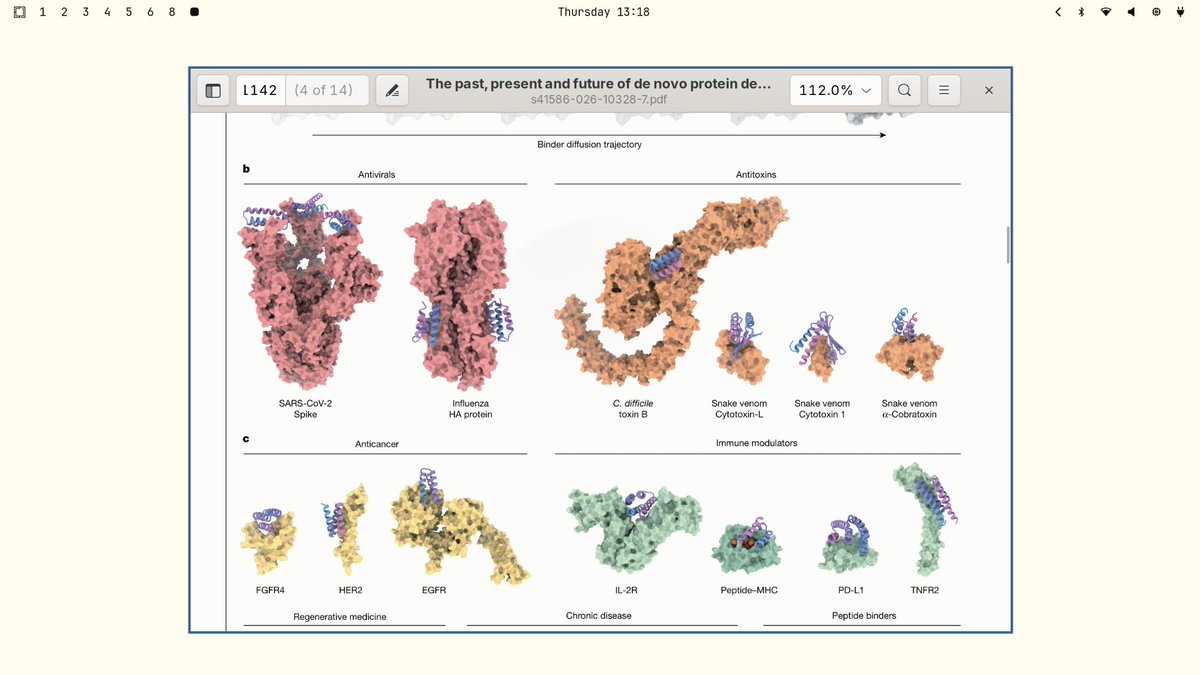
the new david baker's paper is a very good read if you are designing binders
7
28
293
17,610
TechBio Transformers retweeted

Apr 25
important to remember two things - 1) alphafold was built on decades of painstakingly collected xray crystallography, nmr, cryoEM data and 2) protein folding is *NOT* solved, alphafold still under-performs for non-canonical protein types that are important for therapeutic applications

Totally agree that AlphaFold didn't “solve” protein folding!
A system that accurately predicts final structures hasn't explained why those residues fold that way, eg., the energy landscape, the kinetic pathways, what happens co-translationally before the chain is even released from the ribosome… etc
“Solving” means understanding the mechanism. That's a different kind of question. It's the difference between predicting where a ball lands and understanding gravity.
Without that, we can't explain misfolding diseases from first principles, design truly novel protein architectures, or predict how mutations shift folding kinetics rather than just final structure.
AlphaFold gave us better maps. The physics of folding is still largely uncharted.
11
27
288
26,029
TechBio Transformers retweeted

Apr 17
I’ve wanted to do this for a decade.
But I never did - I refuse to give any company my DNA.
It is me.
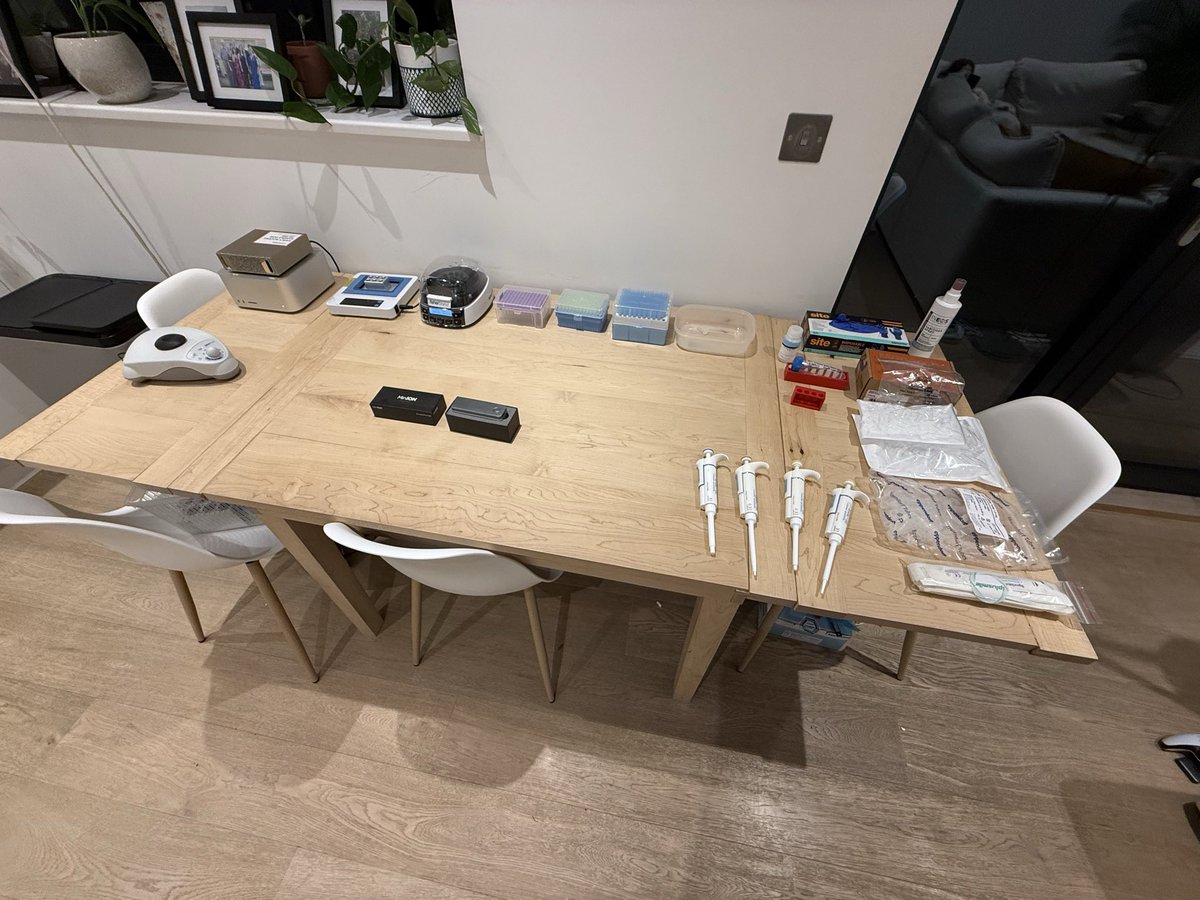
So this week I sequenced my genome entirely at home. Literally on my kitchen table.
I never exposed my DNA sequence to the internet. Not at any point.
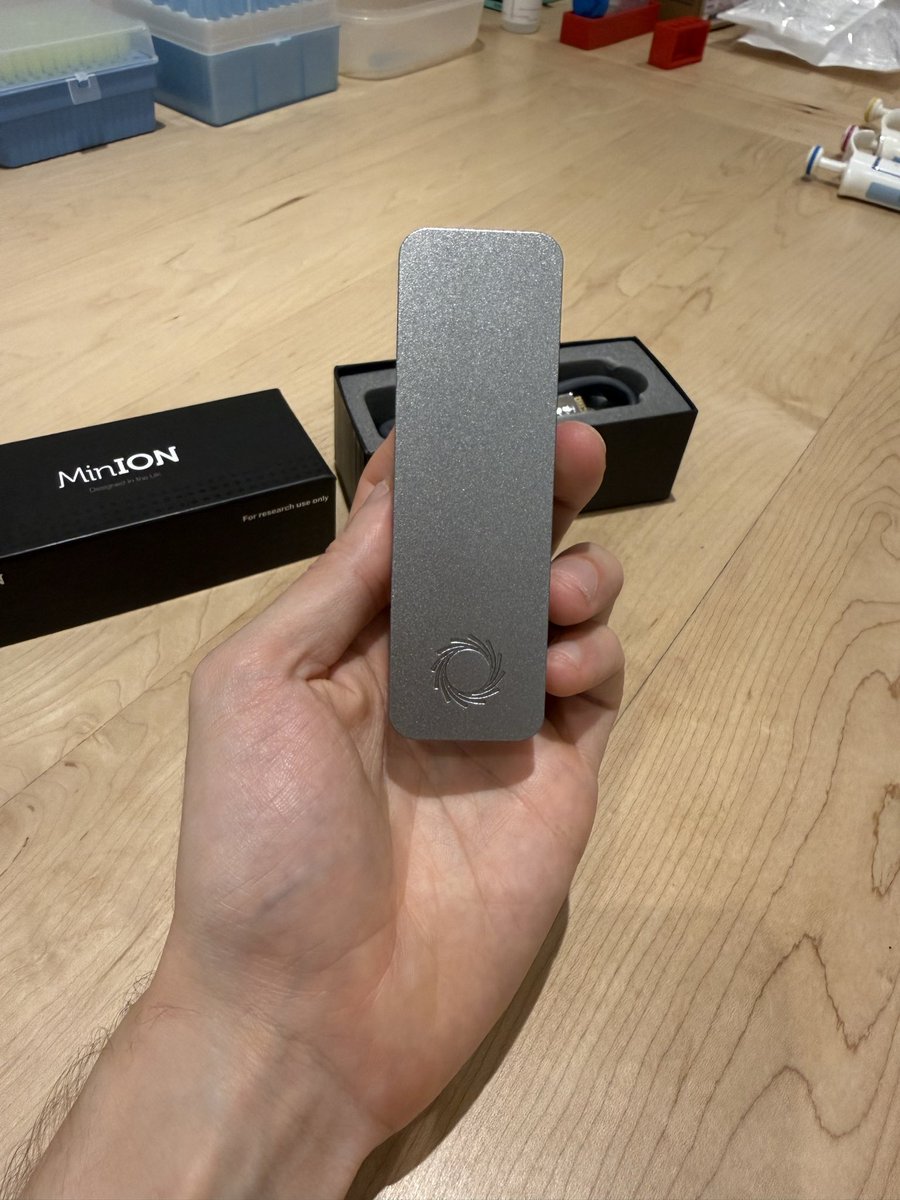
I used a MinION to do the sequencing (it’s smaller weighs less than an iPhone).
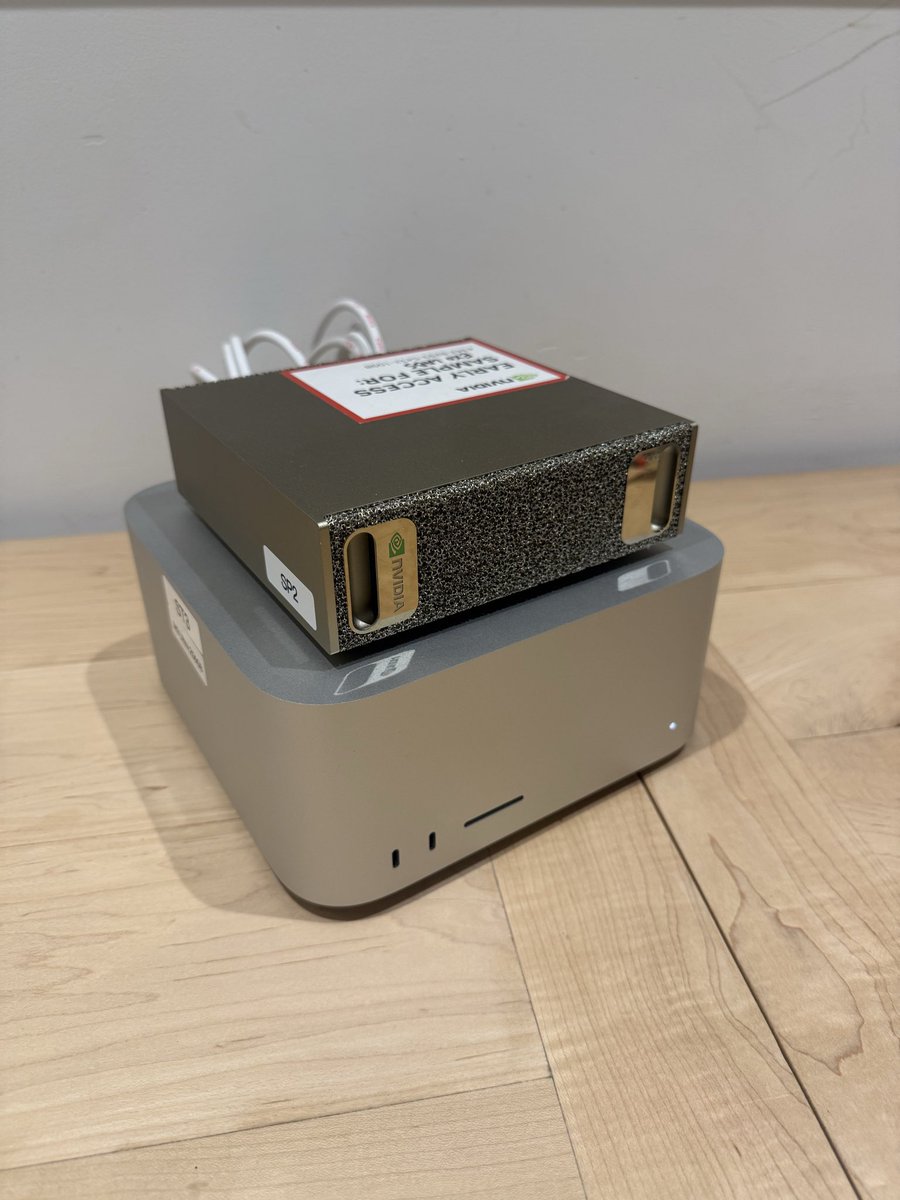
I used open-source DNA models for the analysis (Evo2 and AlphaGenome) running locally on a DGX Spark and Mac Studio.
I traced mechanisms behind my family’s multigenerational autoimmune conditions that no clinician has been able to understand.
When I set out to do this I didn’t know if it would actually work. It does.
Your genome is the most private data you will ever have. You probably shouldn’t let it leave your house.
Apr 17

I'm lucky enough to have a great doctor and access to excellent Bay Area medical care. I've taken lots of standard screening tests over the years and have tried lots of "health tech" devices and tools.
With all this said, by far the most useful preventative medical advice that I've ever received has come from unleashing coding agents on my genome, having them investigate my specific mutations, and having them recommend specific follow-on tests and treatments.
Population averages are population averages, but we ourselves are not averages. For example, it turns out that I probably have a 30x(!) higher-than-average predisposition to melanoma. Fortunately, there are both specific supplements that help counteract the particular mutations I have, and of course I can significantly dial up my screening frequency. So, this is very useful to know.
I don't know exactly how much the analysis cost, but probably less than $100. Sequencing my genome cost a few hundred dollars.
(One often sees papers and articles claiming that models aren't very good at medical reasoning. These analyses are usually based on employing several-year-old models, which is a kind of ludicrous malpractice. It is true that you still have to carefully monitor the agents' reasoning, and they do on occasion jump to conclusions or skip steps, requiring some nudging and re-steering. But, overall, they are almost literally infinitely better for this kind of work than what one can otherwise obtain today.)
There are still lots of questions about how this will diffuse and get adopted, but it seems very clear that medical practice is about to improve enormously. Exciting times!
424
1,075
12,848
2,478,092
TechBio Transformers retweeted

Apr 18
What happens when you put competing neural networks in a Petri Dish and start changing the rules while they adapt?
Last year we released Petri Dish NCA, where neural nets are the organisms that learn during simulation. Today we're releasing Digital Ecosystems: a browser-based platform for interactive artificial life research.
The setup: several small CNNs share a 2D grid, each seeing only a 3x3 neighborhood. No global plan. They compete for territory by attacking neighbours and defending against incoming attacks, learning via gradient descent online while the simulation runs.
What we didn't expect was the role of the learning itself. Gradient descent isn't just optimising each species' strategy. Instead, it acts to stabilize the whole system during simulation. Species that overextend get pushed back by the loss. Species that stagnate get nudged to grow. This means you can push parameters toward edge-of-chaos regimes: a zone characterised by emergent complexity. Letting the neural networks learn acts to hold the complex system together while you explore and interact.
The platform lets you steer all of this interactively. You can draw walls to create niches, erase parts of the system online, and tune 40 system parameters to explore the most interesting configurations. We find it mesmerizing to watch species carve out territories and reorganise when you perturb them.
Everything runs client-side in your browser, no install needed.
Blog: pub.sakana.ai/digital-ecosys…
Code: github.com/SakanaAI/digital-…
39
202
1,160
256,368
TechBio Transformers retweeted

Apr 18
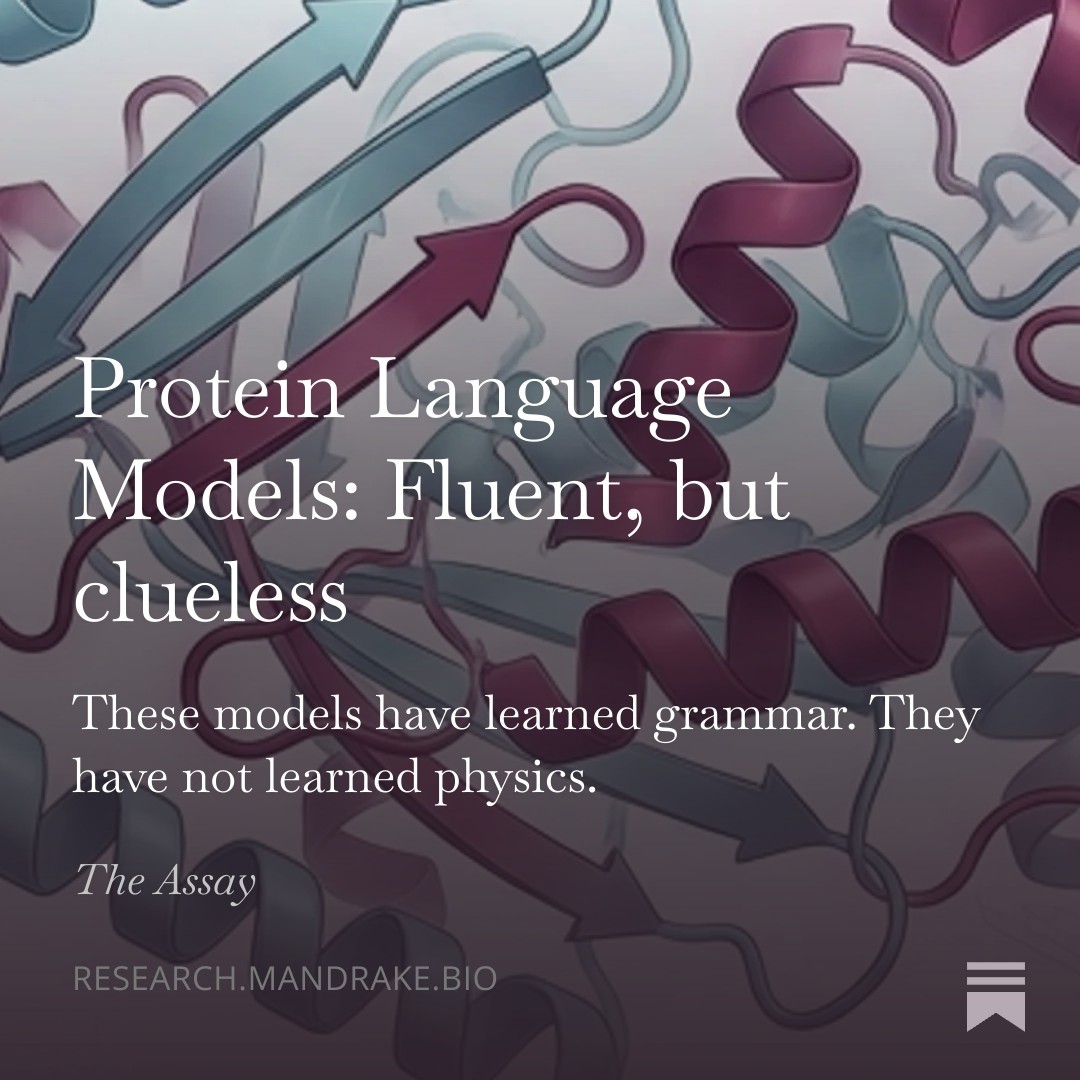
Our 1st Assay into Protein language models at @BioMandrake is here!
PLMs have learned the grammar of evolution. They just haven't learned the physics. We go deeper into some experiments we did to shed light into nuances that Protein designers using these should care about.
12
43
248
13,826
TechBio Transformers retweeted

Apr 18
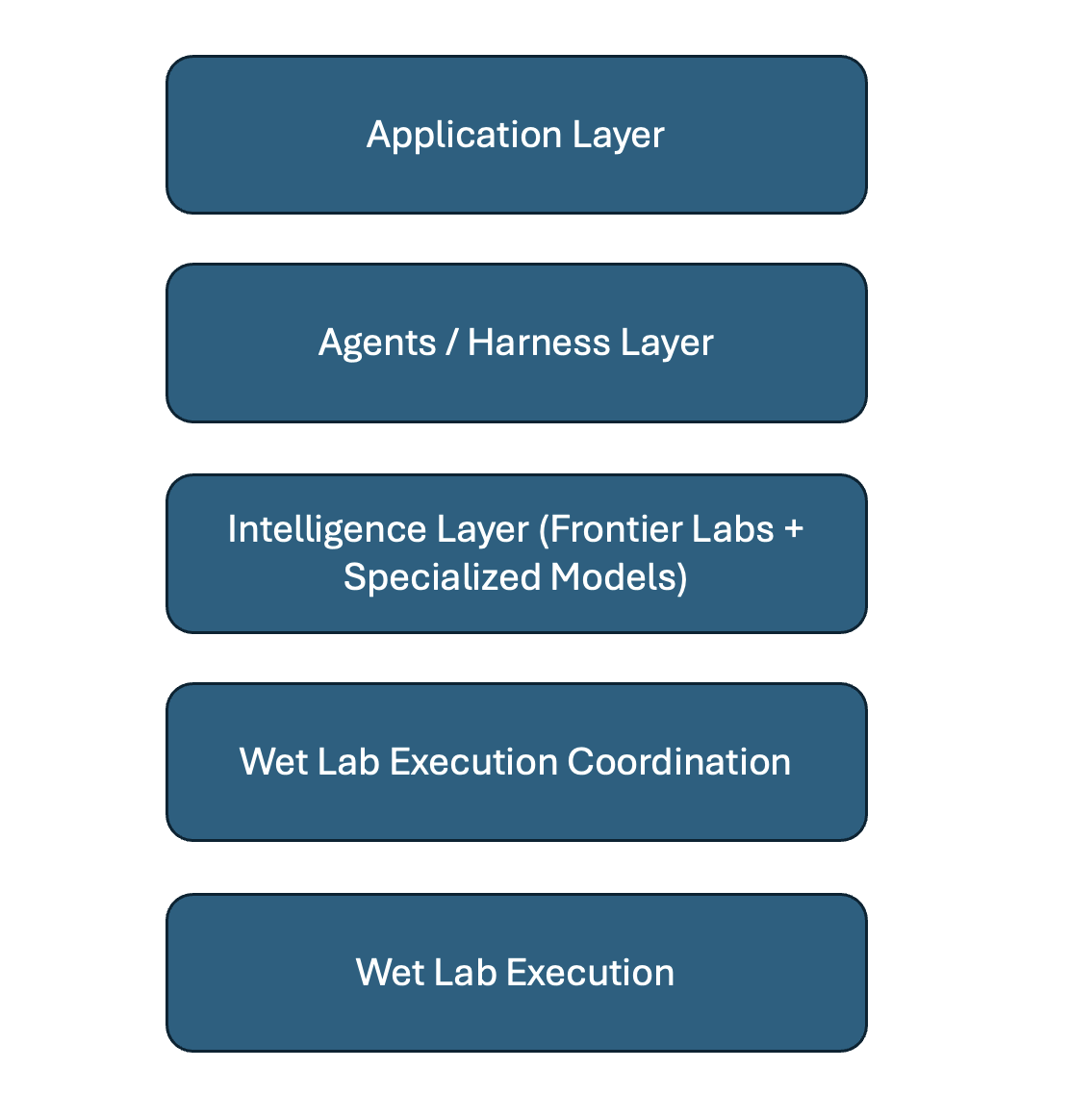
**the emerging AI native life science R&D stack**
the key question from mid 2025 til recently was whether frontier labs were actually serious about building products, capabilities, and orgs in AI x drug discovery or they were using it for marketing purposes in pursuit of ever larger rounds of funding.
fair q when in a few week stretch in 2025, sam altman, demis,and dario all said that one of the biggest benefits of AI for humanity would be huge acceleration of tx development ("dozens of drugs in a decade!") - cue exasperated groans from the trad bio section of the peanut gallery
a few cards have flipped in last few weeks:
OAI: released GPT-rosalind, a life science research model, first vertical specific GPT
Anthropic: acquired Coefficient bio to build biotech infra and a rumored bio model also dropping soon
as the frontier labs' strategy in the space has become clearer, so too has the *AI-native life science R&D stack*
a few comments on each layer of this 5 layer cake, starting with the middle:
Intelligence Layer (Frontier Specialized Models) ~ Ant, OAI, GDP all in running; will proprietary data end up being *the* differentiator? and if so, who actually has access?
Wet Lab Coordination ~ speaking of proprietary data, can't get it at scale without some interface layer to the actual wet lab execution apparatus. in life sciences, that workflow is super outdated, phone calls, Excel, fax , PDFs, all just archaic. nearly no one has an API.
are the frontier labs interested in tackling the long tail of assays and CROs that would need to be wired into a real wet lab coordination layer? nothing to suggest they will right now — but they are hungry for capturing value up and down the chain
AWS Bio is first green shoots that another player will operate in this space but reviews on the ground have not been great - this may be the grittiest but also most unappreciated oppty in the stack
Wet Lab Execution ~ life sciences has a massive long tail of CROs, and given this is where the actual proprietary data gets generated, so this layer can be a genuinely differentiating factor
the interesting topic to watch: are any CROs going to become AI-native and start moving *up* the stack — doing wet lab coordination themselves, or perhaps even becoming preferred data providers to frontier labs?
Early movers like Gingko and Adaptyv are making some noise, but this has to be a topic that the forward-thinking folks running AI strategy at Thermo, Wuxi, and others are thinking about
Agents / Harness Layer ~ sitting on top of intelligence layer, lots of new startups have jumped into this space trying to coordinate models across life sciences specific workflows
big risk looming over all of them is whether frontier labs will simply subsume this into their own product roadmap. Anthropic x Coefficient Bio is an ominous signal (but maybe $ 400M acqui-hire in 12 mo is an outcome that everyone involved is ok with)
Application Layer ~ Benchling is the big gorilla here but if "attention is all you need" is *truly* all you need, the UX / UI with scientist layer becomes critically important, and potentially the most interesting place for a shake-up
frontier labs could still move in. and new form factors could emerge enabling new startups. physical AI could change the whole workflow
additionally is a notebook entry in a digital ELN even the right atomic unit of work in an AI-native workflow?
finally, stepping outside the stack, the looming question that no one has fully answered yet - these are all *infrastructure* plays. what will the truly AI-native therapeutics company actually look like? the actual value creation that comes out of this stack?
how will those AI-native biotechs look different in shape, value creation profile, and capital intensity compared to the biotechs we know today?
stay tuned.
10
17
168
45,398

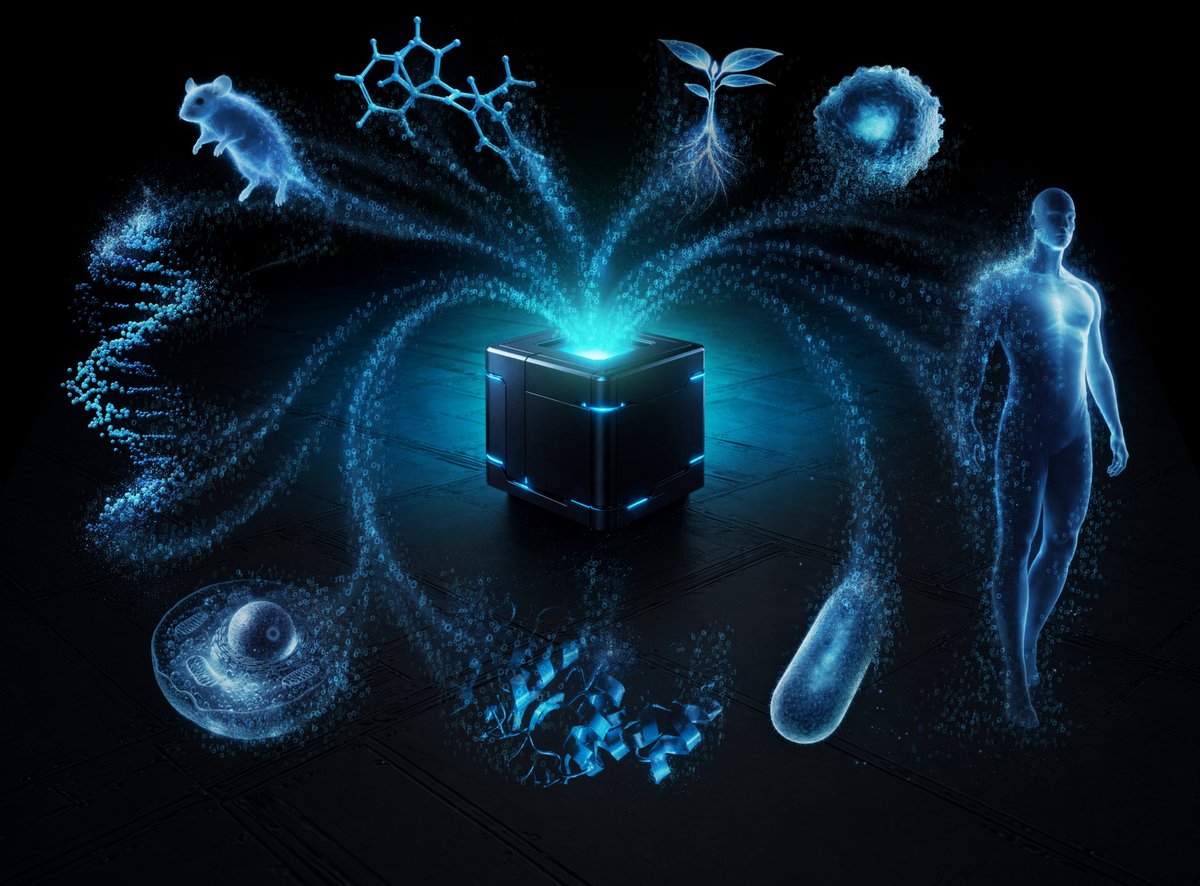
📜 New paper with @mmbronstein: most data needed for AI4Science breakthroughs doesn't exist yet. And it won't - unless we fundamentally rethink data generation. Scaling up isn't enough. We need to stop generating data for humans and start generating for black-box models. We need black-box data 🤖 - 🧵pubs.rsc.org/en/content/arti…
3
44
154
41,331
TechBio Transformers retweeted

🚀AI now has its own infinite self-learning lab!🔥
Science is learning from itself — overnight! ☀️🌛
❌No hand-coded protocols
✅Pure emergent intelligence exploding!
LabOS - LabWorld powers AI4Science.
Manual biology is over! 🎉
We built it to free brilliant minds — AI evolves autonomously through RL.
A true revolution! Welcome to biology’s new era! 👏
🔗 labworld-labos.github.io
What’s the first experiment you want it to run? Drop ideas below! 👇
18
51
276
80,965
TechBio Transformers retweeted

Apr 11
FutureHouse postdoctoral fellow Chenghao Liu and team introduced the best model for de novo enzyme design this week. The fact that it can generate enzymes in a single shot that beat 14 rounds of directed evolution is insane. Congratulations all, this goes way beyond what I thought was possible…

What if AI could invent enzymes that nature hasn’t seen? 👩🔬🧑🔬
Introducing 🪩 DISCO: Diffusion for Sequence-structure CO-design
14 rounds of directed evolution and over a year of wet lab work. That's what it took to engineer an enzyme for selective C(sp³)–H insertion, one of the most challenging transformations in organic chemistry.
DISCO surpasses this with a single plate. No pre-specified catalytic residues, no template, no theozyme, no inverse folding, just joint diffusion over protein sequence and structure.
📝 Blog: disco-design.github.io/
📄 Paper: arxiv.org/abs/2604.05181
💻 Code: github.com/DISCO-design/DISC…
4
28
238
30,822
TechBio Transformers retweeted

Apr 10
On creating 'new knobs of control' in biology
owlposting.com/p/on-creating…
a 5,000~ word essay on the brave new future of increasingly strange therapeutic modalities

6
28
252
45,949
TechBio Transformers retweeted
Apr 10
"The best use case of AI is to improve human health"—@demishassabis
💯 👍
Apr 7

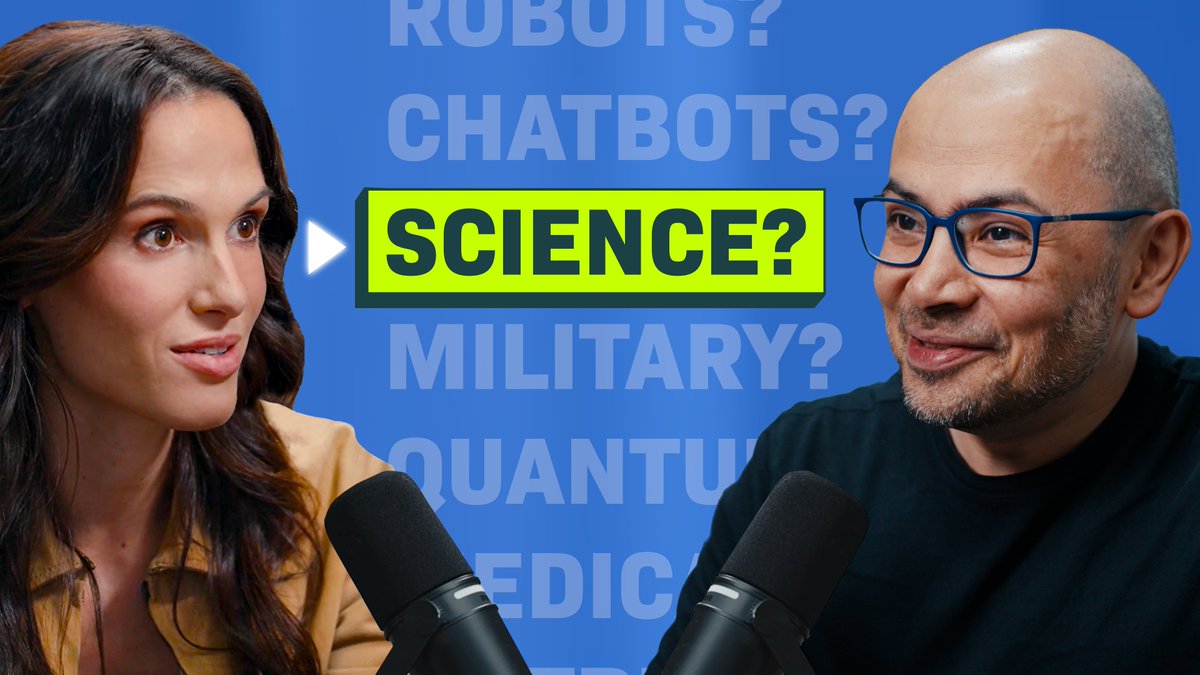
What is the real future Google DeepMind CEO @demishassabis is trying to build?
That's what we talk about in this HUGE* Conversation -- so you can decide for yourself what you think of it.
If you're feeling the doom and gloom, this is the conversation to watch on AI.
We get into:
- The best use of AI
- Why Demis won the Nobel Prize
- The dramatic story of AlphaFold
- The cutting edge of drug discovery right now
- Demis' ideal for how AI gets built (v. what's happening now)
- Why AI is getting more creative
- The surprising stories of AlphaGo, AlphaZero, and AlphaStar
- Governments and militaries using AI (as far as I know, his only recent comments on this)
- What are we worrying too much about v. not enough about
- What can humans do that AI won't
- The big questions on Demis' mind right now
- The plot of the sci-fi future Demis thinks we're headed for (this was my favorite part)
15
32
238
33,773
TechBio Transformers retweeted

Apr 10
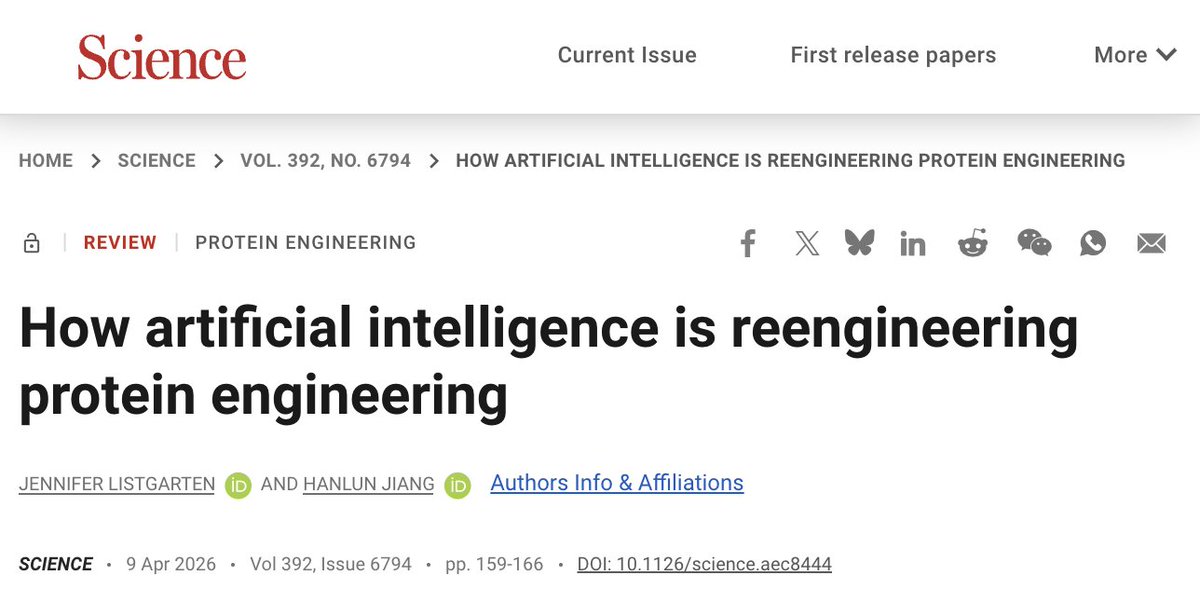
Sampling life's design space: the new statistics of protein engineering
A protein with just 100 amino acids can take on 10¹³⁰ possible sequences—more than the atoms in the observable universe. For decades, navigating this space relied on two Nobel-recognized strategies: directed evolution, which walks sequences close to a functional starting point, and computational protein design, which scores candidates using physics-based energy functions. Both transformed biotechnology—and both face hard limits when venturing into truly new sequence territory.
Jennifer Listgarten and Hanlun Jiang, in a major review just published in Science, argue that AI doesn't simply accelerate these approaches—it reframes the entire problem. The goal, seen through a statistical lens, becomes learning to sample from a property-conditional probability distribution: p(s|y∈Y). Generate proteins with desired properties, rather than search blindly for them.
The paper maps three strategies to build such conditional generative models: baking properties into training from the start; combining a general pan-protein model with a supervised property predictor via Bayes' rule; or guiding diffusion and flow-matching models on-the-fly without retraining. Tools like RFdiffusion and Chroma handle backbone generation; inverse folding models like ProteinMPNN then design compatible sequences. Pre-AI hit rates for computationally designed protein binders were below 0.05%. With generative models, some campaigns have seen gains of orders of magnitude.
Hard challenges remain—enzyme catalysis demands atomic precision beyond current models, and disordered regions resist generative approaches entirely. But the statistical unification offered here clarifies when and why different methods work, and where to push next.
This review signals a real shift: protein engineering campaigns can increasingly be driven by large, general foundation models adapted on-the-fly to specific targets, compressing design cycles and expanding accessible sequence space far beyond what directed evolution or classical computational design can reach alone.
Paper: Listgarten & Jiang, Science (2026) — © AAAS | science.org/doi/10.1126/scie…
2
51
213
12,399
TechBio Transformers retweeted

Apr 9
The next industrial revolution isn’t software. It’s science.
71
135
1,074
444,643
TechBio Transformers retweeted

Over the next week, I’ll be in the US presenting some of the exciting work the Boltz team has been doing, with stops in Boston, San Diego, and New York! 🧬
4
21
217
12,090
TechBio Transformers retweeted

Apr 8
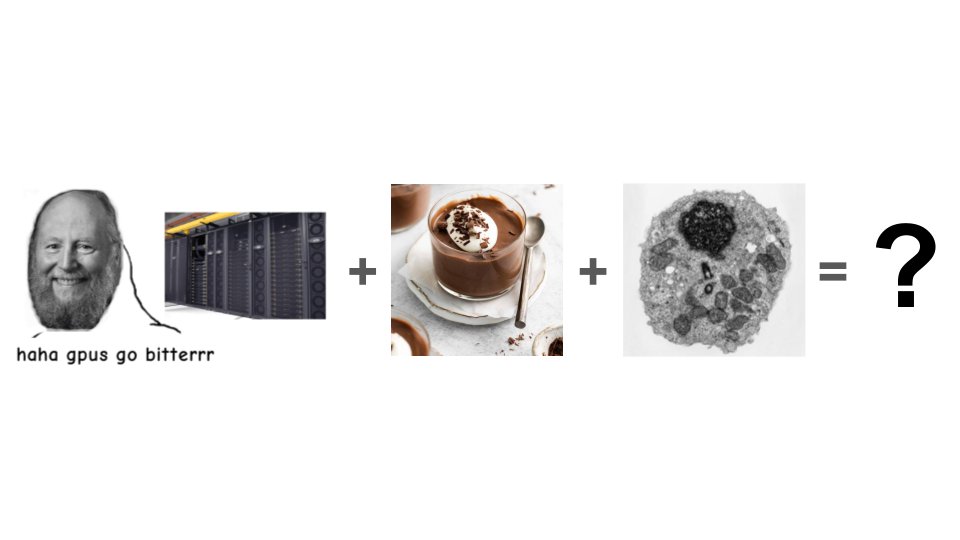
The bitter lesson strikes biology—again.
The current SOTA virtual cell uses a 7-term loss function and injects 6 knowledge sources into a bespoke architecture.
We trained a Transformer on free public data. With a chocolate pudding ranking method.
We beat SOTA. But what our virtual cell learned next will SHOCK you🧵
11
44
396
42,325
TechBio Transformers retweeted

Apr 8
We're grateful to @FoundationOAI for their investment in us and others in the Alzheimer's community. AI will be essential for understanding complex diseases and Arc is working to map the full network of causal factors to pinpoint nodes for intervention: arcinstitute.org/alzheimers-…

Alzheimer’s is one of the most devastating diseases, killing ~2 million people globally each year and costing over $1 trillion annually. It also remains one of the hardest unsolved problems in medicine.
We believe advanced AI can help change that: openaifoundation.org/news/ai…
3
12
79
12,985
TechBio Transformers retweeted

What if AI could invent enzymes that nature hasn’t seen? 👩🔬🧑🔬
Introducing 🪩 DISCO: Diffusion for Sequence-structure CO-design
14 rounds of directed evolution and over a year of wet lab work. That's what it took to engineer an enzyme for selective C(sp³)–H insertion, one of the most challenging transformations in organic chemistry.
DISCO surpasses this with a single plate. No pre-specified catalytic residues, no template, no theozyme, no inverse folding, just joint diffusion over protein sequence and structure.
📝 Blog: disco-design.github.io/
📄 Paper: arxiv.org/abs/2604.05181
💻 Code: github.com/DISCO-design/DISC…
32
244
1,040
277,285