Passionate about harnessing #AI to redefine the future🚀Exploring cutting-edge #tech and #innovation.

Joined January 2022
5 Photos and videos
Willy James retweeted
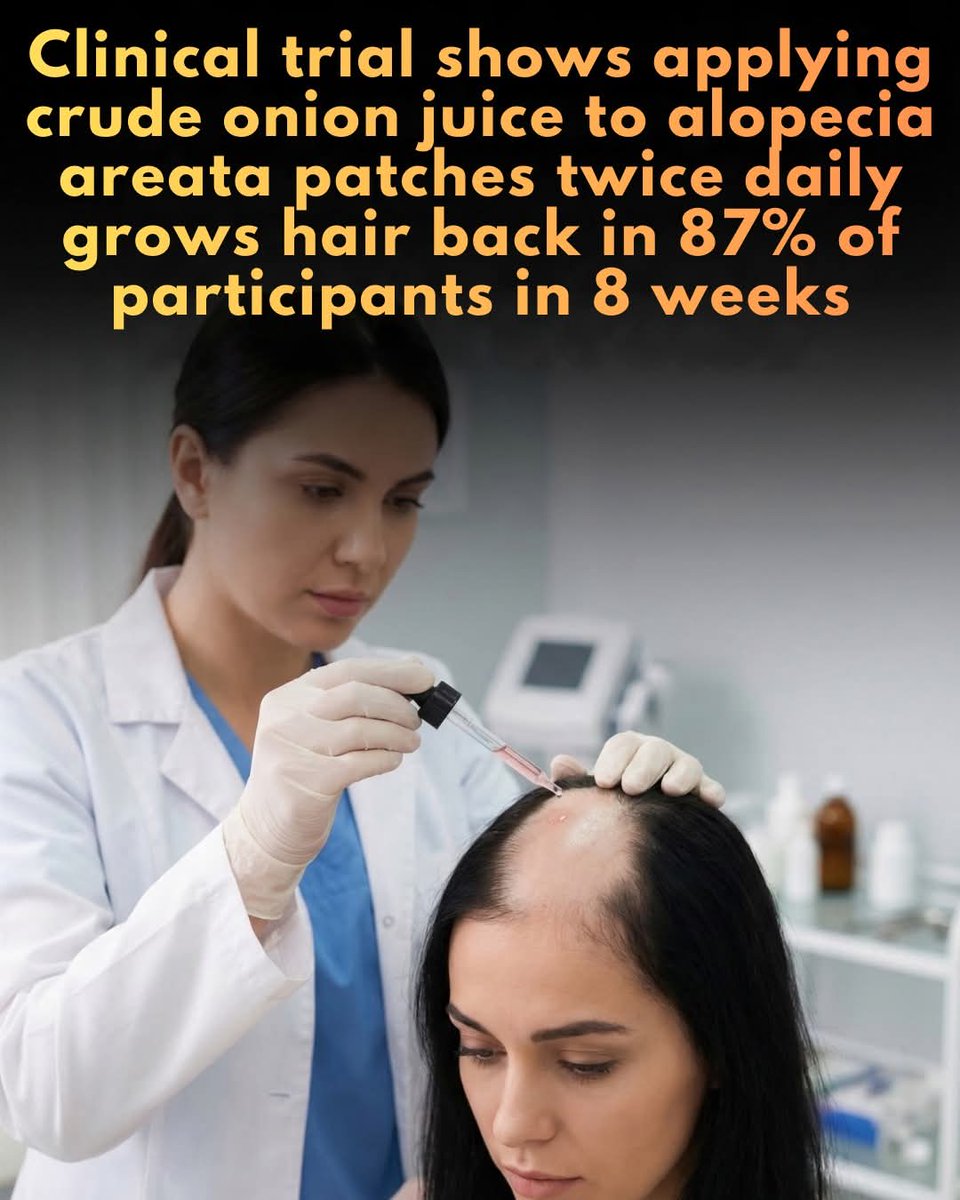
A study had an 87% success rate at reversing hair loss using the method. A landmark study published in The Journal of Dermatology reveals that crude onion juice could be a surprisingly effective natural remedy for patchy alopecia areata. Researchers found that applying the juice twice daily led to significant hair regrowth in nearly 87% of participants within just six to eight weeks. Results were particularly striking among male participants, who saw a 93.7% success rate compared to 71.4% in women. This simple topical treatment significantly outperformed tap water, which served as the control group, marking a potential breakthrough for those seeking accessible, non-pharmaceutical options for hair restoration. The science behind this unconventional method suggests that onion juice acts as a topical irritant. Experts believe this irritation triggers a localized response that diverts the body's autoimmune attack away from hair follicles, effectively allowing them to transition back into a growth phase. However, the study does come with notable caveats, including a small sample size and a lack of professional blinding, which can introduce bias. While the results are promising, users should be cautious as the high sulfur content can cause scalp irritation or itching, and the treatment’s pungent aroma remains a significant practical challenge for daily application. source: Sharquie, K. E., & Al-Obaidi, H. K. (2002). Onion juice (Allium cepa L.), a new topical treatment for alopecia areata. The Journal of Dermatology.
9
26
126
8,575
Willy James retweeted
For the first time ever, solar energy has generated more electricity than coal in the United States. In the most recent month reported, solar power accounted for 12.8% of total U.S. electricity production, narrowly surpassing coal’s 12.2% share, according to energy research organization Ember. This milestone represents a dramatic turning point for a technology once dismissed as a niche or experimental source of power. The transition has occurred at remarkable speed. Over the past five years, coal-generated electricity has fallen by nearly half, while solar output has more than doubled. Sharp declines in solar panel costs, technological improvements, and a surge in domestic and global manufacturing capacity have propelled solar from a marginal contributor to one of the fastest-growing sources in the American energy mix. Coal powered the United States for more than a century, fueling homes, factories, and economic growth. However, it remains the most carbon-intensive major energy source and a significant contributor to air pollution. Solar’s ascent signals a broader transformation in the nation’s electricity system, where a once-costly alternative is now competing head-to-head with traditional fossil fuels on both price and scale. Analysts note that this record may be short-lived in the sense that it will likely be broken again soon. Solar generation typically reaches its annual peak during the sunnier summer months, suggesting even stronger performance ahead. While natural gas continues to be the single largest source of U.S. electricity, solar has now firmly established itself as a major pillar of the country’s power supply. Just ten years ago, the notion that solar energy would outproduce coal would have seemed improbable. Today, it is reality.
40
71
184
17,213
Willy James retweeted
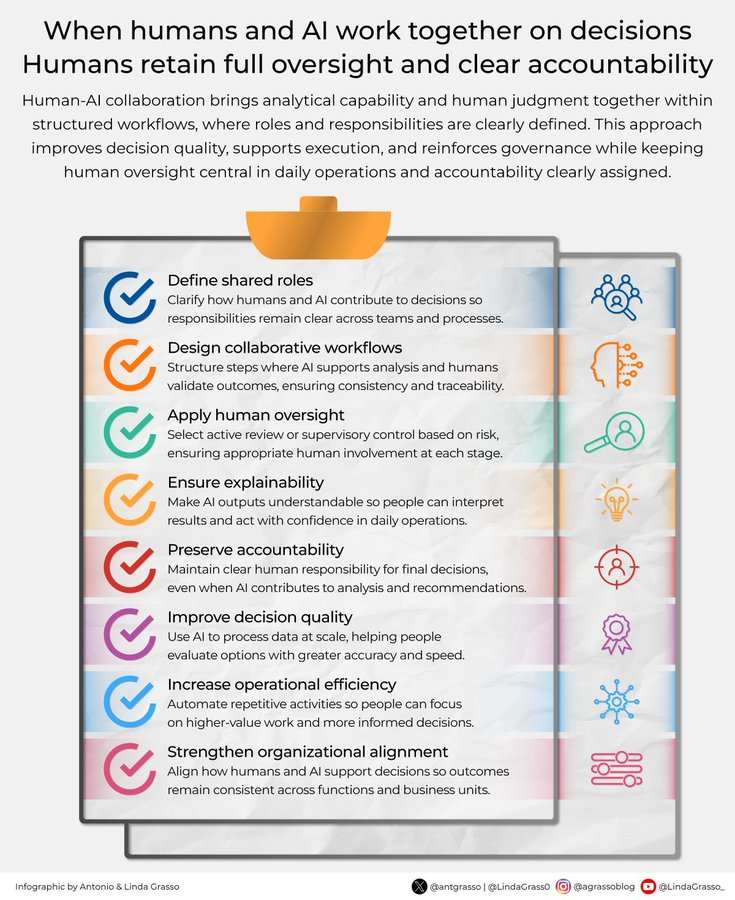
Quand l'humain et l'IA collaborent, l'humain garde le contrôle et la responsabilité. L'IA analyse, l'humain décide ! via @antgrasso #IA
8
14
250
Willy James retweeted
🧠 The human brain regulates emotions through interactions between different regions, particularly the amygdala and the prefrontal cortex. These areas help determine how we respond to perceived threats or stressful situations. The amygdala acts as an early warning system, rapidly activating the body’s stress response when it detects danger or emotional triggers. This can lead to increased heart rate, adrenaline release, and heightened alertness. The prefrontal cortex, located behind the forehead, plays a key role in impulse control, decision-making, and emotional regulation. It helps evaluate situations logically and can reduce automatic emotional reactions. Neuroscience research shows that practicing emotional regulation techniques—such as pausing, deep breathing, or reframing thoughts—can strengthen communication between these brain regions over time. As these regulatory pathways become stronger, individuals may find it easier to manage emotional responses and maintain calm behavior, which can support healthier relationships and reduced long-term stress.
3
23
91
3,543
Willy James retweeted
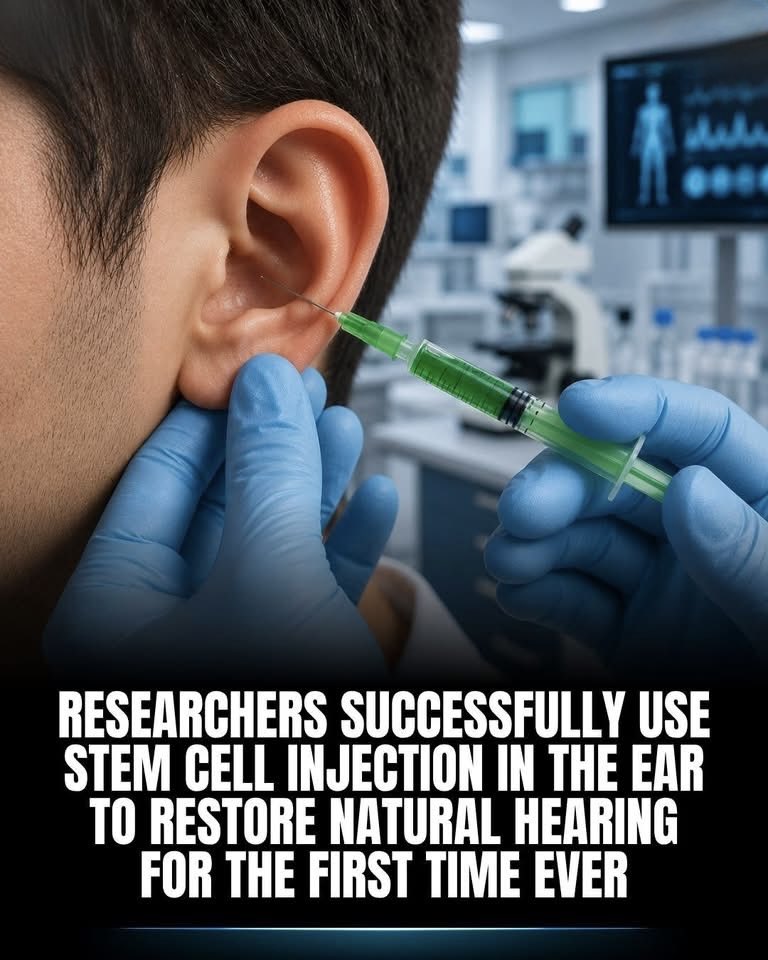
🚨 COULD SCIENTISTS BRING BACK LOST HEARING? Researchers are testing stem cell therapy to repair damaged cells inside the inner ear—the cells responsible for hearing. Early studies show promising signs that these cells may one day be regenerated, offering new hope for people with hearing loss caused by aging, noise exposure, or disease. Source:
Roccio, M., & Edge, A. S. B. Nature Biotechnology.
3
32
105
2,132
Willy James retweeted
To accommodate expansion, the Indiana Bell Telephone Company moved its eight-story, 22-million-pound headquarters 52 feet south and rotated it 90 degrees over 34 days—all while 600 employees continued working inside. Utilities like gas, water, and electricity remained connected via flexible lines, ensuring uninterrupted operations. This engineering marvel stands as a testament to human ingenuity and precision. #Engineering #IndianaBell #HistoricInnovation #BuildingRelocation
2
2
17
2,195
Willy James retweeted

Qualitative Data Analysis with ChatGPT and QualCoder: A Step-By-Step Guide to AI-Powered Coding and Thematic Analysis AI-Powered Research Toolkit — Mastering Research Series — available at amzn.to/4bRsV3q
1
9
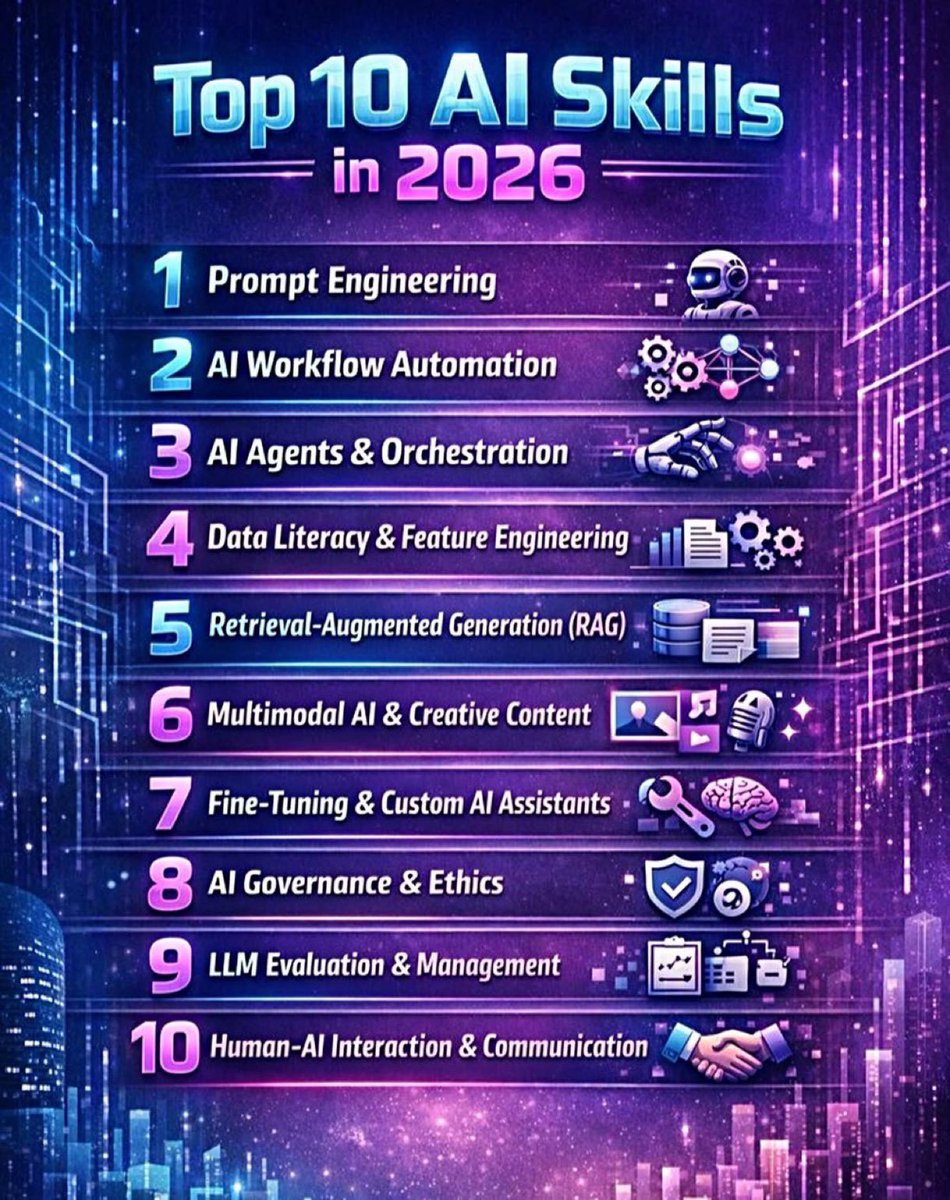
⚠️ 🤖Most people are learning #AI the wrong way ➜ What we’re learning today about AI won’t build tomorrow ⚠️ الكثير يتعلم #الذكاء_الاصطناعي بطريقة خاطئة و ما نتعلمه اليوم لن يصنع الغد The problem isn’t the tools. It’s how we learn them. 🤖These are the Top 10 AI Skills that will define 2026 👇 1️⃣ Prompt Engineering 2️⃣ AI Workflow Automation 3️⃣ AI Agents & Orchestration 4️⃣ Data Literacy & Feature Engineering 5️⃣ Retrieval-Augmented Generation (RAG) 6️⃣ Multimodal AI & Creative Content 7️⃣ Fine-tuning & Custom AI Assistants 8️⃣ AI Governance & Ethics 9️⃣ LLM Evaluation & Management 🔟 Human-AI Interaction 💡 The real shift? It’s not about using AI. It’s about orchestrating AI into systems. That’s where the moat is. 📌 Save this. Build around it. #AI #AgenticAI #FutureOfWork #innovation @enilev @Jagersbergknut @TysonLester @CurieuxExplorer @GlenGilmore @chidambara09 @jeancayeux @mvollmer1 @Nicochan33 @RLDI_Lamy @pchamard @Mack1510019 @mikeflache @FrRonconi @Fabriziobustama @ipfconline1 @PawlowskiMario @theomitsa @drsharwood @kalydeoo @baski_LA @AnthonyRochand @smaksked @Eli_Krumova @andresvilarino @gvalan @bimedotcom @arlenenewbigg @NewsNeus @domingonarvaez1 @jornalistavitor @jblefevre60 @thomas_dettling @FmFrancoise @nafisalam @Mhcommunicate @Corix_JC @c4trends @smoothsale @amalmerzouk @PVynckier @bbailey39 @SiddharthKS @NathaliaLeHen @jasuja @ralf_ladner @c4trends @SabineVdL @mary_gambara
17
86
275
84,978
Willy James retweeted
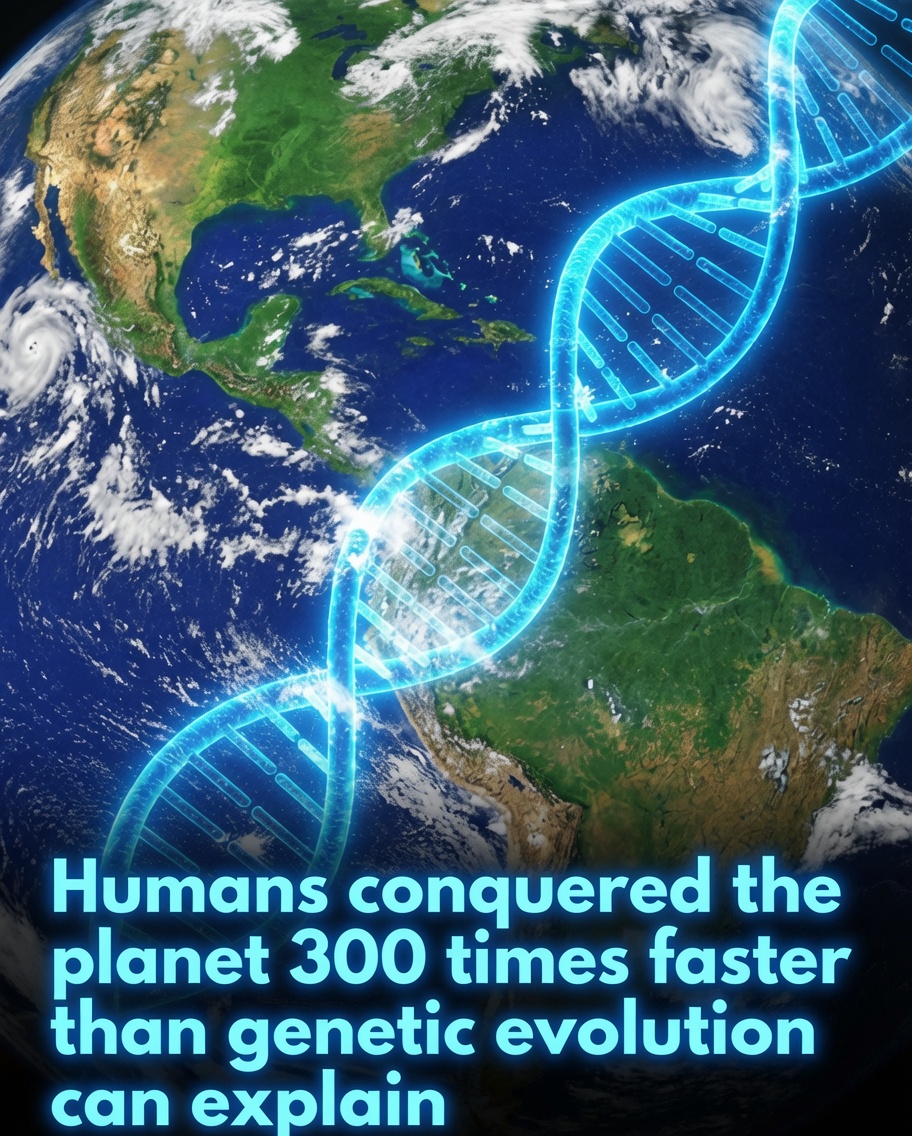
Without our extraordinary capacity for cultural transmission, the ability to rapidly share knowledge, tools, and technologies, humans would have required roughly 88 million years of biological evolution and would have diverged into more than 2,200 distinct species to achieve our current global distribution. Since emerging in Africa around 300,000 years ago, Homo sapiens rapidly spread across every continent, adapting to extreme environments from Arctic tundra to scorching deserts. Rather than depending on slow genetic adaptations through natural selection, our species leveraged a powerful shortcut: cultural evolution. A groundbreaking study published in the Proceedings of the National Academy of Sciences demonstrates that by accumulating and transmitting innovations socially, humans expanded across the planet at a pace approximately 300 times faster than would be expected under typical mammalian genetic evolution. To reach this conclusion, Arizona State University anthropologist Charles Perreault compared humanity’s geographic range with data from nearly 6,000 mammal species. His analysis shows that if we had relied solely on biological mechanisms, achieving our current footprint would have demanded tens of millions of years of lineage splitting and vast differences in body size. Instead, all eight billion humans remain a single, highly adaptable species that collectively occupies a land area comparable to that of all other terrestrial mammals combined. This research highlights that humanity’s success stems not just from being generalists, but from our unique ability to develop localized cultural expertise through cooperation and social learning, our species’ greatest evolutionary superpower. [Perreault, C. (2026). Cultural evolution accelerated human range expansion by more than two orders of magnitude. Proceedings of the National Academy of Sciences, 123(11), e2523038123. DOI: 10.1073/pnas.2523038123]
22
63
268
33,823
Willy James retweeted
When AI builds itself anthropic.com/institute/recu… via @AnthropicAI 👉 This article outlines the transition to recursive self-improvement, where AI systems autonomously develop future iterations, evidenced by a reported 8x increase in code production per quarter. 👉 This shift promises rapid advancements in science and technology but presents urgent societal safety challenges that outpace current institutional readiness. 💡"It’s happening faster than we thought, and the implications deserve greater attention" - Anthropic cc @Corix_JC @SonuMonika @TheAIObserverX @maponi @JagersbergKnut @ahier @Shi4Tech @CEO_AISOMA @theomitsa @dinisguarda @TarakRindani @FrRonconi @Nicochan33 @Khulood_Almani @SusanHayes_ @EstelaMandela @JoannMoretti @sulefati7 @FernandaKellner @MaryRich78 @mikeflache @amalmerzouk @chidambara09 @RLDI_Lamy @WillyRayNick
2
22
25
837
Willy James retweeted
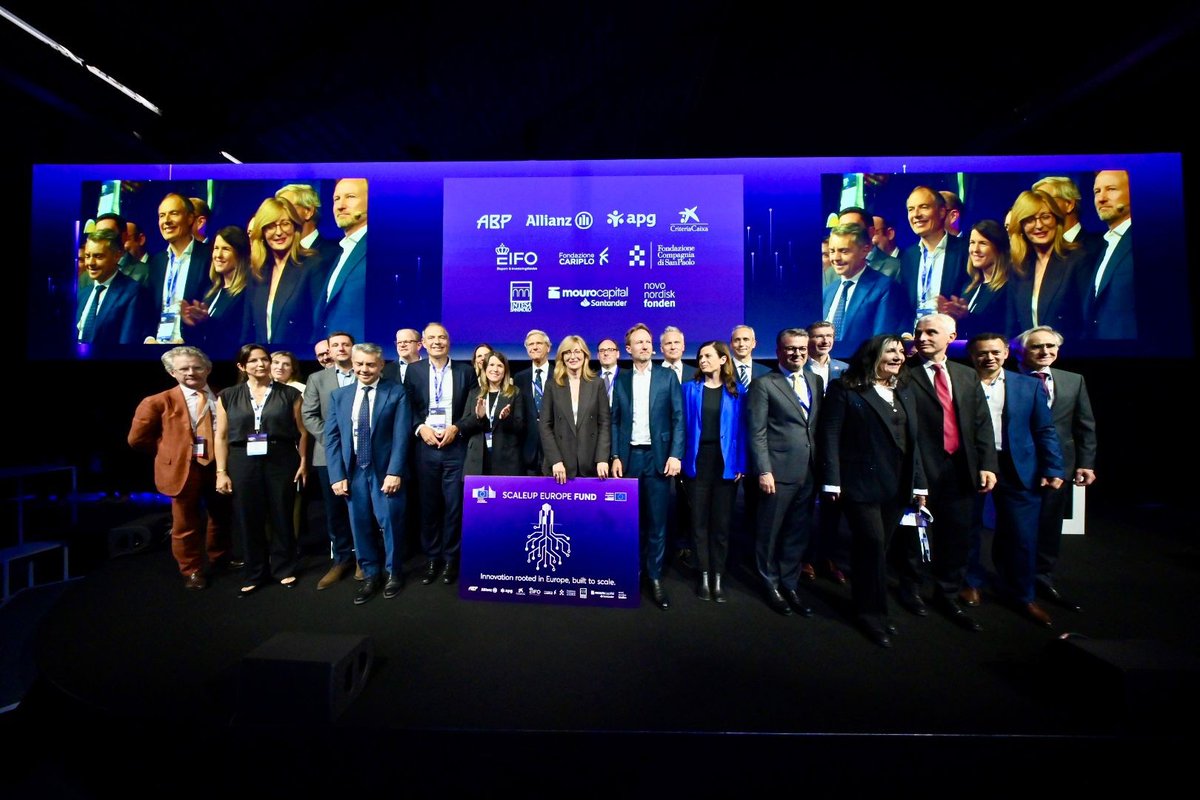
for a continent a few billion is not a lot
We launched the new €5 billion Scaleup Europe Fund to support high-growth companies in artificial intelligence, quantum, clean technologies, biotechnology, space, and more. First close and initial investments by autumn 2026!
1
1
107
Willy James retweeted
New York City is literally sinking under the colossal weight of its own buildings. It’s increasing the threat of rising sea levels for millions of residents. With over one million buildings weighing a staggering 1.68 trillion pounds—equivalent to nearly two million fully loaded Boeing 747s—New York City is slowly compressing into the earth. This phenomenon, known as land subsidence, is causing the city to sink by an average of one to two millimeters per year, with some areas dropping up to 4.5 millimeters annually. While a few millimeters may seem negligible, this downward shift is occurring in tandem with sea levels that are rising faster than the global average. This dual threat places critical infrastructure, low-lying coastal neighborhoods, and transportation systems at an escalated risk of chronic, severe flooding. The weight of the skyscrapers is only part of the equation; geology plays a major role as neighborhoods built on soft clay, artificial fill, and post-Ice Age glacial adjustments settle at faster rates. However, New York is far from the only metropolis facing this slow-motion crisis, as major cities worldwide, including Jakarta and Mexico City, grapple with similar subsidence challenges. While the Big Apple's iconic skyline is not in immediate danger of collapse, the shifting ground beneath its streets serves as a stark reminder that even our most monumental achievements remain subject to the inexorable forces of geology. source: Parsons, T., Wu, P.-C., Wei, M., & D'Hondt, S. The Weight of New York City: Possible Contributions to Subsidence From Anthropogenic Sources. Earth's Future, 11(5), e2022EF003465.
35
124
272
9,653
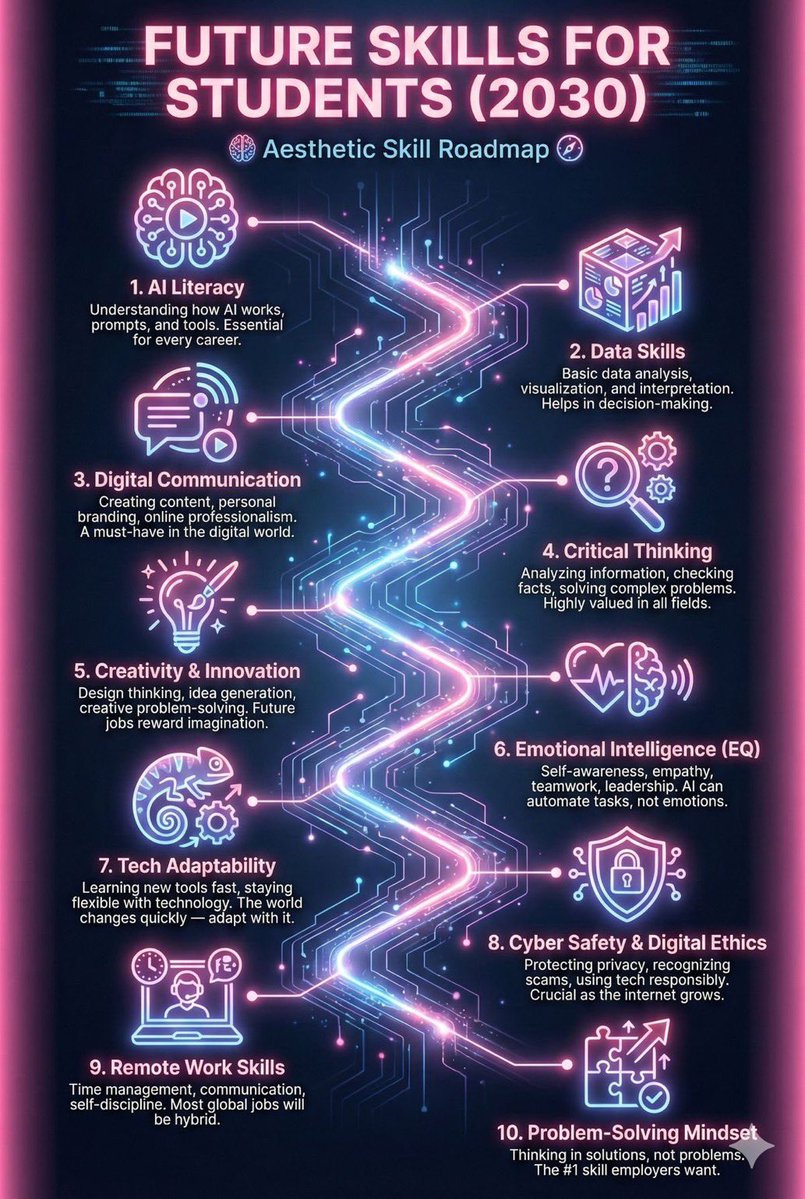
An excellent list of what awaits today's students and how they should prepare. One thing is for sure: It is a much more challenging playfield for all career venues, because everything is so fluid. Adapt or get out of the game!
🤖 𝗪𝗶𝗹𝗹 𝘁𝗼𝗱𝗮𝘆’𝘀 𝘀𝘁𝘂𝗱𝗲𝗻𝘁𝘀 𝗯𝗲 𝗿𝗲𝗮𝗱𝘆 𝗳𝗼𝗿 2030 𝗼𝗿 𝗮𝗿𝗲 𝘄𝗲 𝘀𝘁𝗶𝗹𝗹 𝗽𝗿𝗲𝗽𝗮𝗿𝗶𝗻𝗴 𝘁𝗵𝗲𝗺 𝗳𝗼𝗿 𝗮 𝘄𝗼𝗿𝗹𝗱 𝘁𝗵𝗮𝘁 𝗻𝗼 𝗹𝗼𝗻𝗴𝗲𝗿 𝗲𝘅𝗶𝘀𝘁𝘀❓ 🤖 هل نحن نجهّز الطلاب لوظائف المستقبل… أم لوظائف بدأت تختفي بالفعل؟ Most students today are still learning for exams. 🎯 But the future will reward adaptability, AI literacy & problem-solving ⤵️ ⚙️ 1️⃣ #𝗔𝗜 𝗟𝗶𝘁𝗲𝗿𝗮𝗰𝘆 | فهم الذكاء_الاصطناعي# ↳ AI is becoming the new digital language ↳ Every industry will be AI-driven ✔ Prompts ✔ AI tools ✔ AI workflows ✔ Human AI collaboration 🧠 2️⃣ 𝗖𝗿𝗶𝘁𝗶𝗰𝗮𝗹 𝗧𝗵𝗶𝗻𝗸𝗶𝗻𝗴 | التفكير النقدي ↳ AI can generate answers ↳ Humans must validate them ✔ Logic ✔ Verification ✔ Complex reasoning ✔ Decision-making 🚀 3️⃣ 𝗔𝗱𝗮𝗽𝘁𝗮𝗯𝗶𝗹𝗶𝘁𝘆 | القدرة على التكيف ↳ The future belongs to fast learners ↳ Not fixed careers ✔ Continuous learning ✔ Tech flexibility ✔ Growth mindset ✔ Rapid upskilling 🎨 4️⃣ 𝗖𝗿𝗲𝗮𝘁𝗶𝘃𝗶𝘁𝘆 & 𝗜𝗻𝗻𝗼𝘃𝗮𝘁𝗶𝗼𝗻 | الإبداع والابتكار ↳ Automation scales execution ↳ Creativity remains human leverage ✔ Design thinking ✔ Innovation mindset ✔ Idea generation ✔ Creative execution 📊 5️⃣ 𝗗𝗮𝘁𝗮 & 𝗔𝗻𝗮𝗹𝘆𝘁𝗶𝗰𝘀 | البيانات والتحليلات ↳ Data is the foundation of decision-making ↳ Insight becomes advantage ✔ Data interpretation ✔ Visualization ✔ AI-assisted analytics ✔ Decision intelligence 🌍 6️⃣ 𝗗𝗶𝗴𝗶𝘁𝗮𝗹 𝗖𝗼𝗺𝗺𝘂𝗻𝗶𝗰𝗮𝘁𝗶𝗼𝗻 | التواصل الرقمي ↳ Your digital presence becomes your reputation ↳ Communication becomes influence ✔ Content creation ✔ Personal branding ✔ Online professionalism ✔ Digital collaboration 🛡 7️⃣ 𝗖𝘆𝗯𝗲𝗿 𝗔𝘄𝗮𝗿𝗲𝗻𝗲𝘀𝘀 & 𝗗𝗶𝗴𝗶𝘁𝗮𝗹 𝗘𝘁𝗵𝗶𝗰𝘀 | الوعي السيبراني والأخلاقيات الرقمية ↳ AI scale increases digital risk ↳ Awareness becomes essential ✔ Privacy ✔ Digital responsibility ✔ Scam awareness ✔ AI ethics 💡 The biggest mistake students make today❓ ➡️ Preparing for stability in a world changing exponentially. The students who will dominate 2030 won’t necessarily have the highest degrees. 🎯 They’ll be the ones who can evolve fastest with AI. 🔖 Save this for the future. #FutureOfWork #Education #Students #AILeadership #EdTech @enilev @Jagersbergknut @TysonLester @CurieuxExplorer @GlenGilmore @chidambara09 @jeancayeux @mvollmer1 @Nicochan33 @RLDI_Lamy @pchamard @Mack1510019 @mikeflache @FrRonconi @Fabriziobustama @PawlowskiMario @theomitsa @drsharwood @kalydeoo @baski_LA @AnthonyRochand @smaksked @Eli_Krumova @andresvilarino @gvalan @bimedotcom @arlenenewbigg @NewsNeus @domingonarvaez1 @jornalistavitor @jblefevre60 @thomas_dettling @FmFrancoise @nafisalam @Mhcommunicate @Corix_JC @c4trends @smoothsale @amalmerzouk @PVynckier @bbailey39 @SiddharthKS @NathaliaLeHen @jasuja @ralf_ladner @c4trends @SabineVdL @mary_gambara
1
6
9
329
Willy James retweeted
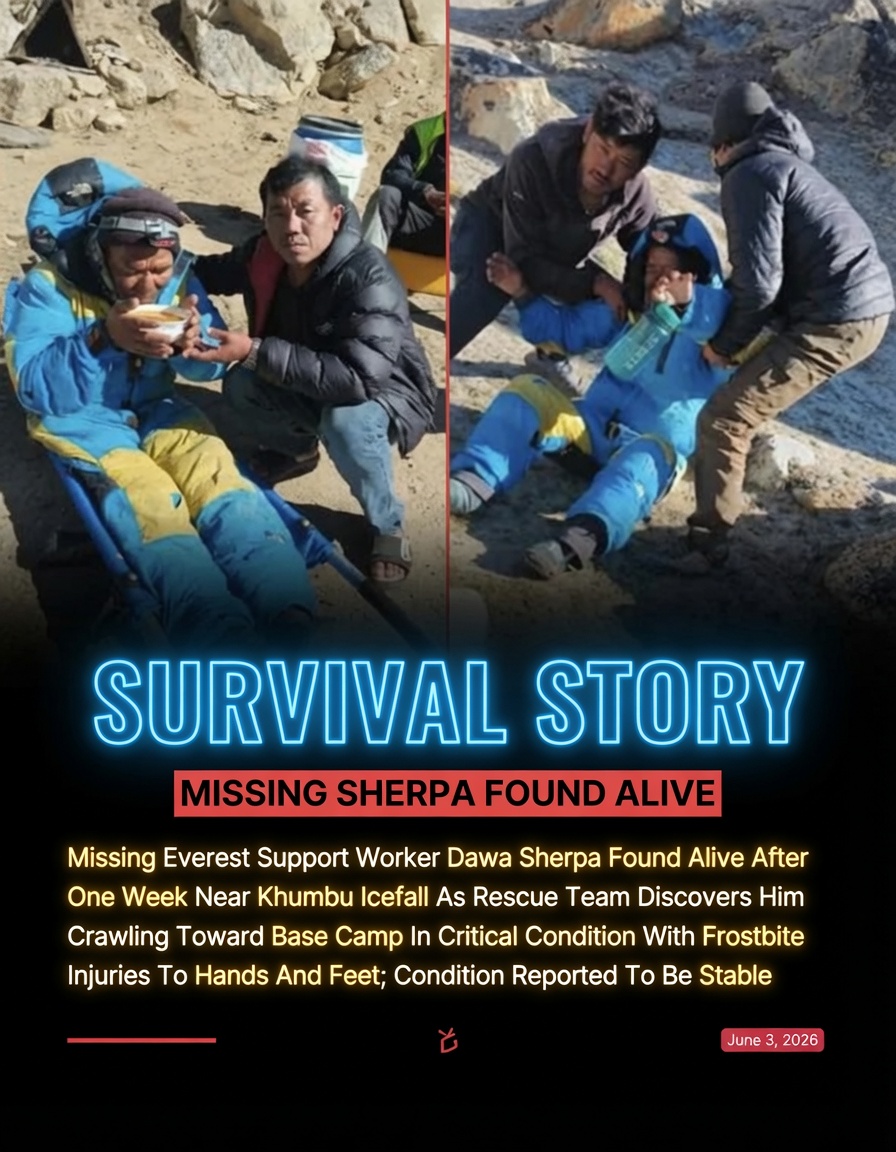
Dawa Sherpa (also known as Hillary Dawa Sherpa, ~52 years old, from Okhaldhunga, Nepal) is a high-altitude support worker/guide for Himalayan Traverse Adventure. He went He went missing around May 28–29, 2026, during descent from above Camp 3 (near the Lhotse Face/Yellow Band, ~7,500–7,600m) after assisting a Polish client who had frostbite. The client and others reached lower camps, but Dawa fell behind and was left without immediate search efforts as the season wound down and fixed ropes/ladders in the Khumbu Icefall were removed. He survived ~6–7 days alone (no food, water, or supplemental oxygen) in extreme conditions and self-rescued by sliding/crawling down toward Base Camp. On the morning of June 4, 2026, a garbage/cleanup team from the Sagarmatha Pollution Control Committee (SPCC) found him near Crampon Point in the Khumbu Icefall, crawling slowly. He had severe frostbite on hands/feet but was conscious (though very weak). He was airlifted to a hospital in Kathmandu for treatment. His family had begun funeral rites but was overjoyed by the news. His condition is described as stable.
8
49
247
14,996
Willy James retweeted
In 1993, French adventurer Emile Leray was stranded in the Moroccan desert after his Citroën 2CV snapped an axle far from the nearest village. Instead of waiting for rescue, he dismantled the entire car and spent twelve days converting it into a working motorcycle using only the tools and parts he had with him. The improvised machine carried him back to safety and later became a museum piece. If your car broke down in the desert, would you even know where to start? #engineering #innovation #mechanics #survival
2
4
17
2,506
Willy James retweeted
Great post, dear @Khulood_Almani! The acceleration demands entirely new operating systems for organizations, where adaptive decision architecture and human-AI symbiosis become the ultimate competitive edge. #AI #AgenticAI #FutureOfWork #EmergingTech #DigitalTransformation
🧠🔥 Is 2026 About Smarter #AI or About Who Can Keep Up❓ 💡This isn’t a story about better models. It’s a story about time collapsing. 🎯 Tasks that took humans days, weeks, even months are now executed by AI in hours, minutes & sometimes seconds. That changes everything. ⚙️ The real bottleneck AI capability is accelerating faster than: • Organizational structures • Legacy workflows • Static interfaces • Human-paced decision making Intelligence scales exponentially. Institutions don’t. 🧠 Why UX becomes the real moat? Not UI & decision design at machine speed. Who controls how intent turns into action when AI operates at near-zero latency? 🤖 This is why Agentic AI is the inflection point From assisting work → to executing work. AI is becoming the unit of work itself. 🚀 Final thought This graphic shows the speed. The real question is whether our systems can move at the same pace. The future isn’t coming. It’s already executing. @enilev @Jagersbergknut @TysonLester @CurieuxExplorer @GlenGilmore @chidambara09 @jeancayeux @mvollmer1 @Nicochan33 @RLDI_Lamy @pchamard @Mack1510019 @mikeflache @JeromeMONANGE @FrRonconi @Fabriziobustama @PawlowskiMario @theomitsa @drsharwood @kalydeoo @TAEVisionCEO @baski_LA @AnthonyRochand @smaksked @Eli_Krumova @andresvilarino @gvalan @bimedotcom @NewsNeus @domingonarvaez1 @thomas_dettling @dinisguarda @FmFrancoise @nafisalam @Mhcommunicate @Corix_JC @jblefevre60 @smoothsale @amalmerzouk @PVynckier @bbailey39 @SiddharthKS @NathaliaLeHen @jasuja @ralf_ladner @ahier @SabineVdL @mary_gambara @anand_narang @bamitav
2
9
15
405
Willy James retweeted
The IPO size is interesting. What is impressive is how quickly AI companies are becoming foundational infrastructure businesses. In technology, market leaders often emerge after years of gradual adoption. In AI, that timeline appears to be compressed dramatically. It is no longer a question of whether AI will reshape industries, but which companies will still matter once AI becomes part of the operating fabric of every business. What's your take on this development? @pchamard @Khulood_Almani @antgrasso @GlenGilmore @Shi4Tech @chidambara09 @CurieuxExplorer @FrRonconi @theomitsa @Nicochan33 @nafisalam @smaksked @Corix_JC @amalmerzouk @quepasachico @IngridVasiliu @EstelaMandela @sonu_monika @RLDI_Lamy @SpirosMargaris @IanLJones98 @Timothy_Hughes @avrohomg @bimedotcom @HaroldSinnott @mvollmer1 @DG_Collective @sijlalhussain wired.com/story/anthropic-fi…
3
8
14
412
Willy James retweeted
This thin sheet is actually a robot! How did POSTECH manage to develop something like this, and what could it be used for?
20
83
11,234
Willy James retweeted
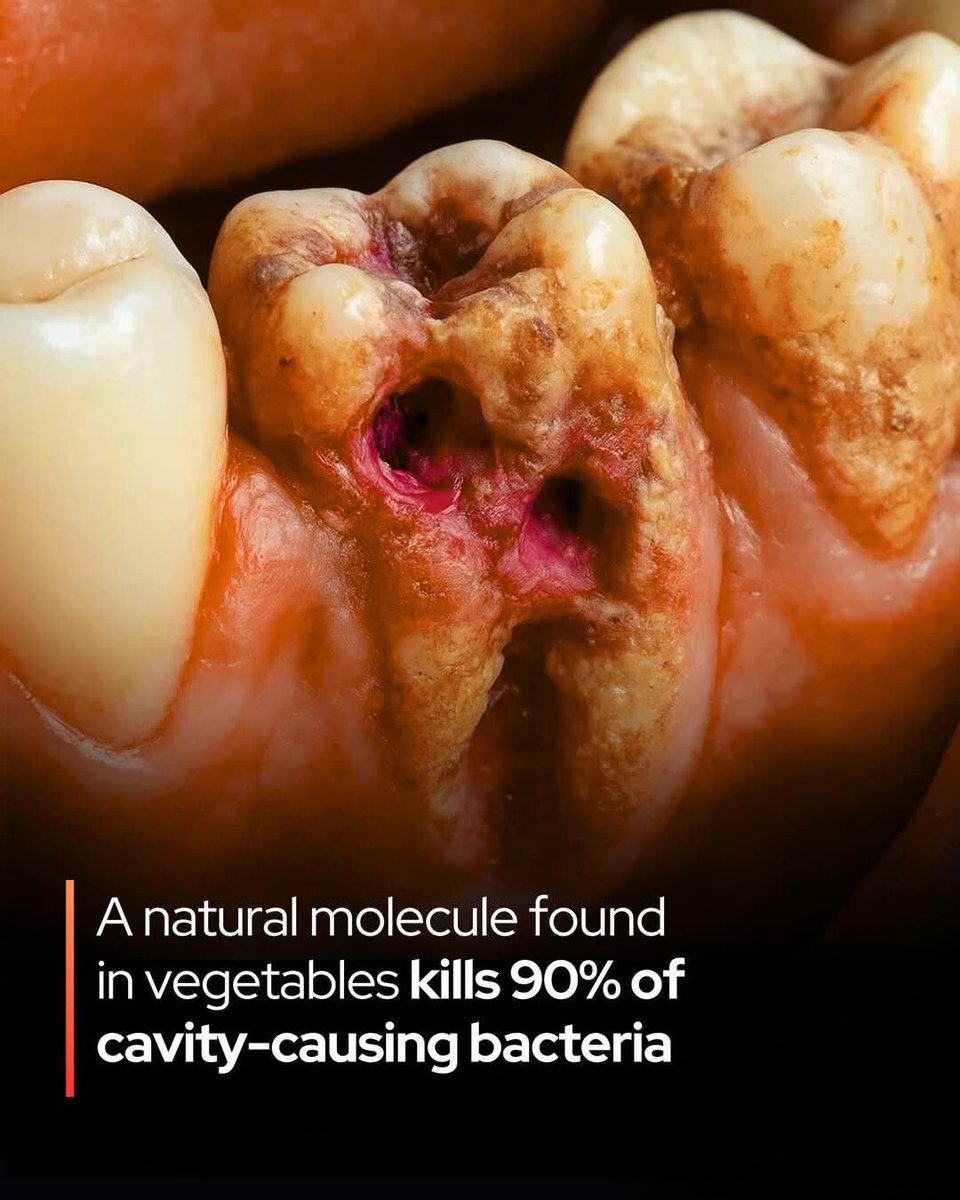
🥦 Compound Found in Broccoli Kills 90% of Cavity-Causing Bacteria A natural molecule from vegetables could transform dental care. Scientists have discovered that a molecule produced when we eat cruciferous vegetables — like broccoli, kale, cabbage, and Brussels sprouts — can wipe out the bacteria that cause cavities. The compound, known as 3,3′-Diindolylmethane (DIM), killed 90% of Streptococcus mutans biofilms in lab tests, according to a new study by Ben-Gurion University, in collaboration with researchers from Singapore and China. Streptococcus mutans is the main culprit behind plaque and tooth decay. It forms sticky biofilms on tooth enamel, which trap acids that erode the surface and cause cavities. DIM appears to disrupt the bacteria’s ability to form those films, effectively dismantling their protective layer and leaving them vulnerable. The findings are still preliminary — the experiments were conducted in vitro, not yet in humans — but researchers believe DIM could someday be added to toothpaste or mouthwash to prevent decay naturally. Beyond its dental potential, DIM is already being studied for its anti-inflammatory and anticancer properties, making it one of nature’s more versatile molecules. So while it’s too early to swap your toothpaste for kale juice, this study offers a promising glimpse into how compounds from plants might power the next generation of oral health care.
5
89
311
21,424