
Assistant Professor Mass General @MGHCSB @MGHPathology and Harvard Med @harvardmed specializing in Immuno-Oncology with a focus on Dendritic Cells.
Joined November 2013
- Tweets 1,570
- Following 1,098
- Followers 838
- Likes 5,132
26 Photos and videos








Christopher Garris retweeted

Jun 10
Excited to share out latest work, out this week in @NatureGenet . In this study, we using CRISPR screens to explore how sensing inflammatory cytokines exposes new tumor-intrinsic dependencies.
@broadinstitute @MGBResearchNews
nature.com/articles/s41588-0…
2
23
73
6,385
Christopher Garris retweeted

Jun 8
Important Request for Information (RFI) from @NIH
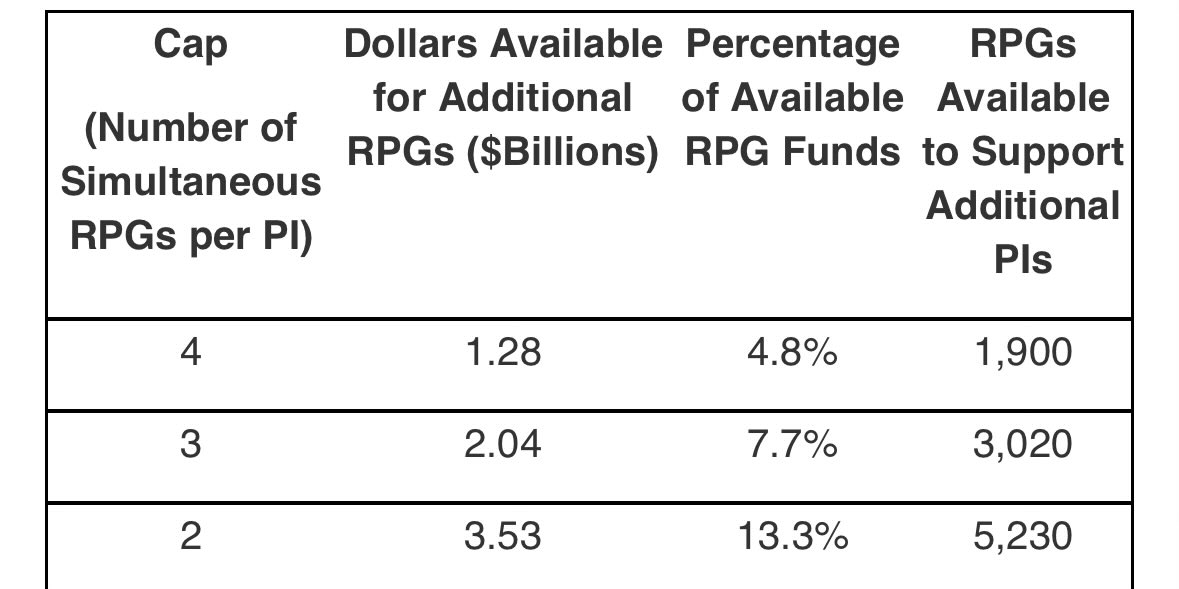
“Proposal to Cap the Number of Simultaneous Research Project Grants per Principal Investigator to Support More Researchers and Maximize Scientific Productivity and Innovation”
grants.nih.gov/grants/guide/…
Some suggested caps & impact:
5
10
13
18,678
Christopher Garris retweeted

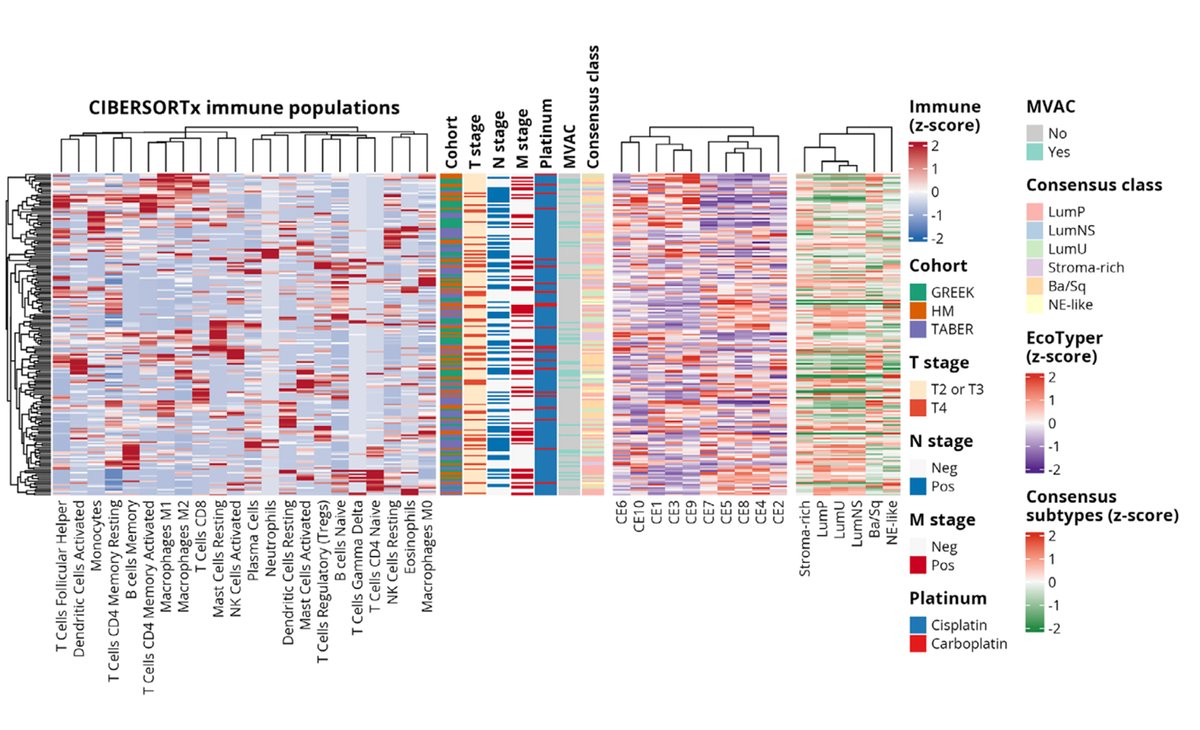
Here’s our latest, we explored tumor B-cell infiltration in advanced urothelial carcinoma. Exciting collaboration with @OncoBellmunt Congrats to leading authors @KonradStawiski @PereraBel
#BladderCancer #Bcells #TLS #MIBC
5
10
31
2,863
Christopher Garris retweeted

Jun 1
Another major advance vs cancer! @ASCO #ASCO26
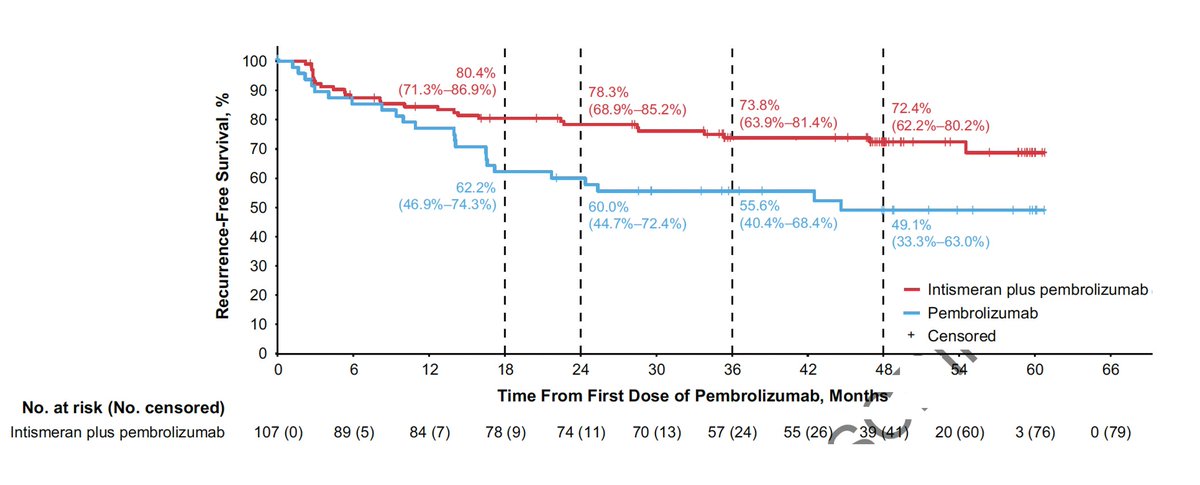
Personalized neoantigen mRNA vaccine 5 year follow-up vs metastatic melanoma reduced recurrence and death by 49% (on top of Keytruda)
ascopubs.org/doi/10.1200/JCO…
31
511
2,043
483,165
Christopher Garris retweeted

$3.1B! Congrats @brian_armstrong
Epigenetic restoration is sure heating up
Jun 2

Exclusive: A longevity biotech co-founded by Coinbase’s CEO more than tripled in value to $3.1 billion—before its drugs begin human testing. on.wsj.com/4fmQi8m
14
48
673
51,684
Christopher Garris retweeted

May 30
Meteor explodes off Massachusetts coast, causing loud boom, meteorologist confirms cbsnews.com/boston/news/mass…
40
217
1,038
385,394

May 28
Very excited to share an amazing body of work now out in Nature Biotechnology!
For many years, the field of cancer immunology has recognized that immune-stimulatory dendritic cells, in particular cDC1, sit at the center of productive anti-tumor immunity. This is well conserved between mechanistic mouse models and humans, and high resolution single cell RNA seq studies have confirmed these cell states in a broad range of cancers.
These cells sit at the core of controlling and facilitating T cell responses and tumor recognition, illustrating how DCs “shepherd” T cells across their lifecycle. These T: DC interactions lie at the center of the Cancer Immunity Cycle. Yet, so far, we only have efficient methods to push on T cells for immunotherapy. Boosting DC responses has been more difficult where treatments need to more carefully balance the toxicity associated with immune activation and efficacy. These concerns, balancing toxicity and efficacy, have led to significant challenges in drug development
Here, we present a new approach enabled by catalytic advances in RNA therapeutics, where information gleaned from single-cell RNA seq cell states can be programmed into therapeutics to remodel the immune environment.
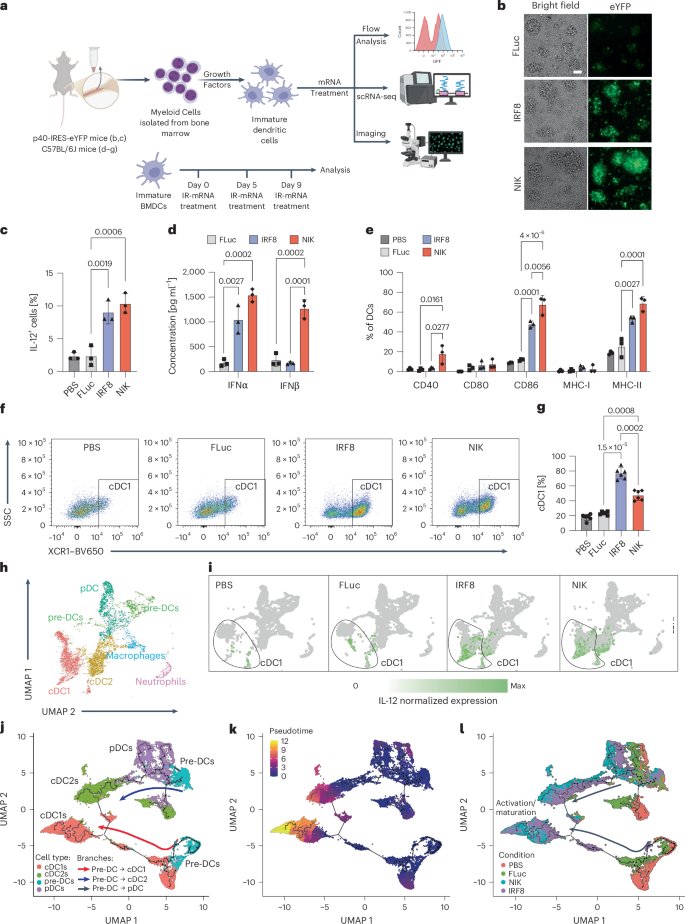
We find that mRNA encoding cDC1-related factors such as interferon regulatory factor 8 (IRF8) and the NFkB-inducing kinase (NIK) can activate antigen presentation and trigger inflammation of tumors by T cells, leading to tumor-immune rejection. Notably, sustained expression of IRF8 is needed for maintaining cDC1 lineage identity, and elegant prior studies demonstrate that enforced IRF8 expression can reprogram diverse cell types into cDC1-like cells. Likewise, we had previously identified NIK expression within IL-12-producing tumor DCs, and others showed that NIK deficiency impaired IL-12 production and the ability to stimulate CD8 T cell responses. NIK lies downstream of CD40-based licensing, which is an essential step towards generating functional CD8 T cells.
Here, we show that the application of these immune remodeling mRNAs (IR-mRNAs; either IRF8 or NIK) can synthetically activate antigen presentation and boost DC responses, triggering anti-tumor immunity. These IR-mRNAs shape the tumor microenvironment to be receptive to T cells, encouraging their accumulation and activity, further showing how DCs “shepherd” T cell responses. These can turn immune “cold” tumors “hot” and responsive to immune checkpoint blockade therapies.
Perhaps the most fascinating aspect of these studies is when IR-mRNA is delivered alongside antigen in vaccination settings. We find that robust CD8 T cell responses are generated with IR-mRNA encoded immune adjuvants. This fits with the role of IRF8 and NIK supporting cDC1 responses, and raises the potential for a new class of cDC1-oriented immune therapeutics.
This was all part of an amazing collaboration between the Anderson Lab at MIT Koch Institute for Integrative Cancer Research and the Center for Systems Biology at Massachusetts General Hospital/Harvard Medical School. @kochinstitute @MGHPathology @MGHCSB @MGBResearchNews
#cancer #immunotherapy #vaccines #dendritic_cells #myeloid
Extra kudos to the lead authors, @akashh_gupta and @Das_Riddha now at @UHEngineering
The Article @NatureBiotech can be found here: nature.com/articles/s41587-0…
Lay Summaries can be found here: news.mit.edu/2026/new-approa… ; massgeneralbrigham.org/en/ab…
2
5
29
7,102
Christopher Garris retweeted

May 20
Thanks @MassGenBrigham for highlighting our study in @NatureBiotech. We discussed the story behind our study, its real-world implications for patients, and how our approach could help make therapy-resistant tumors more visible to the immune system.
Enjoy reading the Q&A!

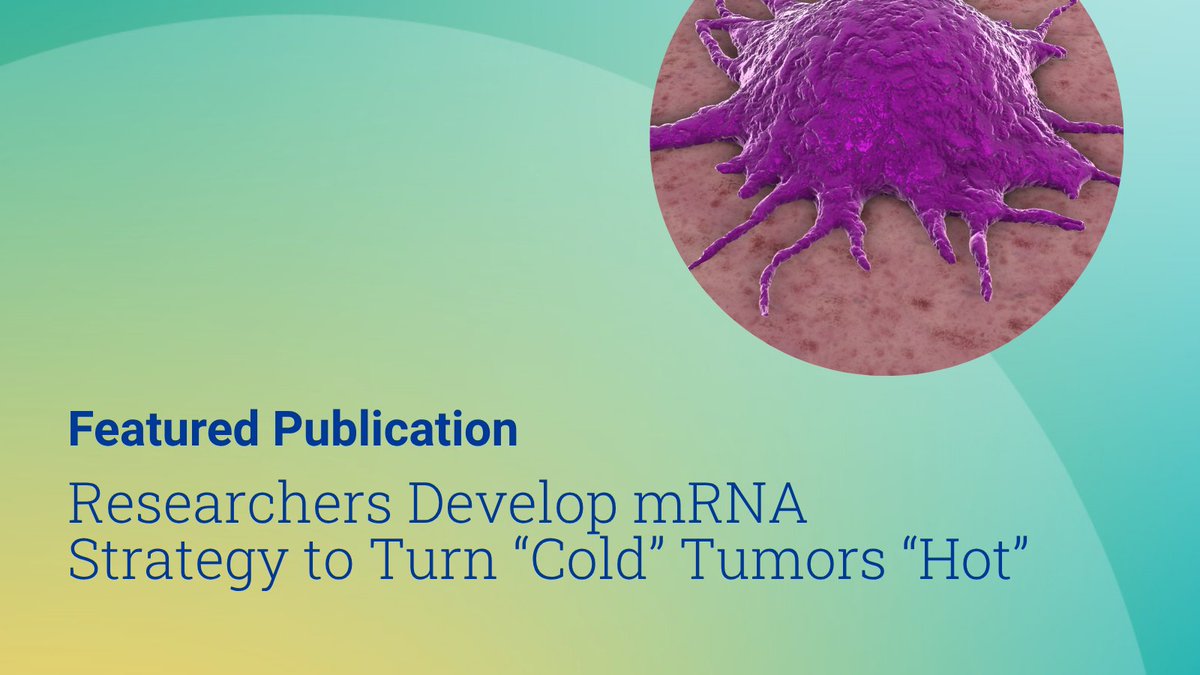
A new mRNA strategy by @MassGenBrigham researchers turns "cold" tumors "hot"
Read more, published in @NatureBiotech: massgeneralbrigham.org/en/ab… doi.org/10.1038/s41587-026-0… @WeisslederLab @csgarrix @MGHCSB @Das_Riddha
2
2
440
Christopher Garris retweeted

A new mRNA strategy by @MassGenBrigham researchers turns "cold" tumors "hot"
Read more, published in @NatureBiotech: massgeneralbrigham.org/en/ab… doi.org/10.1038/s41587-026-0… @WeisslederLab @csgarrix @MGHCSB @Das_Riddha
1
2
4
814
Christopher Garris retweeted

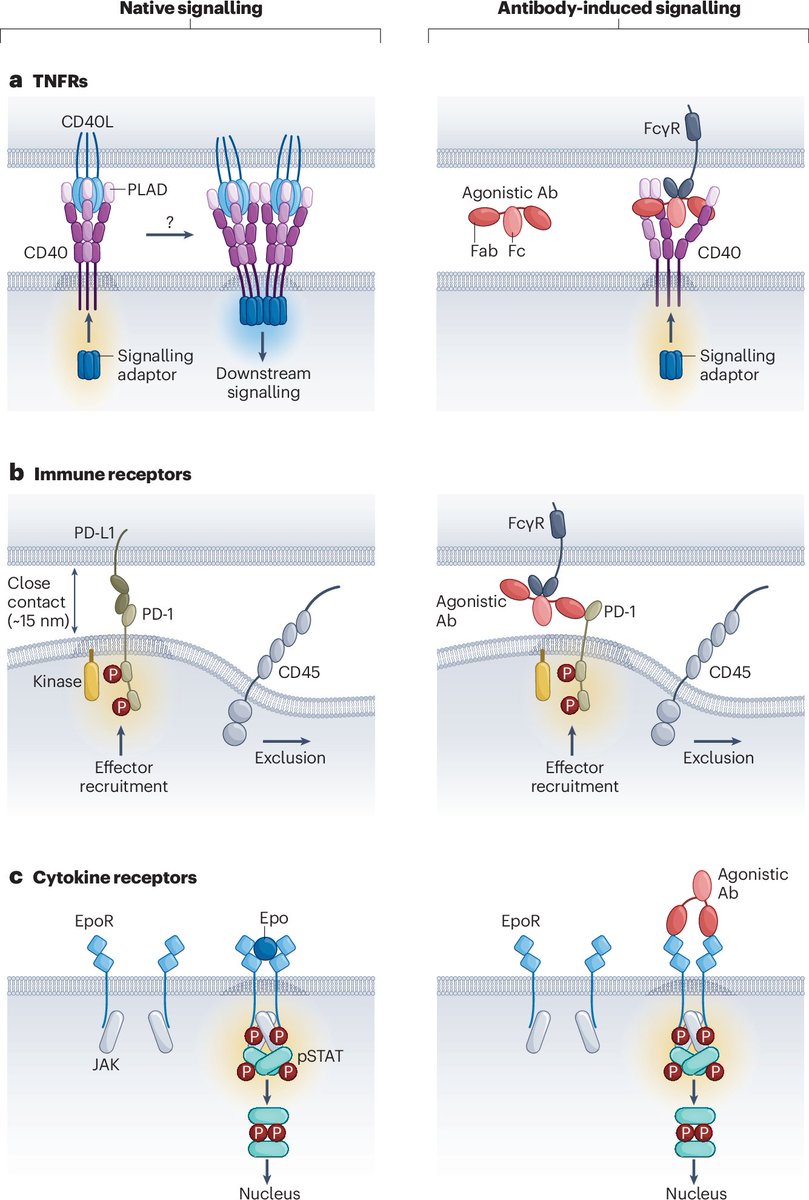
Realizing the potential of agonistic antibody immunotherapy
nature.com/articles/s41573-0…
rdcu.be/fjzZk
This new Review discusses progress with agonist antibodies to treat autoimmune diseases and cancer, as well as approaches to addressing challenges in their development
1
34
96
6,542
Christopher Garris retweeted

May 18
Very excited to get this new work by Shin Ngiow up on #bioRxiv. We may be blocking PD-1 too long causing detrimental effects on Tpex cells. A drug holiday approach may be beneficial. Also some cool new Tpex biology here. #immunopharmacology biorxiv.org/content/10.64898…
3
25
111
9,862
Christopher Garris retweeted

May 16
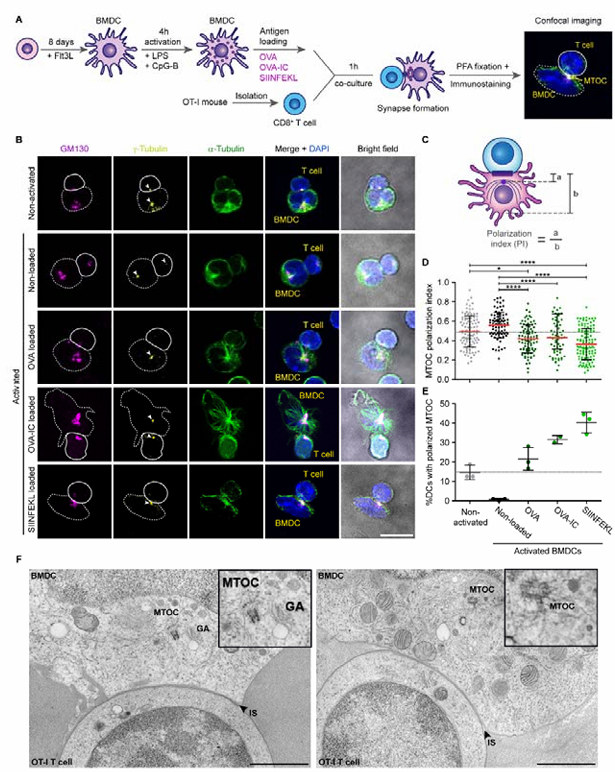
@biorxivpreprint IL-12 is preferentially released at synapses formed with T cells displaying higher T cell receptor affinity, providing a mechanism for selection of the most potent T cell @uppsalauni
doi.org/10.64898/2026.05.13.… 🇸🇪
12
44
1,957
Christopher Garris retweeted

Researchers led by Drs. Tanner Johanns, Niranjan Sardesai, and @GavinPDunn have shown that the personalized #DNAVaccine GNOS-PV01 safely triggers anti-tumor immune responses in #glioblastoma patients and shows promising early survival benefits in a phase 1 clinical trial. 🧬💉
Read the @NatureCancer study: go.nature.com/4dEQdLP



1
2
438
Christopher Garris retweeted

A new approach to cancer vaccination yields more powerful T cells #NBTintheNews news.mit.edu/2026/new-approa…
1
8
12
3,025
Christopher Garris retweeted
May 13
An innovation taking mRNA-nanoparticle cancer vaccines to the next level for potency and durability @NatureBiotech nature.com/articles/s41587-0…
1
25
109
16,083
Christopher Garris retweeted
Immune-remodeling mRNAs expressing IRF8 or NIK generate durable antitumor immunity in multiple cancer models go.nature.com/42td2fh
1
16
53
14,836
Christopher Garris retweeted

May 13
Thrilled to share our @NatureBiotech paper using mRNAs that generate stronger and durable T cell responses by driving DC maturation and activation. This work highlights how defined immune-signaling pathways, paired with controlled delivery, can shape potent therapeutic immunity.

Immune-remodeling mRNAs expressing IRF8 or NIK generate durable antitumor immunity in multiple cancer models go.nature.com/42td2fh
2
13
6,039
Christopher Garris retweeted
May 13
Thrilled to share that a major work from my postdoc is now published @NatureBiotech on #mRNA encoding immune-regulatory signals for #cancer #immunotherapy! Amazing collaboration between @kochinstitute and @MGHCSB, @MassGenBrigham.
nature.com/articles/s41587-0…
3
9
1,288
Christopher Garris retweeted

Apr 24
Online now: Pharmacologic glycoengineering of Fcγ receptor IIIa enhances force-resistant IgG-FcγR interactions and anti-tumor antibody efficacy dlvr.it/TSCfRY
7
32
2,237