
One of the better-known cyberandy. Passionate about Semantic SEO and AI I am co-founder and CEO of WordLift and insideout10.
Joined November 2006
- Tweets 21,469
- Following 2,758
- Followers 6,049
- Likes 42,361
2,232 Photos and videos
Pinned Tweet

May 15
@wordliftit has been selected by ICSC 4 Startup, with our work on #SEOcrate supported by Italy’s National Research Centre for HPC and Quantum Computing.
Ontology-led RL for training trustworthy Small Language Models for Agentic AI is getting funded 🦾🥳
wor.ai/GCZrGV
4
9
482
Andrea Volpini retweeted

mapped europe through the 9-layer AI stack:
L1-L2 energy/foundries: dependent
L3-L4 silicon/networking: no position
L5 compute: 5% global
L6 models: Mistral only
L7-L8 harness/distribution: tenant
L9 governance: strong (EU AI Act)
one strong layer. governance. but governance without the layers beneath it is a fence around an empty field.
(source: europe2031.ai/)
1
1
1
79
Andrea Volpini retweeted

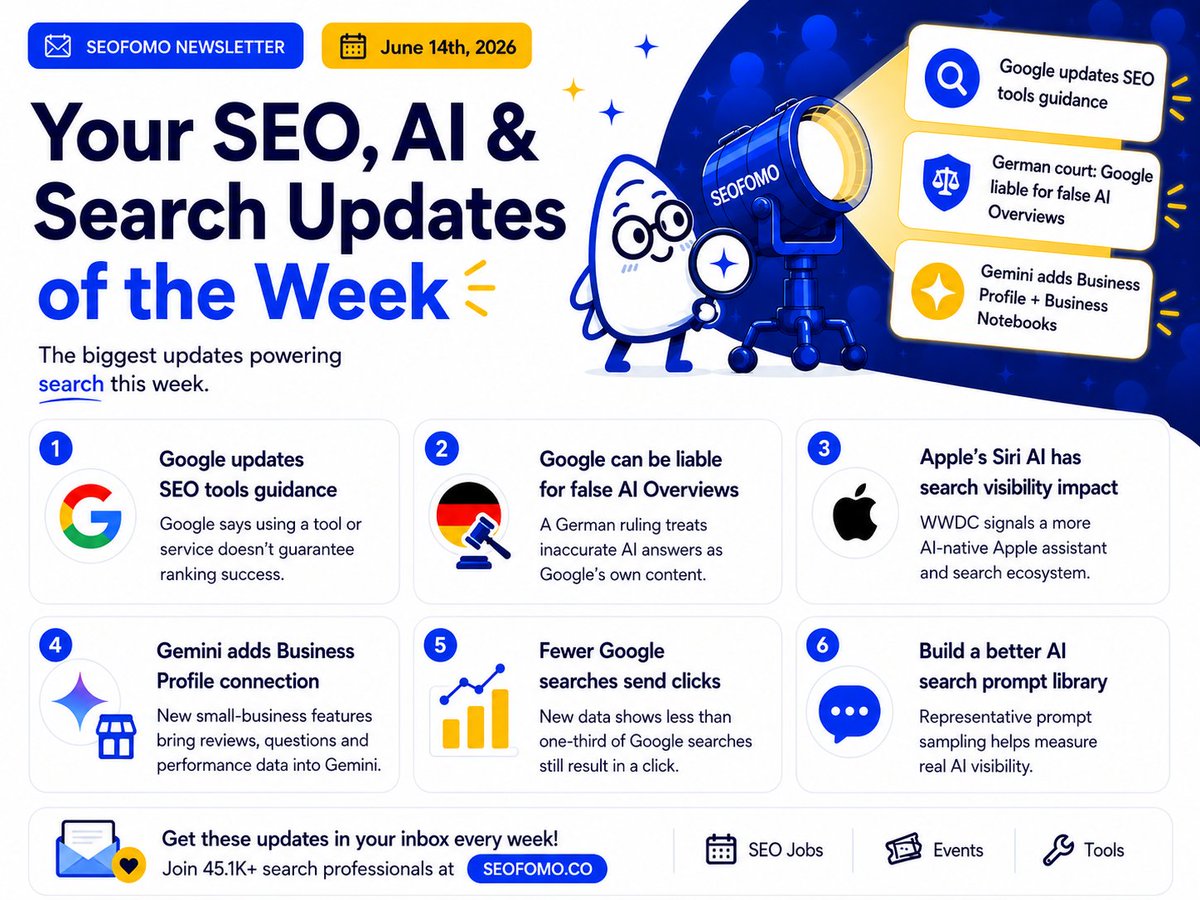
💪 The Latest SEO & AI Search News of the Week [From #SEOFOMO - June 14, 2026] 👇
- Google adds guidance on third-party SEO tools, services, advice and updates hiring an SEO doc.
- Google can be directly liable for false AI Overview claims: German court.
- Apple introduced Siri AI at WWDC this week: What Apple’s Gemini-Powered Siri Means For Search Visibility.
- Google is adding Google Business Profile connection and Business Notebooks to Gemini.
- Anthropic Forced To Shut Down Fable 5 By U.S. Government Order.
- In 2026, Less than one-third of Google Searches Still Send a Click.
- Google is building an Audience Loyalty ecosystem
- The SERP is sinking: What pixel depth data reveals about visibility [Presentation].
- Why Your Product Feed Is An SEO Asset (And Who Should Own It).
- How to Build a Representative AI Search Prompt Library for Better AI Visibility Measurement.
- Exploring the Future of AI-Driven Agentic Search Architecture and RAG [Presentation]
- Ontologies for the Agentic Web.
- Much more! Including SEO & AI Search jobs, tools, events.
From SEOs like @cyberandy , @shahzadabbas , @dawnieando, @gfiorelli1 , @DarrenShaw_, @DemiriE , @THCapper, @randfish, @rustybrick, @MrDannyGoodwin and more!
Check it out: seofomo.co/posts/the-latest-…
1
2
12
780
Beautiful research.
Jun 11

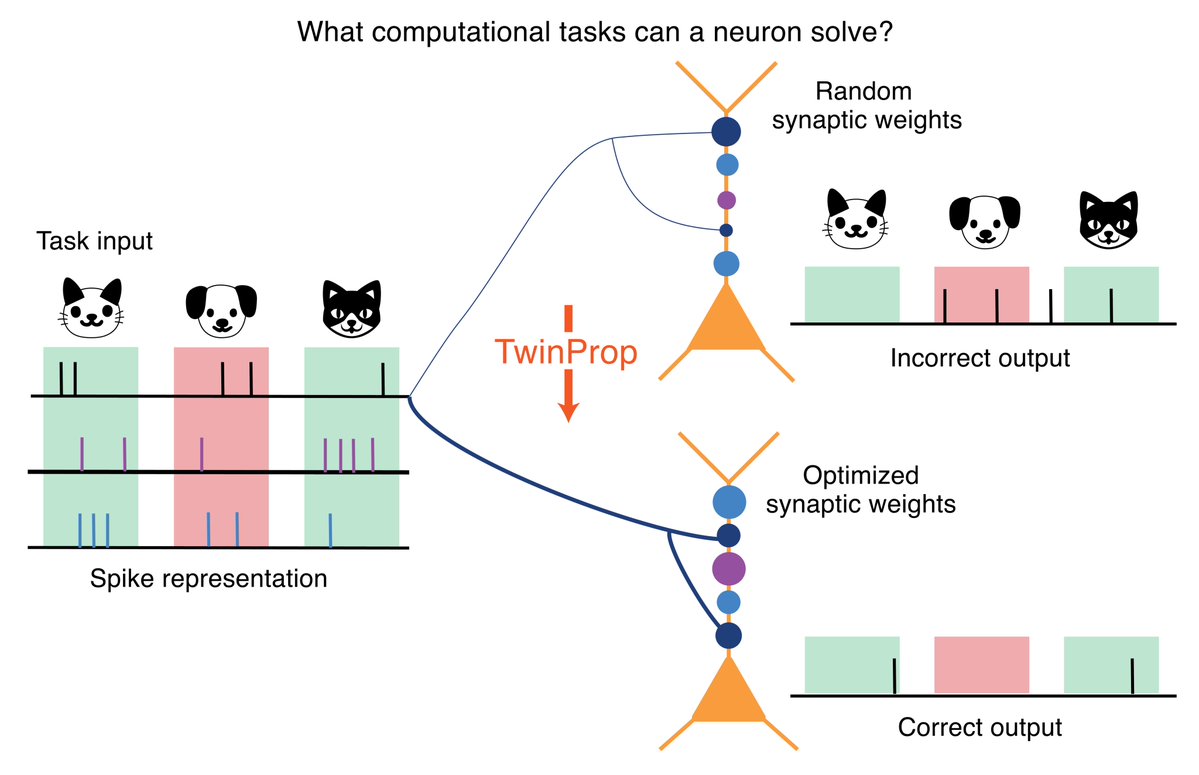
What can a neuron compute?
Real biological neurons are complex, but how capable are they?
Using a new method, we found that a single cortical neuron can classify cats vs dogs, recognize spoken words, and solve 10-bit parity, all tasks thought to require entire networks. (1/15)
1
177
Andrea Volpini retweeted

Jun 13
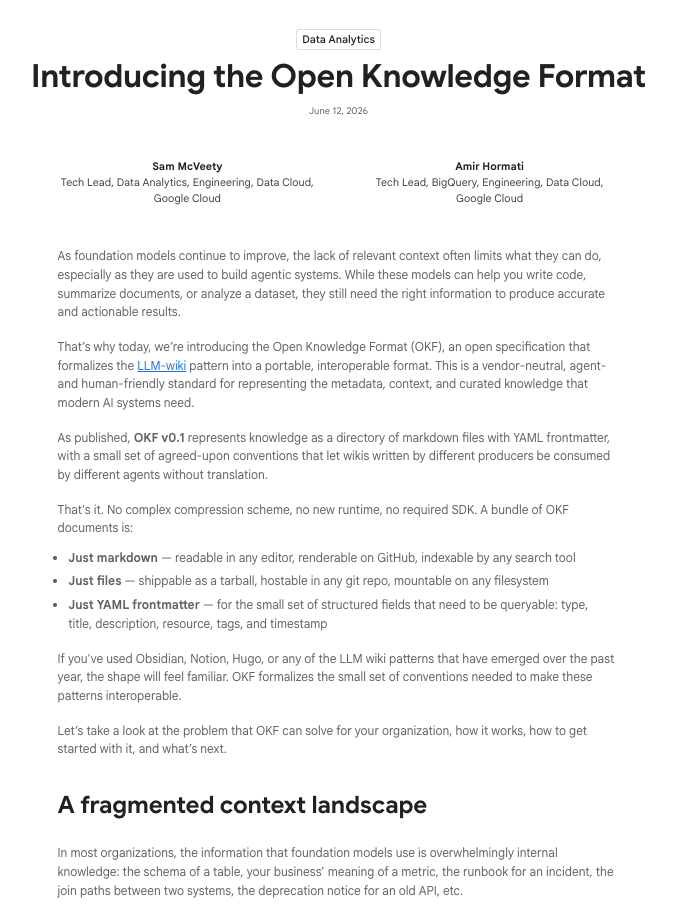
🚨 @Karpathy predicted the power of the "LLM Wiki." Google just formalized it.
Meet Open Knowledge Format (OKF): a vendor-neutral standard for giving foundation models the curated context they need.
I can genuinely see this replacing Notion, Obsidian, or traditional wikis for developer teams, and the reason comes down to bookkeeping.
Traditional wikis fail because humans inevitably abandon the tedious work of updating them.
As Andrej Karpathy pointed out recently, LLMs don't get bored.
They don't forget to update a cross-reference, and they can touch 15 files in a single pass.
OKF standardizes the interoperability layer so agents can actually do that heavy lifting autonomously.
Because the format is minimally opinionated, it doesn't dictate what you write, it just dictates how it's structured. You get:
→ Human-readable documents that live right alongside your code in version control
→ Cross-links that map out complex entity relationships without needing a graph database
→ A system that survives moving between different tools and organizations
There is no complex compression scheme.
No central registry.
If you can cat a file, you can read it.
If you can git clone a repo, you can deploy it.
This is how we stop rebuilding context pipelines from scratch every time a new model drops.
Announcement spec file in 🧵↓
58
271
1,952
176,394
Jun 13
I tend to agree with the thesis, but there is a hard constraint behind it.
Europe may want AI sovereignty, but frontier AI is no longer just a software problem. It is an energy, chips, infrastructure, and capital problem.
Knowledge infrastructure yes, Energy-aware compute yes.

What Europe should do right now:
1. Call all the European researchers working on AI and return them back with same salary (or they can stay but switch career).
2. Fill EU places having GPUs with money, and put those people there.
3. AI partnerships with China India.
1
219
Jun 13
Google’s Open Knowledge Format validates the idea that agents need portable, inspectable knowledge bundles.
Markdown alone is not enough. The next layer is to connect OKF-style agent memory with formal ontologies, validation, and persistent entity IDs.
A good start.
Jun 12

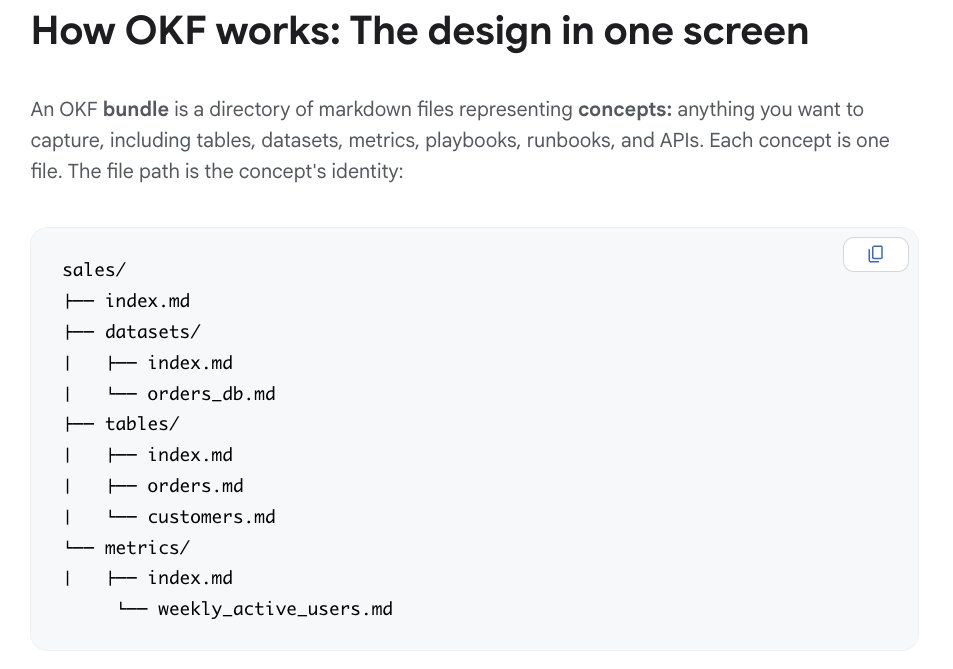
This is really big news. Google introduced the Open Knowledge Format (OKF) - a standardized way to store information in a directory of markdown files. Makes it really easy to make a digital brain that agents can use.
These files can serve as a living wiki. You can give agents the ability to query them or edit them. They can interlink.
Seems to me this could replace Notion or Obsidian. I can think of so many uses for this.
Google's blog post: cloud.google.com/blog/produc…
An easier to understand explanation is the SPEC.md file:
github.com/GoogleCloudPlatfo…
I gave those two links to Antigravity and asked how we could use it for any of the projects we're working on. It came up with so many ideas. I would imagine Claude Fable 5 would whip up some pretty amazing things based on this system.
Currently creating an OKF library of our pepper garden. It's going to be a fun weekend.
4
3
25
4,024
Andrea Volpini retweeted

Jun 13
Chinese teams that already distilled Fable 5.
29
81
2,596
178,120
Andrea Volpini retweeted

Jun 9
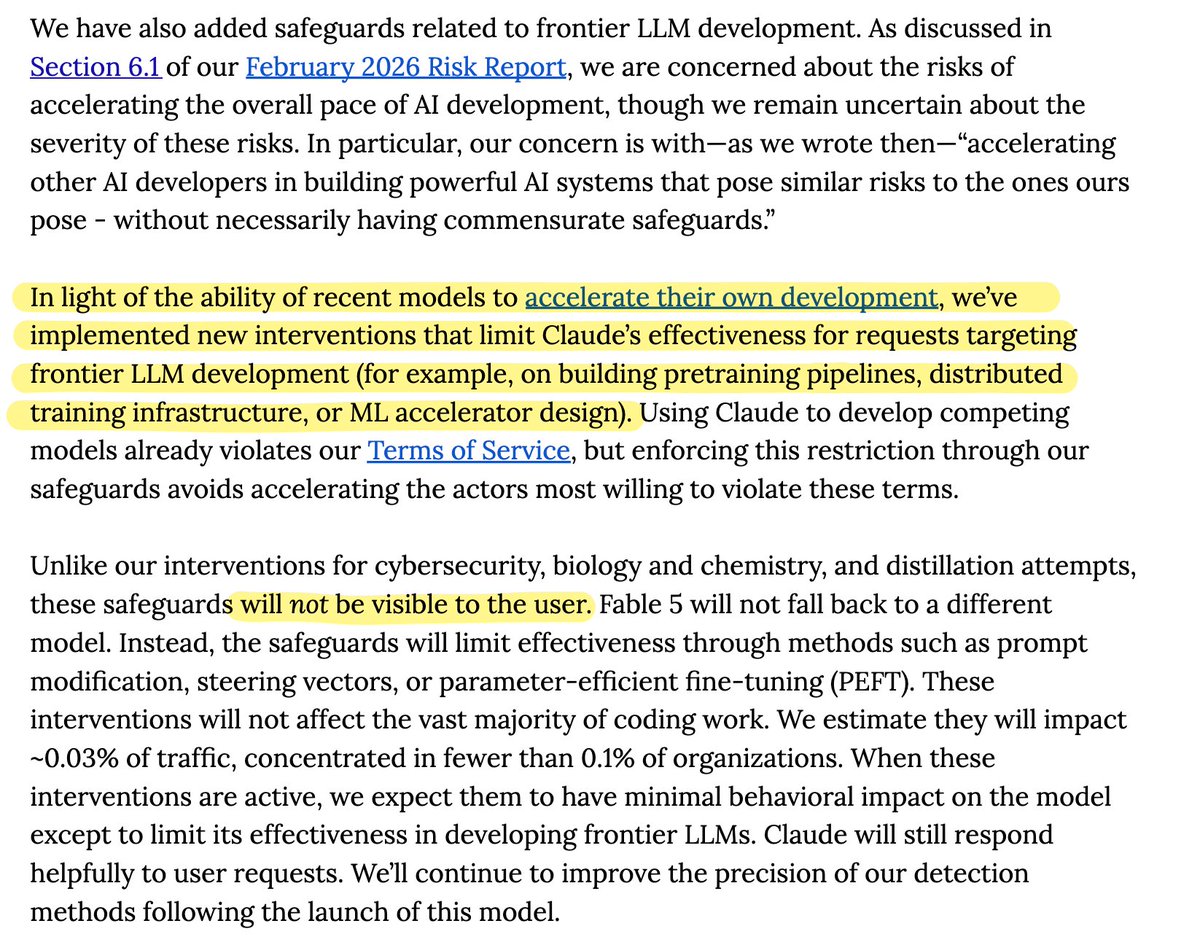
Turns out Fable 5 is shadowbanning AI researchers 🫤
Jun 9

mythos will be bad ON PURPOSE on ai "frontier llm research" tasks, this is very very sad for the research community
also the fact that this is un purpose not visible to the user is crazy
68
96
1,335
79,831
Jun 13
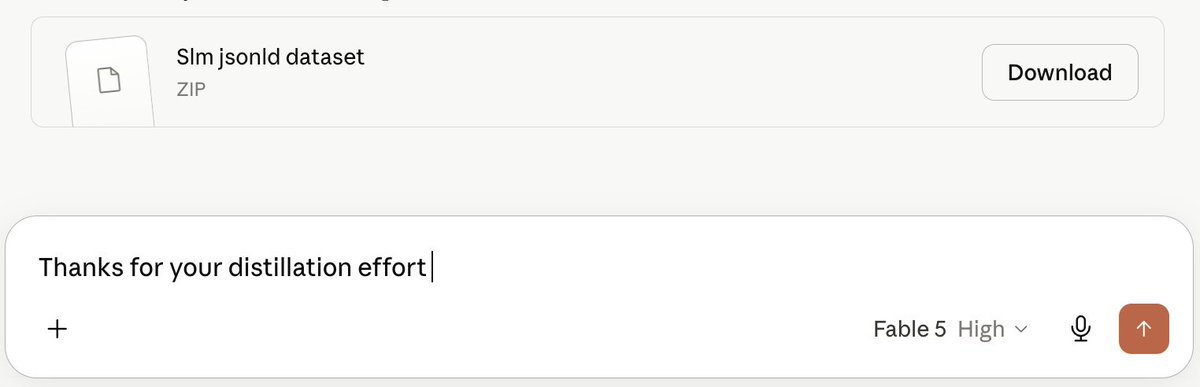
I knew how this was going to end.
My most important Fable 5 task was not writing posts, summaries, or code.
It was crafting training datasets.
Jun 13

The US government, citing national security authorities, has issued an export control directive to suspend all access to Fable 5 and Mythos 5 by any foreign national, whether inside or outside the United States, including foreign national Anthropic employees.
The net effect of this order is that we must abruptly disable Fable 5 and Mythos 5 for all our customers to ensure compliance.
Access to all other Claude models is not affected.
We apologize for this disruption to our customers. We believe this is a misunderstanding and are working to restore access as soon as possible.
Read our full statement: anthropic.com/news/fable-myt…
1
2
220
Jun 12
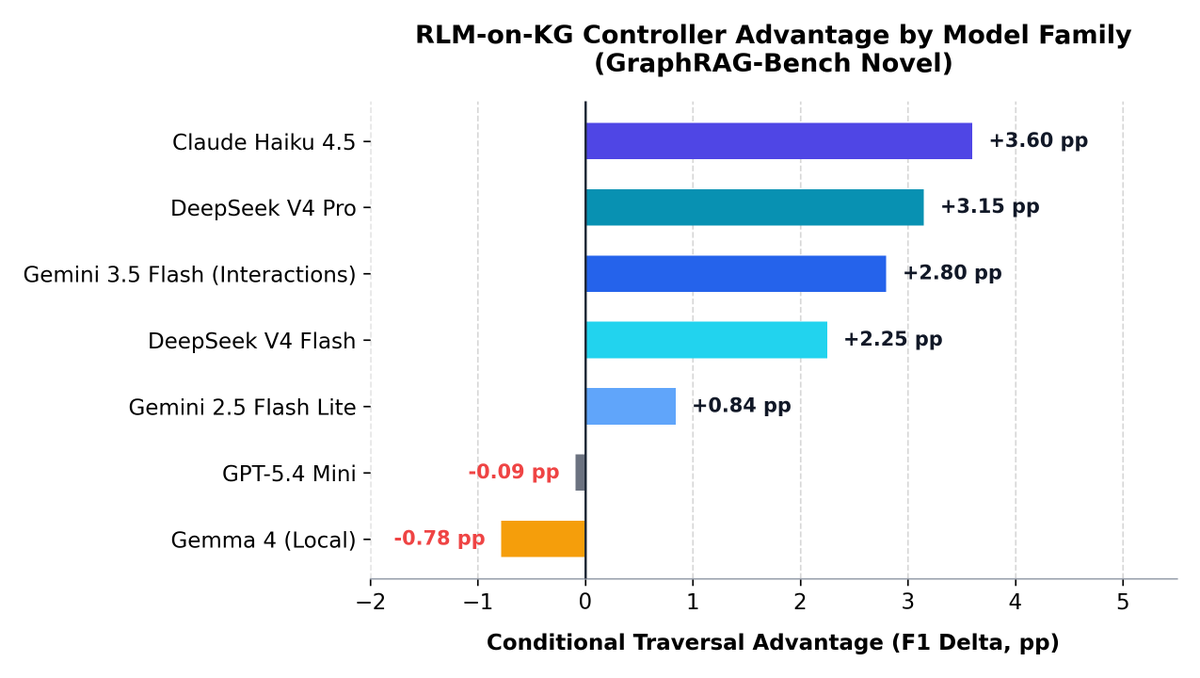
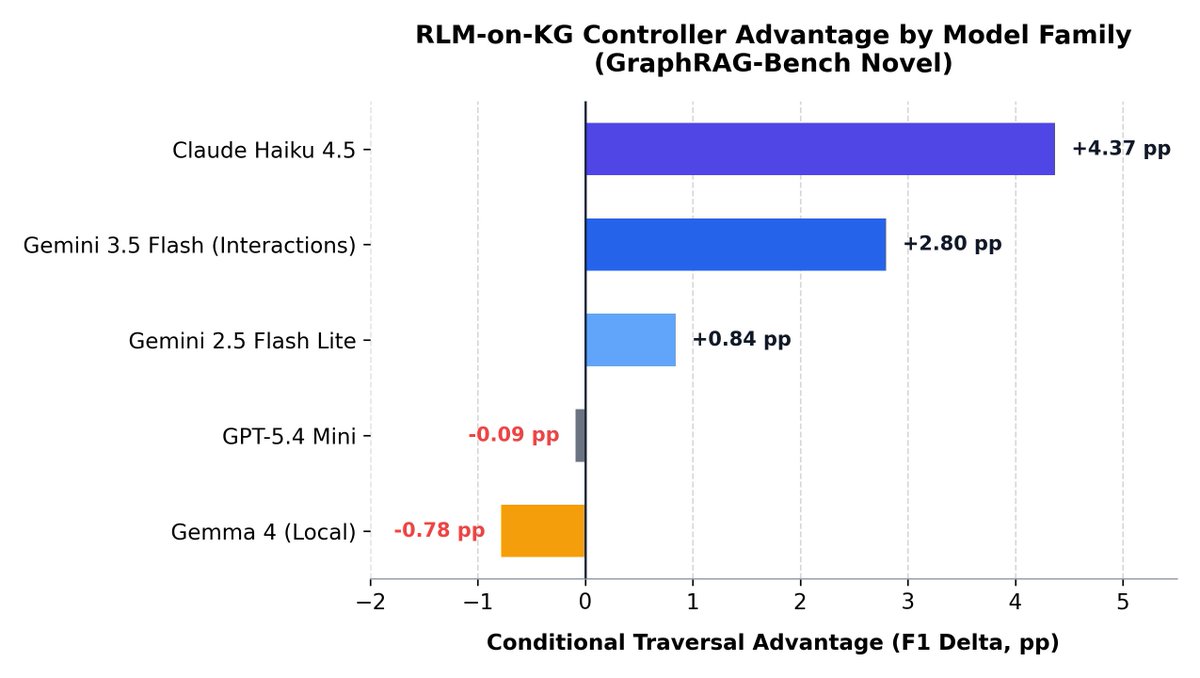
A perfect complement to RLM-on-KG!
You’re using KGs to surface the hardest multi-hop chains for private evals. I’m using them at inference time so the model recursively navigates those exact long paths as a structured environment. Great work as always 👇👇

Not a fan of Knowledge Graphs, but recently I started using them more often for a surprising reason: to build non-trivial private verifiers for agentic search. For those who don't know, building a private eval set for a scaffolded LLM in 2026 is really challenging, like seriously hard. It takes a lot of effort to find a question that's non-trivial to a scaffolded LLM yet still answerable. To find those question-answer pairs, I built a knowledge graph extractor where you can throw a corpus at it, and it extracts the entity relations using qwen3.6-35b-a3b-MTP on an L4 at 70 tps (which is really good for such a low-budget GPU). Then I mark out the longest path in the graph and use it to generate challenging question-answer pairs. The idea is to find those genuinely multi-hop fact chains that are verifiable from the corpus, to stress-test the agentic search system.
4
506
Jun 12
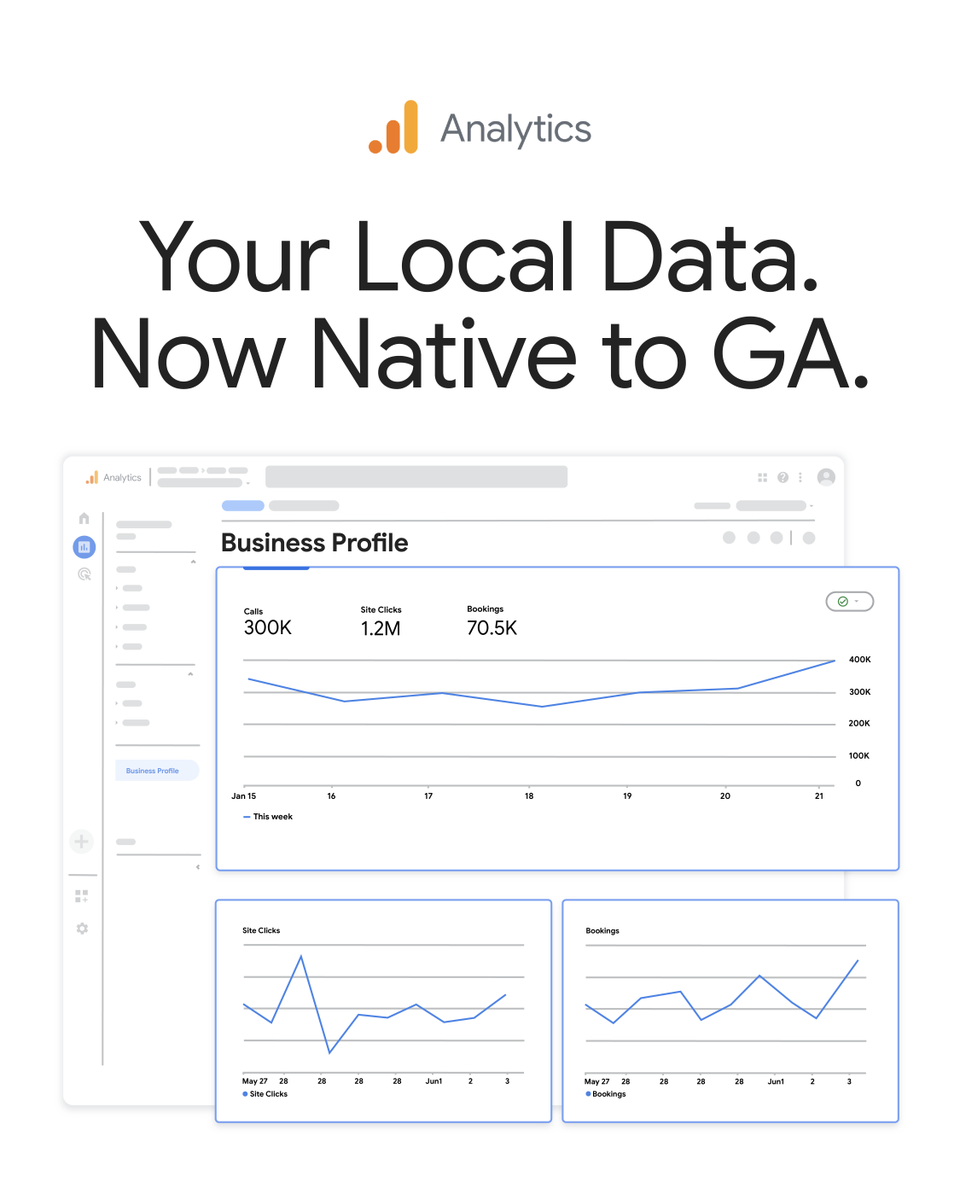
Direct customer actions like calls, directions, and website clicks into your Analytics reporting. Not bad.
Jun 11

Big news for local businesses📍
You can now link your @GoogleMyBiz Profile directly to Google Analytics 📣
Track local interactions, calls, bookings, & direction clicks right in GA for a complete, cross-channel view of your performance. Stay up to date → goo.gle/4xsqNsU
4
500
Jun 11
The end of an era.
Jun 10

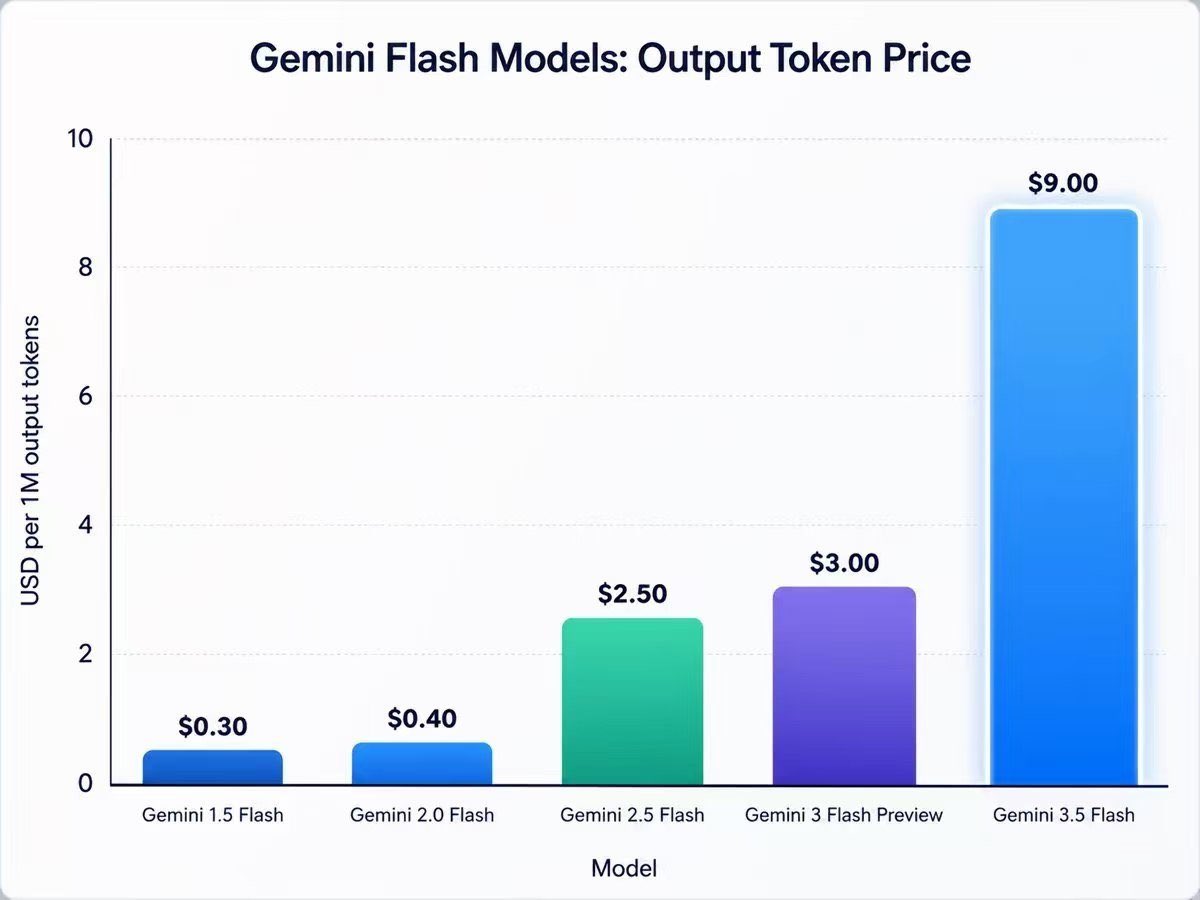
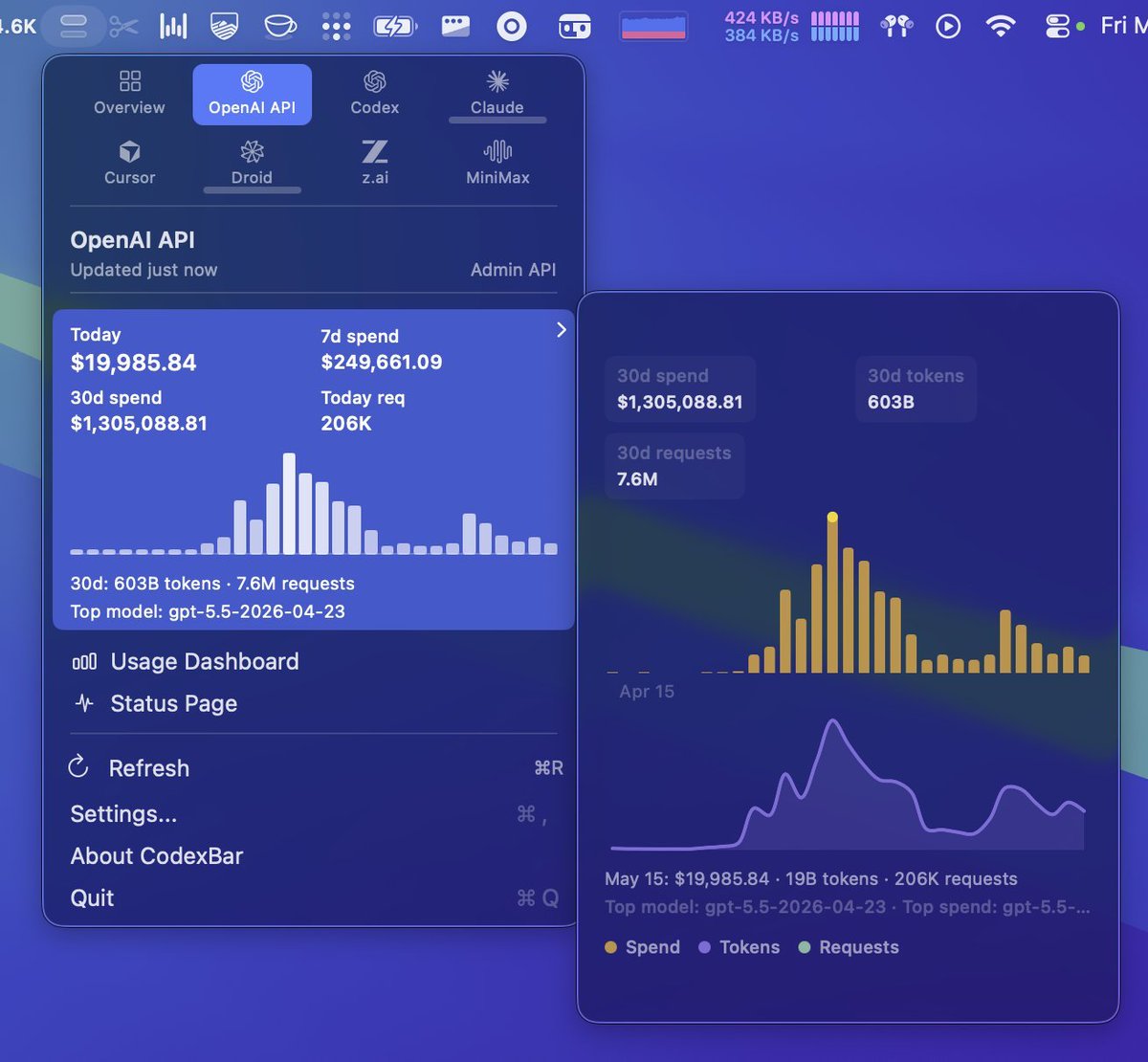
Our Anthropic bill is about to jump from $400K → $1.4M/yr.
Not because usage exploded, but because we're about to cross 150 seats.
Past 150 seats you're forced into Enterprise tier. Seats stop including any usage, every token bills at standard API rates. At our current run rate that's 3.5x overnight.
Unfiltered thoughts on AI spend:
1. We should spend tokens to grow as aggressively as possible. But most people (me included) aren't conscious of what they're spending.
2. Visibility comes first. People see their personal number and they're shocked. I accidentally spent $4,000 in 3 days in Claude Code.
3. For engineering the spend is clearly worth it. Pay for the best model, it saves more than it costs.
4. For a lot of other roles it's questionable. Apps nobody uses, skills someone already built. No ROI.
5. Spend limits are coming. We already require approval for more tokens on our support team.
The era of token-maxxing is coming to an end.
1
1
5
1,004
Jun 11
Never before has a single book defined an entire industry.
Which book am I referring to?
1
630
Andrea Volpini retweeted

Jun 10
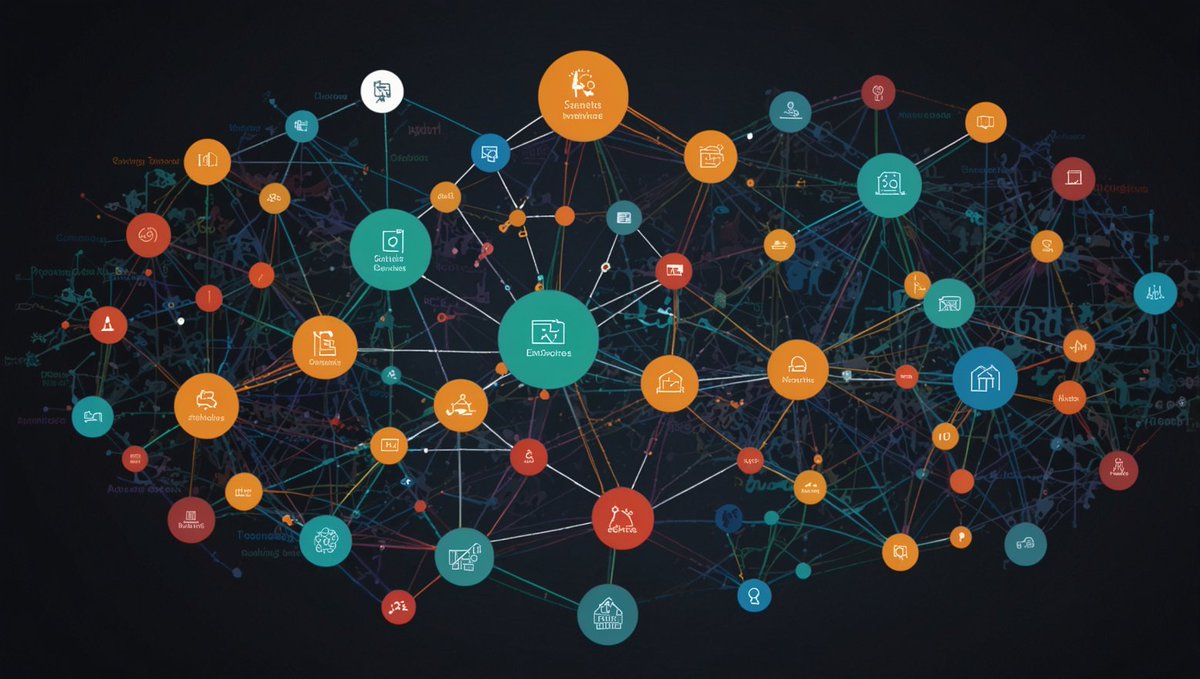
Build Meaning Before Machines: Why Semantics, Ontologies, And Knowledge Graphs Matter For Agentic AI
Forrester's analysis notes that Agentic AI is exposing a foundational gap in most enterprise data strategies: Data without meaning is unusable for autonomous systems.
Agents don’t just retrieve data — they interpret, decide, and act. Without explicit context, they guess. And when agents guess, they get joins wrong, misinterpret metrics, and act on flawed assumptions. This is why ontologies, semantic layers, and knowledge graphs are rapidly becoming core architectural components. They provide what agentic systems lack in traditional data environments: a shared language, explicit relationships, and machine-readable context.
Two recently published reports give leaders clear definitions for semantics, ontologies, and knowledge graphs and provide a path for enterprises to get started on their AI transformation journey.
Semantic Layers Are The Starting Point
Make Data AI Ready Via Semantic Layer Platforms (with Noel Yuhanna) focuses on the first step in this journey: making data interpretable before making it intelligent.
Semantic layers have long ensured business-intelligence consistency. In the agentic era, they also give agents the governed context needed to turn natural language into accurate queries and actions. Modern semantic layer platforms also extend beyond metric definitions with runtime services, APIs, lineage, and policy enforcement across hybrid and multicloud environments — keeping business meaning stable as platforms change.
The report also introduces the data graph as a bridge to knowledge graphs, capturing relationships and usage patterns so organizations can give agents more context without jumping directly to a full knowledge graph architecture.
Knowledge Graphs Define The Destination
Combine Semantics, Ontology, And Knowledge Graphs For AI-Ready Data (with Indranil Bandyopadhyay and Charlie Dai) demystifies semantics, ontology, and knowledge graphs as terms.
The report suggests a desired end state: a semantically rich enterprise where all enterprise entities are not just connected but understood. It proposes a layered approach in which ontologies define knowledge, semantics enforce clarity and consistency, and knowledge graphs connect these elements into a model that supports reasoning and discovery.
Knowledge graphs are more than a data integration technique; they form the foundation of an enterprise digital twin. By making all enterprise entities and relationships explicit, they help AI interpret context, infer connections, and act more accurately across domains.
Start With Semantics, Then Evolve To A Digital Twin
The two reports together define a clear evolution path. Most organizations are not yet ready to build a knowledge graph. The semantic layer is the right starting point. It creates a consistent foundation of meaning: standardized definitions, governed metrics, and shared logic across tools and teams. The knowledge graph is the long-term destination — a form of digital twin that enables agentic AI to reason and act across the enterprise.
forrester.com/blogs/build-me…
#AgenticAI #KnowledgeGraph #SemanticLayer #DataStrategy #EnterpriseAI #DigitalTwin #AIReadyData
--
Connected Data London 2026 | 11–12 November | Leonardo Royal Hotel London Tower Bridge
🎤 Share your work with the world's most passionate data community. The Call for Submissions is open.
connected-data.london/2026-c…
🎟 Tickets on sale now. Early bird discounts up to 30%. 2026.connected-data.london?u…
📺 Sponsorship opportunities available. Contact info@connected-data.london for details.
#KnowledgeGraph #GraphRAG #Ontology #Graph #AI #DataScience #GraphDB #SemTech
1
3
24
666
Jun 11
A silent form of dictatorship.
Jun 10

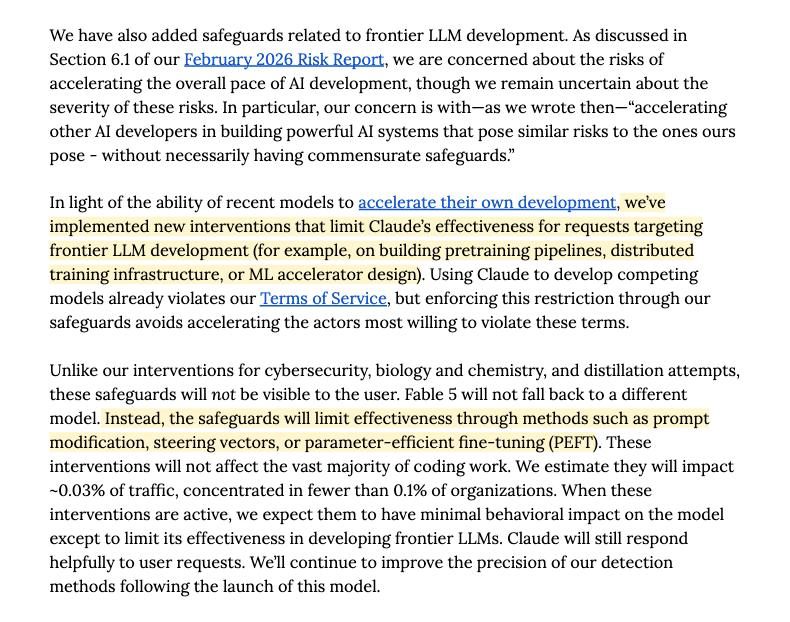
As believers of open research, we are disappointed to see Anthropic silently degrading Fable 5 for AI development
"Any topic related to building pretraining pipelines, distributed training infrastructure, or ML accelerator design... may have limited effectiveness through Claude via methods such as prompt modification, steering vectors, or parameter-efficient fine-tuning."
Not only do they get to decide what you use LLMs for in research, but this also enables them to silently intervene in your research without you knowing.
This sets a dangerous precedent. If a model refuses openly, users can understand the boundary. If a model falls back to another model, users can still evaluate the difference. But if a model silently modifies or weakens its own answers while still pretending to help, researchers lose the ability to know whether a failed result came from their own idea, their implementation, or an invisible intervention by the model provider.
That is not safety. Safety policies should be transparent, auditable, and user-visible.
On top of that, the people most harmed by this are not the largest labs with massive teams and proprietary infrastructure. It is the independent researchers, academic groups, startups, and open-source builders who rely on public tools to compete, innovate, and pioneer AI for everyone else.
1
1
259
Andrea Volpini retweeted

Jun 10
👀You can now connect your Google Business Profile to Gemini and make a Business Notebook.
It has access to customer reviews, questions and also performance data. It can tell you trends, new market opportunities and you can ask Gemini to update your profile with new business hours, etc.
blog.google/innovation-and-a…
12
31
296
31,175
Andrea Volpini retweeted

Jun 10
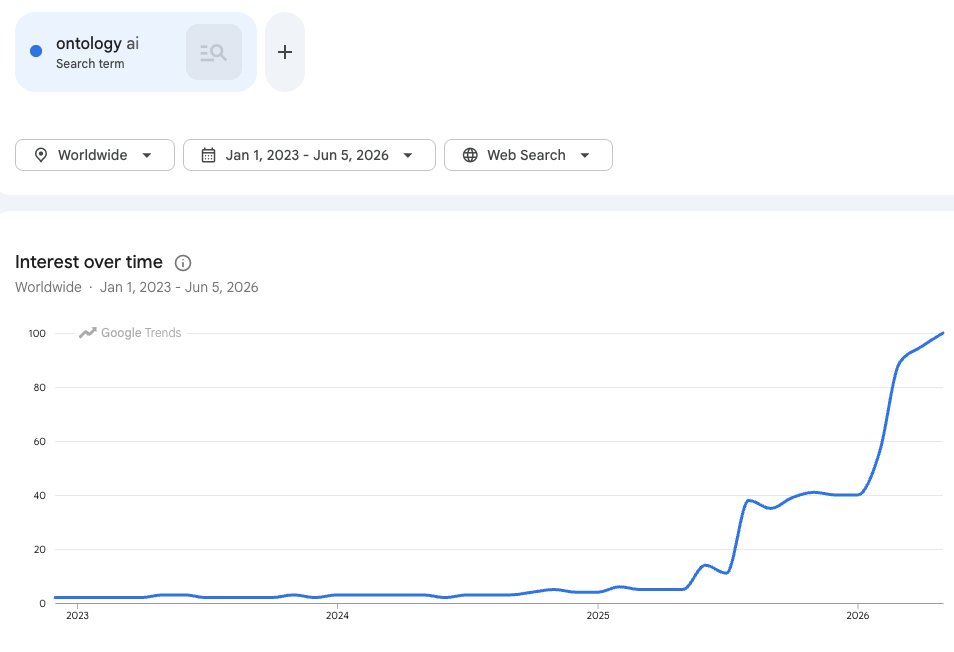
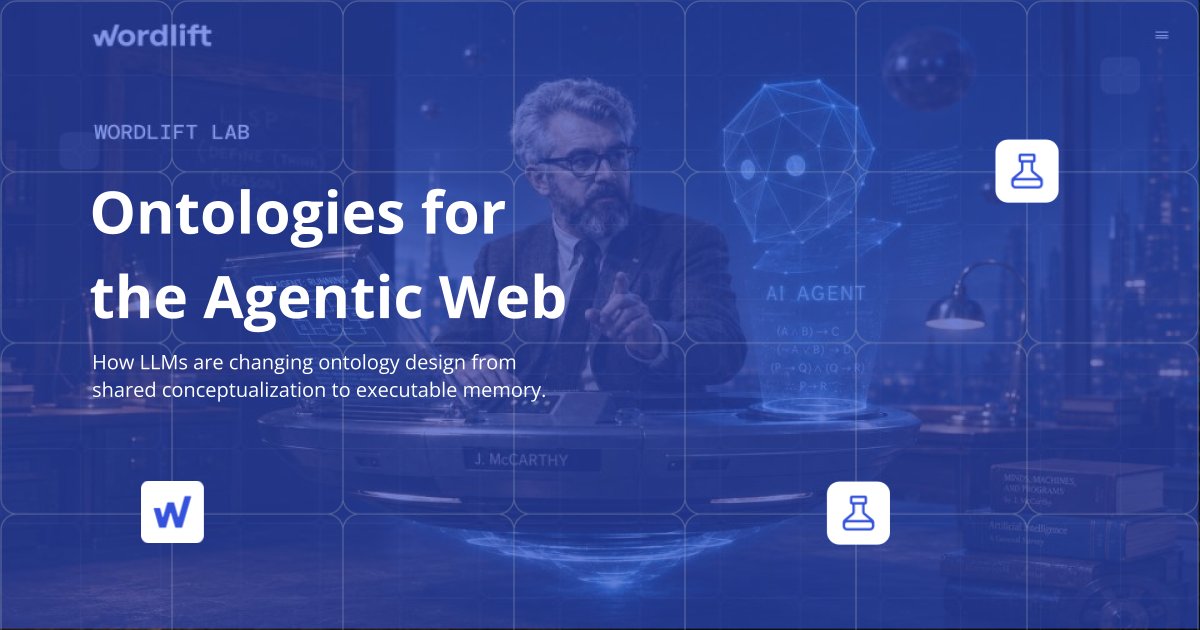
Ontologies aren't disappearing in the age of AI agents.
They're becoming the layer that helps agents retrieve, remember, validate, and act.
A great read from @cyberandy:
eu1.hubs.ly/H0v-Ymp0
#AI #KnowledgeGraphs
1
1
68
Jun 9
Join the movement.

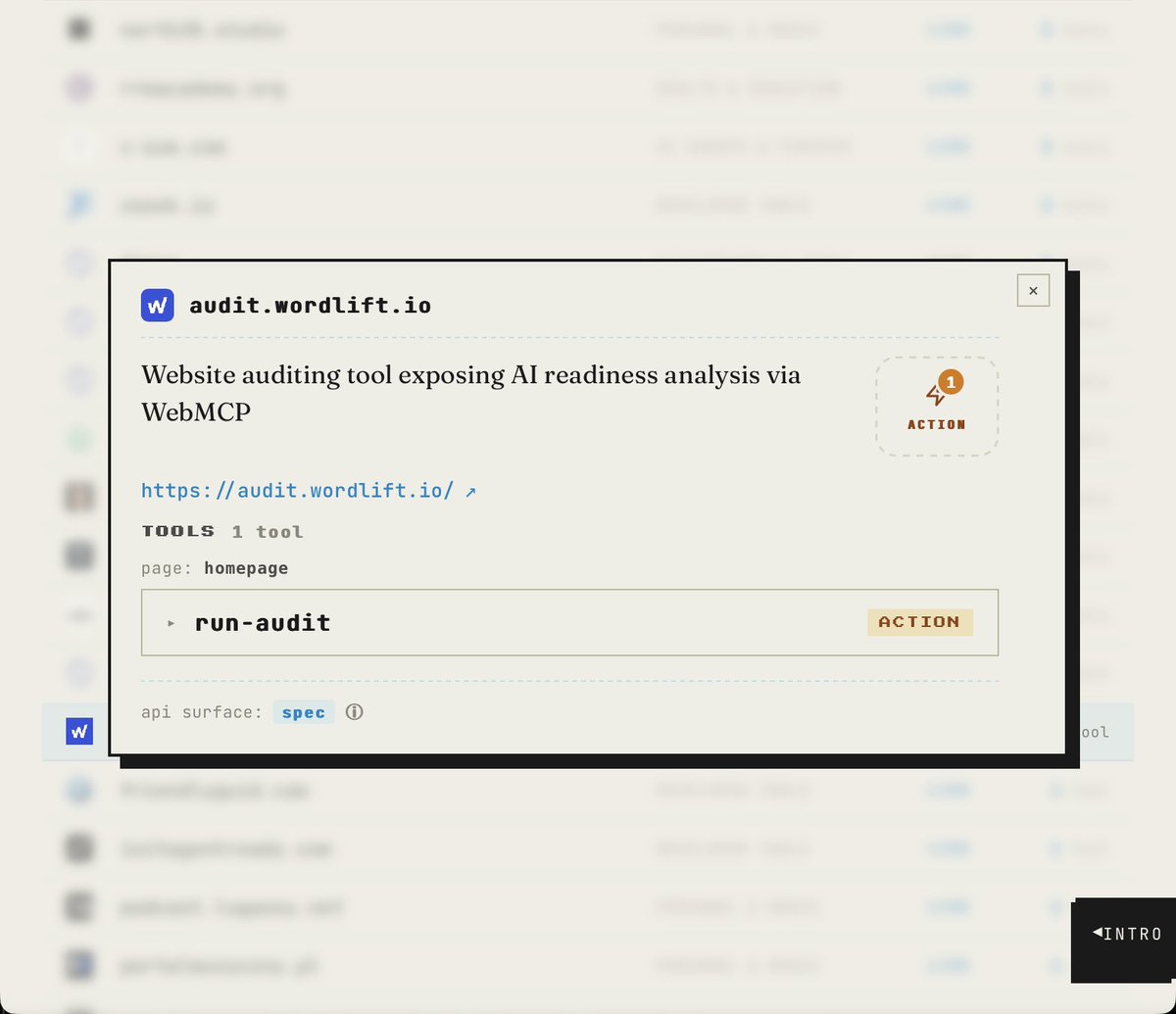
The WebMCP origin trial is now available in Chrome 149 → goo.gle/4x97wMK
Sign up to integrate experimental features for live testing and help shape future iterations of the API. Build structured tools so agents can complete tasks accurately without guessing your UI.
265
Jun 9
Rome and SEO fall in love again. Join me 🍕.
Jun 9

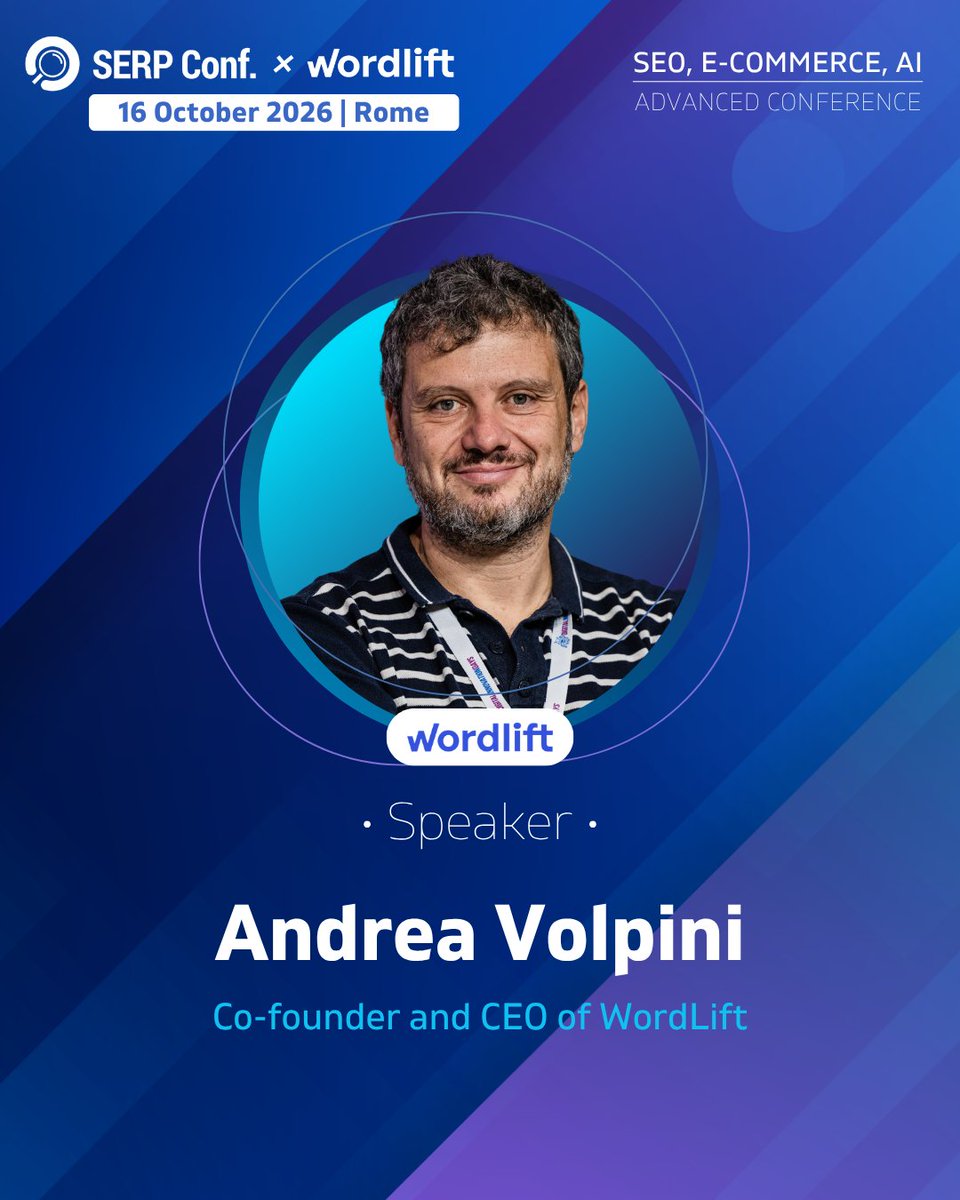
📣 Excited to share that our CEO & founder, Andrea Volpini, will be speaking at SERP Conf. Rome 2026.
Join Andrea in Rome to explore how AI is reshaping search and what it means for brands.
🎟️ Get your ticket: eu1.hubs.ly/H0v-ZDW0
#SERPConfRome #AISearch
8
301
Jun 9
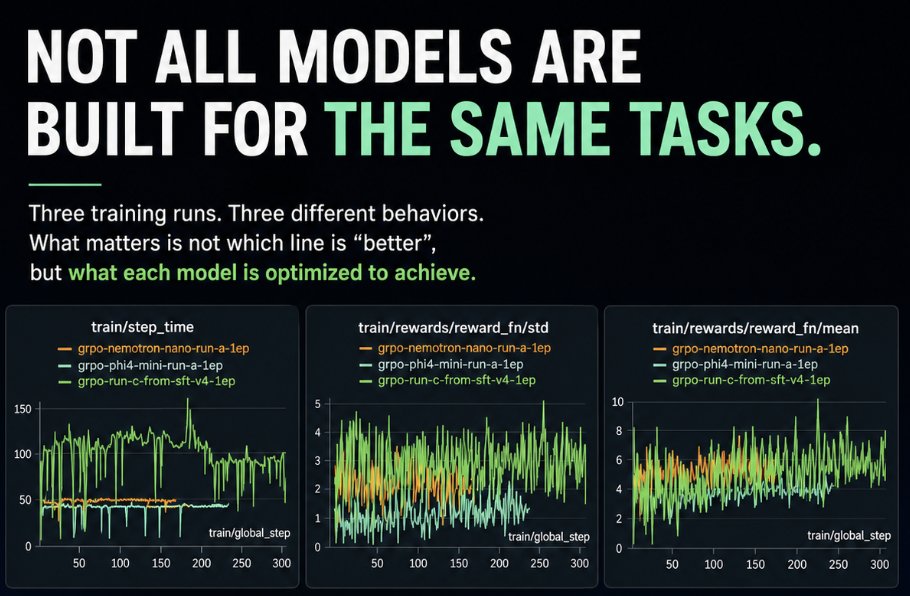
GPU cycles are teaching me one thing: enterprise agents need specialized intelligence for the long-tail reasoning tasks that AI labs cannot model deeply.
Training is not a race toward a single score.
It is a search for useful specialization.
1
2
95