
🌟 Article of the Week 🌟
This week’s featured article from IEEE Journal of Selected Topics in Applied Earth Observations and Remote Sensing (J-STARS) highlights advances in deep learning for multitemporal remote sensing image change detection.
🔍 This Week’s Highlight
Title: B2CNet: A Progressive Change Boundary-to-Center Refinement Network for Multitemporal Remote Sensing Images Change Detection
Authors: Zhiqi Zhang, Liyang Bao, Shao Xiang, Guangqi Xie, Rong Gao
📖 🛰️ In this article, the authors propose B2CNet, a progressive change detection network guided by change boundary awareness and a boundary-to-center refinement strategy. The network enhances fine-grained boundary detection and improves internal region consistency by integrating boundary-aware modules and bitemporal feature aggregation, leading to more accurate change detection in multitemporal remote sensing images.
🔗 Read the full paper here: doi.org/10.1109/JSTARS.2024.…
Stay tuned for more groundbreaking research every week as we celebrate excellence in geoscience and remote sensing! 🌍📡
#IEEEGRSS #RemoteSensing #Geoscience #ChangeDetection #DeepLearning #JSTARS #ieeexplore #AOTW

4
14
617
イズロンさん(・𝕏・) retweeted

15 Nov 2025
freshrss(rss)
changedetection(サイトの変更監視)
frigateNVR(onvif対応監視カメラが必要な監視カメラビュワー)
myspeedtest(みたいな名前のインターネット速度テストツール)
syncthing(万能同期アプリ)
rustdesk(リモートデスクトップ)
siyuan、affine(ノートアプリ)
1
1
3
300

🔥 OnPush is now the DEFAULT change detection strategy
Components with no changeDetection set are now OnPush automatically.
Want the old behavior? Set ChangeDetectionStrategy.Eager (there's a migration for it).
✍️ Signal Forms graduated to the public API!
No longer experimental 🎉
You also get:
- reloadValidation()
- debounce on validateAsync/validateHttp
- FieldState.getError()
- template reactive FVC support
🌐 FetchBackend is now the default for HttpClient
withFetch is deprecated → just remove it.
⚠️ Need upload progress? Use provideHttpClient(withXhr).
Also: reportProgress → split into reportUploadProgress & reportDownloadProgress
💧 Incremental hydration is now the default behavior. No extra config needed.
🤖 Angular is going all-in on AI/MCP tooling:
- provideWebMcpTools
- declareWebMcpTool (experimental)
- AI runtime debugging tools
- an in-page Angular DI graph AI tool
✨ New core goodies:
- @Service decorator (stable)
- injectAsync() helper
- debouncing signals
- resource caching for SSR
- bootstrap apps under shadow roots
- TestBed.getLastFixture()
🧹 Big cleanup (breaking):
- ComponentFactory / ComponentFactoryResolver → gone
- createNgModuleRef → createNgModule
- checkNoChanges → removed
- provideRoutes → provideRouter
- Hammer.js integration → removed
⚙️ Version requirements:
- Node.js 26 supported
- TypeScript 5.9 dropped
- Minimum TS is now 6.0
🧭 Router changes:
- paramsInheritanceStrategy now defaults to 'always'
currentSnapshot in CanMatchFn is now required
- new browserUrl input on router links
That's Angular v22 in a nutshell 🎯
2
17
85
3,881

May 26
The biggest hurdle for satellite data in Latin America isn’t the technology; it’s institutional readiness.
Spotting illegal mining or forest degradation through the clouds within hours is a massive leap forward. But to truly protect these resources, agencies must have the workflows, licenses, and authority to act on the data immediately.
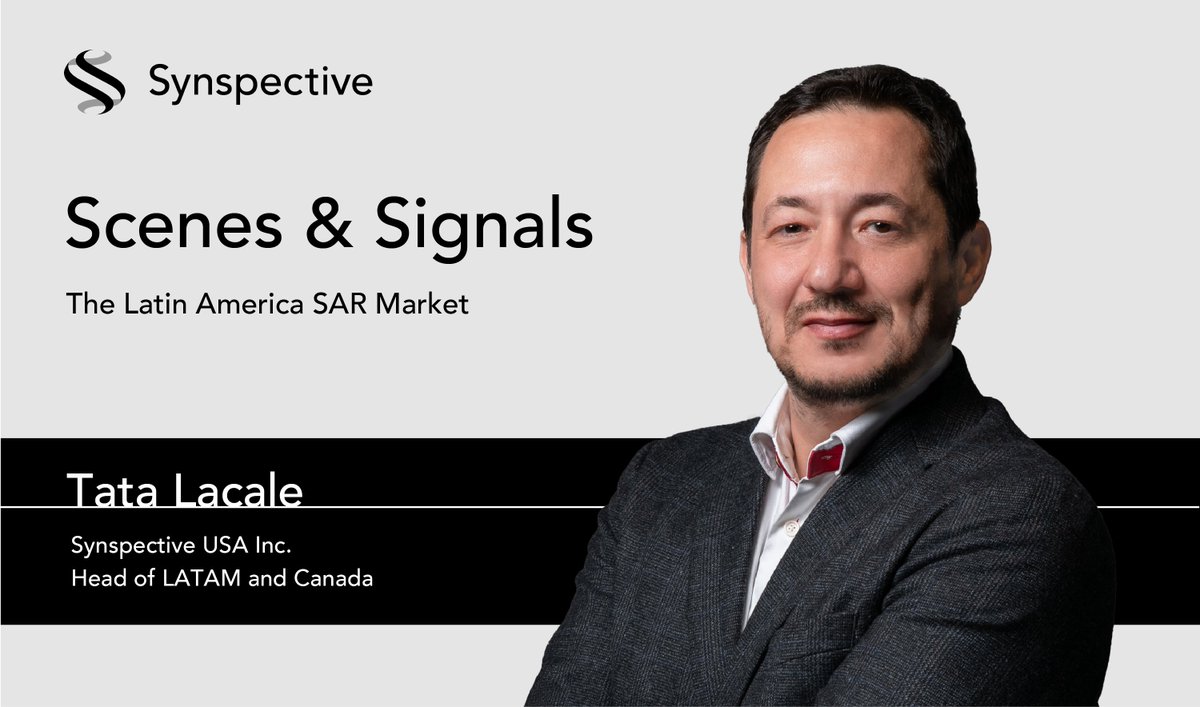
In the latest Scenes and Signals piece, Tata Lacale Canal, Synspective's Latin America lead, explores how the region is moving past the pilot phase and building the infrastructure needed to turn SAR from a crisis tool into an everyday operational layer.
Read the full piece here: synspective.com/blogs/2026/t…
#SAR #EarthObservation #LatinAmerica #ChangeDetection #EnvironmentalProtection
1
7
32
2,079

May 20
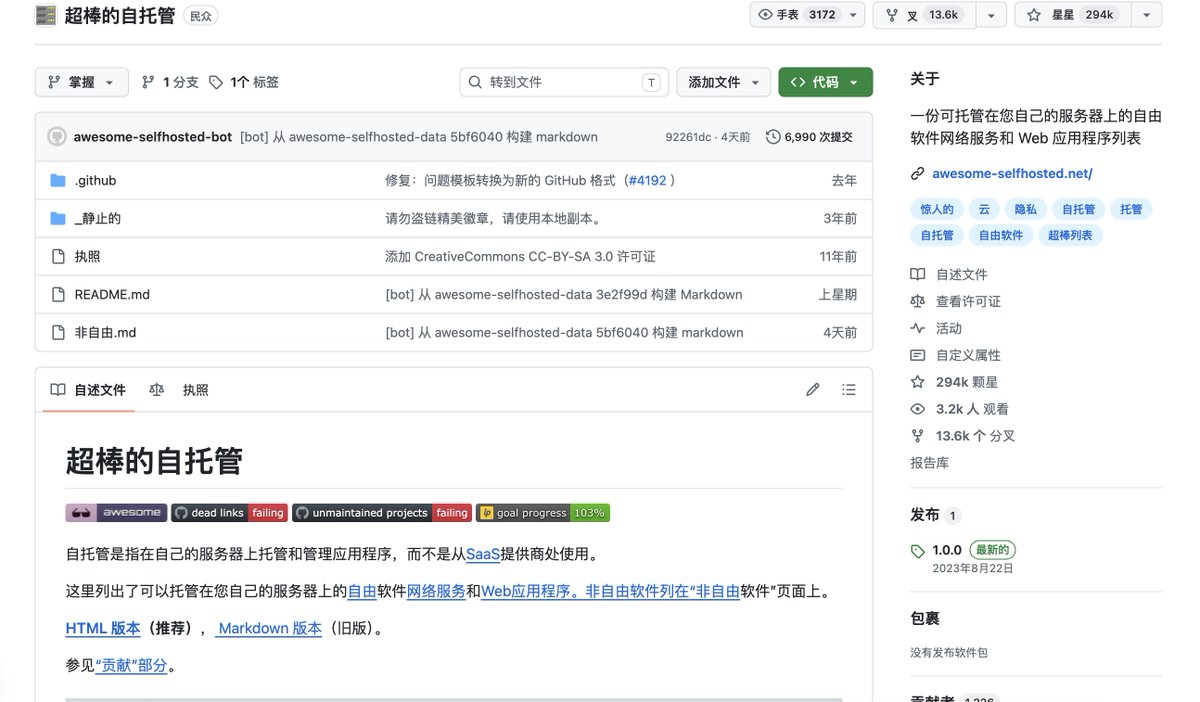
🔥2026年最强自托管宝库:一文掌握1200 免费替代,彻底摆脱云订阅枷锁!
GitHub 294k star 怪物级仓库 — awesome-selfhosted,收录1200 款免费开源自托管工具,覆盖80 个分类。
从邮件到AI大模型,你用过的所有SaaS,这里全有替代方案。
用自己的服务器,跑起完整数字生态。
最实用平替清单(直接省钱)
隐私数据三件套
- Google Drive Office → Nextcloud
- Google Photos → Immich(AI识别杀手)
- LastPass → Bitwarden / Vaultwarden
生产力全家桶
- Notion → AppFlowy / Affine / Trilium
- Zapier → n8n / Activepieces
- BI仪表盘 → Metabase / Superset
- Netflix → Jellyfin
通讯社交
- Slack / Discord → Matrix Element
- Zoom → Jitsi
- Twitter → Mastodon
- 邮件 → Mailcow
杀手级工具
- ArchiveBox(网页永久存档)
- Home Assistant(智能家居中枢)
- Changedetection(网站变动监控)
- Wallabag(稍后读神器)
更狠的是:社区8年持续打磨,近7000次提交,零 open issue,每个推荐都经过实战验证。
2026年了,自托管 = 数据主权 零订阅 极致隐私 无限自定义。
程序员、隐私控、独立开发者、穷创业团队 —— 这个仓库建议低调收藏。
May 19

再也不用花钱买各种网页服务了!
GitHub 上最火的免费自托管宝藏库 —— awesome-selfhosted 来了!
294k Stars(全球顶级热度),143 个分类,近1500个项目,全部免费开源!
从网盘、聊天工具、博客、邮箱,
到电商平台、游戏、AI工具、监控系统……应有尽有!
每个项目都提供完整源码 在线演示
一键部署到你自己的服务器(Docker、一键脚本、完整教程)
数据完全自己掌控,隐私安全、无订阅、无限使用
企业级品质,很多项目被大公司和个人广泛使用
想试就试,想改就改,想自建 NAS、个人云、团队协作平台……全都能搞定!
经典场景:
- 厌倦了百度网盘/OneDrive?→ Nextcloud / Seafile
- 想自建微信/ Slack?→ Matrix / Rocket.Chat
- 需要个人邮箱服务器?→ Mailcow / Poste.io
- 做博客/网站?→ Ghost / WordPress 自托管
- AI 本地部署?→ AnythingLLM、Ollama 等一大堆
- 甚至还有游戏、密码管理、监控、自动化、知识库……
隐私党、生产力玩家、自建爱好者、开发者 必收藏!
装上这个列表,你就拥有了一个私人互联网,再也不用被各种 SaaS 割韭菜了。
快去 star 收藏,谁用谁知道香! (建议用 Docker Portainer 部署,10 分钟上手一个服务)
见评论区下载
1
1
3
1,818

May 17
ChangeDetection.io is already great at noticing web changes. changedetection-mcp makes those changes usable inside an agent workflow.
Monitor pages, summarise diffs, route alerts, kick off follow-up actions.
cc @Teknium
Repo: github.com/rusty4444/changed…
2
35
May 17
I’ve been building small MCP servers for self-hosted tools that agents should already understand.
First up: changedetection-mcp for @change_det_io.
It lets Hermes or any MCP client create watches, check history, and ask what changed without opening the UI.


2
1
3
115

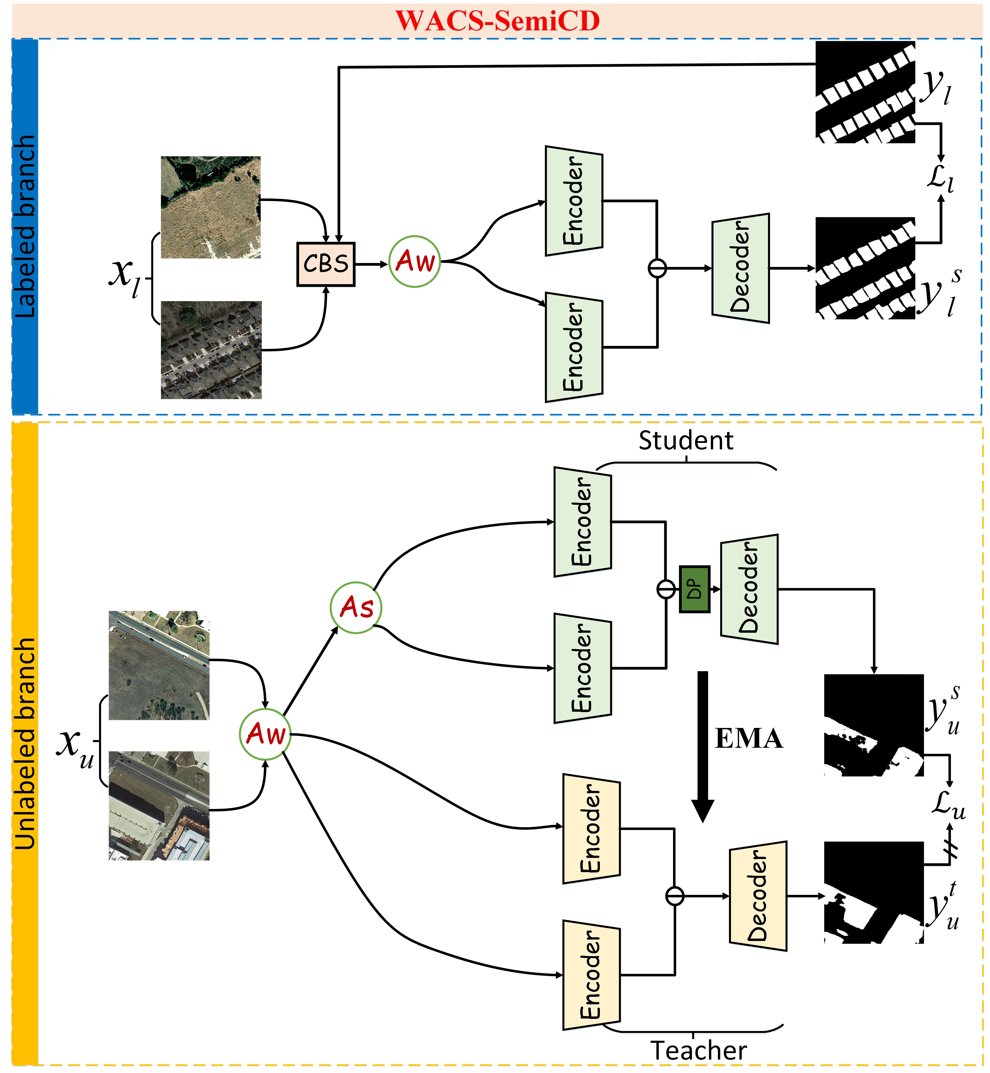
🖼️🖼️ #Perturbation Matters: A Novel Approach for Semi-Supervised #RemoteSensing Imagery #ChangeDetection
✍️ Daifeng Peng et al.
🔗 brnw.ch/21x2spa
5
17
483

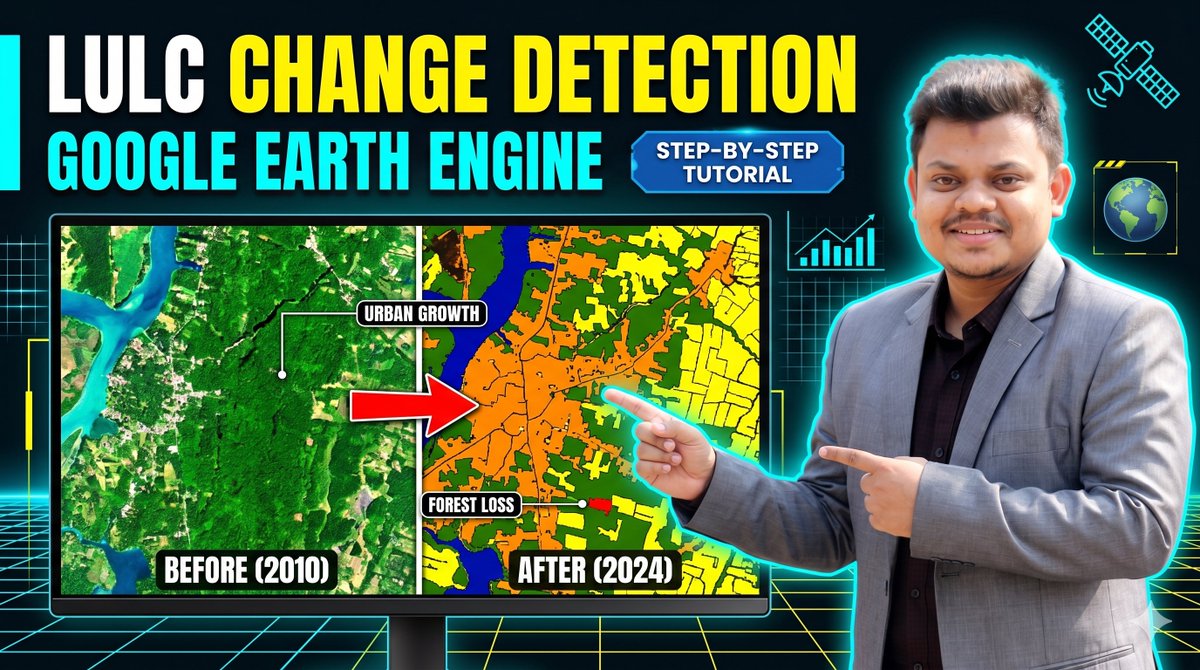
Land Use & Land Cover Change Detection in Google Earth Engine | Step-by-Step Tutorial. The tutorial: youtube.com/live/x1PrBz6k9WY
#GoogleEarthEngine
#LULC
#RemoteSensing
#GIS
#ChangeDetection
#SatelliteImagery
#Geospatial
#EarthObservation
1
2
6
319

A great conversation with @Via_Satellite ahead of @EarthDailyA's next phase.
Don Osborne on why #EO still struggles with #changedetection and the gap between collecting data and trusting it.
Six satellites launching this weekend. Stay tuned. 🚀
hubs.ly/Q04f10LL0
3
136

Apr 21
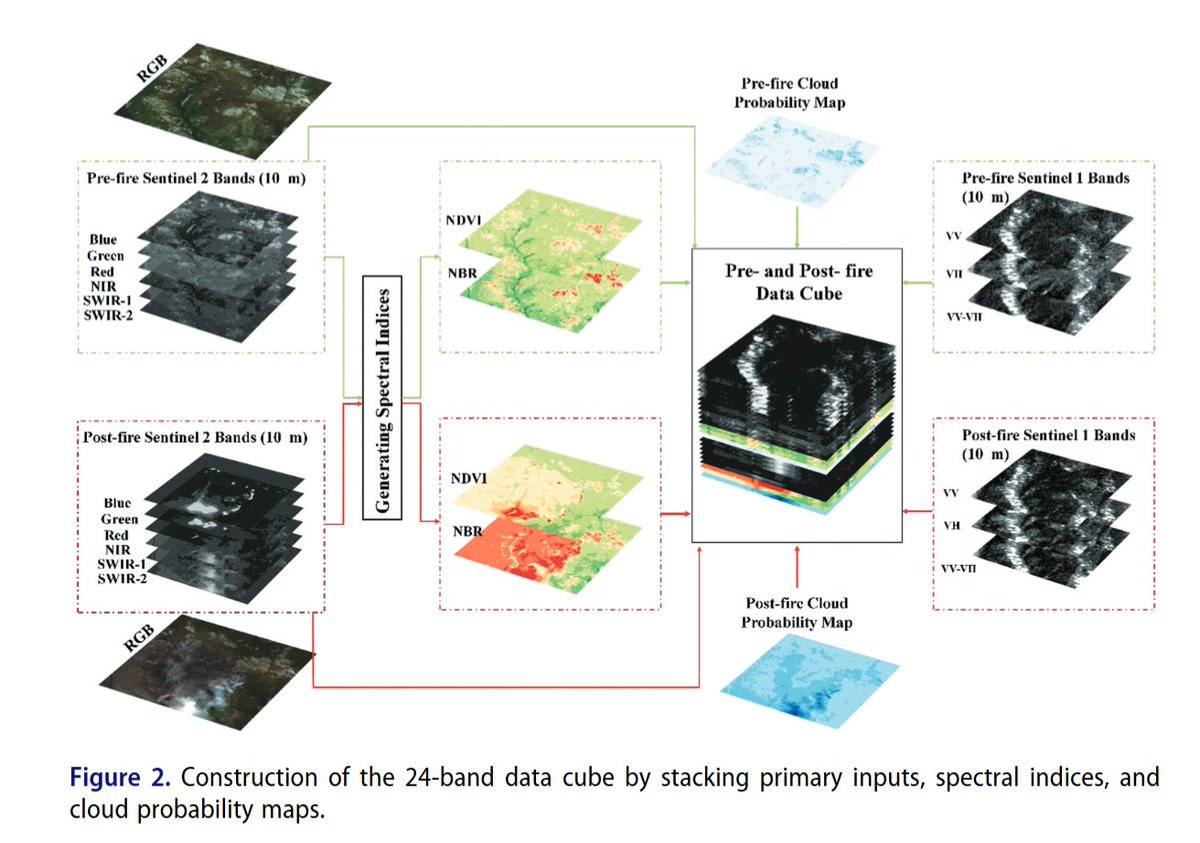
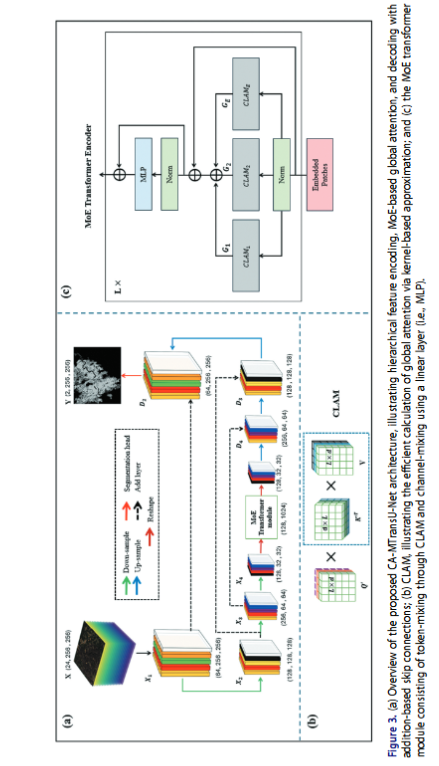
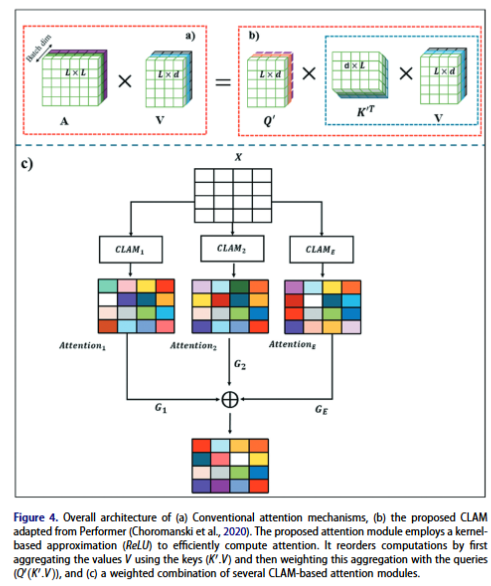
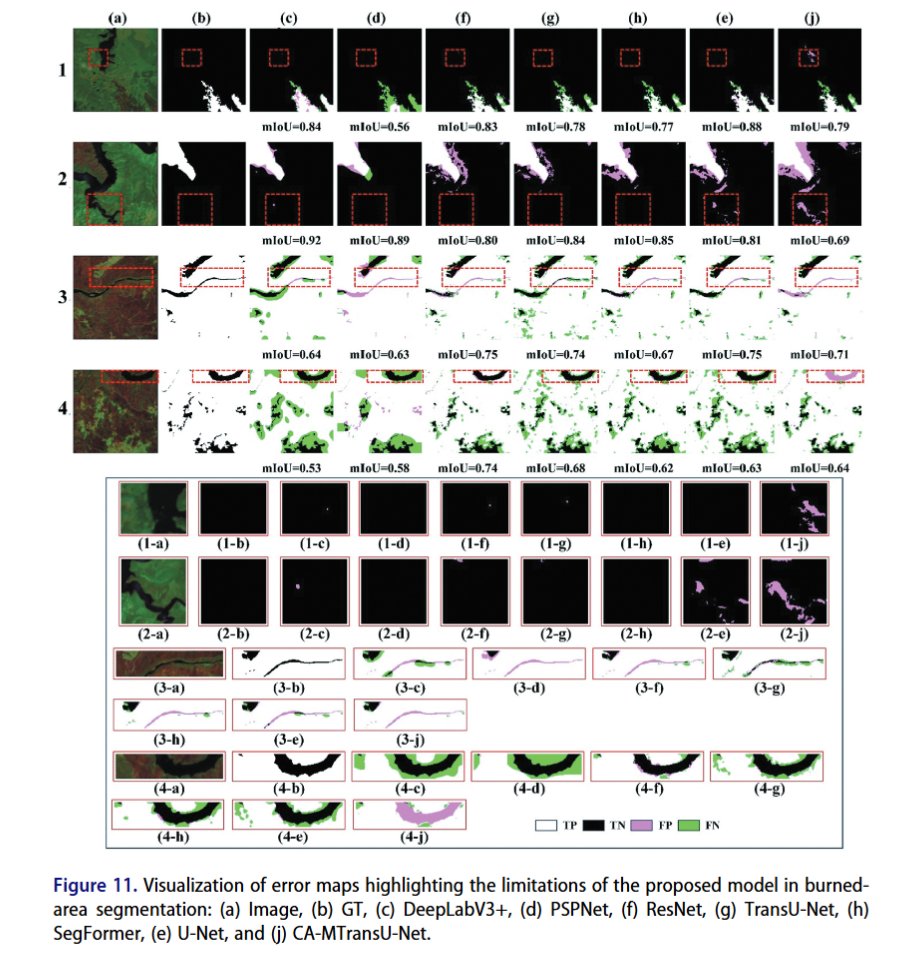
📢 CA-MTransUNet: Cloud-Aware Mixture-of-Experts Linear Transformer U-Net for forest burned area (FBA) mapping using Sentinel-1 and Sentinel-2 images by Sahand Tahermanesh, Ali Jamali @ali_jamali86, Armin Moghimi @ArminMoghimi2, Amin Mohsenifar, Ehsan Khankeshizadeh & Ali Mohammadzadeh
👉 doi.org/10.1080/20964471.202…
💌 This study addresses the limitations of existing #forest #burnedarea detection (#FBA) approaches, which are constrained by challenges in multimodal #dataintegration, the high computational complexity of attention mechanisms, and #cloudcontamination in optical satellite imagery. To overcome these issues, it proposes a Cloud-Aware Mixture-of-Experts Linear Transformer #UNet that integrates #Sentinel1 #SAR and #Sentinel2 #opticaldata through dynamic weighting and an efficient MoE-based linear attention framework. The model achieves superior segmentation accuracy and faster inference compared with several state-of-the-art architectures, while remaining subject to higher memory demand and occasional misclassification of water bodies, highlighting areas for further optimization in operational #wildfire monitoring.
#Deeplearning #remotesensing #GIS #dataanalysis #BigData #forestfire #machinelearning #changedetection #ecologicalmonitoring
3
2,473

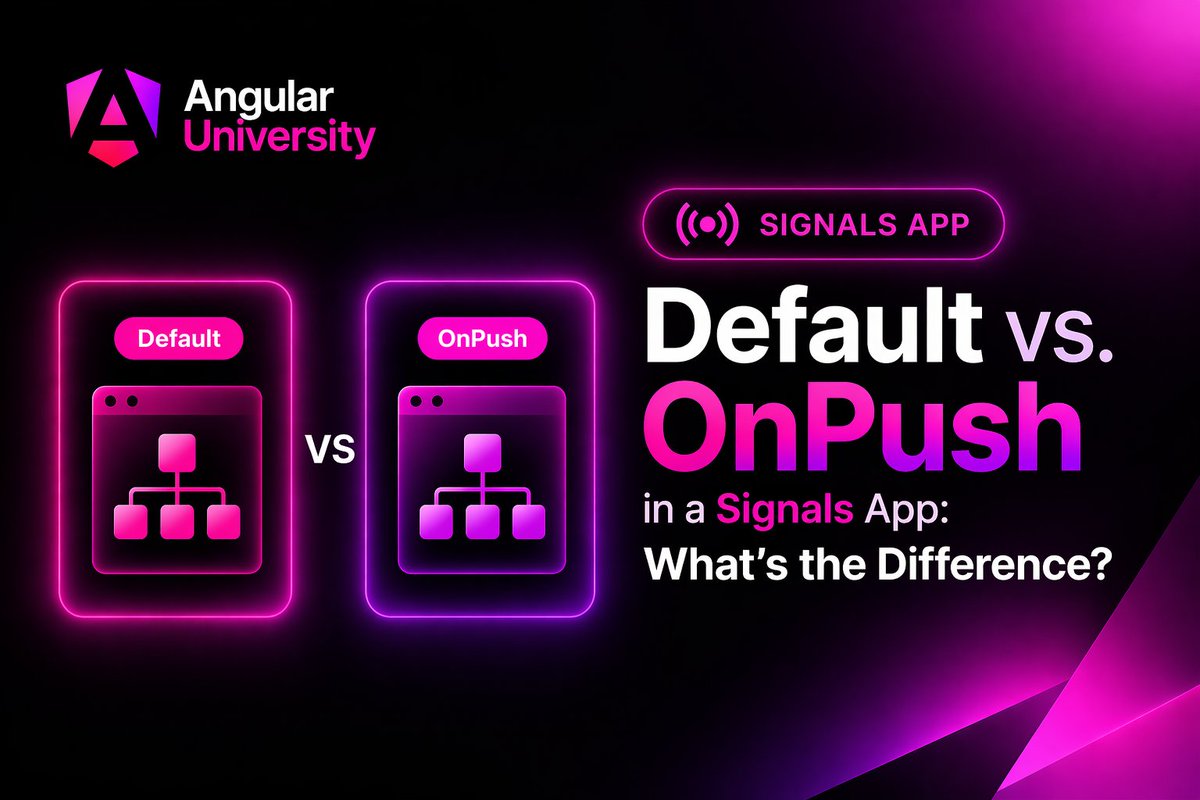
🚦💥𝗗𝗶𝗳𝗳𝗲𝗿𝗲𝗻𝗰𝗲 𝗯𝗲𝘁𝘄𝗲𝗲𝗻 𝗗𝗲𝗳𝗮𝘂𝗹𝘁 𝗖𝗵𝗮𝗻𝗴𝗲 𝗗𝗲𝘁𝗲𝗰𝘁𝗶𝗼𝗻 𝗮𝗻𝗱 𝗢𝗻𝗣𝘂𝘀𝗵 𝗶𝗻 𝗮 𝟭𝟬𝟬% 𝘀𝗶𝗴𝗻𝗮𝗹𝘀-𝗯𝗮𝘀𝗲𝗱 𝗭𝗼𝗻𝗲𝗹𝗲𝘀𝘀 𝗮𝗽𝗽𝗹𝗶𝗰𝗮𝘁𝗶𝗼𝗻?
In practice, no meaningful difference. But still very interesting to know why:
𝗛𝗼𝘄 𝘀𝗶𝗴𝗻𝗮𝗹𝘀 𝗱𝗿𝗶𝘃𝗲 𝗰𝗵𝗮𝗻𝗴𝗲 𝗱𝗲𝘁𝗲𝗰𝘁𝗶𝗼𝗻
When a signal is read in a template, Angular's reactive graph records that dependency. When the signal updates, Angular internally calls markForCheck() on that component — regardless of its change detection strategy.
Both Default and OnPush get marked dirty and re-rendered by the same mechanism.
𝗪𝗵𝗮𝘁 𝗢𝗻𝗣𝘂𝘀𝗵 𝘄𝗮𝘀 𝗮𝗰𝘁𝘂𝗮𝗹𝗹𝘆 𝘀𝗼𝗹𝘃𝗶𝗻𝗴
OnPush was designed to opt out of the Zone.js-driven "check everything" cycle.
Without it, Zone.js would patch every setTimeout, Promise, XHR, etc. and trigger a full top-down tree walk.
OnPush let you say "only check me if my inputs changed or Iwas explicitly marked dirty."
In a zoneless app, that problem doesn't exist. There is no global tick.
Either:
1 - A signal marks a component dirty
2 - Or you mark the component has dirty yourself explicitly
Notice that the async pipe will also mark the component as dirty, but here I'm assuming a signals-only app.
In a signal-based zoneless app, there's no runaway Zone.js cycle to protect against.
𝗪𝗵𝗮𝘁 𝗵𝗮𝗽𝗽𝗲𝗻𝘀 𝗶𝗳 𝘀𝗶𝗴𝗻𝗮𝗹𝘀 𝗮𝗿𝗲 𝗯𝘆𝗽𝗮𝘀𝘀𝗲𝗱
In this exact type of application, if you accidentally bypass signals — a direct property mutation, a class field updated without signal.set(), etc. — nothing happens.
This hold true for both Default and OnPush - again this is true for a zoneless application specifically.
In a disciplined signals-only codebase that's actually a non-issue - every data modification goes via a signal.
𝗔𝗻𝗴𝘂𝗹𝗮𝗿'𝘀 𝗱𝗶𝗿𝗲𝗰𝘁𝗶𝗼𝗻
In the long term, it looks like fine-grained signal reactivity replaces the more coarse-grained Default/OnPush distinction entirely.
The more concrete near-term step is github.com/angular/angular/d…,
which proposes making OnPush the schematic default in Angular 22 — because in a signals-first world, Default becomes the odd choice rather than OnPush.
#angular #angular21 #angular22 #onpush #changedetection
6
40
1,844

Apr 6
𝗪𝗵𝘆 𝗱𝗼𝗲𝘀 𝗱𝗮𝗶𝗹𝘆 𝗺𝗼𝗻𝗶𝘁𝗼𝗿𝗶𝗻𝗴 𝗺𝗮𝘁𝘁𝗲𝗿 𝗶𝗻 𝗺𝗶𝗻𝗶𝗻𝗴?
Mining landscapes can change rapidly, often in ways that are difficult to capture through periodic observation alone.
#Mining #ChangeDetection #RemoteSensing #EarthObservation #SatelliteMonitoring
1
4
77


🌍 No labeled/registered images? No problem! 🔥 S3FCD revolutionizes remote sensing change detection with single-temporal self-supervised learning—no expert annotations needed! 🚀 1.4k views can’t be wrong.
#RemoteSensing #AIInnovation #ChangeDetection #SelfSupervisedLearning #TechBreakthrough
Link[doi.org/10.1080/10095020.202…]
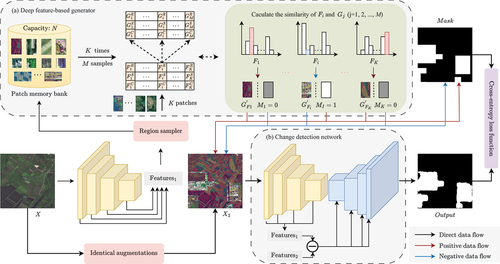
ALT Figure 2. The overall framework of S3FCD. (a) is the deep feature-based generator, which is designed to generate realistic training samples. It selects 𝐾 patches (𝐹𝑖) from the region sampler and 𝑀 samples (𝐺𝑗) from the patch memory bank and calculates the similarity between each 𝐹𝑖 and the 𝑀 samples of 𝐺𝑗. An extremely small threshold is set to differentiate between positive and negative sample sets, which are subsequently sorted by their similarity. Finally, with 50% probability, a positive or negative sample is randomly chosen, and a 𝑋2 sample is generated along with the corresponding mask. (b) is the change detection network, serving the primary purpose of identifying changes between bi-temporal images.
3
8
400
#Collaboration is what turns engineering ambition into operational reality.
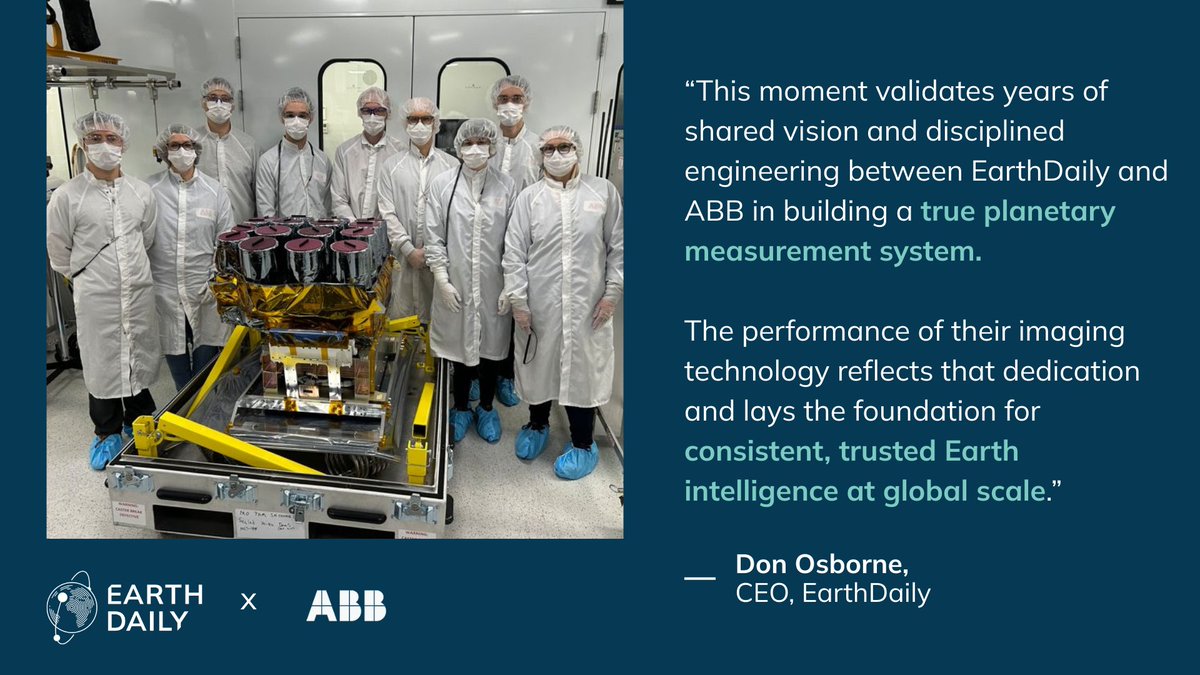
We’re proud to see @ABBgroupnews share the story behind the early imagery release from the #EarthDailyConstellation. Engineering a 22-band, science-grade change detection system requires deep collaboration across spacecraft design, payload integration, and performance validation. #ABB’s expertise in space-qualified systems has been an important part of bringing this architecture to life.
👉Read the full story here on hubs.li/Q045C4GJ0
#ChangeDetection #EarthObservation #MeasurementAndAnalytics
3
176

Mar 4
Stop Repeating This in Every Angular Project! 🛑
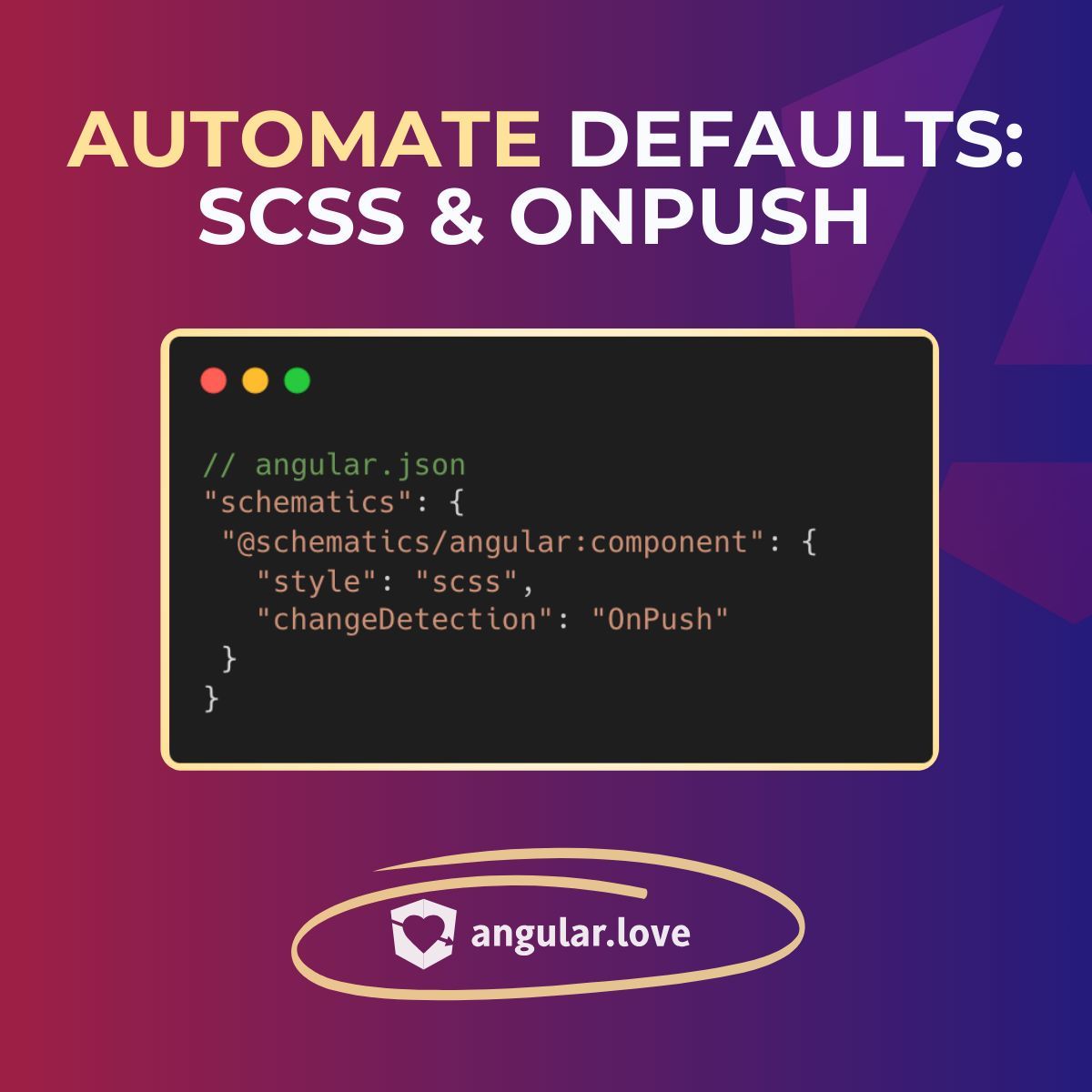
Tired of setting style: scss and changeDetection: OnPush every single time you generate a component?
Just make it the default once and forget about it 😎
Now every ng generate component will use SCSS by default and enable OnPush change detection
Follow best practices automatically
⚡ Clean.
⚡ Performant.
⚡ Enterprise-ready.
✒️ Author: GDE Sunny Gupta, a content creator who enjoys sharing helpful Angular tips on his Instagram. Be sure to check it out! → buff.ly/BAb8JCc
#Angular #WebDevelopment #Frontend #TypeScript #AngularTips #CleanCode #EnterpriseAngular
20
670

Feb 25
Desperately want to remove needing to add “changeDetection: ChangeDetectionStrategy.OnPush” in apps which are entirely new, Zoneless and Signals-based - would love to be able to set the “default” to OnPush in the same way “standalone: true” did.
2
5
611
Sixteen imagers. Twenty-two bands. Daily global coverage.
What does it actually take to build a science-grade measurement system in orbit?
Our latest piece in @SpaceNews_Inc breaks down the engineering behind @EarthDailyA #constellation — calibration, thermal stability, ground architecture, and why we release data as a quality milestone, not a pixel milestone.
👉Click to read:
hubs.li/Q044bxJq0
#EarthObservation #SpaceEngineering #ChangeDetection
1
4
417
Fresh off the release of early imagery from our first satellite, we’re heading to #DGI2026 in London.
Visit us at #Booth23 to learn more about the #EarthDailyConstellation.
Meet Eric von Eckartsberg (CRO) and Peter Round (VP, Defence & Intelligence) to discuss our 22-band, science-grade change detection system and what calibrated, persistent measurement means for GEOINT.
See you in London.
#EarthObservation #ChangeDetection #GEOINT

3
259