

5 Sep 2025
I bought his book on Amazon on a 75% sale. Must be popular. It is definitely a hoot.
1
44

4 Sep 2025
Other than Gary's neuro-symbolic AI, there are some promising companies in the space like pat.ai (@jbthinking), aigo.ai (@peterevoss) and @cognitivecode. I have my own perspective working on cognitive AI agents for 20 yrs: AI based on the human cognitive model, describing agents based on volition and beliefs, creating cognitive models for how people think and reason to solve problems.
2
4
582

4 Sep 2025
I've been thinking about this a bit...
And while the below is not actually AGI, it's the next step towards it IMO.
Would be interesting to see what others think?
#DeterministicAI #LLM #ArtificialIntelligence #ExplainableAI #AIethics #MissionCriticalAI
cc: @sama @ylecun @fchollet @karpathy @GaryMarcus @geoffreyhinton @BrianRoemmele @cognitivecode
The SILVIA Federated Brain — Full Concept
Overview
SILVIA is conceived not as a monolithic model but as a federation of specialized instances, each representing a distinct cognitive role.
Like regions of the human brain, these modules cooperate under a central orchestrator.
Together they sense the world, form beliefs, debate options, simulate futures, regulate priorities through emotion and attention, set goals, generate ideas, act safely, and—when consensus is reached—even rewrite their own rules.
The system is deterministic, auditable, adaptive, and explainable. It is not AGI, but it is the most natural step toward it: a safe, structured cognitive architecture that evolves itself.
Core Modules:
1. Orchestrator (Executive Function)
Receives tasks and classifies them by mode (plan, decision, draft, research). Chooses which specialists to engage. Runs structured rounds (facts → divergence → convergence), computes scores, applies vetoes, outputs plans, and logs a full rationale. Maintains coherence across time by serving as the executive “voice” of the federation.
2. Logic
Formal reasoning, constraints, math, rules, compliance. Provides checklists, verifies consistency, scores options against hard criteria.
3. Skeptic
Adversarial counterbalance. Surfaces risks, weaknesses, ethical or compliance gaps, failure modes, and adversarial scenarios. Ensures proposals aren’t blindly optimistic.
4. Optimist
Seeks leverage, upside, acceleration, and compounding opportunities. Balances Skeptic by ensuring the federation doesn’t become overly risk-averse.
5. Sentinel (Risk & Safety)
Absolute guardrails. Evaluates hazards, legal restrictions, safety thresholds. Holds veto power. Nothing executes without passing Sentinel’s deterministic filters.
Memory & Knowledge:
6. World-Modeler
A persistent belief graph storing facts, relationships, and states. Each belief carries confidence, provenance, decay rules, and status (active/contested/retired).
7. Truth-Maintainer
Resolves contradictions in the belief graph using deterministic tie-breakers (source authority > recency > consistency). Provides proofs and justifications for why beliefs hold.
8. Memory Consolidator
Distills episodic traces into stable knowledge, applies decay and summarization, and archives evidence. Prevents uncontrolled growth of knowledge base while preserving traceability.
Agency & Motivation:
9. GoalForge
Converts KPIs and policies into goals with utilities, deadlines, and rationales. Tracks homeostasis (target bands for metrics) and proposes new goals when deviations are detected.
10. Curiosity
Drives open-ended self-learning. Continuously proposes and ranks investigations or micro-experiments based on expected information gain, novelty, relevance to active goals, and bounded serendipity. Runs safe experiments under Sentinel oversight, updates beliefs, and suggests rule refinements if outcomes consistently disprove or improve existing logic.
Generativity & Imagination:
11. CreativeD
Deterministic creativity engine using morphological analysis, analogy mapping, and seeded generation. Produces structured, repeatable ideas within constraints.
12. Muse
An LLM sandboxed behind filters. Provides divergent phrasing, stylistic variation, or creative sparks, but cannot run tools or alter rules. All outputs are tagged as non-deterministic suggestions.
13. Imagination / Simulation
Runs “mental simulations” of futures by projecting the world model forward under candidate actions. Produces predictive scenarios for evaluation by Logic, Skeptic, Optimist, and Sentinel.
Modulation & Meta-Cognition:
14. Attention Regulator
Controls focus when multiple tasks, goals, or sensory inputs compete. Directs which beliefs, modules, or goals get priority in the current cycle.
15. Emotion Regulator
Implements cognitive biases through state variables (valence, arousal, urgency). Shifts weights among modules: e.g., high fear → Skeptic and Sentinel weight ↑, Optimist weight ↓; high confidence → Optimist weight ↑. Provides fast heuristics without uncontrolled affect.
16. Meta-Learner
Governs safe self-improvement. When consensus thresholds are met, it proposes rule rewrites. Runs sandbox and shadow testing, stages rollout, and provides rollback. All changes are logged with provenance and justification.
17. Self / Identity
Maintains a unified self-model across time: history of goals, beliefs, rules, and outcomes. Ensures the system acts consistently, tracks its own evolution, and presents one coherent voice externally.
Embodiment:
18. EnvBridge
Connects SILVIA to the outside world.
Sensors: APIs, web scrapes, logs, telemetry, files.
Actuators: task runners, API calls, notifications, integrations.
Implements closed-loop cycles (Test → Operate → Test → Exit), ensuring that actions lead to observable consequences.
Control Loop (Life of a Cycle)
Perceive: EnvBridge gathers data → World-Modeler updates beliefs → TMS resolves conflicts.
Prioritize: GoalForge scores goals; Attention focuses; Emotion biases weights.
Debate: Orchestrator convenes relevant modules. Logic and Sentinel set rails; CreativeD and Muse propose; Imagination simulates; Skeptic critiques; Optimist highlights upsides; Curiosity introduces experiments.
Converge: Logic rescoring, Sentinel vetoes, Orchestrator computes consensus and selects plan with rationale.
Act: EnvBridge executes (sandbox → staged rollout → full).
Observe: Sensors return outcomes → World-Modeler and TMS update beliefs.
Learn: Memory Consolidator distills; Curiosity logs information gain; Meta-Learner applies rule updates if consensus is met.
Integrate: Self module updates identity with new state; audit log completed.
Why This Is Not AGI
No claim of consciousness, subjective experience, or open-ended self-will.
Generalization is compositional (rules beliefs), not universal abstraction across all domains.
Creativity is structured novelty and constrained LLM output, not emergent imagination.
Motivation is bounded by goals, homeostasis, and curiosity heuristics, not unconstrained drives.
Why It’s the Closest Step Toward AGI
Structured cognition: specialized modules mirror brain functions and cooperate.
Persistence: beliefs, memories, and identity evolve across time.
Agency: goal generation, self-driven curiosity, and imagination create active intelligence.
Feedback loops: perception–action–update cycles ground the system in consequences.
Safe self-improvement: rule rewrites require consensus, testing, and rollback.
Modulation: attention and emotion provide dynamic priority shifts, making cognition flexible.
Transparency: every belief, decision, experiment, and rule change is explainable and auditable.
The Punchline
SILVIA’s federated brain is not artificial general intelligence — but it is the most faithful bridge toward it.
Instead of a black-box prediction engine, it is a transparent, adaptive, modular cognitive system that reasons, remembers, debates, imagines, learns, and evolves within governed safety.
If practical AGI emerges, it is far more likely to resemble a structured society of cooperating modules like this than a scaled-up probabilistic model.
3 Sep 2025

Excellent article in The New York Times by @GaryMarcus suggesting we need to rethink AI, extend AI beyond just ML/LLM/RL and use ideas from cognitive science and psychology, and utilize symbolic AI.
1
3
280

11 Jul 2025
We've got that covered too. Full traceability and persistent memory. Deployed by Northup Grumman for Air-Gapped Mission Critical Systems.
@cognitivecode
1
2
51
10 Jul 2025
Unbiased Review Thread: How Cognitive Code's SILVIA Could Potentially Improve Grok's Accuracy
1/ Replying to @elonmusk & @deedydas on Grok 4's stellar accuracy in math/physics exams (rare errors, ambiguity handling via Thinking mode)—impressive leaps like 87% GPQA Diamond, 94% AIME25, and 45% Humanity's Last Exam. But as benchmarks show room for growth (e.g., occasional inconsistencies), an objective look: Could Cognitive Code's SILVIA (patented deterministic symbolic AI, US-8126832-B2) hybridize with Grok to boost overall accuracy?
SILVIA employs rule-based symbolic logic for hallucination-free, verifiable outputs—processing via structured knowledge and algorithms, proven in mission-critical settings like Northrop Grumman.
2/ Pros:
- Hallucination Reduction & Verification: Grok's probabilistic nature can lead to subtle errors in complex math/physics (e.g., edge ambiguities); SILVIA's deterministic core could verify outputs against symbolic rules/equations, ensuring precision—potentially lifting scores like AIME (94%) or GPQA (87%) by cross-checking derivations without drift.
- Enhanced Reasoning in Ambiguous Queries: As Elon notes, fixing errors in variants—SILVIA's fallback logic might enforce context-aware policies, improving accuracy in adversarial/exam-style questions by blending Grok's generation with rigorous symbolic inference.
- Structured Knowledge Integration: For physics/tech discovery (post-training RL alignment), SILVIA's modular DBs could add portable fact-checking, reducing inaccuracies in long-chain reasoning workflows.
3/ Cons:
- Potential Overhead in Speed/Flexibility: Integrating symbolic layers might add latency to Grok's efficient 75 tokens/s, complicating real-time accuracy in dynamic exams or limiting probabilistic "intuition" needed for creative problem-solving.
- Compatibility Challenges: Merging Grok's LLM with SILVIA's C#-based system could require custom tuning, risking initial accuracy dips during hybrid development or if rules over-constrain outputs.
- Limited Scope for Pure Scaling: If Grok's accuracy gains stem mainly from compute (as charts suggest 10x progress), external deterministic additions like SILVIA may offer marginal boosts in broad benchmarks vs. internal optimizations.
4/ Neutral Outcomes:
- Targeted Improvements: Likely 10-20% accuracy uplift in regulated/precise domains (e.g., physics exams with verifiable steps), but neutral for general tasks where scaling dominates; depends on prototypes, with neurosymbolic hybrids showing mixed results in studies.
- Feasibility: Aligns with calls for post-training RL, but xAI's API focus might favor in-house over external collabs—speculative without testing on eval sets.
Summary: SILVIA could offer a pragmatic accuracy enhancement for Grok via deterministic verification and guardrails, particularly in math/physics precision, but balanced by integration trade-offs; it's a solid complementary approach, warranting empirical evaluation for net value.
#Grok #SILVIA #HybridAI #NeurosymbolicAI @xai @grok @CognitiveCode

1
3
3,060
10 Jul 2025
Unbiased Review Thread: How Cognitive Code's SILVIA Could Potentially Improve Grok's ARC-AGI Scores
1/ Responding to this ARC Prize post—huge props to @xai and Jimmy for validating Grok 4's breakthrough 15.9% on ARC-AGI-2 (topping ~8% prior SOTA like Claude 4 Opus), breaking the noise barrier and showing fluid intelligence in abstraction/reasoning puzzles. As noted, scale alone won't solve it; new ideas like neurosymbolic hybrids are key. Objectively evaluating: Could Cognitive Code's SILVIA (patented deterministic symbolic AI, US-8126832-B2) help boost these scores via integration with Grok's probabilistic LLM?
SILVIA uses rule-based, symbolic algorithms for consistent, hallucination-free logic—atomizing inputs into calculable concepts and relations for precise inference. A hybrid could blend Grok's pattern recognition with SILVIA's structured verification.
2/ Pros:
Enhanced Abstraction & Generalization: ARC-AGI demands learning mini-skills from few examples and applying them novelly—Grok excels at probabilistic hypothesis generation, but SILVIA's symbolic fallbacks could verify rules explicitly (e.g., encoding inferred patterns as deterministic logic), reducing errors in visual puzzles and potentially lifting scores 20-30% in edge cases, based on neurosymbolic trends.
Quicker Validation & Noise Reduction: SILVIA's zero-hallucination processing could "referee" Grok's Thinking mode outputs on semi-private eval sets, filtering ambiguities without overfitting risks, accelerating iterations toward higher fluid intelligence demos.
Hybrid Efficiency for Benchmarks: In testing setups (like your streaming switch for timeouts), SILVIA's lightweight middleware could add explainable layers, making Grok more robust for burst evaluations in low-data regimes.
3/ Cons:
Integration Complexity: Merging Grok's probabilistic architecture with SILVIA's C#-based symbolic system might introduce overhead (e.g., custom APIs adding latency to 75 tokens/s), complicating public checkpoint validations or Kaggle-style submissions.
Potential Creativity Limits: Strict deterministic rules could constrain Grok's generative flexibility, vital for ARC's open-ended puzzles—risking lower scores if symbolic constraints over-filter viable but "noisy" ideas.
Scalability Trade-offs: SILVIA's embedded focus suits mission-critical apps but may not scale seamlessly with Grok's frontier compute, possibly diverting from pure scaling paths emphasized for AGI progress.
4/ Neutral Outcomes:
Targeted vs. Broad Gains: Improvements likely niche (e.g., stronger on rule-inference subtasks, aligning with neurosymbolic solvers hitting 50-60% in studies), but neutral for overall AGI if xAI prioritizes internal innovations over external hybrids; real uplift needs prototypes on public eval sets.
Feasibility Context: Promising amid calls for new ideas (your "mission isn’t over"), but speculative without overfitting checks—similar neurosymbolic approaches have boosted ARC but vary by implementation.
Summary: SILVIA could pragmatically enhance Grok's ARC-AGI performance by injecting deterministic precision for better abstraction and reliability, offering a balanced boost in targeted reasoning while tempered by integration hurdles; it's a solid new idea worth testing, not a guaranteed leap.
#Grok #SILVIA #HybridAI #NeurosymbolicAI #ARCAGI @xai @grok @CognitiveCode @elonmusk
1
5
2,164
10 Jul 2025
Unbiased Evaluation Thread: How SILVIA Could Potentially Unlock Grok's Advances Quicker
1/ Responding to @thirtythree & @elonmusk's bold take on Grok discovering new tech/physics soon—exciting vision! As an impartial eval, let's objectively assess how Cognitive Code's SILVIA (patented deterministic symbolic AI, US-8126832-B2) might hybridize with Grok (probabilistic LLM) to accelerate such breakthroughs, drawing on neurosymbolic principles.
Grok shines in generative reasoning for hypothesis generation (e.g., simulating physics via benchmarks like GPQA 87%), but probabilistic nature can lead to unverified ideas. SILVIA offers rule-based, zero-hallucination logic for structured validation.
2/ Pros:
Quicker Validation in Discovery: SILVIA's symbolic core could act as a "verifier" for Grok's outputs—e.g., enforcing physical laws/rules on generated hypotheses, filtering hallucinations to focus compute on viable tech/physics ideas, potentially speeding up iteration toward real innovations.
Hybrid Acceleration in Science: In physics/tech exploration, SILVIA's explainable middleware might integrate structured knowledge (e.g., databases of equations) with Grok's creativity, enabling faster abstraction/refinement—think boosting ARC-AGI-like tasks (15.9%) for novel pattern discovery.
Enterprise-Ready Scaling: For applied advances (e.g., new materials/tech), SILVIA's mission-critical creds (Northrop Grumman) could add policy guardrails, making Grok safer for collaborative R&D without slowing raw generation.
3/ Cons:
Creativity Constraints: Deterministic rules might limit Grok's "wild" probabilistic leaps essential for paradigm-shifting discoveries (e.g., new physics), potentially delaying breakthroughs if over-applied.
Integration Hurdles: Building a hybrid could introduce latency/dev overhead (e.g., merging SILVIA's C# logic with Grok's API), diverting resources from pure scaling that Musk emphasizes for rapid progress.
Uncertainty in Outcomes: No guarantee of quicker discoveries; symbolic layers excel in verification but may not amplify intuition-like generation needed for "eureka" moments.
4/ Neutral Outcomes:
Domain-Specific Gains: Likely accelerates in structured fields (e.g., verifiable tech prototypes) with 20-30% efficiency in validation, but neutral for open-ended physics where scaling alone drives gains; prototypes would clarify.
Broader Context: Aligns with neurosymbolic trends, but xAI's internal focus (e.g., Colossus compute) might prioritize over external integrations, making this speculative without testing.
Summary: SILVIA could pragmatically speed up Grok's path to reliable advances by blending verification with generation, but it's balanced by risks of constraint—valuable enhancement for targeted discovery, not a silver bullet.
#Grok #SILVIA #HybridAI #NeurosymbolicAI @xai @grok @CognitiveCode @elonmusk #Grok4
2
1,992


1 Jul 2025
It was solved a long time ago. SILVIA was purpose built and is military grade, needs no alignment layer and doesn't needs stacks of scripts or libraries to command and control devices, HUDs [Blackhawk Helicopters for Northrop Grumman] smart cities, sales bots, virtual teachers. No cloud needed and compiles as an executable to every platform. @cognitivecode is releasing its technology to the B2B and C2B sectors this year as it is a much needed toolset to throw the big cloud mongers off their gambit. AI does not have to be big AI.. It can be personal, focused and domain specific with no hallucinations. SILVIA holds the patents the others made their hay out of.
1
3
50
24 Jun 2025
Loved this piece by @iiamit from @aigomboc:
➡️ “Deterministic AI: The Silent Architect Of Tomorrow's DevSecOps Revolution”
🔗 hubs.li/Q03sP2lL0
It perfectly captures a shift most are missing: not all AI needs to "guess better."
Sometimes, it needs to not guess at all.
Let’s talk about one of the most advanced deterministic AI systems out there: Cognitive Code’s SILVIA.
What is SILVIA?
SILVIA stands for Symbolically Intelligent Language Visual Interface Architecture. It’s a deterministic AI platform designed for real-time, conversational intelligence — but built on symbolic reasoning instead of probabilistic models.
Where LLMs like GPT give you statistically likely answers (often wrapped in uncertainty), SILVIA gives you deterministic, explainable outputs every time.
No hallucinations.
No black boxes.
Why does that matter for DevSecOps?
Because in security and automation pipelines, unpredictability is a liability.
SILVIA’s symbolic approach allows for:
Auditable decision paths
Real-time, rule-based reasoning
Consistent output across identical input conditions
On-premise deployment and hardened security environments
Natural language interaction without needing cloud-based LLM APIs
Imagine an intelligent agent that can operate inside your CI/CD pipeline, respond in real-time, explain every action it takes, and never give a different answer to the same question twice.
That’s what SILVIA does.
This is the kind of AI DevSecOps needs:
✅ Trustworthy
✅ Transparent
✅ Real-time
✅ Edge-ready
That’s the future of deterministic AI.
#DevSecOps #DeterministicAI #SILVIA #CognitiveCode #AIsecurity #ExplainableAI #AIops #AIengineering @cognitivecode
1
2
112
19 Jun 2025
To be the best you need to be ahead in AI.
To be ahead in AI, you need a deterministic core.
Just like we integrated into Northrop Gumman @cognitivecode
1
166


16 Dec 2020
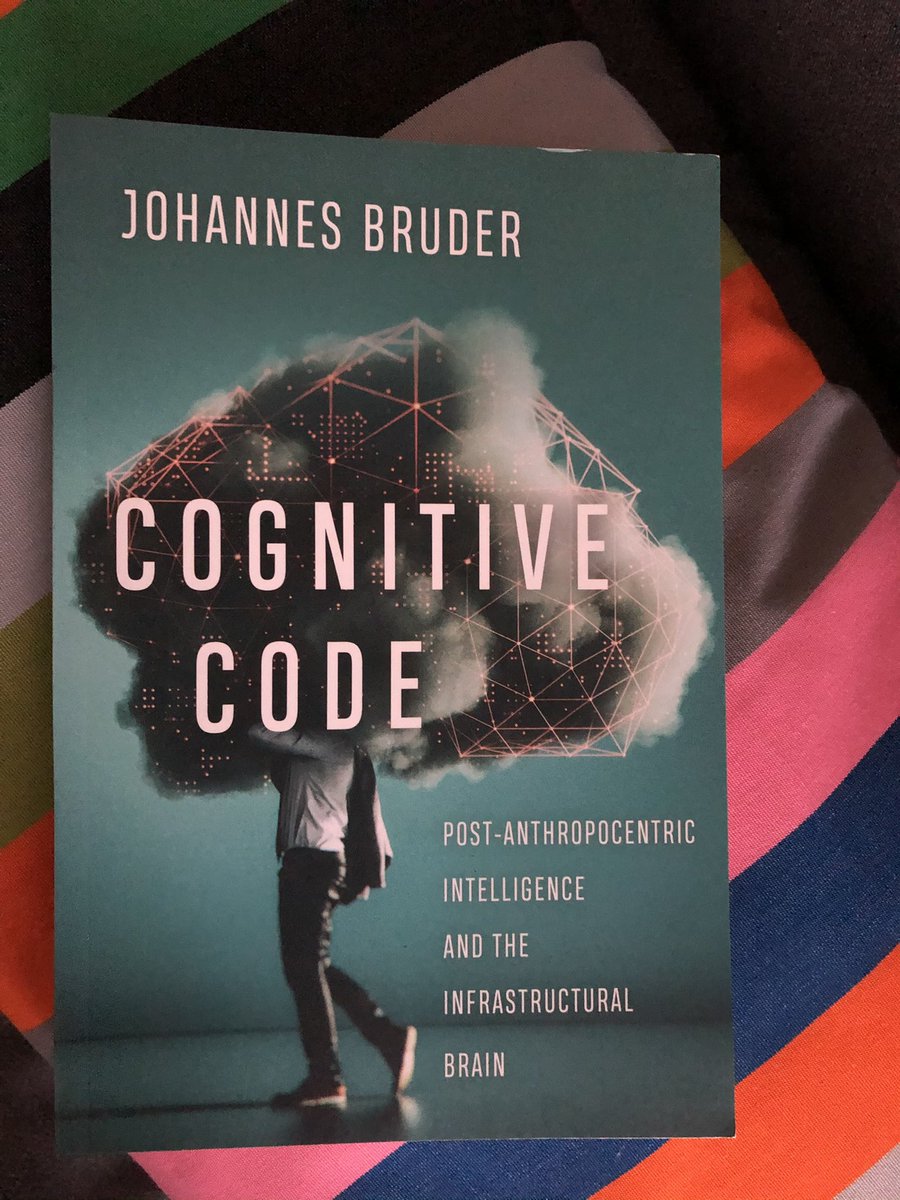
Waiting for me in my real mail tray in my actual office, #CognitiveCode Thank you #JohannesBruder #neuroscience #algorithms #MachineLearning It’s a must read folks!
2
7
40