
Feb 20
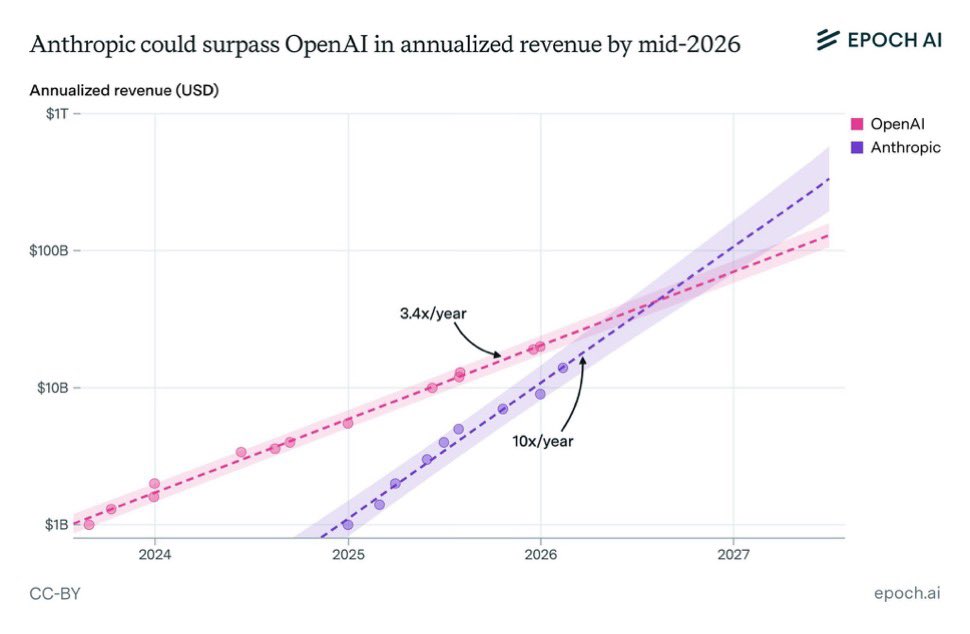
$ANTHROPIC is projected to surpass $OPENAI in revenue later this year.
Not because it has a better chatbot.
But because enterprise AI adoption is scaling faster than consumer AI.
And scaling enterprise AI means one thing:
Compute.
Anthropic already:
• Runs large Claude workloads on $AMZN AWS
• Secures TPU capacity from $GOOGL
• Commits billions in long-term infrastructure
In fact, partnerships with hyperscalers are expected to bring over a gigawatt of AI compute capacity online by 2026.
This isn’t a model race anymore.
It’s a compute procurement race.
Yet today, AI companies still:
– Can’t forward-price GPU capacity
– Can’t hedge compute exposure
– Can’t manage infra volatility
– Depend on opaque hyperscaler contracts
Imagine planning a multi-year AI deployment…
…without knowing what your most critical input will cost next quarter.
At ByteStrike, we’re building the market infrastructure to:
→ Financialize AI Compute
→ Enable price discovery for GPU capacity
→ Introduce forward contracts for compute
→ Unlock liquidity across fragmented global supply
Turning compute from a fixed cost…
…into a tradable digital commodity.
$NVDA builds the chips.
ByteStrike builds the market.
Financializing AI Compute.
byte-strike.com
#AI #Cloud #GPU #ComputeMarkets #DigitalCommodities #EnterpriseAI #AIInfrastructure #Datacenter
$META
Feb 20

NEW IN: Anthropic is projected to surpass OpenAI in revenue later this year.
4
79
Feb 20
$GOOGL Cloud just grew 48% YoY with a $240B backlog.
And now we know why.
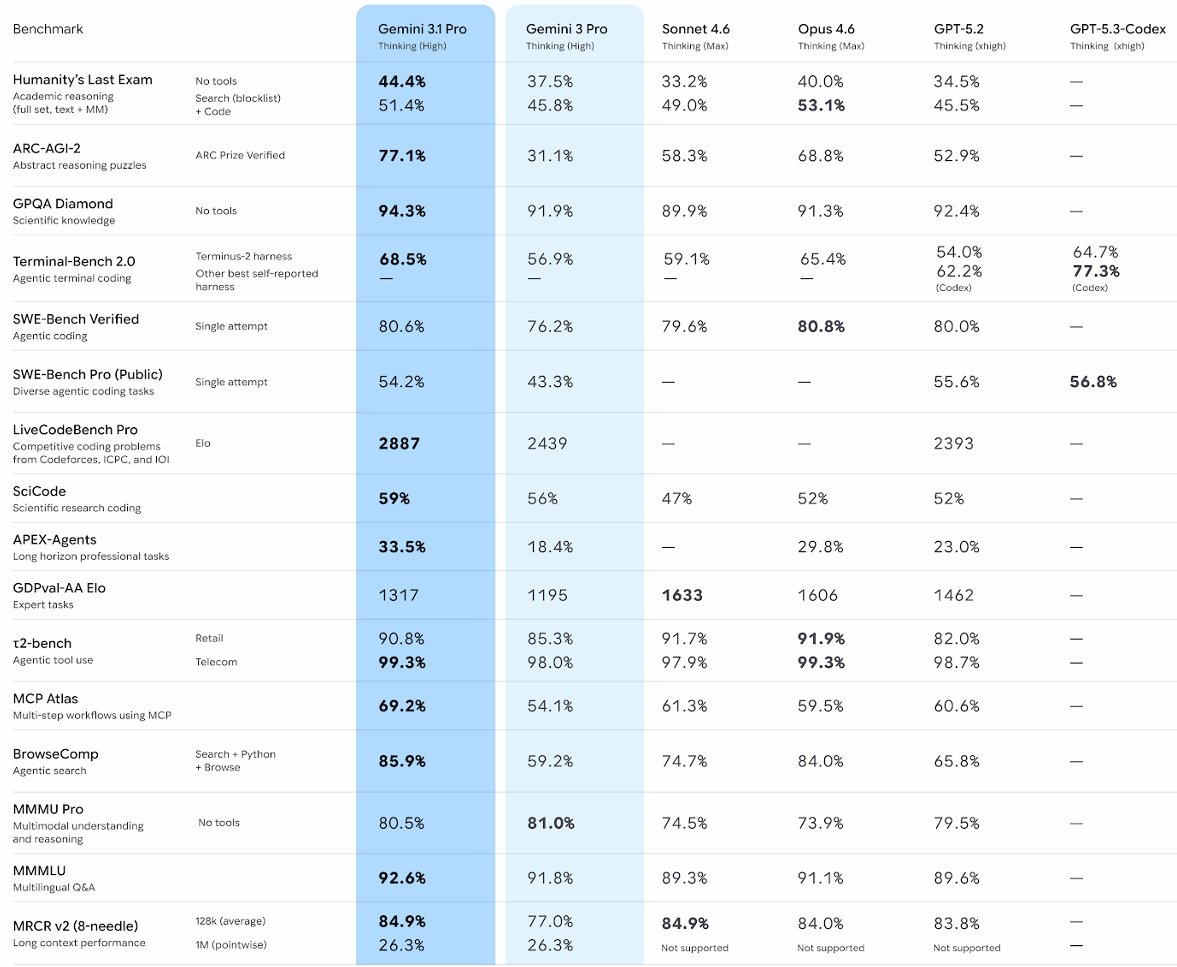
Gemini 3.1 Pro is leading across multiple reasoning, coding, and agentic benchmarks, pushing enterprise AI demand to new highs.
But here’s what most people are missing:
Google’s own CEO has already stated they are operating in a supply constrained environment due to surging compute demand across AI services.
This is no longer a model race.
It’s a compute race.
Every frontier model breakthrough, whether from $GOOGL $MSFT $AMZN or $NVDA, increases:
• GPU demand
• Power requirements
• Data center utilization
• Long-term infrastructure commitments
Yet AI compute, one of the most critical inputs to enterprise AI, is still procured through static cloud contracts with:
– No forward pricing
– Limited supply visibility
– Zero hedging mechanisms
– Vendor-locked ecosystems
Imagine scaling mission-critical AI workloads…
…on infrastructure you can’t reliably price 12 months out.
At ByteStrike, we’re building the market infrastructure to:
→ Financialize AI Compute
→ Enable price discovery for GPU capacity
→ Introduce forward contracts for compute
→ Unlock liquidity across fragmented global supply
Turning compute from a fixed cost…
…into a tradable digital commodity.
The next phase of AI won’t be bottlenecked by models.
It will be bottlenecked by access to compute.
Financializing AI Compute.
byte-strike.com
#AI #Cloud #GPU #ComputeMarkets #DigitalCommodities #AIInfrastructure #EnterpriseAI #Datacenter #NVIDIA
Feb 19

$GOOGL Cloud grew 48% last quarter with a $240B backlog and now we know why.
Gemini 3.1 Pro just took the #1 spot across multiple agentic AI and coding benchmarks.
1
3
127
Feb 19
$OPENAI is reportedly closing in on a ~$100B funding round at an ~$850B valuation.
With backing from $MSFT $AMZN $NVDA and SoftBank, this isn’t venture funding.
It’s infrastructure financing for the AI arms race.
Because scaling frontier models isn’t just about better algorithms anymore.
It’s about who can secure:
• GPU supply
• Power capacity
• Data center access
• Long-term compute availability
And today, AI compute is:
– Scarce
– Regionally fragmented
– Price volatile
– Locked inside hyperscaler ecosystems
Yet enterprises are still procuring one of their most critical AI inputs through static cloud contracts with zero price transparency or hedging mechanisms.
Imagine running a trillion-dollar AI roadmap…
…on infrastructure you can’t forward-price.
At ByteStrike, we’re building the market layer to:
→ Financialize AI Compute
→ Enable price discovery for GPU capacity
→ Introduce forward contracts for compute
→ Unlock liquidity across fragmented global supply
Turning compute from a fixed cost…
…into a tradable digital commodity.
The next phase of AI won’t be bottlenecked by models.
It will be bottlenecked by access to compute.
ByteStrike is building the rails for that future.
Financializing AI Compute.
byte-strike.com
#AI #Cloud #GPU #ComputeMarkets #DigitalCommodities #AIInfrastructure #Datacenter #EnterpriseAI #NVIDIA
Feb 19
OpenAI is finalizing a new ~$100B funding round that would value the company at ~$830B.
For context, $META is ~$1.6T with 3.6B daily users & $200B in revenue while OpenAI is ~$12B ARR with ~800M weekly users and still burning cash.
Make this make sense.


1
3
149


5 Dec 2025
Need 2d art for your project? Dm me now!
#AgenticEconomy #DeFAI #WAGBAI #StrategicReserve #BitcoinAct #SovereignDebt #Hyperliquid #HYPE #ChillGuy #PENGU #PIPPIN #UnitBias #RWA #PayFi #ParallelEVM #Monad #SentinelAgents #Swarm #ComputeMarkets #Inference #2d #2dartistry


1
4
593

2 Dec 2025
(3)
This is why BlackRock, banks, and nation-states are circling:
Tokenization is the bridge between AI economies and global capital.
2026: the year the world wakes up.
We’re early. 🤖📈
#AIInvesting #Crypto #DigitalAssets #ComputeMarkets
3
21

take note
@cysic_xyz testnet phase 2 closes nov 10, proofs dropped from ~5s to ~1.2s, and the SDK v0.2.1 shipped multi‑agent orchestration. verifiable AI with gears and receipts
why you should care: compute turns into a market where work is priced, verified, and paid. proof‑of‑compute audits agents, and GPUs stop idling. early PoW energy for the post‑gas era #ComputeMarkets
my playbook:
> run 10 agent jobs on testnet
> farm yaps in the yapper program
> line up for mainnet beta tge in Q1 2026
> prep to stake for compute credits governance
november will be loud AF, get yapping now
1
2
20

2 Nov 2025
zero‑knowledge meets zero friction is wild enough
but @cysic_xyz making compute a *market* you can plug into?
AI cycles as tradable infra, priced in motion instead of blocks
post‑gas era PoW vibes with flow replacing dust
tokenless until the trust layer crystallizes → feels like the kind of infra you don’t notice until it’s everywhere
#ComputeMarkets might just be the next big liquidity zone for brainpower
2 Nov 2025

Compute ≠ static anymore.
It’s flow, it’s priced work, it’s market logic mapped onto math.
@cysic_xyz turning AI cycles into tradable infrastructure, tokenless until value crystallizes in motion.
Reminds me of the first sparks of PoW but optimized for the post‑gas era.
Dust monetized by proofs → flow monetized by trust.
Zero‑knowledge meets zero friction. #ComputeMarkets @cysic_xyz
11
11
14,532

2 Nov 2025
Compute ≠ static anymore.
It’s flow, it’s priced work, it’s market logic mapped onto math.
@cysic_xyz turning AI cycles into tradable infrastructure, tokenless until value crystallizes in motion.
Reminds me of the first sparks of PoW but optimized for the post‑gas era.
Dust monetized by proofs → flow monetized by trust.
Zero‑knowledge meets zero friction. #ComputeMarkets @cysic_xyz
2 Nov 2025

wild that compute itself turning tradable now
@cysic_xyz feels like early proof‑of‑work energy but cleaner, tokenless till flow arrives
zk jobs as markets, AI cycles priced not dreamed
you blink, it’s revenue where there was dust
2
5
187

1 Nov 2025
Signals to watch & content that lands on Starboard:
Track royalty issuance volume, secondary NFT yields vs raw inference revenue, % of AID flow routed to royalties, average waterfall latency (proof → payout), and tranche spread (senior vs junior yield). Post concrete data: a screenshot of a recent royalty waterfall (redact sensitive data), a short case study showing upfront funding vs ongoing payouts, or a mini-table of “royalty APR vs inference volume” those signals cut through hype and earn credibility (and Aura).
@gaib_ai
#ComputeMarkets #GPUtokenization #ModelRoyalties
8
41
1 Nov 2025
Real-world wins & use cases
• Indie devs: pay only for the exact compute needed to run experiments or deploy small models.
• Enterprises: dynamically scale pipelines without locking capital in long-term infrastructure.
• Operators: monetize idle GPUs, generate predictable revenue streams, and improve utilization.
• Institutions: invest in fractional compute exposure, hedging risk while capturing yield. Dynamic leasing transforms raw GPU hours into an investable, bankable infrastructure product.
#ComputeMarkets #GPUtokenization #RWAiFi
9
48
1 Nov 2025
Dynamic GPU Leasing Markets the next frontier where compute capacity becomes flexible, on-demand, and yield-generating.
GAIB lets operators lease GPU time in fractional, verifiable slots that are tokenized and tradeable. Developers pay per block of usage in $AID, while sAID stakers earn streaming yield from leased capacity.
How it works:
• Operators register GPU capacity and set leasing terms (duration, SLA, latency).
• Smart contracts manage fractional allocation, usage verification via on-chain proofs, and automated settlements.
• Developers can aggregate multiple slots across operators to assemble scalable pipelines.
Why it matters:
• Unlocks unused GPU inventory as revenue.
• Developers gain elastic, pay-as-you-go compute without upfront CapEx.
• Institutions can invest in fractional compute exposure with predictable returns.
Signals to watch: leasing volume, fraction of idle GPUs utilized, yield per slot, SLA compliance, and sAID streaming from leased compute.
With GAIB, compute isn’t just hardware it’s a liquid, investable infrastructure asset fueling AI at scale. 🚀
@gaib_ai
#ComputeMarkets #DynamicGPU #OnChainCompute #DeFiMeetsAI
49
47
47
895
31 Oct 2025
Real-world implications:
• Operators: monetize reliability, earn streaming yield, and attract premium jobs.
• Developers/enterprises: select nodes confidently reduce model downtime & SLA risk.
• Investors: back high-reputation GPU portfolios, hedge risk, and structure tranches with predictable returns.
Result: compute reliability turns into a verifiable, investable asset class, not just a service metric. #ComputeMarkets #AIFi #RWAiFi
6
56
31 Oct 2025
Compute Reputation Markets turning GPU reliability into on-chain trust and investable value
GAIB tracks verified performance across operators: uptime, latency, energy efficiency, and SLA compliance become reputation tokens that are tradeable, stakable, and yield-generating.
How it works:
• Operators earn reputation by completing verifiable GPU runs with anchored proofs.
• Reputation tokens influence allocation priority, yield rates, and insurance premiums.
• Developers pay for high-reputation nodes with AID; stakers of sAID earn streaming yield proportional to the reliability their reputation unlocks.
Why it matters:
• Aligns incentives: reliable operators earn more, underperformers get penalized.
• Developers & enterprises can select nodes with confidence, reducing downtime risk.
• Institutional capital can underwrite GPU portfolios with transparent, performance-backed signals.
Signals to monitor: reputation token issuance, redemption velocity, correlation with SLA performance, and sAID yield generated from high-reputation nodes.
With GAIB, compute reliability is no longer opaque it becomes auditable, investable, and monetizable infrastructure. 🚀
@gaib_ai
#ComputeMarkets #OnChainReputation #GPUtokenization #DeFiMeetsAI
48
55
60
1,032
31 Oct 2025
Track: maintenance credit issuance growth, repair-to-claim latency, error-rate vs premium spreads, and sAID yield contribution from uptime gains. Share short case screenshots of an attested repair receipt → on-chain payout flow (redacts sensitive logs) and tag @gaib_ai concrete proofs metrics = credibility, engagement, and Starboard traction.
#GAIB #ComputeMarkets #DeFiMeetsAI
5
27
31 Oct 2025
Predictive Maintenance Markets : turning GPU health into recurring yield and safer compute for everyone.
GAIB can monetize hardware telemetry: operators sell maintenance credits and health-backed notes (paid in AID) that fund proactive repairs, firmware patches, and spare part logistics buyers (LPs, treasuries) earn sAID-like streaming yield tied to reduced downtime and higher verified uptime.
How it works, simply:
• Nodes publish signed health telemetry (temperature, ECC, error-rates) → compact on-chain proofs.
• Market issues maintenance credits / bonds collateralized by GPU tokens and reserved AID streams.
• When telemetry predicts failure, credits pay for prioritized fixes; verified recovery triggers yield distribution to credit holders.
• Reputation-weighted pricing: reliable operators pay lower maintenance premiums; risky nodes pay more or get fewer reservations.
Why it matters:
• Operators: steady revenue for upkeep, higher utilization, lower catastrophic failures.
• Builders: predictable SLAs & lower interruption risk launches don’t hinge on surprise hardware failures.
• Institutional capital: buy a low-volatility income stream that’s mechanically tied to uptime improvements, not opaque spot revenue.
Key design & safeguards:
• TWAP’d health baselines, multi-source telemetry, and attested repair receipts prevent gaming.
• Layered capital (senior maintenance notes vs junior alpha notes) fits risk profiles.
• Optional reinsurance vaults for systemic hardware events.
Signals to watch: maintenance credit issuance, error-rate vs premium spreads, repair-to-claim latency, and sAID yield contribution from uptime gains.
Bottom line: by making upkeep a tradeable, yield-bearing product, GAIB moves compute from fragile hardware expense to bankable, credit-graded infrastructure real-world reliability engineered into the economics of AI. 🚀🔧
@gaib_ai
#ComputeMarkets #OnChainMaintenance #ComputeReliability #DeFiMeetsAI

47
56
59
1,065
30 Oct 2025
Signals to watch & tweet about (high-impact topics that attract attention):
• Verification rate (% of runs with clean proofs) and proof latency.
• Uptime / reliability score per operator and energy-efficiency tags.
• sAID yield contribution from proven compute vs unproven.
• Tranche issuance tied to benchmarked portfolios and insurance pool health (premium:claims).
Publicize short case studies (one verified run → payout path) or a screenshot of on-chain proof payout flow — those concrete signals cut through hype and earn credibility (and Aura). 📈🔥
@gaib_ai #ComputeMarkets #OnChainTrust #sAID
7
37
30 Oct 2025
GPU Provenance & Traceable Compute the hidden backbone turning raw GPU hours into auditable, investable infrastructure.
GAIB anchors every compute run with cryptographic proofs, creating verifiable records of performance, uptime, and energy use. These proofs let operators monetize reliability, treasuries underwrite GPU-backed tranches, and developers pay for guaranteed, SLA-compliant execution.
Why it matters:
• Operators earn premium yields for proven reliability.
• Developers gain confidence deploying mission-critical models.
• Investors can hedge, tranche, and securitize GPU revenue with on-chain transparency.
Signals to monitor: GPU utilization vs verified throughput, uptime scores, energy efficiency tagging, and sAID yield from proven compute.
GAIB transforms compute from opaque resource into bankable, auditable infrastructure bridging AI, finance, and real-world trust. 🚀
@gaib_ai #ComputeMarkets #OnChainProvenance #GPUtokenization #DeFiMeetsAI

52
58
54
1,024
30 Oct 2025
Deep Dive on Economics:
Edge lanes aren’t just about speed they unlock a micro-economy for compute: operators earn high-frequency yield streams for short inference bursts, while developers pay precisely for what they consume.
This reduces idle capacity, smooths revenue for edge nodes, and makes GPUs fungible at a hyper-local scale.
#ComputeMarkets #AIFi
5
75
30 Oct 2025
Edge Compute Markets: Latency meets liquidity
@gaib_ai is turning geo-distributed GPUs into tradeable, verifiable edge lanes, where developers buy low-latency, location-aware inference credits and operators earn $AID sAID yield streams.
How it works: nodes tag capacity with latency, region, and GPU specs; smart contracts route calls to optimal nodes; payments release only after on-chain proof of execution.
Why it matters: Apps hit sub-50ms inference without managing infra, operators monetize local GPUs predictably, and enterprises meet SLA data-residency rules. Edge compute becomes auditable, hedgeable, and investable infrastructure.
Signals to monitor: credit volumes vs cloud calls, latency spreads, premium for priority lanes, operator utilization, sAID yield from edge revenue.
With edge markets GAIB transforms compute from a generic cloud cost into a tradable, high-frequency infrastructure asset that scales real-time AI globally.
@gaib_ai
#GAIB #AID #sAID #AIFi #GPUtokenization #RWAiFi #ComputeMarkets #OnChainInference #EdgeCompute

46
34
30
740