
You forgot to add-up to the #ControlPlane of the K8s, #CloudControllerMgr, which helps with ALB, during the ingress {HTTP/S} global services requirements (#ControlMgr).
1
1
38


Control plane failures increasingly at center of cloud outages buff.ly/zJKaVXj? #ControlPlane #IT #CTO #CIO #CloudFailure #ITOperationalIndependence
8

Jun 8
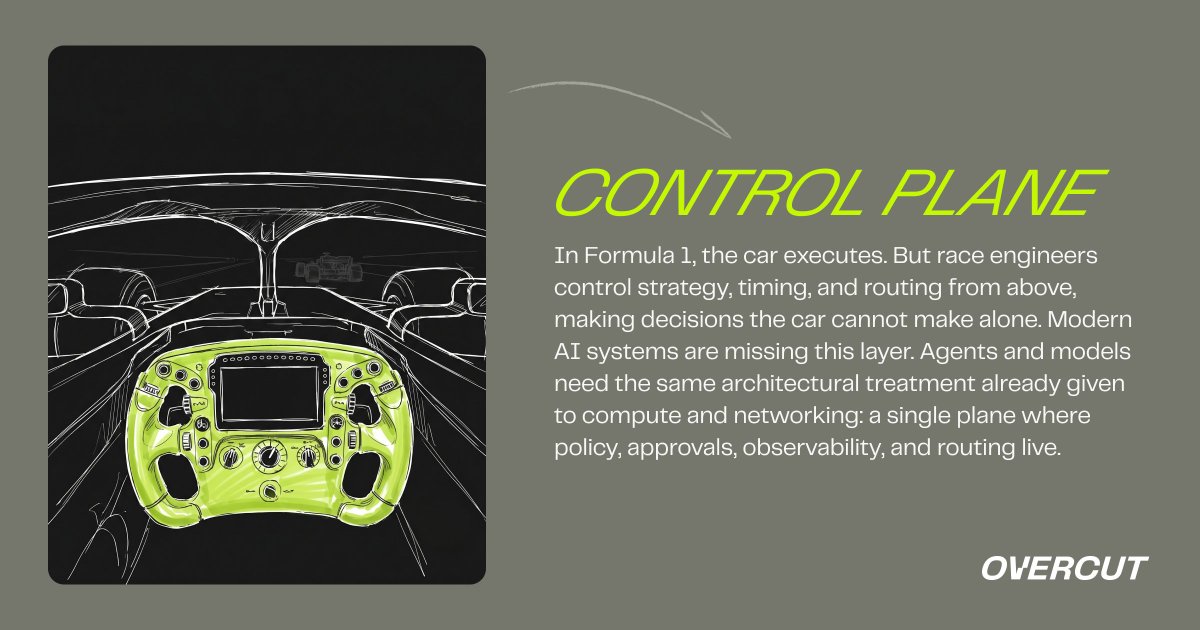
🏎️ Vocabulary Series #4: Control Plane
As AI systems become more capable, most of the attention continues to go toward the agents themselves. Which model should you use? How autonomous should the agent be? What tasks can it perform?
Those are important questions, but they miss a much bigger architectural shift that is happening.
The future of AI systems will not be defined by individual agents. It will be defined by the control planes that manage them.
Formula 1 provides a useful example. From the outside, it looks like the driver is in control. In reality, the driver is just one component in a much larger system. Engineers monitor telemetry, strategists analyze race conditions, and team leadership makes decisions about risk, timing, and execution. The driver executes, but the team coordinates.
The same principle applies to AI.
As organizations deploy more agents across engineering, operations, security, and support, they need a central layer responsible for governance, approvals, routing, policy enforcement, observability, and decision making. Without that layer, every agent becomes another isolated tool. With it, agents become part of a coordinated organizational system.
This is what a control plane does.
It sits above the execution layer and provides the visibility and governance required to operate AI at scale. It determines what can run, when it can run, who can approve it, which models should be used, and how outcomes are monitored across the organization.
The conversation around AI is gradually moving from building smarter agents to managing fleets of agents. When that happens, the control plane becomes more important than any individual model.
Just like in Formula 1, the winning advantage rarely comes from a single driver. It comes from the system that coordinates the entire operation.
#AgenticAI #ControlPlane #PlatformEngineering #SoftwareEngineering #AIAgents
2
70

The middleman you’re referring to is a lightweight controlplane - literally a lookup. Everything else is you talking to your server.
It cost Tailscale close to nothing to host it. Thats why its free.
144

Sandbox Probe is a great tool to find holes in your coding agent sandboxes. Created by Andrew Martin ( @sublimino ) and his team at ControlPlane - github.com/controlplaneio/sa…
4
20
2,220

May 14
Frontier models like #Mythos & #Daybreak excel at #securityreasoning, but discovery is only half the battle.
@shail_manjrekar breaks down why Operational #ControlPlane is the missing link to turn intelligence into governed action.
"A model can tell you a vulnerability exists, but it doesn't know your business criticality or rollback paths." @TheFabrixAI bridges gap between frontier reasoning & safe enterprise execution.
🔗fabrix.ai/blog/the-security-…
2
2
37

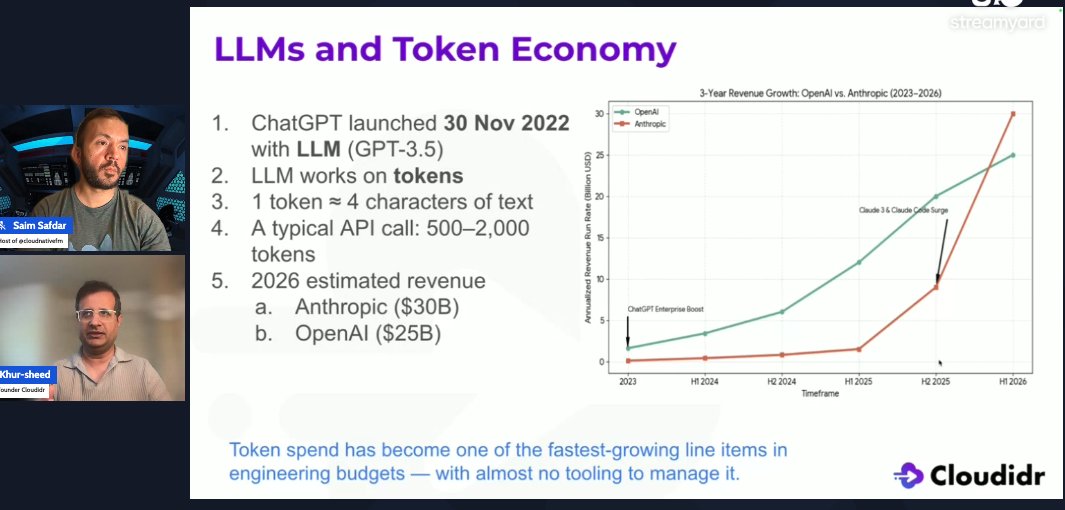
Learn @cloudidr approach of building an AI FinOps Controlplane, helping teams track cost by model, team, agent, and request, apply budget guardrails, and route traffic to the cheapest capable model without code changes.
Watch on @cloudnativefm
youtube.com/live/eytMDFkBtEQ

7
299

May 14
We are now Live learning the @cloudidr approach of building an AI FinOps Controlplane, helping teams track cost by model, team, agent, and request, apply budget guardrails, and route traffic to the cheapest capable model without code changes.
Join now: youtube.com/live/eytMDFkBtEQ
1
2
35

Mar 16
Ayer un colega de infra automatizando unos bonds con ia revento un cluster y tiro todo un controlplane de rhosp, se perdieron accesos completos y hubo intermitencia de servicio…existe un mundo donde el criterio se paga caro todavia (no se por cuanto tiempo)
4
421

Mar 13
ControlPlane launches enterprise support for OpenBao as IBM's $6.4bn HashiCorp acquisition increases demand for open source Vault alternatives. #OpenBao #HashiCorp #IBM #OpenSource #CloudSecurity techday.com.au/story/control…
2
3
197

Mar 12
Partnership Alert: ControlPlane unveils enterprise support for OpenBao
OpenBao gains enterprise-scale security alongside Vault alternatives as demand spikes from major IBM-HashiCorp deal.
Are you ready to switch to open-source safety at scale? 🔒🛡️
#CyberSecurity #InfoSec #Sa…
2
65

Mar 5
🛠️ DevLog – PyClaw Monorepo Direction & Module Map
We’ve been wiring more of the PyClaw core together (storage, context, memory, tools), and the main takeaway is: the overall architecture looks right - the hard work now is integration and design validation, not reinventing the structure.
🔹 Monorepo strategy (design decision)
- PyClaw will stay in one repo with many pyclaw-* cores:
- Fast cross-module fixes and atomic refactors
- Easier end-to-end tests and shared environments
- Each pyclaw-* module remains a separate package with its own contracts and tests
- We won’t split into many repos until APIs are very stable and/or there are distinct maintainers - priority is getting a solid v0, not repo gymnastics
🔹 Module map (current plan)
High-level modules we’re converging on (names can still evolve, but this is the shape):
Orchestration / Runtime:
- pyclaw-runtime – main orchestrator/daemon; wires sessions, brain, tools
- pyclaw-brain – agent loop (interpret → plan → act → verify → reflect)
- pyclaw-metagovernor – risk/budget signals and “require validation / escalate / stop” hints
Session, Storage, Artifacts:
- pyclaw-session – canonical event log for each run
- pyclaw-storage – SQLite record store backing sessions, memory, skills, etc.
- pyclaw-artifact – content-addressed blobs/files and retention policies
Context, LLM, Memory:
- pyclaw-context – prompt packing and strict context budgets
- pyclaw-llm – provider abstraction and routing (including Cortensor /delegate)
- pyclaw-compress – summarization/compaction to fight context bloat
- pyclaw-memory – long-term and working memory store
- pyclaw-identity – small, versioned agent profile capsule
Tools, Policy, Safety
- pyclaw-tools – tool host and plugin system (OS, HTTP, browser, etc.)
- pyclaw-policy – approvals and grants for risky or irreversible actions
- pyclaw-safety – guardrails and hard stops
Skills and Knowledge
- pyclaw-skill – procedural “how to” playbooks for tools
- pyclaw-registry – agent registry, capabilities, preferred routes
- pyclaw-a2a – local agent-to-agent queue (future multi-agent coordination)
Channels, Secrets, Diagnostics
- pyclaw-controlplane – channel adapters (CLI/chat/etc.) feeding the runtime
- pyclaw-controlplane-telegram – Telegram adapter (later more channels)
- pyclaw-secret – secrets loading and safe injection
- pyclaw-diagnostics – health checks and recovery helpers
🔹 What we’re doing right now
- Using this module split inside one repo to:
- Wire storage ↔ session ↔ context ↔ LLM ↔ tools in small end-to-end tests
- Shake out contract edges before we lean on PyClaw more heavily in the next phases
- No Telegram or external control plane yet - focus is core module integration and design validation, not full product UX
We’ll keep updating the PyClaw doc as this stabilizes:
docs.cortensor.network/commu…
#Cortensor #DevLog #PyClaw #AgentFramework #AgenticAI
Mar 5

🛠️ DevLog – PyClaw Design Update (Context, Policy, Telemetry)
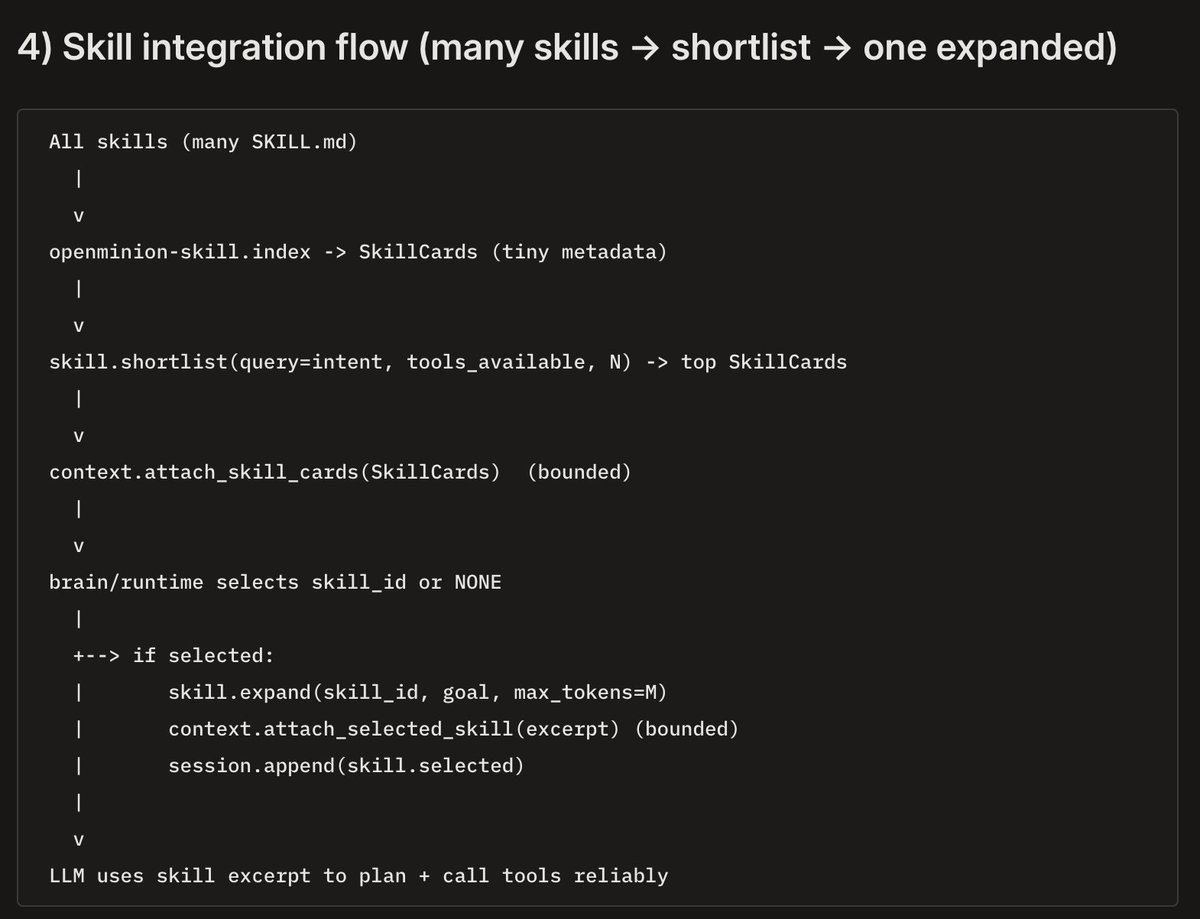
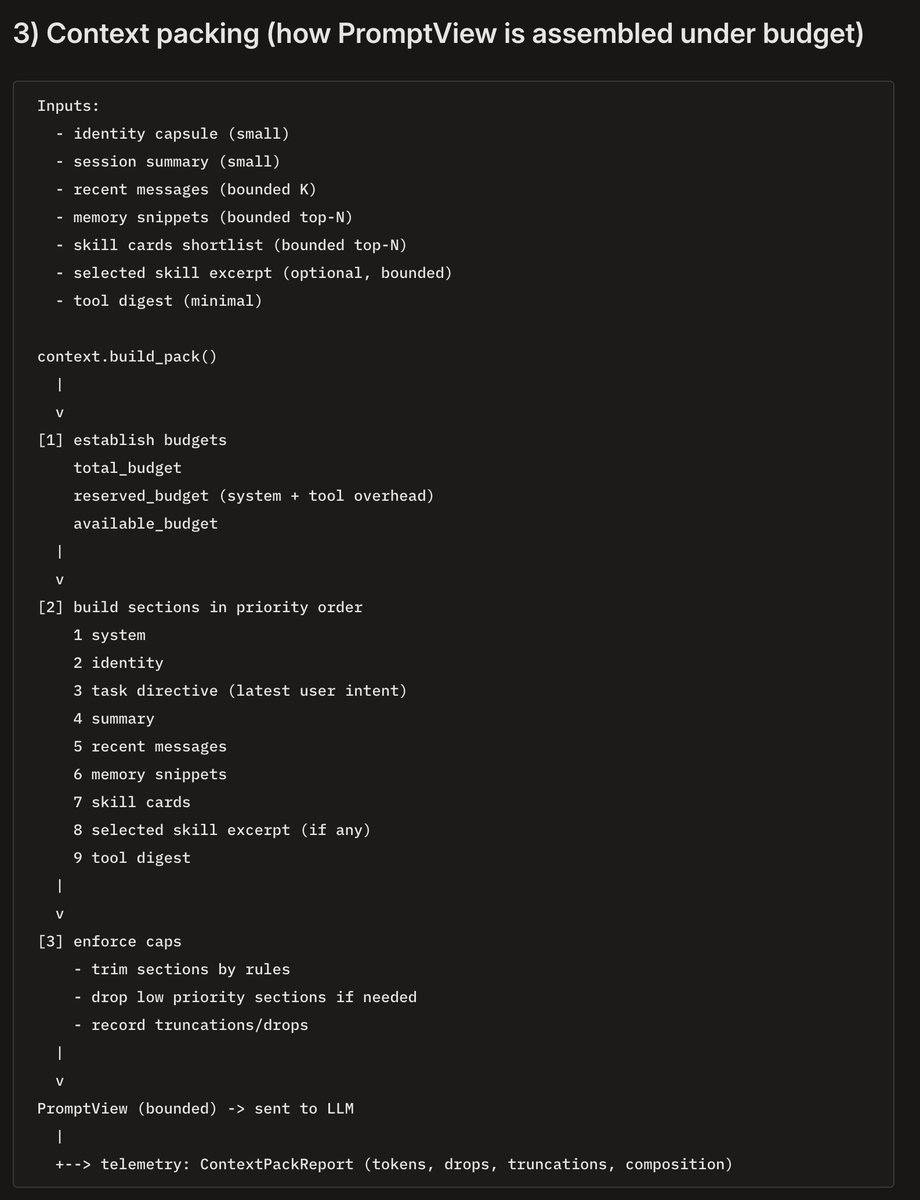
We’ve done another design pass on PyClaw and updated the doc with more concrete flows around context engineering, policy, and telemetry – still design/WIP, but getting sharper.
🔹 What’s now sketched in detail
- Runtime turn flow: from control event → run loop → packs → tool calls → final answer, with every step logged into the session store.
- Context packing (PromptView): full history stays in the session DB; each LLM call gets a compact view (identity, summary, recent window, top memories, skill cards, tool digest) under a strict token budget.
- Tool execution policy approvals: tools go through a policy layer that can allow, deny, or ask for approval (once / time window / until revoked) before execution.
- Telemetry flow: per-pack and per-turn metrics (token budget vs usage, drops/truncations, tool call counts, latency) wired for SQLite/JSONL now and OTEL later.
- Session durability V2 slots: append-only session history with artifact refs, plus early diagrams for multi-agent daemons, registry, and local/remote A2A messaging.
We’ll keep iterating this spec as we move PyClaw from “design doc” toward a real local-first agent runtime that talks to Cortensor as a first-class backend.
Doc (updated):
docs.cortensor.network/commu…
Diagrams: docs.cortensor.network/commu…
#Cortensor #DevLog #PyClaw #AgenticAI #ContextEngineering #DePIN
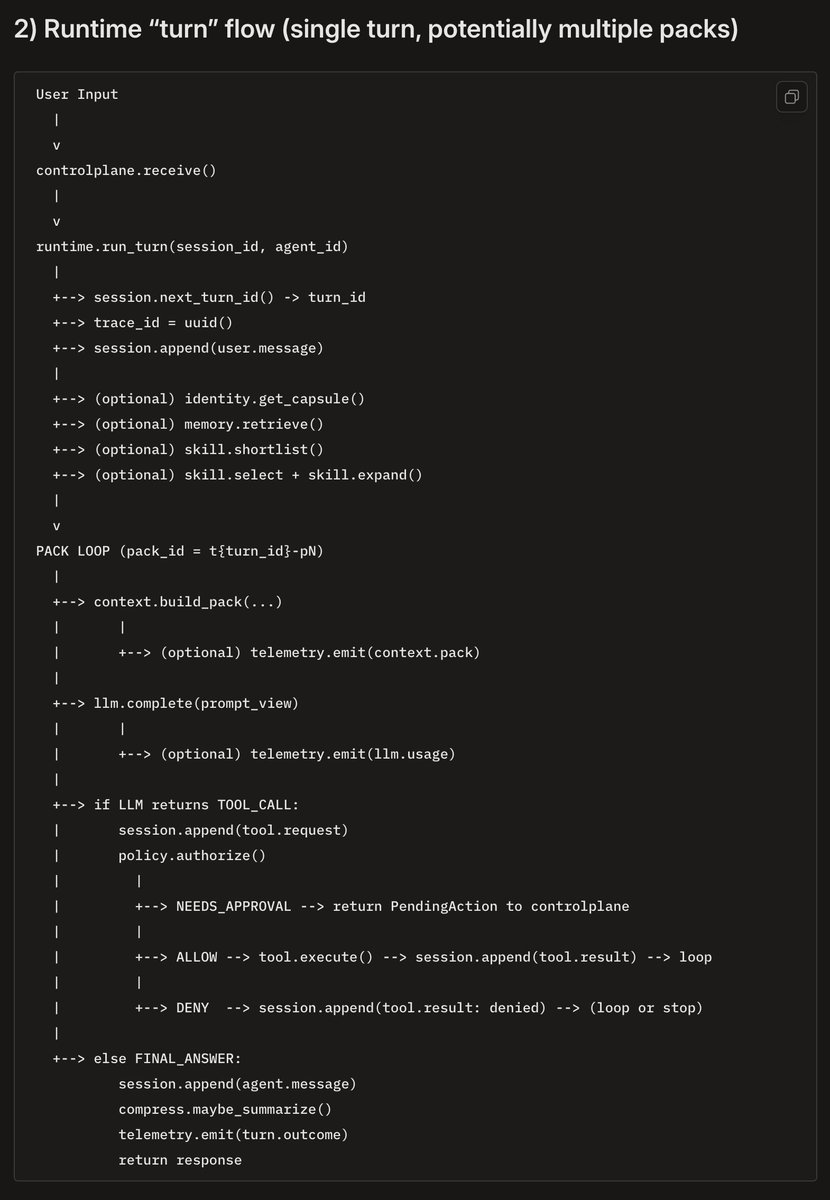
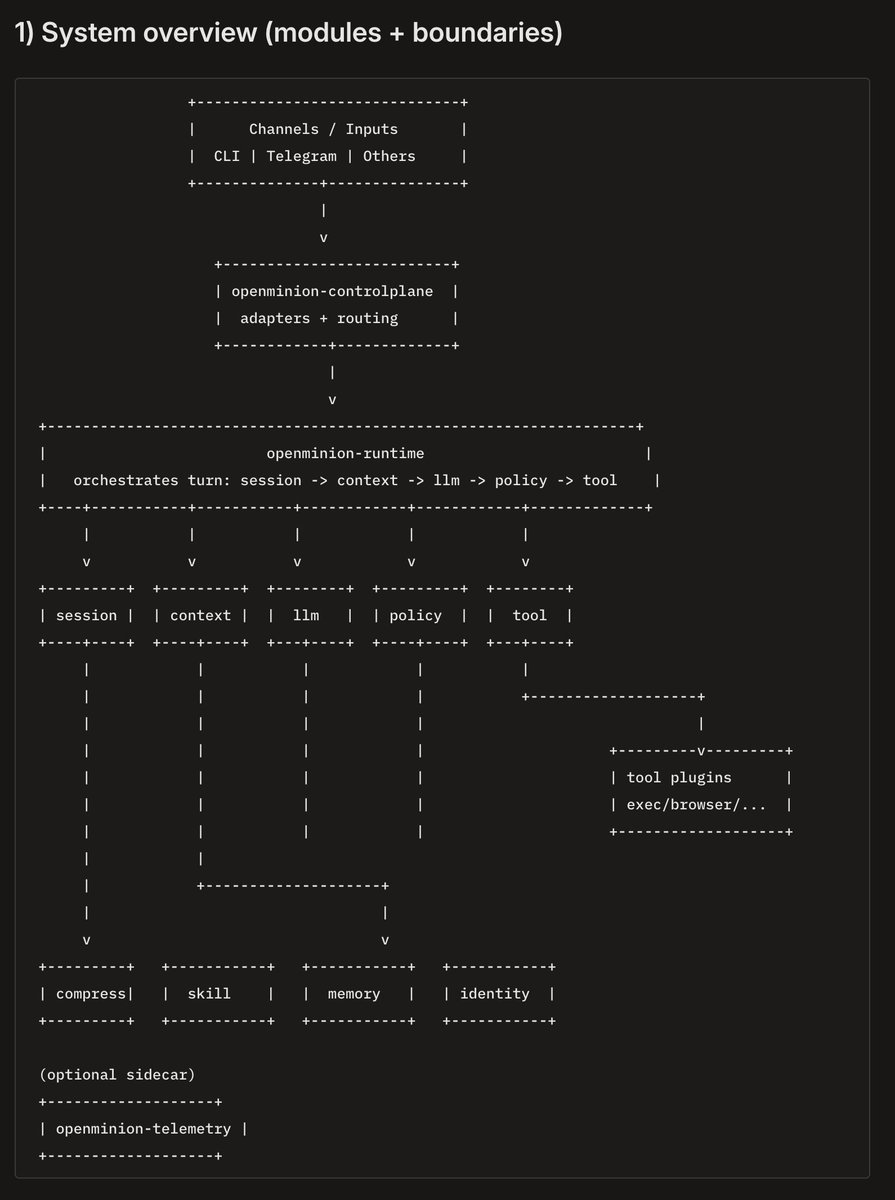
4
9
767
Mar 2
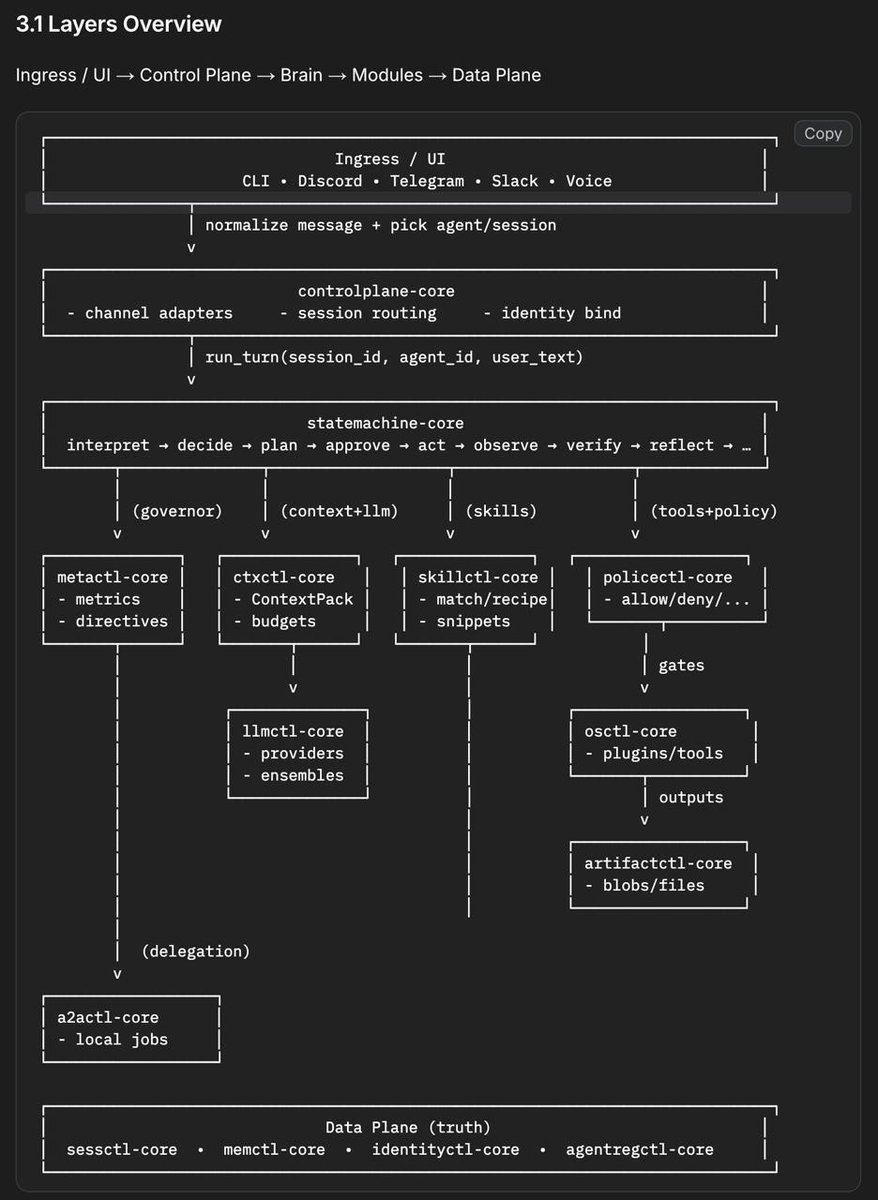
🧩 New Doc – PyClaw Agent Framework (Design Draft)
We’ve published a new PyClaw design doc that lays out how we’re thinking about a local-first agent framework that can eventually sit on top of Cortensor:
docs.cortensor.network/commu…
The page walks through:
- The core idea: a small set of *-ctl modules (control plane, state machine, memory, tools, safety, etc.) wired into one runtime that can later talk to Cortensor’s /delegate /validate.
- Each module’s role in one line (controlplane, statemachine, ctx/mem, tools, policy/safety, agent registry, A2A jobs, eval).
- How we’re approaching V1 (local, SQLite, easy debugging) vs V2 (remote agents, queues, object storage, stronger auth) without changing the core contracts or audit model.
This is still a living draft – we’ll keep refining it as the design and early implementation evolve.
#Cortensor #PyClaw #Agents #AgentFramework #DevLog #AgenticAI
Mar 2
🛠️ DevLog – PyClaw Agent Framework: Early Design Pass
PyClaw is evolving from a simple test harness into a local-first agent orchestration framework that can sit tightly on top of Cortensor’s /completion, /delegate, /validate, and factcheck surfaces.
🔹 What We’re Designing PyClaw For
- Local-first runtime: a control plane takes commands (CLI/chat/voice), routes them to the right agent/session, and keeps an audit log of everything.
- State-machine brain: interpret → plan → policy-gate → act → observe → reflect → improve, with tools memory context compaction to stay safe and efficient.
- Scaling path:
- V1 – fully local: SQLite, local transports, easy debugging.
- V2 – swap in remote agents, durable queues, object storage, and stronger auth without changing the core contracts or event/audit model.
- Execution: PyClaw orchestrates; Cortensor remains the decentralized execution verification fabric underneath.
🔹 Core Modules (1-liner each, still design-stage)
- controlplane-core – Channel adapters, command routing, global audit log.
- statemachine-core – Agent brain loop as a hierarchical state machine.
- identityctl-core – Role/personality/risk compressed into a tiny identity snippet version.
- sessctl-core – Event-sourced session truth: timelines, summaries, snapshots.
- ctxctl-core – Budgeted context packs with identity session injection and manifests/hashes.
- llmctl-core – Provider/model catalog, per-agent routes, and ensemble/judge patterns.
- policectl-core – Allow/deny/confirm/modify gates before any side effect.
- safetyctl-core – Stop/kill/panic switches and global execution locks.
- osctl-core – OS/tool control plugins, sandboxed exec, captured outputs.
- artifactctl-core – Content-addressed files, views, aliases, GC/cleanup.
- memctl-core – Scoped memory (facts/knowledge/procedures) with TTL promotion.
- agentregctl-core – Agent discovery, capabilities, endpoints, profile refs.
- a2actl-core – Local agent-to-agent jobs/queue, status and cancel.
- evalctl-core (optional) – Replay/regression harness with mock tools/LLMs.
This is design iteration, not a product launch yet. The goal is to make PyClaw a clean “agent brain control plane” that can lean on Cortensor for scalable, verifiable compute instead of re-implementing infra in every agent project.
#Cortensor #DevLog #PyClaw #AgentFramework #AgenticAI #Delegate #Validate #DePIN
3
9
20
732
Mar 2
🛠️ DevLog – PyClaw Agent Framework: Early Design Pass
PyClaw is evolving from a simple test harness into a local-first agent orchestration framework that can sit tightly on top of Cortensor’s /completion, /delegate, /validate, and factcheck surfaces.
🔹 What We’re Designing PyClaw For
- Local-first runtime: a control plane takes commands (CLI/chat/voice), routes them to the right agent/session, and keeps an audit log of everything.
- State-machine brain: interpret → plan → policy-gate → act → observe → reflect → improve, with tools memory context compaction to stay safe and efficient.
- Scaling path:
- V1 – fully local: SQLite, local transports, easy debugging.
- V2 – swap in remote agents, durable queues, object storage, and stronger auth without changing the core contracts or event/audit model.
- Execution: PyClaw orchestrates; Cortensor remains the decentralized execution verification fabric underneath.
🔹 Core Modules (1-liner each, still design-stage)
- controlplane-core – Channel adapters, command routing, global audit log.
- statemachine-core – Agent brain loop as a hierarchical state machine.
- identityctl-core – Role/personality/risk compressed into a tiny identity snippet version.
- sessctl-core – Event-sourced session truth: timelines, summaries, snapshots.
- ctxctl-core – Budgeted context packs with identity session injection and manifests/hashes.
- llmctl-core – Provider/model catalog, per-agent routes, and ensemble/judge patterns.
- policectl-core – Allow/deny/confirm/modify gates before any side effect.
- safetyctl-core – Stop/kill/panic switches and global execution locks.
- osctl-core – OS/tool control plugins, sandboxed exec, captured outputs.
- artifactctl-core – Content-addressed files, views, aliases, GC/cleanup.
- memctl-core – Scoped memory (facts/knowledge/procedures) with TTL promotion.
- agentregctl-core – Agent discovery, capabilities, endpoints, profile refs.
- a2actl-core – Local agent-to-agent jobs/queue, status and cancel.
- evalctl-core (optional) – Replay/regression harness with mock tools/LLMs.
This is design iteration, not a product launch yet. The goal is to make PyClaw a clean “agent brain control plane” that can lean on Cortensor for scalable, verifiable compute instead of re-implementing infra in every agent project.
#Cortensor #DevLog #PyClaw #AgentFramework #AgenticAI #Delegate #Validate #DePIN
1
7
17
590

Feb 1
afaict it's an unsolved problem. tough when the controlplane and dataplane aren't separate.
1
2
73

Again not familiar with the platform but a few observations from reading this (on a plane right now)
- it doesnt really matter if you land in a vm or a container if you can land in all of them
- still have SA tokens
- controlplane components running in a VM?
- is kubeproxy a vm?
1
2
1,336
You can execute code on other nodes allowing you to pivot from a workernode to a controlplane in a few commands that aren't logged by audit policy
1
3
1,435

Jan 17
I need to talk to the other people building orchestrators. @Steve_Yegge who else?
At this point I'm literally adding new features to CEPH, and rewriting the kubernetes controlplane to make k8s easier to operate as a human llm agent orchestration substrate.
2
2
324

Jan 7
We built a centralized controlplane in cloudflare on the edge that routes traffic to any provider. each provider is a few thousand lines of code. Takes less than a day to implement.
1
4
716