
19 years ago today, NATO defense ministers sat down in Brussels to figure out what the hell had just happened to Estonia. Two months earlier, Russian hackers had basically turned an entire country's internet into a smoking crater, and nobody quite knew what to do about it.
The whole thing started when Estonia moved a Soviet war memorial from downtown Tallinn to a cemetery. Moscow was furious. Within hours, coordinated cyberattacks slammed Estonian government sites, banks, telecom networks, and news outlets. The timing wasn't subtle: attacks peaked on May 9, Russia's Victory Day, with Russian-language attack instructions posted online for anyone to follow.
For days, Estonia's digital life ground to a halt. The Prime Minister's office went dark. Major banks like Hansabank couldn't process transactions. Mobile networks crashed. It was the first time anyone had watched an entire nation get cyber-mugged in real time.
Estonian investigators traced the attacks back to Russian IP addresses and found coordination happening in Russian forums where people shared target lists like they were trading baseball cards. The Kremlin denied involvement, naturally, but the sophistication and timing told a different story.
What made this a watershed moment wasn't just the scale. It was that Estonia, one of the most digitally advanced countries in Europe, got taken down by what were mostly basic distributed denial-of-service attacks. Some SQL attacks hit key servers, but US diplomatic cables later noted Estonia's network was never really at risk of total shutdown. The psychological impact was bigger than the technical damage.
NATO had been focused on protecting its own systems, not helping members defend theirs. The Estonian attacks changed that calculation overnight. By October 2007, NATO had hammered out its first cyber defense policy. By May 2008, they'd opened the Cooperative Cyber Defence Centre of Excellence in Tallinn, with James Mattis calling the need "compelling."
That center became home to the Tallinn Manual project, the most influential attempt to figure out how international law applies when nations start hacking each other. They're working on version three now, which tells you how fast this space keeps evolving.
The real legacy isn't the technical details. It's that 2007 Estonia showed how authoritarian states could mess with democracies without firing a shot. Russia proved you could cripple a NATO ally's daily life with laptops and internet connections. By 2016, NATO finally acknowledged that cyber attacks could trigger Article 5 collective defense.
Estonia got hit first, but it wasn't going to be the last. The playbook was written, tested, and ready for export. Every major cyber conflict since traces back to lessons learned in Tallinn that spring.
foreigninterference.org/post…
#foreigninterference #CoordinatedCyberWarfare #CriminalBotnetWeaponization #CyberEspionage #DDoSAttacks #DiplomaticCoercion #FinancialCyberTheft #GovernmentDestabilization #InfrastructureAttacks #WebsiteDefacement
1
57

Jun 11
Latin America Cyber Threats Escalate 26.9% in May
A surge in politically motivated DDoS and ransomware campaigns swept across Latin America and the Caribbean this May, crippling government portals and financial networks.
Telegram-based threat groups coordinated mass disruption efforts, shifting focus from data theft to visibility-driven chaos. As regional infrastructures face mounting pressure, organizations must evolve beyond reactive defense—embracing adaptive resilience and proactive threat intelligence to safeguard critical systems.
Read the full FalconFeeds Threat Report to secure your infrastructure: falconfeeds.io/reports/latin…
#Cybersecurity #ThreatIntelligence #ddosattacks #ransomware #telegramthreats #LatinAmericaSecurity #Cyberawareness #FalconFeeds
1
1
975

South Africa hit by DDoS (Distributed Denial of Service) attacks, everyday internet users face disruptions as cybercriminals expose vulnerabilities in the nation’s digital infrastructure.
Read on tinyurl.com/49jmejd4
#DDoSAttacks #Cybercrime #InternetDisruption #CyberSecurity
1
2
5
816

Building a practical foundation in cybersecurity? I walk through recon, social engineering, DoS variants, MITM techniques, spoofing, & malware types, with diagrams & real examples #CyberAttacks #NetworkSecurity #SpoofingAttacks #DoSAttacks #DDoSAttacks
linkedin.com/pulse/common-cy…
2
27
Jan 29
ASEAN’s cyber threat surge isn’t just growing, It’s Evolving.
In 2025, ASEAN saw 4,810 cyber incidents (66.6% jump YoY)
High-visibility attacks like DDoS and defacements dominated, while breaches and initial access sales quietly fueled a booming cybercrime economy.
There was also seen a sharp December spike proving threats can escalate faster than defenses.
From Public Infrastructure to Corporate Networks, attackers are testing every weak point. Understanding what’s happening underground is no longer optional, it’s mission critical.
Read the full report to see detailed:
Category → Observation → Recommendation breakdown, uncover emerging risks, and learn how to strengthen your defenses before the next attack hits.
falconfeeds.io/reports/asean…
#CyberSecurity #ASEANCyberThreats #CyberThreatLandscape #ThreatIntelligence #CyberCrime #DDoSAttacks #DataBreaches #CyberRisk #InformationSecurity #DigitalSecurity #CyberResilience #CriticalInfrastructure #EnterpriseSecurity #CyberDefense #SecurityAwareness #CyberTrends2025 #Falconfeeds
1
3
8
7,375
24 Nov 2025
The ASEAN cyber landscape cooled in volume this October, but not in complexity.
Our latest Threat Intelligence Report breaks down the 258 incidents shaping the region — from DDoS waves and data breaches to a diverse ransomware mix targeting high-value sectors.
A must-read for security leaders across government, finance, and critical industries.
Read the full breakdown here: falconfeeds.io/reports/asean…
#ASEANCyberThreats #CyberSecurityReport #ThreatIntelligence #DataBreachAwareness #RansomwareTrends #DDoSAttacks #SecurityLeadership #CriticalInfrastructure #CyberResilience #OctoberCyberInsights
1
9
22
10,935
31 Oct 2025
Europe saw fewer cyber incidents this September… But the attacks were smarter, more targeted, and harder to predict.
Here’s what stood out:
⚠️ 1,019 cyber incidents across Europe
🌐 DDoS crossed 50% of all attacks
🧑💻 25 ransomware groups active
🏭 Government & Manufacturing top targets
📱 Telegram remains attacker HQ
This isn’t a slowdown — it’s a tactical shift.
If you work in cybersecurity, you’ll want to see the full breakdown.
🔗 Read the complete report here: falconfeeds.io/reports/europ…
#CyberSecurity #CyberThreats #DDoSAttacks #Ransomware #EuropeanCybersecurity #IncidentResponse #TechTrends #CyberAwareness #DataProtection #ThreatIntelligence
2
4
1,335

25 Sep 2025
❌ "𝗦𝗼𝗿𝗿𝘆, 𝘄𝗲'𝗿𝗲 𝗲𝘅𝗽𝗲𝗿𝗶𝗲𝗻𝗰𝗶𝗻𝗴 𝘁𝗲𝗰𝗵𝗻𝗶𝗰𝗮𝗹 𝗱𝗶𝗳𝗳𝗶𝗰𝘂𝗹𝘁𝗶𝗲𝘀"
That ONE message can ruin your Indian #FestiveSales.
While you're planning promotions and stocking inventory, cybercriminals are planning their attack strategy. They see your peak sales as the perfect moment to strike.
Don't let #DDoSAttacks turn your biggest revenue opportunity into your biggest regret.
With Tata Communications DDoS Protection platform, your site is ready for the rush AND the attacks. 🛡️Always up. Always trusted. Always secure.
Know more: okt.to/XONHFM
1
1
3
217
5 Sep 2025
Threat actors don’t just choose how or who to attack—they choose when. From ransomware gangs mirroring 9-to-5 schedules to phishing waves timed with religious festivals and DDoS attacks synced to political unrest, timing is becoming one of the sharpest clues to attacker intent and origin.
🔎 Our latest blog unpacks how global time zones, cultural rhythms, and geopolitical calendars shape the tempo of cybercrime.
👉 Read the full analysis here: falconfeeds.io/blogs/strateg…
#CyberCrimeTiming #ThreatActorInsights #RansomwareTrends #PhishingPatterns #DDoSAttacks #GeopoliticalCybersecurity #CulturalRhythms #CyberAwareness #DigitalSecurity #TimingIsEverything
1
5
1,532
1 Sep 2025
Europe logged 1,034 cyber incidents in July 2025—a sharp reminder that the region’s digital battlefield is only getting more complex.
From relentless DDoS campaigns to the steady rise of ransomware gangs like Qilin, Akira, and SAFEPAY, the report uncovers how attackers are reshaping strategies, targeting critical sectors, and exploiting underground platforms to stay ahead.
But behind the numbers lies a bigger story:
👉 Why do certain industries keep taking the hardest hits?
👉 Are mid-tier ransomware groups the next wave of cybercrime giants?
👉 And how much of this activity is tied to geopolitics?
We’ve unpacked these questions—and more—in our Threat Intelligence Report: Europe – July 2025.
🔗 Read the full report on our website: falconfeeds.io/reports/europ…
#CyberSecurity #ThreatIntelligence #EuropeCyberReport #Ransomware #DDoSAttacks #CyberCrimeTrends #Geopolitics #DigitalBattlefield #CyberResilience #TechInsights
1
5
24
11,101

11 Aug 2025
SafeBreach researchers have found a new #attack method, #WinDDoS, that could use thousands of public domain controllers to build a botnet for #DDoSattacks. #ThreatIntelligence #Cybersecurity #onpatrol4malware
thehackernews.com/2025/08/ne…
1
4
252

17 Jun 2025
DanaBot Malware Network Disrupted After Researchers Discover Key Flaw cysecurity.news/2025/06/dana… #cryptocurrency #DanaBot #DDOSAttacks

1
1
1
667
9 May 2025
Russian Hacktivists Disrupt Dutch Institutions with DDoS Attacks cysecurity.news/2025/05/russ… #CyberAttacks #DDoS #DDOSAttacks

1
1
521

DDoS attacks are the most common form of cyberattacks that render an organization’s networks and servers inoperable. Cybercriminals use various types of DDoS attacks to disrupt victims’ operations.
shorturl.at/k21V7
#DDoSAttacks #Cybersecurity #USCSI
1
3
21

Akamai Releases Latest State of Internet Report... Read more: australiancybersecuritymagaz…
@Akamai #Cloudcomputing #AI #report #Apps #API #Security #internet #technology #DDoSattacks #SaaS
1
1
3
76
24 Apr 2025
March 2025 wasn’t just noisy—it was coordinated chaos.
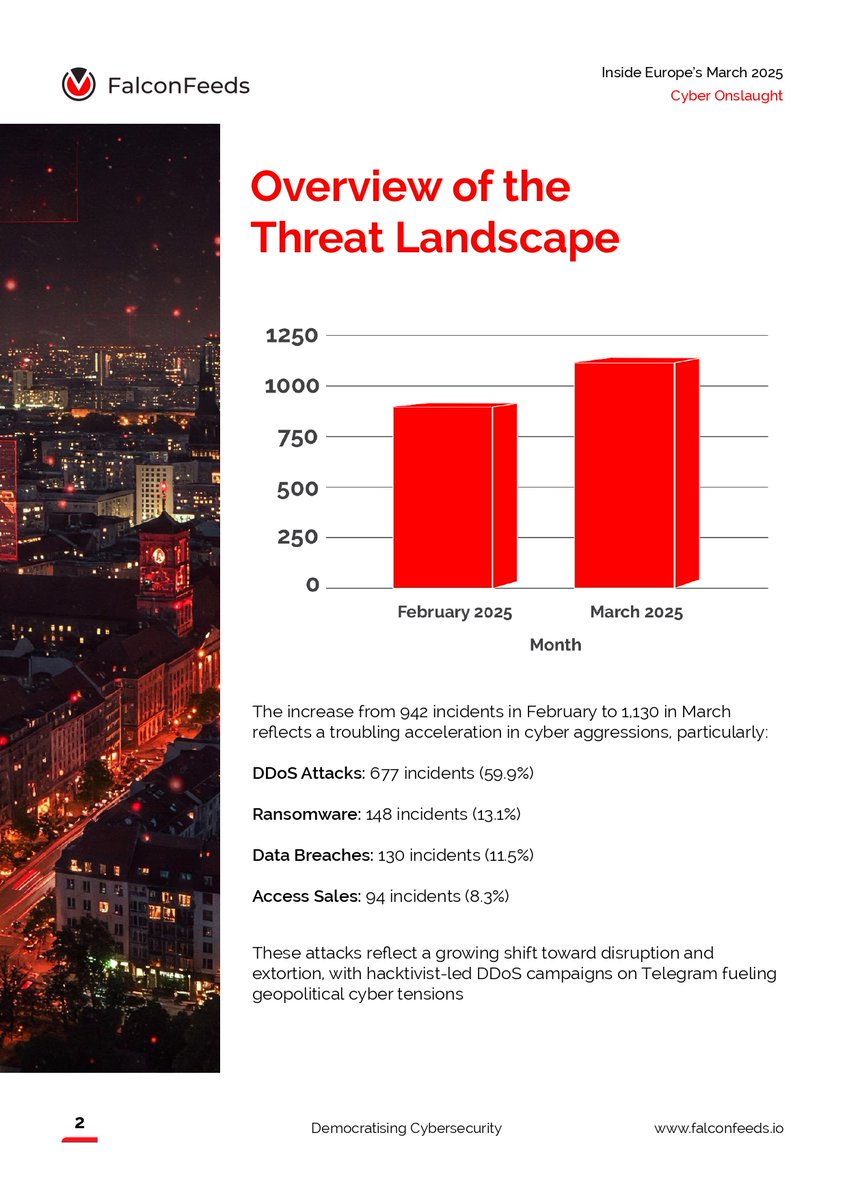
🚨 1,130 attacks in a single month.
Spain, France, and Ukraine were the top targets.
🏭 Government, manufacturing, and the IT sector took the hardest hit.
From Telegram-coordinated DDoS waves to RansomHub’s new playbook, this report dives into the silent shifts reshaping Europe’s digital battlefield.
If you're in security, risk, or leadership—this isn’t just data. It’s a warning.
Read the full March Threat Intelligence Report → falconfeeds.io/reports/march…
Stay informed. Stay ahead.
#CyberSecurity #ThreatIntelligence #March2025Report #DDoSAttacks #RansomwareAlert #DigitalWarfare #CyberThreats #Europe #RiskManagement #SecurityLeadership #FalconFeedsReport #cyberdefense #CoordinatedChaos #StayCyberAware
4
12
9,994

Volume of attacks on network devices shows need to replace end of life devices quickly
#ddosattacks #cyberattacks #networking
csoonline.com/article/395116…
1
2
58

18 Mar 2025
#TechTipTuesday: Understanding #DDoSAttacks & How to Stay Protected
Distributed Denial of Service (#DDoS) attacks flood a network, #server, or #website with overwhelming traffic, causing disruptions or complete shutdowns. It can delay services & expose security vulnerabilities.

1
2
264

13 Mar 2025
DDoS Attacks on X & Rumble! What's Going On?
#GovernmentSpending #EconomicStruggles #Cybersecurity #DDoSAttacks #X #Rumble #SmallBusiness #PoliticalEconomy #USPolitics #DigitalAttacks
5
5
26

10 Mar 2025
#Anonymous
Dark Storm hacktivist group claims to be behind DDoS attacks causing multiple #X worldwide outages on Monday, leading the company to enable DDoS protections from Cloudflare.
#DarkStormTeam #DDoSAttacks
bleepingcomputer.com/news/se…
1
8
12
1,082