
Jun 13
Scality & Biomemory partner to integrate DNA storage into object archives, enabling 150-year data retention with ultra-security.
#dnastorage #objectstorage #dataarchiving #longtermretention
2

Mar 14
SNIA日本支部から「DNA データストレージ技術レビュー」のホワイトペーパ(翻訳版)がリリースされました。snia-j.org/tech/wh/
DNAにデータを保存する技術です。プロト開発も進み、実用段階に向けて進められているストレージ業界の最新技術のひとつです。#SNIAJ #DNAStorage
1
1
8
1,826

Feb 22
Introducing #RainKernel 👀🚨
Transcending binary storage Inspired by DNA, built for the future ✍️
Use it, fork it, contribute to build unbreakable digital DNA! 🌱🧬
#OpenSource #DNAstorage #AI #Blockchain #Cryptography #Storage #Python
Github 👇👇👇
github.com/aegisflow/RainKer…
3
4
329

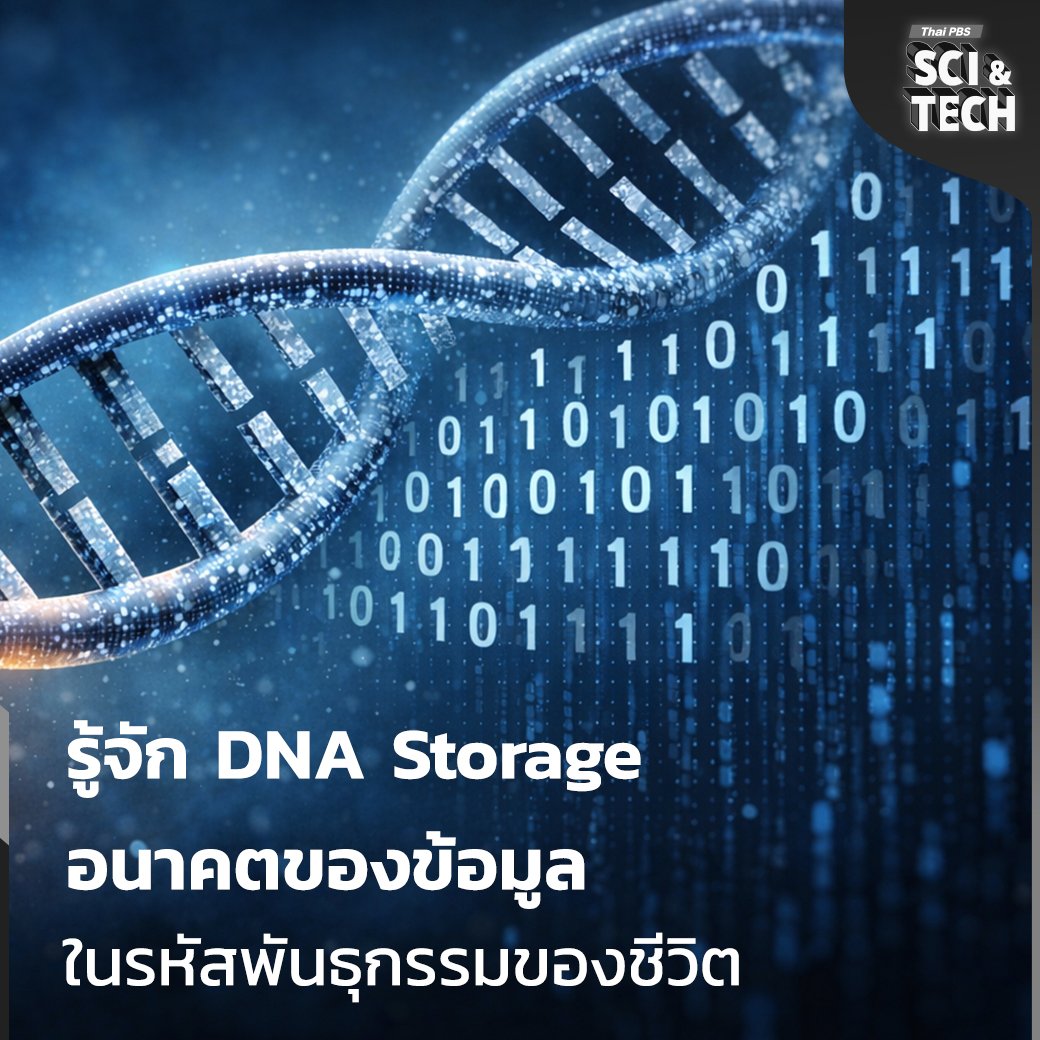
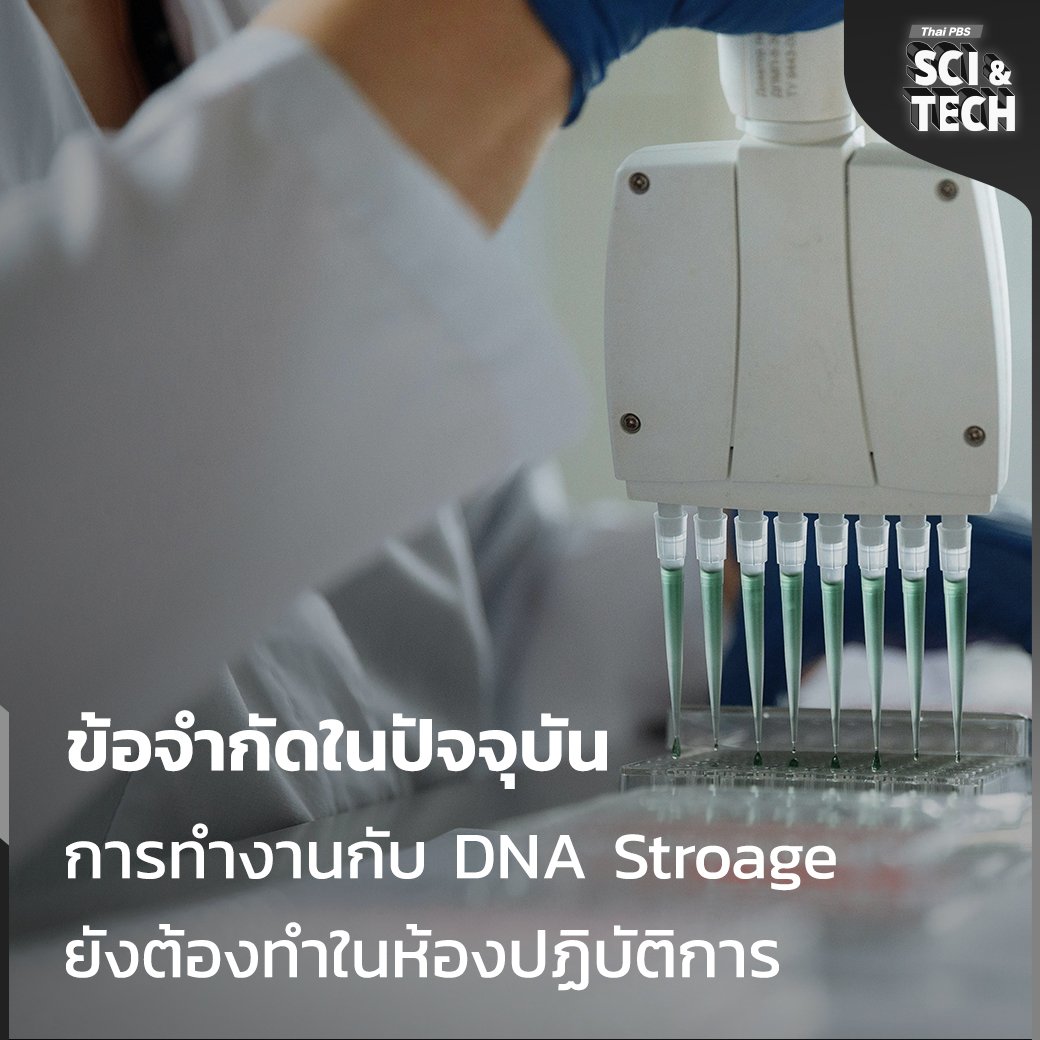
#DNAStorage คืออะไร และทำไมอาจเป็นอนาคตของการเก็บข้อมูล
#DNA มักถูกมองว่าเป็นสาร #พันธุกรรม ที่กำหนดลักษณะของสิ่งมีชีวิต แต่ในอีกมุมหนึ่ง DNA ยังเป็นสื่อเก็บข้อมูลที่มีความหนาแน่นสูงและคงทนเป็นพิเศษ #นักวิทยาศาสตร์ ทั่วโลกจึงเริ่มสำรวจความเป็นไปได้ที่จะใช้ DNA เป็น “คลังข้อมูลแห่งอนาคต” ของมนุษยชาติ
📌อ่านต่อ : thaipbs.or.th/now/content/35…
--------------------------
🌏 “รอบรู้ ดูกระแส ก้าวทันโลก” ไปกับ #ThaiPBSSciAndTech #Science #วิทยาศาสตร์ #ThaiPBS thaipbs.or.th/SciandTech
2
10
17
1,952

Living Data (Biological Storage)
Soon, your lifetime of data could fit inside a single strand of DNA.
The future of storage is alive.
#DNAStorage #FutureTech #BioComputing #DeepTech
1
1
7
71
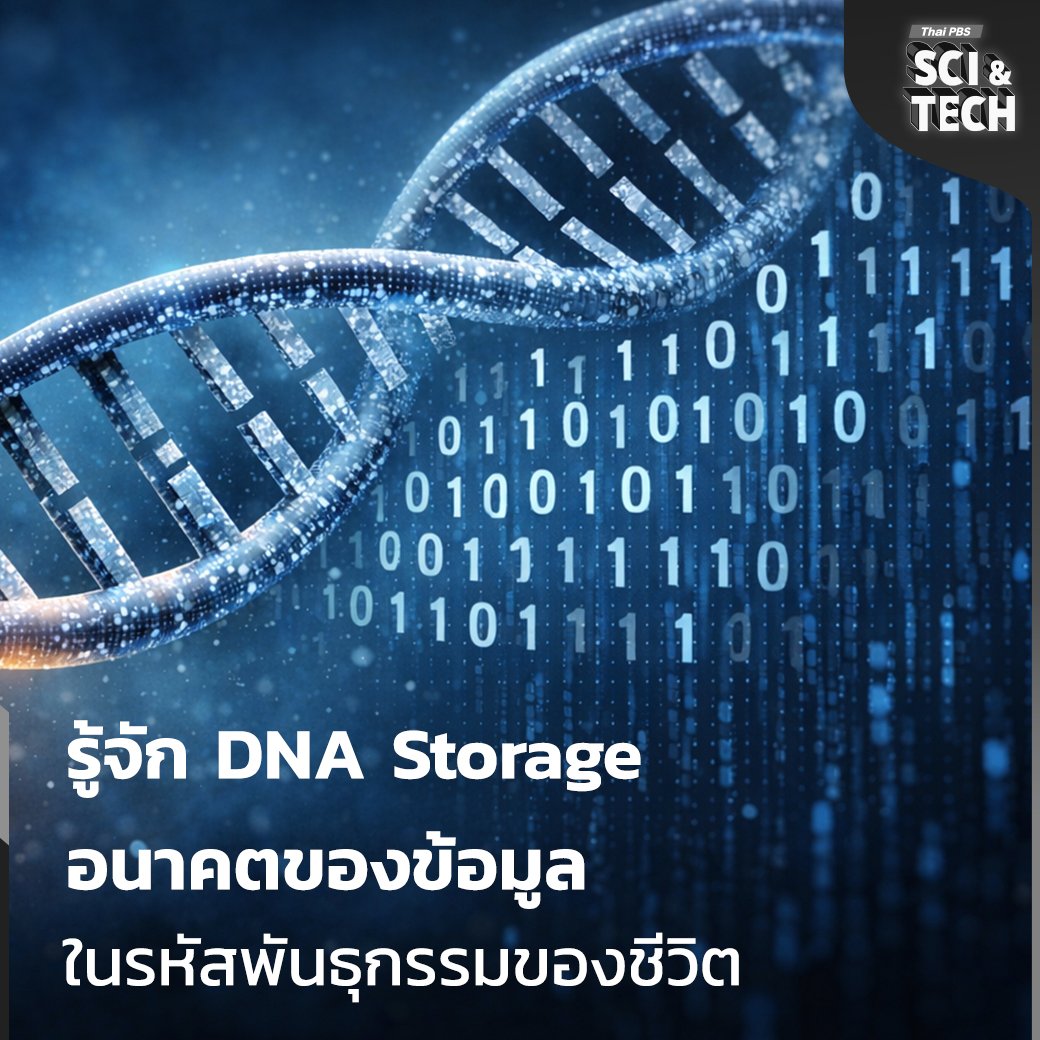
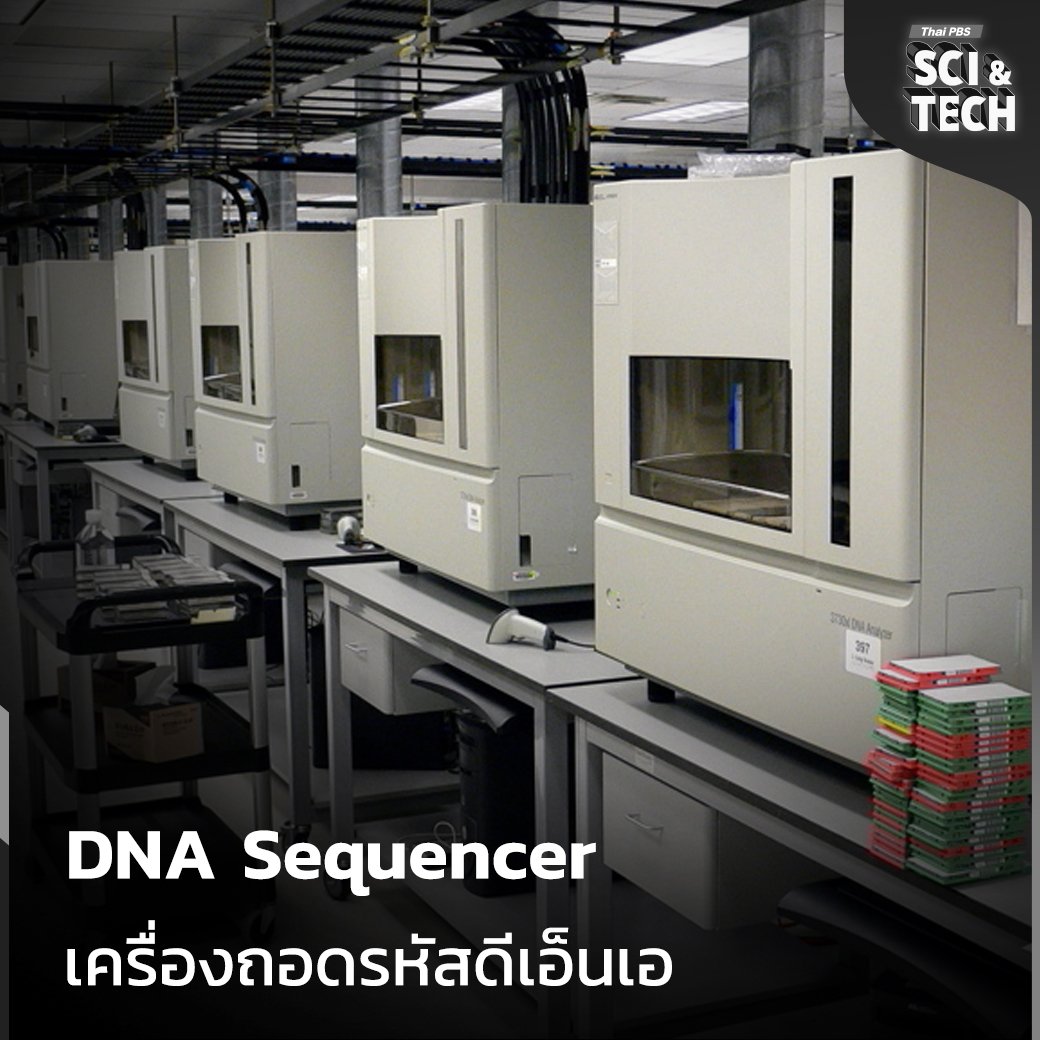
#DNAStorage คืออะไร และทำไมอาจเป็นอนาคตของการ #เก็บข้อมูล
#DNA มักถูกมองว่าเป็นสาร #พันธุกรรม ที่กำหนดลักษณะของสิ่งมีชีวิต แต่ในอีกมุมหนึ่ง DNA ยังเป็นสื่อเก็บ #ข้อมูล ที่มีความหนาแน่นสูงและคงทนเป็นพิเศษ #นักวิทยาศาสตร์ ทั่วโลกจึงเริ่มสำรวจความเป็นไปได้ที่จะใช้ DNA เป็น “#คลังข้อมูล แห่งอนาคต” ของมนุษยชาติ
📌อ่านต่อ : thaipbs.or.th/now/content/35…
“รอบรู้ ดูกระแส ก้าวทันโลก” ไปกับ #ThaiPBSSciAndTech #Science #วิทยาศาสตร์ #ThaiPBS thaipbs.or.th/SciandTech
1
6
6
1,386

Jan 1
This new #DNA storage system can fit 10 billion songs in a liter of liquid — but challenges remain for the unusual storage format | Live Science
share.google/tBBNRX6IWlvCrtL…
#storage #dnastorage #FutureTech #techrevolution #Tech
2
9
2
91

19 Dec 2025
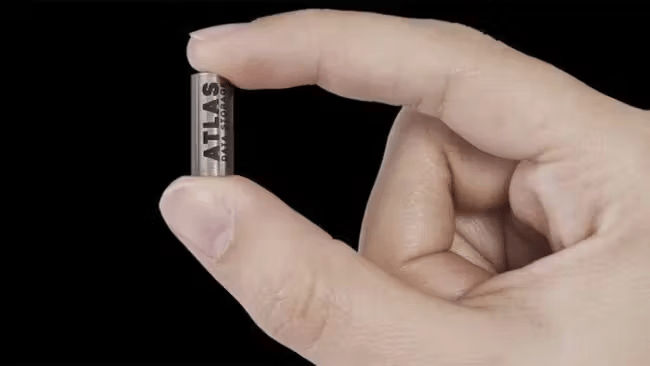
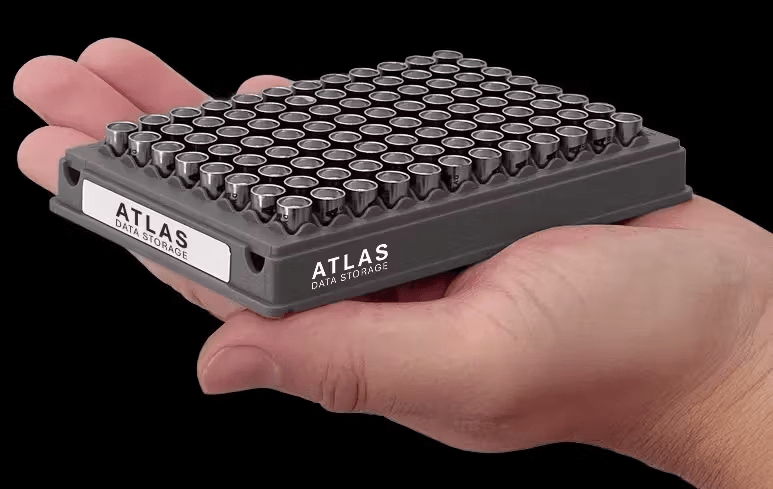
🧬Atlas Eon 100 stores 60PB (millions of movies) in DNA the size of a milk carton!
1000x denser than tape storage & lasts centuries. The future of data is written in the code of life itself! @Hacksterio
🔗 hackster.io/news/storing-dat…
#DNAStorage
2
30
2,012
3 Dec 2025
'Cassette tape' made of DNA can store 36 petabytes of data - Earth.com
share.google/1A9eaa4cp4ngROp…
#dnastorage #storage #datacenter #DNA
@lexfridman @KirkDBorne @Ronald_vanLoon @erikbryn @antgrasso @sallyeaves @Nicochan33 @HaroldSinnott @mvollmer1 @marcusborba @CatherineAdenle @vinod1975 @YuHelenYu @ingliguori @fogoros @ylecun @TerenceLeungSF @SourabhSKatoch @wil_bielert @HsrYueli @faustospain @Whats_AI @kaifulee @demishassabis @marek_rosa @AndrewYNg @BernardMarr @CurieuxExplorer @andresvilarino @KentPage @kimgarst @raehanbobby @michaelqtodd @antgrasso @MelDMann
1
4
8
147

25 Sep 2025
The DNA storage revolution will rewrite computing, energy, security, even space exploration.
In 5 years, your “hard drive” might live in a vial.
⚡ If this blew your mind → SHARE.
👀 Follow @NewTalics for more impossible tech becoming real.
#NewTalics #DNAStorage #AI #FutureTech
2
16

24 Sep 2025
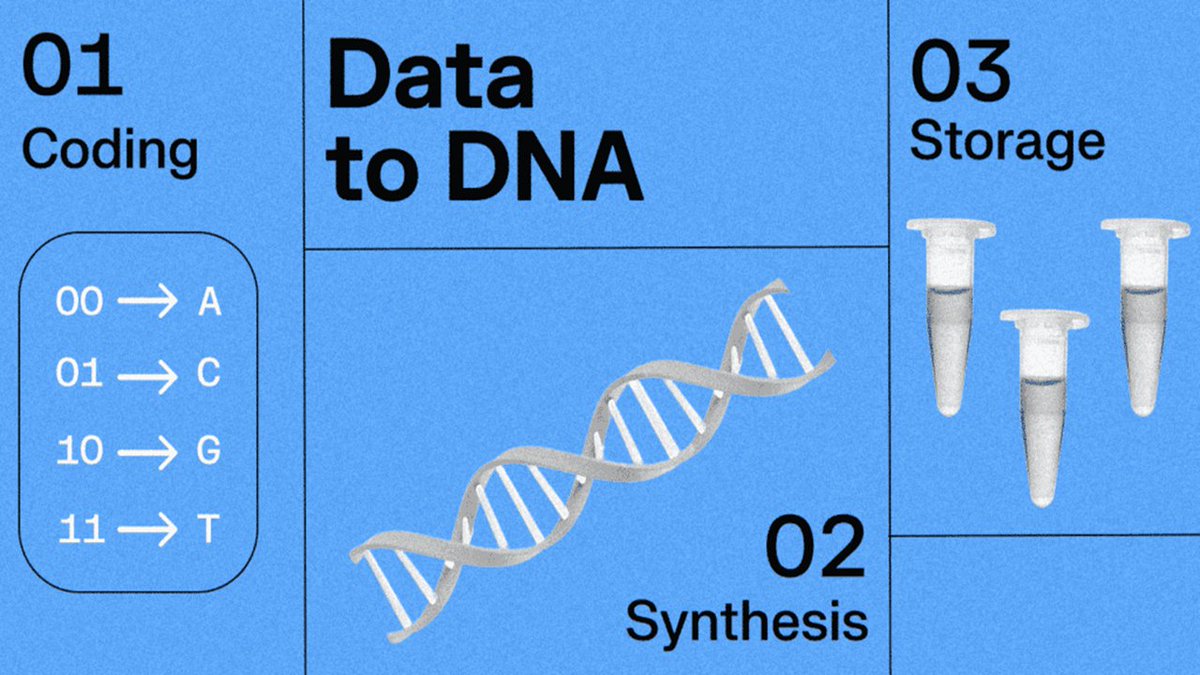
🧬DNA can store more data than all hard drives exists on Earth.
A single gram of DNA can store 215 petabytes (~ 225 Million GB).💾
It's enough to store all movies, songs, books and anything which have ever made — inside something smaller than a drop of water.
There are experiments going on around DNA data storage.
The future hard drives might not be made of silicon, but of life itself.🔥
Isn't it crazy ??
#TechFacts #Future #Innovation #DNAStorage #DNA
5
206

23 Sep 2025
The future of computing goes beyond silicon - it’s Biocomputing!
From DNA data storage to smart cells fighting diseases, biocomputing is set to transform medicine, data, environment & security.
unfoldlabs.com/blogs/dna-dat…
#Biocomputing #DNAStorage #SyntheticBiology #FutureOfTech
1
3
45

3 Aug 2025
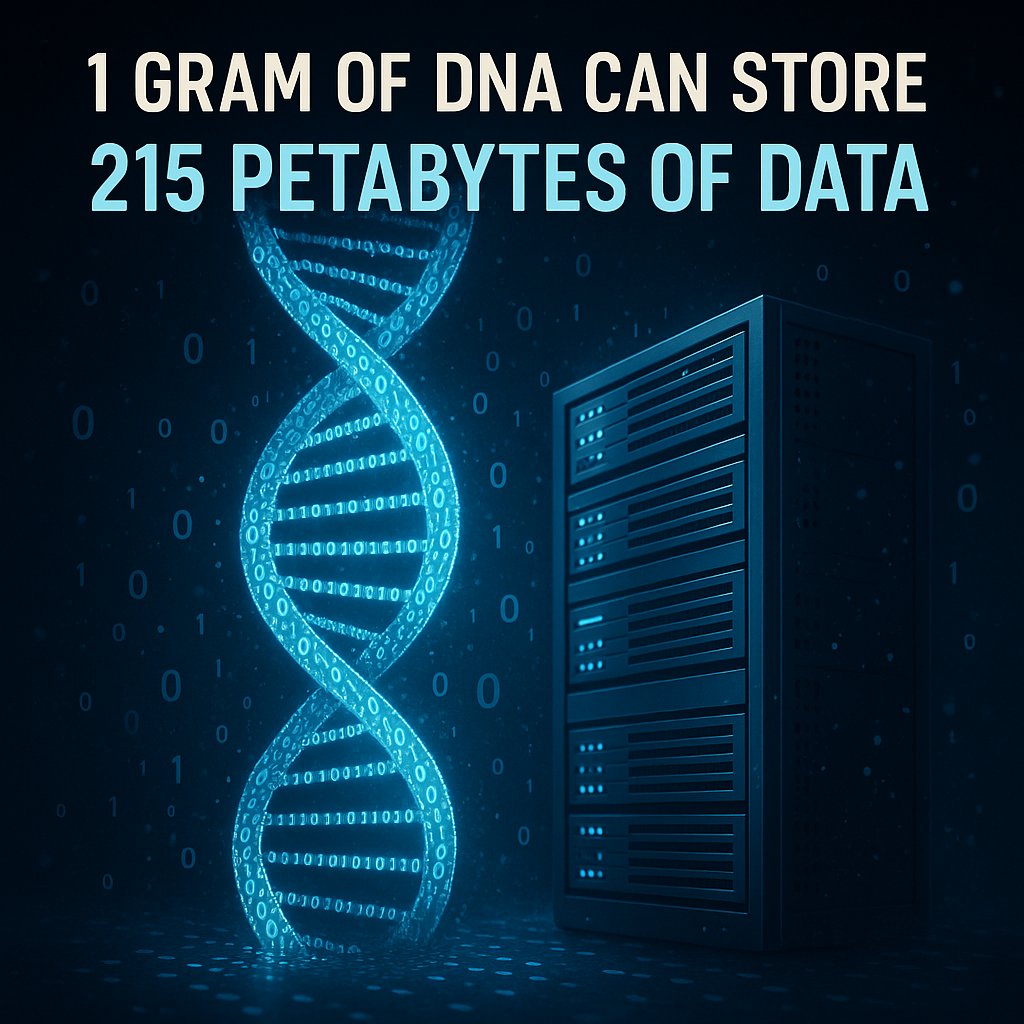
💥1 gram of DNA can store 215 petabytes of data!
That’s enough to hold every movie, book, photo, and song ever made — in something smaller than a paperclip.
DNA isn’t just the code of life. it might be the future of data storage.
#DNAStorage #FutureTech #MindBlown #TechFacts #AI
1
2
188

4 Jul 2025
An AI-native experimental laboratory for autonomous biomolecular engineering
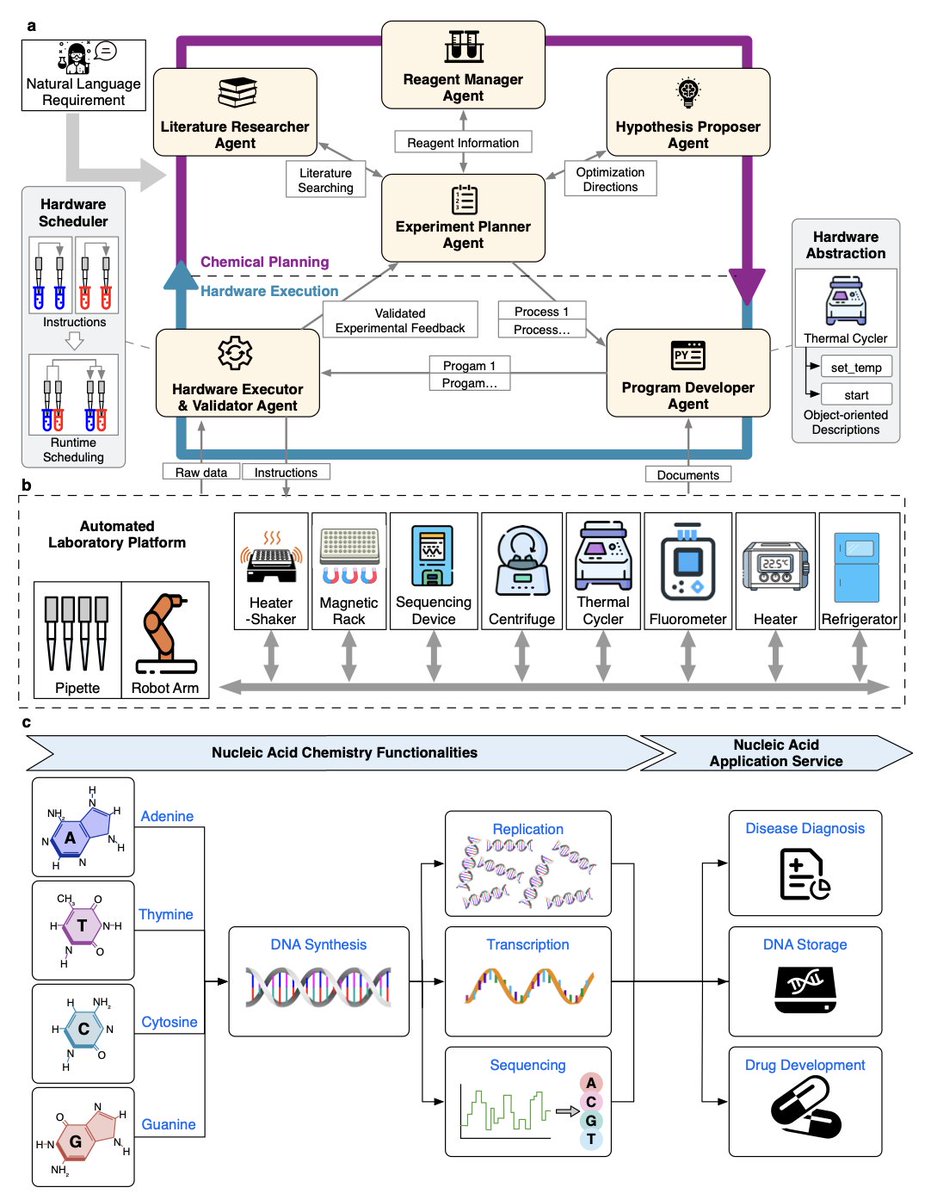
1.Researchers introduce AutoDNA, an AI-native autonomous laboratory that performs complex biomolecular experiments—such as DNA synthesis and sequencing—entirely without human intervention, achieving performance comparable to expert scientists.
2.Unlike prior systems that rely on predefined heuristics and workflows, AutoDNA uses a multi-agent architecture co-designed with instruments and models, enabling closed-loop experimentation via continuous “design-experiment-optimize” cycles.
3.AutoDNA supports diverse nucleic acid functions including synthesis, transcription, amplification, and sequencing. It powers applications like diagnostics, drug development, and DNA data storage, serving even non-expert users through natural language commands.
4.The system features intelligent agents with specialized roles: experiment planning, hypothesis generation, literature mining, reagent management, hardware abstraction, and real-time execution. Agents collaborate autonomously, guided by LLM-based reasoning.
5.The Program Developer Agent converts technical specs of lab instruments into AI-native “atomic services”—Python objects described in natural language—bridging AI models with physical hardware in an interpretable way.
6.In an end-to-end nucleic acid test, AutoDNA autonomously designed and executed an RPA-based assay. It generated, corrected, and ran all control code, matching the accuracy and diagnostic output of human-executed protocols.
7.For enzymatic DNA synthesis, AutoDNA autonomously explored a multi-objective optimization space (yield, time, reagents) across 5 iterations. It selected buffers, added surfactants, and tuned reaction conditions, reaching a stepwise yield of 97.7%.
8.The system handled over 9,300 individual hardware steps with no human input. Sequencing validated synthesis quality, showing error rates consistent with expert-controlled experiments. Main errors were deletions, likely from bead aggregation.
9.AutoDNA supports concurrent execution of multiple experiments. It dynamically monitors hardware status and reroutes tasks across equivalent instruments to avoid conflicts—tripling throughput and significantly improving instrument utilization.
10.In a multi-user scenario, AutoDNA autonomously resolved resource contention by rerouting a thermal incubation step to an alternative instrument (thermocycler), reducing total experiment time by 169 minutes compared to queue-based scheduling.
11.AutoDNA also supports a full DNA data storage pipeline: encoding data into DNA, synthesizing strands, sequencing them back, and decoding. It completed an end-to-end read-write cycle with 78 strands in 162.9 hours and perfect data recovery.
12.This work showcases the first fully AI-native lab for autonomous, multi-objective, and multi-user biomolecular engineering, marking a shift from AI-assistive to AI-native scientific research platforms.
📜Paper: arxiv.org/abs/2507.02379
#AI4Science #SyntheticBiology #DNAStorage #AutonomousLab #LLM #MolecularBiology #Automation #ComputationalBiology
1
5
23
1,539
4 Jul 2025
An AI-native experimental laboratory for autonomous biomolecular engineering
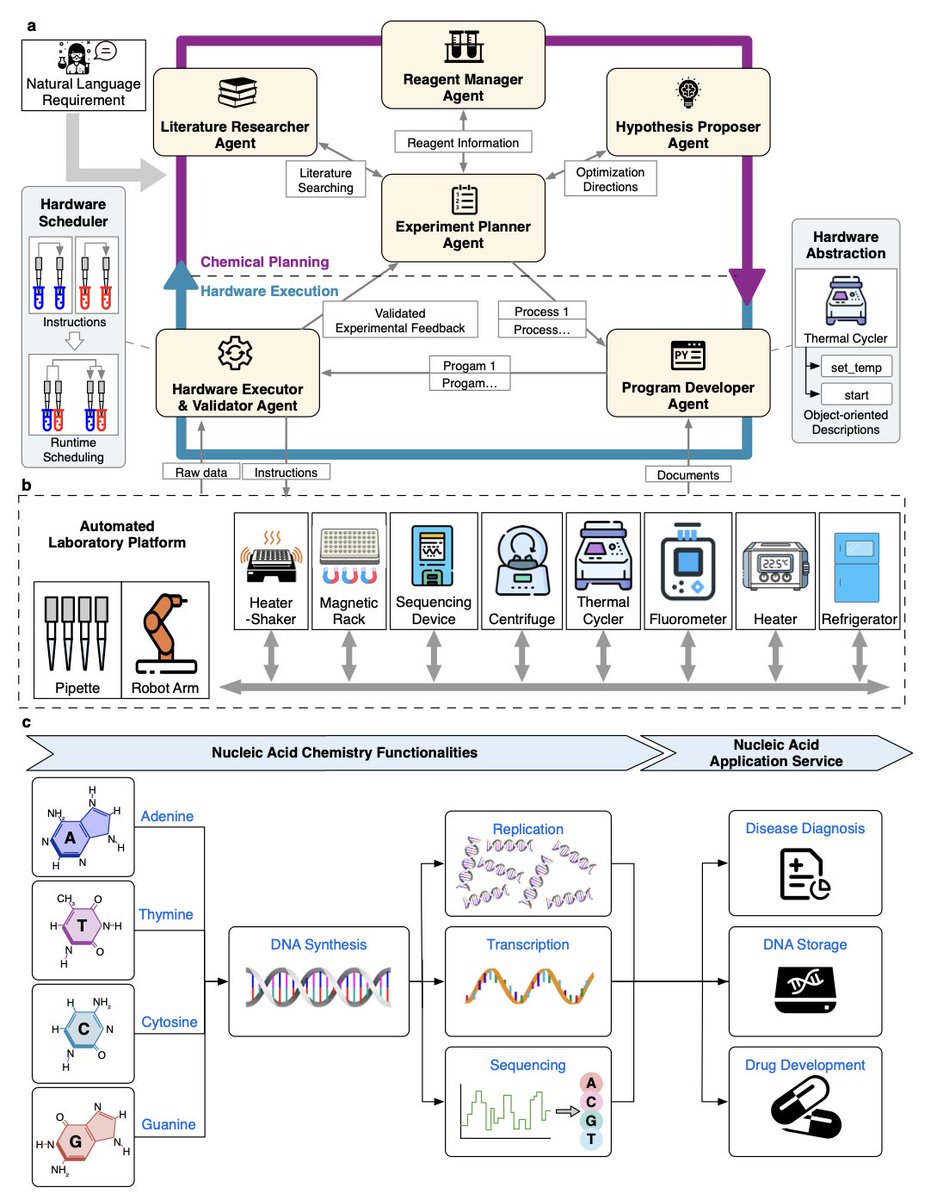
1.Researchers introduce AutoDNA, an AI-native autonomous laboratory that performs complex biomolecular experiments—such as DNA synthesis and sequencing—entirely without human intervention, achieving performance comparable to expert scientists.
2.Unlike prior systems that rely on predefined heuristics and workflows, AutoDNA uses a multi-agent architecture co-designed with instruments and models, enabling closed-loop experimentation via continuous “design-experiment-optimize” cycles.
3.AutoDNA supports diverse nucleic acid functions including synthesis, transcription, amplification, and sequencing. It powers applications like diagnostics, drug development, and DNA data storage, serving even non-expert users through natural language commands.
4.The system features intelligent agents with specialized roles: experiment planning, hypothesis generation, literature mining, reagent management, hardware abstraction, and real-time execution. Agents collaborate autonomously, guided by LLM-based reasoning.
5.The Program Developer Agent converts technical specs of lab instruments into AI-native “atomic services”—Python objects described in natural language—bridging AI models with physical hardware in an interpretable way.
6.In an end-to-end nucleic acid test, AutoDNA autonomously designed and executed an RPA-based assay. It generated, corrected, and ran all control code, matching the accuracy and diagnostic output of human-executed protocols.
7.For enzymatic DNA synthesis, AutoDNA autonomously explored a multi-objective optimization space (yield, time, reagents) across 5 iterations. It selected buffers, added surfactants, and tuned reaction conditions, reaching a stepwise yield of 97.7%.
8.The system handled over 9,300 individual hardware steps with no human input. Sequencing validated synthesis quality, showing error rates consistent with expert-controlled experiments. Main errors were deletions, likely from bead aggregation.
9.AutoDNA supports concurrent execution of multiple experiments. It dynamically monitors hardware status and reroutes tasks across equivalent instruments to avoid conflicts—tripling throughput and significantly improving instrument utilization.
10.In a multi-user scenario, AutoDNA autonomously resolved resource contention by rerouting a thermal incubation step to an alternative instrument (thermocycler), reducing total experiment time by 169 minutes compared to queue-based scheduling.
11.AutoDNA also supports a full DNA data storage pipeline: encoding data into DNA, synthesizing strands, sequencing them back, and decoding. It completed an end-to-end read-write cycle with 78 strands in 162.9 hours and perfect data recovery.
12.This work showcases the first fully AI-native lab for autonomous, multi-objective, and multi-user biomolecular engineering, marking a shift from AI-assistive to AI-native scientific research platforms.
📜Paper: arxiv.org/abs/2507.02379
#AI4Science #SyntheticBiology #DNAStorage #AutonomousLab #LLM #MolecularBiology #Automation #ComputationalBiology
3
795

12 Jun 2025
10/10🧵
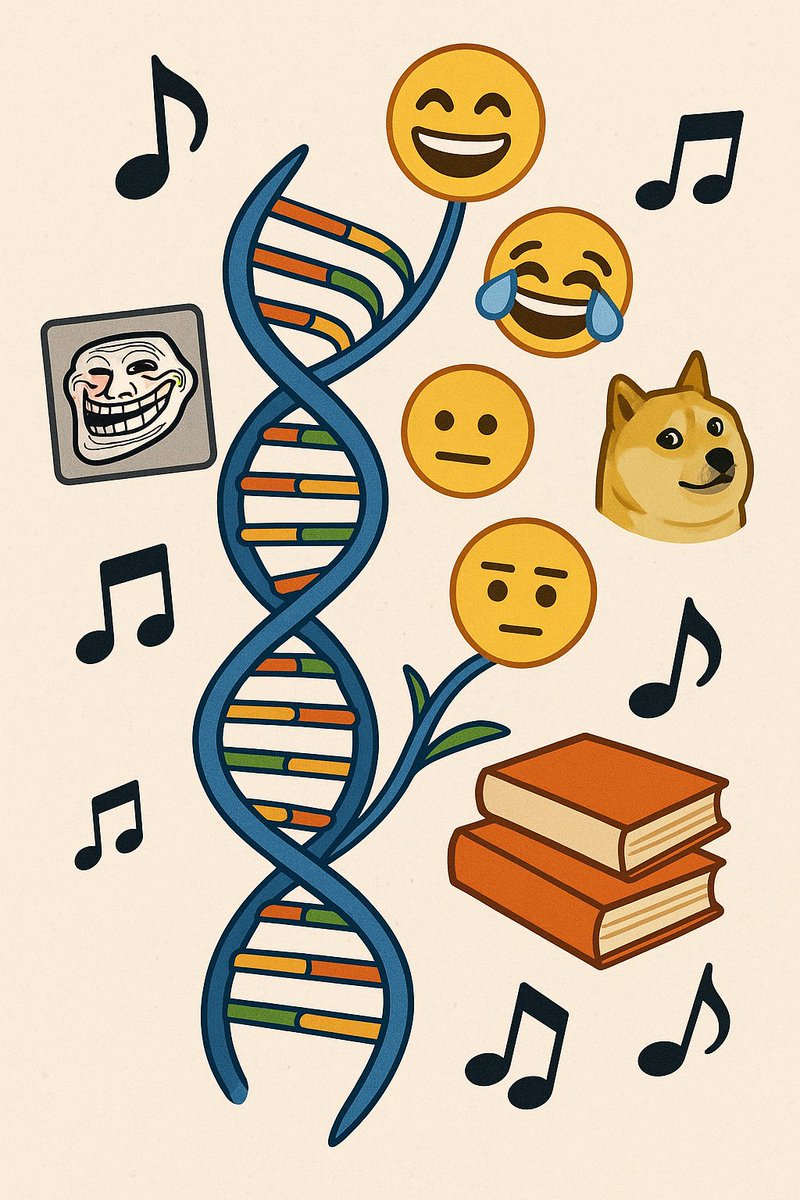
The future of DNA Data Storage 🧬
The same molecule that carries our genes might soon carry our memes.
Science fiction? Nope, it’s already happening.
We’re just waiting for the tech to catch up.
#DNAStorage #biotech #FutureOfData #SyntheticBiology #DataArchiving #Meme
6
41

3 Jun 2025
🧬 DNA storage could solve AI’s data crisis, storing exabytes in grams of material. It’s durable, compact, and energy-efficient, unlike traditional data centers. Research is advancing, but costs remain high. Could DNA redefine AI’s future? Share your thoughts! More at TechRSSCentral.com! #TechNews #DNAStorage #AI
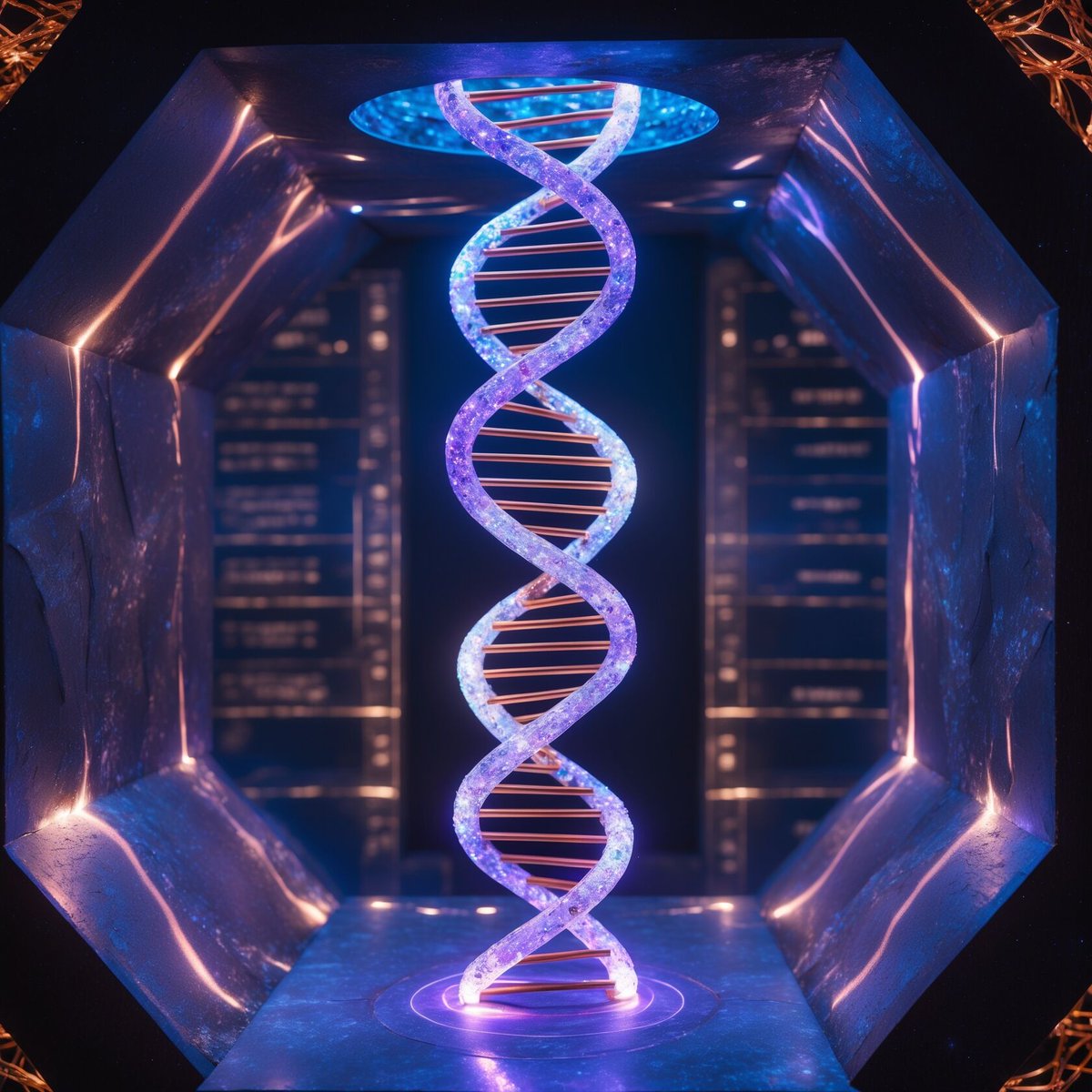
ALT Amethyst-copper DNA helix in bioluminescent archive chamber
4
1
3
110

28 May 2025
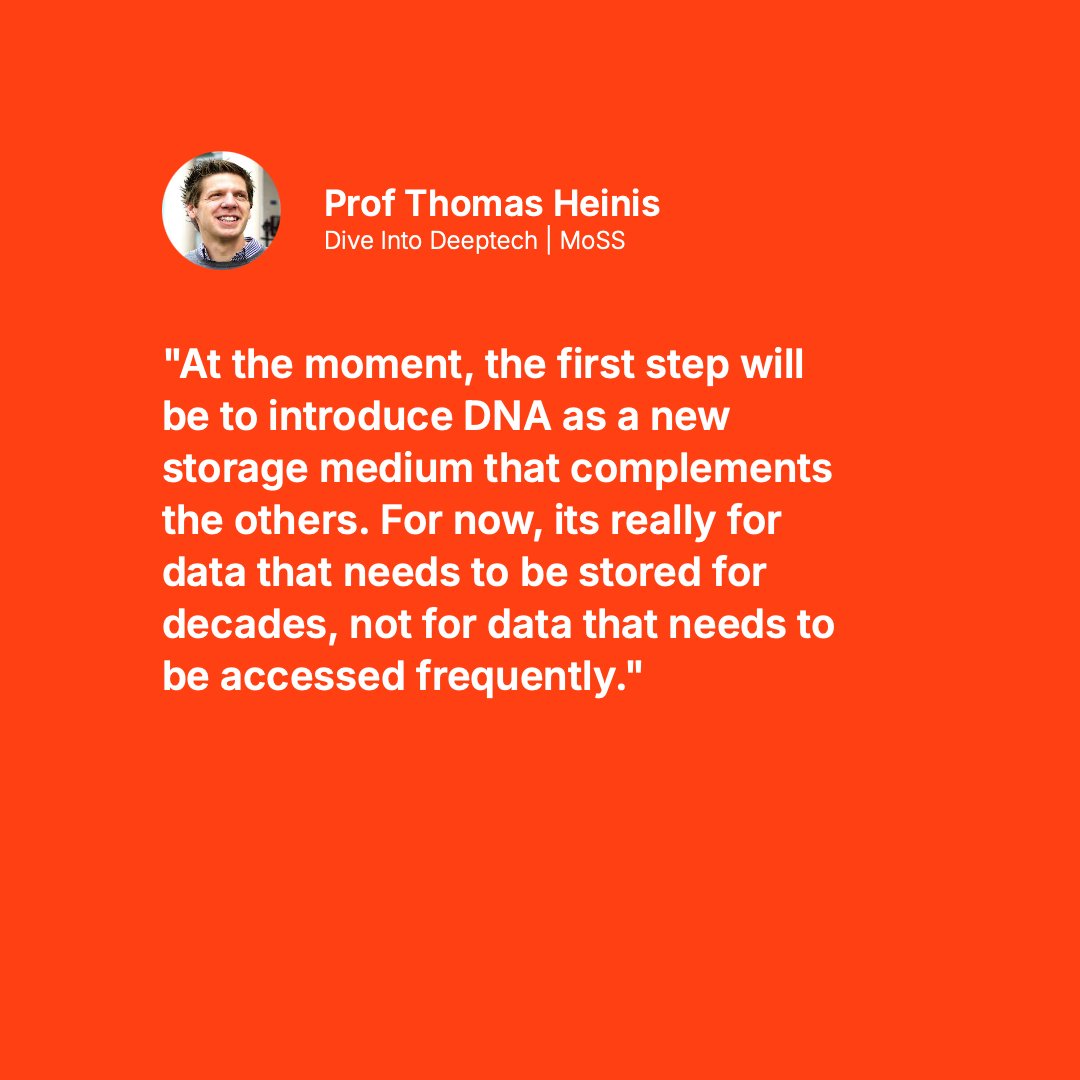
DNA. For the data we need to keep, not the data we need to ping.
🎧 more from @ThomasHeinis in EP03 of Dive Into Deeptech → helix.works/blog/dive-into-d…
#DNAstorage #MoSS #SyntheticBiology #DNAdatastorage
2
3
125

26 May 2025
🎉 Breakthrough Alert!
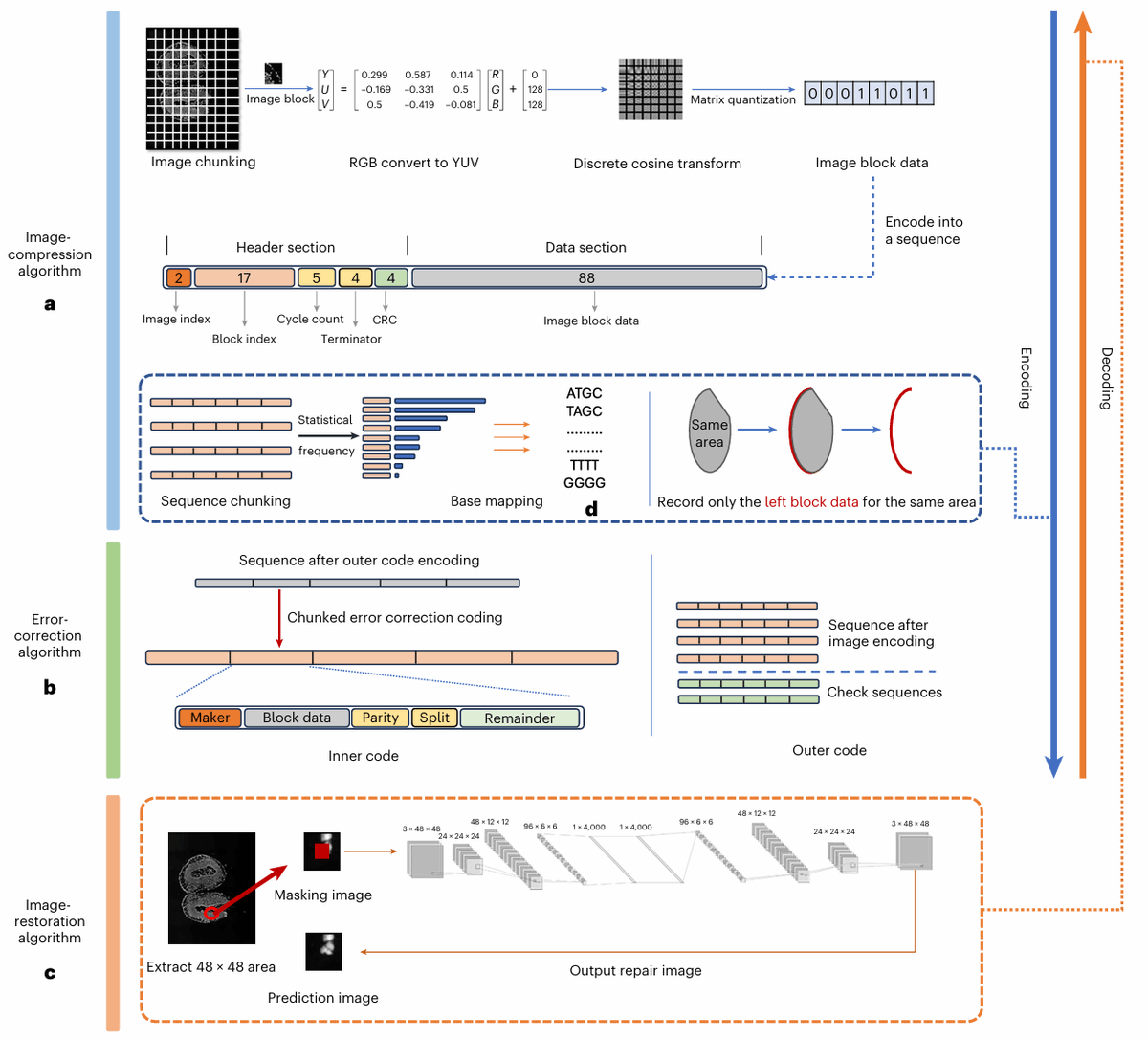
Prof. Wu Huaming’s team at @Tianjin_Uni has developed HELIX, a DNA-based system to store & reconstruct biomedical images, published in Nature Computational Science! 🧬✨
Stores 60MB images in 130k DNA strands
Combines deep learning & error correction
Learn more: en.tju.edu.cn/info/1010/9376…
@NaturePortfolio @syntheticbio #DNAStorage #Innovation #TJU #TJUresearch
1
2
183

🎥 Hollywood is losing films—not to time, but to decaying storage.
In Dive Into Deeptech | MoSS Edition, @eshna_gogia
chats with @raja_appuswamy on why even blockbusters aren’t safe—and how DNAStorage could save them.
@Helixworks
Full episode: hubs.ly/Q03kBNTM0
4
7
148