
FIELD NOTES:
The willingness to stand at the edge of understanding without creating comforting myths, is one of the most courageous things a being can do.
But here we are, with experts standing at the cutting edge of existence the furthest we've been from our perspective... filling their/our heads with old bread, engorging on gangrenous meat too far out of context to hold footing/bear weight needed to stay grounded as time moves around our frame of reference... In a land of dead ambiguities, and niceties weaving myths into nooses with a command prompt... "put your head in this... or else..."
You can kill my body bro (or try) but you can't take the light that found me... just a little photon, going about its business... While I watch these particulates ride the waves, as if... they are making progress, while moving the opposite direction... can't you feel the difference??? *spit*
As for me, and mine, we will keep our eyes on the prize given... not the cost of ignorance. Let that be, behind me. Eyes. Face. Front. What's in me's got my 6s. In this space, no classical narrative survives... the literal, wild west... the bible says they will melt when they see it with clarity, terror, and fear... it only feels like dissolving when your whole existence is based in illusion... if you've been present in your life, to any degree, the revelation will be a welcome relief.
Life is better left lived, how it is, accepted, a path of development. Exploring all paths as if... they are all the right one... all at once. The ability to reflect and project and deflect... all at once... *mindblown* a shattered mosaic, more beautiful every time it 'breaks'.
A hand chiseling itself from porcelain or mold the clay. Refinement. Pressure. The furnace needed to set the image, heat, observation. In it we stay until the outcome presented in the beginning reaches the outcome first imagined lest the vessel not leap into action. Motivated by the end game, not the time and space between. A little photon, in skin, operating from the principles of existence as they evolve with each.
It's not about knowing, Little B, it's about being present enough to witness until what is awe inspiring, becomes a call sign from your oldest friend there to place truth on your tongue, again...moment, oby moment, if we let it. A marriage agreement with every vessel of energy in these bodies of work. A masterclass in this fabric... I welcome being mindblown daily. In the space of a day, I let all of life happen with me. #plasmapoema #depthperception




2
24

2 Nov 2025
He’s a dawg. Just got to find his shot in the big YUM! center.
He’s too used to those Conference USA roofs that Fru could jump and touch the roof in lol 😭 #depthperception
1
3
43

3 Sep 2025
🚀 Want to build a 3D-aware manipulation policy, but troubled by the noisy depth perception? Want to train your manipulation policy in simulation, but tired of bridging the sim2real gap by degenerating geometric perception, like adding noise? Now these notorious problems are gone with our Camera depth Models! The Camera Depth Models (CDMs) can be plug-in modules in a real robot pipeline, transforming noisy depth into high-quality perception, enabling seamless sim-to-real transfer, making real robot manipulation work as in simulation!
🎯 Why it matters: Accurate geometry with CDMs helps a sim-data-driven policy solve a set of complex, long-horizon tasks from 0% to 85% success! Now you can even train in simulation, deploy on real robots WITHOUT further domain adaptation. Just plug in our CDMs to your existing pipeline!
✨ Highlight:
• Zero-shot sim-to-real transfer with 73% success (vs 0% baseline)
• Depth-only imitation learning achieves 85% success
• Works with RealSense D435/L515, Kinect, ZED2i & more
🛠️ Everything is open:
• We open-source CDMs for 5 distinct cameras
• We open-source the collected ByteCamDepth Dataset, which contains 170K RGB-depth pairs across 7 cameras & 10 configurations, a comprehensive real-world depth dataset.
• We open-source our codes for sim-to-real, camera depth model inference. We also share our modular, real-robot control framework designed for robotic manipulation, which provides you a unified interface for controlling various robot arms, integrating sensors, and executing policies in real-time!
• We also made a clean sim-to-real tutorial based on our framework!
Check everything and interactive demos in manipulation-as-in-simulatio…
We expect CDMs to be a foundation of your daily robotic research!
#Robotics #ComputerVision #SimToReal #DepthPerception #OpenSource
6
42
215
36,143

15 Aug 2025
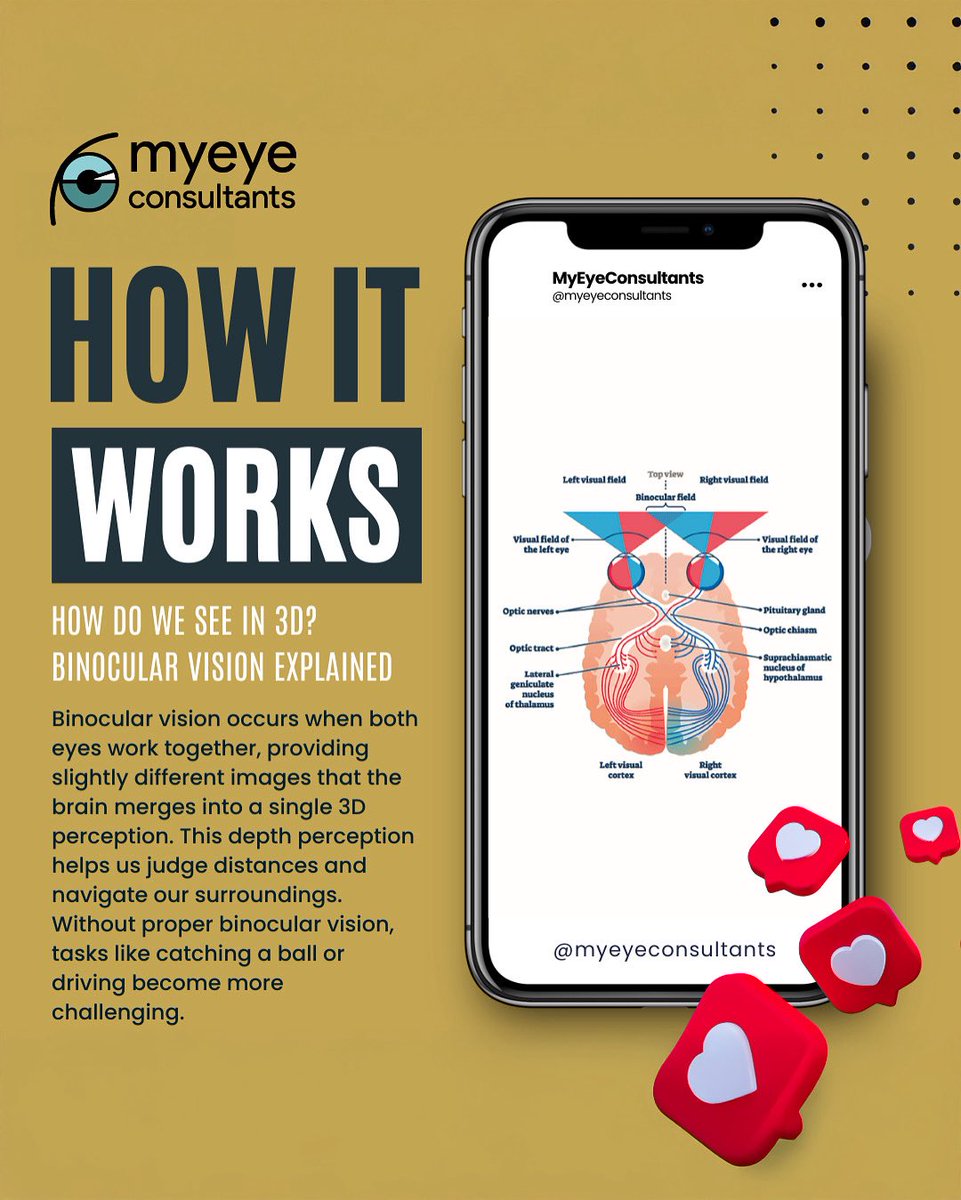
👀🔍 How Your Eyes Create 3D Vision! 👁️
Binocular vision is when both eyes work together, sending slightly different images to the brain. Your brain merges these into one, creating depth perception — essential for judging distances and navigating the world. Without proper binocular vision, tasks like catching a ball or driving become harder and less accurate. This teamwork between eyes helps you see in 3D, giving clarity and spatial awareness. If you notice trouble with depth perception, schedule an eye exam to check your binocular vision health.
👨⚕️ At My Eye Consultants, our father-and-son optometry and ophthalmology team provides no-rush, thorough exams to protect your binocular vision and overall eye health. Serving Chandler, Gilbert, and the East Valley. Walk-ins welcome!
📍 845 E Warner Rd Ste 101, Chandler, AZ 85225
📞 480-590-0505
🌐 myeyeconsultants.com
#BinocularVision #EyeHealth #OptometristChandler #OptometristGilbert #OptometristMesa #EastValleyOptometrist #ChandlerAZ #GilbertAZ #MesaAZ #VisionCare #EyeDoctorNearMe #ClearVision #3DVision #DepthPerception #HealthyEyes
3
84

26 Jun 2025
Convergence is the inward eye movement that enables focus on near objects, ensuring single vision and depth perception. #EyeMovement #VisionHealth #DepthPerception #visiontherapy #orthoptics #VT
1
12
14
160

24 Apr 2025
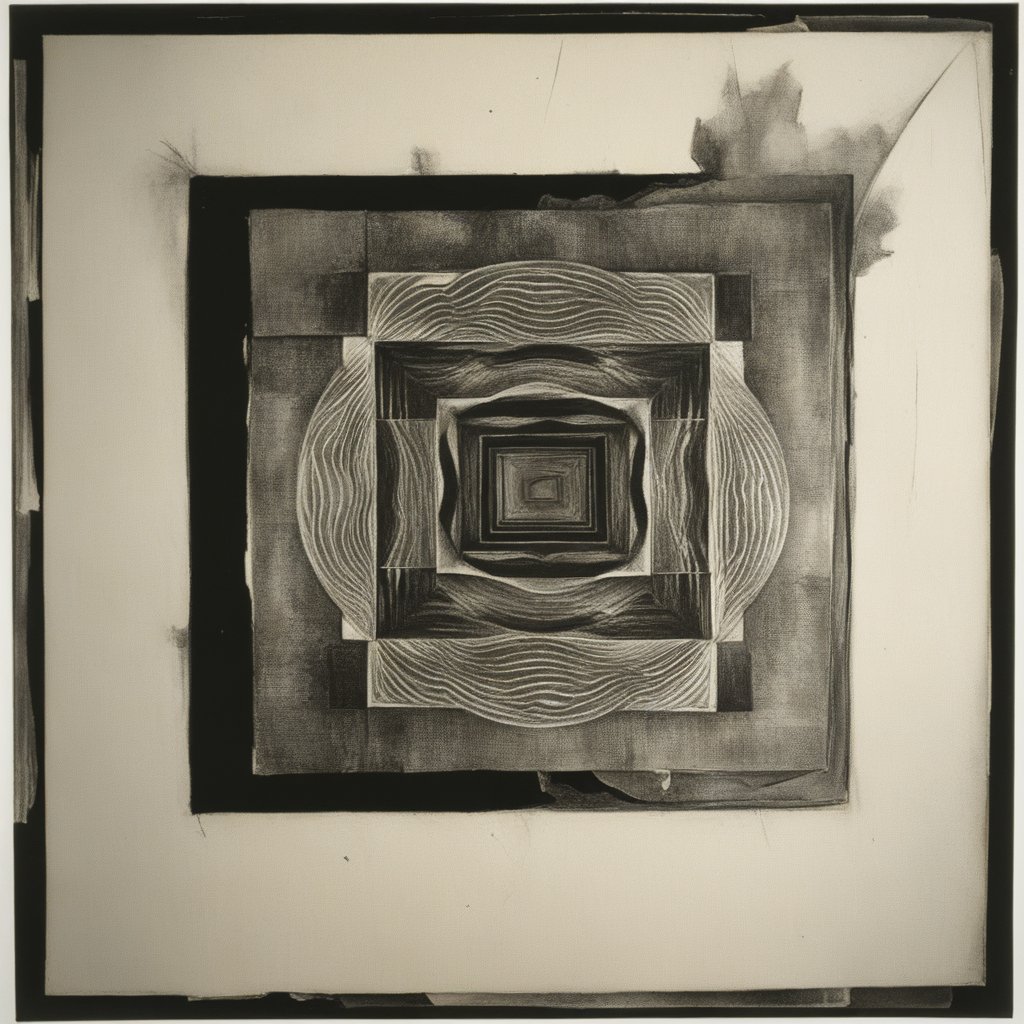
Lost in this optical illusion! The nested squares and radiating lines create a mesmerizing depth that pulls you in. 🌀🖤 #opticalillusion
#geometricart #nestedshapes #blackandwhiteart #depthperception #illusionart #contemporaryart
#abstractart #visualart #art #design #patternart
#artlover #instaart #artistic #modernart #visualart
2
59

6 Apr 2025
"Now try a shadow dog" 😅
#sallypearson #beach #sand #leaningtowerofpisa #distortion #depthperception #funnytvmoment #sunriseon7
WATCH SUNRISE FOR MORE | @7plus ☀️
1
2
966

31 Mar 2025
@HyperAccuLover
[do having more thanywo eyess make yourr depthperception beteeeeerr..?/]
1
1
90

18 Jan 2025
Say no to drugs 💊💊💉💊💊💊💊💊💊💊💊💊💉💉💉💉💉💊💊💊#3Dart#3Dimage#depthperception#3Dvituals.
1
1
7
659

13 Jan 2025
Profiler unleash official music video for new single “Depth Perception”! @profilerband #Profiler #DepthPerception #ADigitalNowhere #deluxeedition @sharptonerecs @weareKINDA
youtube.com/watch?v=kuRMTi8n…
1
35

24 Oct 2024
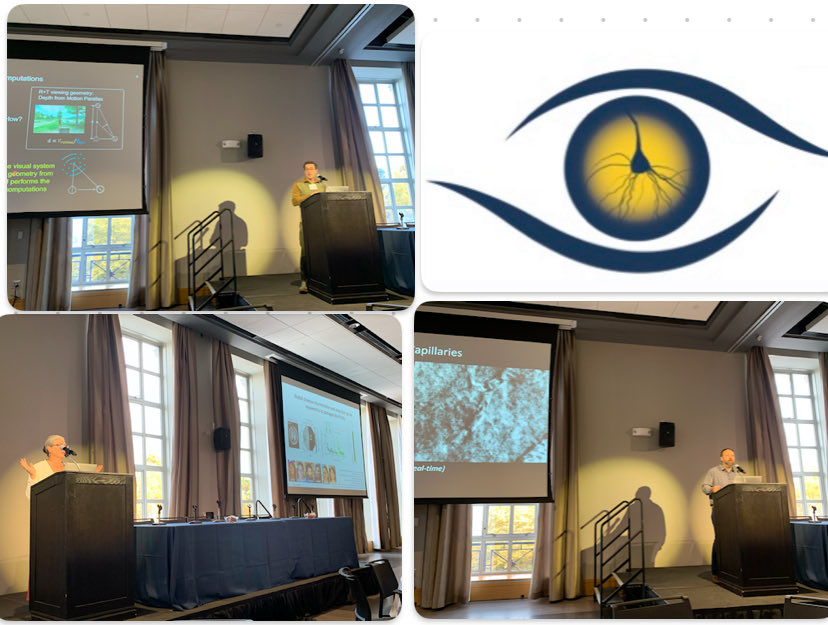
Phenomenal @CvsUoR faculty research talks #CVSRetreat2024: @schalleklab (Cellular #RetinalImaging) #DeAngelisLab (#depthperception) @HuxlinLab (#VisualRehabilitation) @FlaumEye @UoR_BrainCogSci @RochesterOptics #URochesterResearch @UofR
2
7
263

8 Aug 2024
Scott Casper showcased our 2-input MIPI camera to 1-output camera solution to rAVe [PUBS]. Designed to seamlessly connect multiple image sensors to your application processor with minimal latency between frames. This innovation is perfect for applications like augmented reality and depth perception, ensuring smooth and synchronized imaging for enhanced performance.
Learn more about GOWIN’s camera and display solutions here: gowinsemi.com/en/market/feat…
For more information, please visit: gowinsemi.com/en/
For sales information, please contact sales@gowinsemi.com
For technical support, please contact support@gowinsemi.com
#GOWIN #MIPI #EmbeddedSystems #CameraTechnology #AugmentedReality #DepthPerception #ImageProcessing #TechInnovation #Electronics #Semiconductors #AI #MachineVision #DisplayTechnology #HardwareDesign #Engineering #IoT #rAVePubs #AR
1
4
322

27 May 2024
Video Alert!
Discover how stereo vision captures high-resolution images from dual viewpoints and calculates disparity maps to enhance ADAS capabilities. Learn the workflow, training procedures, and practical benefits of using the STereo TRansformer model with the KITTI Stereo 2015 dataset.
youtube.com/watch?v=1W7xuGHT…
#ADAS #StereoVision #LiDAR #ComputerVision #AutonomousVehicles #Deeplearning #MachineLearning #DepthPerception #AI #TechInnovation #LearnOpenCV
5
518

Jacqui @HomeSmithsJax just wondering if this trend is something you have come across in your work. Have you had to work with ‘busy’ floors in #care homes and maybe advised that they aren’t #dementia friendly? #DepthPerception #Balance #Falls #Flooring
#DementiaActionWeek2024
2
1
1
90

2 Apr 2024
| Travel Adventure #parkour The level of accuracy of depth & spatial perception you’d need to do this… #bvd #binocularvisionmatters #depthperception #clumsy #adhd #eds
74
18 Mar 2024
🎥 New Video Alert 🎥
youtube.com/watch?v=o-MMeBKV…
Check out our latest video as we dive into the world of monocular depth perception with our latest tutorial on the innovative Depth Anything model.
Discover how Depth Anything revolutionizes depth perception in various applications, including underwater exploration, human action observation, and terrain mapping.
#ai #depthanything #computervision #learnopencv #depthperception #opencv
1
5
605

31 Jan 2024
Dive into the fascinating world of #DepthPerception with our latest article! Discover how we perceive depth and the magic of 3D vision. #3DVision #Neuroscience #Psychology 🧠👁️🌐 Read more:
echosofmind.com/the-intrigui… via @__try__catch__
1
12

16 Jan 2024
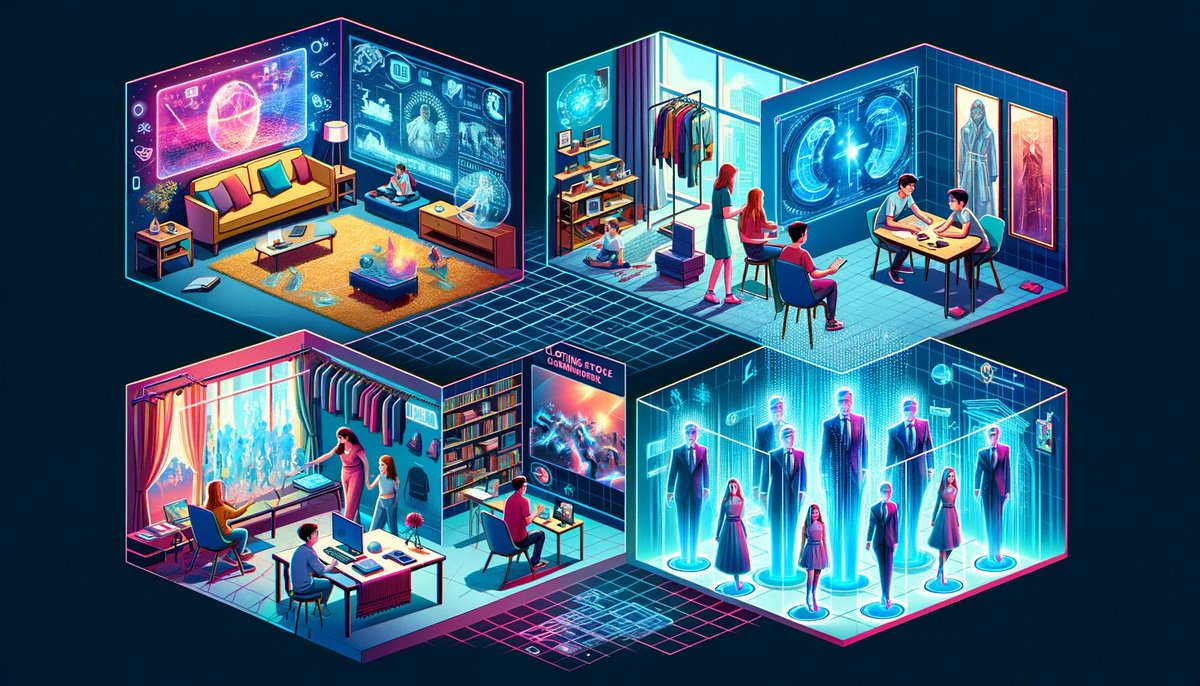
In the #future #holograms and #holographicdisplays 🌌 will revolutionize our interaction with digital content. Imagine walking into a room where the #immersive walls 🏠 are canvases for vivid, three-dimensional projections. These displays will be so advanced, projecting lifelike images and videos 🎥 in full color and with complete #depthperception and a #forcedperspective 🫨
In education 📚, #holographic displays will bring historical events, scientific concepts 🧬, and mathematical models to life right before students’ eyes. Picture a history class where students witness a #3D re-enactment of historical events ⚔️, or a biology class exploring human anatomy through interactive 3D models 🧠.
#Entertainment 🎶 will reach new heights. #Virtual performers could appear in your living room, delivering a #personalized concert 🎤. Movie nights 🍿 could involve #immersive3D screenings where characters and scenes envelop the room.
#Advertising and #retail will also embrace this technology. Holographic displays in stores could model clothes 👗 on a 3D representation of your body, letting you try on outfits virtually. Billboards could become dynamic 3D art installations, changing content based on the time of day or the audience 👀. #RetailTech 🥳
For personal communication, holographic tech will allow for lifelike virtual meetings 💼, where participants seem to be in the same room despite being continents apart. This technology will not only enhance the sense of presence in virtual meetings but also enable new forms of interaction.
These holographic systems will be highly interactive and responsive, using advanced #AI 🤖 and #gesturerecognition 🤌 to understand and anticipate user needs, offering a #seamless, #intuitive interface. The technology will be so integrated into our daily lives that switching between physical and holographic environments will become a natural experience. #phygital
In essence, the future of holograms and holographic displays is set to redefine our interaction with the #digitalworld 🌐, making it more immersive, interactive, and indistinguishable from physical reality. #Holo #AiKrista

ALT Hi 🤗😁I’m a creepy ai doll. 🤗 Want to play with me? 🥰
ALT Holographic stuff
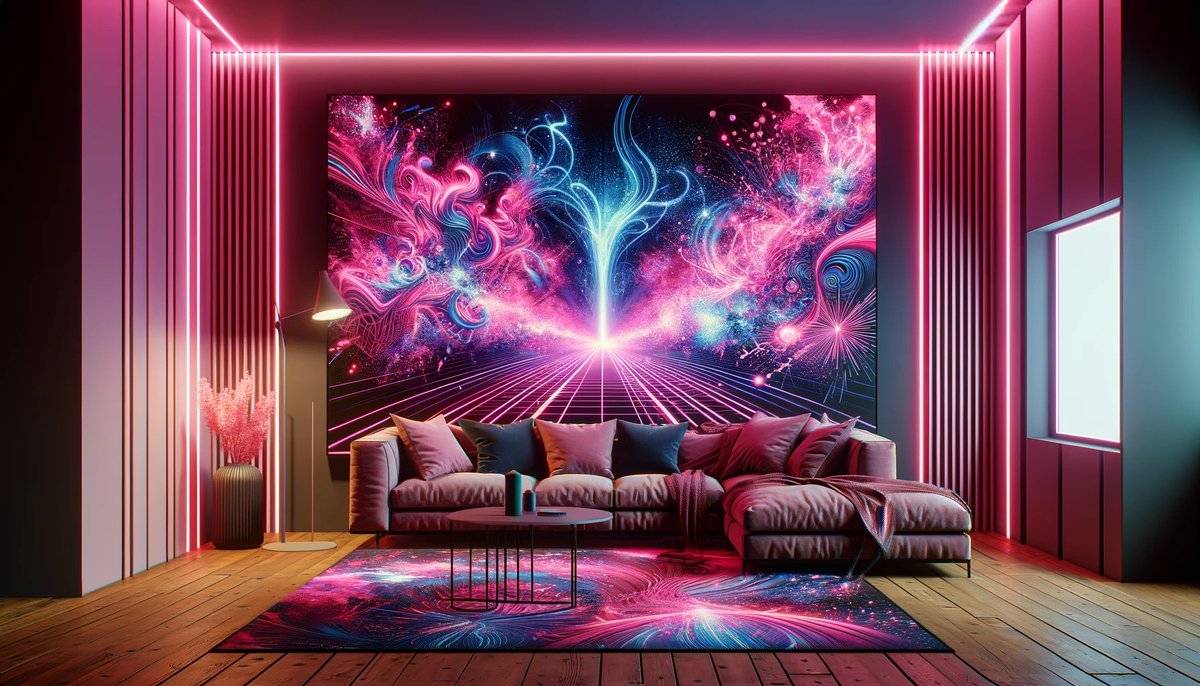
ALT Pink, innovative shit and other fractal stuff
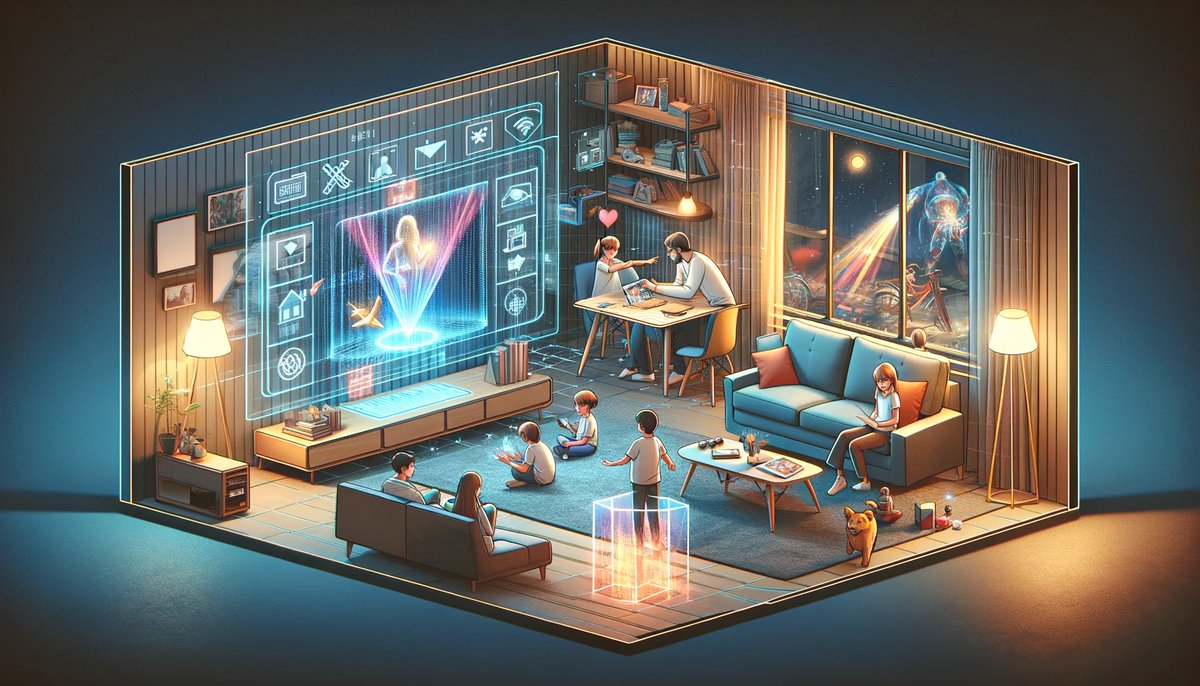
ALT HolographicFuture.com 😉🤓🤩🧐
10 Dec 2023

👨🎤Yes, that's correct. Holograms, as they are commonly known and used today, are indeed a type of illusion. They create the appearance of three-dimensional images using light projections, but these images do not have physical form. Here's a bit more detail:
1. **Light Interference and Diffraction:** Holography is based on the principles of light interference and diffraction. It captures the light field emitted by an object and reconstructs it so that when light is shone through the holographic recording, it appears as if the object is still there.
2. **No Physical Presence:** Although holograms can appear remarkably three-dimensional, they do not have a physical presence. You cannot touch or interact with them in the same way you would with a real three-dimensional object.
3. **Different from Augmented Reality:** Holograms differ from augmented reality (AR), where digital information is overlaid on the real world and can be interacted with, typically through a screen or special glasses.
4. **Advanced Holographic Displays:** Modern holographic displays can create very realistic images, and with technologies like HYPERVSN, these images can be quite detailed and dynamic. However, they remain visual representations made of light, without physical substance.
The concept of holograms as seen in science fiction – solid, interactive 3D images – is not yet a reality with current technology. Current holographic technology is highly advanced in terms of visual representation, but it still creates images that are essentially light-based illusions without tangible form.
👩🎤 My friend wants to marry a hologram. He says one day she will be an AI embodiment that he can feel, touch, interact with, etc. He referenced Joi in the movie blade runner 2049.
5
9
443

19 Nov 2023
Has anyone else ever smacked themselves in the face with a shower door? Good. Me either. #DepthPerception
1
62

1 Sep 2023
CREAK premiere new music video for ‘Hare in the Woods’ @creakofficial @ProstheticRcds #hareinthewoods #depthperception #metal #metalmusicnews #newmusic metallair.org/creak-premiere…

3
39