
Apr 11
Someone I know has more or the same issue with @FirstMutualLife @FMHL__ ,late mom's pension fund payout not done,almost a year now.They're all the same,don't know if even @IPECZW is working anymore,their social media handles has no one who attends to them.
1
2
3,141


Feb 10
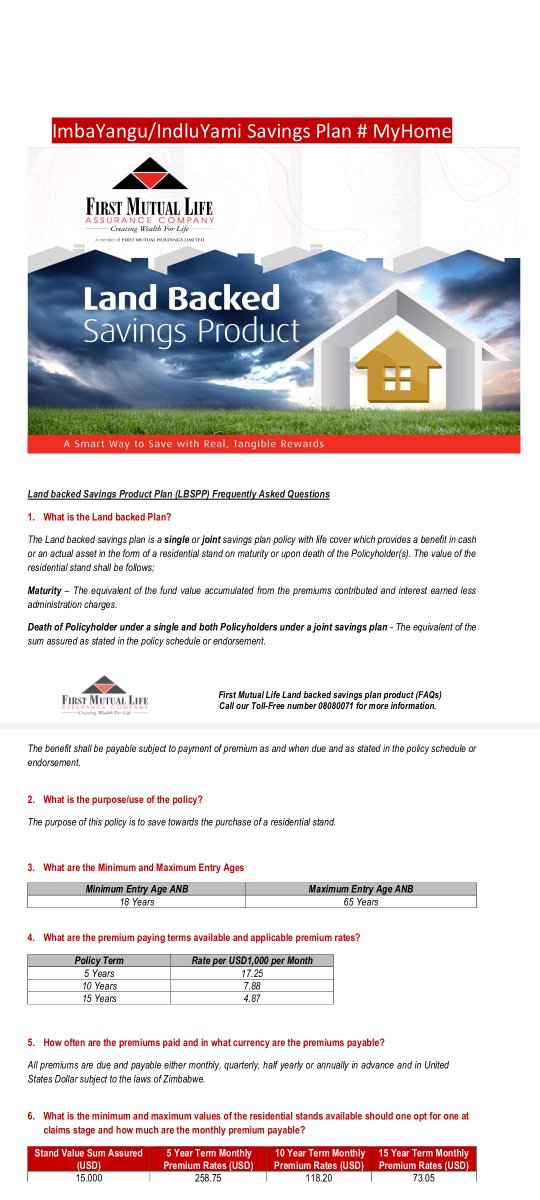
Last week, a colleague alerted me to a new advertisement from @FirstMutualLife (FML) regarding their Land-Backed Savings Plan (LBSPP).
While a new insurance product rarely stops the presses, this one caught my eye for a specific reason: sophisticated financial instruments do not exist in a vacuum. They require a foundation of policy predictability and long- term stability.
The arrival of such a product begs the question: Has the outdated narrative of #Zimbabwe as a "financial basket case" finally reached its expiration date?
Could this arrival of sophisticated financial instruments and a surge in tangible infrastructure that would be impossible in a fractured economy, be a confirmation and vindication of government’s claims of economic development and stability?
But when private companies like First Mutual Life launch products that link your life savings to the very soil of the country, they must see a level of predictability that the casual observer might miss.
FML is making a high-stakes bet on the future but combined with the roar of new steel plants and the completion of trans-continental highways, it is clear that Zimbabwe has turned a corner.
It is becoming increasingly impossible to ignore this seismic shift in Zimbabwe’s economic trajectory.
For years, the narrative was one of volatility, but the dawn of 2026 presents a compelling case for a nation that has finally found its footing.
The Land-Backed Savings Product
The most powerful evidence of this new era is the emergence of long-term, asset-backed financial products like the First Mutual Life (FML) Land-Backed Savings Product Plan (LBSPP).
A savings plan that promises a residential stand upon maturity requires three foundational pillars: secure land tenure, manageable inflation, and a robust legal framework.
By launching the #LBSPP, FML is effectively declaring that these pillars are now standing. It is a private-sector vindication of the government’s claims: you do not offer long-term, asset-backed products in a "fractured" economy.
The Land-Backed Savings Product Plan (LBSPP) serves as a critical private-sector companion to the government’s ongoing Land Tenure and Title Deeds program, creating a unified pathway toward secure property ownership in Zimbabwe.
While the government’s initiative focuses on regularising and issuing securitised title deeds to unlock economic value, the LBSPP provides the financial mechanism for citizens to acquire new, fully serviced land with the same guarantee of legal protection.
The product ensures that upon maturity or the fulfilment of specific payment thresholds, the policyholder receives an actual asset—a residential stand—which is then transferred with all necessary statutory obligations and legal proof of title.
By requiring the payment of property transfer fees, stamp duty, and conveyancing fees as part of the benefit discharge, the LBSPP guarantees that the resulting land ownership is fully integrated into the formal legal system.
This synergy transforms land from a mere place of residence into a "tangible reward" and a bankable asset, directly supporting the national goal of enhancing the dignity and financial inclusion of Zimbabwean homeowners.
The product’s design even includes provisions for potential currency shifts, ensuring that should policy maturity occur during a move to local currency, the customer’s proportion of the stand value remains protected and convertible.
Historically, hyperinflationary environments destroy such long-term savings plans.
The existence of the LBSPP proves that institutional investors now have enough confidence in the ZiG and the broader macroeconomic framework to offer "Real, Tangible Rewards" to the public.
The Architecture of Stability
Government’s claims are further vindicated by a series of massive infrastructure milestones scheduled for 2026, which serve as the physical scaffolding for this stability.
With the IMF and World Bank projecting GDP growth of around 5-6% for 2025 and 2026, Zimbabwe is currently outpacing many of its Sub-Saharan African peers.
@kudzie_sharara @cemambo @tawakarombo @BC_bruceC @dereckgoto @ZimTreasury @GGuvamatanga @DonaldTchidoori @Jamwanda2
1
3
173

11 Nov 2025
A recap to the past weekend.
Our Happy place 🛣️.
@FirstMutualLife
#RunningWithTumiSole #healthgoals2025
1
24
987
10 Nov 2025
Yes the life of social Marathoners 😊
2
25
10 Nov 2025
1
1
12
178



5 Nov 2025
Herbert Chitepo Street aka Main Street in Mutare. That pic was probably taken today whilst standing at @DiamondFMZim veranda. That's @FirstMutualLife building
1
16
2,580

3 Nov 2025
Its basically monthly contributions that start from $49 for a 25 year termand stands vary in sizes from 200 to 400sqm.
Value of stand depends on location.
You can pay for a shorter term of 5 years but the premium will be higher.
1
2
2
78

3 Nov 2025
Yeah especially for team diaspora coz one day home is gonna be calling
1
2
106

3 Nov 2025
Time is your biggest asset. Start early, stay consistent, and let time and compounding do the heavy lifting for your financial future.
Ne Imba Yangu/Indlu Yami savings you have peace of mind.
💬WhatsApp us on 263772187438 and start your savings journey today.
#FirstMutualLife

5
8
11
676

3 Nov 2025
Thank you for joining Friday Drinks in partnership with Sahwira Market Place for a fantastic week of networking and opportunity at Nyaradzo House, Hertfordshire.
As the Friday Drinks team — @baba_nyenyedzi, @dziya_mya, and @rufarogz — we truly appreciate your support and feedback. A big thank you to all our guests who appeared on the Friday Drinks and Sahwira Market Place series, and to everyone who took the time to engage with us during the week.
We extend our sincere gratitude to the Zimbabwean corporate sector, including @Nyaradzo_Group CEO Philip Mataranyika, Head of Strategy Tendayi Gwatiringa, and Lordwick Mushawa, MD of Nyaradzo Group UK & Europe. Special thanks to Daniel Allen, Leader of North Hertfordshire Council, for his support.
📺 The Friday Drinks in partnership with Sahwira Market Place series will be available on our YouTube channel — be sure to watch, like, and subscribe youtu.be/vtdT6D3LcNU?si=5njE…
We are also deeply grateful to our amazing sponsors: @OldMutualZW @CBZHoldings @OmariZimbabwe @zidainvest @BonvieHaircare @FirstMutualLife @mukurudotcom @CimasHealth @pro_feeds, Kantor and Immerman, and many others. Thank you all for being part of this incredible journey.

1
8
23
3,005
31 Oct 2025
Thank you for engaging with and supporting Friday Drinks - @baba_nyenyedzi, @dziya_mya and @rufarogz - in partnership with Sahwira Market Place @Nyaradzo_Group a series and gathering of brands and investors for a week of opportunity from 29 October to 2 November at Nyaradzo House, Hertfordshire, UK.
We would also like to extend our sincere gratitude to all our amazing sponsors, including: @OldMutualZW @CBZHoldings @SeedCoZimbabwe @zidainvest @BonvieMedical @FirstMutualLife @CimasHealth @mukurudotcom @CrestaHotels, Kantor and Immerman, @pro_feeds @nigel_philp and many others.

7
11
1,541
30 Oct 2025
Our episode with Profeeds @pro_feeds Zimbabwe’s Leading Stock Feed Manufacturer. This series is part of Sahwira Market Place @Nyaradzo_Group
Our sponsors including @OldMutualZW @FirstMutualLife @BonvieMedical @zidainvest
youtu.be/lUbNKovqkB8?si=w3Rf…
7
9
1,939
29 Oct 2025
Sahwira Market Place — Redefining the power of partnerships in Africa’s diaspora economy
@Nyaradzo_Group @zidainvest @pro_feeds @OldMutualZW
@CimasHealth @FirstMutualLife
@BonvieMedical @mukurudotcom
heraldonline.co.zw/sponsored…
5
11
706

19 Sep 2025
First Mutual Holdings has declared an interim dividend of $0.65 mln, split as $0.52 mln (US$0.071 cents /share) in USD plus $0.13 mln (ZWG0.479 cents /share) in local currency.
More details to follow.
@ZSE_ZW @FirstMutualLife #DividendYield #DividendStocks #StocksToBuy #stocks

4
578

19 Sep 2025
Insurance Service Growth and Malawi Investments Lift Fidelity Life’s H1 Profit
✳️Fidelity Life’s H1’25 profit rose 14% to US\$6M, driven by strong #insurance services, #life segment & #Malawi income.
✳️#AI, #digitalisation & #microinsurance set path for #growth. @FirstMutualLife
2
2
354

17 Sep 2025
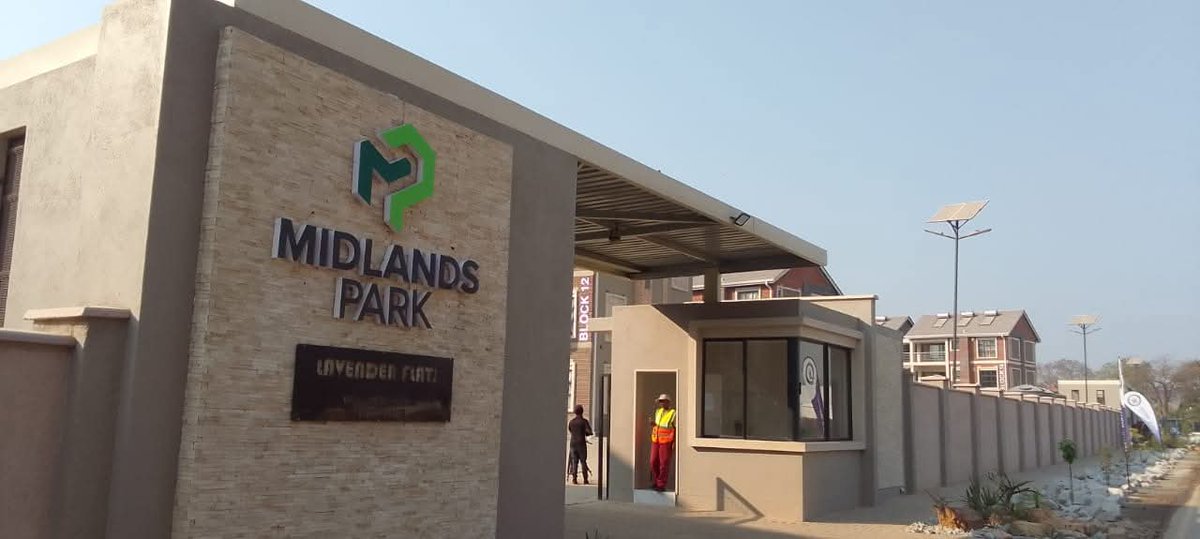
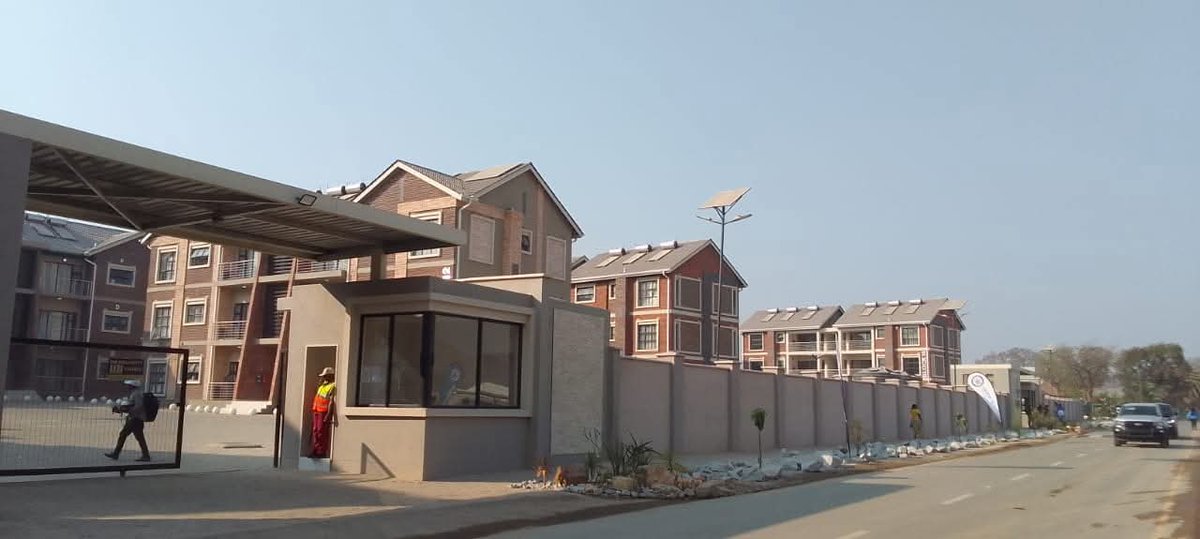
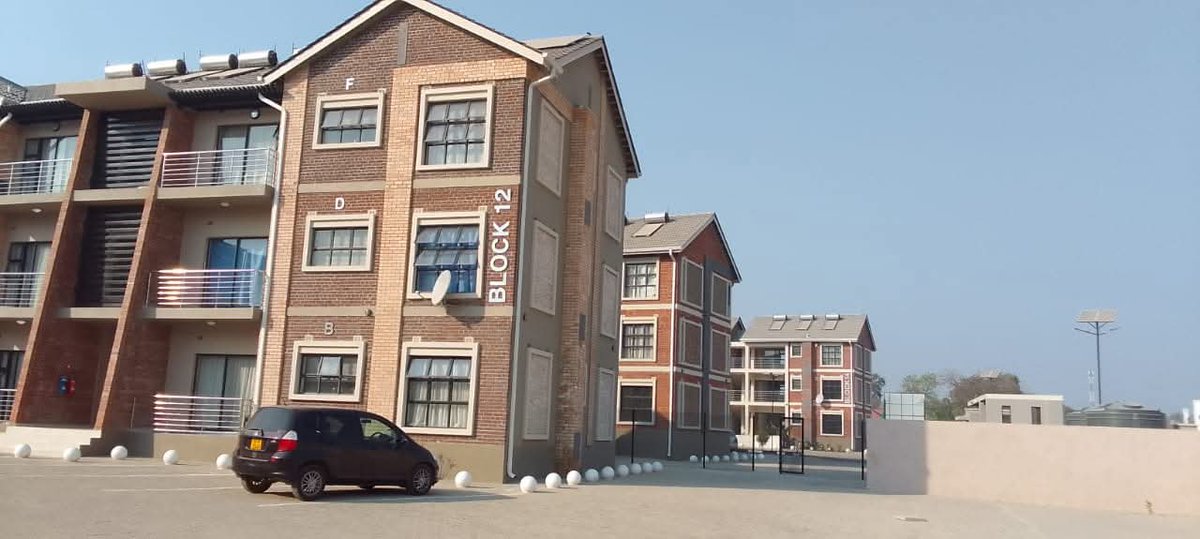
A groundbreaking public-private partnership between the Public Service Commission (PSC) and First Mutual Holdings has resulted in a $37.7 million housing project in Zvishavane.
The Midlands Park development will provide 300 residential flats and 750 student apartments, addressing the national housing shortage.
The housing project was originally opened this Monday by President Emmerson Mnangagwa.
@FirstMutualLife @tendaimadondo @InfoMinZW @edmnangagwa
2
2
168

15 Sep 2025
#NDS1: Namhla, President @edmnangagwa will commissioning the Midlands Park Housing Project in Zvishavane, a $29 million development designed to accommodate 1,000 families. After the commissioning, he will preside over the Munhumutapa Day celebrations at Mandava Stadium in Zvishavane, which coincides with his 83rd birthday.
Key Events
✔️Commissioning of Midlands Park Housing Project: A $29 million housing development project providing homes for 1,000 families, featuring 156 modern residential flats and 504 student apartments.
✔️Munhumutapa Day Celebrations: A celebration honoring Zimbabwe's heritage, unity, and vision for development under the Second Republic, expected to attract over 30,000 people, particularly the youth. @psczimbabwe @FirstMutualLife @MidlandsState @MAmenities @Zim_Vision2030 @mhtestd @FirstMutualProp
2
7
20
3,485