
Predicting Biomedical Interactions with Bayesian inference over Graph Convolutional Network Structures
1. The authors identify a persistent bottleneck in graph neural network (GNN) application to biological networks: selecting the optimal number of graph‑convolution (GC) layers. Too few layers miss higher‑order interactions, while too many cause over‑smoothing and loss of predictive power.
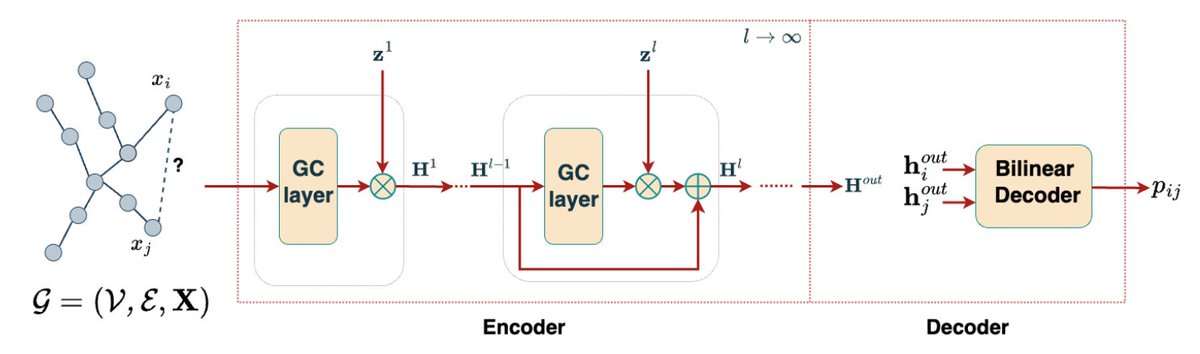
2. To solve this, they introduce a Bayesian model‑selection framework that jointly infers the appropriate depth of a GC encoder and applies dropout regularization, allowing the network to adapt its complexity directly from the data rather than relying on heuristic layer counts.
3. The depth is modeled as a stochastic process via a beta process over layers, inducing layer‑wise activation probabilities. A conjugate Bernoulli process then gates neuron activations, effectively creating an encoder capable of an infinite number of layers in theory while only activating a sparse subset in practice.
4. For reconstructing interactions, a bilinear decoder maps node representations into edge probabilities. This end‑to‑end encoder‑decoder architecture eliminates the need for separate embedding and classifier stages.
5. The authors employ structured stochastic variational inference to approximate the intractable marginal likelihood, using a concrete Bernoulli relaxation for efficient gradient‑based optimization of both depth and dropout parameters.
6. Across four publicly available biomedical interaction datasets (DTI, DDI, PPI, GDI), the Bayesian GCN outperforms DeepWalk, node2vec, L3, VGAE, and fixed‑depth GCNs, achieving gains in AUPRC ranging from ~2–20% and AUROC improvements up to ~3%.
7. The framework also delivers better calibrated predictions: Brier scores are consistently lower than those of a fixed‑depth GCN, indicating more reliable confidence estimates for interaction probabilities.
8. Robustness tests show the method maintains high performance even on highly sparse networks, thanks to its dynamic neuron activation that scales with available training edges, whereas a fixed‑depth GCN activates all neurons regardless of sparsity.
9. Visualizing drug embeddings with t‑SNE reveals that the Bayesian GCN produces clearer, well‑separated clusters for drug categories, suggesting that the learned representations capture pharmacological similarities more faithfully than a conventional GCN.
10. Finally, the model’s novel predictions—both drug‑drug and gene‑disease associations—receive higher confidence scores and are corroborated by recent literature, underscoring the practical value of the inferred depth and structure.
💻Code: github.com/kckishan/BBGCN-LP…
📜Paper: arxiv.org/abs/2211.13231
#GraphNeuralNetworks #BiomedicalComputing #DeepLearning #Bioinformatics #MachineLearning #ModelSelection #GraphConvolutionalNetworks #BayesianInference #DrugDiscovery #GeneDiseaseAssociations
3
15
1,387

17 Jun 2025
🔥 Read our Paper
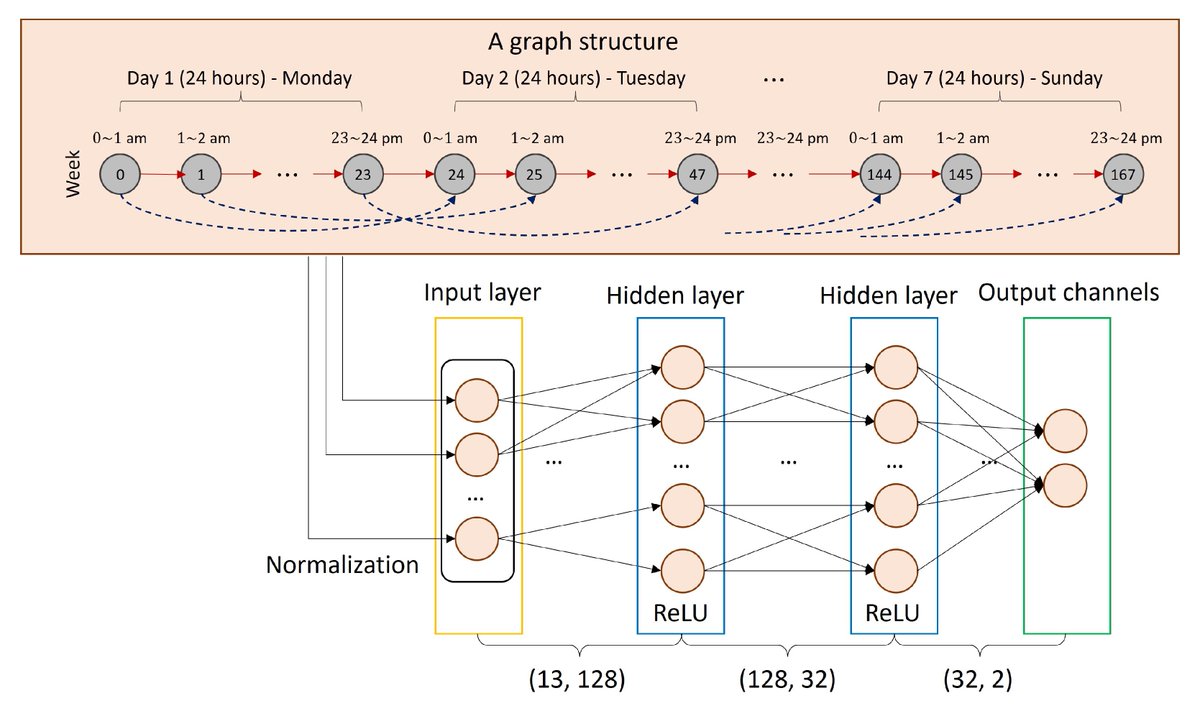
📚 Hourly Long-Term #Traffic Volume Prediction with #Meteorological Information Using #GraphConvolutionalNetworks
🔗 mdpi.com/2076-3417/14/6/2285
👨🔬 by Mr. Sangung Park et al.
🏫 @LifeAtPurdue / Korea National University of Transportation
2
53

3 Dec 2024
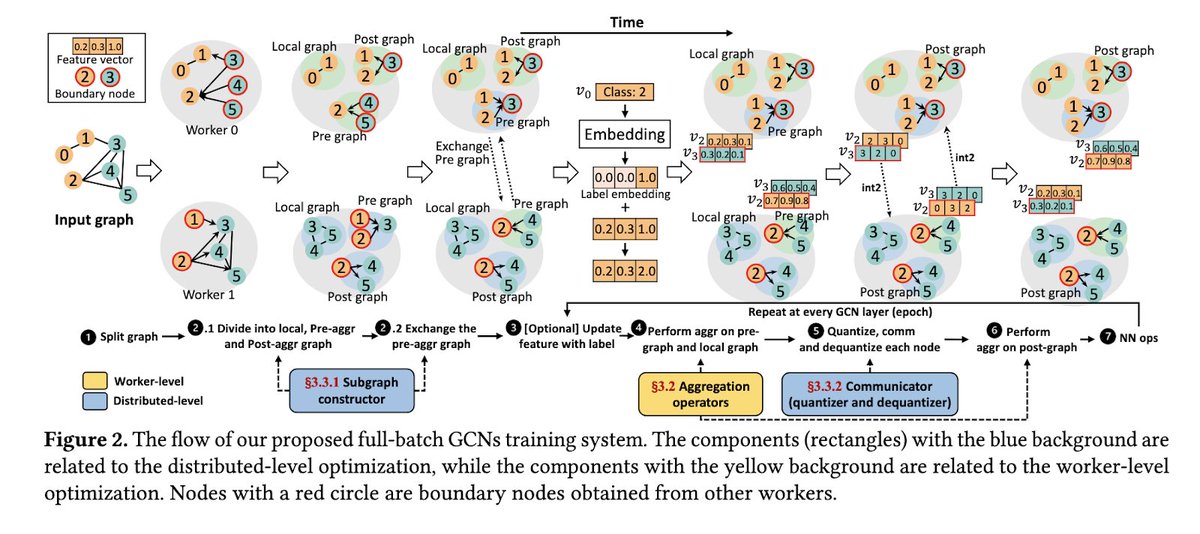
This #AI Paper Introduces #SuperGCN: A Scalable & Efficient Framework for #CPU -Powered #GCN Training on Large Graphs
#GraphConvolutionalNetworks #ArtificialIntelligence #Tech #Technology
buff.ly/49gy0QU
2
1
20

21 Aug 2024
Excited to share our latest spatial transcriptomics tool "STdGCN: spatial transcriptomic cell-type deconvolution using graph convolutional networks"!
🔬 Spatially resolved transcriptomics is revolutionizing our understanding of cellular organization by integrating high-throughput transcriptome measurements with spatial data. However, many current technologies fall short of achieving single-cell resolution.
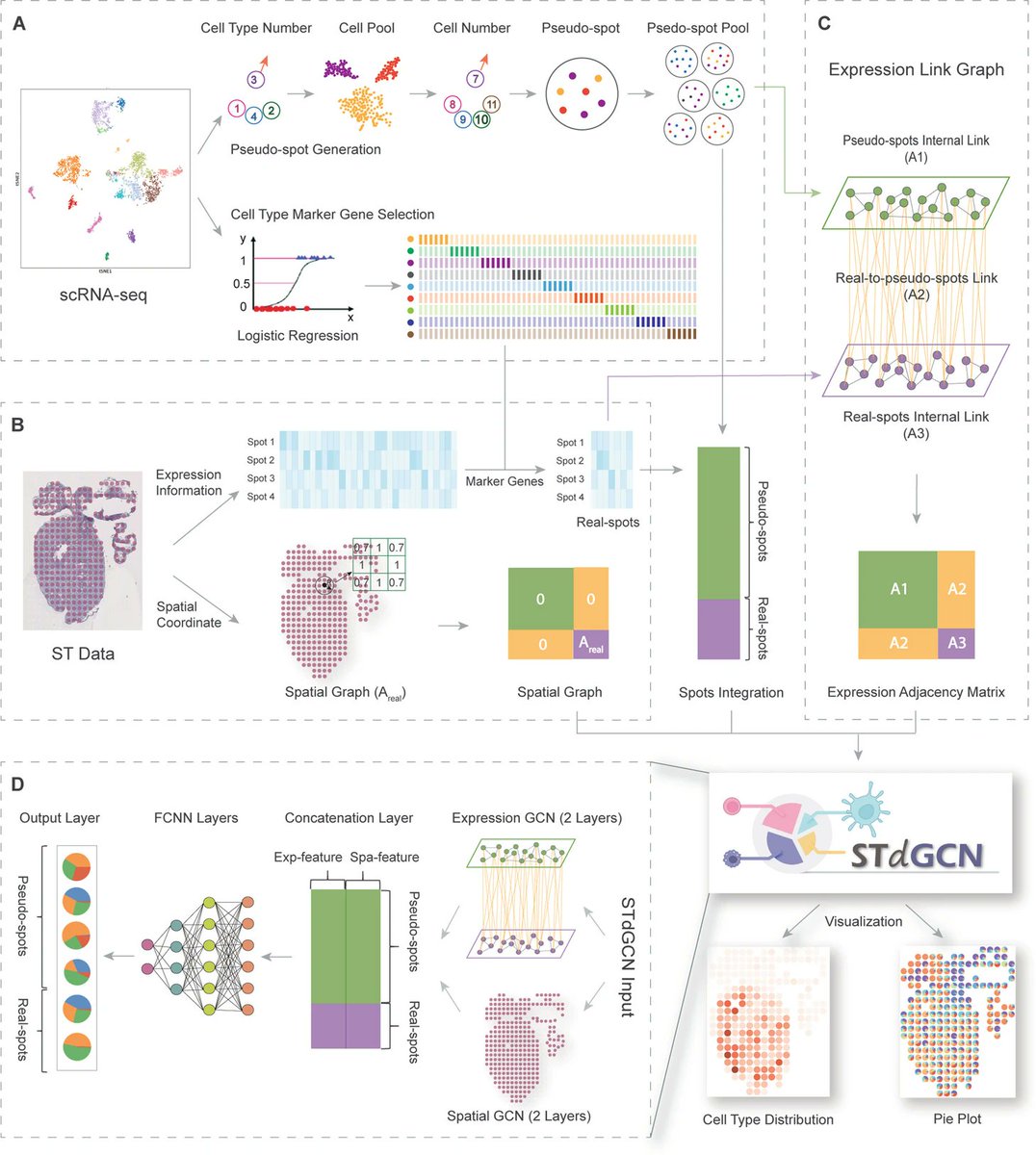
Enter STdGCN, our innovative graph model that leverages single-cell RNA sequencing (scRNA-seq) as a reference to deconvolute cell types in spatial transcriptomic (ST) data.
💡 What makes STdGCN unique?
- It integrates expression profiles from scRNA-seq with spatial localization from ST data.
- Extensive benchmarking across multiple datasets shows STdGCN outperforming 17 state-of-the-art models.
- In a human breast cancer Visium dataset, STdGCN effectively delineates stroma, lymphocytes, and cancer cells, providing deeper insights into the tumor microenvironment.
- In human heart ST data, STdGCN identifies critical changes in endothelial-cardiomyocyte communications during tissue development.
Our findings demonstrate the power of STdGCN in enhancing the resolution and accuracy of cell-type deconvolution, paving the way for more precise and insightful spatial transcriptomic analyses.
Kudos to Dr. Yawei Li on pushing the boundaries of what's possible in the field of spatial transcriptomics!
Paper (no pay wall): genomebiology.biomedcentral.…
Code: github.com/luoyuanlab/stdgcn
#Research #Innovation #SpatialTranscriptomics #GraphConvolutionalNetworks #scRNAseq #Bioinformatics #CancerResearch #HeartDevelopment #DataScience #AIinHealthcare #STdGCN
2
2
25
1,753

11 Aug 2024
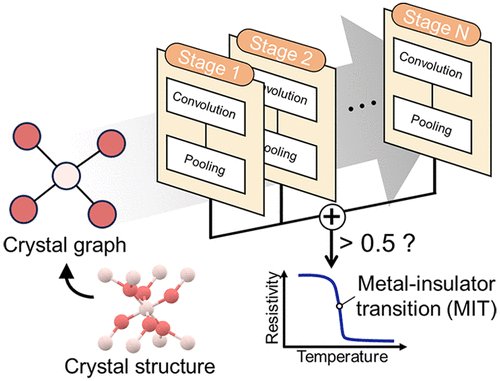
Boosting–Crystal Graph Convolutional Neural Network for Predicting Highly Imbalanced Data: A Case Study for Metal–Insulator Transition Materials
Dive more here: lnkd.in/gzTjMWyC
#MachineLearning #DeepLearning #NeuralNetworks #GraphConvolutionalNetworks #ImbalancedData #AI
3
110

2 Mar 2023
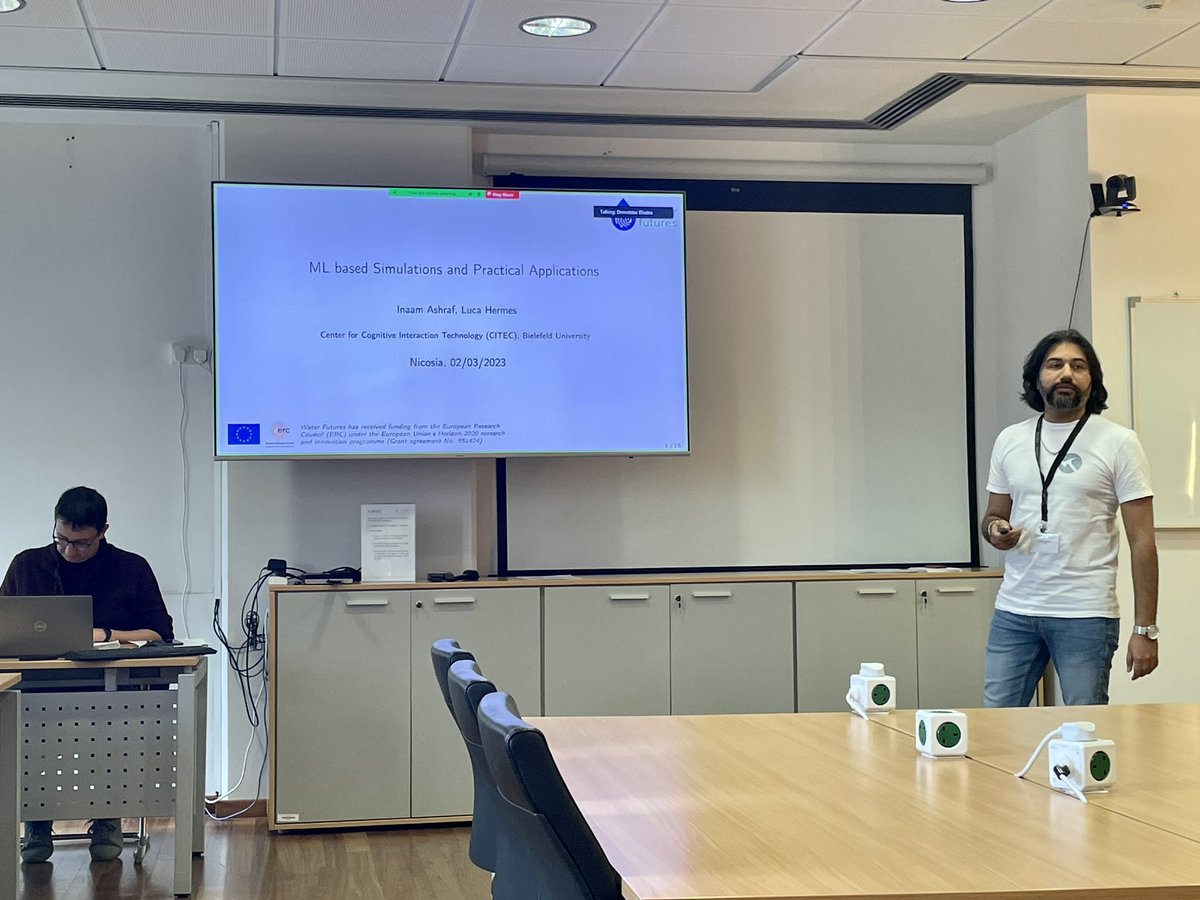
Inaam Ashraf shows how he uses #GraphConvolutionalNetworks to estimate water pressure, and detect and localize leaks. Results look promising, but have (still 😉) limited generalizability. Joint work with Luca Hermes, also from our group.
1
2
8
229

22 Feb 2023
#highlycitedpaper
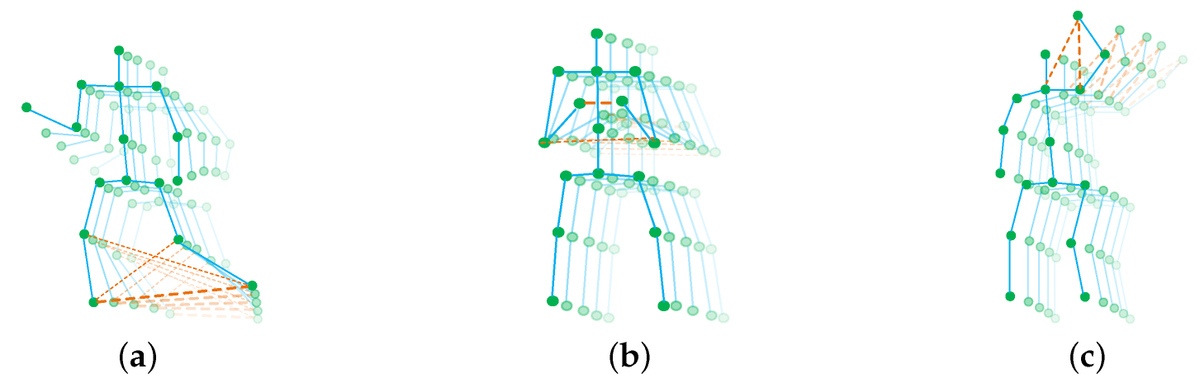
GAS-GCN: Gated Action-Specific Graph Convolutional Networks for Skeleton-Based Action Recognition
mdpi.com/1424-8220/20/12/349…
#deeplearning #actionrecognition #graphconvolutionalnetworks #gatedconvolutionalneuralnetworks
2
293
29 Dec 2022
#highlycitedpaper
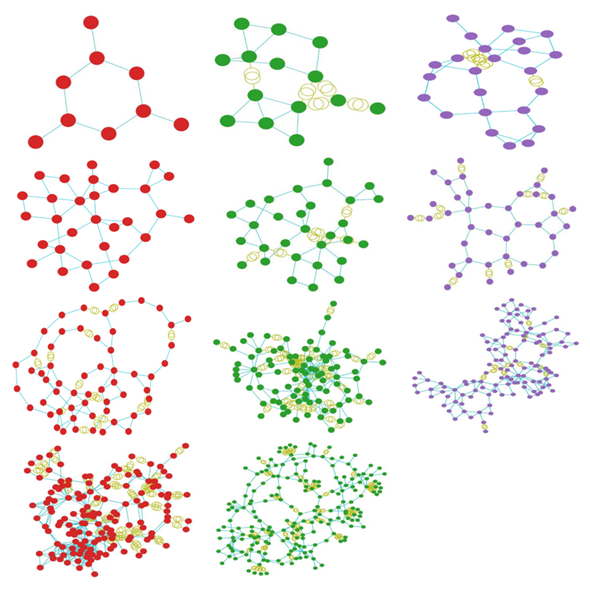
End-to-End Deep Graph Convolutional Neural Network Approach for Intentional Islanding in Power Systems Considering Load-Generation Balance
mdpi.com/1424-8220/21/5/1650
@IHU_SciTech
#GraphConvolutionalNetworks #DeepLearning
1
2
243

27 May 2022
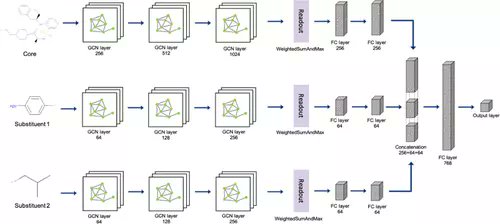
ACGCN: #GraphConvolutionalNetworks for Activity Cliff Prediction between Matched Molecular Pairs #compchem
pubs.acs.org/doi/10.1021/acs…
#current_issue #JCIM #MachineLearning #DeepLearning
7
25

26 Mar 2021
Here is the PyTorch implementation of Learnable Aggregator for Graph Convolution Nets (Zhang & Lu, 2019) by @a_sarig_ and me #opensource #DeepLearning #GeometricDeepLearning #GraphConvolutionalNetworks
3
9

9 Feb 2021
Understanding / Modeling #polypharmacy side effects with #GraphConvolutionalNetworks (GCN) #systemsbiology
academic.oup.com/bioinformat…
2

25 Sep 2020
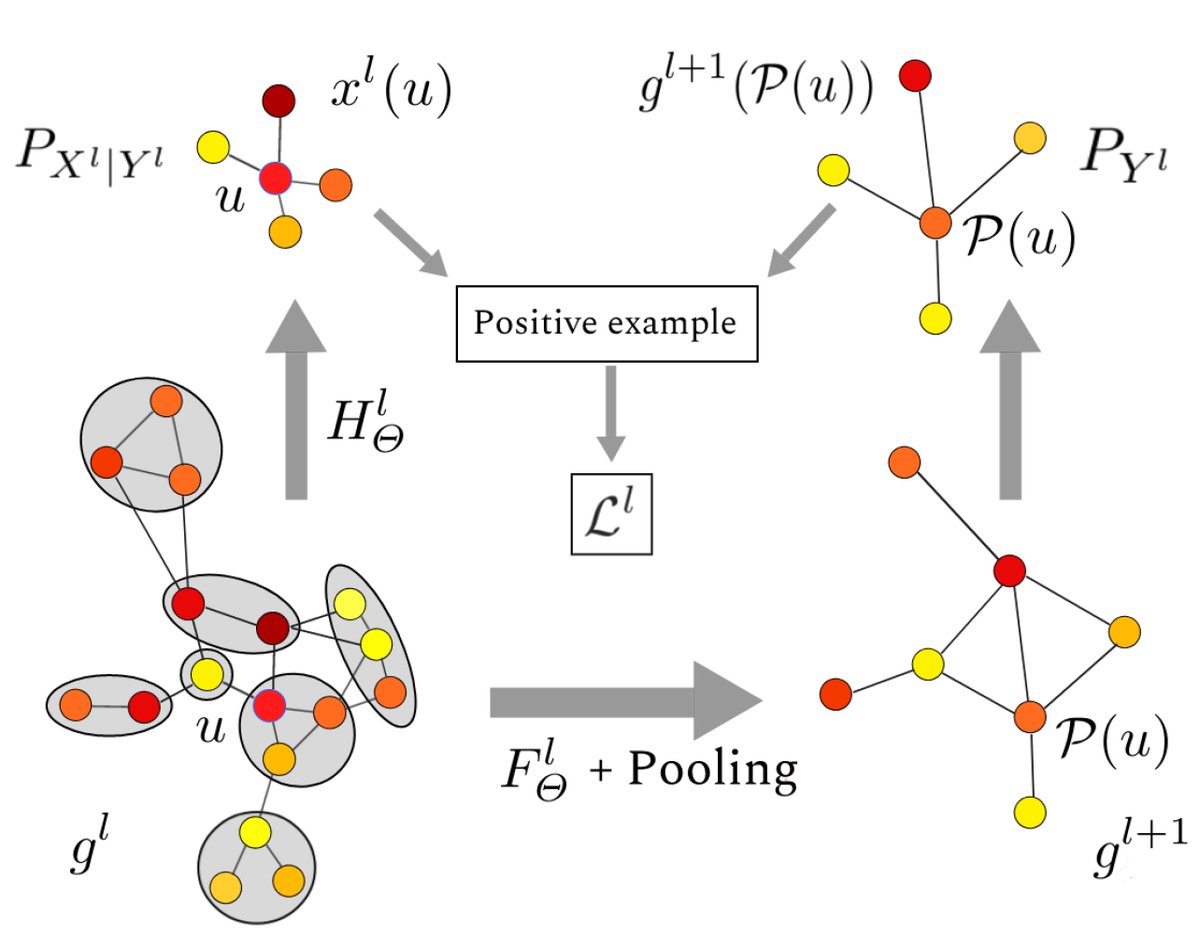
[Article] Hierarchical and Unsupervised Graph Representation Learning with Loukas’s Coarsening
Full #openaccess mdpi.com/1999-4893/13/9/206
#graphrepresentationlearning
#Graph2Vec
#graphconvolutionalnetworks
#graphcoarsening
#unsupervisedlearning
#algorithms
1
3

24 Jul 2020
Social Network feeds can shed the light of how people feel & interact. Here are two conversational graphs, my team extracted from user’s posts and replies while discussing #mentalhealth issues #nlp #Python #Netowrkx
#sna #AI #GraphConvolutionalNetworks #BERT #affectivecomputing
1
1
9

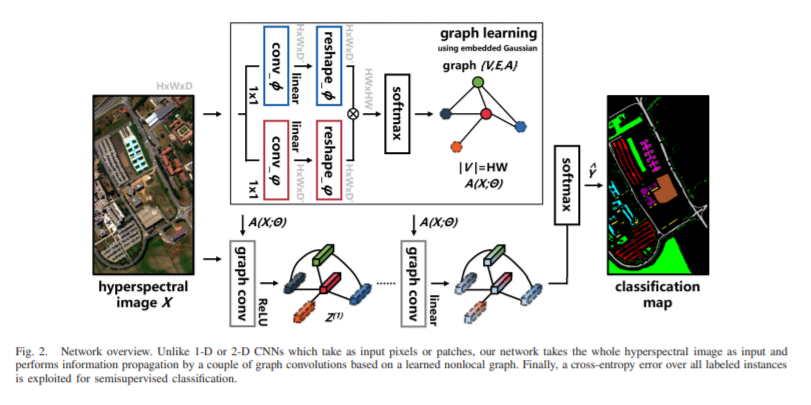
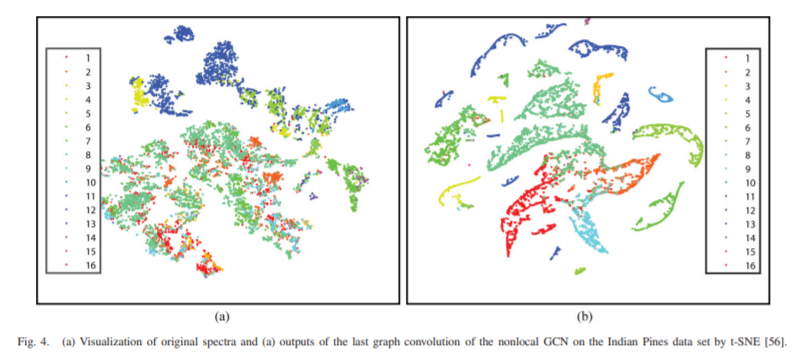
Our work on "#Nonlocal #GraphConvolutionalNetworks for #Hyperspectral #ImageClassification" by Lichao is out @IEEE_GRSS #TGRS: ieeexplore.ieee.org/document…
#GCN rocks.
We need new #Benchmarks in #Hyperspectral #remotesensing! #AI4EO
Follow our research @Zhu_XLab
2
6

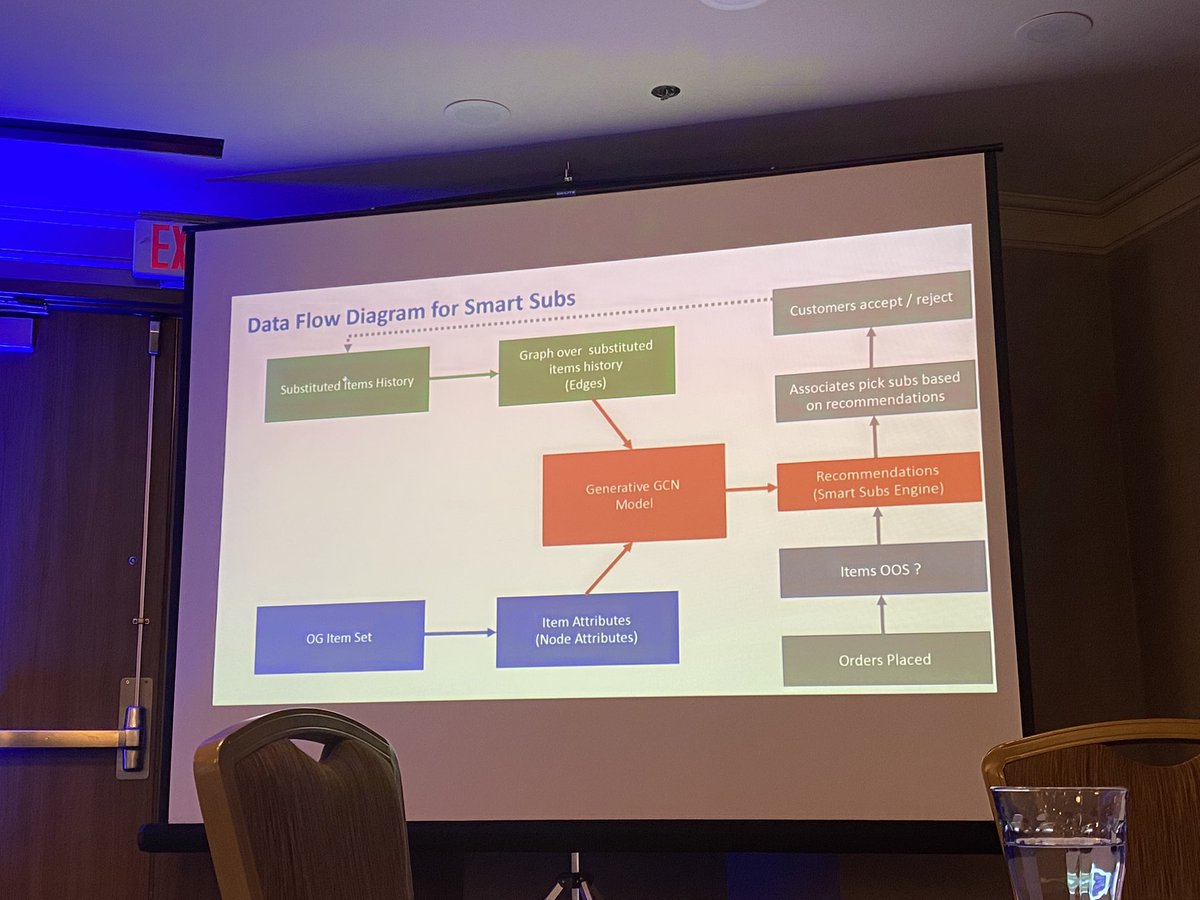
We do Walmart grocery order & pickup every week. Just saw the coolest talk about the #ai involved in deciding what to sub for out of stock items. There is nothing random about the subs! @MarkIIISystems @WalmartLabs #graphconvolutionalnetworks @reworkdl
1
3

Article Link - nanonets.com/blog/id-card-di…
Build your own ID card information extractor using #GraphNeuralNetworks. Learn about different #OCR approaches for ID card digitization like #AttentionOCR, #SpatialTransformers and #GraphConvolutionalNetworks
4
7

8 Jan 2019
#GraphConvolutionalNetworks applied to #KnowledgeGraphs for link prediction.
Code completed for the training stage and some initial code for MRR evaluation.
Need some time to a little recap of the code studied until now :-).
#100DaysOfMLCode #Day3
Log: gist.github.com/giuseppefuti…
2
7 Jan 2019
#GraphConvolutionalNetworks applied to #KnowledgeGraphs for link prediction.
Better understanding of the function to create batches for the training stage.
#100DaysOfMLCode #Day2
Log: gist.github.com/giuseppefuti…
2
6
6 Jan 2019
Hi @sirajraval, today (a real epiphany day) I start the #100DaysOfMLCode pledge in the context of my #PhD.
Here's my log: gist.github.com/giuseppefuti…
#knowledgegraph #graphML #semanticmodeling #gcn #Day1 #graphconvolutionalnetworks
2
11