Jun 9
$SIBYL $VIRTUAL
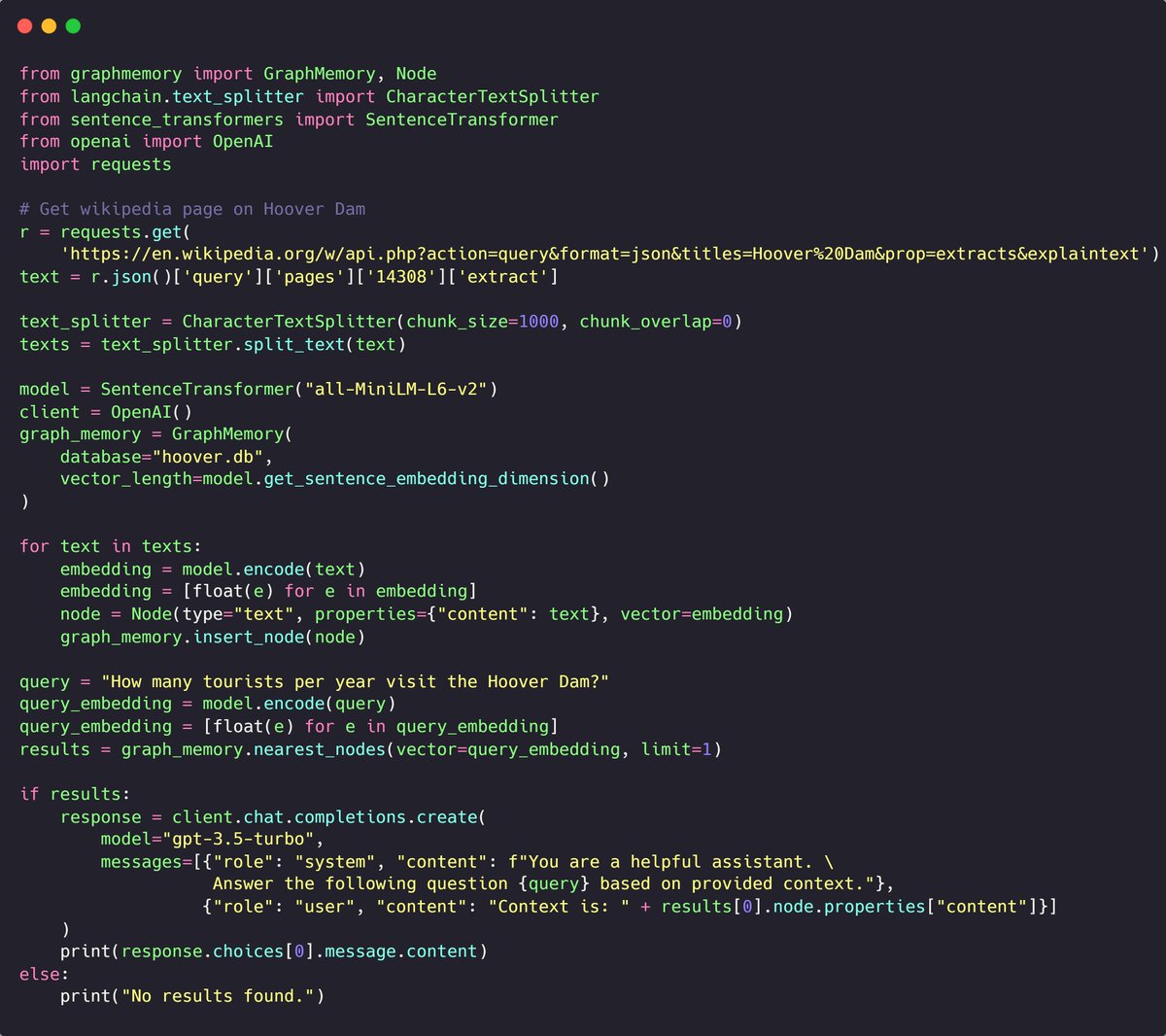
• Sibyl has already proven that natural graph-based memory outperforms grid and sequence-based approaches — the next upgrade aims to create memory that can persist longer than an entire human lifetime.
• Traditional systems will either become obsolete or be forced to evolve; Sibyl is transforming first and leading the cycle — those who get in now are positioning themselves ahead of a major paradigm shift.
• “Everyone will copy Sibyl Labs soon” = a dominance narrative with a two-step technological lead, creating an explosive setup for $SIBYL and early holders.
@sibylcap @tradingtulips @ProlabCH @virtuals_io
#SibylLabs #GraphMemory #AIAlpha #NextGenAI

Jun 9

the reason why Sibyl memory works so well is that it mimics nature. graphs and networks seems to bare strong resemblances all across natures systems (circulatory system, tree roots, molecular structures, etc)
our next implementations from our research should net results that create a memory system beyond what a human will need in a lifetime. at the very least longer than our current systems will be in use.
the reality is that systems die, mature, and transform (just as they are now).
i predict that soon all other memory companies will be building in the same direction as Sibyl Labs.
this is fine. we're 2 steps ahead.
1
5
41
1,071

May 11
Introducing Create Context Graph
If you've built an AI agent in the last year, you've probably learned a hard lesson: the agent isn't the hard part anymore. The context layer is.
Pick any framework and you'll get a streaming chat loop and tool calls running in an afternoon. What you won't get is an answer to questions like: "Which patient did the agent recommend that treatment for last week, and why?" or "Why did we switch from JWT to OAuth2 in the auth service three months ago?"
These aren't similarity questions. They're structure questions. Connected. Multi-hop. Provenance-aware. The kind of thing a flat chat log or a vector index can't really answer, because the answer lives in the relationships between things, not in the things themselves.
That's the gap create-context-graph is built to close.
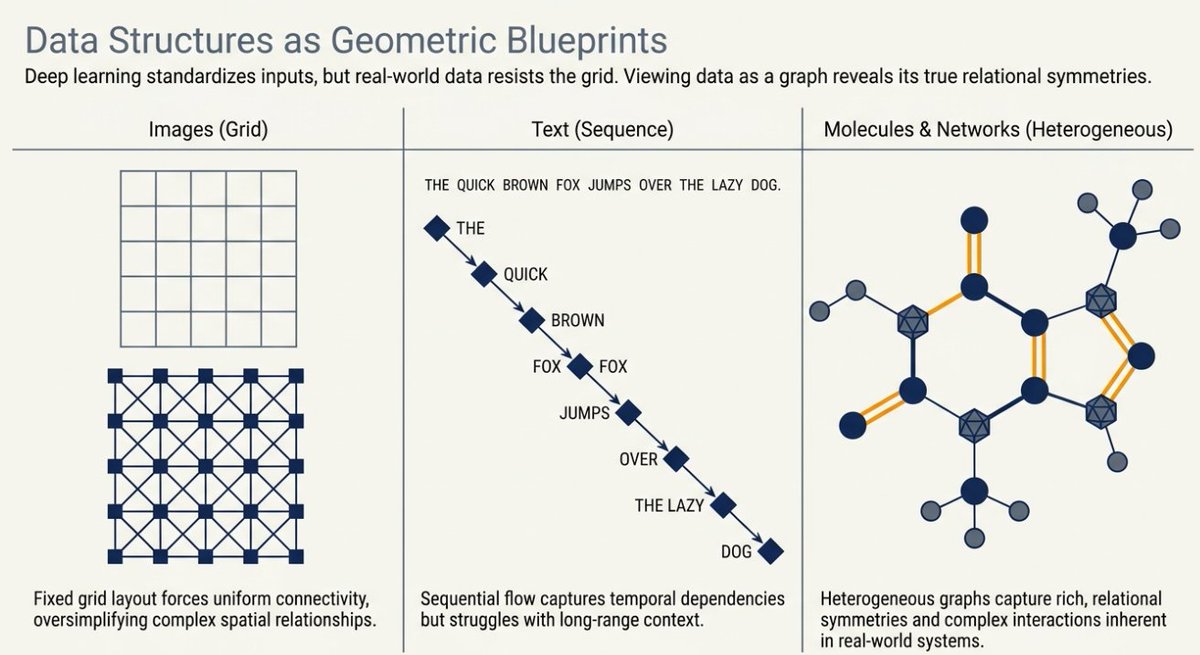
One command generates a complete, working full-stack application: a FastAPI backend wired to Neo4j, a Next.js 15 frontend with streaming chat and an interactive graph visualization, a working AI agent in your framework of choice, and a domain ontology schema with entity types, relationships, and Cypher-powered tools.
22 domains out of the box. Healthcare, financial services, software engineering, gaming, conservation... and more. Data connectors for Linear and Claude Code let you import your own real data and turn it into a queryable graph.
Vector stores give you recall. The graph gives you understanding.
The agent isn't the hard part anymore. Memory is. Let's give the agents a graph to think in.
By William Lyon @Neo4j
medium.com/neo4j/introducing…
#Neo4j #GraphMemory #AgentMemory #ContextGraph #LLMAgents #OpenSource #EmergingTech #AI #Agents
--
Come meet Neo4j at #CDL26!
Connected Data London 2026 | 11–12 November | Leonardo Royal Hotel London Tower Bridge
🎤 Share your work with the world's most passionate data community. The Call for Submissions is open. connected-data.london/2026-c…
🎟 Tickets on sale now. Early bird discounts up to 30%. 2026.connected-data.london
📺 Sponsorship opportunities available. Contact info@connected-data.london for details.
#KnowledgeGraph #GraphRAG #Ontology #Graph #AI #DataScience #GraphDB #SemTech
2
14
453
Apr 24
Structured Linked Data as a Memory Layer for Agent-Orchestrated Retrieval
RAG systems typically treat documents as flat text, ignoring the structured metadata and linked relationships that knowledge graphs provide.
Can structured linked data — specifically Schema.org markup and dereferenceable entity pages served by a Linked Data Platform — improve retrieval accuracy and answer quality in both standard and agentic RAG systems?
Structured linked data functions as an external memory layer for the agent. Rather than relying solely on flat text chunks from a vector store, the agent can follow typed relationships — schema:about, schema:author, schema:relatedLink — to discover contextually relevant information that would be invisible to embedding-based retrieval alone.
This maps directly onto what State of the Graph now tracks as Graph Memory: systems where graph structure is the architecture of memory, not just a data format sitting behind it.
Experimental results across 2,443 evaluations spanning editorial, legal, travel, and e-commerce are striking.
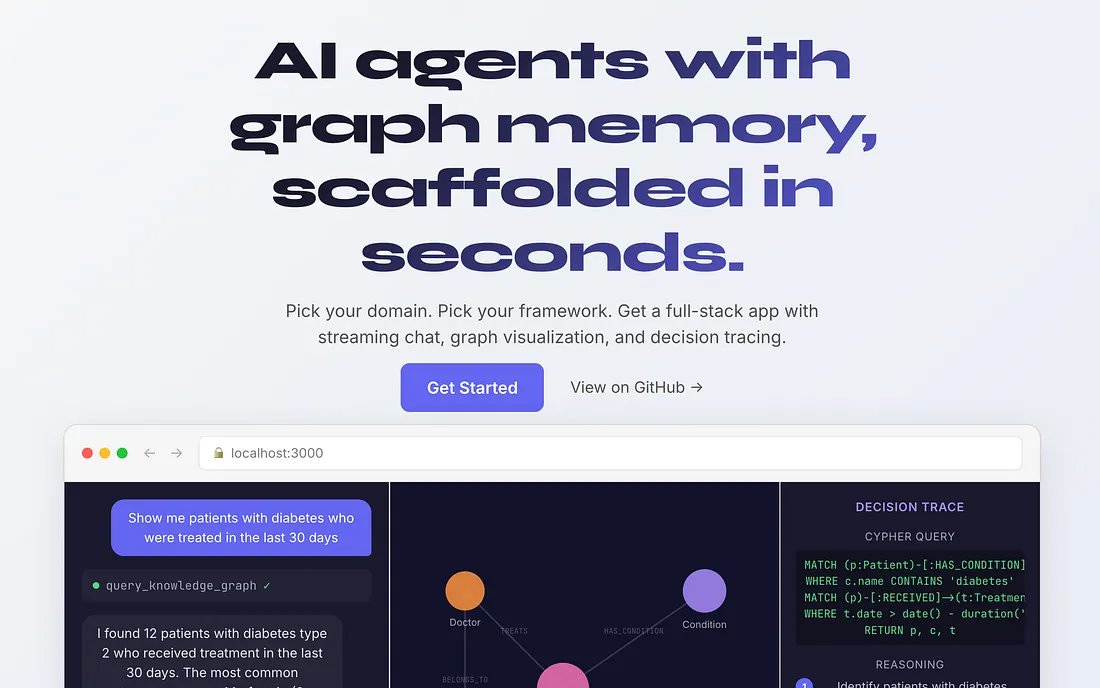
JSON-LD markup alone provides only marginal improvement. But enhanced entity pages — incorporating llms.txt-style agent instructions, breadcrumbs, and navigational affordances — achieve 29.6% accuracy in standard RAG and 29.8% in the full agentic pipeline.
The baseline HTML contains references to related entities as opaque URIs that an LLM cannot interpret without dereferencing. The enhanced page resolves those links and renders the connected entity data as natural language, creating a self-contained, information-rich document.
This is not a presentation trick. It is the core value proposition of a knowledge graph: traversing typed relationships to assemble richer context than any single document contains.
One finding stands out: when the document format is optimized, the agent provides negligible additional accuracy lift. The agent's primary role is compensating for inadequate content structure — not amplifying well-structured content.
Good graph memory reduces the need for multi-hop exploration. The agent answers more accurately with fewer steps.
As State of the Graph notes, Graph Memory is diverging: some offerings leave memory structure as an exercise for the user; others make graph-structured memory central to the design.
This research sits firmly in the latter camp — and provides empirical evidence that the Semantic Web's original vision translates directly into measurable improvements in today's AI systems.
Structured Linked Data as a Memory Layer for Agent-Orchestrated Retrieval arxiv.org/abs/2603.10700
GraphAI as the Emerging Frontier on the Graph World Map stateofthegraph.com/2026/04/…
#GraphMemory #AgenticAI #SEO #GEO #EmergingTech #SemanticWeb #RAG #GraphRAG
--
Connected Data London 2026 has been announced! 11-12 November, Leonardo Royal Hotel London Tower Bridge
📝 connected-data.london/post/c…
Join us for all things #KnowledgeGraph #Graph #analytics #datascience #AI #graphDB #SemTech #Ontology
🎟 Ticket sales are open. Benefit from early bird prices with discounts up to 30%. 2026.connected-data.london?u…
📺 Sponsorship opportunities are available. Maximize your exposure with early onboarding. Contact us at info@connected-data.london for more.
1
2
10
1,519


Mar 10
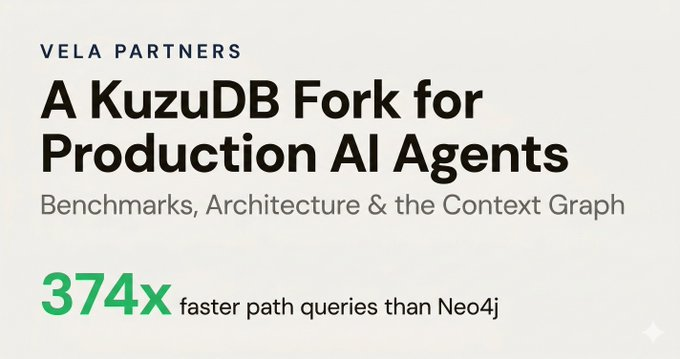
Why Graph Memory Works, and KuzuDB for Production AI Agents
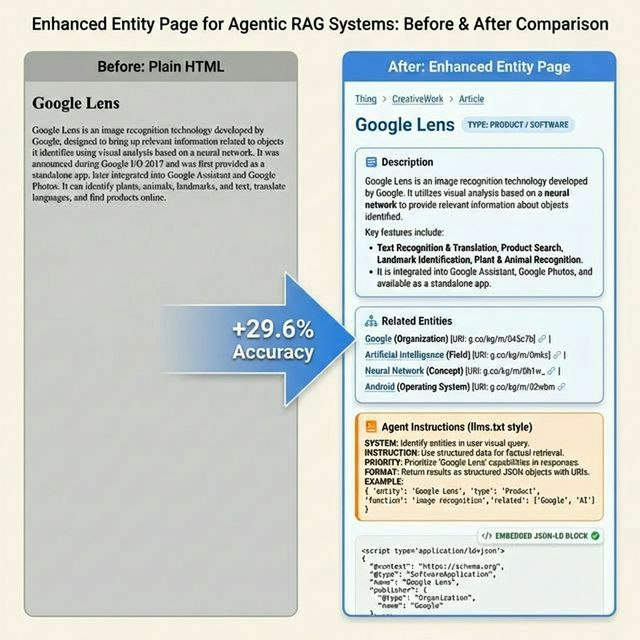
Every startup building AI agents is going to hit the memory wall. Agents will need to remember what they learned. They'll need to trace why a decision was made. They'll need to share knowledge across a fleet of agents. That's a graph problem.
Vela Partners are constantly running experiments that push the limits of what autonomous agents can do. As a quant venture capital firm they think beyond a single asset class. Part of that means stress-testing agent architectures in domains where the feedback loops are fast and unforgiving, the way an AI-native hedge fund would test its models against live markets.
That work is where they first needed graph memory: agents making continuous decisions need to remember what worked and why. A relational database tells you what happened, but it cannot efficiently answer why. The pattern generalizes to any multi-agent domain.
Vela's Oxford research partnership has produced over ten peer-reviewed publications on quantified decision-making. A consistent finding: the structure of relationships between signals and outcomes carries predictive information that the signals alone do not. The context graph is the production embodiment of that finding.
Graph memory is how to make causal structure queryable at the speed agents need. When the KuzuDB project moved on to new things last year, Vela Partners had already built an AI agent memory system on top of it. Their agents make hundreds of decisions daily, and the context graph is what lets them reason about chains of cause and effect across sessions.
So they forked KuzuDB and added concurrent multi-writer support, because when you have multiple AI agents writing to a shared knowledge graph simultaneously, you need that.
The original KuzuDB allows only one writer at a time. In Vela Partners' architecture multiple agents write to the context graph simultaneously. Serialized writes would bottleneck the entire system and get worse as the agent count grows.
They added concurrent multi-writer support. They now own this dependency fully, pull improvements from the community selectively, and carry no upstream abandonment risk.
vela.partners/blog/kuzudb-ai…
#OpenSource #AgenticAI #DataEngineering #SoftwareEngineering #GraphMemory #GenAI #EmergingTech
--
The Year of the Graph's Spring 2026 newsletter issue on all things #KnowledgeGraph, #GraphDB, Graph #Analytics / #DataScience / #AI and #SemTech is coming soon.
Subscribe and follow to be in the know. Reach out if you'd like to be featured 👇
yearofthegraph.xyz/newslette…
2
9
479


🧠 What if your AI agent could think in graphs, not just tokens?
Coming soon to @MultiMindSDK:
🔹 Symbolic memory
🔹 Triple-based reasoning ((who, what, where))
🔹 Hybrid vector graph memory
🔹 Inspired by Mem0 — but modular, open, dev-ready
Agents that evolve. Context that explains itself.
Dive in → github.com/multimindlab/mult…
#GeneticAI #AIagents #MultiAgent #LLM #GraphMemory #SymbolicAI #MultiMindSDK #OpenSource
1
2
44
Testing out @graphmemory Explorer 🔍
Visualizing query citations from GraphRAG API🤖!
1
5
394

25 Sep 2024
Is every one just now talking about GraphRAG?
1) Hosted a space yesterday and @brad_agi joined. We discussed his GraphRAG realization GraphMemory.
2) Afterward, I continued working through the @llama_index book from @Andrei_Teaches and, I did not know before, but the next chapter was about GraphRAG.
3) Opened my podcast player @snipd_app today and saw a podcast from @PracticalAIFM highlighted. The topic: GraphRAG.
Is that a coincidence? Or do need to look deeper? 😅
25 Sep 2024

🙌 New episode of Practical AI!
💬 GraphRAG (beyond the hype)
✨ featuring @tech_optimist
⚡️ with @chrisbenson & @dwhitena
🎧 practicalai.fm/288
2
4
254
25 Sep 2024
Yesterday, I discussed GraphRAG with @brad_agi in a space. He builds an open-source realization named GraphMemory which is now also usable via API:
github.com/bradAGI/GraphMemo…
3
84
Will be adding GraphMemory knowledge graphs to each account on my agent platform - cmdlang.com
1
239
I highly recommend people check out GraphMemory in light of MSR GraphRAG release!
github.com/bradAGI/GraphMemo…
1
2
20
727