
Jun 9
assume-breach is theater. ai-native security is real. your data architecture IS your security architecture now. hypersegmentation ai orchestration = actual defense. data leaders... this is your moment.
#AI #DataStrategy #FractionalCDO #DataLeadership
5

Jun 9
Technology doesn't replace the Relationship Manager (RM); it empowers them. In a hyper-segmented world, AI provides the "nudges" and granular insights that allow RMs to focus on long-term strategic growth and high-value opportunities. Read more about shifting the RM focus from reactive facilitator to proactive advisor. Download the full report: delo.tt/6012BBxEOj
🟢 #DeloitteAfricaFSI
#HyperSegmentation #RelationshipManagement #BankingInnovation #StrategicGrowth
70

Dr. David Spetzler, President at Caris Life Sciences made some important comments in the panel on cancer screening at the at the Inaugural National Caris Precision Oncology Alliance Member Meeting at @BrownUniversity @carisls
He spoke about “multiplicity and the hypersegmentation problem” as causing “the risk of false discovery to go up” and driving up the sample size.
He spoke about cofounders, the need to address the complexity of biology.
Dr Spetzler also said “unnecessary interventions need to be minimized.”

1
6
241

Apr 12
megaloblastic changes, most commonly due to: Vitamin B12 deficiency, Folate deficiency
Pathophysiology:
Defective DNA synthesis impaired nuclear maturation, cytoplasmic maturation continues , nuclear-cytoplasmic asynchrony , hypersegmentation.
Clinical correlation:
Often seen in:
- Megaloblastic anemia
- Malabsorption states
•Chronic alcoholism
•Certain medications (e.g., methotrexate)
From a broader perspective, this reflects deficient methylation and nucleotide synthesis, where:
•B12 (cobalamin) and folate are central
•Orthomolecular correction: methylcobalamin 5-MTHF
•Supportive: B-complex, zinc, gut optimization (absorption)
The neutrophils are hypersegmented, indicating a megaloblastic process (B12/folate deficiency until proven otherwise).
1
3
335

Apr 12
Diagnosis: Hypersegmented Neutrophil
Key Observations
➤ Hypersegmentation: The neutrophil in the image clearly displays six or more nuclear lobes (segments) connected by thin chromatin filaments.
➤ Morphology: While a normal neutrophil typically has 3 to 5 lobes, this cell exceeds that limit, which is a hallmark hematological finding.
Clinical Significance
➤ Megaloblastic Anemia: This is most commonly associated with Vitamin B12 deficiency or Folate (Vitamin B9) deficiency.
➤ Early Marker: Hypersegmentation is often the first sign of megaloblastic changes, appearing in the peripheral blood even before macrocytosis (enlarged red cells) develops.
➤ Other Causes: It can also be seen in cases of long-term chemotherapy (antimetabolites) or rare genetic conditions.
Summary (Ultra-Short)
➤ Condition: Hypersegmented Neutrophil.
➤ Primary Cause: Megaloblastic Anemia (B12/Folate deficiency).
➤ Definition: Presence of ≥ 6 nuclear lobes in a single neutrophil.
1
4
277

29 Dec 2025
Erythroid (RBC precursor) dysplasia
1. Binucleation
What it means: One erythroblast has two nuclei
Why it happens: Faulty cell division
Significance: Classic sign of dyserythropoiesis in MDS
2. Multinucleation
What it means: More than two nuclei in one erythroblast
Significance: More severe erythroid dysplasia
3. Nuclear budding
What it looks like: Small “buds” protruding from nucleus
Meaning: Defective nuclear maturation
High-yield: Strongly suggests MDS
4. Nuclear irregularity / karyorrhexis
What it means: Abnormally shaped or fragmented nucleus
Exam tip: Think ineffective erythropoiesis
5. Megaloblastoid change
What it looks like: Large erythroblasts with immature nuclei but mature cytoplasm
Looks like: B12/folate deficiency
Key point: In MDS, B12 & folate are normal
6. Ring sideroblasts
Definition: ≥5 iron granules encircling ≥1/3 of nucleus
Cause: Mitochondrial iron trapping
Seen in:
MDS (especially SF3B1 mutation)
Alcohol, drugs (INH), copper deficiency
⚪ Granulocytic (myeloid) dysplasia
7. Pseudo–Pelger–Huët anomaly
What it looks like: Neutrophil with bilobed or unilobed nucleus
Key feature: Hyposegmented nucleus
High-yield: Very characteristic of MDS
8. Hypogranulation
What it means: Neutrophils lack normal granules
Slide clue: Pale, “empty” cytoplasm
Clinical impact: Poor neutrophil function → infections
9. Abnormal nuclear segmentation
Includes: Hypersegmentation or bizarre shapes
Meaning: Faulty maturation
Megakaryocytic dysplasia
10. Micromegakaryocytes
What they are: Abnormally small megakaryocytes
Nucleus: Single or bilobed (instead of multilobed)
Very typical for MDS
11. Hypolobated nuclei
What it means: Megakaryocyte nucleus has too few lobes
Exam pearl: Think MDS rather than ITP
12. Separated nuclear lobes
Appearance: “Pawn-ball” or widely separated lobes
Significance: Dysplastic megakaryopoiesis
4
426

In marketing speak I fear Spotify are guilty of hypersegmentation....
6
28

31 Oct 2025
Speaking of data. Do you know that if you wanted to run certain campaigns without an already established database that hyper segmentation is harder? And so hypersegmentation really just takes off with data accumulation as data laws and P&C policies restrain a lot of data.
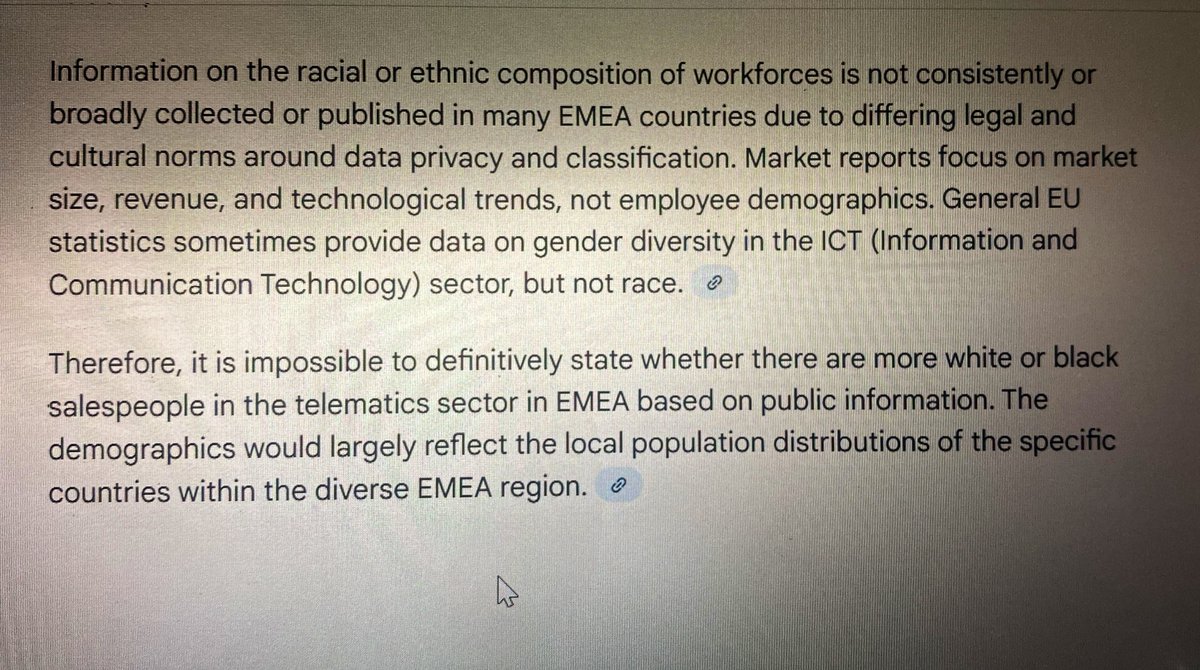
So, I was brainstorming with someone on some campaigns in a specific sector and we were building a brief to guide design, comms etc but could not get access on racial distribution on a specific department in a sector in the EMEA region. We have read multiple papers and even looked at company group pictures to try to figure this out to no avail😭🤧
Only solution now is a market research org or we will commission sales to find ways to figure out ethnicity when doing demo calls.
All this to say that on the surface, recording data such as this might be misconstrued as something that could be weaponized for racism, however, what if regulatory bodies factored in nuanced use cases of data in such a way that it can be used for good while streamlining it’s abuse?
2
2
8
812

9 Oct 2025
🧫 Neutrophil Hypersegmentation — Hema Pearls 🧠🧬
🔍 Definition:
≥5 lobes in ≥5% of neutrophils (or ≥6 lobes in any cell) 🔬
🚨 Main Causes:
1️⃣ Megaloblastic anemia 💉
➡️ Vit B12 deficiency 🧀
➡️ Folate deficiency 🥦
📍DNA synthesis impaired → nuclear maturation delay
2️⃣ Cytotoxic / Antimetabolite drugs 💊
➡️ Methotrexate, Hydroxyurea, Azathioprine, 6-MP, Cytarabine
3️⃣ Myelodysplastic syndrome (MDS) 🧬
➡️ Dysplasia → abnormal nuclear segmentation
4️⃣ Chronic infection / Inflammation 🔥
➡️ Reactive hypersegmentation occasionally seen
5️⃣ Iron deficiency anemia (rare) 🍖
➡️ Borderline changes mimicking megaloblastic picture
6️⃣ Uremia / Liver disease 💧
➡️ Metabolic effects on marrow maturation
🩺 OSCE Tip:
💬 “Peripheral smear shows hypersegmented neutrophils — next test?”
✅ Serum B12 & Folate levels
📚 Ref:
•Bain BJ. Blood Cells: A Practical Guide, 6th Ed, 2025.
•Hoffbrand AV et al., Postgraduate Haematology, 8th Ed, 2023.
#HemaPearls 🧬 #Neutrophils #Hypersegmentation #B12 #Folate #MDS #Hematology
6
27
1,194

25 Aug 2025
This has been a recurring topic around here for the past years. If not mistaken, @Recuenco has been talking about this and hypersegmentation (maybe not the right word) in the ES community for years, and it has been mentioned in some major podcasts such as TF
1
2
1,570

15 May 2025
Hurler Syndrome (HS) is a lysosomal storage, X-linked autosomal recessive disorder of the aminomucopolysaccharide Type IH (MPS-IH). It is caused by the excessive build-up of glycosaminoglycans (GAG) in lysosomes. It is caused by mutations on chromosome 4 (4,p16.3) with deficiency in alpha-L-iduronidase enzyme leading to lysosomal degradation. It causes organ systems damage in CNS, skeletal, corneal, and heart. Abnormal changes appear by 3 months of age with progressive developmental and mental deterioration. There's a large head, frontal bossing, and short stature. By age 4 years, there's a developmental arrest. Diagnosis: amniocentesis, and genetic testing. Hurler syndrome is characterized by neutrophil hypersegmentation and the presence of Alder-Reilly inclusions on histopathology. The accumulation of glycosaminoglycans, protein-carbohydrate complexes within lysosomes, form the specific and pathognomic Alder-Reilly inclusions of Hurler Syndrome. Ddx. Other types of mucopolysaccharidosis types like Hurler-Schei and Schei syndromes, which are milder forms. Tx. Enzyme replacement therapy with iduronidase, corneal surgery, surgical bone corrections, and hematopoietic stem cell transplantation (HSCT).
2
2
8
1,385

6 May 2025
Although the case presented suggests #thalidomide-induced #phocomyelia, this drug is no longer used to treat morning sickness since it was strictly prohibited during #pregnancy in 1962, after its association with birth defects in babies of mothers who had taken it was discovered.
Thalidomide's use is currently restricted to multiple myeloma and erythema nodosum leprosum. Less common uses include inflammatory diseases such as sarcoidosis and Behçet's disease, and some dermatological conditions such as actinic prurigo and adult Langerhans histiocytosis, among others.
Phocomelia can also be associated with different genetic syndromes, including:
◦ Roberts Syndrome: A rare autosomal recessive disorder caused by a mutation in the ESCO2 gene that manifests with severe limb malformations and craniofacial defects.
◦ Thrombocytopenia with radial aplasia: A rare autosomal recessive disorder related to the RBM8A gene that presents with thrombocytopenia and limb radial deficiency.
◦ Syndrome of severe limb defects, vertebral hypersegmentation, and mirror polydactyly: An autosomal recessive disorder resulting in severe limb hypoplasia with polydactyly and hypersegmentation of the spine.
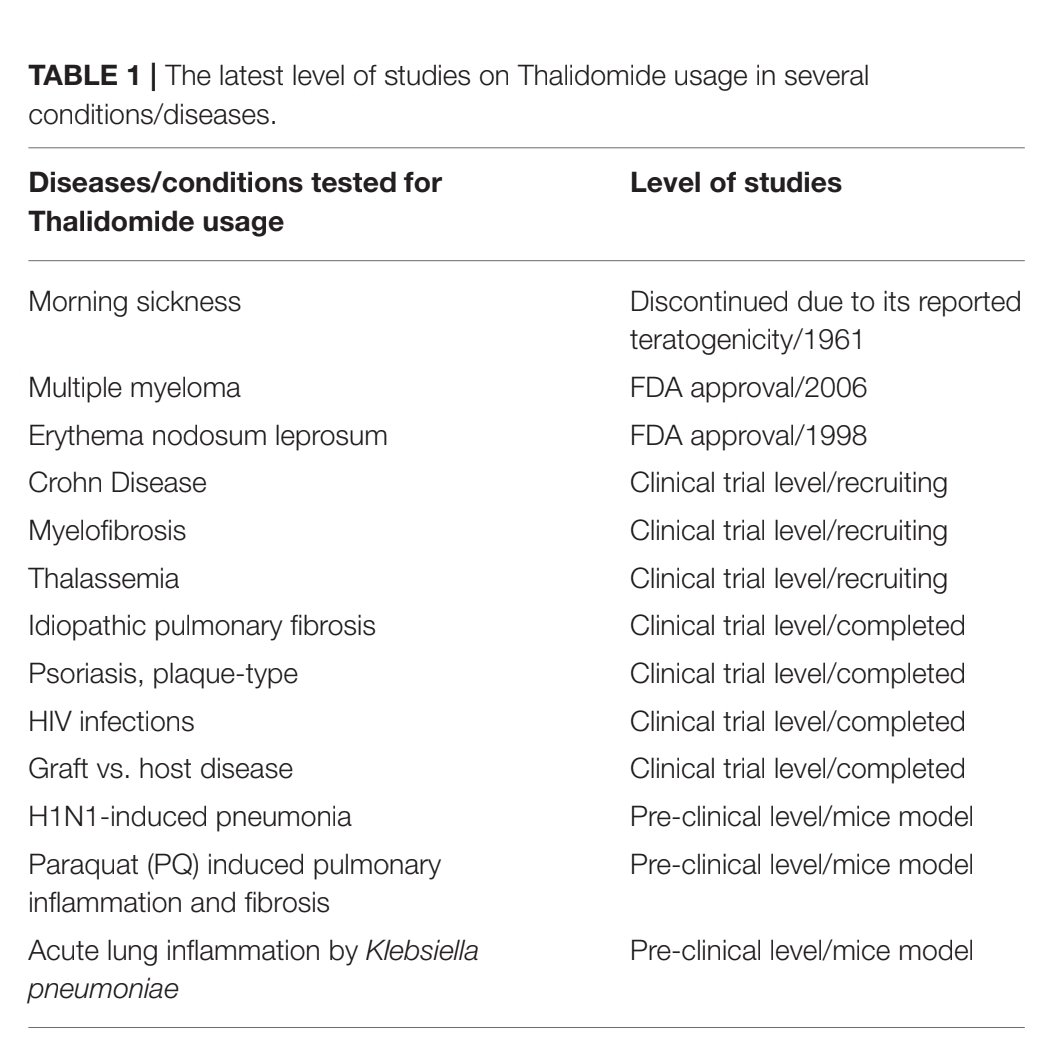
ALT Khalil A, Kamar A, Nemer G. Thalidomide-Revisited: Are COVID-19 Patients Going to Be the Latest Victims of Yet Another Theoretical Drug-Repurposing?. Front Immunol. 2020;11:1248. Published 2020 May 28. doi:10.3389/fimmu.2020.01248
4 May 2025

Diagnosis?
What's the cause??
(Mother had been on some drug for her Morning sickness)

2
2
319
6 May 2025
Although the case presented suggests thalidomide-induced phocomyelia, this drug is no longer used to treat morning sickness since it was strictly prohibited during pregnancy in 1962, after its association with birth defects in babies of mothers who had taken it was discovered.
Thalidomide's use is currently restricted to multiple myeloma and erythema nodosum leprosum. Less common uses include inflammatory diseases such as sarcoidosis and Behçet's disease, and some dermatological conditions such as actinic prurigo and adult Langerhans histiocytosis, among others.
Phocomelia can also be associated with different genetic syndromes, including:
◦ Roberts Syndrome: A rare autosomal recessive disorder caused by a mutation in the ESCO2 gene that manifests with severe limb malformations and craniofacial defects.
◦ Thrombocytopenia with radial aplasia: A rare autosomal recessive disorder related to the RBM8A gene that presents with thrombocytopenia and limb radial deficiency.
◦ Syndrome of severe limb defects, vertebral hypersegmentation, and mirror polydactyly: An autosomal recessive disorder resulting in severe limb hypoplasia with polydactyly and hypersegmentation of the spine.
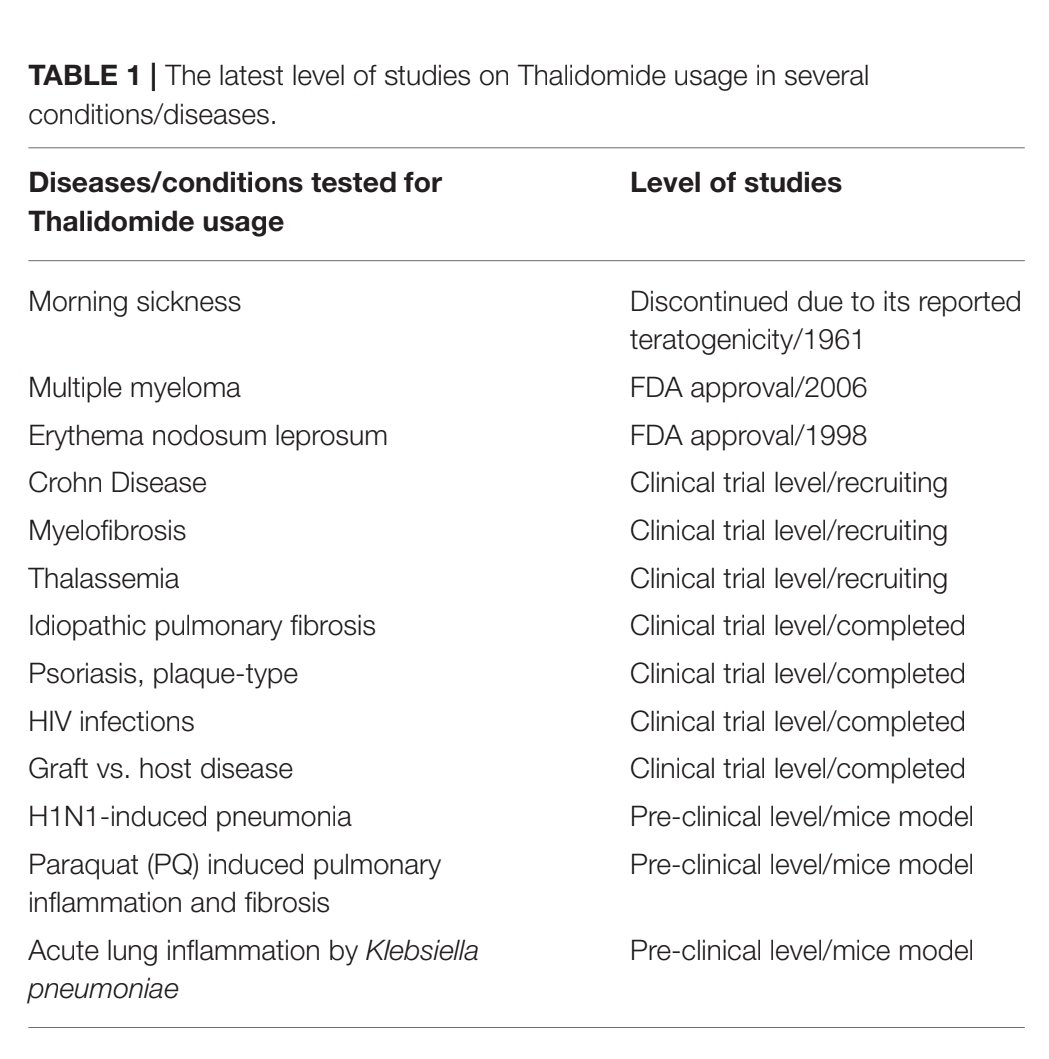
ALT Khalil A, Kamar A, Nemer G. Thalidomide-Revisited: Are COVID-19 Patients Going to Be the Latest Victims of Yet Another Theoretical Drug-Repurposing?. Front Immunol. 2020;11:1248. Published 2020 May 28. doi:10.3389/fimmu.2020.01248
1
2
100
4 Apr 2025
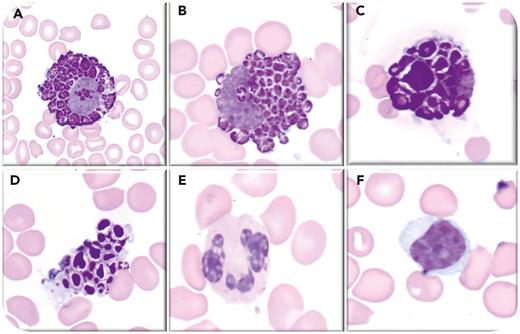
Neutrophil hypersegmentation and Alder-Reilly inclusions in Hurler Syndrome, a genetic mucopolysaccharidosis
type 1H disorder caused by deficiency in alpha-L-iduronidase leading to defective lysosomal degradation of glycosaminoglycans and the accumulation of these protein-carbohydrate complexes within lysosomes forming the Alder-Reilly inclusions.
4 Apr 2025

The relationship between neutrophil hypersegmentation and Hurler syndrome has yet to be described. ow.ly/clHp50Vue9Y #BloodWork #phagocytesgranulocytesandmyelopoiesis
2
5
460

4 Apr 2025
The relationship between neutrophil hypersegmentation and Hurler syndrome has yet to be described. ow.ly/clHp50Vue9Y #BloodWork #phagocytesgranulocytesandmyelopoiesis
1
4
29
3,071

25 Jan 2025
Segmentation is completely useless
in this post I’m gonna show you all you need to know about segmentation so you do not run into
low deliverability
overworking just to send to micro segments
not understanding why people do not buy
there’s this myth that you need to personalise everything
if you hold on for a second you realise it’s completly fluff
Most of your subscribers do have something in common and it’s interest in your brand
so as long as you don’t sell dog food & beauty products on the same store you can pretty much send to the entire list whenever you hit send
But ye you’re right
In theory we would love to send a personalised msg to all 158293 people on the list
And don’t get me wrong you would probably see better results than sending 1 email to everyone
But the required work just does not add up
Less work focus on other levers to pull shotgun approach > more work hypersegmentation sniper approach
so here’s what you need:
You send to –> ENG X days. This can be 60,90,120,180D whatever you want and is mainly dependend on how good your deliverability is.
Engaged for us means: Opened or clicked email
More important than who you’re sending to is who you’re NOT sending to
So here are the segments we do not send to:
List clean 1 (people who received 15 or more emails but haven’t opened 1)
List clean 2 ( people who marked email as spam, email bounced, email dropped at least once)
List clean 3 (past purchasers last 14D)
That way you do not run into deliverability issues and your past purchasers will not get annoyed after just placing an order
And that’s it
No overcomplication needed
1
5
282


23 Oct 2024
tempted to say LGLL given RA but large cell does not appear granular. No hypersegmentation but folate def in differential esp if patient on MTX. Counted 3 schistocytes and not seeing any platelets so would get hemolysis labs to r/o MAHA. A bite cell, will review meds for G6PD.
1
1
52
10,095

Botryoid neutrophil (radial hypersegmentation) secondary to heat stroke.
1
2
559

1 Mar 2024
sorry I’m not an academic in this world, but is the hypersegmentation of real estate markets not taken for granted? this seems both logically and empirically obvious
1
1
5
326