
The LCFS is an old law that was lobbied for by environmental groups, pushing lower carbon emissions.
That wasn't Tesla lobbying.
edf.org/media/california-app…
Naturally, Tesla correctly believed they should be eligible for the benefits.
The Nevada example is just one of an endless parade of examples of cities and states using tax incentives to try to attract major business investment. No major rule change was lobbied for, or needed/involved. Nevada has offered similar tax credits to tons of other large businesses.
I'm guessing the Texas example is basically identical.
And again, I've literary made entire films about this stuff. The issue is that the government has the power to do it at all.
It another point I'd make here is that Tesla was already well established before any of these examples, meaning the company was not successful *because* of these things.
Oh... And... Not giving the government more of your money is not the same thing as taxpayers funding your company.
8
20

Its interesting that Oregon state has done everything it can to push people into driving EV including 40-cents-per-gallon motor vehicle fuel tax, city/county local gas taxes, the LCFS hidden tax and even addtl DMV registration/title fees. NOW theyre adding TAX to Electric Cars!!

🚘Oregonians driving electric vehicles will be required to pay hundreds of dollars in new taxes and fees starting next year, sending tens of millions of dollars annually to the State Highway Fund.
Read more: portlandtribune.com/2026/06/…
1
36

Jun 13
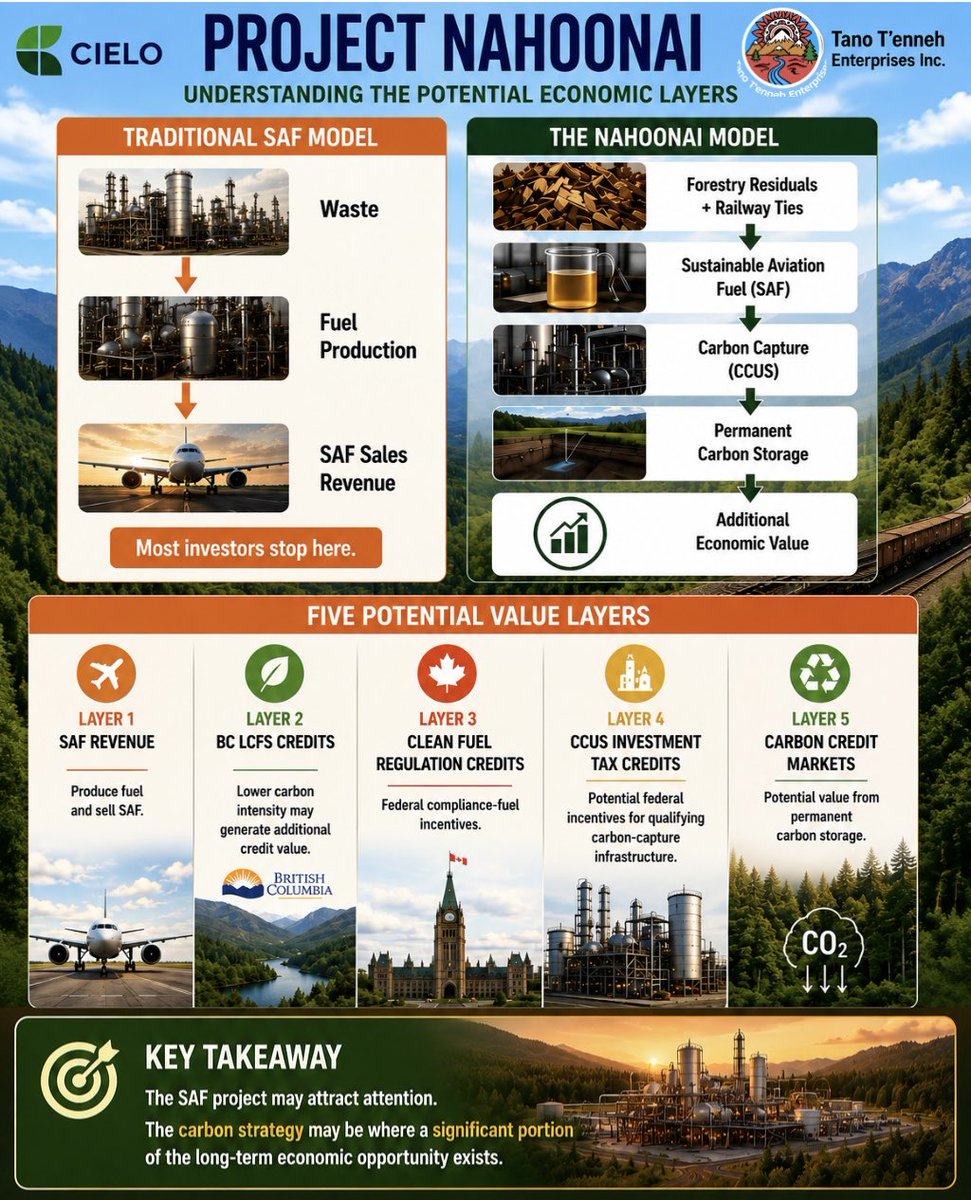
.07 To $7 Understanding The Potential Economic Value Layers
Layer 1
✈️ SAF Revenue
Produce fuel and sell SAF
Layer 2
🌿 BC LCFS Credits
Lower carbon intensity may generate additional credit value.
Layer 3
🇨🇦 Clean Fuel Regulation Credits
Federal compliance-fuel incentives.
Layer 4
🏗️ CCUS Investment Tax Credits
Potential federal incentives for qualifying carbon-capture infrastructure.
Layer 5
♻️ Carbon Credit Markets
Potential value from permanent carbon storage.
WHY THE CDL ATLAS DATA LIBRARY MATTERS
The Atlas is not revenue.
The Atlas is not a tax credit.
The Atlas may help answer one critical question:
Where does the carbon go?
PROJECT NAHOONAI
Waste
⬇️
SAF
CCUS
Carbon Storage
Carbon Credits
Tax Incentives
THE BIG QUESTION
What percentage of Project Nahoonai’s future value could come from:
✈️ SAF Production
versus
♻️ Carbon Capture, Storage & Carbon Economics?
KEY TAKEAWAY
The SAF project may attract attention.
The carbon strategy may be where a significant portion of the long-term economic opportunity exists.
Important Disclaimer:
My posts are not financial or investment advice. Please conduct your own due diligence before making any investment decisions. I am simply an individual on Reddit and X sharing my personal opinions, and they should be interpreted as such.
I do, however, want to emphasize that you are welcome to share this content across any form of media, including Reddit, X/Twitter, stock chat rooms, etc.
2
3
33

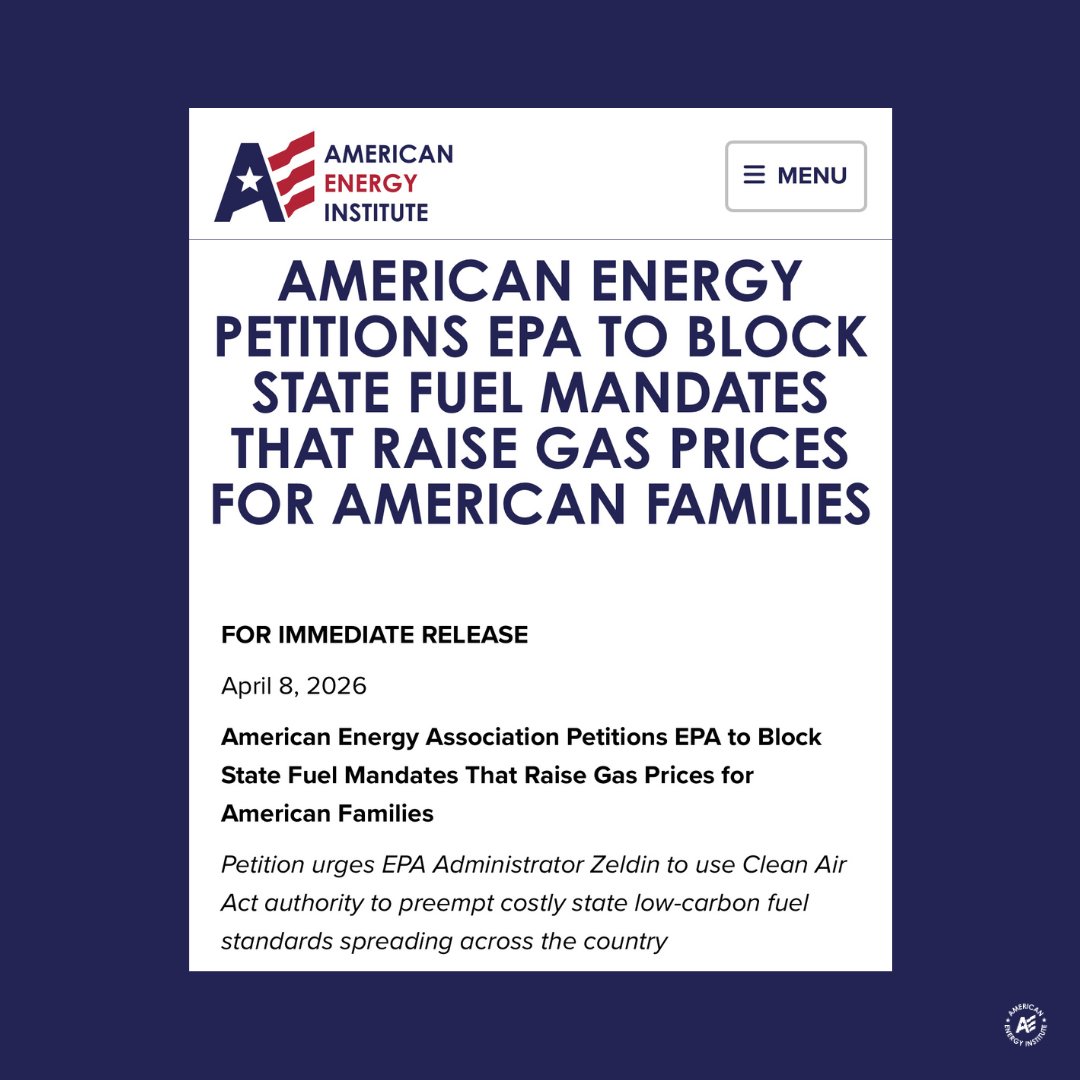
REMINDER: Back in April, we called on @EPALeeZeldin to kill another backdoor EV mandate — the Low Carbon Fuel Standard.
Now it’s time to finish the job — use existing federal authority to preempt state LCFS programs.

NEW: @4AmericanEnergy is officially petitioning the EPA to block state-level mandates that raise gasoline prices for American consumers.
We are urging @EPALeeZeldin to use existing federal authority to preempt state Low Carbon Fuel Standard (LCFS) programs. 🧵
2
374

Jun 13
Brazil remains a global biofuels leader. The real success story is internal resilience innovation, not reliance on any single export market.
What do you think — did LCFS deliver more or less than expected?
Full article in bio/comments.
Sources: EIA, CONAB, USDA, Datagro.
CC: @PlinioNastari @tx_marcelo @UNICAOficial #Ethanol #Agribusiness @BrazilAgProf
10
Jun 13
Key Lessons from 50 Years of Brazilian Leadership:
Policy like LCFS creates niches, but domestic strengths matter more — flex-fuel infrastructure, production diversification (sugarcane corn), and innovation in SAF/advanced biofuels.
Predictions often miss local adaptation.
1
14
Jun 13
Why the gap?
1. US corn ethanol resilience (yields policy)
2. Limited multi-state LCFS adoption (only OR, WA followed closely)
3. Brazilian priorities: domestic demand, weather, sugar competition, RenovaBio
4. Trade remained opportunistic, not structural
1
4
Jun 13
US-Brazil Trade:
• Brazilian imports peaked around 400 million gallons in strong early-2010s years (mostly California LCFS credits)
• Often much lower otherwise
• Trade became bidirectional — Brazil imported US corn ethanol during shortages
1
1
5
Jun 13
The Prediction in detail:
• LCFS boom in California (and potentially 14 other states)
• US corn ethanol “not clean enough” insufficient
• Sugarcane ethanol would flood in thanks to much better GHG scores (~70-80% lower than gasoline)
Sounded promising at the height of biofuels enthusiasm.
1
1
9
Jun 13
In May 2009, I highlighted Nastari’s optimistic take on California’s new Low Carbon Fuel Standard (LCFS).
He saw it as a game-changer: sugarcane ethanol’s superior carbon intensity would open massive US export doors.
Key forecast: Brazil could capture up to 30% of the total US gasoline market.
1
9
Jun 13
2009 Prediction vs 2025 Reality: Why California’s LCFS Didn’t Flood the US with Brazilian Ethanol
As former EthaBlog editor and expert on Brazil’s Proálcool program 50 years of fuel ethanol in large fleets, I revisit a key 2009 outlook from Plinio Nastari (Datagro).
Thread 👇
#BrazilianEthanol #Biofuels
1
21

Jun 12
One of the notable changes in the updated 45ZCF-GREET model released today is that the refreshed model will prevent participants in the program from receiving negative CI scores. This will surely impact landfill biogas and potentially some SAF producers, though some LCFS programs like CA reward ultra-negative CI scores. #biofuels #SAF #biogas #OOTT #OOAT
energy.gov/documents/45zcf-g…

2
211
🚽 🤴JRR ToiletKing retweeted

Jun 12
#RollCall
#45z #RenewableDiesel #Biodiesel #Soybeans #SoybeanOil #Canola #CanolaOil #Rins #LCFS #Ethanol #RFS #OATT #OOAT #RFS #AgTwitter
1
1
12
1,071

Jun 12
attn: @OilandGibbs do any LCFS credits change?
SBO, Tallow, DCO, Canola = .50, .60, .70, .20?
1
1
2,530

Jun 11
We’re proud to welcome @Phillips66Co as our 𝐇𝐨𝐬𝐭 𝐒𝐩𝐨𝐧𝐬𝐨𝐫 for the 𝐀𝐫𝐠𝐮𝐬 𝐍𝐨𝐫𝐭𝐡 𝐀𝐦𝐞𝐫𝐢𝐜𝐚𝐧 𝐁𝐢𝐨𝐟𝐮𝐞𝐥𝐬, 𝐋𝐂𝐅𝐒 & 𝐂𝐚𝐫𝐛𝐨𝐧 𝐌𝐚𝐫𝐤𝐞𝐭𝐬 𝐒𝐮𝐦𝐦𝐢𝐭.
A big thank you to the Phillips 66 team for their ongoing support in shaping this year’s event. Their commitment to the biofuels market reflects the importance of collaboration across the value chain as the industry continues to evolve.
Join us as we bring together leaders from across North America for valuable discussions, insights, and networking.
#ArgusBiofuelsConference
1
400

Jun 11
Maybe these students can help manage CARBs LCFS program so that businesses can thrive in CA.
6

🚨 Fundraising alert! 🚨
One of our own, LCFS Rachel Hodges is abseiling off King’s Mill Hospital tomorrow (12 June) for Sherwood Forest Hospitals Charity!
We’re wishing Rachel the very best of luck (and steady nerves!) 🤞
Support if you can 👇
justgiving.com/page/rachel-h… 💙

1
41

Jun 10
California Gas Taxes (as of June 2026):
State Excise Tax (Motor Vehicle Fuel Tax): $0.612 per gallon (rises to $0.634 on July 1, 2026).
Federal Excise Tax: $0.184 per gallon.
State & Local Sales Tax: Varies by location ( 2.25% base local; typically 8–12 cents/gallon equivalent).
Underground Storage Tank Fee: 2 cents per gallon.
Other fees/regulatory costs: Minor additional charges indirect costs (e.g., LCFS, cap-and-trade).
State local total: 70–71 cents/gallon (highest in the US).
Grand total (incl. federal): 89 cents/gallon or more, depending on location and price.
1
17

Many countries mandate or enforce Low Carbon Fuel Standards (LCFS) or equivalent Clean Fuel Regulations, requiring fuel providers to reduce the lifecycle greenhouse gas (GHG) intensity of transportation fuels. 🇨🇦, 🇺🇸, EU, UK, 🇧🇷
4
2
98