
May 20
Part 5 of MCOOL Misconceptions: “You can’t have MCOOL without mandatory EID”
The U.S. successfully implemented MCOOL for beef and pork from 2009–2015, and it worked without mandatory electronic ID tags.
Packers already segregate beef for export markets, branded programs, organic claims, and USDA grades. MCOOL requires no new processes, only using the systems already in place and the origin information they already receive and track.
All cattle imported into the U.S. are already permanently marked with their country of origin through brands, tattoos, or eartags. When those cattle go to slaughter, packers can visually confirm origin and label the beef accordingly, for example: “Born and Raised in Canada, Slaughtered in the U.S.”
Cattle born and raised entirely in the United States have no foreign markings and can simply be labeled: “Born, Raised, and Slaughtered in the USA.” This method, known as the “presumption of domestic origin,” was already recognized in the original COOL regulations and eliminates the need for mandatory EID.
American consumers can have transparency at the grocery store without expanding government control over American cattle producers.
MCOOL existed for years without mandatory EID, and it can again.
Call (202) 224-3121 and tell Congress to #LabelOurBeef.
Up next: “How does MCOOL impact imports?”
#MCOOL #EatUSABeef #CattleIndustry
1
16
37
1,395
Apr 29
Part 4 of MCOOL Misconceptions: “What about added costs?”
Just as there were no costs to producers when MCOOL was law from 2009–2015, there will be no costs to producers when MCOOL is reinstated. Any compliance costs occurred at the packer level, not the cow-calf producer level. Producers weren’t required to implement new systems.
Packers already segregate beef for export markets, branded programs, organic claims, and USDA grades. MCOOL requires no new processes, only using the systems already in place and the origin information they already receive and track.
MCOOL doesn’t raise consumer prices. It empowers consumers to choose American beef if they want to or cheaper imported beef if they prefer. MCOOL allows price differences to exist. When consumers can see the difference, demand for U.S.-born and raised cattle increases. More demand means stronger cattle prices.
Without MCOOL, consumers cannot send demand signals for domestic cattle, and packers can continue using undisclosed imports to push down cattle prices and harm domestic producers.
MCOOL restores transparency and allows American cattle to be valued at their true worth.
Call (202) 224-3121 and tell Congress to #LabelOurBeef
Up next: “MCOOL requires EID.”
#MCOOL #TruthInLabeling #CattleIndustry #AmericanRanchers
1
6
19
2,078
Apr 20
🚨The Farm Bill is Moving🚨
Congress is deciding right now whether MCOOL for beef gets a chance to be included in and voted on as part of the farm bill.
The farm bill has passed the House Agriculture Committee and is now heading toward the floor. All amendments must be submitted by April 22 and right now, MCOOL for beef is not included.
Call 202-224-3121 today and tell Congress you want MCOOL for beef included in the farm bill.
#LabelOurBeef
6
57
150
20,369
Apr 16
“MCOOL doesn’t work.”
Let's talk about it ⬇️
Opposition to MCOOL does not come from the producer side of the industry. It comes from the packer sector, which profits most from blending foreign and domestic beef and selling domestic beef without disclosing it. Independent producers, consumers, and rural communities stand to gain from transparency.
The claim that MCOOL doesn’t work ignores the fact that it worked exactly as intended before its repeal in late 2015: it allowed consumers to choose and it allowed producers to compete.
The real economic reason MCOOL was repealed had nothing to do with cost or trade. It had everything to do with packer profit. When MCOOL was in place, U.S. born cattle gained value compared to imported cattle because consumers could identify and choose American beef. Even the Big 4 packers admitted this in court.
In the In Re Cattle Antitrust Litigation, they acknowledged that when MCOOL was repealed and foreign beef no longer required labels, this “spurred additional imports and caused domestic cattle prices to fall.” That is their own statement, not an outside claim, and it confirms that MCOOL changed market behavior.
USDA reached similar conclusions. The agency found that packers could not sell beef labeled as Canadian or Mexican for the same price as beef labeled from the United States. Once Congress repealed MCOOL under WTO pressure, packers erased that price difference by erasing the labels. That allowed them to blend cheaper imported beef into the domestic supply and sell it all as a U.S. product.
MCOOL never reduced import volumes by force. What changed was that U.S. born cattle earned proper value in the marketplace because origin was no longer hidden. Producers lose value without MCOOL while packers increase their margins.
Every day MCOOL remains repealed, American consumers unknowingly pay domestic prices for imported beef while American producers suffer the cost.
Call (202) 224-3121 and tell Congress to #LabelOurBeef.
5
23
53
2,310
Apr 1
🚨NEW MCOOL COSPONSOR ALERT 🚨
@Rep_Stansbury
(New Mexico)
Thank you for cosponsoring H.R.5818 to restore MCOOL for beef! Have you called your senators and representative? Call 202-224-3121 today!
#LabelOurBeef
1
16
43
925
Mar 31
Why do we still need MCOOL if we have a "Product of USA" label?
For too long, imported beef could be repackaged and labeled as “Product of USA.”
We support USDA’s updated “Product of USA” label that took effect earlier this year because it tightens the definition and stops foreign beef from being labeled as American. The campaign also helps drive greater consumer awareness about where beef comes from and brings labeling back into the national conversation.
But it’s still a voluntary label.
It’s an important step, but it’s not the finish line. It only partially corrects a decades-old mistake that harmed American cattle producers and misled consumers.
That’s why mandatory country of origin labeling is still the goal.
Because consumers deserve to know where their beef comes from, and American cattle producers shouldn’t have to compete against unlabeled foreign imports in their own market.
Only MCOOL ensures all beef is clearly labeled at the grocery store as to where it was born, raised, and harvested.
MCOOL isn’t something USDA or any administration can implement on its own. It was created by statute and repealed by statute, and bringing it back requires Congressional action. We’ve been clear from the beginning that the “Product of USA” rule is not a substitute.
We’re engaged at every level to get it done.
Call (202) 224-3121 and tell Congress to #LabelOurBeef.
1
23
55
1,870
Mar 24
USDA's “Product of USA” label is a big step in the right direction, but it’s not the finish line.
Mandatory country of origin labeling for beef must be reinstated. Only Congress can require origin labels on all beef sold in the United States.
Call (202) 224-3121 and tell Congress to #LabelOurBeef.
3
12
63
2,381
Feb 23
For nearly 2 decades, MCOOL for beef has been clouded by misinformation and corporate influence. What should be a simple question of honesty in the marketplace has been turned into a complex policy debate that leaves producers undervalued and consumers in the dark. These claims collapse under scrutiny. The facts show that MCOOL works, consumers want it, and only a handful of multinational packers benefit from its absence. #LabelOurBeef
3
30
70
3,768
Feb 20
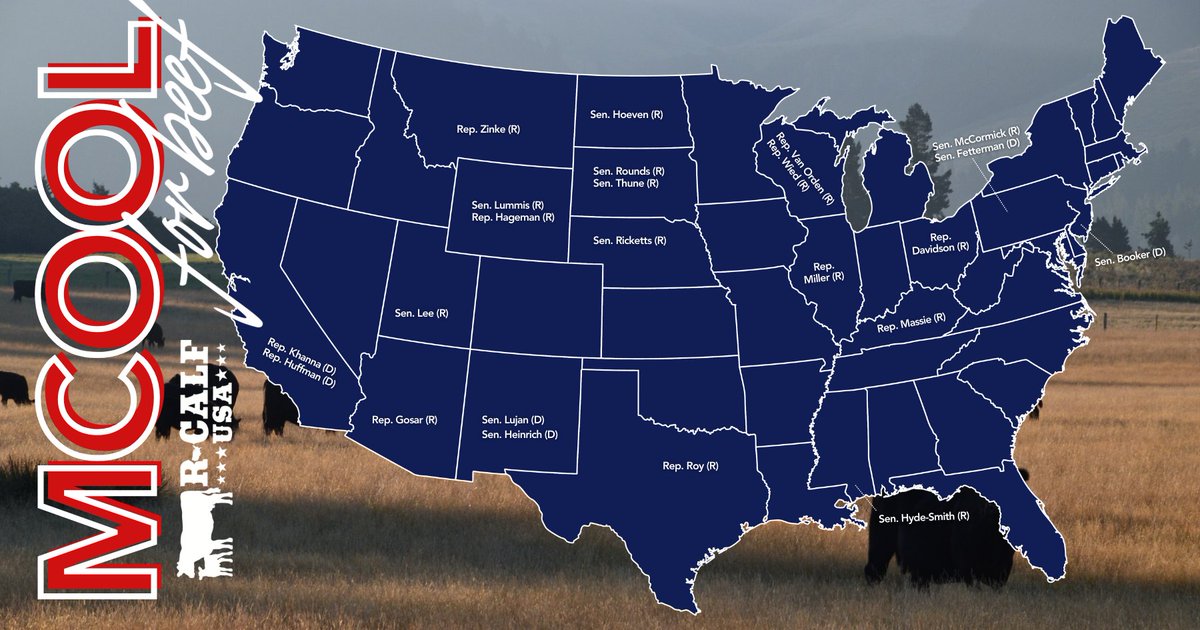
Don’t see your Senator or Representative on this map?
That means it’s time to call and tag them below!
📞 202-224-3121
Ask them to support Mandatory Country-of-Origin Labeling for beef: H.R. 5818 and S. 421.
At a time when families are paying close attention at the meat case, they deserve to know exactly where their beef comes from. MCOOL would give consumers the ability to choose between American-raised beef and cheaper imported beef.
Thank you for support MCOOL for beef!
@LeaderJohnThune
@SenBooker
@SenatorRounds
@SenatorHeinrich
@SenLummis
@SenFettermanPA
@SenJohnHoeven
@SenatorLujan
@SenMikeLee
@SenHydeSmith
@SenatorRicketts
@SenMcCormickPA
@RepHageman
@RepRoKhanna
@Rep_Davidson
@RepThomasMassie
@RepChipRoy
@RepGosar
@RepMaryMiller
@RepVanOrden
@RepRyanZinke
@RepTonyWied
@RepHuffman
#LabelOurBeef
5
28
61
3,807
Jan 26
🚨NEW MCOOL COSPONSOR ALERT 🚨
@SenatorRicketts (Nebraska)
@SenMcCormickPA (Pennsylvania)
Thank you for cosponsoring S.421 to restore MCOOL for beef! Have you called your senators and representative? Call 202-224-3121 today! #LabelOurBeef
4
18
513

16 Nov 2025
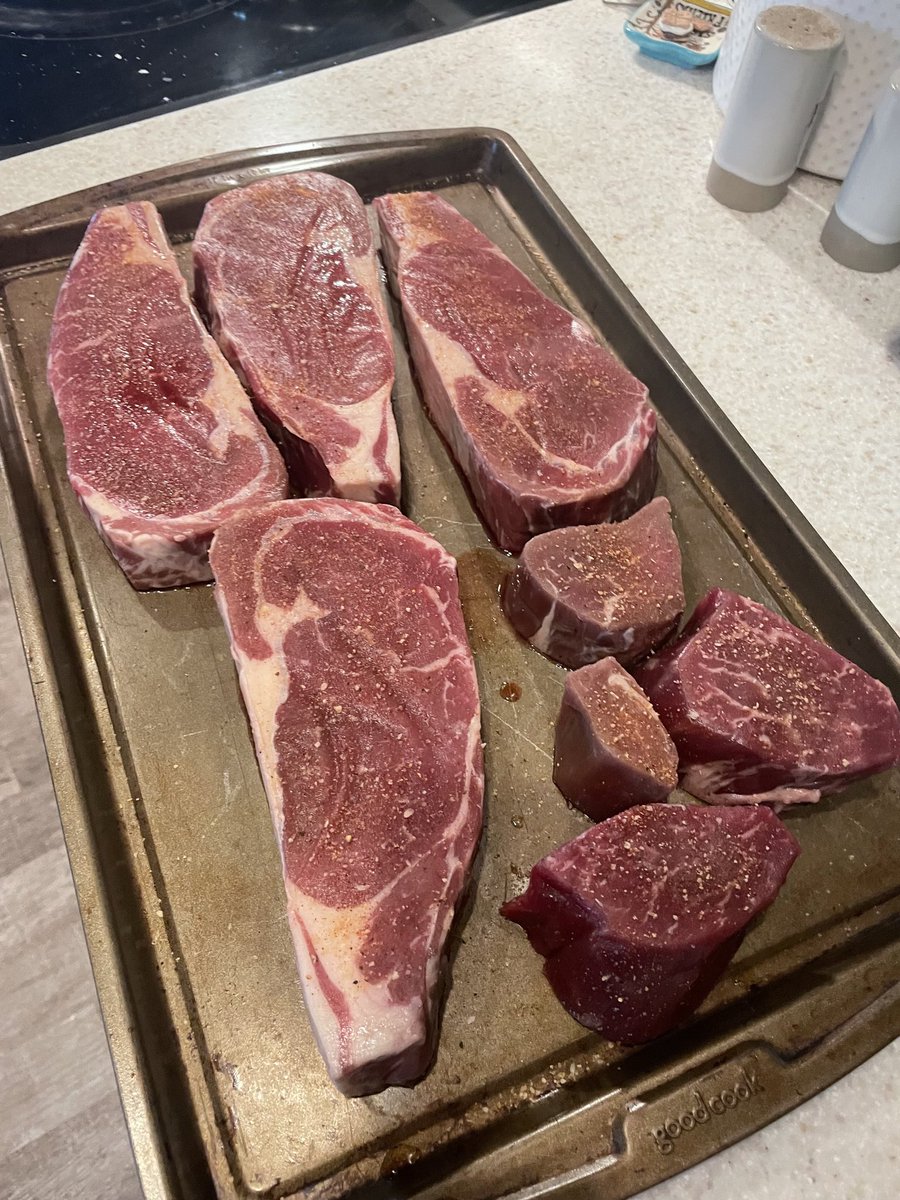
Beef might be expensive…
But the only beef that is overpriced…
is the foreign crap that gets imported and passed off as Product of USA to consumers who shouldn’t have to do a research project to find out where it’s really from.
#LabelOurBeef
21
73
371
9,713
12 Nov 2025
🚨NEW MCOOL COSPONSOR ALERT 🚨
@SenHydeSmith (Mississippi)
@RepTonyWied (Wisconsin)
Thank you for cosponsoring S.421 and H.R.5818 to restore MCOOL for beef! Have you called your senators and representative? Call 202-224-3121 today!
#LabelOurBeef
1
13
48
1,683
6 Nov 2025
Does implementing MCOOL increase burden on producers or create more paperwork? No. All the information needed already exists.
Imported boxed beef already enters the U.S. with a country of origin label, that label disappears once it’s repackaged by a processor.
When live cattle come from Canada or Mexico, they’re branded with a “C” or “M” before they cross the border. When they’re harvested, packers can visually confirm that identification and label the resulting beef accordingly, for example, “Born and Raised in Canada, Harvested in the U.S.”
Cattle born and raised entirely in the U.S. have no foreign markings, so they can be labeled “Born, Raised, and Harvested in the USA.” That’s called the presumption of domestic origin and it’s already recognized in federal COOL regulations.
#LabelOurBeef
4
53
132
2,170
2 Nov 2025
🚨NEW MCOOL COSPONSOR ALERT🚨
Thank you @RepMaryMiller (Illinois), @RepMTG (Georgia), and @RepRyanZinke (Montana) for cosponsoring H.R.5818 to restore MCOOL for beef!
Have you called your senators and representative? Call 202-224-3121 today and tell them to support S.421 and H.R.5818. #LabelOurBeef
2
31
89
1,445
1 Nov 2025
When MCOOL was in place, U.S.-born cattle gained value compared to imported cattle because consumers could identify and choose American beef. Even the Big 4 packers admitted (in court) that after MCOOL was repealed and foreign beef no longer had to be labeled, imports surged and U.S. cattle prices fell. #LabelOurBeef
3
90
191
2,738
1 Nov 2025
MCOOL is about freedom. The freedom to choose what you buy, the freedom to compete fairly in your own market, and the freedom to keep our food supply in American hands. #LabelOurBeef
4
55
131
2,688
29 Oct 2025
Why not just voluntary COOL? Because it’s already been tried and it failed.
Before 2002, USDA offered a voluntary meat labeling program. In three years, not one supplier participated. From 2002 to 2008, USDA implemented another voluntary program. Again, few if any, retailers chose to participate. In 2005, opponents tried to pass a bill to replace MCOOL with a voluntary version, and it failed. USDA admitted in 2009 that there was a “lack of widespread participation” in voluntary labeling programs.
When labeling was optional, packers simply refused to do it. Why would they? When they can import cheap foreign beef, repackage it, slap on a “Product of USA” label, and sell it for American prices, all while consumers have no idea what they’re really buying.
When mandatory COOL was fully implemented in 2013, American consumers got to see where their beef came from and American ranchers could compete on a level playing field in their own market.
But in 2015, Congress repealed MCOOL for beef under pressure from the WTO and packer lobby groups like NCBA and USMEF. USDA then allowed packers to go back to voluntary labeling, letting them put a “Product of USA” label on imported beef that was only repackaged here.
That deception continues today. USDA’s new “Product of USA” rule takes effect in 2026 and tightens the label, but it’s still voluntary, and it still doesn’t require imported beef to be labeled at all.
Meanwhile, four multinational corporations control 80% of the beef industry. They profit by keeping consumers in the dark. They don’t want MCOOL because it exposes how much imported beef they’re selling as “U.S.” and the profits they’re making off both producers and consumers. Do we really think the same corporations that caused this are going to fix it voluntarily?
It’s time to restore mandatory country of origin labeling through S.421 The American Beef Labeling Act and H.R.5818 The Country of Origin Labeling Enforcement Act.
Call 202-224-3121 and tell Congress to #LabelOurBeef.
4
37
89
3,970
29 Oct 2025
🚨New MCOOL Cosponsor Alert 🚨
Thank you @SenMikeLee (Utah), @RepMaxMiller (Ohio), and @RepVanOrden (Wisconsin) for standing with American ranchers and American consumers by cosponsoring S. 421 and H.R. 5818 to restore MCOOL for beef.
We need your help!! Call 202-224-3121 and tell your senators and representative to support S. 421 and H.R. 5818.
#LabelOurBeef #MCOOL
4
58
131
3,176
29 Oct 2025
Restore MCOOL for beef.
Enforce the Packers & Stockyards Act.
Enforce antitrust laws.
R-CALF USA has filed a class-action antitrust lawsuit against the Big 4 packers, alleging they unlawfully suppressed cattle prices while inflating beef prices.
We’re also pushing for enforcement of the Packers and Stockyards Act and antitrust laws that have been ignored for years.
Breaking up corporate control and restoring fair markets go hand in hand. MCOOL is a key part of the solution.
MCOOL, the Packers and Stockyards Act, and antitrust enforcement are all tools to rebuild competition and restore fairness in America’s cattle industry.
#LabelOurBeef
14
167
421
7,383