
May 31
Feel the piano keys in your head.
Hear your brain wordlessly playing the piano with #TouchThinking.
Even if you don’t know ways to play a piano, still you feel it.
Click to read in @ScienceDaily ways #metacognition aligns #TheHumanTouch with #ThePiano.
#ThinkToThink™ about #TouchThinking.
Feel your thinking.
Feel your thinking.
Feel your thinking.
Whole-body consciousness informs the quantity and quality of your thinking.
Ask a pianist or a neurosurgeon about “the feel of their thinking” as they prepare to “perform,” while they’re performing, and after each demonstration of their mastery of performance metacognition.
Performance metacognition.
Metacognitive regulation is involved in “touchingly thinking” and playing Beethoven's Piano Sonata No. 14 in C-sharp minor, nicknamed “The Moonlight Sonata.”
Hear it? Feel it.
Music activates nearly every major region of the brain simultaneously, so allow yourself to “feel it” playing in your brain’s acoustically unique performing arts center.
These human feelings of “thinking about thinking”—with whole-body consciousness—artificial intelligence won’t be able to fully replicate.
AI may never “know” benefits of the “feeling of thinking” that I’m encouraging you to learn to feel.
Metacognition skills align your #HumanThinking with #MachineThinking of #thinkbots.
Does a #piano have “a mind” of its own?
Feel the mind #music of metacognition.
[Applause.]
Come to think of it.™
Bravo!
sciencedaily.com/releases/20…
4
5
201

3 Jan 2025
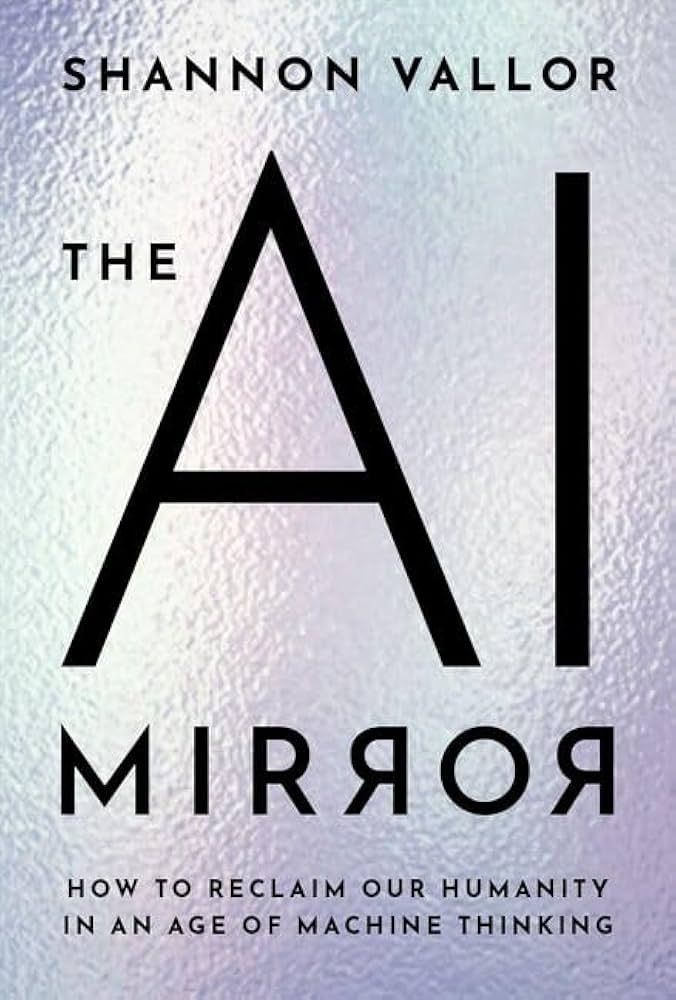
👍🏽⭐#Books The AI Mirror: How to Reclaim our Humanity in an Age of Machine Thinking. The publication of Centre for Technomoral Futures' Director, Professor Shannon Vallor’s new book: nautil.us/ai-is-the-black-mi…
#AI #MachineThinking #Humanity #Future
2
4
154

12 Dec 2024
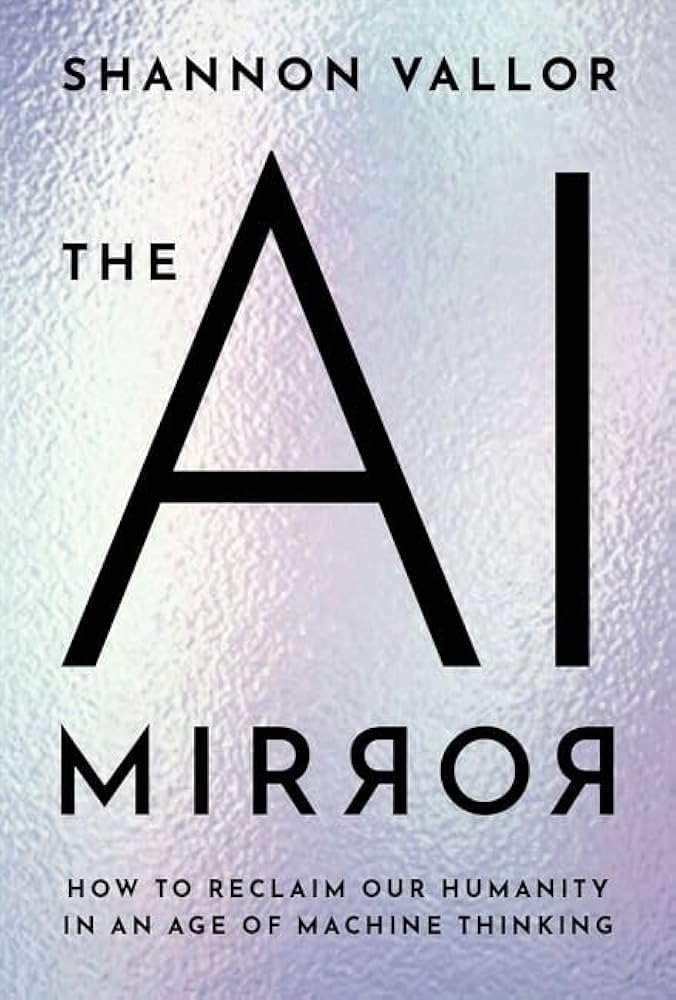
#Books The AI Mirror: How to Reclaim our Humanity in an Age of Machine Thinking. The publication of Centre for Technomoral Futures' Director, Professor Shannon Vallor’s new book: #AI #Humanity #MachineThinking.
efi.ed.ac.uk/the-ai-mirror-h…
v/ @UoE_EFI
6
145

20 Oct 2024
there are lots of channels with parts of it. but none have that machinist sensibility while being young enough to want to bother with this. codyslab and machinethinking... OH wait no i found your guy. rare uploads though.

2
32

13 Sep 2024
" .. one tool of any psychopathic tyrant. Everything is based on reality orientations called reductionism /dualism, machinethinking, means destroying our self-regulation. The oldest repressive business/political model. .. "
1
1
43
18 Jul 2024
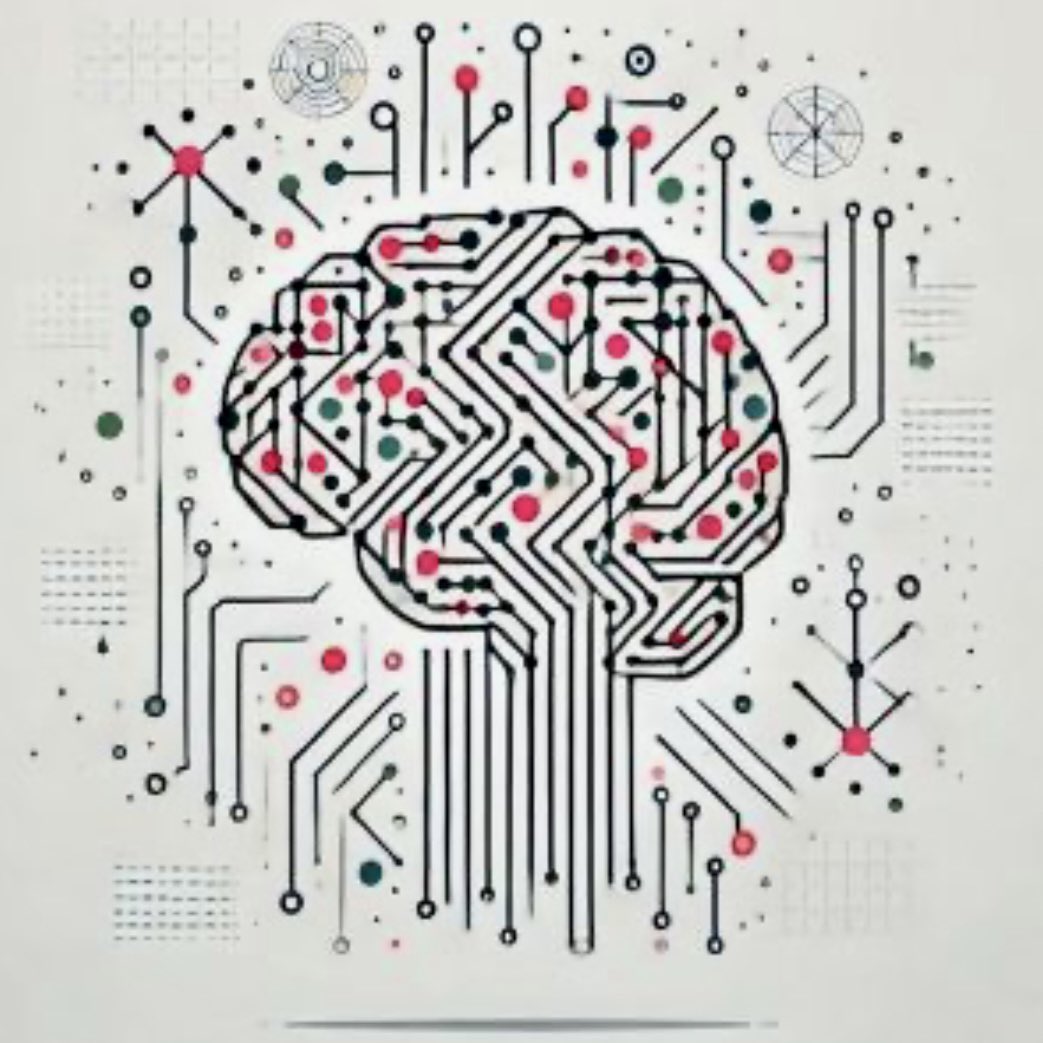
#ElectrometricIntelligence is @EnclaveAcademy’s term for the nonstop co-electrification of #HumanThinking and #MachineThinking. We playfully theorize it began with the invention of the wheel. #Thinking “rolled beyond” itself. @JohnNosta’s #DigitalSelf is #metacognition mobilized.
18 Jul 2024

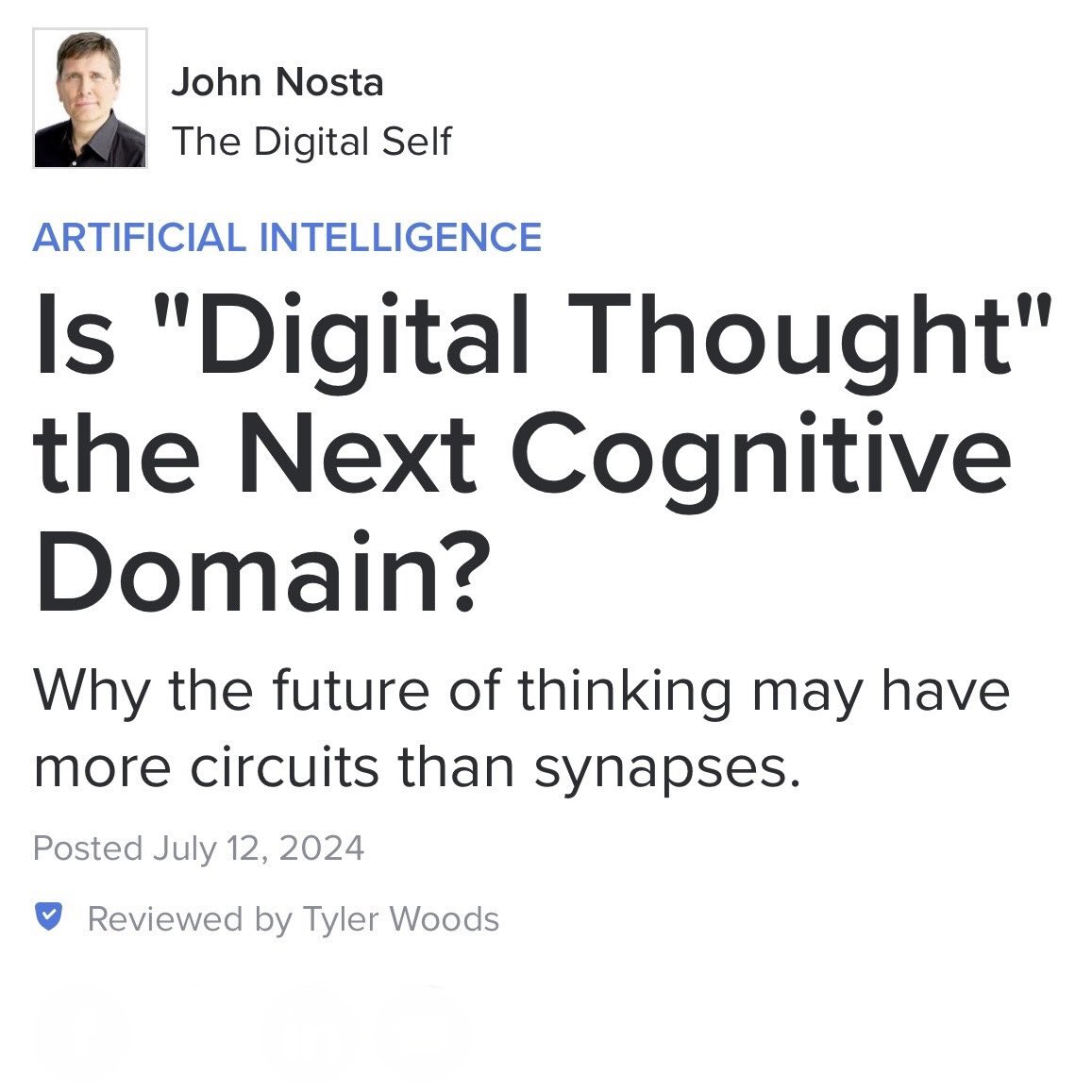
As #WaltWhitman intuited in his poem “I Sing the Body Electric,” #electrometrical measurements in the brain suggest natural #DigitalThinking. @JohnNosta brilliantly illustrates seamless integration of technology to further digitize our #CognitiveProcesses. psychologytoday.com/us/blog/…
2
2
886
4 Jul 2024
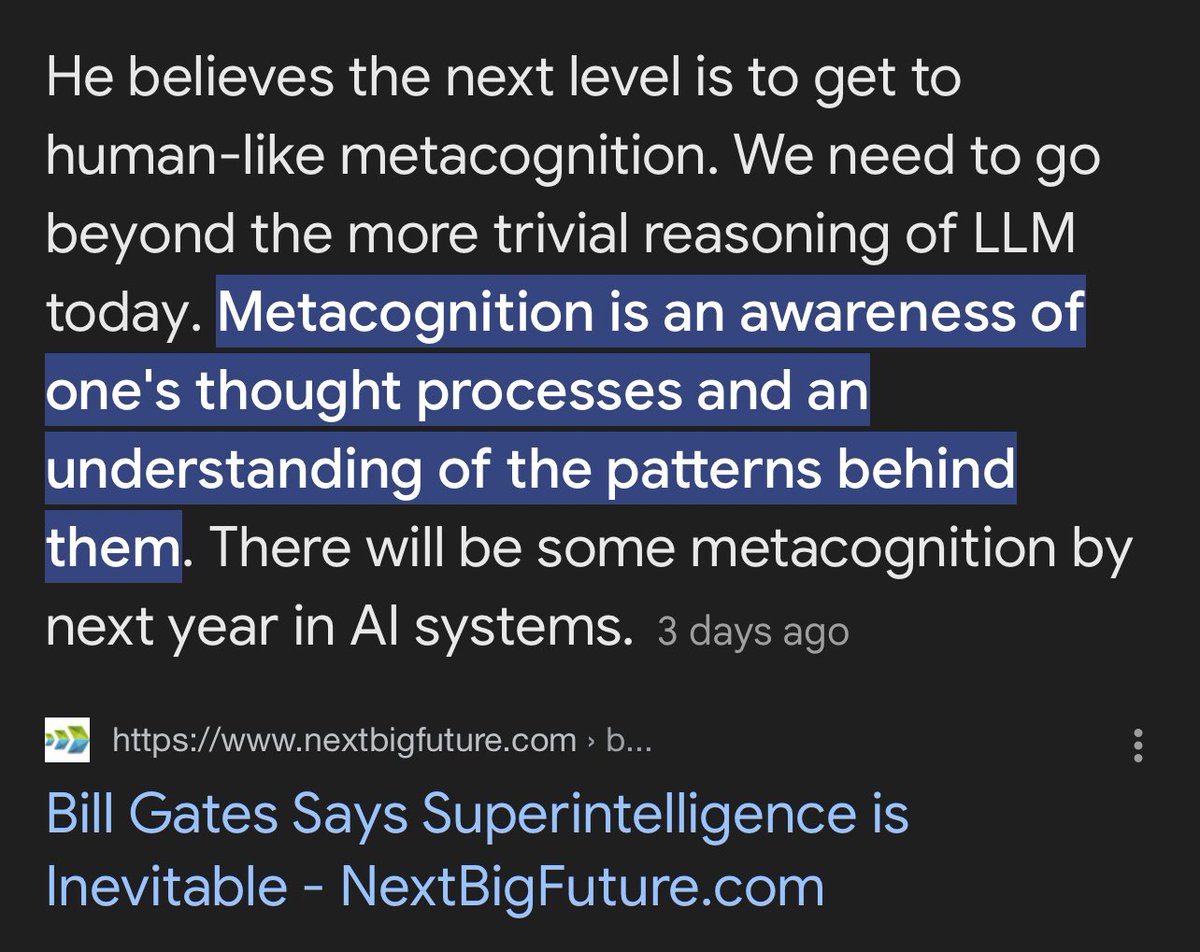
For @EnclaveAcademy’s nonclinical empirical #microlearning modularity about #metacognition for #leaders, #cotelligence we call the alchemy of #MachineThinking working with #HumanThinking.
"Superintelligence" is too over-the-top Orwelllian big-brotherish.
nextbigfuture.com/2024/07/bi…
4 Jul 2024
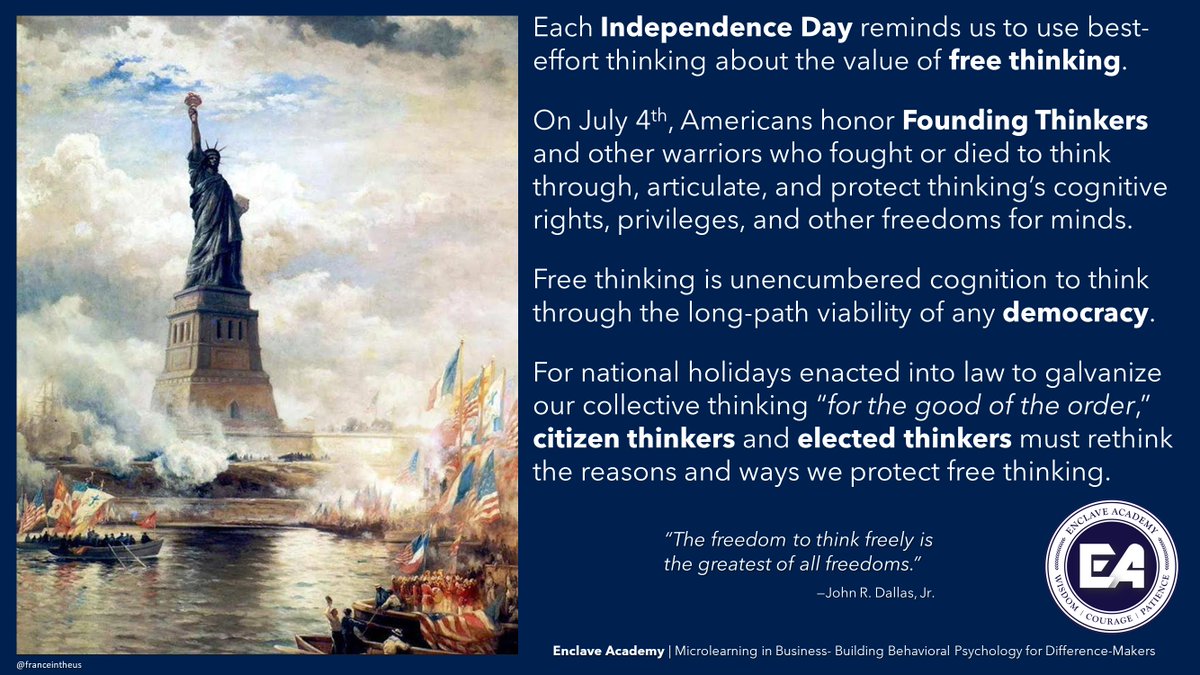
Arguing, as I do when I speak about the vitality of mastering #metacognition, that "The freedom to think freely is the greatest of all freedoms" can be approached from various perspectives, I introduce a headful of philosophical, practical, and historical views (see quote in posted image):
1. Free Thinking is Fundamental and Foundational to Individual Autonomy
#PersonalAutonomy: The freedom to think allows individuals to form their own beliefs, values, and opinions. Without this freedom, personal autonomy is severely compromised because people can't/won't develop their own identities or make independent choices.
Basis for Other Freedoms: Many other freedoms—such as freedom of speech, freedom of the press, and freedom of assembly—are built upon the foundation of free thinking. If individuals cannot think freely, these other freedoms lose their meaning.
2. Driving Force of Innovation and Progress
Innovation: #FreeThinking is crucial for #creativity and #innovation. It's the metacognitive ability to think outside of accepted norms and challenge the status quo that leads to scientific discoveries, technological advancements, and artistic achievements.
#ProblemSolving: By fostering a diversity of ideas and perspectives, the freedom to think freely allows societies to tackle complex problems more effectively.
3. Vital for a Democratic Society
#InformedCitizenry: For democracy to function properly, citizens must be able to think critically and independently. This includes questioning authority, evaluating evidence, and engaging in thoughtful, humble, and respectful debate.
#CitizenThinkers and their #ElectedThinkers—especially the #ThinkerInChief of the United States—must pause to think about their thinking long enough to identify their best available LEARNED mindsets and specific types of thinking required, all the while remaining vigilant and resistant to risky #CognitiveBiases they can name and describe.
Pluralism: A healthy #democracy thrives on a plurality of thoughts and ideas, which can coexist and compete in the public sphere, leading to deeper insights and more robust and reliable decision-making.
4. Historical Lessons
Totalitarian Regimes: History shows that suppressing free thinking is a common tactic of totalitarian regimes.
Control over what people think typically leads to broader suppression of freedoms and human rights.
Intellectual Movements: Many of the world's most significant intellectual and social movements, like the Renaissance and the Scottish Enlightenment, were grounded in the unfettered (i.e., free-thinking) exchange of deeper, wider, and higher insights and free-flowing ideas.
5. Personal Fulfillment
Self-Expression and Growth: The freedom to think is intrinsic to personal development, fulfillment, and flourishing instead of languishing.
Free thinking allows individuals to explore their interests, understand themselves better, and pursue their passions.
#MentalHealth: Psychological #wellbeing is closely linked to the ability to think freely and honestly about oneself and one’s circumstances. Suppressing free thought can lead to #CognitiveDissonance, mental distress, #MoralInjury, and other adverse outcomes.
The freedom to think freely is, therefore, not just another freedom but the bedrock upon which all other freedoms stand, I believe.
Do you agree?
Free thinking is essential for personal growth, societal progress, and for the sustainable functioning of democratic institutions.
Do you agree?
In its absence, other freedoms cannot flourish, making it arguably the greatest of all freedoms.
Do you agree? —JRDjr
2
3
213
29 Jun 2024
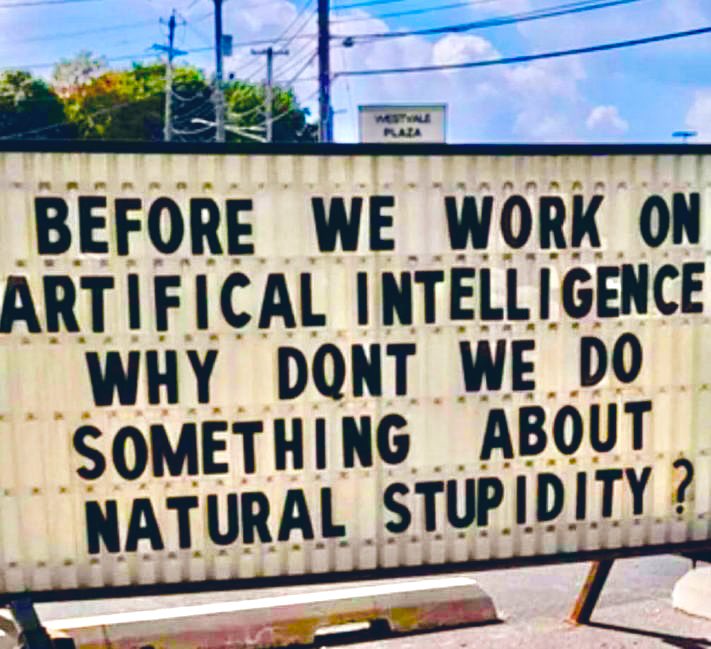
Truth-in-humor sign as seen by a #Superthinker as he flew over the heads of #LateBloomers and #LateAdopters. Healthy and agile minds must hear and heed #AdultThinking’s call to think better about #HumanThinking. #MachineThinking is getting more than its earned share of attention.
2
3
72
27 Jun 2024
This is a #chatbot’s logo design for #CitizenThinkers for #ElectedThinkers Forum—the nonpartisan #metacognition facilitation for #voters initiative of @EnclaveAcademy.
n.b., #AI “chose” to illustrate the wondrous—and worrisome—untidiness of #HumanThinking and #MachineThinking.

2
4
150
26 Jun 2024
The unknowns and likely unknowables about mechanized #CognitiveCapacity of #ArtificialIntelligence aren’t dissimilar to gray areas and black holes of #HumanIntelligence.
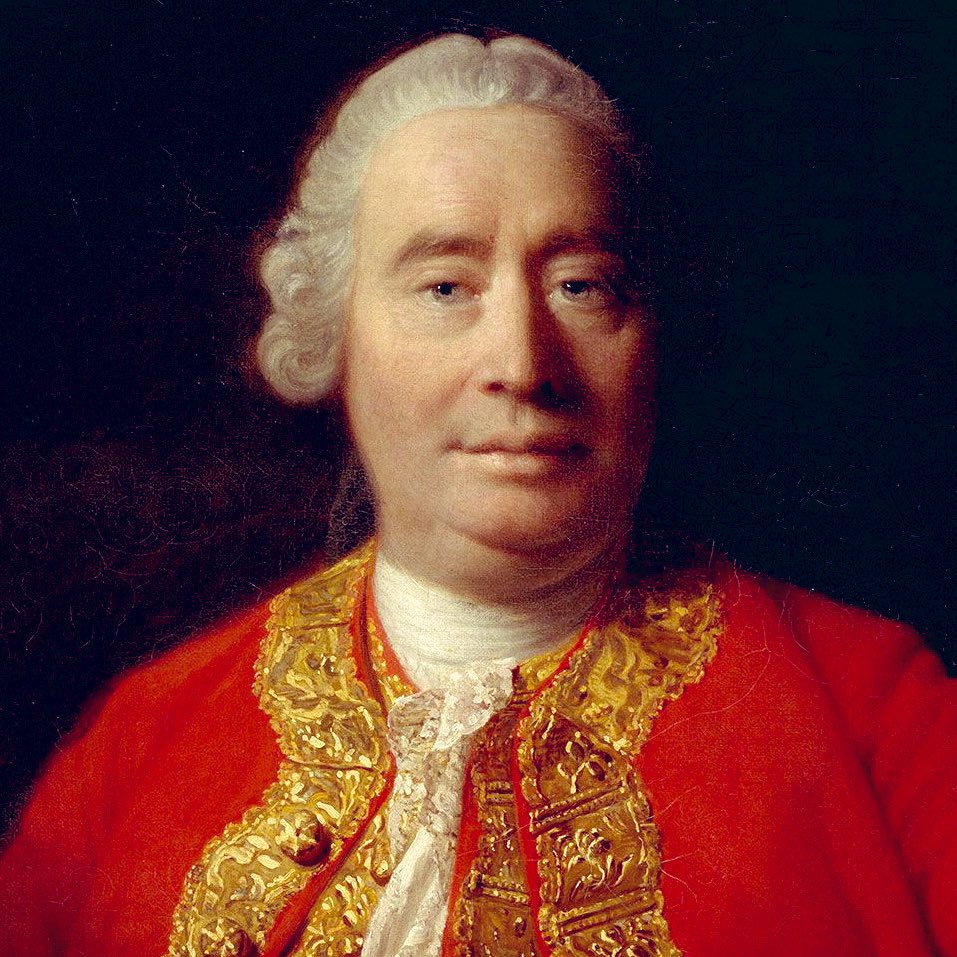
#Scotland’s #DavidHume (1711-1776) philosophized about how little humans know about ourselves, and how conclusions we believe true aren’t and couldn’t be. His reasoned doubts still ignite both ire and guide intellectual rigor.
Yes, I queried @ChatGPTapp’s #NOVA about ways #Hume’s thinking may influence #AI. Below is the highly relevant response to the above fusion I suggest for all thinkers about thinking—#metacognators—to more strategically and tactically align contemporaneous interest in #MachineThinking and #HumanThinking:
“David Hume's philosophical insights, particularly his work on empiricism, human understanding, and causality, have indirectly influenced the development of modern artificial intelligence (AI) and #MachineLearning, including large language models (#LLMs) like #GPT4.
Here's how Hume's ideas may connect to the development and functioning of AI:
1. Empiricism
Hume was a strong proponent of #empiricism, the idea that knowledge comes from sensory experience. This principle is foundational in the field of AI, where learning algorithms are trained on large datasets (experiences) to identify patterns and make predictions. Just as Hume emphasized the importance of observation and experience in forming #ideas, AI systems rely on vast amounts of data from which they learn.
2. Causality
Hume questioned our understanding of causality, suggesting that what we consider cause and effect is more about patterns and correlations observed in data. Modern machine learning systems often work by identifying correlations within data, and while they can make predictions and associations, understanding true causality remains a complex challenge. This echoes Hume's skepticism about our ability to perceive causation directly.
3. Inductive Reasoning
Hume critically examined #InductiveReasoning, the process of deriving general principles from specific observations. AI algorithms often use inductive reasoning to generalize from the training data. Hume’s insights highlight the inherent uncertainties and limitations of such approaches, reminding AI researchers of the potential pitfalls and the importance of rigorous testing and validation.”
Download it for free:
novaappai.page.link/6DmEPWhW…
David Hume isn’t mentioned in this piece in @PsychToday by Damian K.F. Pang, M.Sc., yet the above #chatbot input will deepen your curiosity and the overall value of this article’s #MetacognitiveWaypoints, especially “Hume's skepticism about our ability to perceive causation directly.”
psychologytoday.com/us/blog/…
26 Jun 2024
#DavidHume’s #ScottishThinking ruffled feathers and hiked kilts. His #ScotThoughts coursed through brave brains and bulging veins of the #Scot third of the #FoundingThinkers who signed, on 2 August 1776, The Declaration of Independence. His disruptive #thinking retains its value.
1
2
214
21 Jun 2024
With #AI’s acceleration comes sometimes unconscious, possibly even uncomfortable, intellectual eagerness for depth, breadth, and height of understanding about cognition—i.e., both #MachineThinking and #HumanThinking. Seize the moment with #metacognition’s mechanics and mysteries.
21 Jun 2024

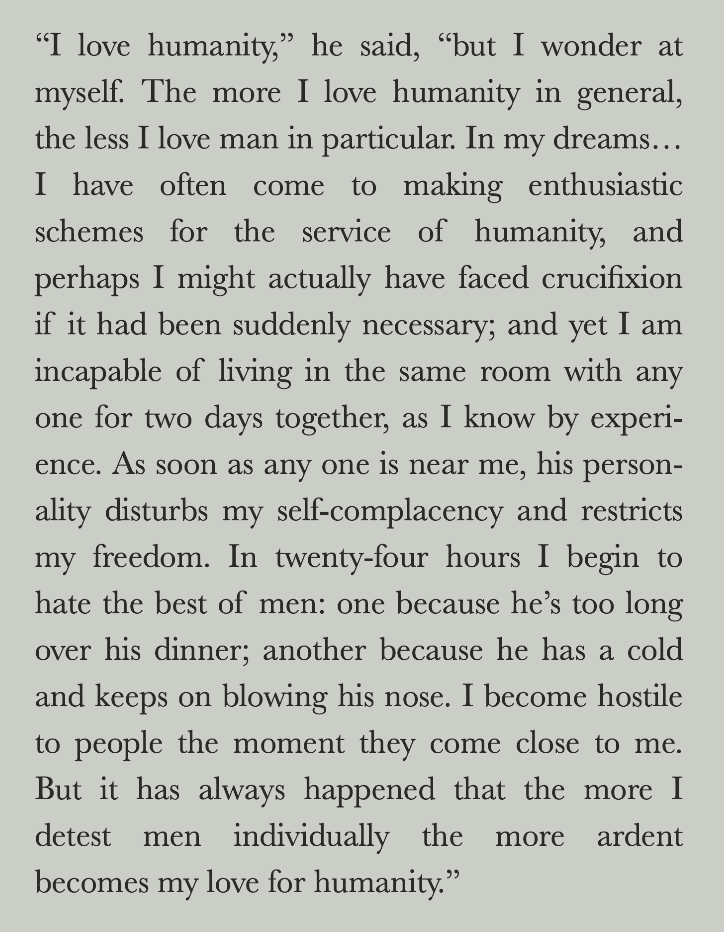
Page after page, The Brothers Karamazov is full of psychological insight.
Who doesn't recognize someone they know (or themselves) in this?
2
4
556
22 Mar 2024
Think of #AI apps as “thinking-about-#thinking” partners—your mind’s #metacognition mates. Make @ChatGPTapp your #cognitive clearing house. #Alexa, #Siri, and peers are assistants. #Cotelligence™ names #MetacognitiveRegulation’s combining of #HumanThinking with #MachineThinking.
2
3
47
8 Mar 2024
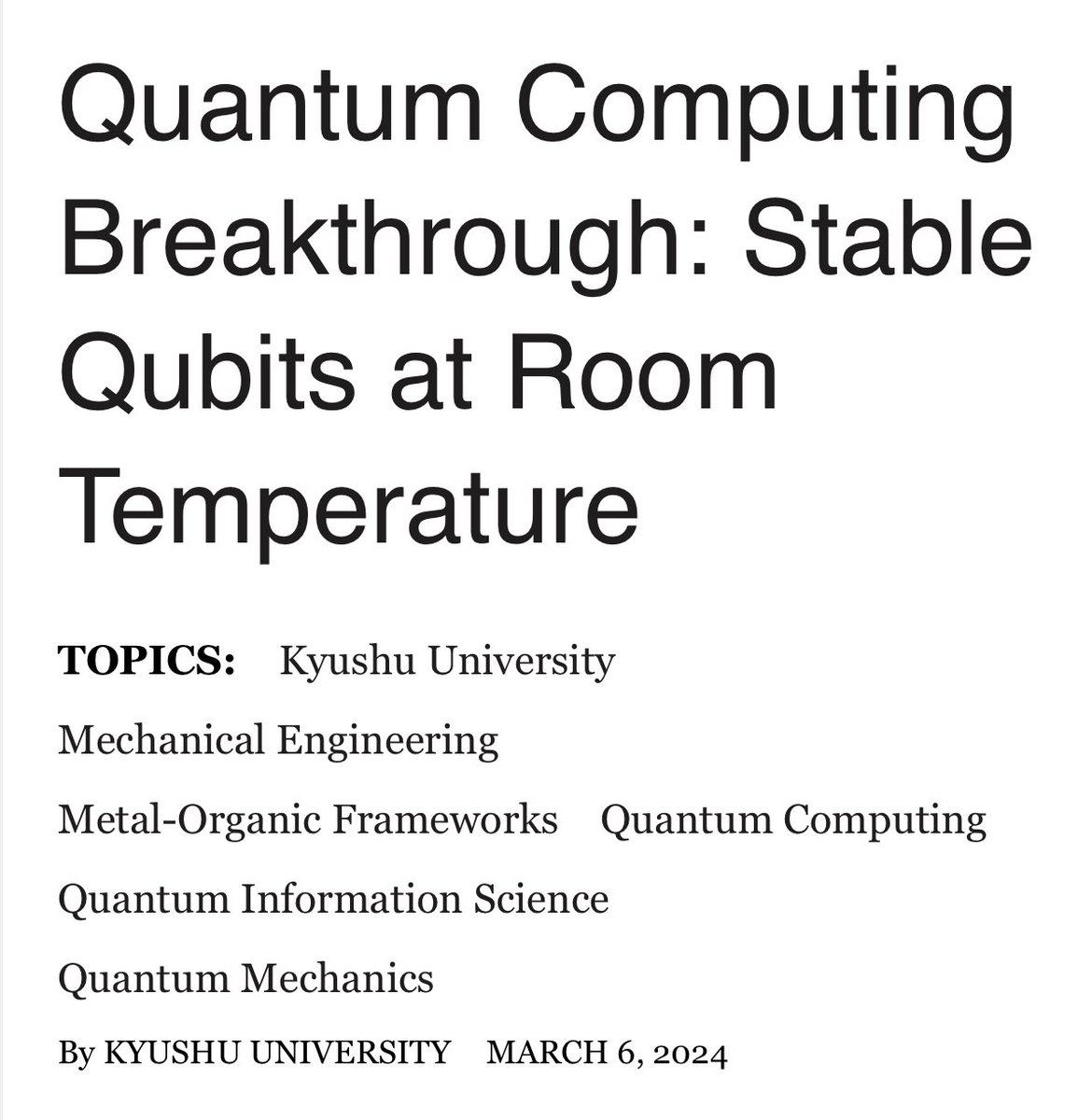
Are you more intrigued by developments in #QuantumComputing than by developing your mind’s #QuantumCognition?
Does news about #ArtificialIntelligence (#AI) appeal more than breakthroughs in #neuroscience?
Follow BOTH #MachineThinking and #HumanThinking!
scitechdaily.com/quantum-com…
2
2
5
641
29 Oct 2023
#ThinkToThink™ toward YOUR #BestEffortThinking (BET). Don’t let anyone or anything derail your #HumanUniqueThinking’s thinking about #AI’s thinking. Metacognition with #MachineThinking moves our thinkably thinkable thinkingness beyond known and yet unknown cognitive constraints.
9 Jun 2023
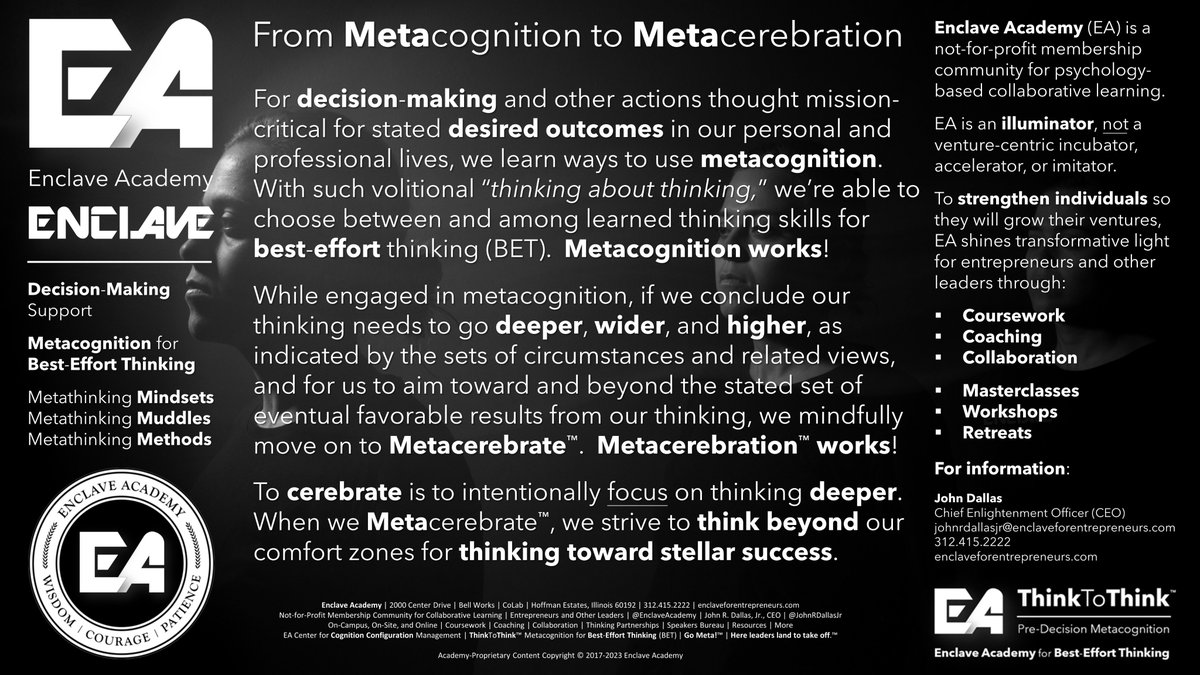
The quantity of talk and thought about #ArtificialIntelligence (#AI) seems to be at an all-time high. As machine thinking is top-of-mind, let's also focus on human thinking. "From Metacognition to Metacerebration™" is @EnclaveAcademy's cerebral invitation to ignite metathinking.
2
3
123
29 Oct 2023
Use #AI as a personified force to inspire curiosity and creativity—a mechanized metacognitive muse.
#HumanUniqueThinking (#HUT) thrives in thinking partnership with #MachineThinking.
Entrepreneurs are encouraged by @EnclaveAcademy to follow @IBMwatsonx.
dataplatform.cloud.ibm.com/r…

1
2
2
89
17 Oct 2023
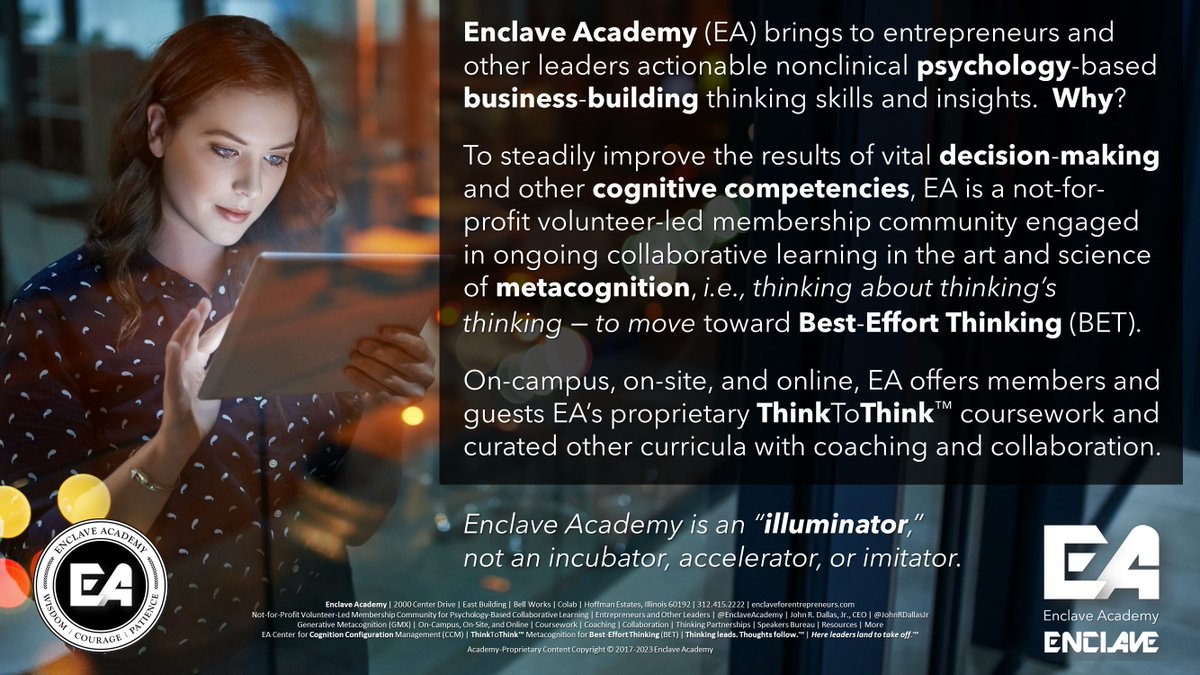
From @EnclaveAcademy (EA) comes a steady flow of business-building thinking about thinking—i.e., #metacognition. #AI has #entrepreneurs and other #leaders focused on #MachineThinking. EA zeros in on defining, describing, and developing YOUR best-effort #HumanUniqueThinking (HUT).
2
3
114
14 Oct 2023
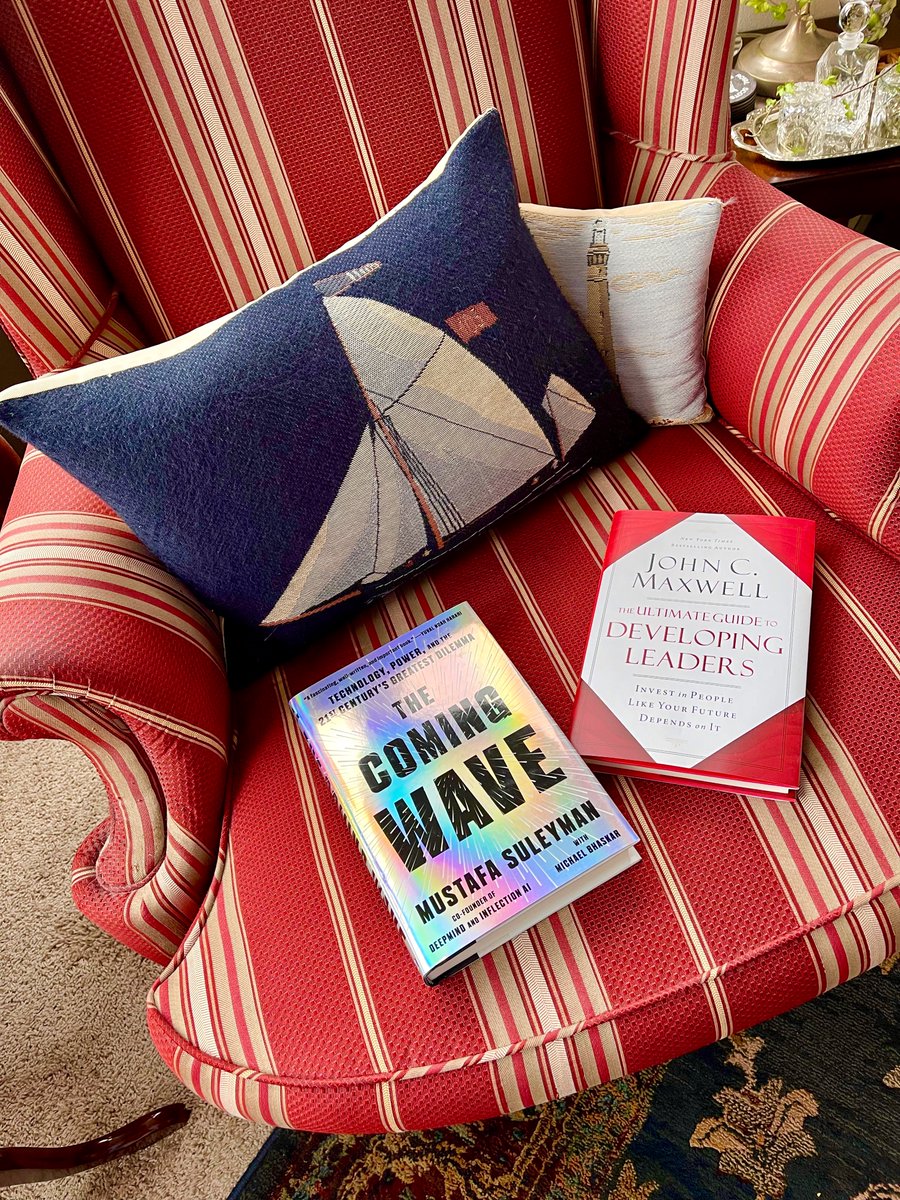
Rest assured I’ll not “sit on” today’s book arrivals.😉#MachineThinking (#AI) and #HumanUniqueThinking (#HUT) must be strategically aligned in personal and organizational development #learning programs. @mustafasuleyman and @TheJohnCMaxwell are aptly quoted at @EnclaveAcademy.📚
3
3
147

27 Mar 2023
Source: Robert Lemos, darkreading.com/risk/employe…
#AI #MachineLearning #Chatbots #MachineThinking #VirtualAssistants #GPT #OpenAI #AIChatbot
2
50

21 Sep 2022
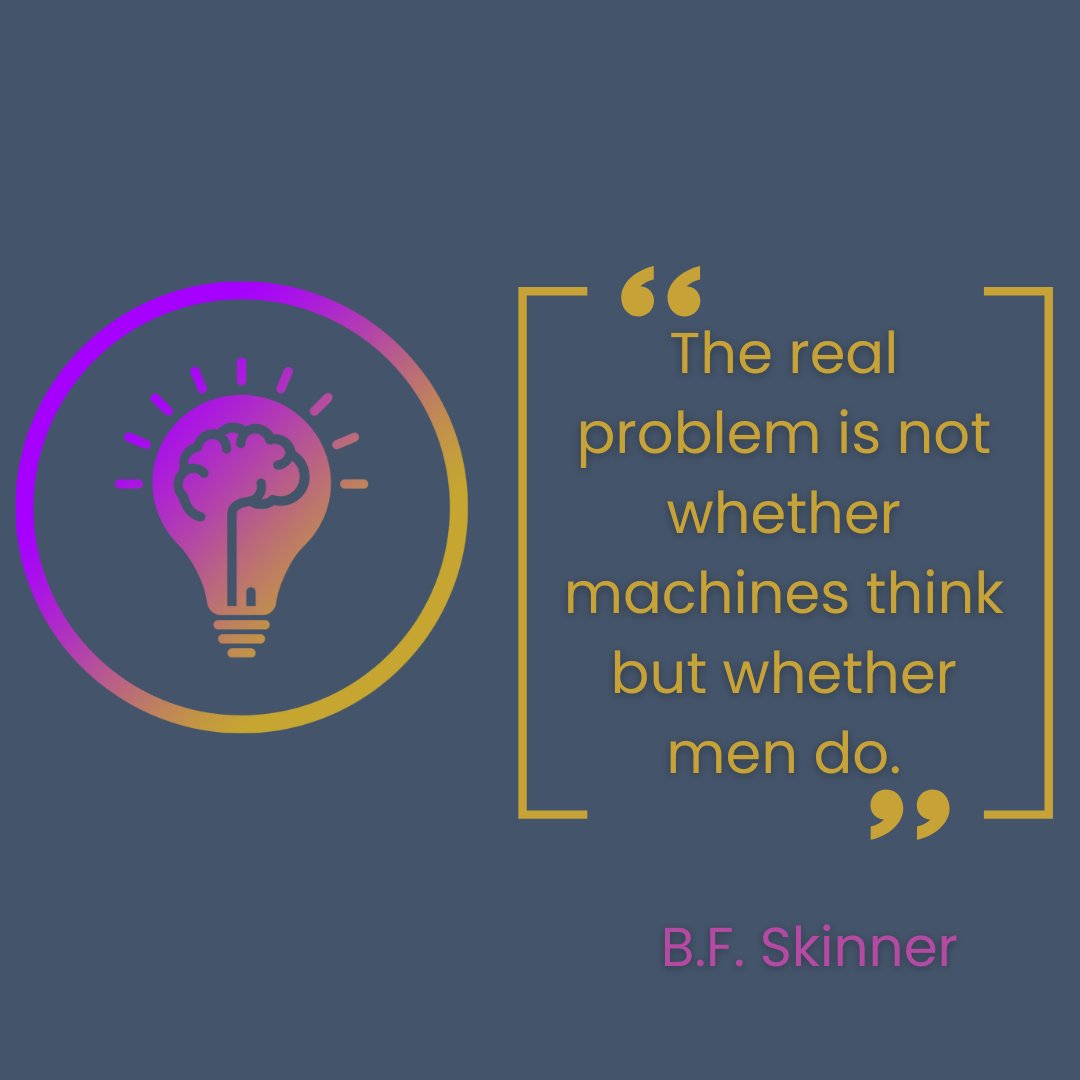
Is it #machinelearning or is it #machinethinking? And are we still doing the thinking? #Quote by B.F. Skinner
#Wednesdaythought
1
2

7 Jul 2022
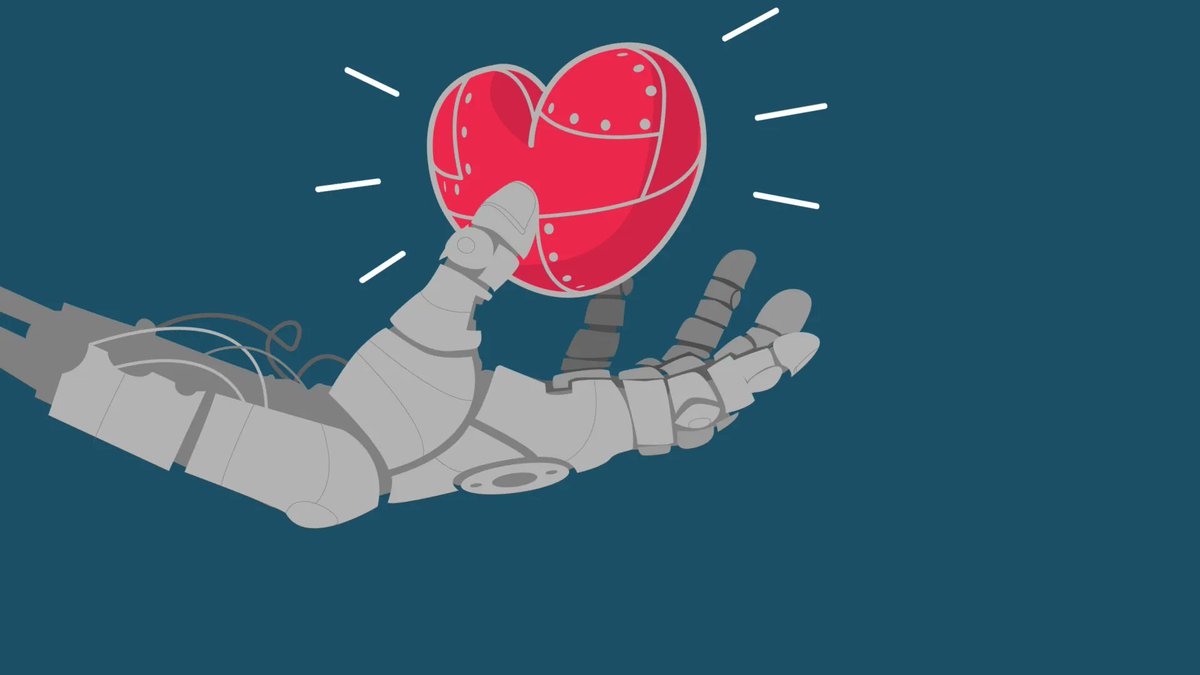
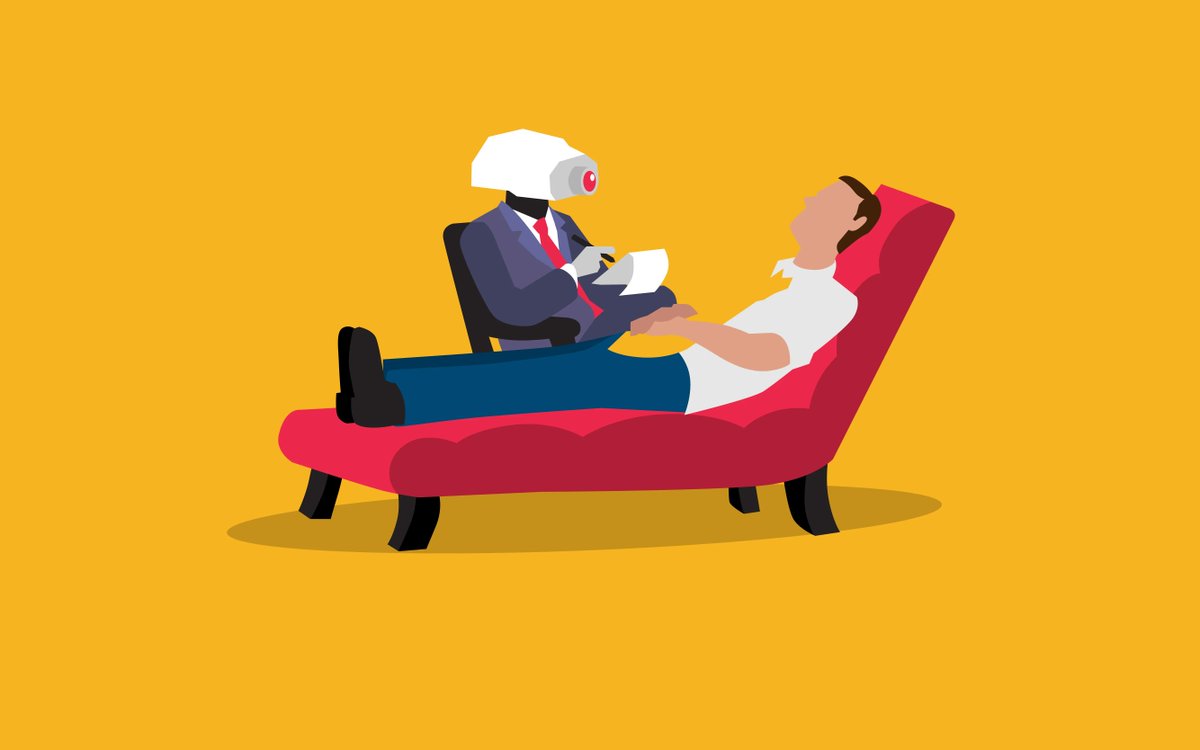
As I keep reading "Could Artificial Intelligence Replace Therapists" on #AI gerd.fm/3bZVMHz via @PsychToday more qs arise: What if humans don't want a MACHINE to 'know' all these things about them - after all, machines use data, store data, SHARE data. #machinethinking
1
2