

Apr 27
🧵 Day 11/30 — #LLD
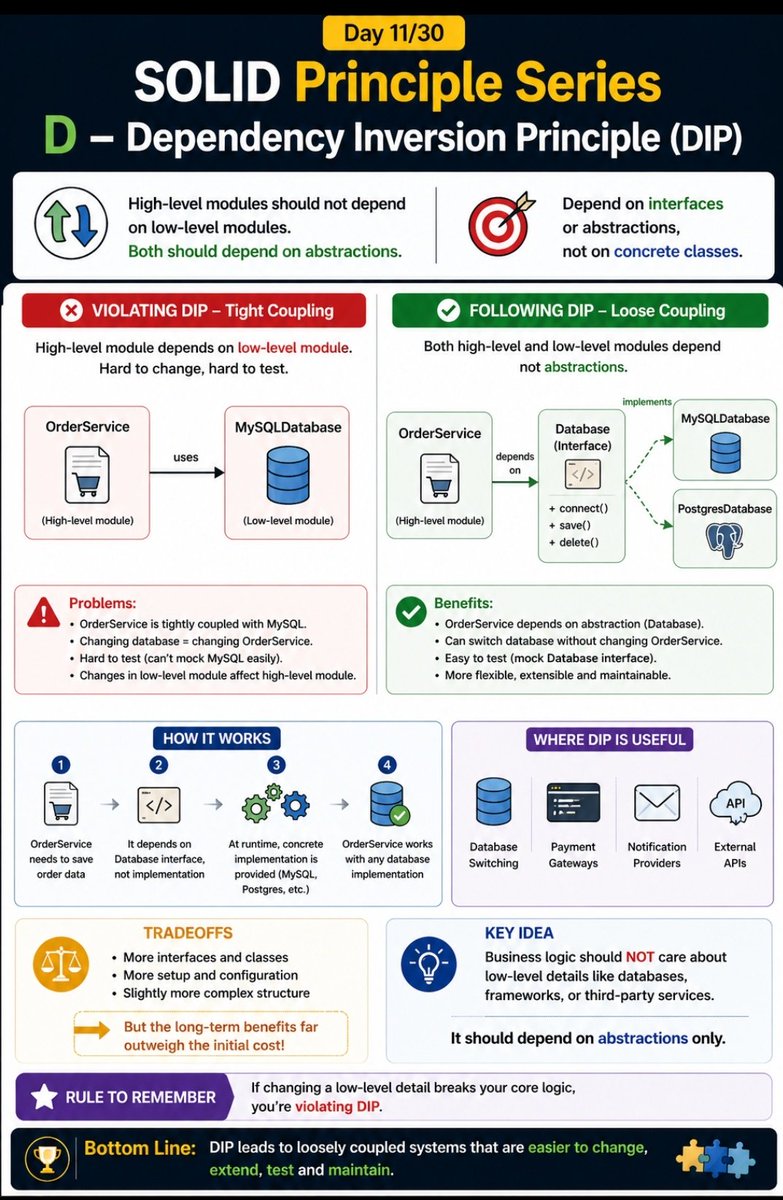
DIP (Dependency Inversion Principle)
👉 High-level modules should NOT depend on low-level modules
👉 Both should depend on abstractions
In simple terms:
→ Don’t depend on concrete classes
→ Depend on interfaces / contracts
---
Why this matters 👇
When DIP is violated:
→ Tight coupling between components
→ Hard to change implementations
→ Difficult to test (no mocking)
→ Small changes ripple across system
---
Classic example 👇
❌ Bad design
OrderService directly depends on MySQLDatabase
→ Changing DB = changing service
→ Testing becomes hard
---
✅ Better design
→ Create Database interface
→ MySQL, Postgres implement it
→ OrderService depends on interface
Now:
→ Swap DB without changing service
→ Easy to test (mock interface)
---
💡 Key idea:
Business logic should NOT care about:
→ Database
→ External APIs
→ Frameworks
It should depend on abstractions only
---
⚠️ Tradeoffs:
→ More interfaces
→ More setup initially
→ Slightly complex structure
But…
→ Highly flexible system
→ Easy to extend & test
→ Loosely coupled architecture
---
🔥 Rule:
If changing a low-level detail breaks your core logic →
You’re violating DIP
---
Where this shows up 👇
→ Database switching
→ Payment gateway integration
→ Notification providers
→ External APIs
---
Would you:
A) Directly depend on concrete classes
B) Use abstractions for flexibility
What would you choose and why?
👇
Apr 26

🧵 Day 10/30 — #LLD
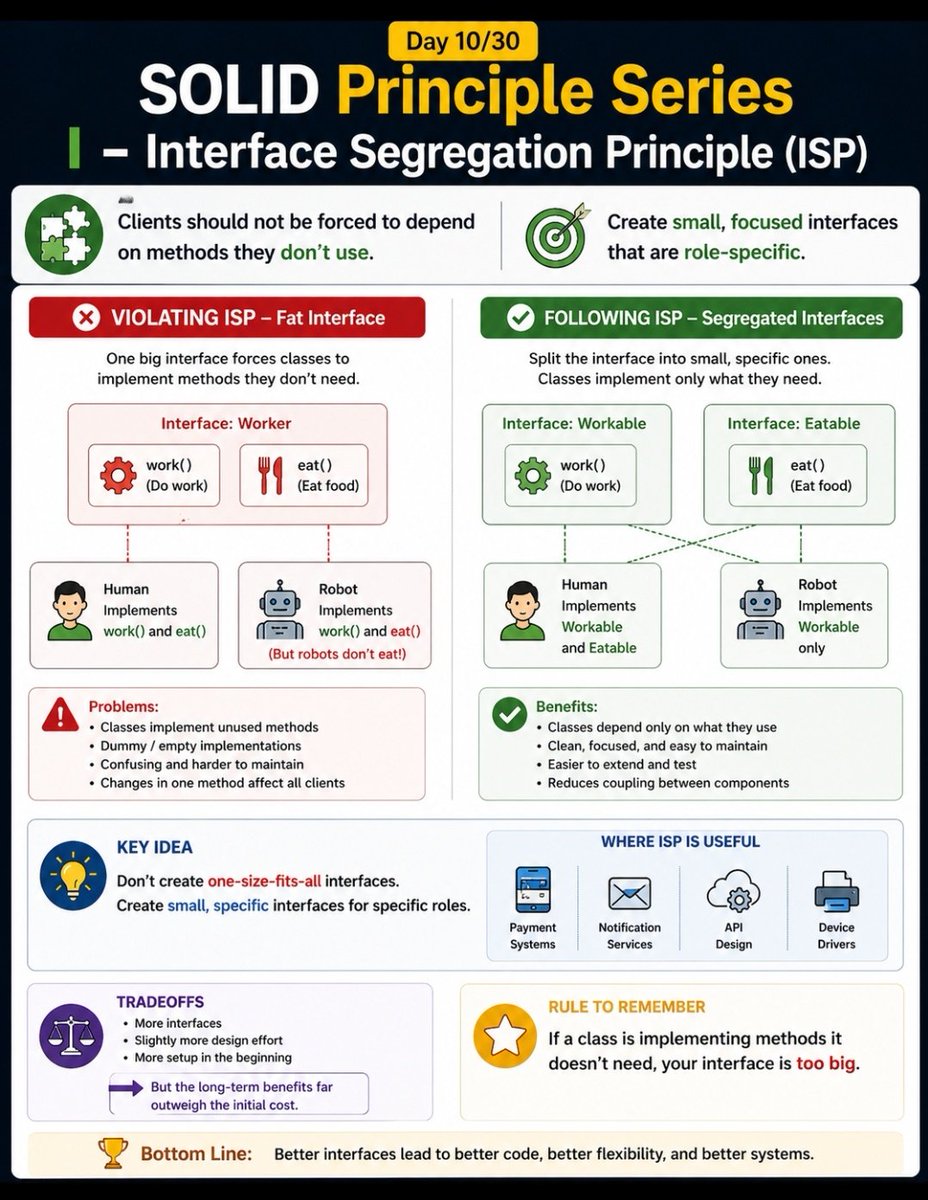
ISP (Interface Segregation Principle)
👉 “Clients should not be forced to depend on methods they don’t use”
In simple terms:
→ Don’t create fat interfaces
→ Create small, focused ones
---
Why this matters 👇
When ISP is violated:
→ Classes implement unused methods
→ Leads to empty / dummy implementations
→ Increases confusion
→ Makes code harder to maintain
---
Classic example 👇
❌ Bad design
One interface: Worker
→ work()
→ eat()
Now a Robot implements it 🤖
→ work() ✅
→ eat()? ❌ (doesn’t make sense)
Forced implementation = bad design
---
✅ Better design
Split interfaces:
→ Workable → work()
→ Eatable → eat()
Now:
→ Human → implements both
→ Robot → implements only work()
Clean. Logical. Flexible.
---
💡 Key idea:
Interfaces should be:
→ Small
→ Specific
→ Role-based
Not “one-size-fits-all”
---
⚠️ Tradeoffs:
→ More interfaces
→ Slightly more design effort
But…
→ Better flexibility
→ Easier testing
→ Cleaner architecture
---
🔥 Rule:
If a class is implementing methods it doesn’t need →
Your interface is too big
---
Where this shows up 👇
→ Payment systems (different capabilities)
→ Notification services (SMS vs Email)
→ API design (modular endpoints)
---
Would you:
A) One big interface for everything
B) Multiple small focused interfaces
What would you choose and why? 👇
11
1
13
393

Mar 29
You “fixed” it:
class OrderService {
private Database db;
public OrderService() {
this.db = new MySQLDatabase();
}
}
Did you really invert the dependency?
Or just hide it inside the constructor? 👀
#CleanArchitecture
3
14
3,000

Mar 28
Tight coupling.
- Hardcoded MySQLDatabase -> no flexibility
- Cannot switch to PostgreSQL easily
- Unit testing becomes hard (no mocking)
Violates Dependency Inversion. Should depend on interface, not concrete class
1
14
731
Mar 28
Spot the issue:
class OrderService {
private MySQLDatabase db = new MySQLDatabase();
}
Works fine today.
But what happens when:
You add PostgreSQL?
You write unit tests?
You move to cloud?
#DesignPatterns
2
13
2,164

Feb 13
Dependency Inversion is a SOLID principle that says depend on abstractions, not concrete classes. Inversion of Control means shifting object creation and lifecycle management to a framework/container. Dependency Injection is the technique used by IoC containers to inject dependencies into classes (via constructor, setter, or field).
1. Dependency Inversion Principle (DIP)
Type: Design Principle (SOLID)
High-level modules should NOT depend on low-level modules. Both should depend on abstractions.
In simple words:
Depend on interfaces, not concrete classes.
Without DIP
class MySQLDatabase {
void save(String data) {
System.out.println("Saved to MySQL");
}
}
class UserService {
private MySQLDatabase db = new MySQLDatabase(); // Tight coupling
void saveUser(String user) {
db. save(user);
}
}
Problem:
- UserService tightly coupled to MySQL
- Cannot switch to MongoDB / PostgreSQL easily
With DIP:
interface Database {
void save(String data);
}
class MySQLDatabase implements Database {
public void save(String data) {
System.out.println("Saved to MySQL");
}
}
class UserService {
private Database db;
UserService(Database db) { // Depends on abstraction
this.db = db;
}
void saveUser(String user) {
db.save(user);
}
}
- Now we can plug any DB implementation.
2. Inversion of Control (IoC)
Type: Design Pattern / Architecture Principle
Control of object creation & lifecycle is inverted (shifted) from the application code to a container/framework.
Instead of YOU creating objects → Framework creates & manages them.
Without IoC
UserService service = new UserService(new MySQLDatabase());
You control creation.
With IoC (Spring Example)
@ Service
class UserService {
private Database db;
public UserService(Database db) {
this.db = db;
}
}
Spring Container does:
- Create Database bean
- Create UserService bean
- Inject dependency
You don’t control creation anymore.
3. Dependency Injection (DI)
Type: Implementation Technique of IoC
Dependencies are injected into a class rather than created inside it.
DI is HOW IoC is achieved.
Types of DI
1. Constructor Injection (Recommended)
class UserService {
private Database db;
UserService(Database db) {
this.db = db;
}
}
2. Setter Injection
class UserService {
private Database db;
void setDatabase(Database db) {
this.db = db;
}
}
3. Field Injection (Spring)
@ Autowired
private Database db;
3
7
1,756

Jan 19
5️⃣ Dependency Inversion Principle
Depende de abstracciones, no de implementaciones concretas.
❌ OrderService usa directamente MySQLDatabase. Cambiar a PostgresDatabase obliga a reescribir el servicio.
✅ Crear interfaz Database y pasarla por inyección de dependencias. El servicio no depende del motor concreto.

1
1
3
1,674

3 Nov 2025
Your code is correct. Your tests pass. ✅
But when traffic spikes, your data looks weird. 😵💫
Welcome to the world of transaction isolation levels in MySQL - where phantoms, dirty reads, and non-repeatable reads lurk in the shadows.
Understand what’s really happening under the hood 🔍
medium.com/gitconnected/mysq…
#mysqldatabase #Consistency #Engineering
1
2
53

25 Oct 2025
Never open your production and local databases side by side,Trust me you’ll realize it after you’ve deleted an entire table or row.
Oh f***… I just deleted the production DB. 😭
To all my devs friends: triple-check that DB connection before you hit enter.
#DevLife #Laravel #Database #Programming #php #mysqldatabase
#phpmyadmin
1
1
51

7 Sep 2025
🛠️ Example: Instead of `class User { Database db = new MySQLDatabase(); }`, inject `User(Database db)`. Swap `MySQLDatabase` with `PostgresDatabase` or a mock without changing `User`. 🚀
#designpatterns #testing #microservices
1

22 Aug 2025
🎥 New Episode on RackNerdTV! ✅📅 How to Use Database Wizard in cPanel. 💻🌐 -- 📺▶ WATCH HERE: youtu.be/FAmTRKo5Gjc
🛒CPANEL HOSTING racknerd.com/shared-hosting
#cPanelDatabase #DatabaseWizard #WebDevelopment #WebsiteSetup #cPanelTutorial #MySQLDatabase #HostingGuide
1
2
171
11 Aug 2025
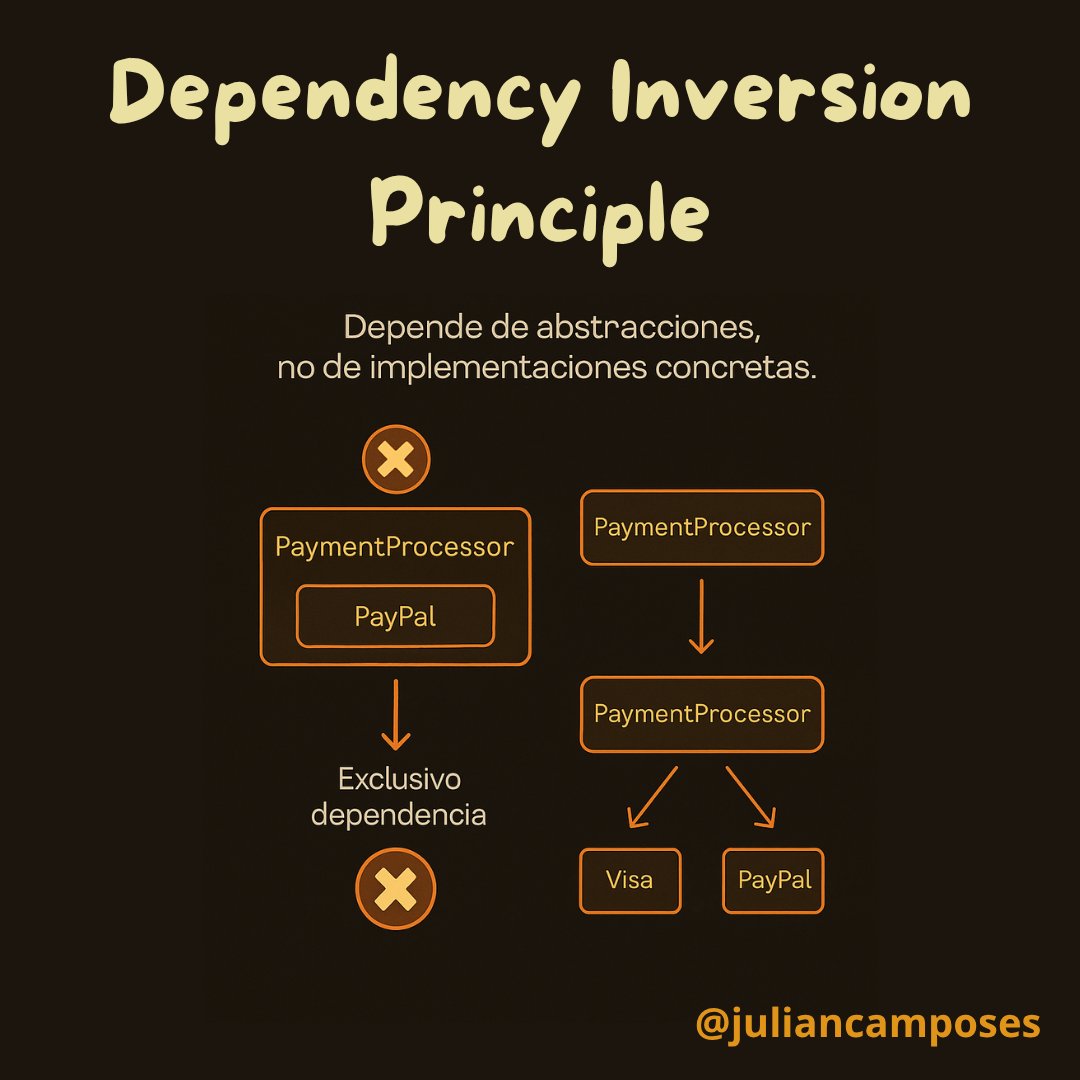
5⃣ Dependency Inversion Principle
Depende de abstracciones, no de implementaciones concretas.
❌ OrderService usa directamente MySQLDatabase. Cambiar a PostgresDatabase obliga a reescribir el servicio.
✅ Crear interfaz Database y pasarla por inyección de dependencias. El servicio no depende del motor concreto.
1
1
16
4,447

2 Aug 2025
💡 Did you know?
Nearly 30% of #WordPress sites still use #MySQL 5.7!
With WordPress powering 43.6% of all websites, MySQL's impact is enormous.
Dive into the full MySQL #versionHistory & latest 9.0 updates! 🚀
🔗 wpexperts.io/blog/mysql-vers…
#MySQLDatabase #WooCommerce #WebDev

ALT MySQL Version History List - From its beginning to the Latest Version.
1
1
3
43

19 May 2025
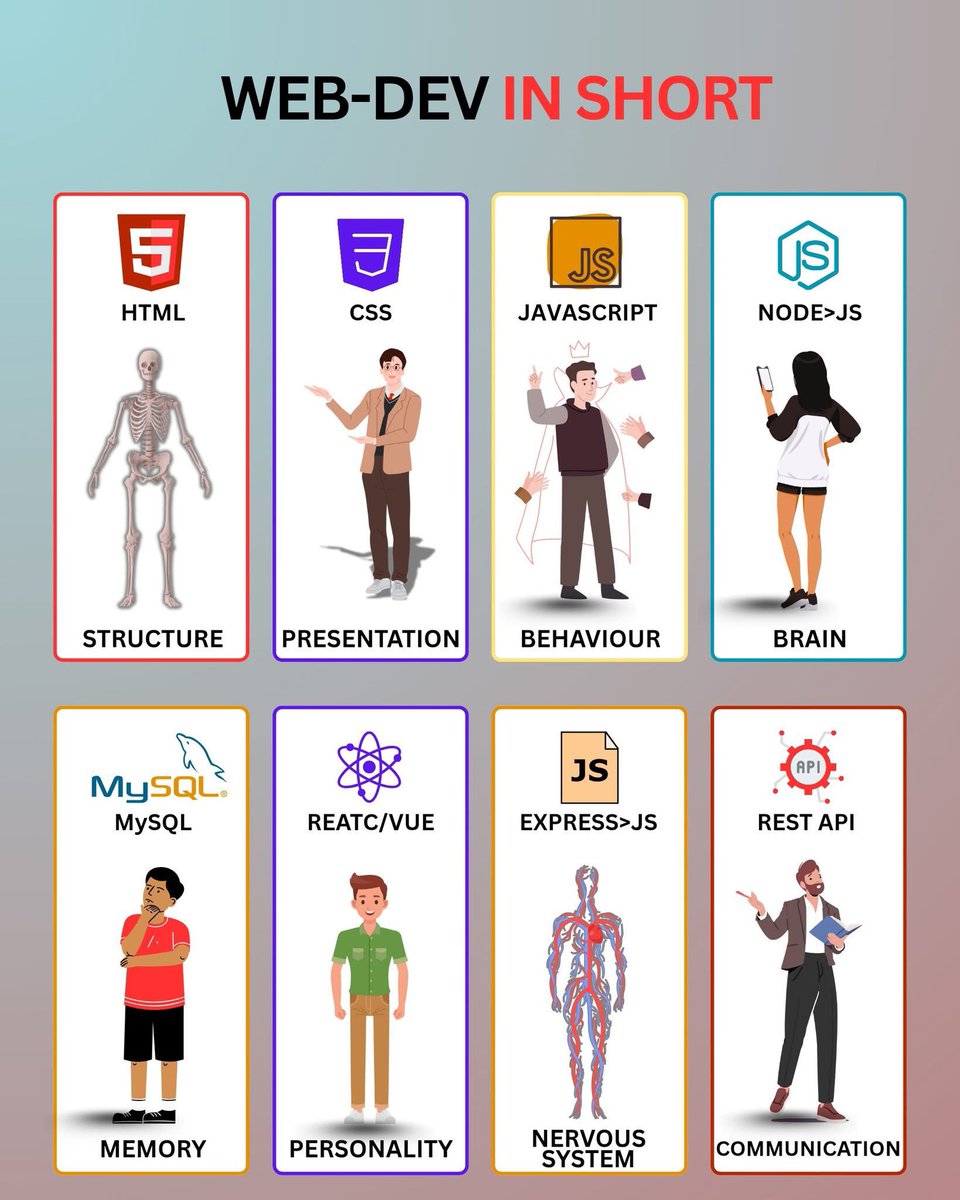
WEB DEVELOPMENT IN SHORT
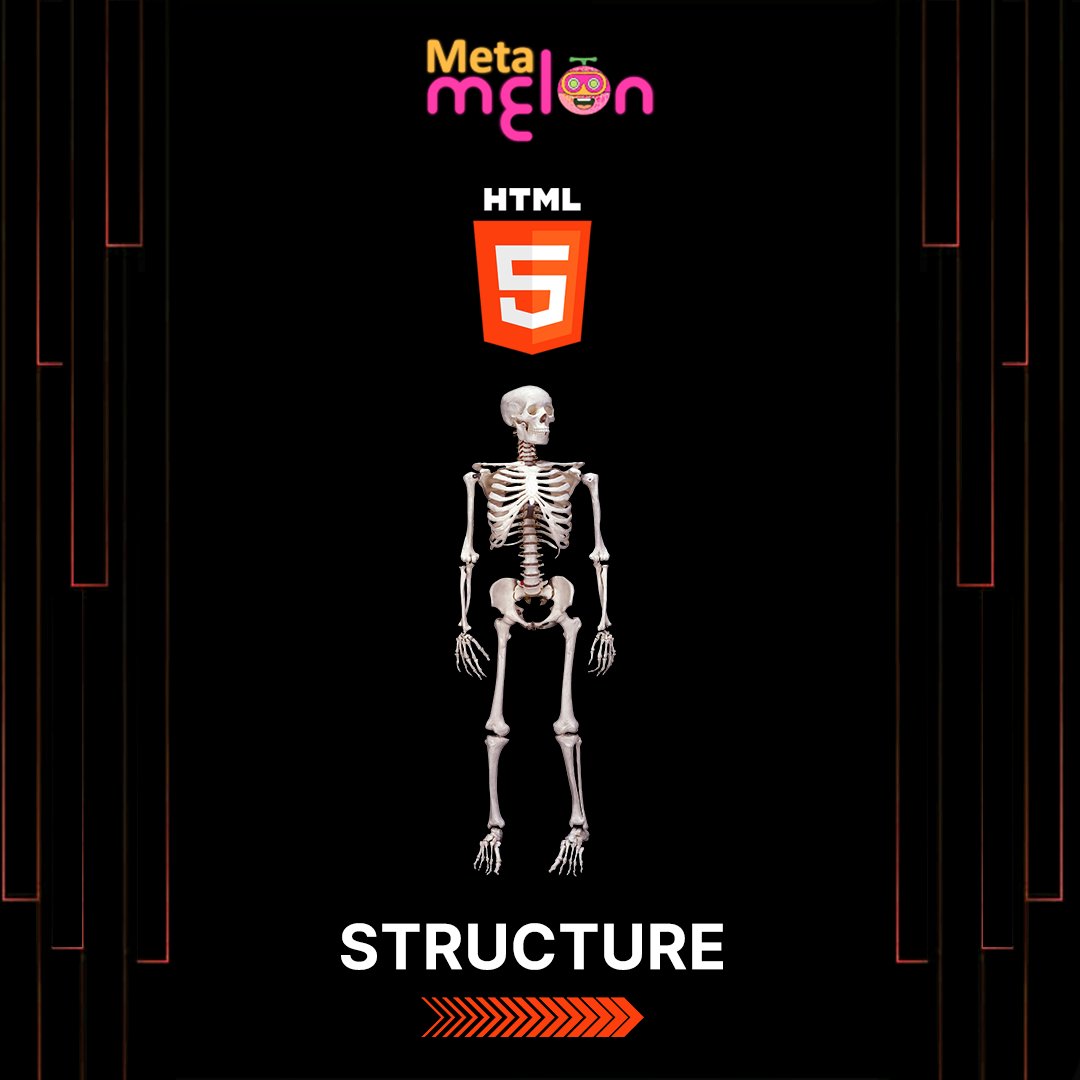
1. HTML (Structure)
It’s like the skeleton of a website. Without it, nothing stands. It builds the basic structure.
#HTMLBasics #WebStructure #FrontendDevelopment
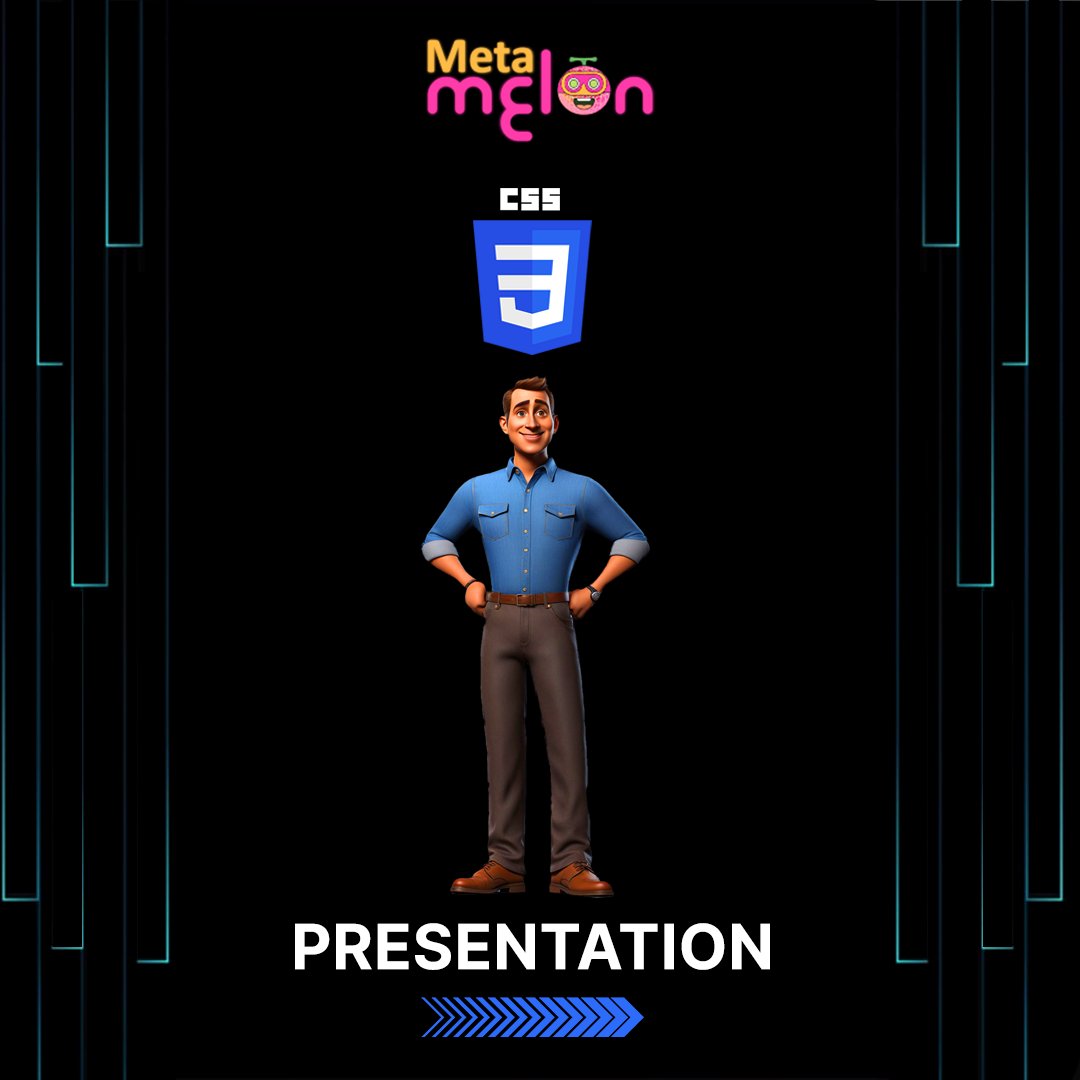
2. CSS (Presentation)
Adds style to the HTML. Like clothes, colors, fonts, and layout—all done using CSS.
#CSSDesign #WebStyle #FrontendTips
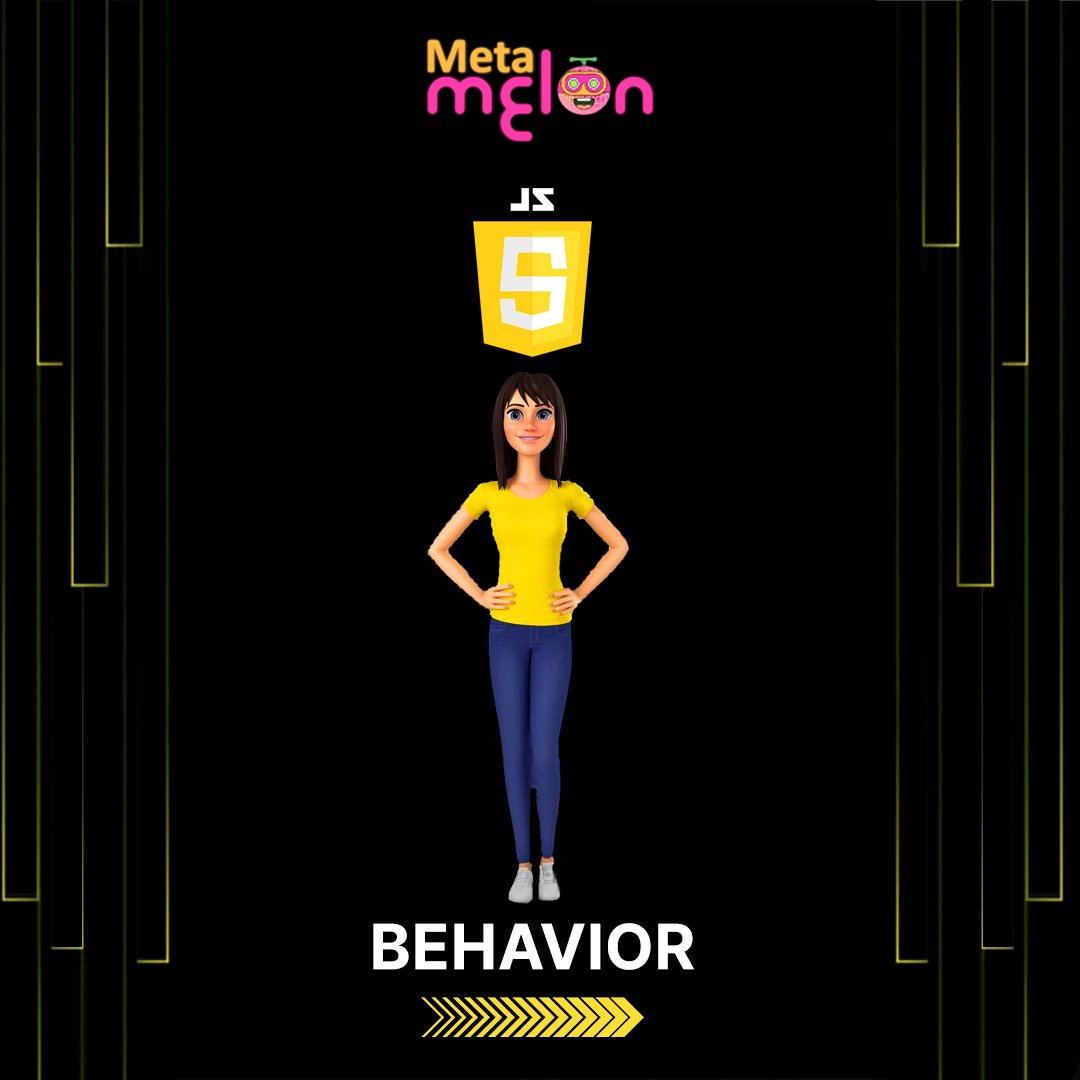
3. JavaScript (Behaviour)
Brings life to the website. Makes buttons clickable, popups appear, and more.
#JavaScriptFun #WebBehaviour #InteractiveWeb
4. Node.js (Brain)
The brain of the website. Handles all logic and processing in the backend.
#NodejsPower #BackendBrain #ServerSide
5. MySQL (Memory)
Works like memory. Stores all user data like login info, comments, etc.
#MySQLDatabase #DataStorage #BackendMemory
6. React/Vue (Personality)
Gives the website a smooth personality. Helps create modern and interactive UIs.
#ReactVue #ModernFrontend #UserInterface
7. Express.js (Nervous System)
A helper of Node.js. Keeps the server and APIs running smoothly.
#ExpressJS #BackendFlow #ServerRouting
8. REST API (Communication)
The communicator between frontend and backend. Passes data between them.
#RESTAPI #DataCommunication #WebIntegration
3
5
152

10 Sep 2024
Can I bribe my mysql database with cookies to make it cooperate with solr?
Source: devhubby.com/thread/how-to-i…
#programmingtips #codingtutorial #programming #techblog #import #mysqldatabase
5
7

5 Aug 2024
What if Web Development is represented by human characters.
#metamelon #web3 #metaverse #html #CSS #javascript #js #nodejs #MySQL #mysqlserver #mysqldatabase #reactnative #expressjs #API
2
122

6 Jul 2024
💡#Tutorial:🧱Build Your #CMS Part 4 - Login Form.
📺Keep #Coding #YT👇
youtube.com/watch?v=3y71o3k5…
#website #webdev #sql #html #data #javascript #mysqldatabase #webdevelopment #manager #php #mysql #video #tutorials #youtube #database #data #management #backend #free #Bootstrap

3
5
82
29 Jun 2024
💡#Tutorial:🧱Build Your #CMS Part 3 - Connecting PHP to MySQL.
📺Keep #Coding #YT👇
youtube.com/watch?v=wsOcXHfI…
#website #webdev #sql #html #data #javascript #mysqldatabase #webdevelopment #manager #php #mysql #video #tutorials #youtube #database #data #management #backend #free
4
8
121

24 Jun 2024
Speedup your website performance with simple steps.
#development #developer #phpcommunity #wordpress #wordpressdeveloper #wordpressblogger #wordpressdesign #wordpressblog #Joomla #JoomlaDevelopment #developercommunity #webserver #MySQL #mysqldatabase #LiteSpeed #Cloudflare
2
2
21

30 May 2024
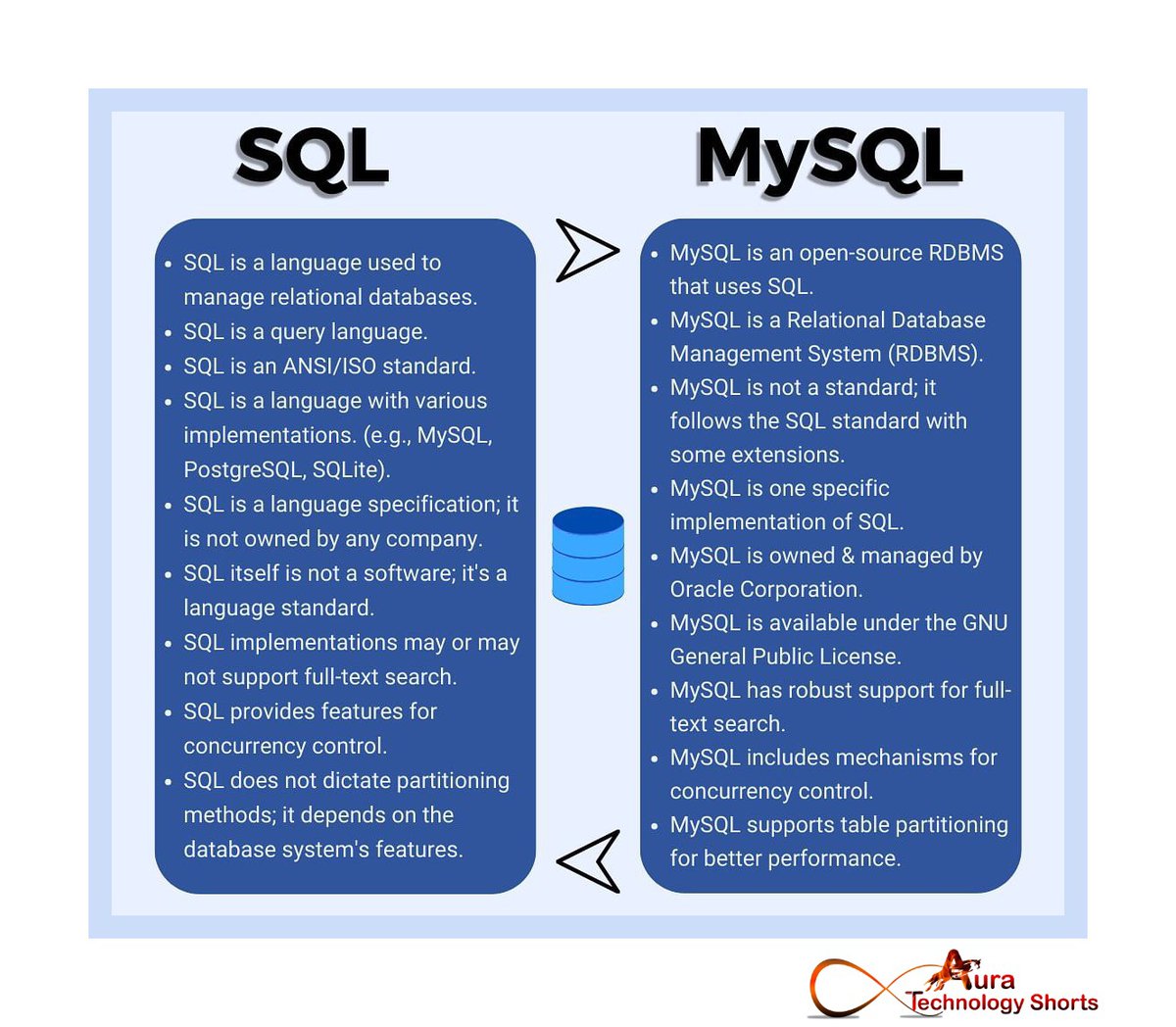
Difference between SQL VS MySQL
...............
#SQLvsMySQL #DatabaseComparison #SQLDatabase #MySQLDatabase #DataManagement #StructuredQueryLanguage #RelationalDatabase #DatabaseSystems #SQLvsNoSQL #DataStorage
7