
🚀 Replacing enterprise monitoring with open-source flexibility.
At O2 Czech Republic, we helped replace IBM Netcool with Zabbix — starting with a PoC and growing into a complete migration to a robust, scalable monitoring platform.
Together with the O2 team, we built a solution focused on real operational needs: custom event handling, advanced filtering, role-based views, quick incident actions, integrations, and custom visualization.
The result?
✅ complete migration from an enterprise platform to Zabbix
✅ up to 100,000 events per second
✅ 3 years of trouble-free production operation
✅ significant savings thanks to a platform without license fees
This project shows how open-source monitoring can support even large-scale telecommunications environments — when it is designed, customized, and implemented the right way.
A big thank you to the O2 Czech Republic team for their trust and great cooperation.
Read the full case study here:
initmax.com/case-study/how-w…
#initMAX #Zabbix #Monitoring #OpenSource #Telecommunications #ITInfrastructure #Observability
4
51

8 Dec 2025
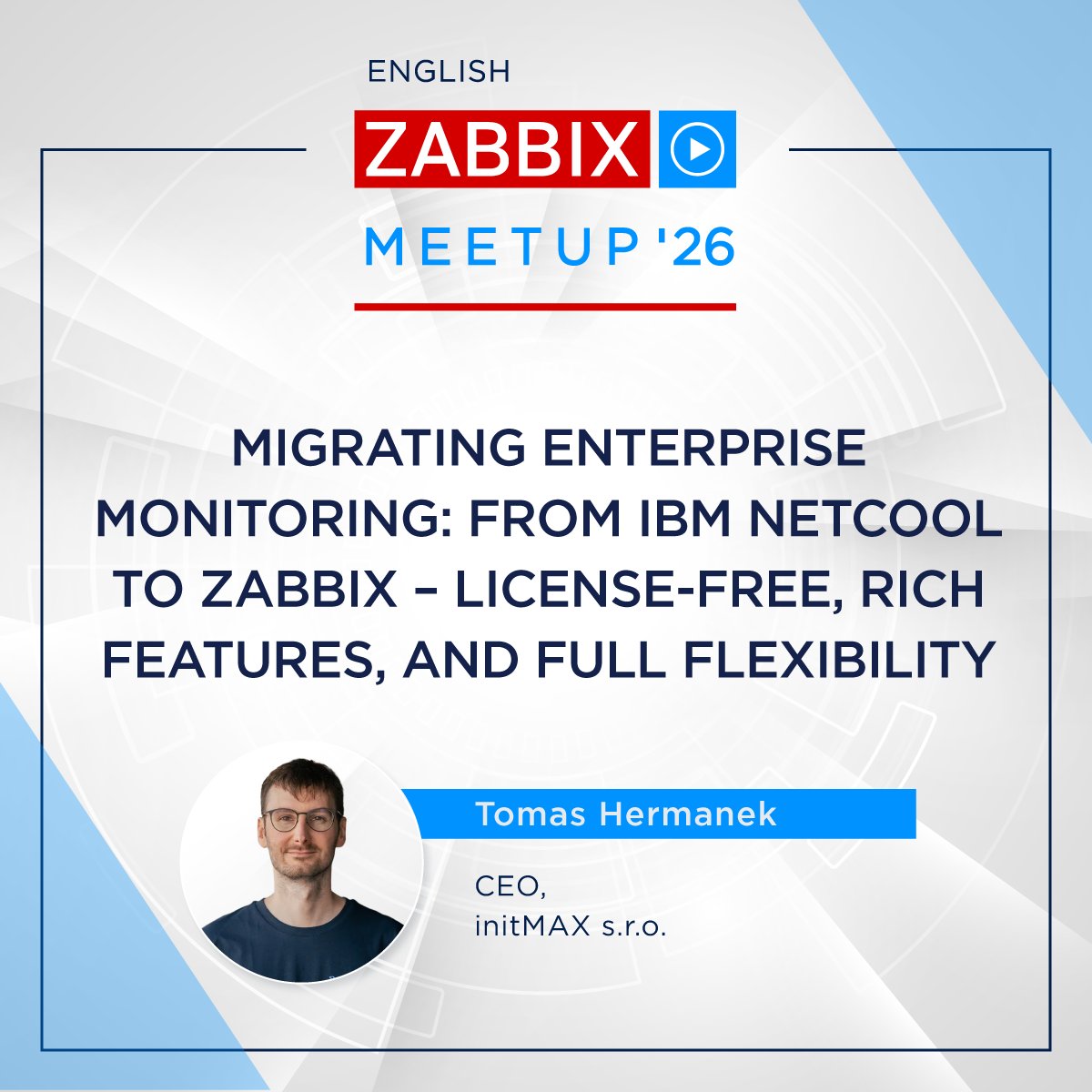
New date for our online meetup - January 8 at 10 AM CST, free to join!
We’ll look at the new JSON item type, hear a real-world migration story from IBM Netcool to Zabbix, and explore Promabbix for bringing Prometheus metrics into Zabbix at scale.
🔗 zabbix.com/events/meetup_202…



5
412

19 Nov 2025
I asked GROK if it could explain what my career was before I retired, and it nailed it pretty good. I know what everything here is, and it's only about 1/3 of what I was responsible for. This is what I did for 25 years. ⬇️⬇️⬇️
In short: It’s a highly skilled, hands-on job that keeps the core of the internet and telephone network running. You’re the person who physically touches the routers and fiber that carry terabits of traffic and 911 calls. It’s not glamorous, but it’s stable, pays well, and is still very much in demand even in the fiber/5G era. Here’s a clear, realistic description of what a Central Office Technician (CO Tech) at a major U.S. telecommunications company (AT&T, Verizon, Lumen, Frontier, etc.) actually does in 2025:
Primary Responsibilities Installs, tests, maintains, and repairs the equipment inside telephone central offices (COs), headends, huts, and large data centers that make up the backbone of the network.
Works heavily with:
Legacy copper/TDM equipment (DS0–DS3 circuits, DLCs, voice switches such as 5ESS, EWSD, or softswitches)
Modern fiber/optical transport (DWDM, Ciena, Infinera, Nokia, Cisco ONS/ACP, Adtran, Calix)
IP/MPLS routers and switches (Cisco ASR/8000, Juniper MX, Nokia 7750)
Power plants (−48 V DC rectifiers, batteries, BDFBs, inverters)
Timing & synchronization (GPS clocks, BITS, SyncE, PTP)
Carrier-grade Ethernet and GPON/NG-PON2 OLTs for fiber-to-the-home
Day-to-Day Tasks (typical)Provisioning and turning up new circuits (DS1/DS3, Ethernet, OTU2/OTU4, 400G wavelengths, etc.)
Troubleshooting outages using test sets (T-Berd/Viper, EXFO, Viavi 4100, protocol analyzers)
Running and splicing fiber (both inside the CO and occasionally to the FDF or outside plant)
Replacing faulty cards, transponders, power supplies, fuses, or entire racks
Alarm clearing and working with NOC/SOC on Tier-2/3 escalations
DC power work: adding new breakers, battery string replacement, load testing
Performing routine PM (preventive maintenance) and acceptance testing on new equipment
Racking/stacking new routers, switches, or transport gear during network augments or 5G backhaul builds
Coordinating with field techs, engineering, and transport planners
Work Environment Almost entirely indoors in climate-controlled central offices or large data centers
24/7 on-call rotation is common (especially for transport/power techs)
Shift work common (many COs are staffed 24/7/365)
Lots of ladder work, crawling under raised floors, heavy lifting (batteries, equipment)
Strict safety rules: grounding, ESD protection, arc-flash gear when working on power plants
Skills & Tools You Use DailyFluke or Viavi Ethernet testers, OTDRs, optical power meters, T-Berd 5800/4100
CLI on Cisco/Juniper/Nokia for provisioning and troubleshooting
Element management systems (Ciena OneControl, Nokia NFM-T, Cisco CTC, etc.)
Ticketing systems (Netcool, Remedy, ServiceNow)
Basic electrical knowledge (−48 V DC systems, grounding, bonding)
Fiber characterization and cleaning discipline
4
1
9
274

5 Oct 2025
To be fair, the VP of network operations at TWC once had me replace the Netcool alarm panels with screenshots of when everything was green so his demo for the SVP would go unblemished. 😅
5
1,298

5 Apr 2025
Netcool Cricket Club secured a 10-wicket victory over the Hawks Cricket Club in their first match of the Midlands Two Keys T20 Tournament. Andile Mangena's exceptional performance, taking five wickets, earned him the Player of the Match award.
#TwoKeysT20 #MidlandsCricket

3
226

3 Mar 2025
Forbes: в России удалось импортозаместить только 5% программ для критической инфраструктуры
Как пишет Forbes со ссылкой на результаты исследования «Монк Диджитал Лаб», в 95% случаев Россия продолжает использовать иностранное ПО для контроля объектов критической информационной инфраструктуры (КИИ).
«Многие российские компании одновременно используют “трофейные” проприетарные решения, западные open-source платформы и отечественные разработки»,
— отмечают аналитики.
Как минимум 40% объектов КИИ работают на западных коммерческих платформах, таких как IBM Netcool и Splunk. Еще 80% используют зарубежные open-source решения, причем 85% из них применяют Zabbix в качестве основной или дополнительной системы мониторинга.
Forbes пишет, с 2022 года в России запрещены покупка и поддержка иностранного ПО для объектов КИИ, а с 2025 года — его использование.
«Использование западных решений создает риски при обновлении и масштабировании систем. Они в ряде случаев требуют регулярного обновления и интеграции с другими коммерческими продуктами, что может стать сложной задачей на фоне санкционного давления и отсутствия официальной поддержки в России», — говорится в исследовании.
1
1
4
1,041

19 Sep 2024
New #job in the #UK! 🇬🇧
Our client, a leading global #IT service provider, is recruiting for NETCOOL DEVELOPER!
Send your CV to sales@manningglobal.com
#Tech #IBM #APIs #Programming #Java #Python #SQL #Shell #Scripting #TCP #IP #Developer #SoftwareDeveloper #ManningGlobal

2
7
149

2 May 2024
#netcool #omnibus #probes #gateways
Netcool/OMNIbus 8.1 released with the latest Java security updates.
8.1.0-TIV-NCOMNIbus-FP0032:
ibm.com/support/pages/tivoli…
CVE link:
ibm.com/support/pages/node/7…
1
1
35

23 Mar 2024
Please find below the job details:
Network Analyst - NOC
Melville, NY, Rochester, NY and Miami/Doral, FL.
12 months contract will extended
Job Desription
Network Operations Center Network Analyst. Within this role, the Analyst will oversee the configuration, layout, and maintenance of the entire network. This person will also analyze, supply feedback, look for trends, and provide additional technical support to the Network Control Center. The Analyst will also research and evaluate the network through our NMS tool and recommend needs where applicable. This role will also include interaction with our customer base to provide support, status, and direction to ongoing initiatives. The Analyst will need to be well-versed in the administration of a heterogeneous network across multiple platforms. The Analyst will work cross-functionally with internal departments, external vendors, and the NOC team to coordinate corrective actions, resolve issues, and provide documentation as well as metrics to performance within our deployed infrastructure.
Responsibilities:
• Plan, validate, and deploy network corrective measures as needed
• Provide network troubleshooting documentation and run books for the department
• Continuously review all NMS and EMS systems for process improvement
• Interface directly with customers related to identified chronic issues till resolution
• Investigate and supply TRRs to customers as requested
• Work with support and vendors to resolve complex network problems
• Organize and drive all post-mortem meetings till resolution and closure
• Provide weekly ticket reviews related to all NOC tickets to ensure accuracy and content
• Provide the deep dive analysis through the NMS system to proactively identify network issues
• Provide metrics (internal and/or customer-facing) to management as requested related to team and network performance
• Lead all complex change management activity
• Provide feedback to management on process and procedural improvement
• Direct compilation and validation of records and reports concerning network operation and maintenance
• Effectively prioritize workload and alter as needed in the interest of the business needs
• Lead by example and drive the core values of the company
• Always ensure a quality customer experience
Qualifications:
• 5 years network administration experience with a NOC environment, including monitoring and surveillance
• Excellent written and verbal communication skills, interpersonal and presentation skills
• Ability to manage complex issues and drive action items with customers and inter-departments
• Ability to promote cross-functional collaboration and teamwork.
• Ability to perform tasks with minimal supervision
Education:
Bachelor's degree from an accredited College or University in computer science or related area required. Equivalent work experience in a similar position may be substituted for educational requirements.
Certifications in leading networking hardware/software are required.
Experience with IBM Netcool is a plus
2
7
1,179

2 Mar 2024
في إطار التزام مجموعة stc برسم ملامح مستقبل قطاع الاتصالات وتقنية المعلومات بالمنطقة، أبرمت المجموعة العديد من الشراكات والاتفاقيات الاستراتيجية مع شركات عالمية ومن ضمنها شركة هواوي و إريكسون و سامسونج‘، حيث تتماشى هذه الشراكات وتندرج ضمن سعيها لتمكين التعاون وتعزيز الابتكار وتحسين مستوى الأداء الرقمي. وكذلك وقعت مع شركة "آي بي إم" بهدف ترقية نظام إدارة الأخطاء الحالية من خلال الاستفادة من أحدث إصدارات منصة إدارة الأخطاء Netcool القائمة على الحوسبة السحابية. وفي السياق ذاته، وقّعت مذكرة تفاهم مع شركة "China Mobile International" تتضمن تعزيز سبل التعاون لدفع عجلة تطوير وتنفيذ خدمات اتصالات إنترنت الأشياء للمؤسسات في المنطقة.

1
1
3
1,031
25 Sep 2023
New #job in the #UK! 🇬🇧
Our client, a global #IT company, is recruiting for an ENTUITY DEVELOPER!
Send your CV to sales@manningglobal.com
#TCP #Entuity #BMC #Unix #SQL #Shell #ITIL #Groovy #Netcool #TrueSight #Shell #Scripting #Networking #Routing #NewJob #ManningGlobal

2
6
371


19 Apr 2023
Sana kumakapit yung vpn ko para di ako lagi nalolog out sa netcool ko at ldap kasi ang hirap mag connect. Di ako maka work. Pwede ba yan Josh ha sabihin mo EME. Sana makapasok ako sa 200. Kasi kung hindi, ehdi ganun talaga mahal pa rin naman kita with poot🥹
19 Apr 2023

Ilagay mo ang iyong sarili sa kwentong ito. Anong pinagdadaanan mo? Ano ang gusto mong sabihin? Paano mo sila pakikiusapang kumapit?
PAKIUSAP LANG will be out on 04.21.23
#JC_PAKIUSAPLANG



4
164

23 Mar 2023
AIX環境だったら
・Tivoli製品の情報を漁る。(ITMやNetcoolなど)
・HMC、VIOS、LPARの情報を漁る。
・smit、smittyの使い方を知っておく。
・snapコマンドに慣れておく。
2
967
14 Mar 2023
#netcool #probes #webhook
Community Chat: Ask the OMNIbus Expert - Introduction to OnPrem Message bus probe Webhook.
Join if you want to ask some questions.
community.ibm.com/community/…
1
1
1
109
30 Nov 2022
#netcool #omnibus #probes #integrations
Twenty frequently asks questions for the message bus probe
ibm.com/support/pages/node/6…
1

CERTFR-2022-AVI-647 : Vulnérabilité dans IBM Tivoli Netcool/OMNIbus (15 juillet 2022)
cert.ssi.gouv.fr/avis/CERTFR…
3
4
CERTFR-2022-AVI-544 : Multiples vulnérabilités dans IBM Netcool Operations Insight (14 juin 2022)
cert.ssi.gouv.fr/avis/CERTFR…
5
5
4 May 2022
#netcool #omnibus #webhook
Useful FAQ on using the Message bus probe as a HTTPS listener; not that HTTP transport is replaced by the Webhook transport.
Using the message bus probe configuration as a HTTPS listener
ibm.com/support/pages/node/6…
2
4 May 2022
#think2022 #netcool #omnibus
Think on Tour - Cloud ideas and technology
ibm.com/events/think/on-tour…
Think London
19th May & July 14th 2022
- IBM AIOps portfolio session
1
2