
Jun 11
📢 #highlycited paper
📚 A WENO-Based Upwind Rotated Lattice Boltzmann Flux Solver with Lower Numerical Dissipation for Simulating Compressible Flows with Contact Discontinuities and Strong Shock Waves
🔗 mdpi.com/2076-3417/14/23/114…
👨🔬 by Yunhao Wang et al.
🏫 Nanjing University of Aeronautics and Astronautics
#CFD #numericalmethods #simulation
17

📡 New Special Issue in Symmetry!
"Symmetry in #NumericalMethods"
📅 Deadline: 31 October 2026
🔗 brnw.ch/21x3ag7
#Symmetry
10
shoukofuuyumi retweeted

A new Special Issue opens for submission!
Title: Symmetry in #NumericalMethods
Editor: Dušan Nikezić and Nikola Mirkov
Details: brnw.ch/21x3ag7
#callforpapers #mdpisymmetry #computationalfluiddynamics #timeseriesforecasting
@Univerzitet_BG
@ComSciMath_Mdpi
4
5
108
Apr 15
📢 #highlycited paper
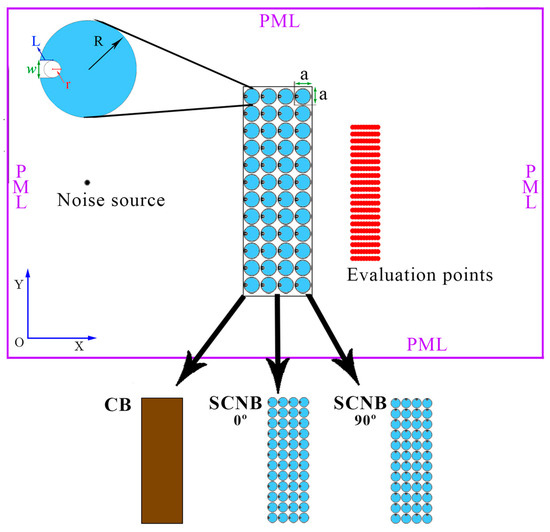
📚 #SonicCrystal #NoiseBarrier with Resonant Cavities for Train Brake Noise Mitigation
🔗 mdpi.com/2076-3417/14/7/2753
👨🔬 by David Ramírez-Solana et al.
🏫 Universitat Politècnica de València (UPV)/Politecnico di Bari/D’Annunzio University of Chieti—Pescara
#localresonances #numericalmethods
1
5
63

Apr 13
University of Surrey | PhD in Numerical Methods & PDEs ⚙️📐
Passionate about mathematics, HPC, and scientific computing? Check out this fully funded PhD at University of Surrey 🇬🇧
📌 Position: PhD – Parallel Methods for Nonlinear Oscillatory PDEs
🏫 Department: Mathematics and Statistics
📍 Location: Surrey, United Kingdom
👨🏫 Supervisor: Bin Cheng
⏳ Deadline: May 4, 2026
📅 Start Date: October 1, 2026
🕒 Duration: 3.5 years
💡 Project Focus
Develop advanced numerical methods for solving complex nonlinear PDEs using modern parallel computing architectures ⚡
🔬 What You’ll Work On
• 📐 Oscillatory PDE models in fluid & climate systems
• ⚙️ Parallel-in-time algorithms (HPC)
• 🧠 Near-resonance theory in nonlinear dynamics
• 💻 Efficient CPU-based large-scale simulations
• 📊 Performance & energy efficiency analysis
🌍 Research Impact
Applications in:
• 🌦️ Weather prediction
• 🌊 Fluid dynamics
• 🌍 Climate modelling
🎯 Ideal Candidate
• Strong background in Mathematics / Applied Math
• Interest in PDEs, numerical analysis, or HPC
• Programming & computational skills (plus)
• Passion for theoretical applied research
🎁 What You Get
• 💰 Fully funded (≈ £21,805/year stipend)
• 🎓 Covers tuition (UK & eligible international)
• ✈️ Travel & research funding
• 🌐 Access to cutting-edge HPC research
🌆 Why UK?
Home to world-class research universities and strong academic networks 🇬🇧
🔗 More Info
phdscanner.com/opportunities…
🚨 Deadline: May 4, 2026
#PhD #Mathematics #HPC #NumericalMethods #UK #ResearchJobs #FullyFunded #PDE #PhDOpportunity
4
375

Mar 24
How we chose our ODE solver for PK/PD simulation — a journey through 4 methods
Building a 3-compartment PK model simulator (remimazolam/propofol), we tested every major ODE solver. Here's what happened:
1. Euler (1st order)
Simple: y(n 1) = y(n) h*f(t,y)
Fast but inaccurate — error ~0.1-1%. Not acceptable for clinical simulation.
2. Dormand-Prince RK45 (5th order, adaptive)
Theoretically the best — adaptive step size, error control, 5th-order accuracy.
Reality: PK systems are mildly stiff (ke0 timescale vs clearance). RK45 entered step-rejection cascades, step size collapsed below minimum, solver crashed. No stiffness detection = no rescue.
3. LSODA (auto stiff/non-stiff switching)
The gold standard in pharma — auto-detects stiffness, switches Adams/BDF.
Problem: Requires external JS library. When unavailable, fell back to RK4 silently. Unpredictable behavior in PWA offline mode.
4. RK4 (4th order, fixed step)
"Boring" but bulletproof.
- Error < 0.000001% at dt=0.1 min (validated)
- No external dependencies
- No stiffness issues at physiological ke0 ranges
- 15-25ms for 60-min simulation
- Predictable, debuggable, maintainable
Winner: RK4.
Sometimes the most sophisticated algorithm isn't the best engineering choice. RK4's O(dt^4) convergence is overkill for clinical precision — and that's exactly why it's reliable.
All solver code is still in the repo if you want to compare:
github.com/ysuzuki1978/remim…
#NumericalMethods #Pharmacokinetics #ODE #RK4 #TIVA #TCI #SoftwareEngineering
2
54

Feb 6
Julia’s GPU-accelerated ODE solvers have shown 20–100× speedups over JAX and PyTorch—and it’s not magic. In this talk, Dr. Chris Rackauckas explains the architectural differences behind Julia’s approach to #GPU solvers and why they unlock performance gains across real scientific and engineering workloads. youtu.be/ZSFfv2cckx0?si=nhcT…
#JuliaLang #GPUComputing #ScientificComputing #HPC #SciML #DifferentialEquations #MachineLearning #PerformanceEngineering #NumericalMethods #AIEngineering
2
12
876

22 Dec 2025
When we move into Itô Calculus you have to give up the fantasy that you’ll evaluate stochastic integrals in closed form. Forget it! 😏
The notation is compact, but the objects are brutal. Even something that looks harmless like
Xₜ = X₀ ∫₀ᵗ (sin(Xₛ³) s² e^{Xₛ}) ds ∫₀ᵗ (1 Xₛ²) dBₛ
already couples the noise term to the entire random path Xₛ in a nonlinear way. And a 2D system like
dXₜ = (Xₜ − Xₜ³ Yₜ²) dt (1 Xₜ²) dBₜ
dYₜ = (−Yₜ³ sin Xₜ) dt (1 Xₜ² Yₜ²) dBₜ
is basically simulation or nothing in practice. In stochastic calculus, solving the SDE usually means a good numerical scheme like Euler-Maruyama, not a neat closed-form formula.
#ItôCalculus #StochasticCalculus #SDEs #EulerMaruyama #NumericalMethods #ProbabilityTheory
5
5
32
3,910

13 Nov 2025
Did you know? Henry Briggs devised a clever log-approximation to build the first base-10 tables
In the early 1600s, Henry Briggs (the “father” of common logarithms) used this practical approximation to compute log.
**Why it’s brilliant**
* Works well for large (m,n).
* Briggs picked (m) and (n) as powers of two, so finding (a^{1/n}) and (10^{1/m}) reduced to repeated square-root extractions—pencil-and-paper friendly.
* This method powered the accurate log tables that turbocharged astronomy, navigation, and engineering for centuries.
From hand roots to slide rules to silicon—numerical ingenuity never goes out of style.
#mathhistory #numericalmethods #innovation #logarithms #Briggs

2
20
2,475
5 Nov 2025
What if ODE solvers weren’t just numerical black boxes? In this talk, Dr. Chris Rackauckas breaks convention with Julia by integrating symbolic-numeric techniques into stiff ODE/DAE solvers. Discover how tools like #ModelingToolkit and codegen transform solver performance—boosting speed and robustness in ways traditional methods can’t match. A must-watch for computational scientists and engineers. youtu.be/NjcrCY0iqGA?si=hvJp…
#JuliaLang #ModelingToolkit #ScientificComputing #NumericalMethods #SymbolicComputing #ODESolvers #DAESolvers #HighPerformanceComputing #TechnicalComputing #DifferentialEquations
1
3
607

26 Oct 2025
Computer Oriented Numerical Methods Complete Course 🚀
We’re excited to announce a brand new course on BCA PATHSHALA - @JOINWEBSYRO Academy
👉 Start Learning Now: academy.websyro.com/courses/…
#BCAPATHSHALA #WebsyroAcademy #LearnToCode #NumericalMethods #Programming

2
60
24 Sep 2025
Julia and ModelingToolkit.jl are a powerful combination for engineers.
This video explores how to model and analyze both steady-state and dynamic systems. You'll see how to efficiently set up, solve, and interpret system responses, using a hydraulic actuator model as a demonstration.
It's a great workflow for engineers looking to enhance their #modeling and #simulation capabilities. juliahub.com/videos/julia-fo…
#JuliaLang #ModelingToolkit #SciML #Engineering #ModelingAndSimulation #DynamicSystems #SystemsEngineering #OpenSource #NumericalMethods

1
6
619
23 Sep 2025
Major news for engineers and researchers! A recent talk on ModelingToolkit.jl highlighted new features that simplify workflows and boost performance.
MTKParameters enables parameter #optimization, while improved initialization allows for a wider range of initial conditions. The package also now supports dynamic optimization and new polynomial solvers. It's a game-changer for #modeling and #simulation. juliahub.com/blog/what-s-new…
#JuliaLang #ModelingToolkit #SciML #OpenSource #Tech #SymbolicAI #ScientificComputing
#NumericalMethods #Engineering

3
465

17 Jul 2025
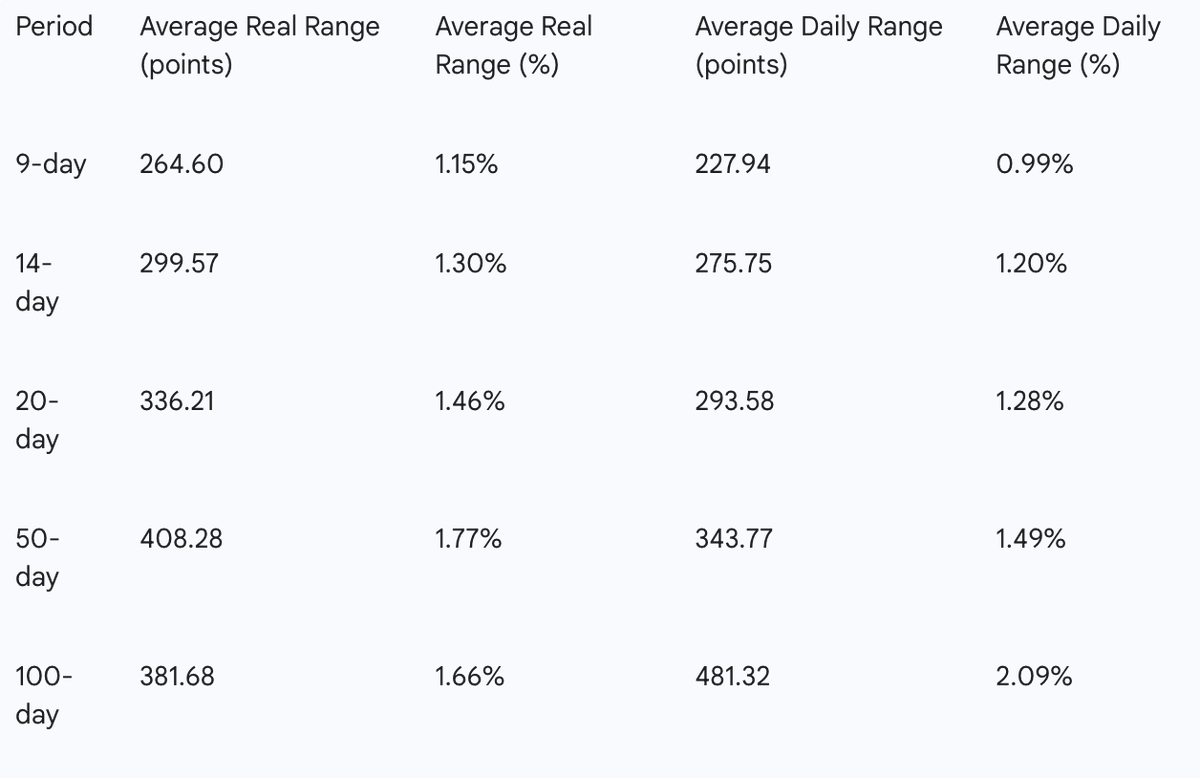
📊Digging into market volatility:
Here's a look at average daily and real ranges across different periods (9-day to 100-day). Interesting to see how these metrics evolve.
#QuantAnalysis #Stats #DataScience #FinancialModeling #AlgorithmicTrading #MachineLearning #MarketData #FinancialEngineering #Econometrics #TimeSeries #QuantitativeFinance #BigData #PythonForFinance #RStats #NumericalMethods #TradingStrategy #RiskManagement #MarketAnalytics #PredictiveModeling #ComputationalFinance
2
4
1,394

11 Jul 2025
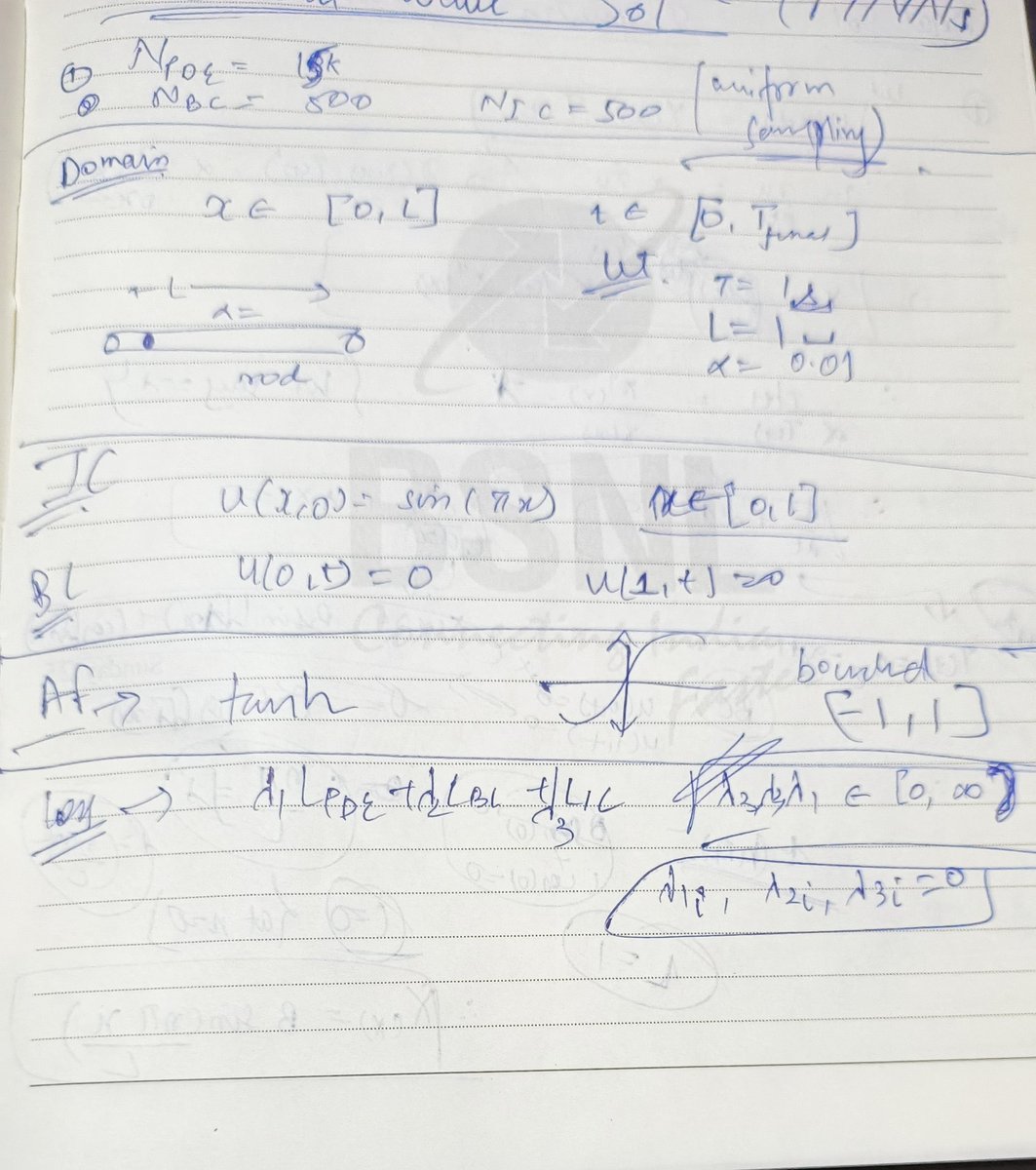
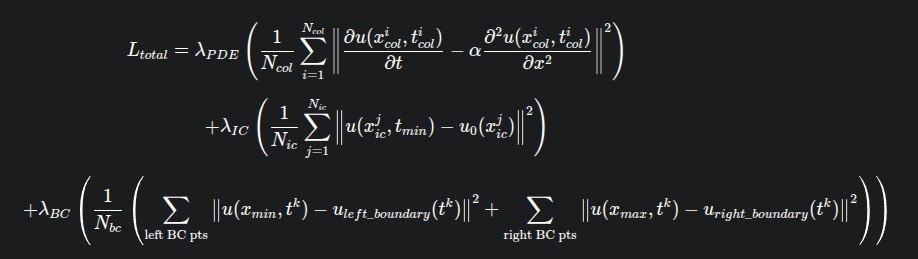
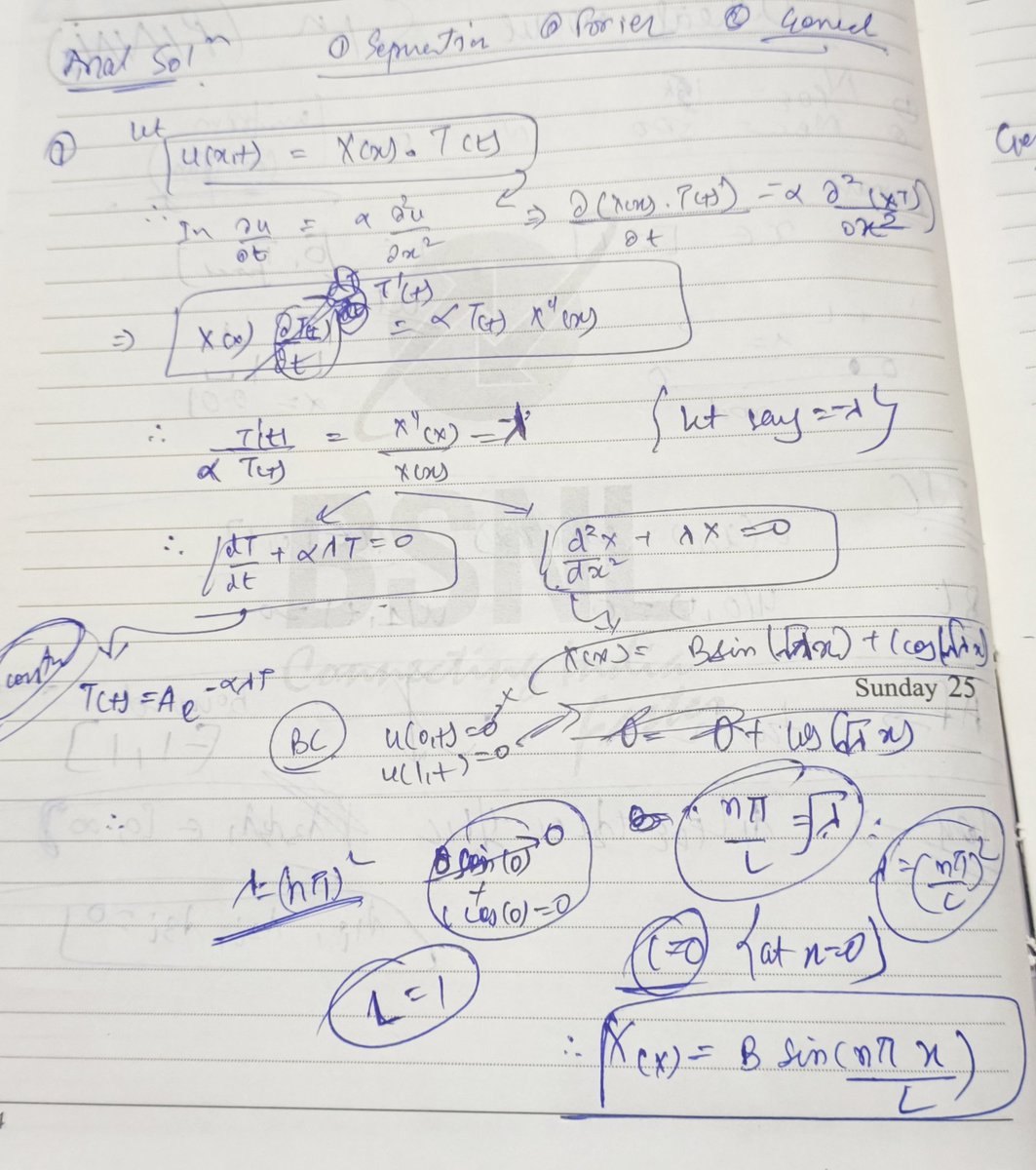
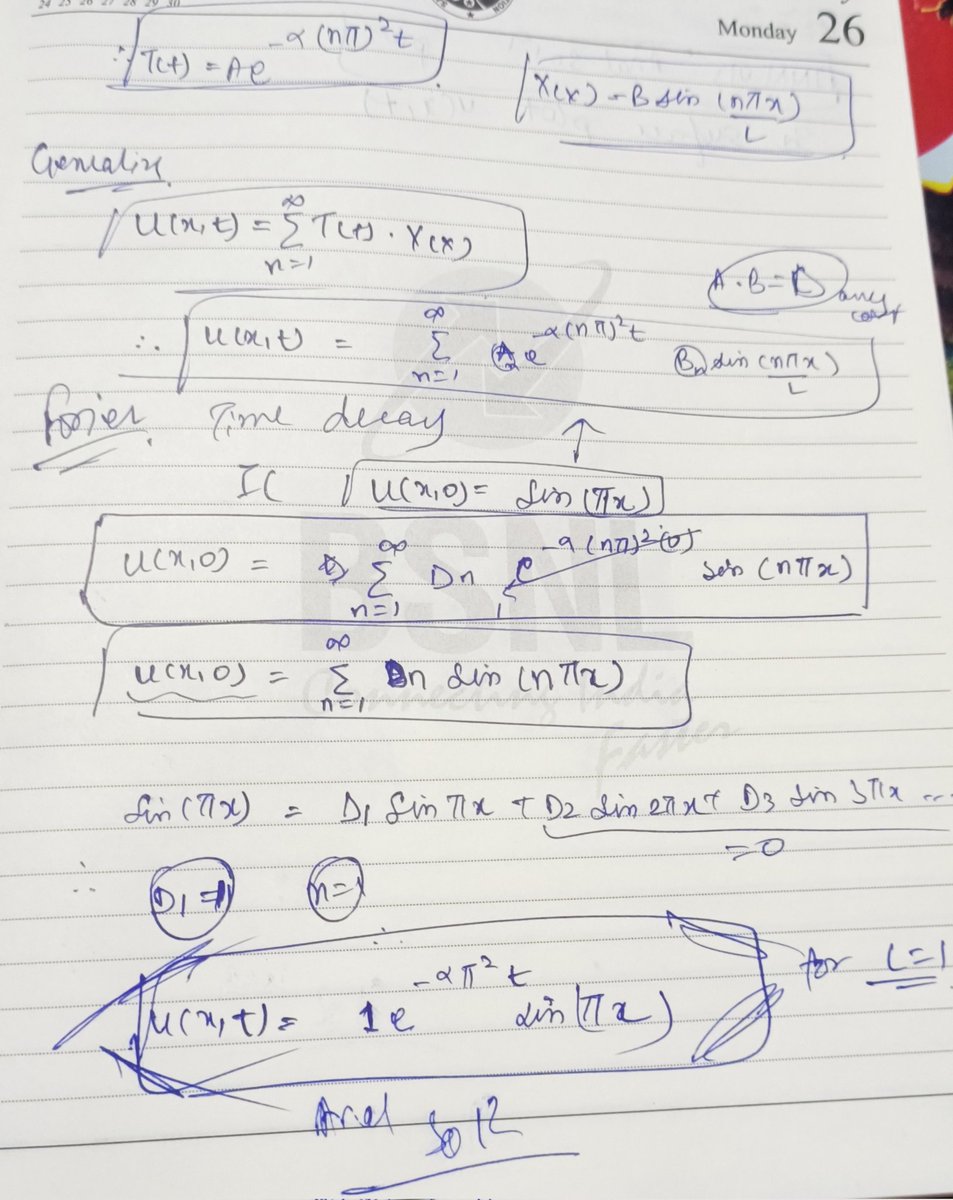
Excited to dive deep into Core of Neural Nets now🚀. Spent the last week solidifying my understanding of PINNs for the 1D Heat Equation.
#PINNs #PhysicsInformedNeuralNetworks #MachineLearning #DeepLearning #AI #NumericalMethods #PartialDifferentialEquations
1
1
3
165

10 Jul 2025
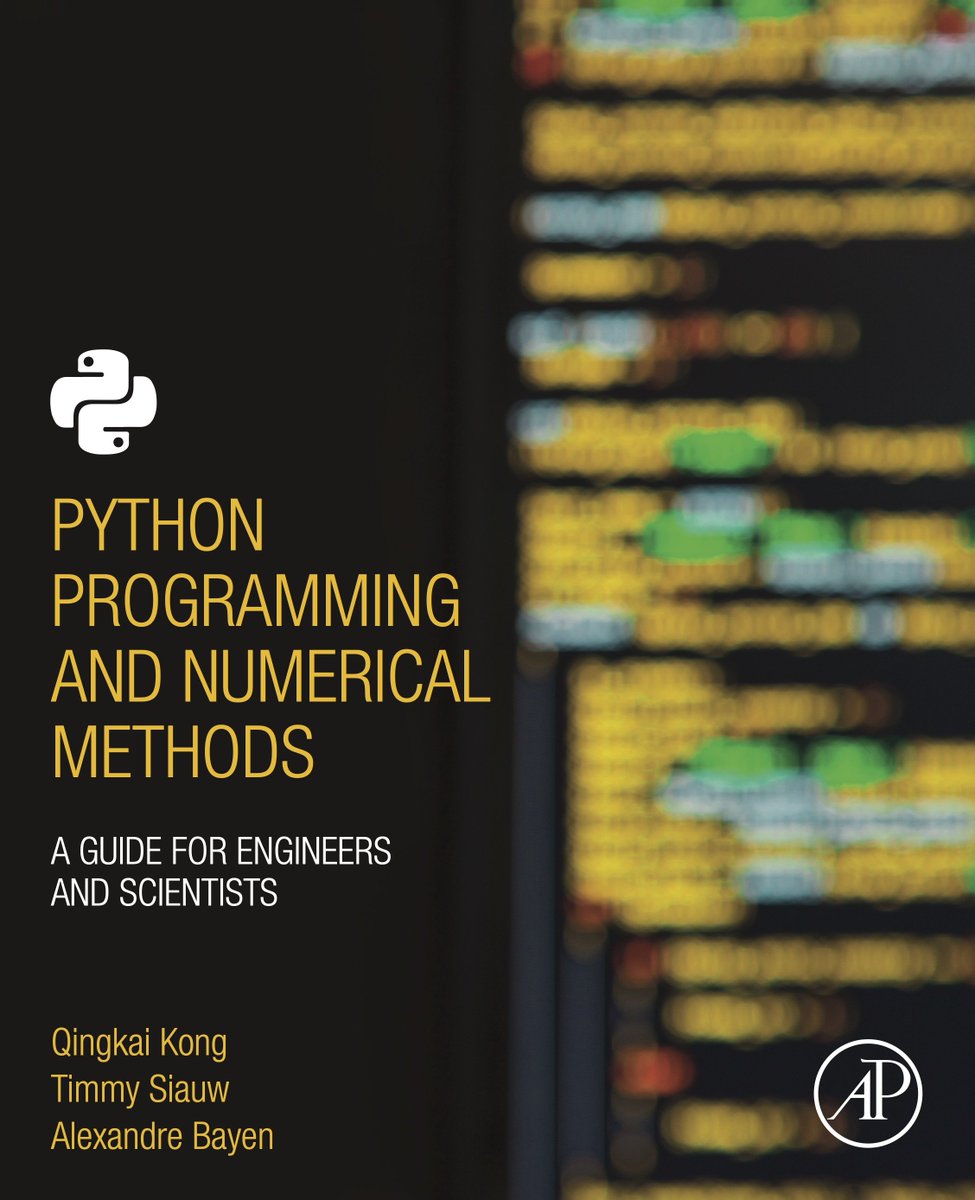
Python Programming and Numerical Methods: A Guide for Engineers and Scientists
Covers Python fundamentals powerful numerical methods.
Explore it free 👉 pythonnumericalmethods.berke…
#DataScience #Python #MachineLearning #NumericalMethods
3
336