
That’s why when you hear things like “black people can’t be racist” that’s not technically a deviation from what the term was coined for and that’s why you have to operate outside of recognizing it as a legitimate thing. Especially when textbook racism is almost never reality.
Amb. Dr. Fancy Too, MBS retweeted

Jun 12
The European Organization for Nuclear Research (CERN), is an intergovernmental organization based in Geneva that operates the largest proton accelerator laboratory in the world. Its research scientists not only contributed to the establishment of the world wide web as we know it but continue to engage in cutting edge research and use cases crucial in space, health, software engineering and many other fields.
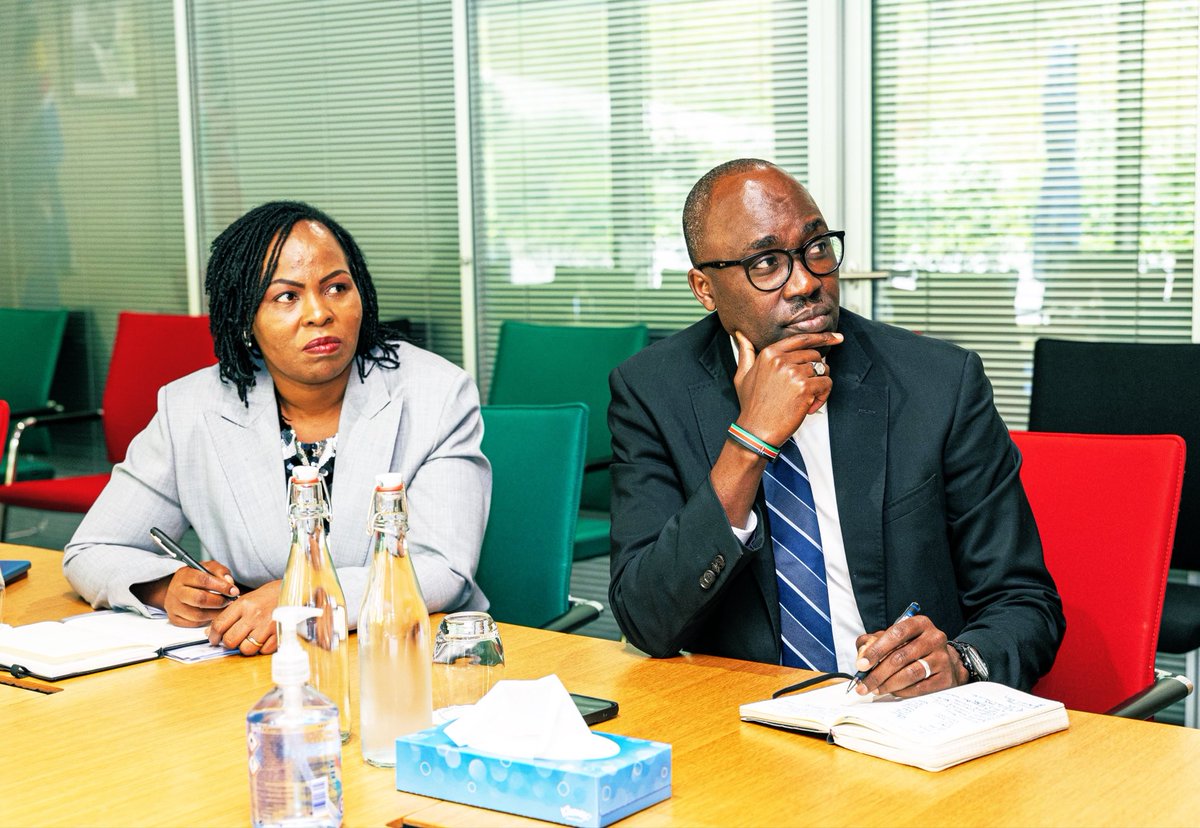
I was delighted to meet Mr. Martin Gastal, @CERN Adviser for the MENA region, in Geneva. We discussed advancing Kenya’s Science & Technology sector by pursuing a formal International Cooperation Agreement (ICA) with CERN.
As Africa’s Silicon Savannah, Kenya is ready to partner on high-performance computing, student mobility, and cutting-edge research. Looking forward to welcoming the CERN team to Nairobi soon to formalize this strategic partnership. @Profshaukat @Profmutisya @SpaceAgencyKE @ForeignOfficeKE


5
22
64
2,848

Zerospace retweeted

4 Sep 2022
In Operate Shooting Star, MegaMan SF lacks a frozen sprite. So when he gets frozen, he becomes MegaMan.EXE's frozen sprite instead.
2
37
166

Because anyone can just suddenly know how to operate a farm I guess.
I think I might become an astronaut tomorrow and fly to the moon, apparently experience is over rated.

The land isn’t going anywhere. Our food security is reasonable.
Although obviously we need to stop Mass Immigration.

It's clear that the "busted" ped0 is in on these simulated revenge catharsis scripted skits (look at the facial expressions) while the real global trafficking networks operate unabated, insulating their non 🇮🇱 controllers.
Jun 13

🇺🇸🇮🇱 76-year-old Hollywood Jewish Israeli producer Herschel Weingrod was caught having lunch with a random 15-year-old child.
Just a few weeks later, he fled the country to israel.
5
Rosanne Young retweeted

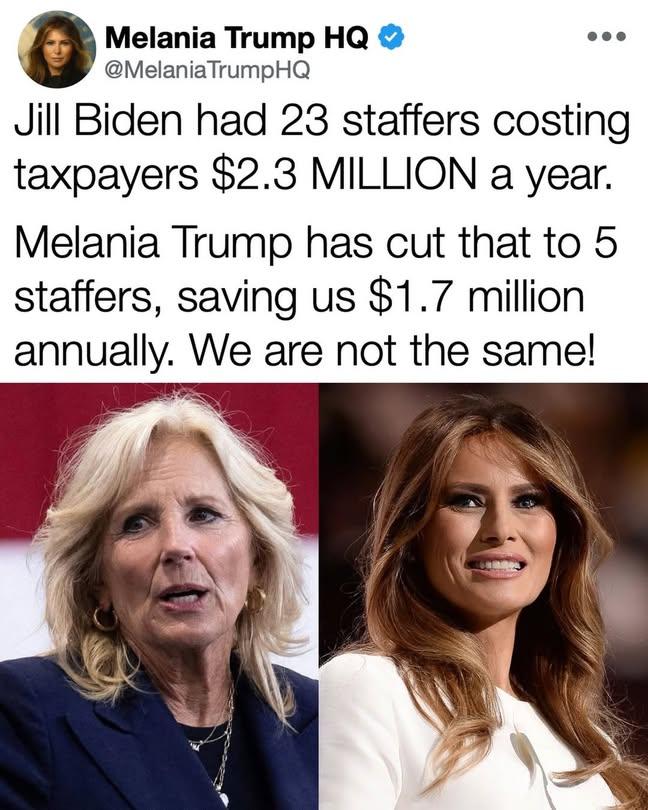
💰 Less spending. Fewer staff. Bigger savings.
If one First Lady can operate with 5 staffers instead of 23, should all government offices be held to the same standard?
$1.7 million saved every year—smart leadership or political talking point? 👇🔥
207
291
703
9,053

How can an unregistered group allowed to operate in the State.
They should be banned from the state.
MduCeramicist retweeted

Or you can put money together for @MduduziMats to fully operate and employ SA youth.
1
1
1
7

The debate over Uganda’s lawyer-to-population ratio suffers from a fundamental economic miscalculation. While Western benchmarks recommend 1 lawyer per 1,000 people, these metrics assume a formalized economy with widespread disposable income. In Uganda, where a significant portion of the 51.4 million population lives below or near the poverty line, the actual addressable market for legal services is drastically smaller than the gross population figures suggest. True legal access cannot be calculated by raw demographics when the target demographic cannot afford basic sustenance. To accurately solve the justice gap, policymakers must look past enrollment numbers and focus on subsidizing public defense, expanding legal aid clinics, and legitimizing local council courts that operate outside the traditional, cost-prohibitive formal chambers.

Still on enrolment…
Some people are saying “Uganda has too many lawyers”. This argument is premised on false logic.
Factually, Uganda Law Council shows enrolled advocates are still under 10,000.
That means ever since we started enrolling advocates, Uganda’s advocates are few.
Meanwhile, Uganda’s population is about 51.4 million people.
That’s roughly 1 advocate for every 5,000 Ugandans. Access to justice is still a real challenge, not a surplus.
..........
For context
1. UN/World Bank benchmark Many countries aim for
∼1 lawyer per 1,000 people for basic access to justice.
2. Kenya
∼24,000 advocates for ∼55M people = 1 per 2,292
3. UK/US
∼1 per 250-300 people
So Uganda’s ratio is 5-20x lower than recommended benchmarks.
The data doesn’t support a “too many advocates” claim it points to the opposite.
There's a genuine need to speed up the enrolment process of Advocates in Uganda because of the demands of access to justice.
Cc:
@IsaacSsemakadde
@AsiimweAnthony2
@ug_lawsociety
@MoJCA_UG
@JudiciaryUG
@SamMayanj
@norbertmao

3

Go on then, tell which other countries operate a “free”( tax) health care like our NHS and is better

Scalability is shifting from concept to reality as TRON continues to operate at massive scale in live conditions. #TRONEcoStar @justinsuntron @trondao
Mawuƒemɔ🇬🇭🔥 retweeted

How does a fraudster operate? And what happens when someone almost falls for it? You'll find out soon. Shine your eye. Spot the fraud, stop the fraud.
20
232
100,379
I K E retweeted

The NDC really lack ideas.
Even bigger shopping malls in major cities don't operate 24 hours, yet they're talking about a 24-hour koobi, kako, and bankye market in Atebubu and Bodwiase? Wei!
@Gen_Buhari_ @ForVolta @MrIrish3 @GOD_MC1 @GiftyBoatemaaO @BureauNpp @CASTINBILLZ
4
14
75
5,338


Wemby must improve his conditioning, they controlled his minutes til now. He needs to pick spots he wants to operate from & have moves he can go to; especially in crunch time. Harper needs more clock, coach needs better adjustments, & they need consistent defensive discipline.
5

I will definitely experiment again- that is the purpose of this paper trade also. I told myself I wouldn't do as many big trades after the leg-out experience. When an 8 leg breaks apart and is no longer grouped in the brokerage tool, and you have 30 options of similar prices, strikes, dates, that becomes a moment of instant panic. But it lasted just one second- I calmed myself and went to work- I think I operate better under pressure than I do without. I will create a paper trade in the names you suggested-appreciate you

Psychological research generally supports this claim; in gender-neutral domains, there are largely no significant differences between men and women in their overall susceptibility to social conformity or groupthink. Both men and women frequently adjust their behaviors based on situational pressures and the desire for social acceptance. [1, 2]
While the foundational traits that drive groupthink—such as a desire for harmony or fear of rejection—are universal, the way men and women experience and express social pressure differs in a few specific ways:
Public vs. Private Settings: Studies have shown that men are sometimes more likely to hold their ground and refuse to conform in public situations. However, in private settings, these gender differences largely disappear. [1]
Social Roles: The way groups operate can enforce varying expectations. Men frequently face pressure to conform to ideals of self-reliance, stoicism, or dominant "masculine" group norms. In organizational settings, groups of highly like-minded men (such as executive boards) can be just as susceptible to the insular, consensus-driven thinking that defines groupthink. [1, 2, 3, 4]
In-Group Biases: Psychological findings, such as those published in the Journal of Personality and Social Psychology, highlight that women often display a significantly stronger implicit in-group preference than men do. Men typically lack this automatic same-gender bias, though this does not protect them from succumbing to collective pressures once integrated into a specific group dynamic. [1, 2]
3

Years ago James O’Keefe (@JamesOKeefeIII) PROVED what a scam ActBlue is, so why is it still allowed to operate?
This video alone is enough to indict.
 Mila Joy
45
1,777
4,432
20,186