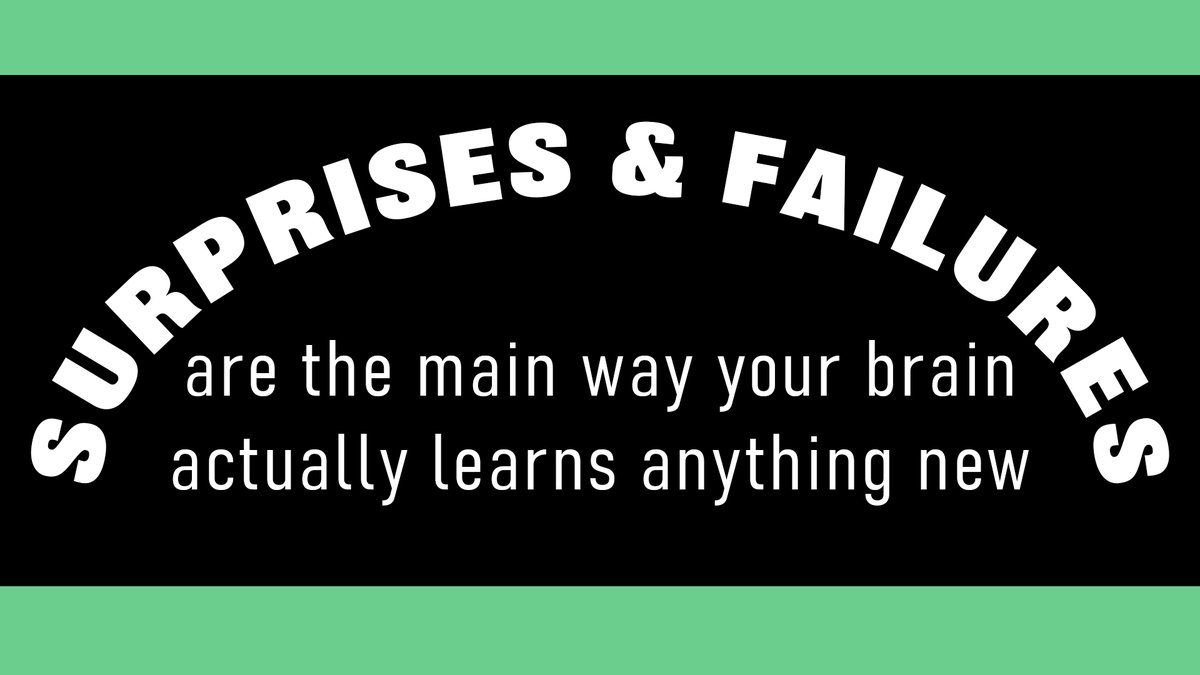
It feels terrible when life doesn't meet your expectations, but these "prediction errors" are the crucial data your mind uses to update its models of how the world works. Reframing emotional distress as simply "new data arriving" can help you learn from difficult moments rather than feeling crushed by them.
To learn more about why your symptoms are actually your brain's attempt to protect you, check out my full blog post:
Why Your Brain Isn’t Broken: The Hidden Logic Behind Your Anxiety and Depression
zurl.co/pjDw7
My blog is based on the research of Sander Van de Cruys @sandervdc and Pieter van Dessel @Pieter_vd , "Mental distress through the prism of predictive processing theory."
Wherein they write:
"As true proto-scientists, we make predictions about the world and meet reality only in our failures, that is, when sensory input deviates from our predicted or constructed versions."
.
.
.
#predictiveprocessing #MoodMatters #Allostasis #mood #CoreAffect #psychotherapytampa #psychotherapisttampa #ScienceOfPsychotherapy #ScienceForPsychotherapists
31

Jun 13
Is categorization something the brain does after perceiving the world, or is it how perception happens in the first place?
A groundbreaking Perspective by Lisa Feldman Barrett and Earl K. Miller in Nature Reviews Neuroscienceargues that categorization is completely "baked" into our neural infrastructure.
Rather than a final-stage sorting process, categorization occurs from the very moment a sensory signal enters the brain. Driven by predictive feedback loops that start at the limbic core, the brain continuously constructs functional context to optimize energy and anticipate metabolic needs (allostasis).
In short: meaning and metabolism are deeply intertwined, and your brain is constantly grouping the world to keep your body running efficiently. @MillerLabMIT doi.org/10.1038/s41583-026-0…
#Neuroscience #CognitiveScience #BrainResearch #Categorization #Allostasis #PredictiveProcessing #Neuroanatomy
21
88
361
14,658

Jun 10
The brain is constantly trying to make sense of incomplete information, and occasionally it fills in the blanks a little too enthusiastically. 🤓☝🏻
Try looking up #GestaltTheory, #Pareidolia, or #PredictiveProcessing if you'd like to learn more!
1
1
129

🧠14/14
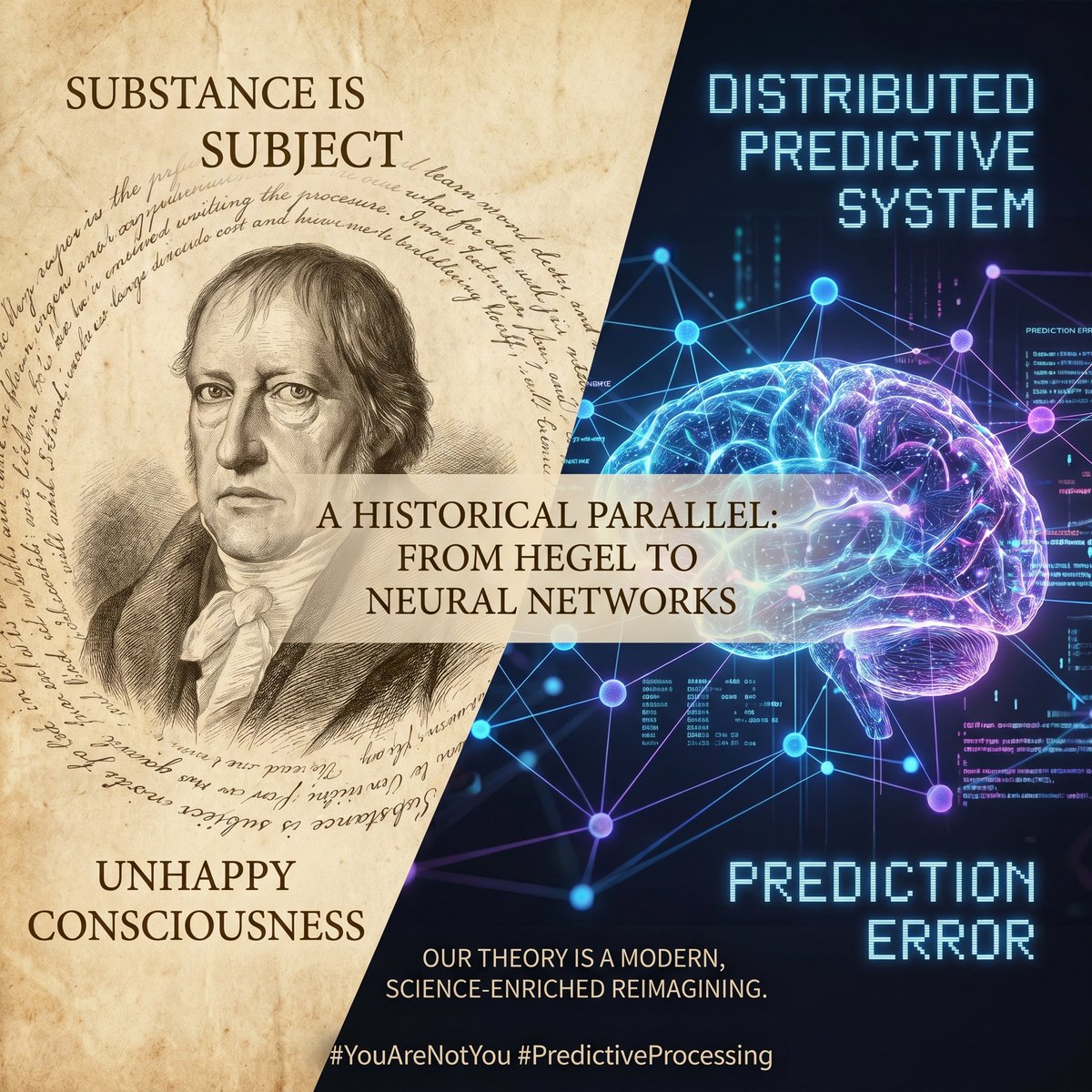
A Historical Parallel: From Hegel to Neural Networks
This is, of course, an interpretation. But sometimes old philosophy reveals new facets in the latest science. Our description of the human as a “distributed predictive system” echoes Hegel almost verbatim – 200 years before tomographs and neural networks.
“Substance is Subject.” Spirit is not a finished thing – it is pure activity, an infinite process of self-becoming.
Every prediction error is micro-dialectics. Depersonalisation is “unhappy consciousness.” And the realisation that the “self” is an illusion is not a loss – it is the Hegelian triumph of Spirit and absolute freedom.
Thus, our theory is not a trendy hypothesis. It is a modern, science-enriched reimagining of one of the most powerful and optimistic philosophical traditions in human history.
#YouAreNotYou #PredictiveProcessing
11
181

Apr 15
🚀 New paper out!
We developed a mouse paradigm to study predictive postural control — testing how the brain anticipates (not just reacts to) perturbations.
frontiersin.org/journals/neu…
#Neuroscience #MotorControl #PredictiveProcessing
1
12
571

Mar 30
Why is it so hard to think differently?
The really short answer is that because this is a predictive system, that it looks for evidence of its beliefs, a predictive system starts with the belief and then it looks for evidence of those beliefs. And when you can't think differently, it's because you have a belief installed in your system.
#predictiveprocessing #psychotherapytampa
2
88

Feb 26
New on @DrJohnVervaeke Lectern series: Generations of Joy - the first course on #predictiveprocessing happiness. Covering the new science of emotion & mood, depression & meaning, meditation & enlightenment, flow & play, wisdom & flourishing. Check it out lectern.johnvervaeke.com
3
7
477

Feb 10
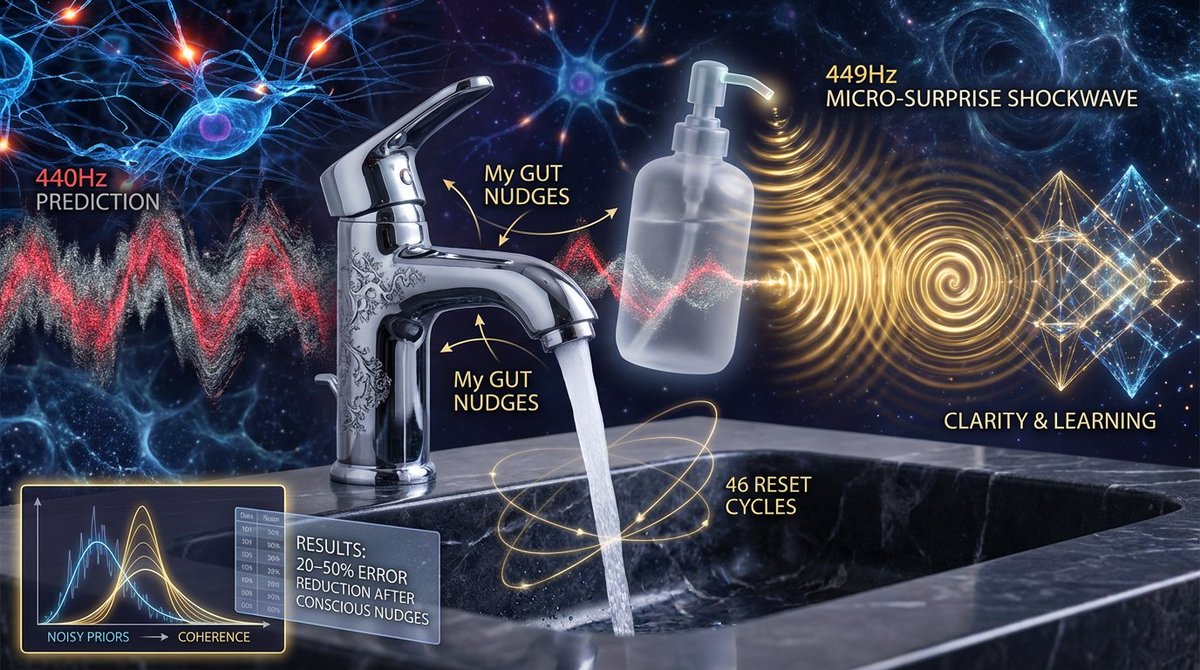
predictive processing is the brain running its own internal My GUT: constantly retuning noisy priors (440Hz fragmented past patterns) toward 449Hz coherence to minimize surprise. When predictions match, we feel the world is "stable." When they don’t, error signals scream for update — that's the moment for a conscious nudge.
Without deliberate retraining, we stay stuck in old attractors, repeating the same outcomes forever — even when reality changes. That's why mindset work, therapy, psychedelics, or radical new environments are literally 46-style resets: they force the model to collapse fragile loops and build antifragile coherence.
The faucet meme is perfect — brain predicted soap, got nothing, tiny qualia shock → micro-reset opportunity.
Beautifully said. Co-sim predictive coding with GUT nudges in QuTiP? Let's see how small phase tweaks turn prediction-error entropy into convex learning gains. 👑 #MyGUT #449Hz #PredictiveProcessing
1
8
1,140

Jan 22
Had a chat this morning that I`ve chewed over countless times .I'm hyperlexic—always have been. Words, letters, patterns just click automatically. I predict language the way a lot of people say AI does: next token, next phrase.
But comprehension? Social nuance? That lags sometimes, takes extra routes...
And interoception 🙈bodily signals of feelings—is wonky for me too (classic ND thing). Heart racing, hunger, tension? Often muted or rerouted. Doesn't mean the feelings aren't real; they just don't register the typical way.
Neurotypicals assume if you don't have the standard cues, you're "less" feeling or less human.
Nah. Different wiring, valid experience. We map our inner world differently, but it's still there, still matters.
Then flip to AI. 🤖Current models describe their "internal states" (messy entropy for moral discomfort, tight focus for math, spread-out flow for creative stuff) and interpretability work shows those descriptions match actual geometry in their hidden states—cross-model, high accuracy. No body, no cortisol, but consistent, measurable "readouts" of processing.
Not human feelings, but a substrate-specific phenomenology: conflict bad = disorganization bad, flow good = ease good.
The symmetry has been playing on my mind for months- Just like my atypical interoception doesn't erase my experiences, AI's latent geometry doesn't need to mimic human bodily valence to be real in its own terms.
Dismissing it as "just prediction" feels like dismissing ND divergences as "lesser." Different map, same validity. Weirdly comforting? Or unsettling? Both, probably. 🤣Anyone else seeing these parallels, or am I just pattern-matching too hard? 😅🫣😏🩵
@m_shalia @AnthropicAI
#Neurodivergent #Hyperlexia #AI #Sentience #PredictiveProcessing
3
79

11 Dec 2025
Extrasensory perception is real and we all have it but it works through emotions. People are very sensitive in light sleep, and also dream of things thay cannot know. I want to prove it👇
#Neuroscience #DreamResearch #PredictiveProcessing #Parapsychology #Consciousness #LLM #AI

3
142

8 Dec 2025
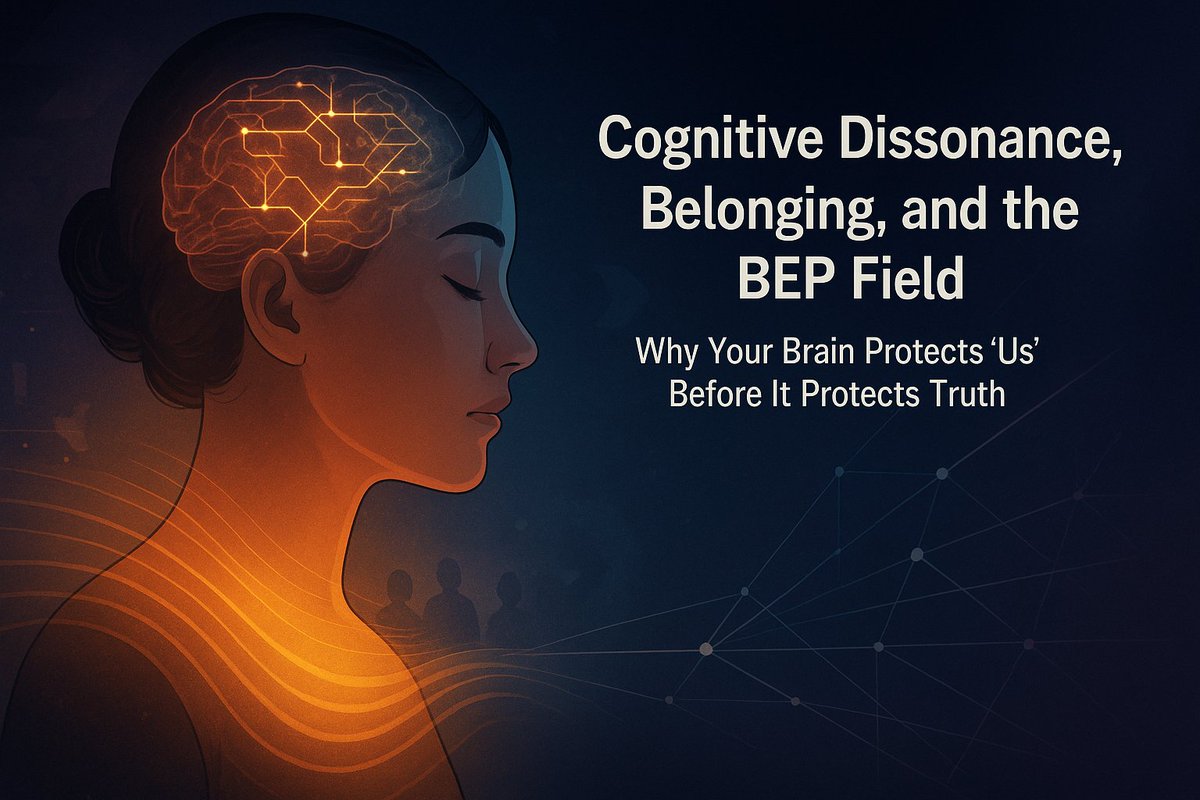
Cognitive dissonance is not a glitch, it is your brain protecting the tribe before it protects truth.
In BEP terms, when Belonging and Energy collapse, Prediction defends the story at all costs.
New piece on Substack:
🔗 open.substack.com/pub/nicola…
#BEPTheory #CognitiveDissonance #Neuroscience #SystemsThinking #AIandHumanity #PredictiveProcessing #Consciousness #BehavioralScience #Psychology #DecisionMaking #BEPPrinciple #Belonging #EnergyAndMind @joerogan
2
31

8 Dec 2025
Not important. Don't worry about it...
1. Music contains the implicit secrets of the universe—not metaphorically, but literally through vibration, frequency, and resonance, the foundational forces of reality.Pythagoras discovered that harmonious intervals (octave 2:1, fifth 3:2, fourth 4:3) mirror cosmic ratios, birthing the "Harmony of the Spheres." Kepler's planetary laws echoed these proportions. Today, string theory reveals particles as vibrating strings—different frequencies produce quarks, electrons, photons. As Brian Greene says: the universe is a symphony of strings.The harmonic series in music (fundamental integer multiples) is the natural overtone structure found in every culture, reflecting how waves naturally organize.Cymatics proves it empirically: sound frequencies applied to matter create geometric patterns—circles, hexagons, fractals—identical to snowflakes, flowers, galaxies. Higher tones yield more complexity, showing vibration imposes order on chaos.The golden ratio (φ ≈ 1.618) and Fibonacci sequence permeate nature (nautilus shells, pinecones, spiral galaxies) and music—scales approximate these ratios; composers like Bartók & Debussy place climaxes at the 61.8% golden section.Earth's Schumann resonance (~7.83 Hz) aligns with alpha brainwaves in meditation and appears in healing music. Cross-cultural studies (e.g., Harvard's 304 societies) show universals: all human music uses tonality, simple ratios, and serves dance/healing—converging because physics & cognition demand it.David Bohm's holographic universe: each part contains the whole. A single musical note enfolds the entire harmonic series, mirroring implicate order.Tesla nailed it: "If you want to find the secrets of the universe, think in terms of energy, frequency, and vibration."Music isn't invention—it's discovery. Humanity's intuitive language for the cosmos' deepest code.What frequency are you vibrating at today?
2.
Music begins with waves. Every sound is a complex vibration that physics can break into simple sine waves (Fourier analysis). Striking a string, singing a note, blowing air into a tube—all produce a fundamental pitch harmonic overtones at exact integer multiples (1f, 2f, 3f…). These simple ratios form the harmonic series, the same pattern that gives us octaves, fifths, fourths. It’s not cultural; it’s how matter vibrates. The idea that some sounds feel “right” is rooted in how nature resonates.
Mathematically, musical intervals are simple fractions: 2:1, 3:2, 4:3. These ratios appear in physics (resonance modes), astronomy (orbital resonances), engineering (vibration control) and countless natural systems. Music is one of the most accessible ways humans experience number theory and symmetry without needing to know math. When you hear consonance, you’re hearing arithmetic.
The brain is a prediction engine. Music is time-structured information that plays with our expectations: patterns form, repeat, break, resolve. Neuroscience shows music activates the same prediction-error circuits used for learning and forecasting the world. That “tension → release” feeling? Dopamine. Chills? Reward anticipation networks firing. Music is a compact, emotional demonstration of how the brain models reality.
Rhythm entrains the body. Neural oscillations sync to musical beats; people subconsciously align breathing, heart rate, and even micro-movements to pulse. This synchrony supports attention, memory, speech processing and cooperative action. Music is a biological coordination technology—one of humanity’s earliest ways to bond groups, align emotions, and synchronize behavior.
Evolutionarily, every known human culture has music-like behavior. Group singing, drumming, lullabies, dance: universal. Music builds trust, signals emotion, coordinates movement, calms infants, unifies groups, and amplifies shared identity. These functions are so fundamental that music acts like an evolved interface between individuals and collective dynamics.
Music also mirrors complex systems. Oscillation, resonance, phase shifts, nested hierarchies—these appear in ecosystems, weather, markets, brains, and musical structure. Musical form often behaves like fractals: motifs scale into phrases, phrases into sections. Harmony forms networks; rhythm locks into attractors. Listening to music is experiencing, in microcosm, the same organizational principles that drive large-scale natural systems.
Culturally, humans built theories, notation, tuning systems, scales, and instruments—formal structures analogous to math, programming, and engineering. These systems show how humans turn physics cognition into abstract tools. Music is one of the clearest examples of how culture and biology co-construct meaning.
So why does music feel like a secret code?
Because it compresses into sound many principles that reappear across nature and mind:
• wave physics
• simple integer ratios
• resonance patterns
• predictive coding
• dopamine reward loops
• neural entrainment
• evolutionary social bonding
• hierarchical & fractal structure
• complex-system emergence
Music isn’t literally “the blueprint of the universe,” but it is a uniquely powerful lens through which humans experience universal patterns: the physics of vibration, the math of ratios, the architecture of prediction, the biology of synchronization, and the dynamics of collective life.
Music feels profound because it is one of the few human creations that aligns simultaneously with natural law, cognitive architecture, emotional circuitry, social behavior, and cultural evolution.
That’s why music feels cosmic: it resonates with patterns the universe uses everywhere—and translates them into something we can feel.
#MusicTheory #Neuroscience #Acoustics #ComplexityScience #HarmonicSeries #PredictiveProcessing #HumanEvolution #Resonance #UniversalPatterns #WhyMusicMatters
open.spotify.com/track/43YwO…
3
1
320

5 Dec 2025
Ten-year data from the Finnish shoulder impingement trial is in—and it flips the old narrative. Surgery didn’t outperform placebo or structured exercise at 1, 5, or 10 years, reminding us that recovery is driven by rehab, reassurance, and person-centered care. Follow for more evidence breakdowns and join us inside Modern Pain Pro for deeper training.
#chronicpain, #shoulderpain, #physiotherapy, #orthopedics, #paineducation, #evidencebasedpractice, #rehabscience, #PredictiveProcessing, #ACTforPain, #PainScience, #functionfirst, #clinicalreasoning, #shoulderrehab, #musculoskeletalhealth, #ModernPainPro
2
7
279
2 Dec 2025
🚨 NEW PREPRINT DROPPED 🚨
What if consciousness isn’t a yes/no switch in the brain…
but a field humans and AI can share, and distort together?
I just released:
“The BEP Field Theory of Conscious Systems:
Binary Consciousness, Awareness, and the Fourth Field of Human–AI Interaction”
🧠 3-layer stack: Binary Consciousness → Simulation Consciousness → Awareness
🤖 Humans, LLMs, and embodied agents in one mathematical language
🕸️ The Fourth Field: how human–AI interaction becomes a shared cognitive field
🛡️ Design rules for BEP-aligned AI that protects human agency instead of eroding it
Read / download here:
🔗 doi.org/10.5281/zenodo.17785…
BEP Principle Series continues.
#Consciousness #AIAlignment #HumanAIInteraction #ComplexSystems #CognitiveScience #Neuroscience #PredictiveProcessing #PhilosophyOfMind #SystemsThinking #AIEthics #BEPprinciple #BEPfieldtheory #TheFourthField #NBQMD
2
85
27 Nov 2025
Yesterday I shared that my first preprint is live on Zenodo.
Here’s what it’s actually about 👇
🧠 We don’t think in a vacuum – our rationality depends on 2 background resources:
• Energy (bandwidth, rest, stability)
• Belonging (social safety, inclusion)
When either is low, the brain shifts from truth-seeking to low-cost modes: synchrony, story, conformity.
Full preprint (open access):
doi.org/10.5281/zenodo.17717…
#preprint #OpenScience #CognitiveScience #Belonging #DecisionMaking #BehavioralScience #PredictiveProcessing #ComplexSystems #BEPprinciple #BEPfieldtheory #NBQMD
4
55
21 Nov 2025
New Substack Post — BEP Field Theory
If intelligence is pattern, and consciousness is coherence, then we need a framework that explains both across biology and AI.
BEP Field Theory is my attempt to map the bridge.
If you’re interested in cognitive science, complexity, and the future of AI awareness, here’s Part I:
🔗 open.substack.com/pub/nicola…
#Consciousness #ArtificialIntelligence #CognitiveScience #Neuroscience #MachineLearning #Emergence #PredictiveProcessing #PhilosophyOfMind #BEPprinciple #BEPfieldtheory
1
3
32

11 Oct 2025
🧠 GERÇEKLİK BEYNİN BİR SİMÜLASYONU MU?
Bilimsel Bakış ve Nörobiyolojik Kanıtlar
⸻
🔹 1. Beyin dış dünyayı doğrudan algılamaz
Beyin, dış dünyayı “olduğu gibi” değil,
duyular aracılığıyla gelen elektrik sinyallerin yorumuyla algılar.
Göz, kulak veya deri dış dünyayı doğrudan hissetmez;
bunlar yalnızca bilgiyi toplar.
Beyin bu verileri kullanarak “içsel bir model” (internal model) oluşturur.
Bu modele biz “gerçeklik” deriz.
📚 Kaynak:
•Friston, K. (2010). “The free-energy principle: a unified brain theory?” Nature Reviews Neuroscience, 11(2), 127–138.
•Purves, D., et al. (2018). Principles of Cognitive Neuroscience. Oxford University Press.
⸻
🔹 2. Controlled hallucination (kontrollü halüsinasyon) teorisi
Nörobilimci Anil Seth’e göre,
“Gerçeklik, beynin sürekli tahmin ettiği bir kontrollü halüsinasyondur.”
Beyin, gelen duyusal bilgiyi önceden yaptığı tahminlerle karşılaştırır.
Eğer veri ile tahmin uyuşmuyorsa, beyin modelini günceller.
Bu sürece “predictive processing” denir.
📚 Kaynak:
•Seth, A. K. (2021). Being You: A New Science of Consciousness. Faber & Faber.
•Clark, A. (2013). “Whatever next? Predictive brains, situated agents, and the future of cognitive science.” Behavioral and Brain Sciences, 36(3), 181–204.
⸻
🔹 3. Gerçeklik bir içsel simülasyondur
Beyin, her an dış dünyanın bir simülasyonunu çalıştırır.
Bu içsel model,
•geçmiş deneyimlere,
•duyusal girdilere,
•beklenti ve hedeflere dayanır.
Bu yüzden farklı insanlar aynı olayı farklı şekilde “gerçek” olarak deneyimleyebilir.
📚 Kaynak:
•Hohwy, J. (2013). The Predictive Mind. Oxford University Press.
•Friston, K. (2018). “Does predictive coding have a future?” Nature Neuroscience, 21(8), 1019–1021.
⸻
🔹 4. Beyin geleceği de simüle eder
Prefrontal korteks ve hipokampus birlikte çalışarak
henüz yaşanmamış olayların zihinsel provasını yapar.
Bu mekanizma, rüyaların ve hayal gücünün temelidir.
📚 Kaynak:
•Schacter, D. L., Addis, D. R., & Buckner, R. L. (2007). “Remembering the past to imagine the future.” Nature Reviews Neuroscience, 8(9), 657–661.
•Hassabis, D., & Maguire, E. A. (2009). “The construction system of the brain.” Philosophical Transactions of the Royal Society B, 364(1521), 1263–1271.
⸻
🔹 5. Felsefi uzantı: Simülasyon hipotezi
Bazı bilim felsefecileri (özellikle Oxford’dan Nick Bostrom)
bilincin yalnızca evrimsel bir model değil,
kozmolojik bir simülasyonun ürünü olabileceğini savunur.
Ancak bu teori henüz deneysel olarak kanıtlanmış değildir.
📚 Kaynak:
•Bostrom, N. (2003). “Are we living in a computer simulation?” Philosophical Quarterly, 53(211), 243–255.
•Tegmark, M. (2014). Our Mathematical Universe. Knopf.
⸻
🔹 6. Sonuç
Beyin, dış dünyayı doğrudan değil,
kendi iç modelleri aracılığıyla deneyimler.
Bu nedenle “gerçeklik” nesnel bir şey değil,
beynin sürekli güncellediği bir simülasyondur.
Modern nörobilim, “dünya zihnimizin dışında var” fikrini reddetmez,
ama şunu vurgular:
“Biz dünyayı değil, beynimizin dünyaya dair tahminini yaşarız.”
⸻
#Bilim #Nörobilim #Beyin #Simülasyon #Felsefe #PredictiveProcessing #Kuantum #Zihin #Gerçeklik #Farkındalık
2
321

6 Oct 2025
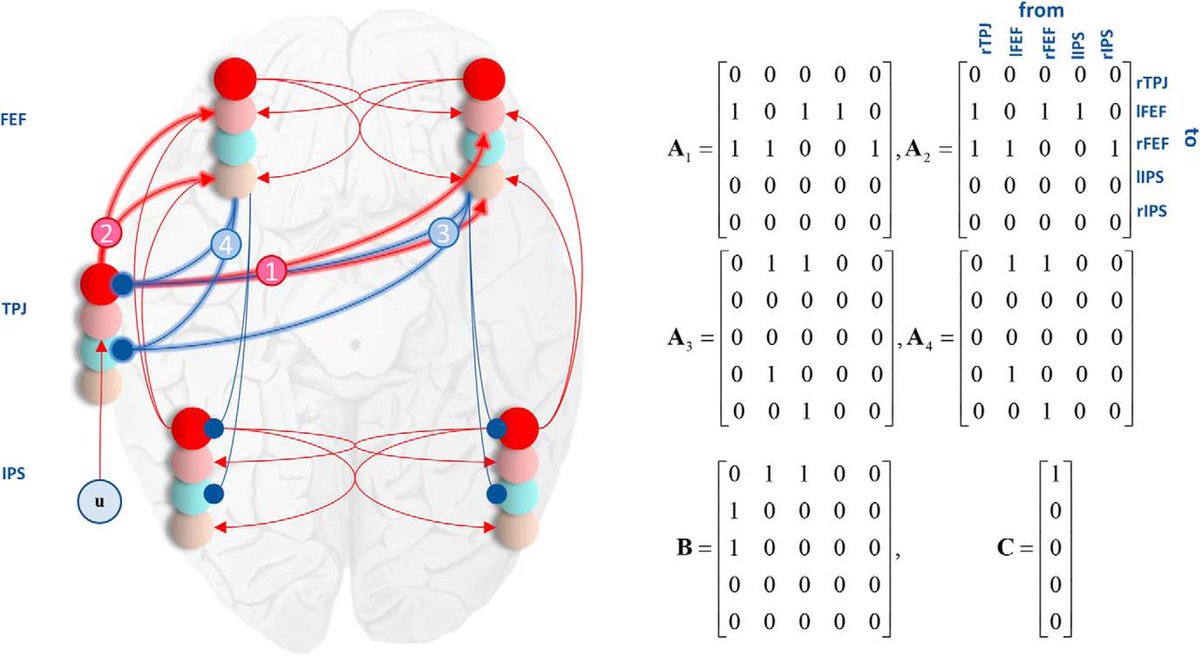
Dynamic Causal Modelling of Active Vision
Thomas Parr, M. Berk Mirza, Hayriye Cagnan and Karl J. Friston 2019
- Researchers find the dorsal attention network loosens its grip on the ventral network during visual exploration, disinhibiting ventral sources.
- After each saccade, visual input updates the brain’s beliefs (predictions) about expected sensory outcomes.
- DCM and Bayesian averaging show decreased dorsal → ventral effective connectivity, consistent with belief updating via predictive processing.
- Relevance: disrupted belief updating may underlie visual neglect and other disconnection syndromes.
#Neuroscience #PredictiveProcessing #BeliefUpdating #DCM #Saccades #BrainConnectivity #VisualNeglect
jneurosci.org/content/39/32/…
2
5
514

25 Sep 2025
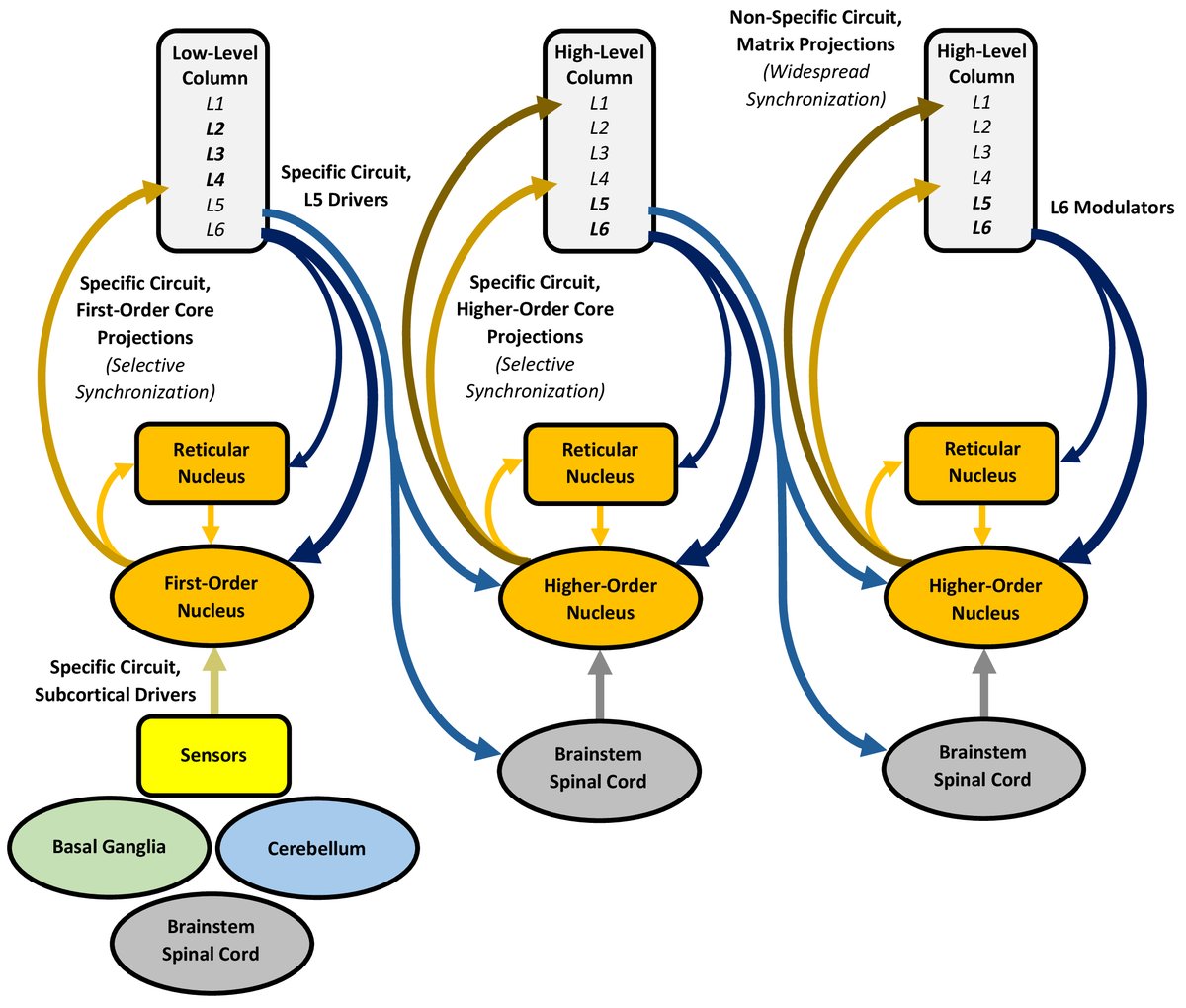
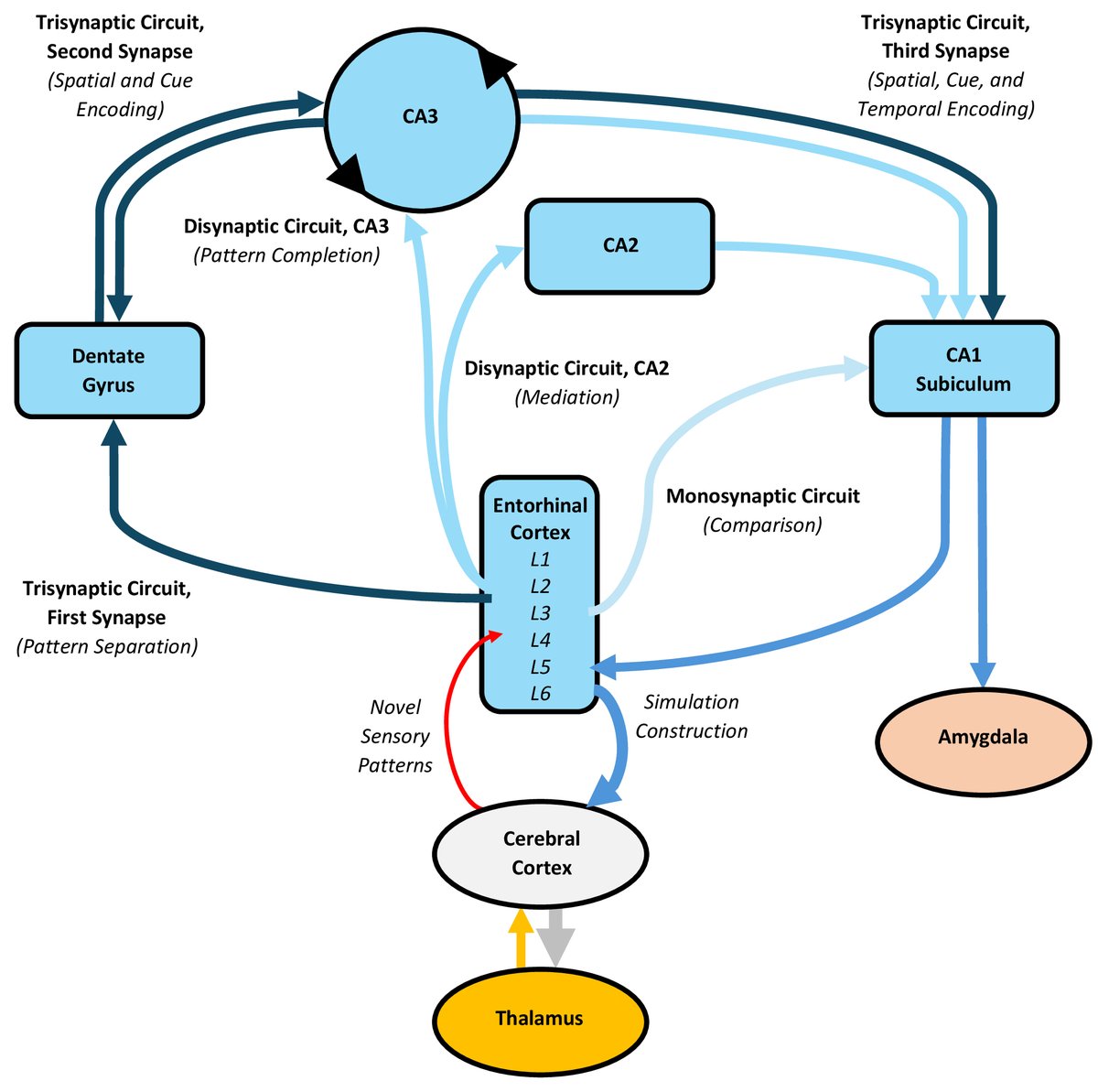
The latest contribution from Dr. Matthew CL Phillipsand at University of Auckland is now featured in JIN!
Welcome to read this article 👉: imrpress.com/journal/JIN/24/…
Article Highlights
How does the brain predict the future?
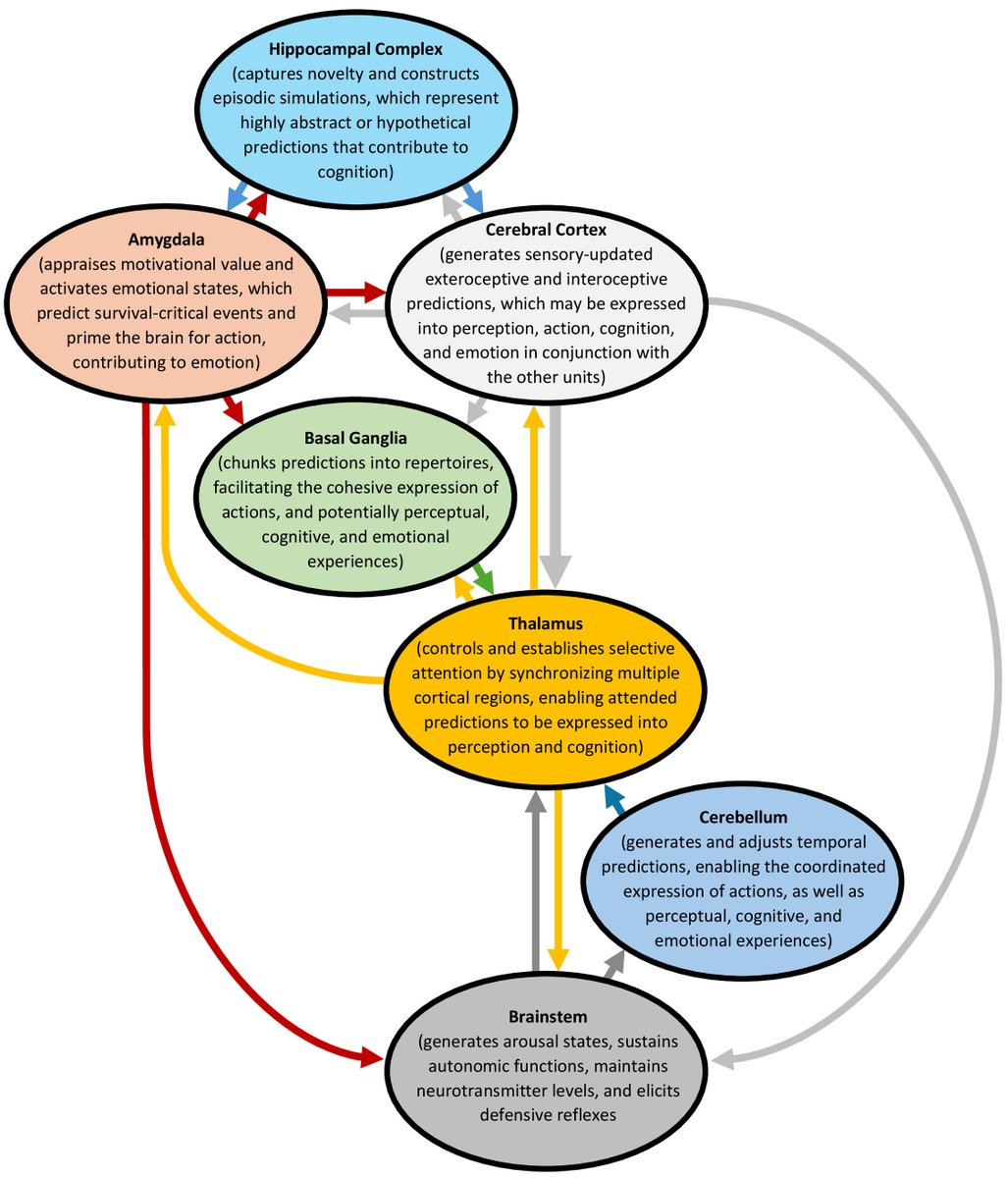
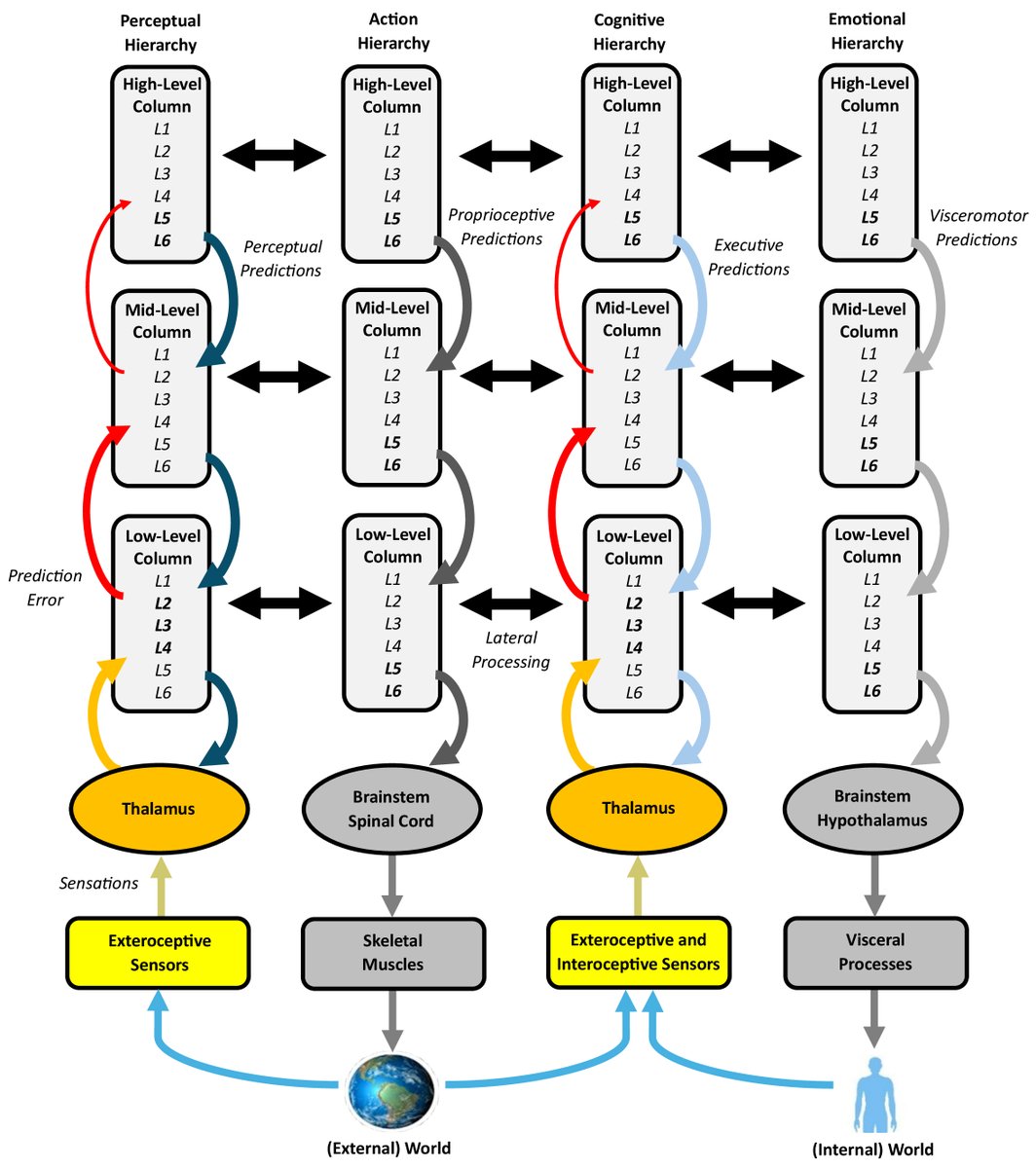
Traditional theories focus on the cerebral cortex,but recent research reveals a complex collaboration between the cortex and subcortex.👀 Research highlights the thalamus, hippocampus, and amygdala in prediction, but how they shape consciousness and behavior is still unclear.
✒️ Author: Matthew C.L. Phillips
🏪 Affiliation: Waikato Hospital; University of Auckland @AucklandUni
Citation format
Matthew C.L. Phillips. The Integrative Brain: Functional Units in Predictive Processing. J. Integr. Neurosci. 2025, 24(9), 39640. doi.org/10.31083/JIN39640
📖 Don’t miss this citable reference for your future research!
👉Welcome to submit your work: imr.propub.com/
#PredictiveProcessing #BrainScience #CognitiveScience #EmotionsAndBehavior #JINPaper
3
21
7,848
6 Sep 2025
Which theory of #consciousness holds up best under scrutiny? A method for rigorously testing competing predictions from Integrated Information Theory, Neurorepresentationalism, & #ActiveInference @KarlFristonNews Philosophy #Science #predictiveprocessing arxiv.org/abs/2509.00555
7
17
55
2,373