
[Just nailed my first SQL query! Spent 2 hours mastering basic joins—data analysis feels less scary now. Grateful for every small win in learning! #StudyGram #SQLForBeginners],

3

The UPDATE & DELETE Statements tutorial is officially out now 🔥
🎥 Watch here: youtu.be/rPHhklUiuBA
👍 Like
💬 Comment
🔁 Share
🔔 Subscribe for more SQL tutorials
#SQL #LearnSQL #SQLTutorial #DataAnalytics #DataScience #Database #Programming #Coding #Tech #SQLForBeginners
12

Apr 14
“I finally understand SQL.”
That’s what our last cohort said.
Not because SQL suddenly became easy…
But because it was taught in a way that made sense.
Most people struggle with SQL not because it’s hard, but because they’re taught to memorize queries instead of understanding how data works.
In Cohort 8, we do things differently:
•We break SQL down to its simplest form so you actually get it
•We teach you how to think like an analyst, not just write code
•We combine research SQL, so you know what to look for before you query
•We give you hands-on tasks using real-world scenarios, not random examples
So instead of saying
“I’ve learned SQL before…”
You’ll confidently say:
“I can analyze data and explain my results.”
Because at the end of the day,
it’s not about writing queries…
it’s about solving problems with data.
Cohort 8 is open. Don’t stay stuck in confusion.
👉 Secure your spot now: analyticsages.io/beginner-bl…
#LearnSQL #DataAnalytics #TechSkills #SQLForBeginners #AnalyticsNigeria #DataThinking

3
48

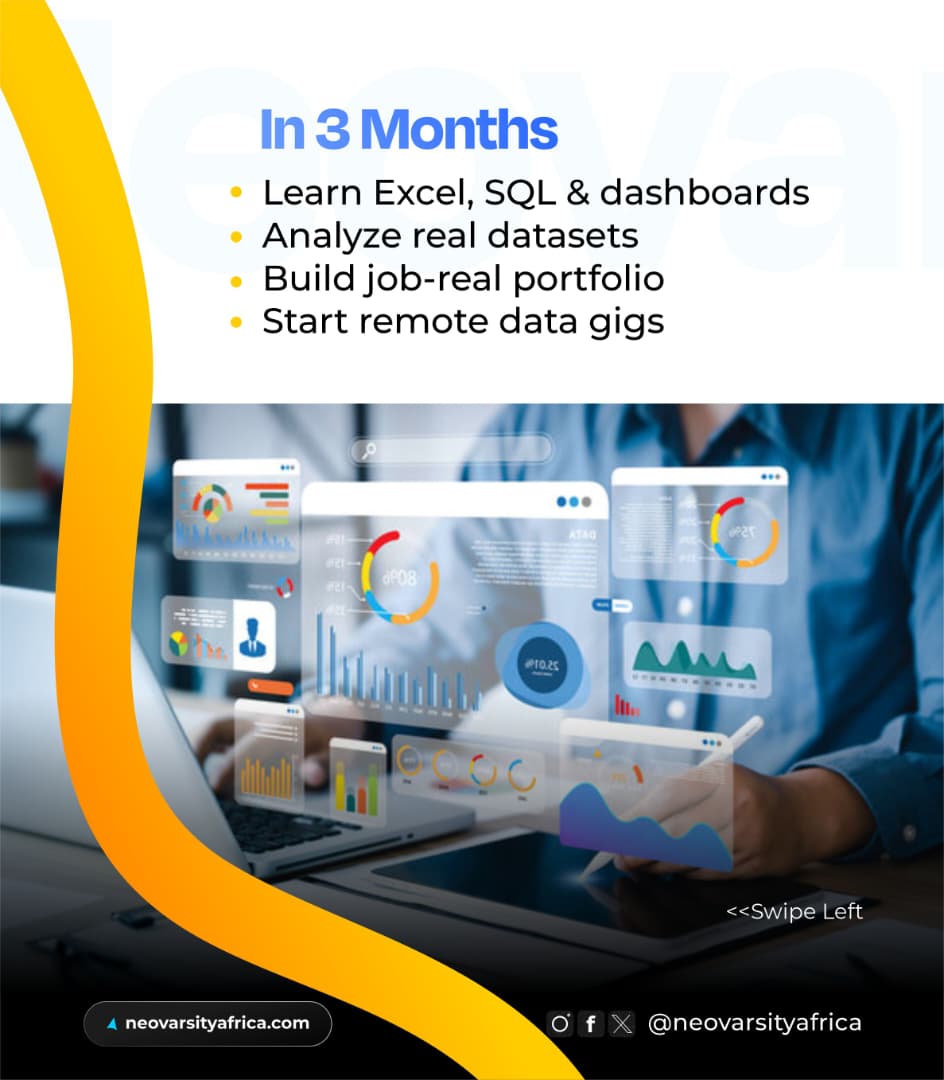
In that same time, you could learn Excel, SQL & dashboards, work on real datasets, build a portfolio, and start landing remote gigs
The question isn't whether it's possible — it's whether you're ready to try.
#LearnExcel #SQLForBeginners #DataDashboard #DataAnalysis #DataAnalyst

2
20
Apr 6
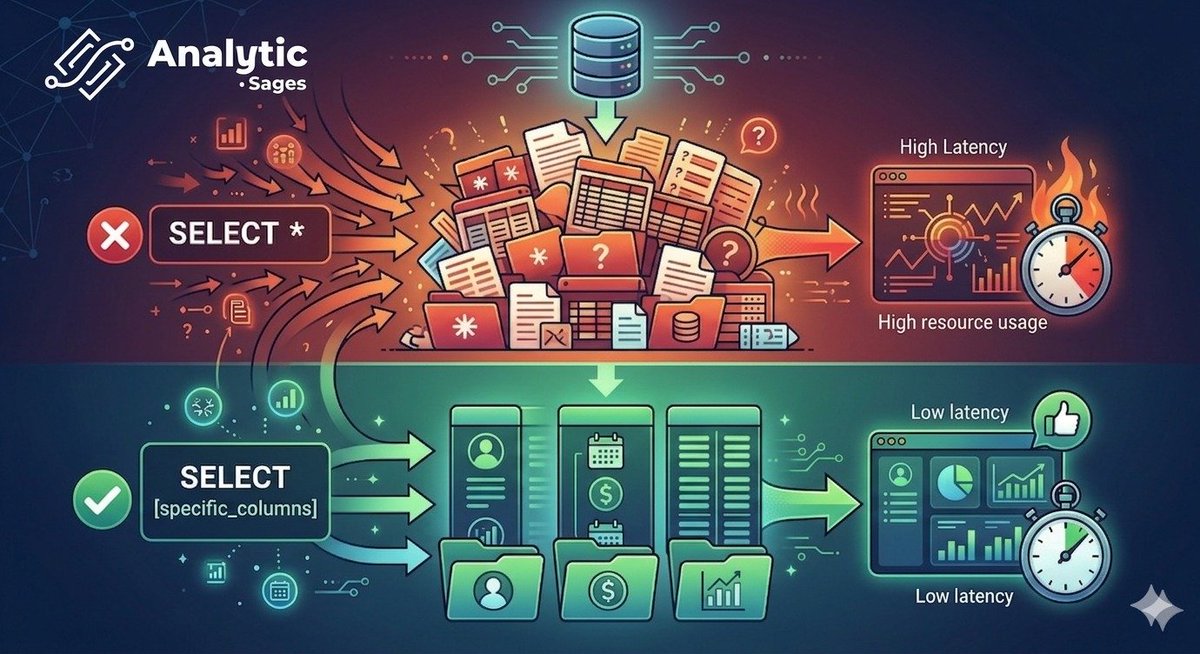
Stop using `SELECT *`. It’s costing you more than you think.
It feels faster. It’s not.
When you use `SELECT *`:
* You pull unnecessary data
* You slow down your query
* You make results harder to read and debug
Good analysts don’t guess; they’re intentional.
Select only the columns you need. Small habit. Big difference.
Precision isn’t optional, it’s the baseline for real SQL skills.
Want to move from writing queries to thinking like an analyst?
Register for Cohort 8: forms.gle/BCpYf13Fwxy3vmqT8
#SQLTips #DataAnalytics #LearnSQL #DataSkills #TechSkills #AnalyticsSages #SQLForBeginners #DataCommunity
1
5
77

Apr 4
🏛️ Oracle-Specific Things to Know:
↳ Every table belongs to a schema (a user)
↳ Table names should be meaningful - not T1, T2
↳ Column names cannot have spaces - use underscore: student_name ✅
↳ Oracle is case-insensitive for table/column names by default
⚠️ Common Beginner Mistake:
Mixing up rows and columns!
Remember this:
↳ Columns = go up-down (vertical) = types of data
↳ Rows = go left-right (horizontal) = one record
🧠 Quick Summary:
✅ Table = where all data is stored in a database
✅ Column = one attribute / field (type of data)
✅ Row = one record / entry
✅ Cell = one value at row column intersection
✅ In Oracle → use CREATE TABLE to make one
✅ Tables always belong to a schema
#OracleSQL #SQL #Database #WhatIsATable #LearnSQL #SQLForBeginners #Day2 #100DaysOfCode #TechTwitter
1
4
125
Apr 3
🏛️ Oracle-Specific Term:
In Oracle, we don't just say "database" - we say SCHEMA.
A schema = a user who owns a collection of tables and database objects.
So, when you create a user in Oracle → you're creating a schema. 🔑
🧠 Quick Summary:
✅ Database = organized storage of data
✅ Table = where data lives (rows columns)
✅ DBMS = software to manage the database
✅ Oracle DB = Relational DBMS (RDBMS)
✅ Schema = Oracle's term for a user's collection of objects
#OracleSQL #SQL #Database #LearnSQL #SQLForBeginners #Day1 #100DaysOfCode #TechTwitter #DatabaseBasics
9
206

I Was TERRIFIED of SQL… But on Day 2 It Clicked Here’s the Exact Queries Mindset Hack That Changed Everything (This video was my second time ever writing a query)
#SQL #SQLForBeginners #DataAnalytics #Web3 #Web3Data #OnchainAnalytics #DuneAnalytics #CryptoData #DataAnalyst
2
2
6

Jan 21
💡 Tech Tip for Aspiring Data Experts!
Want to start your journey in data and databases?In this video, you see step by step how to create a database and a table in SQL, the building blocks of every data-driven project
#SQLForBeginners #LearnData #TechTips #DataSkills #OladseTech
2
2
4
25

SQL doesn’t have to be confusing.
I teach clear, practical SQL for beginners & career switchers.
💻 1,000 learners taught globally
📚 5 classes | ₦25,000
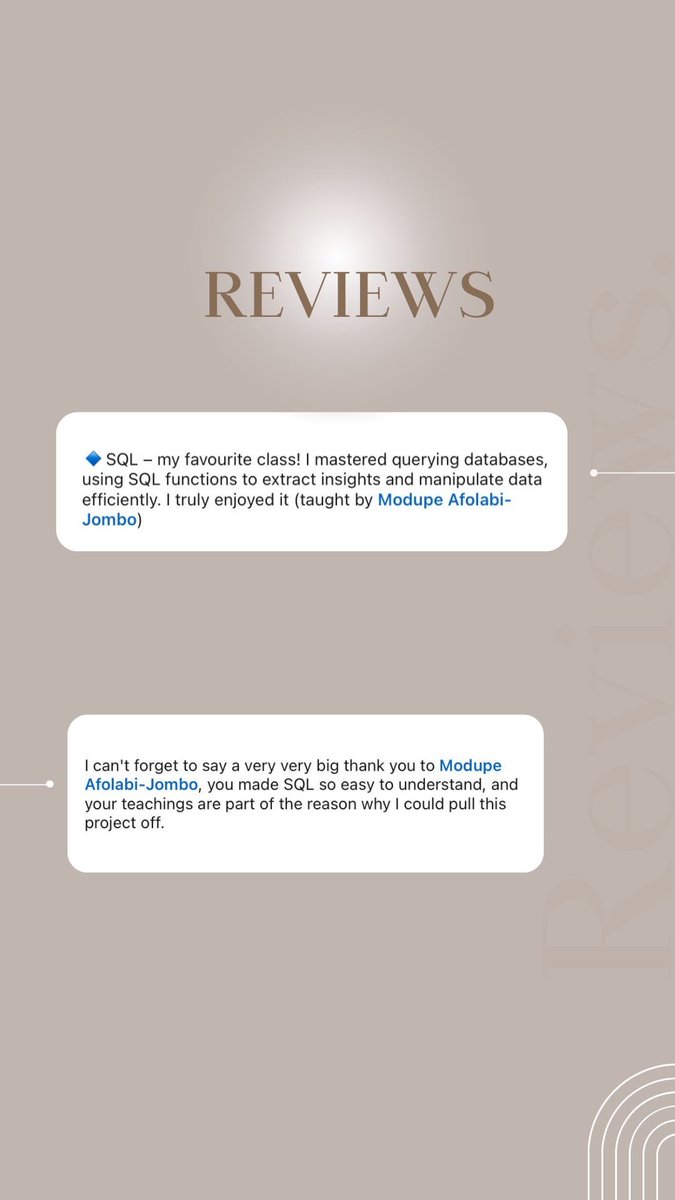
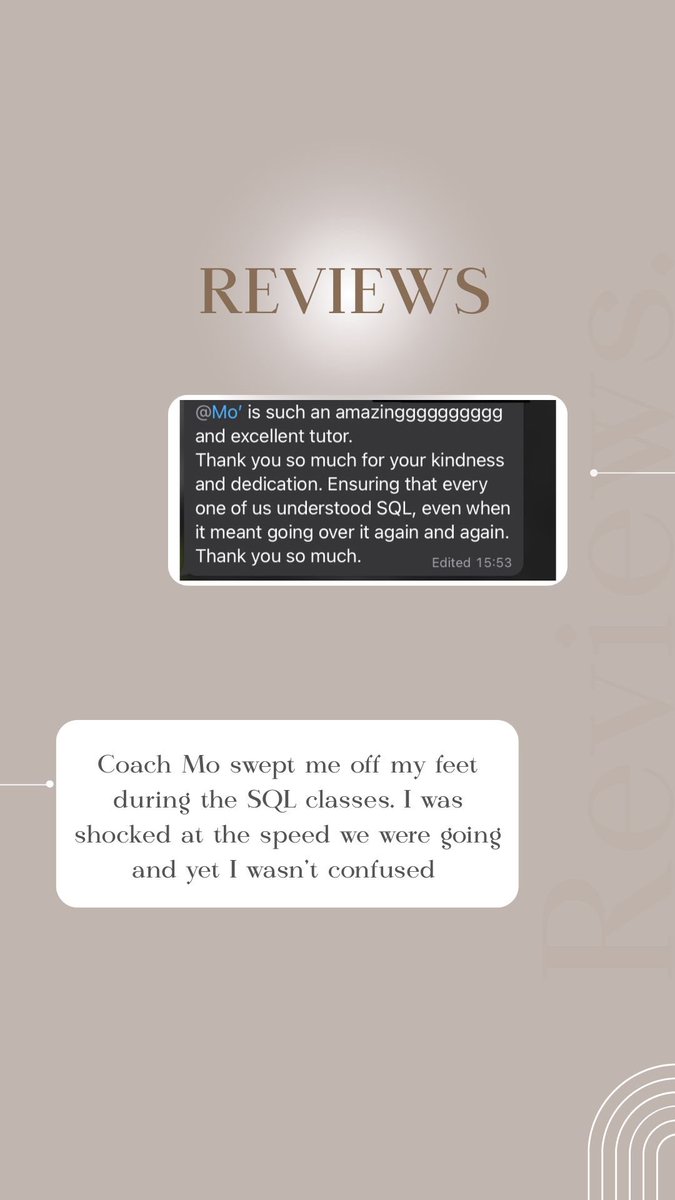
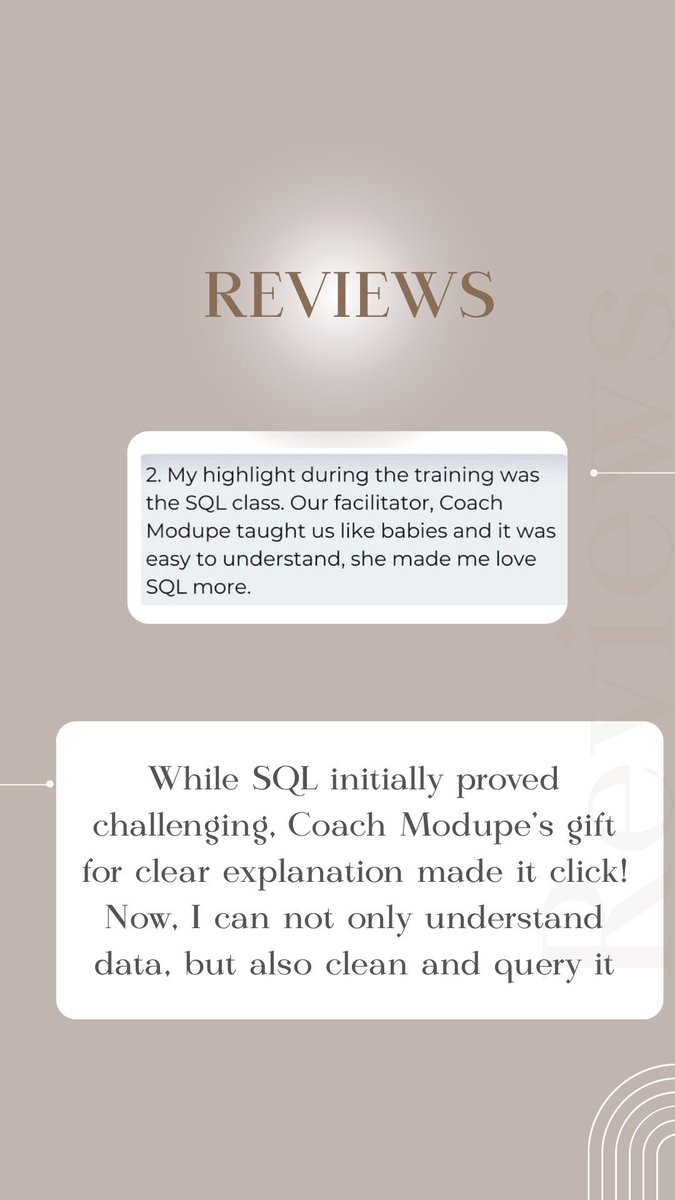
⭐Check out reviews below
DM me for details.
#SQL #DataSkills #SQLForBeginners #learnsql

1
2
4
130

16 May 2025
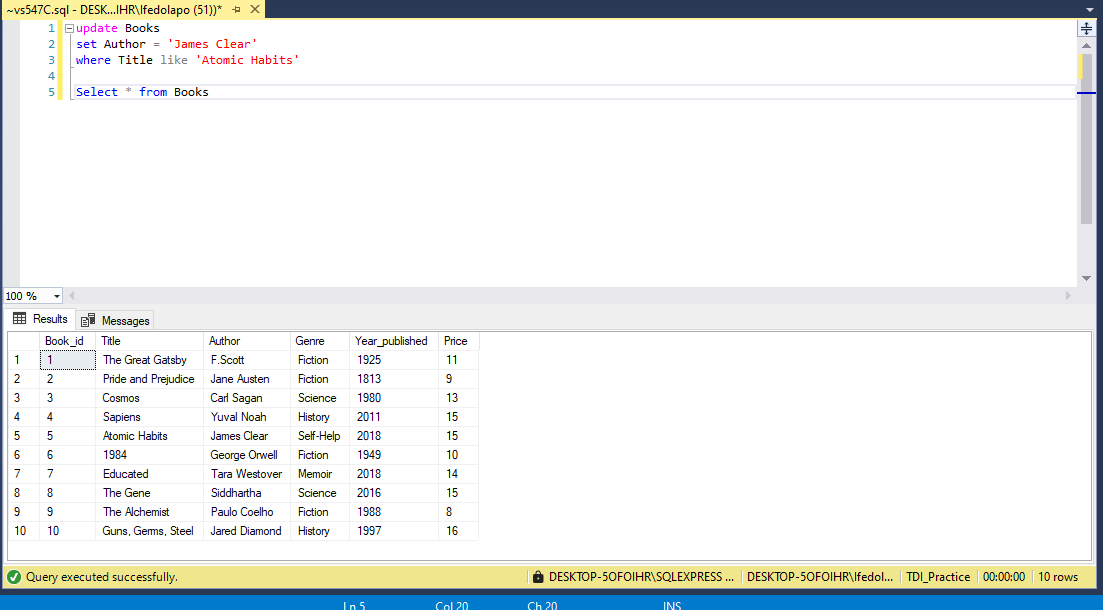
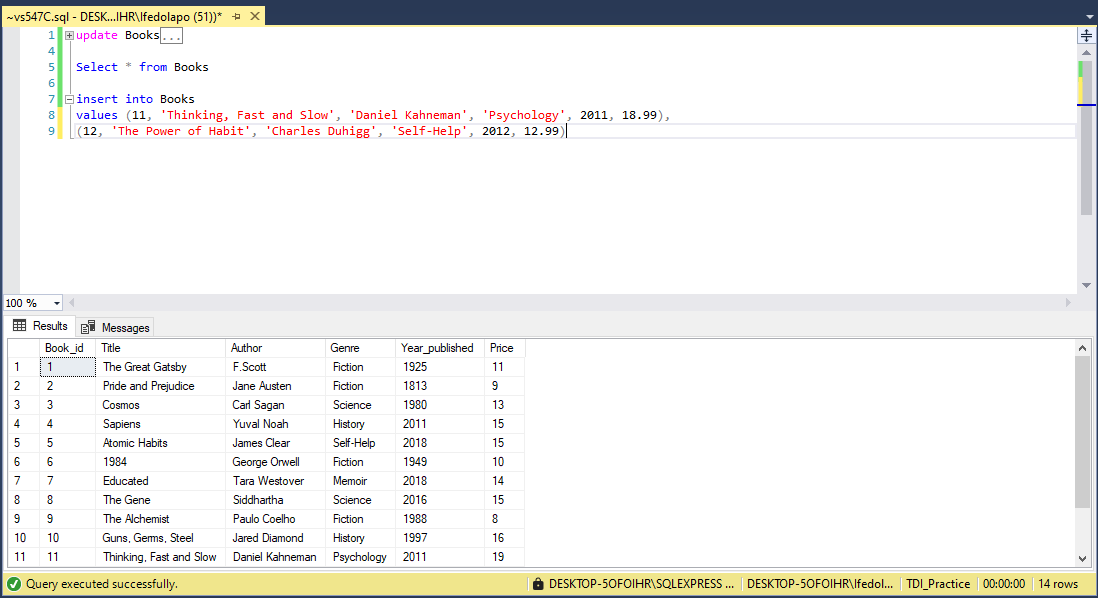
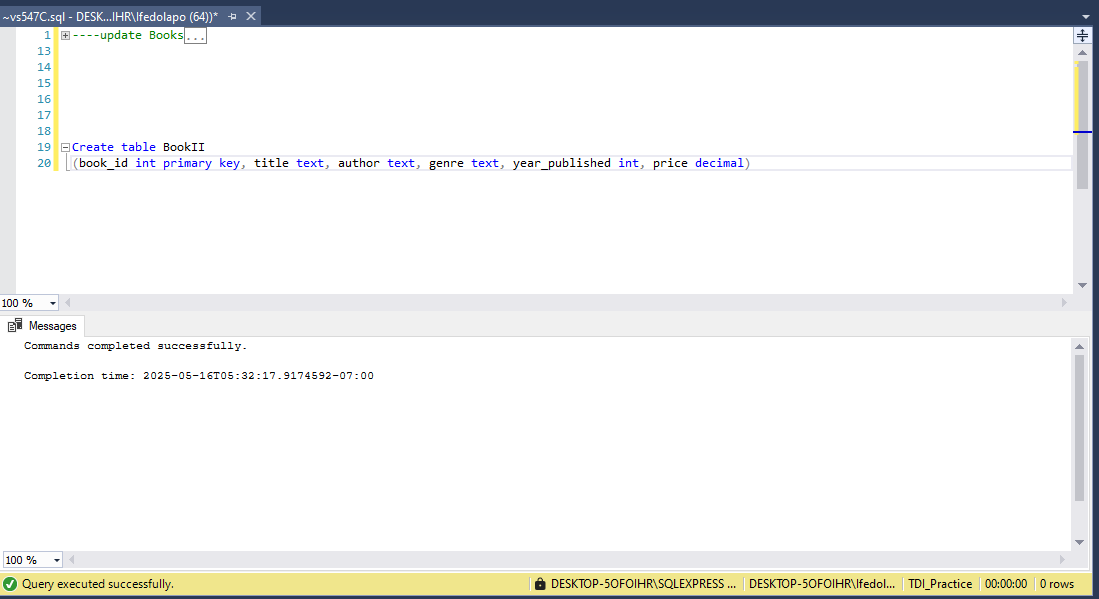
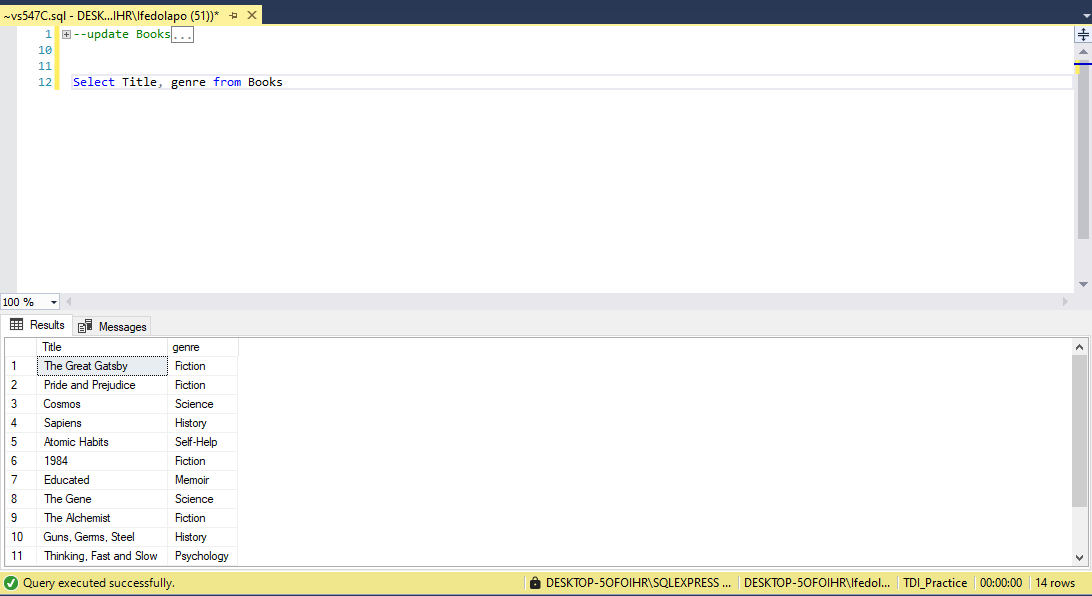
Just completed Week 1 of the #TDI SQL assignment!
Here's how it went:
Learned the Basics: Got familiar with SQL commands like SELECT, WHERE, ORDER BY, and how relational databases work.
#TDI #SQLforBeginners #DataAnalytics @TDataImmersed @DabereNnamani @JudeRaji_ @MSPowerBI
2
3
137

13 Apr 2025
34
6
57
2,035

12 Mar 2025
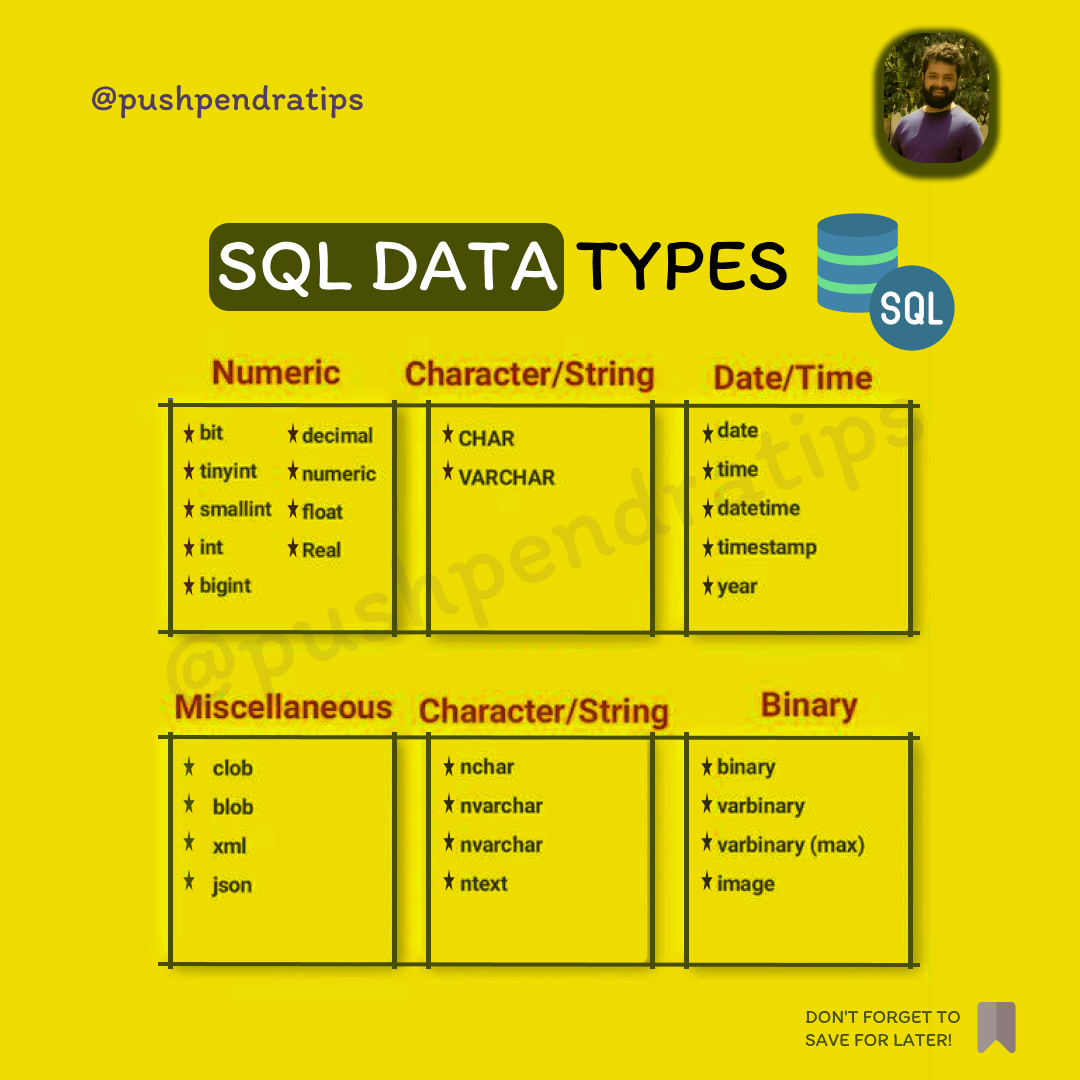
🚀 SQL DATA TYPES
SQL data types define the type of data that can be stored in a column. They vary slightly between different database systems like MySQL, PostgreSQL, SQL Server, and Oracle, but here are the common categories:
A thread 🧵👇🏻👇🏻
#SQL #SQLTutorial #LearnSQL #SQLQuery #SQLForBeginners #Database #SQLDatabase #SQLQueries #SQLServer #MySQL #PostgreSQL #DataScience #DataAnalytics #SQLTips #SQLInterview #pushpendratips
31
8
40
1,229

11 Mar 2025
MYSQL and NODE-JS || HTML Tutorial ||
HTML Beginner || MELS Coding |
youtube.com/watch?v=1jjM77UM…
#JavaScript #MELS #HTML #Database #SqlTutorial #SqlBasics #SqlForBeginners #MySQL #Server #MELSSTEM #MELSCoding #MachineLearning #AI #EssentialSkills #STEAM #DeepLearning #nodejs
2
51
7 Mar 2025
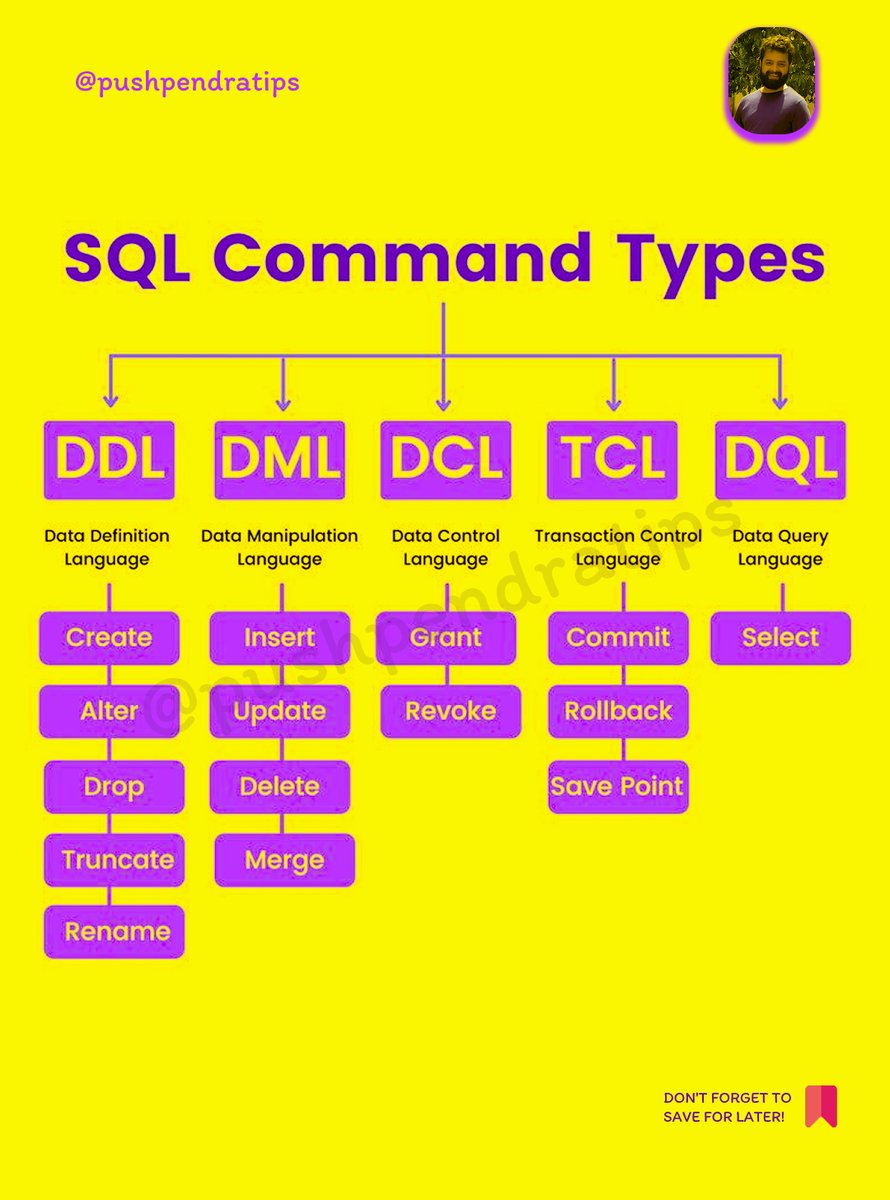
🔥 SQL Command Types Explained (With Examples)
SQL commands are divided into 5 Main Categories based on their functionality.
A thread 🧵👇🏻
#SQL #LearnSQL #SQLTips #SQLTutorial #DatabaseManagement #SQLQueries #SQLDeveloper #SQLForBeginners
36
12
69
3,005
23 Feb 2025
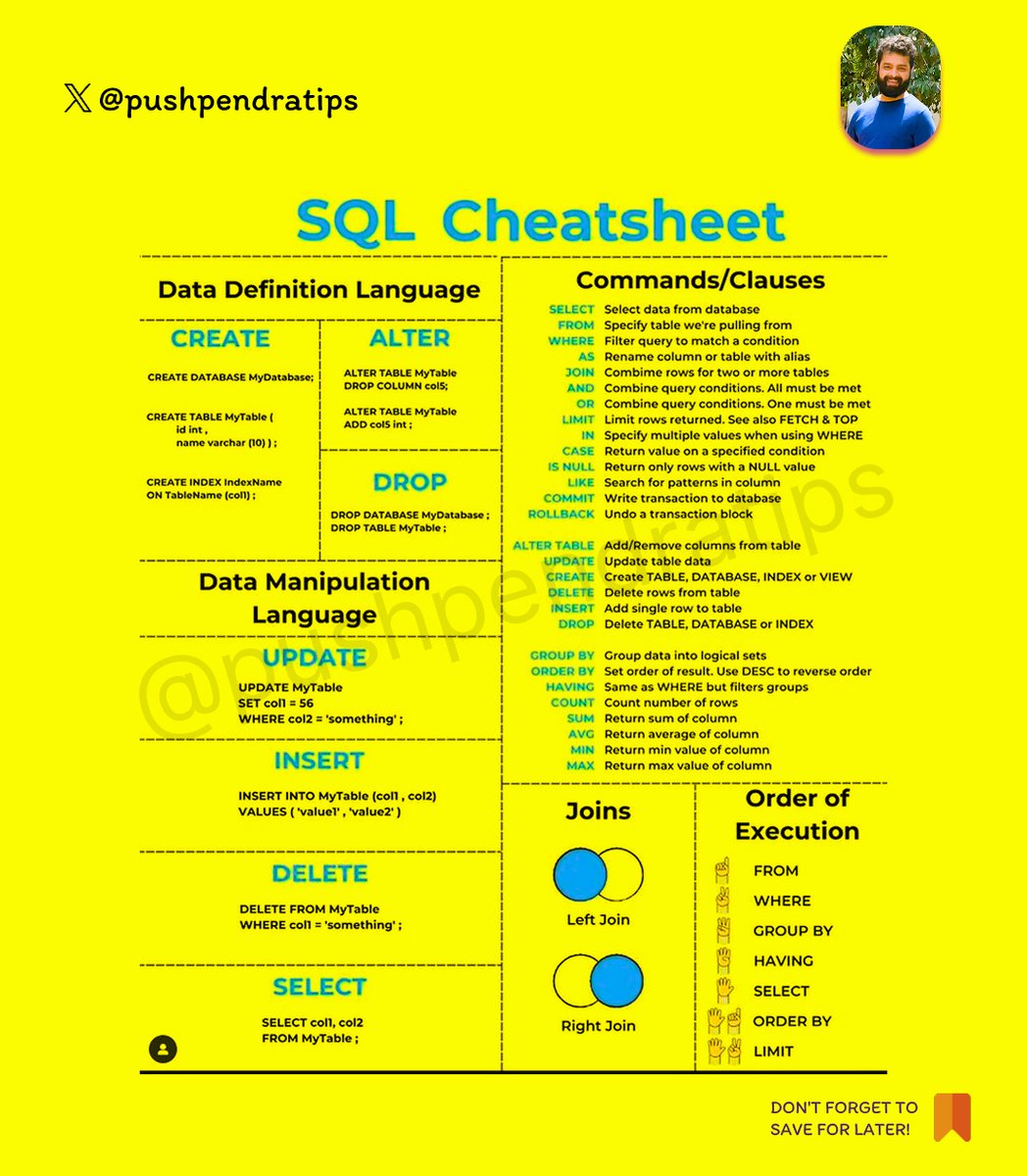
📜 SQL Cheat Sheet
🔍 Fetching Data (SELECT)
SELECT * FROM table_name;
SELECT column1, column2 FROM table_name;
SELECT DISTINCT column FROM table_name;
_____________________________________________________
🎯 Filtering Data (WHERE)
SELECT * FROM users WHERE age > 25;
SELECT * FROM orders WHERE status = 'delivered';
_____________________________________________________
🧩 Multiple Conditions (AND, OR, NOT)
SELECT * FROM users WHERE age > 25 AND city = 'Delhi';
SELECT * FROM products WHERE price < 500 OR stock > 50;
SELECT * FROM employees WHERE NOT department = 'HR';
_____________________________________________________
🔢 Sorting Results (ORDER BY)
SELECT * FROM employees ORDER BY salary DESC;
SELECT * FROM products ORDER BY price ASC, name DESC;
_____________________________________________________
🎛 Limiting & Skipping (LIMIT, OFFSET)
SELECT * FROM products LIMIT 5;
SELECT * FROM orders LIMIT 10 OFFSET 5;
_________________________________________________________
🏗 Grouping Data (GROUP BY, HAVING)
SELECT department, COUNT(*) FROM employees GROUP BY department;
SELECT category, AVG(price) FROM products GROUP BY category HAVING AVG(price) > 100;
_________________________________________________________
🏆 Aggregations (COUNT, SUM, AVG, MIN, MAX)
SELECT COUNT(*) FROM users;
SELECT SUM(price) FROM orders;
SELECT AVG(salary) FROM employees;
SELECT MIN(age), MAX(age) FROM users;
_____________________________________________________
🔄 Joining Tables (JOIN)
👫 Inner Join
SELECT users.name, orders.amount
FROM users
INNER JOIN orders ON users.id = orders.user_id;
_____________________________________________________
📌 Left Join
SELECT users.name, orders.amount
FROM users
LEFT JOIN orders ON users.id = orders.user_id;
_________________________________________________________
📌 Right Join
SELECT users.name, orders.amount
FROM users
RIGHT JOIN orders ON users.id = orders.user_id;
_____________________________________________________
🔗 Full Join
SELECT users.name, orders.amount
FROM users
FULL JOIN orders ON users.id = orders.user_id;
_____________________________________________________
🏗 Creating & Modifying Tables
🆕 Creating a Table
CREATE TABLE users (
id INT PRIMARY KEY,
name VARCHAR(100),
age INT,
city VARCHAR(50)
);
_____________________________________________________
🔧 Altering a Table
ALTER TABLE users ADD COLUMN email VARCHAR(100);
ALTER TABLE users DROP COLUMN city;
_____________________________________________________
📝 Modifying Data
➕ Inserting Data
INSERT INTO users (id, name, age) VALUES (1, 'Amit', 30);
_____________________________________________________
🛠 Updating Data
UPDATE users SET age = 31 WHERE id = 1;
_____________________________________________________
❌ Deleting Data
DELETE FROM users WHERE id = 1;
DELETE FROM users; -- Delete all rows
_____________________________________________________
🏛 Indexes & Keys
🔑 Primary Key
CREATE TABLE users (
id INT PRIMARY KEY,
name VARCHAR(100)
);
_____________________________________________________
🔑 Foreign Key
CREATE TABLE orders (
id INT PRIMARY KEY,
user_id INT,
FOREIGN KEY (user_id) REFERENCES users(id)
);
_____________________________________________________
🚀 Creating Index
CREATE INDEX idx_name ON users(name);
_____________________________________________________
📜 Subqueries & Unions
🔄 Subquery
SELECT name FROM users WHERE id IN (SELECT user_id FROM orders);
_____________________________________________________
🔗 Union (Combine Results)
SELECT name FROM customers UNION SELECT name FROM suppliers;
SELECT name FROM customers UNION ALL SELECT name FROM suppliers; -- Includes duplicates
_____________________________________________________
🔥 Transactions
BEGIN TRANSACTION;
UPDATE accounts SET balance = balance - 500 WHERE id = 1;
UPDATE accounts SET balance = balance 500 WHERE id = 2;
COMMIT; -- Save changes
ROLLBACK; -- Undo changes
#SQL #SQLTutorial #LearnSQL #SQLQueries #SQLCheatSheet #Database #DataScience #Programming #Tech #Code
#SQLForBeginners #SQLBasics #SQLTraining #LearnToCode #CodingForBeginners #AdvancedSQL #SQLPerformance #SQLOptimization #SQLBestPractices
#SQLDatabase #MySQL #PostgreSQL #SQLServer #OracleSQL #NoSQL #DataAnalytics #SQLForDataScience #BusinessIntelligence #BigData #DataVisualization
28
19
66
8,752

18 Dec 2024
Use OR conditions to include multiple cases when filtering data (e.g., for customers who were not referred by customer id = 2 or have no referee at all). 📊#Leetcode #SQLQueries #Database ()#DataAnalysis ()#SQLTips #TechTips()#SQLForBeginners()#TechEducation ()#ProblemSolving
1
16
4 Nov 2024
Set Tables in MySQL and Manage Directories in Linux (Set 1/3) || Data base || HTML || Linux ||
youtube.com/watch?v=iKe1rh-9…
#Jquery #JavaScript #MELS #STEM #HTML #Query #Database #SqlTutorial #SqlBasics #SqlForBeginners #MySQL #Server #MELSSTEM #MELSCoding #MachineLearning #AI
1
45

31 Oct 2024
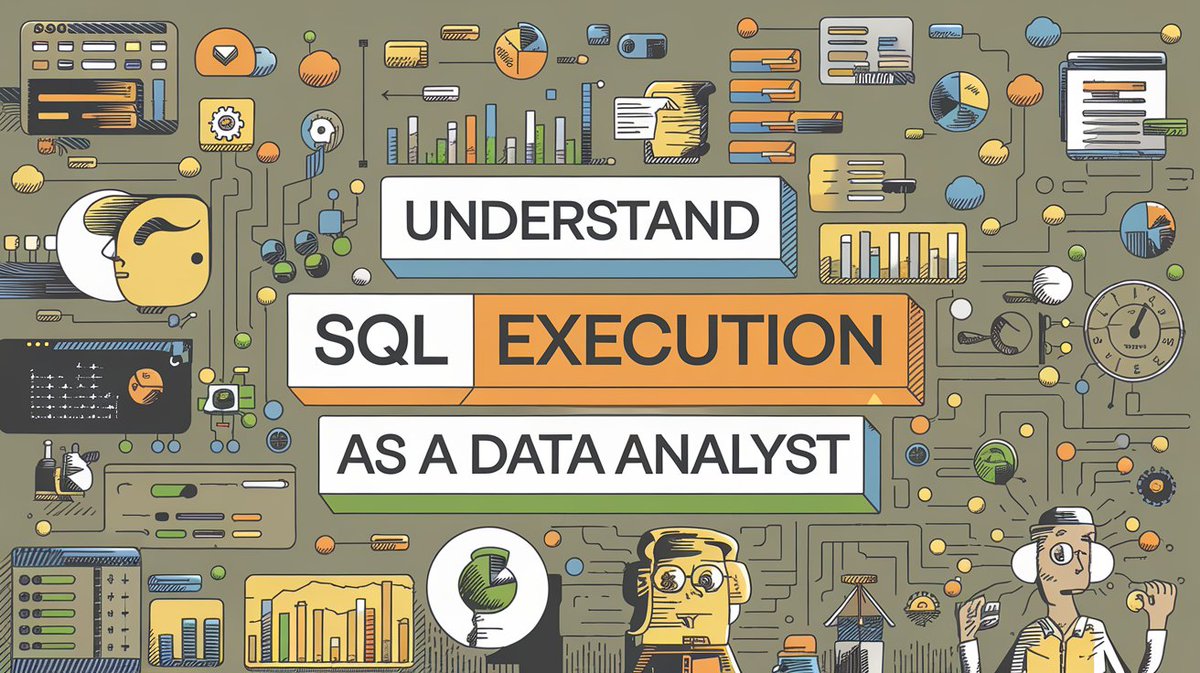
Data Analysts perform a lot of tasks with SQL such as data cleaning, data pre-processing, data transformation, EDA, and a lot more, improving database performance using partitioning, indexing, and more.
Let's discuss SQL execution in this thread!
#SQL #DataAnalytics #DataAnalyst #SQLTips #DataScience #DataAnalysis #DatabaseManagement #SQLQueries #TechCareers #AnalyticsJobs #DataJobs #SQLForData #SQLCommunity #DataAnalystJobs #HiringDataAnalysts #AnalyticsUK #AnalyticsUSA #DataEurope #GlobalDataCareers #SQLForBeginners #DataScienceUK #DataScienceUS #TechCareersEurope #DataCareers #SQLExecution #DataScienceEurope #SQLInsights #AnalyticsWorld #USDataAnalytics #UKDataAnalytics #EuropeDataAnalytics #GlobalDataInsights #DataScienceUK #DataScienceUSA #DataScienceEurope #AnalyticsGermany #DataAnalyticsFrance #DataJobsSpain #DataAnalystNetherlands #GlobalAnalyticsJobs #AnalyticsItaly #EUDataAnalyst #WorldwideDataCommunity #DataAnalyticsSweden #DataJobsEurope #GlobalTechCareers #AnalyticsIreland #UKAnalyticsJobs #EuropeanDataCommunity
1
4
39