
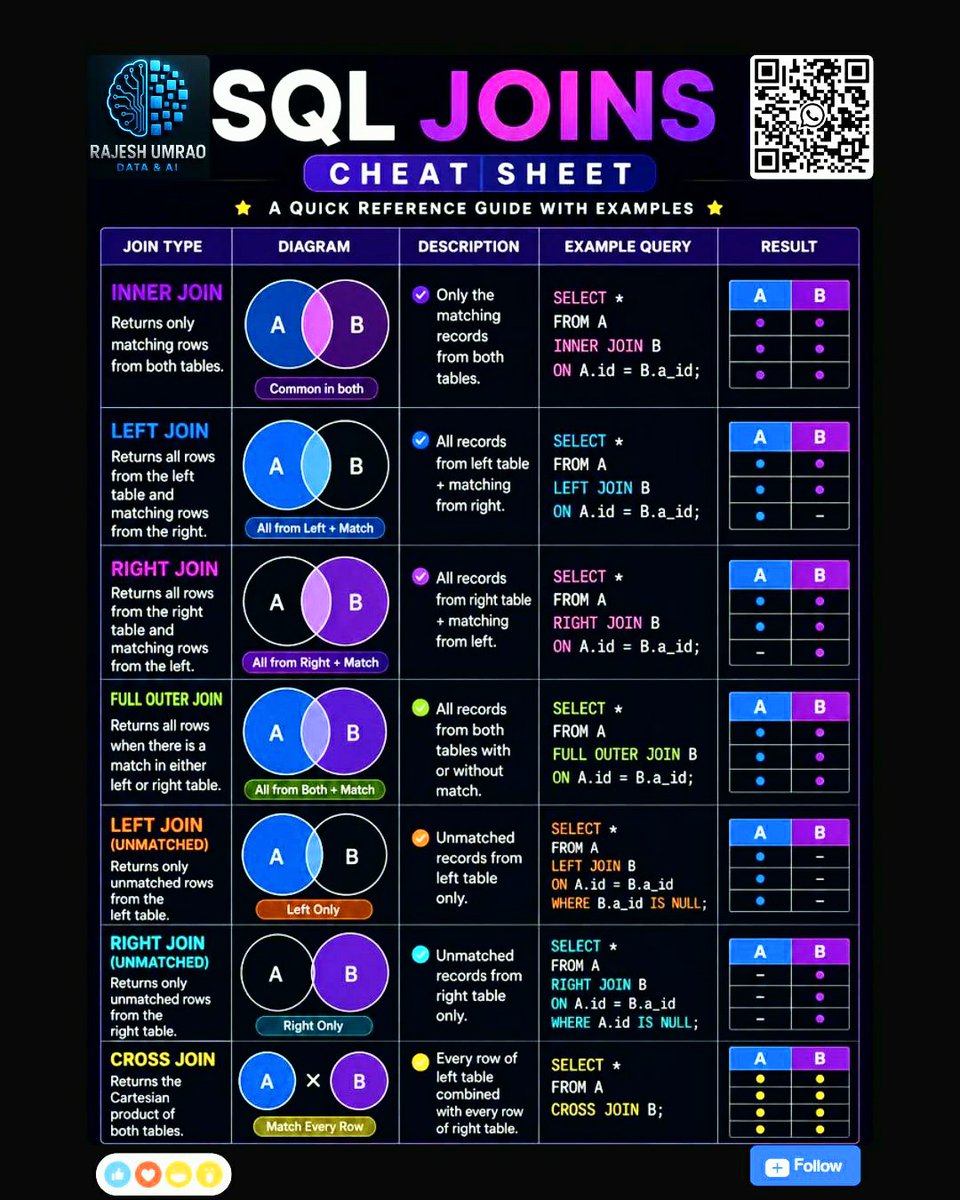

May 2
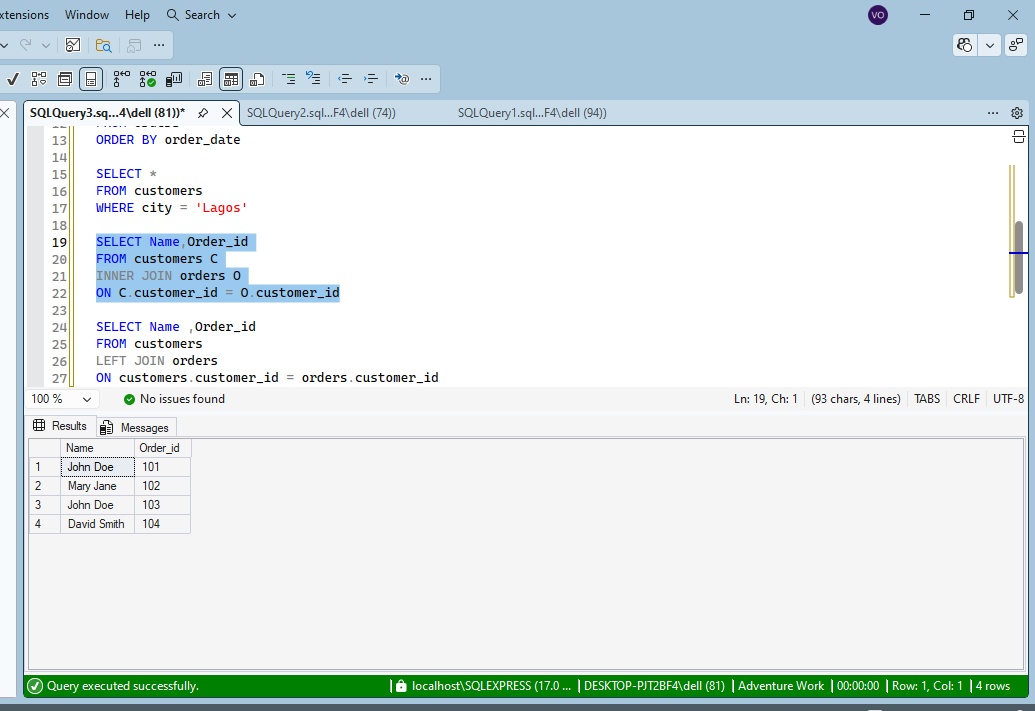
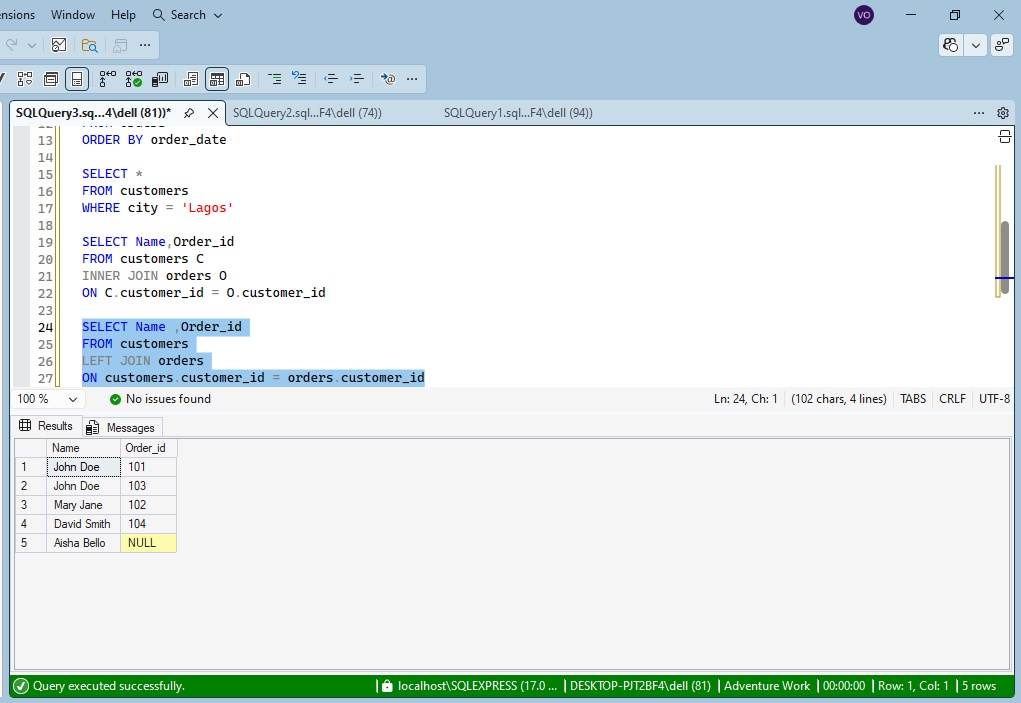
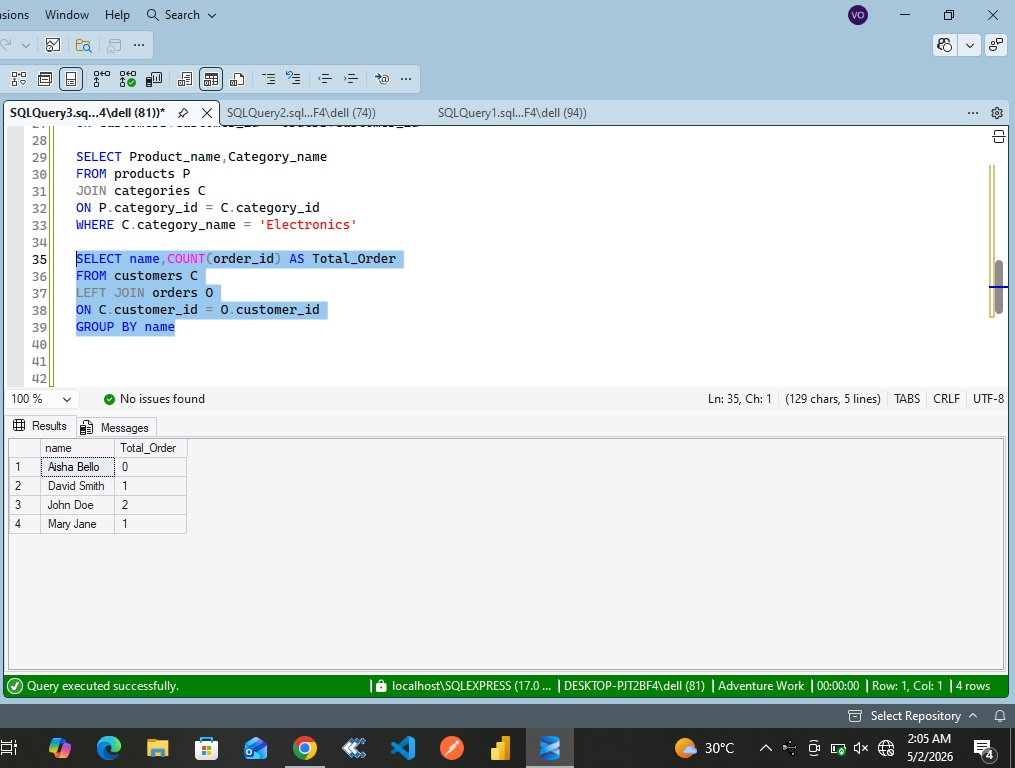
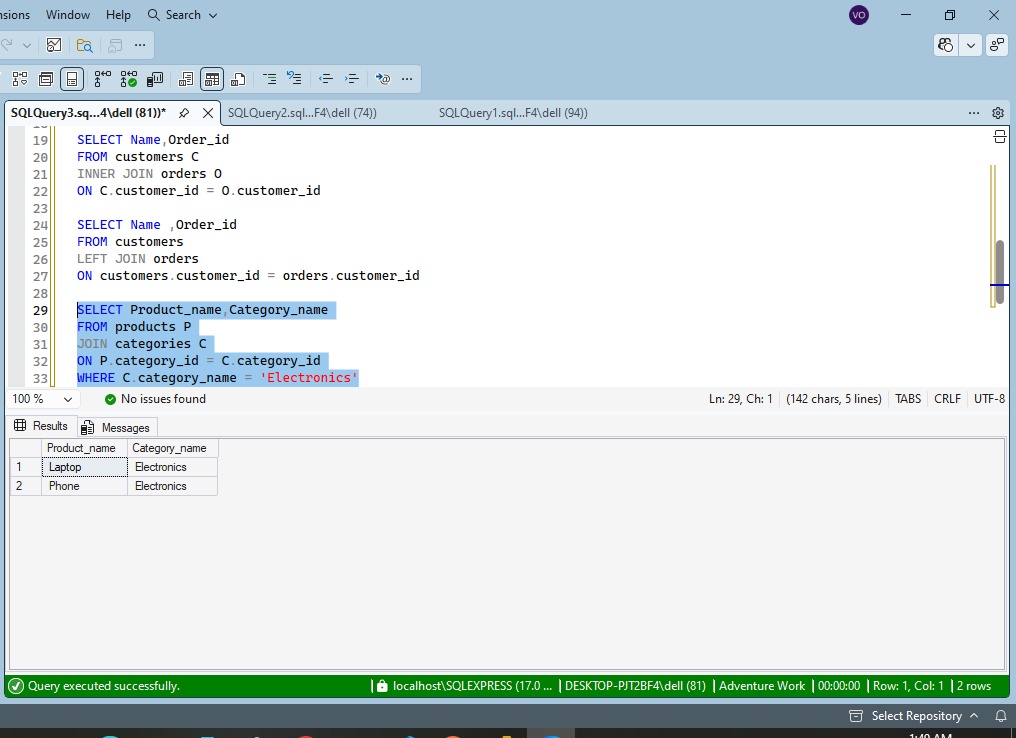
I practiced Joins in SQL with a small data just to understand how it works.
I used the Inner and Left Joins to answer some questions.
1st slide: Getting the customers name with their order
2: All the customers name with their orders ( including those with no order)
3👇
#SQLJoins
4
14
184

Feb 27
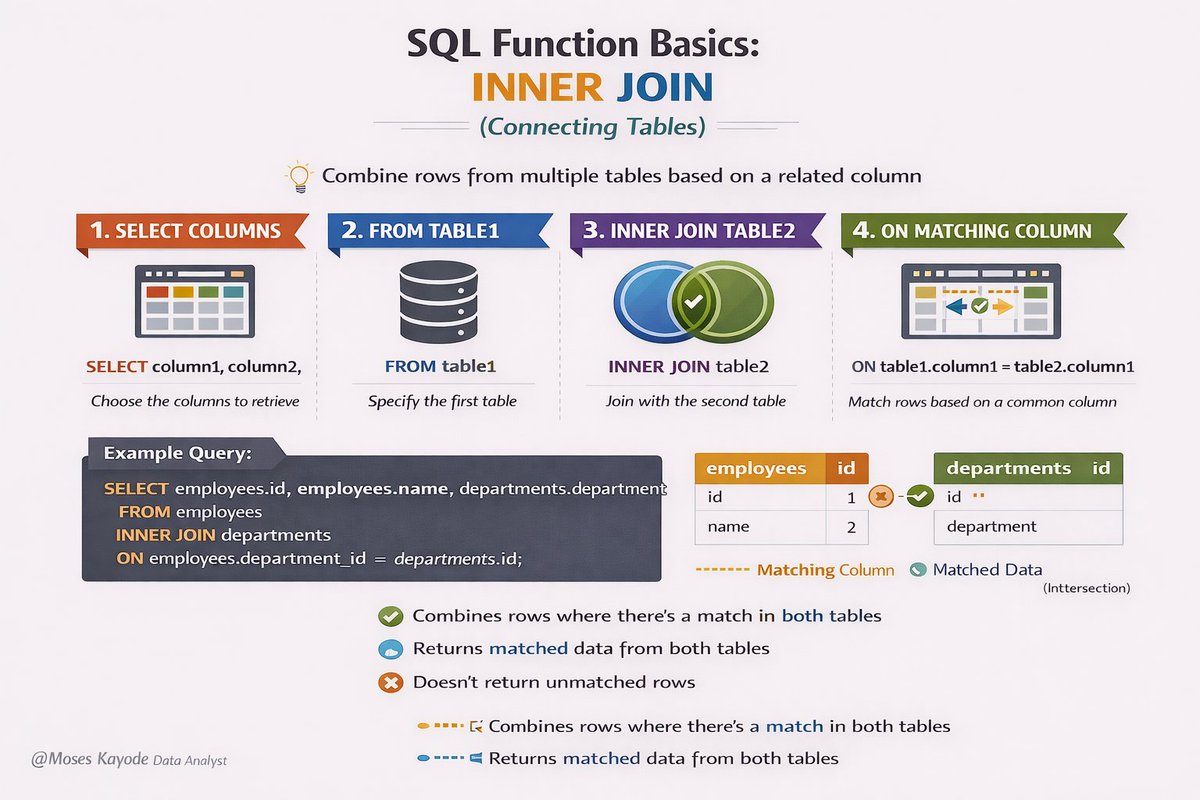
Real data lives in multiple tables.
INNER JOIN is how you connect them.
#SQL #DataAnalytics #SQLJoins
2
29

Feb 7
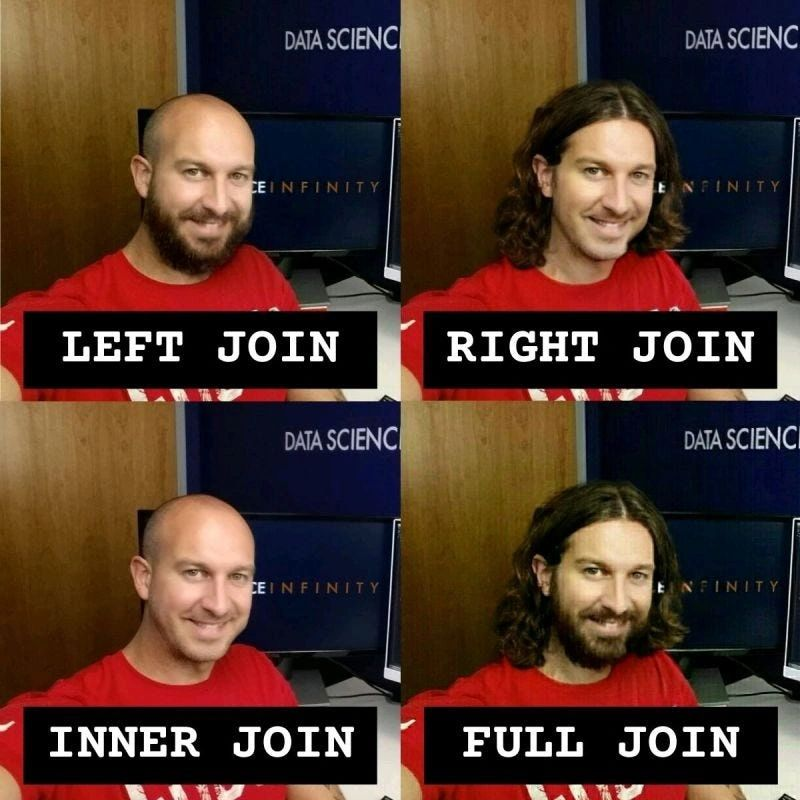
I practice SQL joins every day.
I write queries.
I get correct outputs.
Interviewer: “Can you explain joins?”
My brain: SELECT * FROM panic; 😭
To all data analyst freshers:
You’re not alone.
Joins make sense… until someone asks you to explain them on the spot 😄
#SQL #DataAnalystLife #DataAnalystFresher #AnalyticsHumor #SQLJoins #InterviewPrep #DataAnalytics
7
5
13
3,238
Jan 22
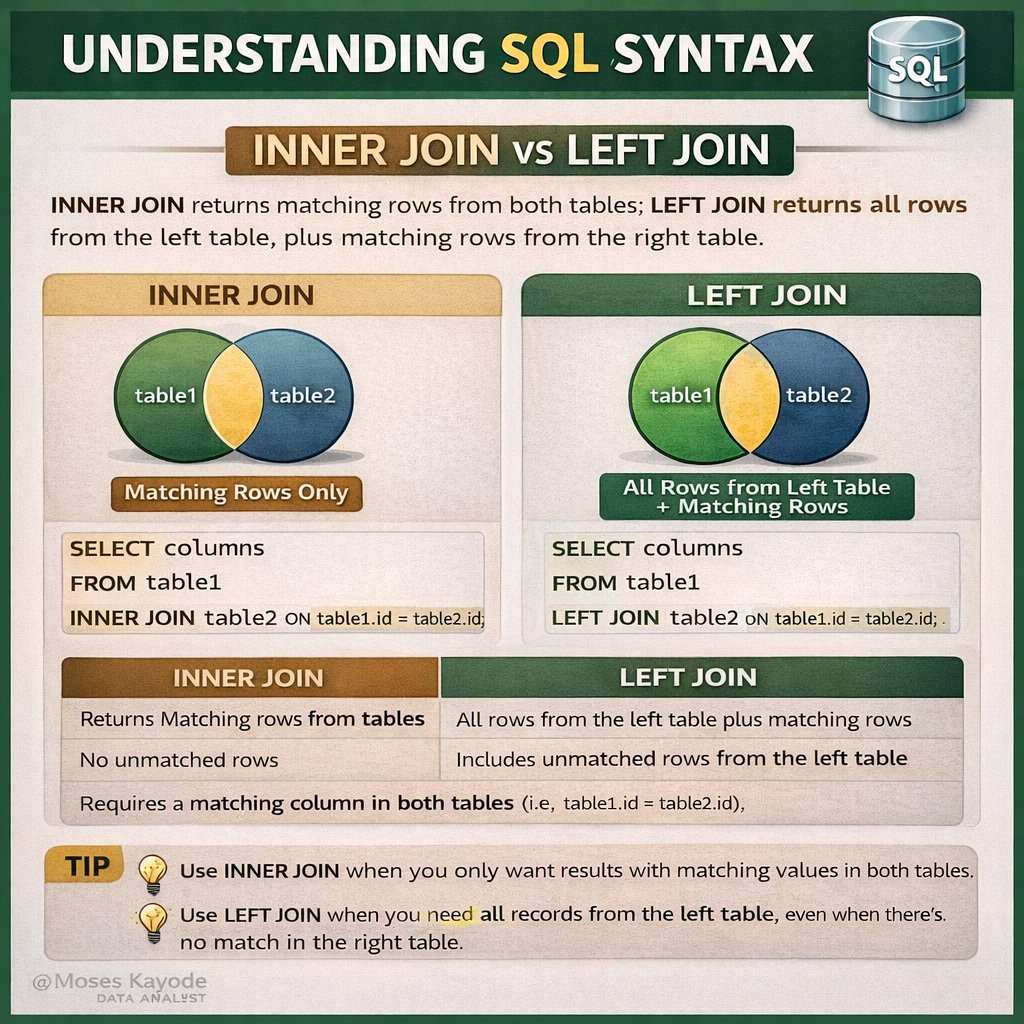
INNER JOIN returns only what exists in both tables.
LEFT JOIN keeps everything from the left table.
Even when there’s no match on the right.
#SQLJoins #DataAnalytics #SQLTips
2
72

16 Aug 2025
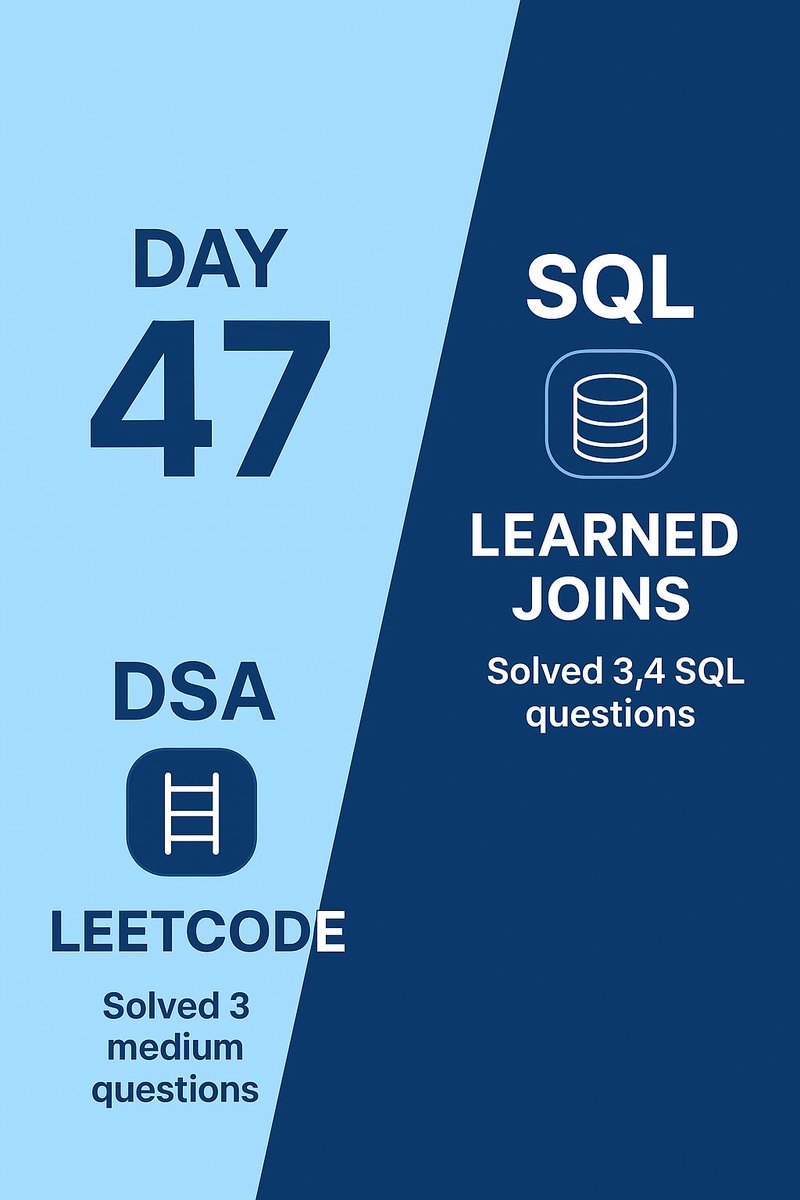
Day 47 ✅
📌 In SQL: Learned Joins and solved 3-4 SQL questions.
📌 In DSA: Practiced 3 medium-level questions on LeetCode.
#Day47 #SQLJoins #LeetCodePractice #DSA #SQL #ProblemSolving #CodeEveryday #KeepLearning #CodingJourney #ConsistencyIsKey #ProgrammerLife
5
38

27 Jul 2025
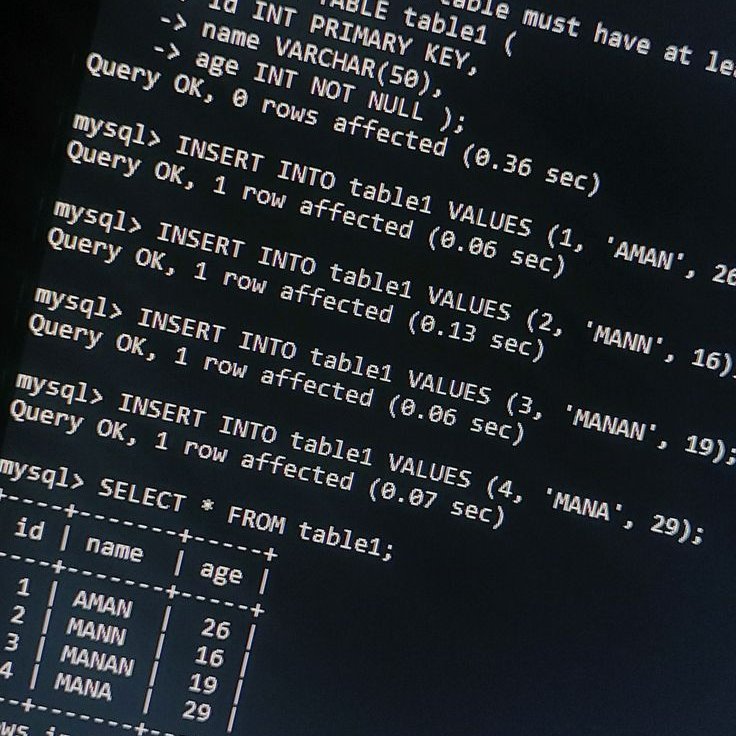
Just finished SQL! Learned everything from #databases basics & #CRUD operations to advanced #SQLJoins, #Subqueries, #Views, and key #Constraints like Primary/Foreign Keys. So much power in one language! #SQL #DataAnalytics
1
1
4
125

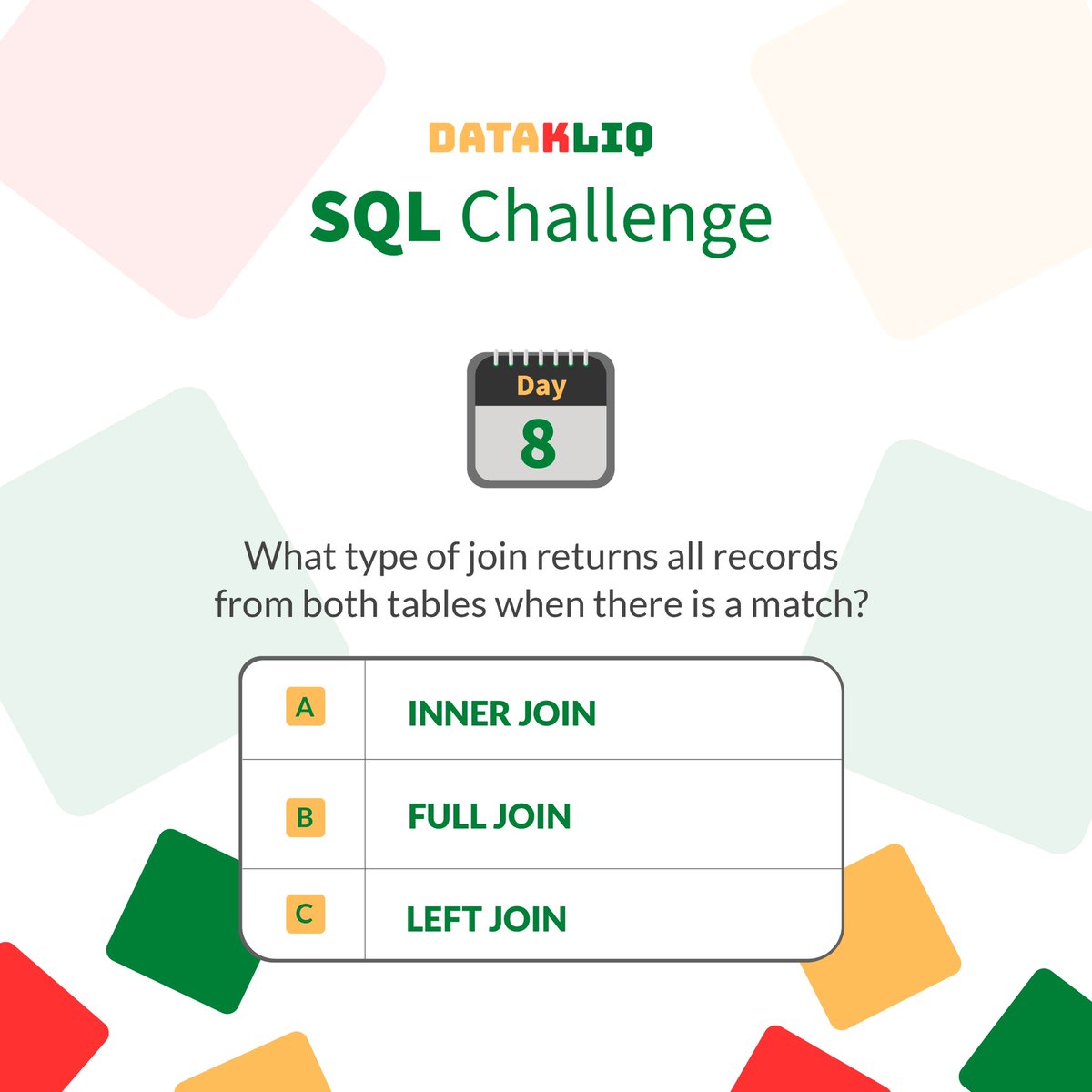
DataKliq SQL Challenge - Day 8!
What type of join returns all records from both tables when there is a match? 🤔
Drop your answer in the comments! ⬇️
#DataKliq #SQLChallenge #SQLJoins
4
4
406

18 Feb 2025
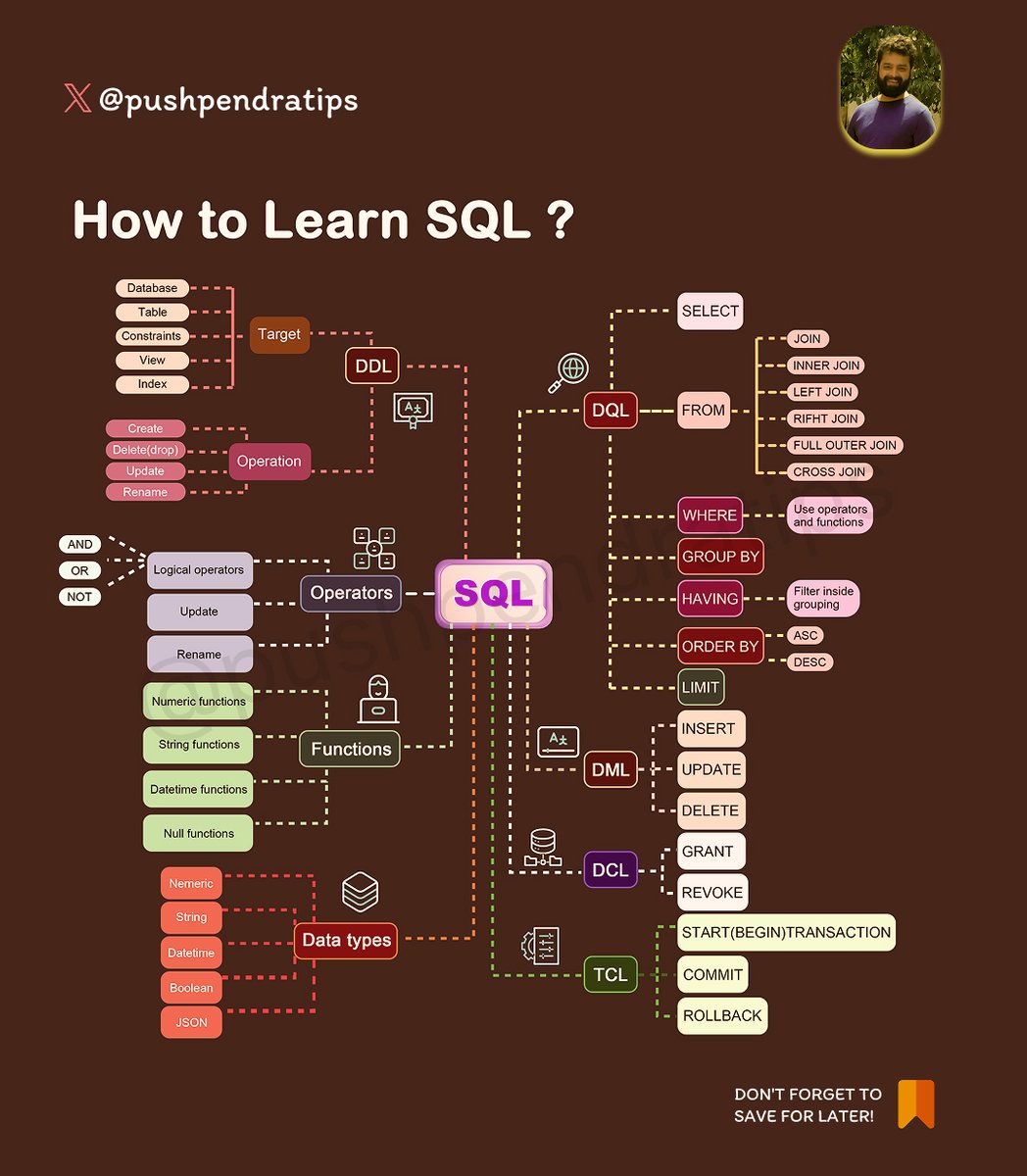
🚀 SQL Roadmap 2025: From Beginner to Expert 🛣️
🔹 1. Basics of SQL
✅ What is SQL? Introduction to Databases
✅ Data Types (INT, VARCHAR, DATE, etc.)
✅ Basic Queries: SELECT, FROM, WHERE, ORDER BY, LIMIT
✅ SQL Operators: LIKE, IN, BETWEEN, AND, OR, NOT
✅ Sorting and Filtering Data
🔹 2. SQL Joins & Relationships
✅ Primary Keys & Foreign Keys
✅ One-to-One, One-to-Many, Many-to-Many Relationships
✅ INNER JOIN, LEFT JOIN, RIGHT JOIN, FULL OUTER JOIN
✅ Self Joins & Cross Joins
✅ Using UNION and UNION ALL
🔹 3. Aggregations & Grouping
✅ COUNT(), SUM(), AVG(), MIN(), MAX()
✅ GROUP BY & HAVING
✅ Using DISTINCT for Unique Data
✅ Subqueries & Common Table Expressions (CTEs)
🔹 4. Advanced SQL Concepts
✅ Window Functions (ROW_NUMBER(), RANK(), DENSE_RANK(), LAG(), LEAD())
✅ Recursive Queries using CTEs
✅ Pivot & Unpivot Data
✅ JSON & XML Handling in SQL
✅ Using CASE Statements
🔹 5. Indexing & Performance Optimization
✅ How Indexing Works (Clustered vs. Non-Clustered Indexes)
✅ Optimizing Queries with EXPLAIN PLAN
✅ Avoiding N 1 Query Problems
✅ Using Proper Data Types for Performance
✅ Partitioning Large Tables
🔹 6. Transactions & Concurrency Control
✅ ACID Properties (Atomicity, Consistency, Isolation, Durability)
✅ Transactions (BEGIN, COMMIT, ROLLBACK)
✅ Isolation Levels (READ COMMITTED, REPEATABLE READ, SERIALIZABLE)
✅ Deadlocks & How to Avoid Them
🔹 7. SQL for Big Data & Scalability
✅ NoSQL vs. SQL (MongoDB, Firebase vs. PostgreSQL, MySQL)
✅ Distributed Databases (CockroachDB, Amazon Aurora)
✅ Data Warehousing (Snowflake, BigQuery)
✅ Querying Large Datasets Efficiently
🔹 8. Stored Procedures, Views & Triggers
✅ Creating & Using Views
✅ Writing Stored Procedures
✅ Using Triggers for Automation
✅ Dynamic SQL & Parameterized Queries
🔹 9. Working with Different SQL Dialects
✅ MySQL
✅ PostgreSQL
✅ Microsoft SQL Server
✅ SQLite
✅ Oracle SQL
🔹 10. Mastering SQL in Real-World Applications
✅ SQL in Backend Development (Node.js, Python, Java)
✅ Using SQL with ORMs (Sequelize, TypeORM, Prisma)
✅ Integrating SQL with APIs
✅ Data Analytics & Reporting with SQL
#SQLRoadmap2025 #LearnSQL #SQLMastery #DatabaseDesign #SQLQueries #DataAnalytics #SQLJoins #BigData #SQLPerformance #BackendDevelopment #DataEngineering #SQLOptimization #FullStackDev #TechRoadmap
38
17
69
4,368


21 Nov 2024
You will be performing a lot of joins in your career as a data analyst.
Also, Joins are really important in SQL and you should practice and master them.
Let's discuss the difference between inner join and left join as you will be using them often as a data analyst.
𝗜𝗻𝗻𝗲𝗿 𝗝𝗼𝗶𝗻: It retrieves rows that are common in both tables.
𝗘𝘅𝗮𝗺𝗽𝗹𝗲:
SELECT e.emp_id , s.salary
FROM employees as e
INNER JOIN salary as s using(emp_no)
𝗟𝗲𝗳𝘁 𝗝𝗼𝗶𝗻: It retrieves all the rows from the left table and common rows from the right table. It shows null in the right rows when there is no match.
𝗘𝘅𝗮𝗺𝗽𝗹𝗲:
SELECT e.emp_id , s.salary
FROM employees as e
LEFT JOIN salary as s using(emp_no)
Enjoy. Follow for more!
#SQL #DataAnalytics #DataAnalysis #SQLJoins #InnerJoin #LeftJoin #SQLLearning #DataSkills #TechSkills #DataAnalystTips #GlobalDataAnalytics #WorldwideDataInsights #SQLGlobal #AnalyticsCommunityGlobal #DataAnalystWorldwide #USDataAnalytics #LearnAnalyticsUSA #SQLSkillsUSA #DataAnalystUSA #AnalyticsCommunityUSA #UKDataAnalytics #SQLUK #LearnDataToolsUK #BritishDataAnalyst #AnalyticsCommunityUK #EuropeDataAnalytics #SQLSkillsEurope #DataInsightsEurope #EuropeanDataAnalyst #AnalyticsCommunityEurope #SingaporeDataAnalytics #SQLSingapore #LearnSQLSG #AnalyticsInSingapore #DataInsightsSG
3
30
3 Nov 2024
When you are working as a data analyst, you will have to join a lot of tables in SQL to get the desired results.
Also, a lot of times you will not have a direct relationship between two tables.
So, how will you join two tables together?
Let's discuss that in this thread.
#SQLJoins #BridgeTable #DataAnalysis #SQLTips #DataAnalyst #DataEngineering #DataScienceCommunity #AnalyticsSkills #BusinessIntelligence #TechCareers #SQLForDataAnalysis #DataInsights #DataScienceUSA #AnalyticsUSA #SQLInUSA #USDataCareers #UKDataScience #AnalyticsUK #SQLUK #DataAnalystUK #EuropeData #SQLInEurope #DataAnalystEU #EUTechCareers #GlobalAnalytics #SQLWorldwide #DataScienceGlobal #InternationalDataCommunity
1
1
17

2 Nov 2024
Exploring LEFT JOIN and RIGHT JOIN
LEFT and RIGHT JOINs include unmatched rows from one table.
Use LEFT JOIN for rows from the left table and RIGHT JOIN for the right table.
These joins give flexibility for exploring datasets!
#LeftJoin #RightJoin #SQLJoins #DataScience
4
24

1 Nov 2024
🌐 Mastering SQL Joins: The Key to Data Integration! 🌐
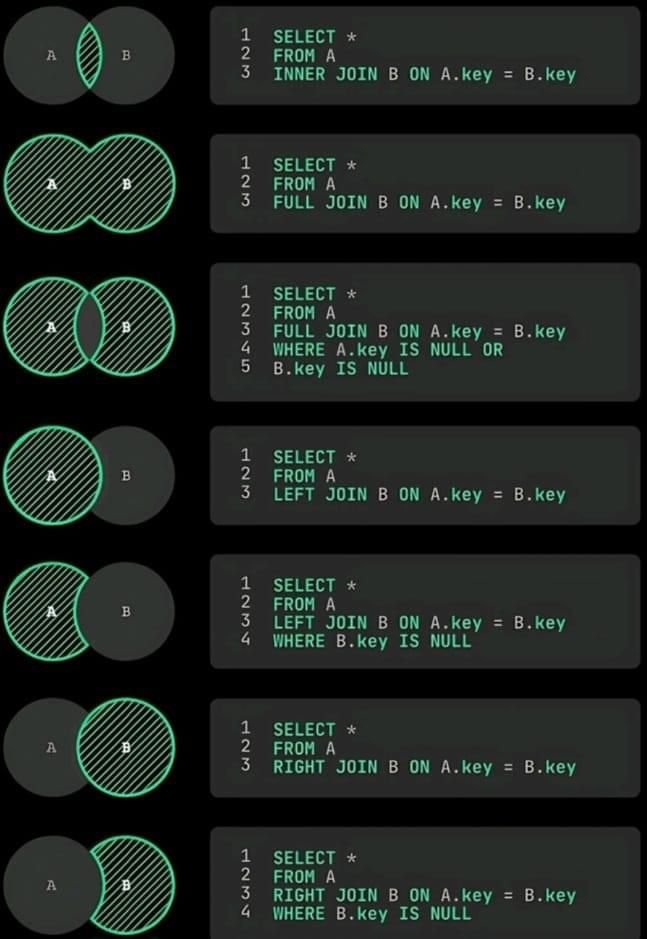
One of the most essential skills for anyone working with data is understanding SQL joins. Joins allow us to combine data from multiple tables, giving us richer insights and a fuller picture of our datasets. Here’s a quick breakdown of the main types of joins and when to use each:
1️⃣ INNER JOIN: Only returns records where there is a match in both tables. Great for finding common data between two tables.
2️⃣ LEFT JOIN (or LEFT OUTER JOIN): Returns all records from the left table, plus the matched records from the right. Use this when you want to include all data from the left, even if there’s no match on the right.
3️⃣ RIGHT JOIN (or RIGHT OUTER JOIN): The opposite of LEFT JOIN. It returns all records from the right table and the matched records from the left. Handy when you want to keep everything on the right.
4️⃣ FULL JOIN (or FULL OUTER JOIN): Combines LEFT and RIGHT joins by returning all records when there’s a match in either table. Useful when you need to see all data, with or without matches.
5️⃣ CROSS JOIN: Creates a Cartesian product of two tables—every row from the first table is combined with every row from the second. Be cautious; this can result in very large datasets.
💡 Pro Tip: Before using joins, always check your table sizes and indices to avoid performance hits!
Mastering these joins will make your SQL skills incredibly valuable, whether you’re analyzing data, building dashboards, or working on data integration projects.
What’s your favorite SQL join? Let me know in the comments! 👇
Follow @YusufOGaniyu for more!
#SQL #DataEngineering #DataAnalysis #DataScience #Joins #LearningSQL #TechTips #DataIntegration #SQLJoins
4
13
335

25 Oct 2024
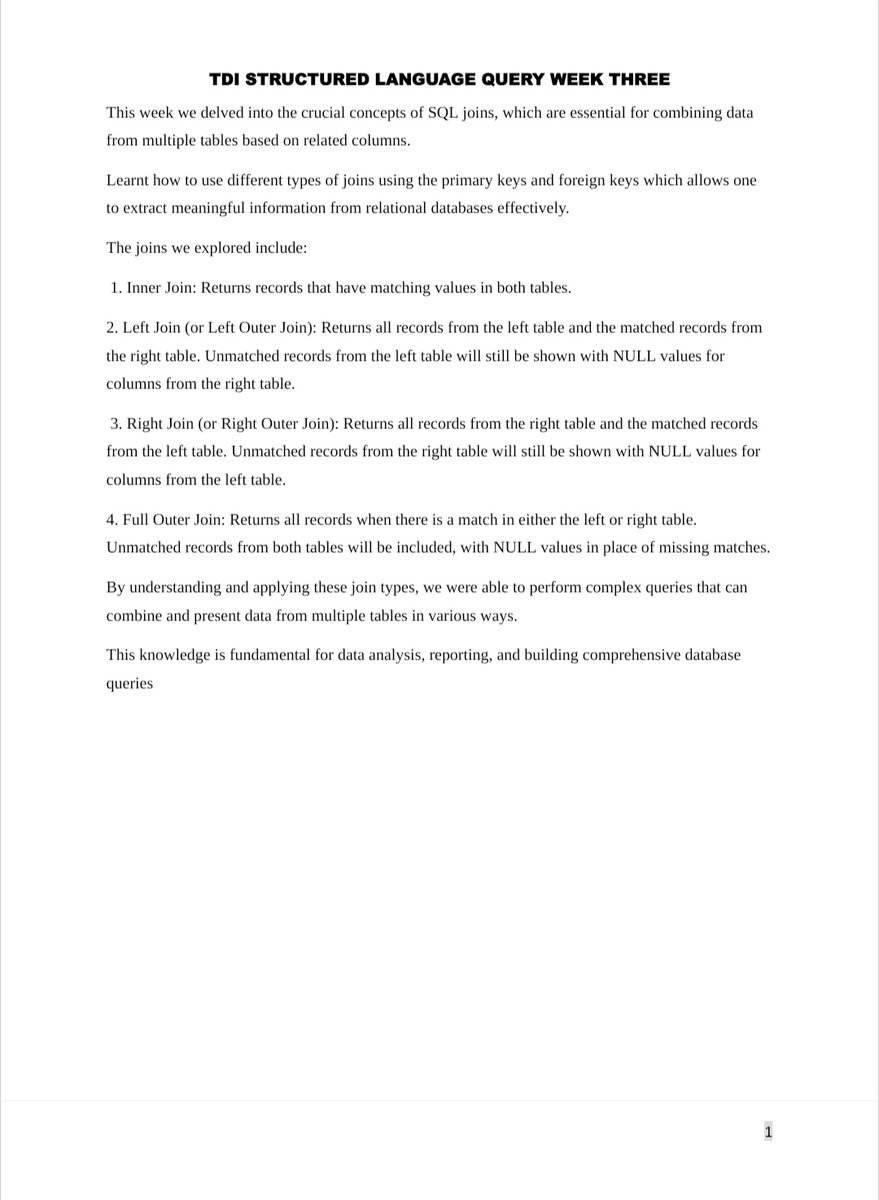
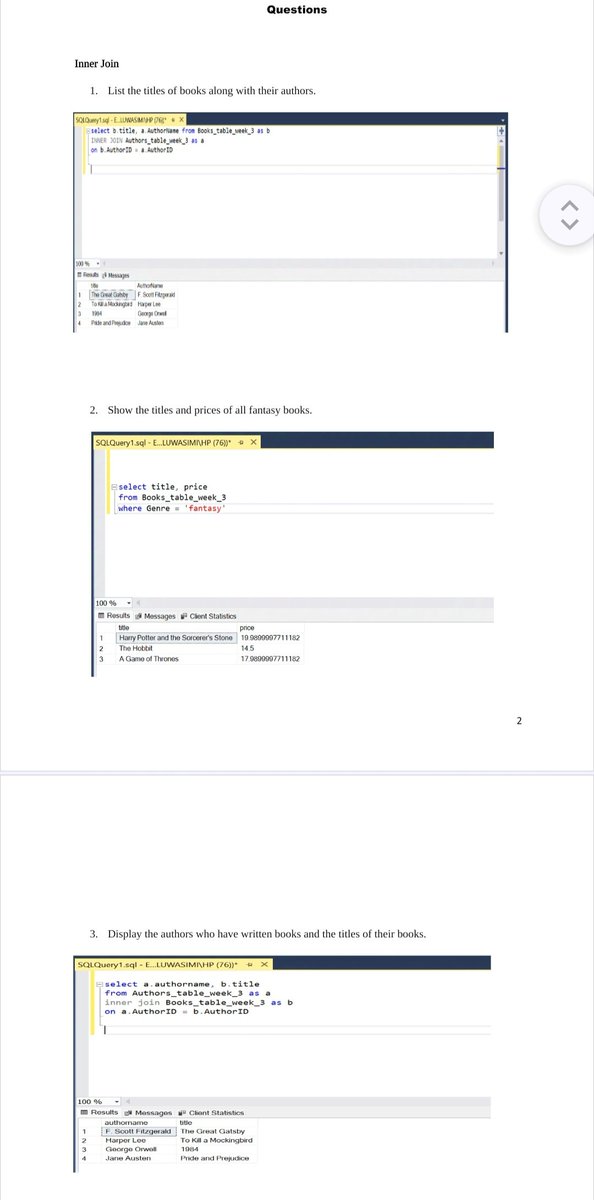
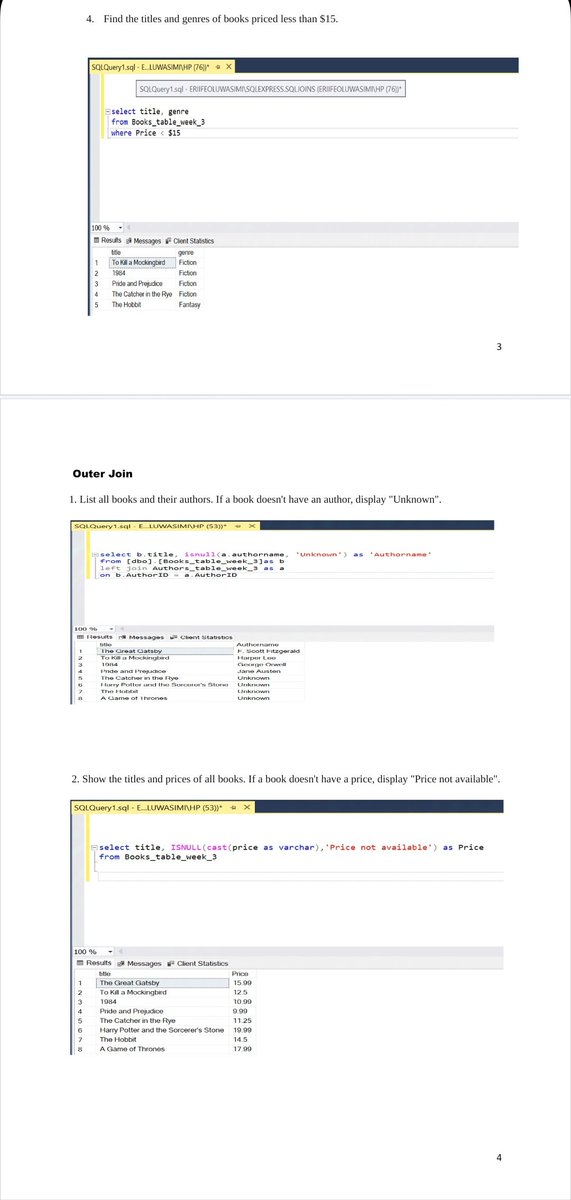
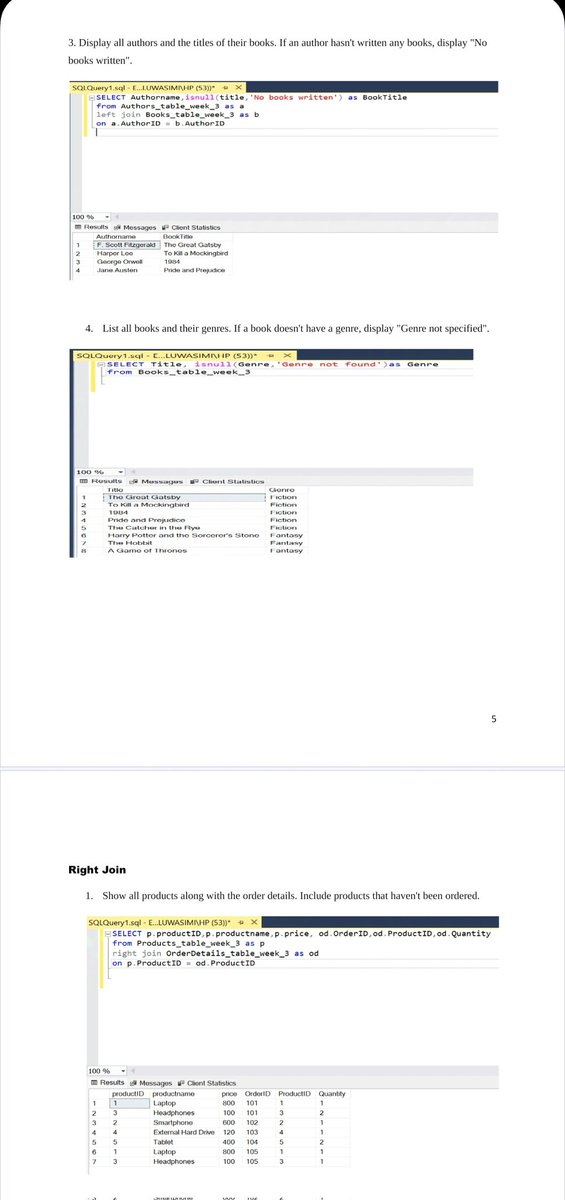
This week being the 3rd week of learning SQL @TDataImmersed we delved into the crucial concept of SQLJOINS, which are essential for combining data from multiple tables based on related columns
@TDataImmersed
@DabereNnamani
@The_Jonathaan
@JacobAjala
@SQLServer
#TDI
1
2
5
150


12 Jul 2024
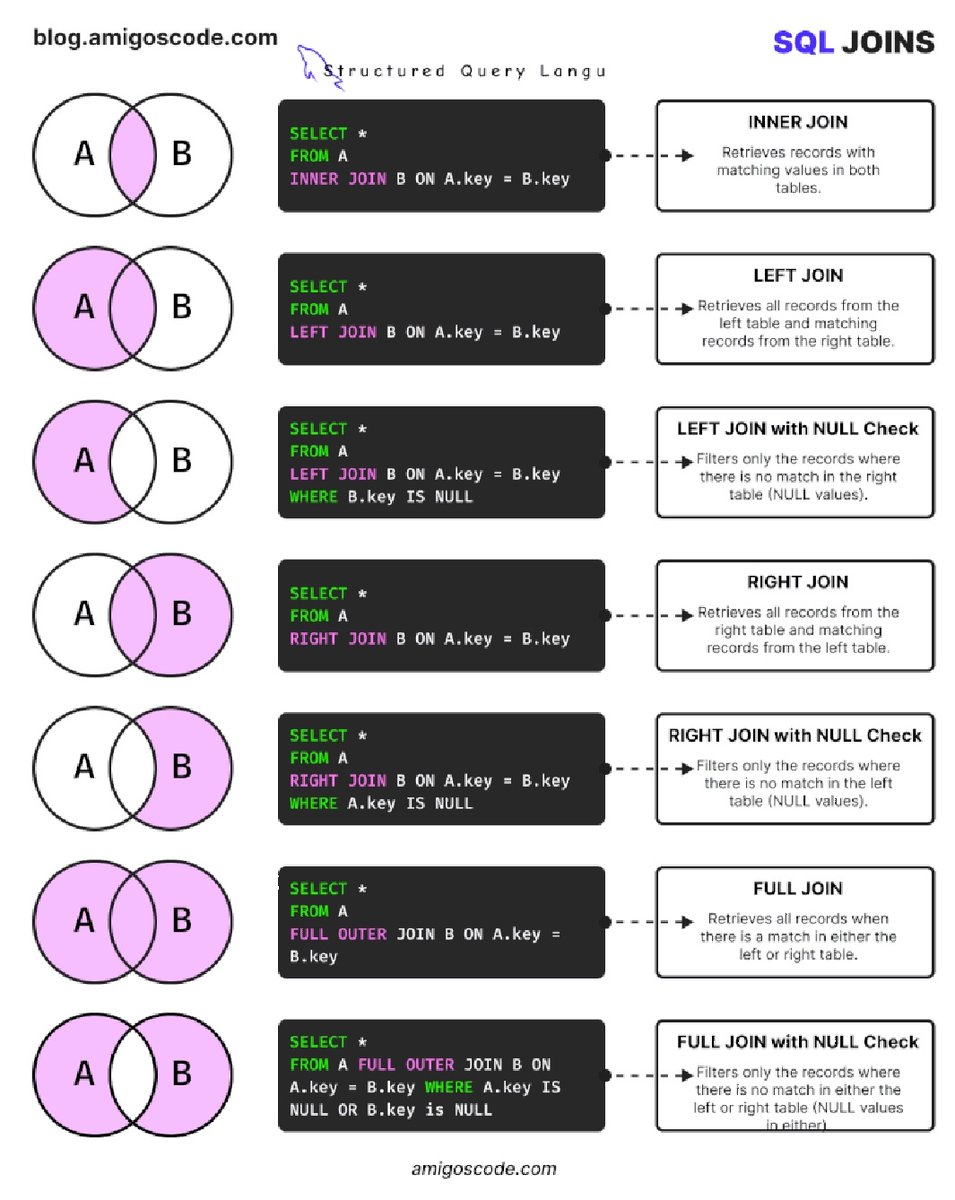
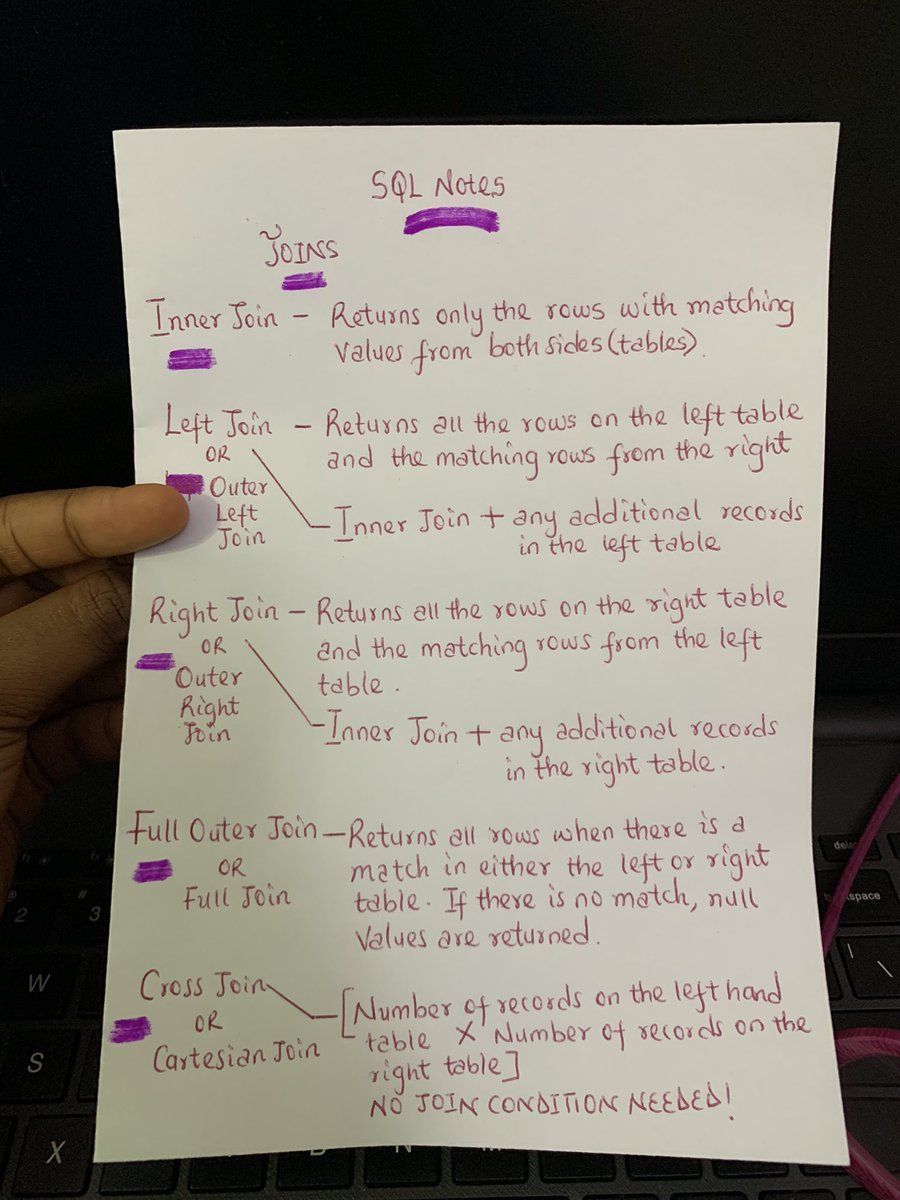
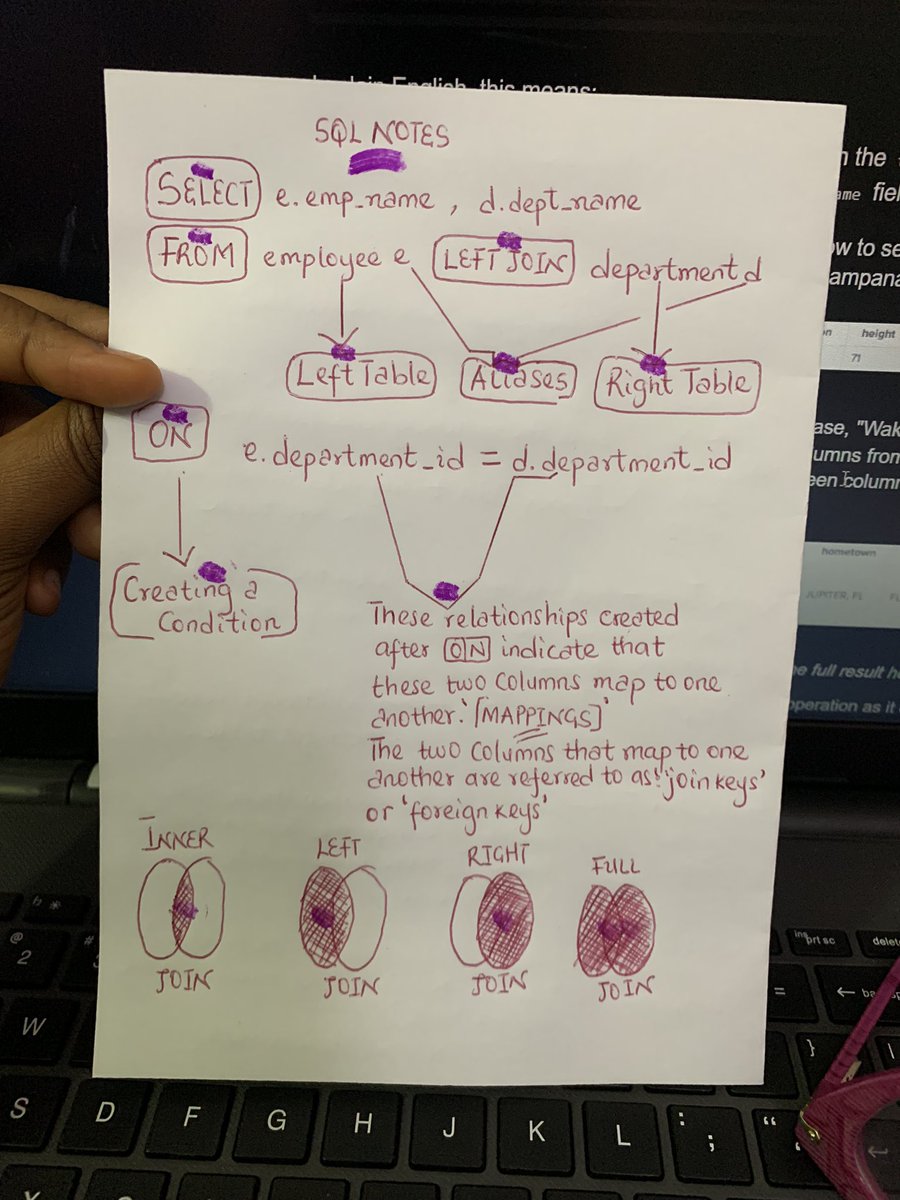
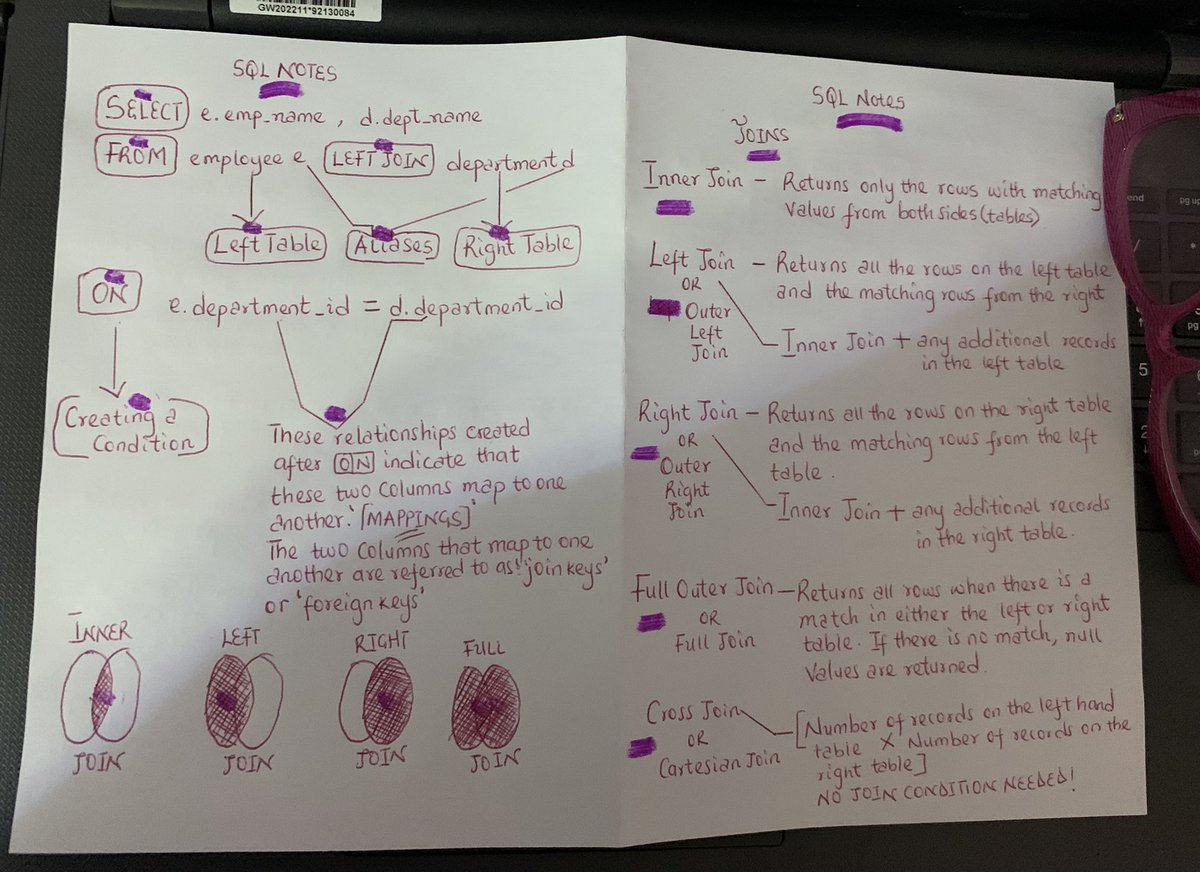
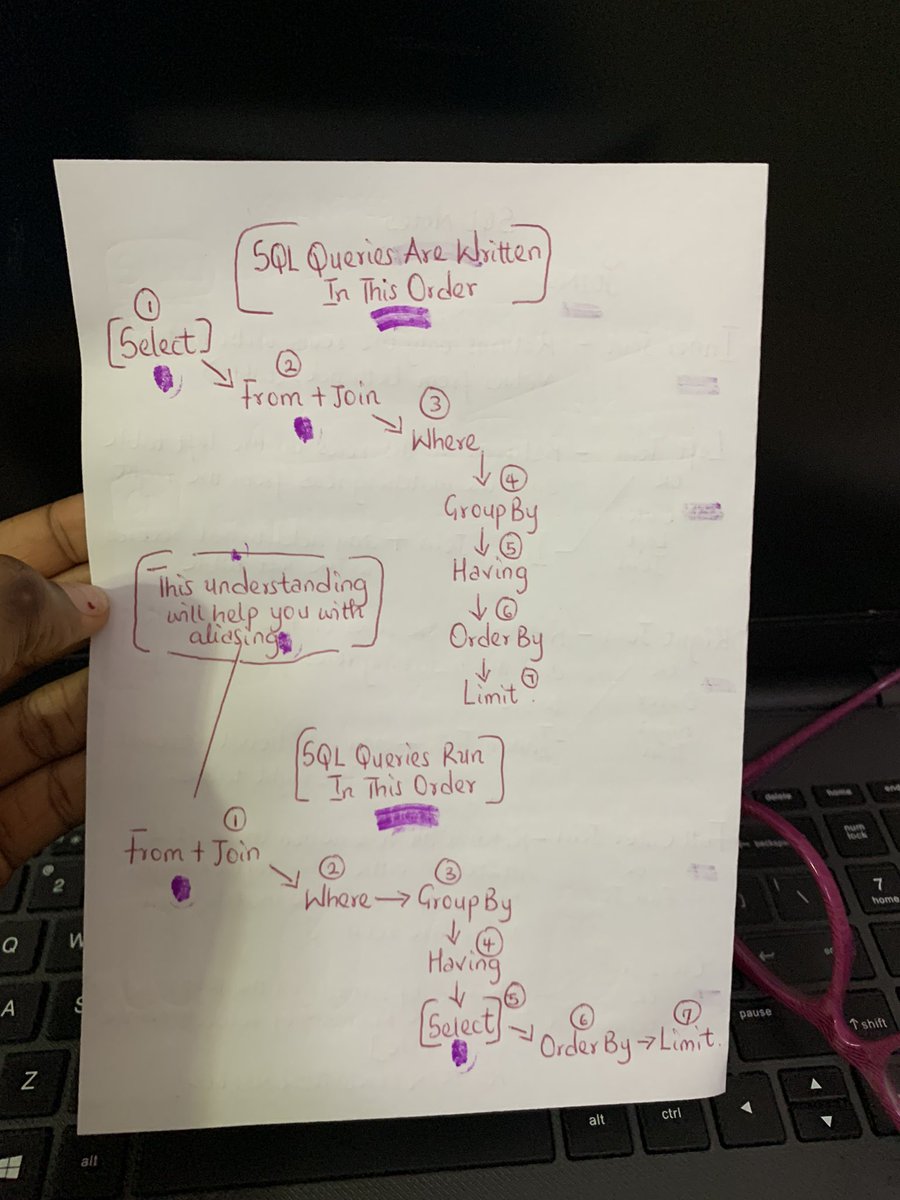
I created these notes today while solving #Sql projects and challenges!
Honestly, if I had to learn #SqlJoins all over again, I’d want to start with a note like this which is why I created this to help anyone who is struggling with joins!
What do you think? #DataAnalytics
15
43
209
10,037

10 Jul 2024
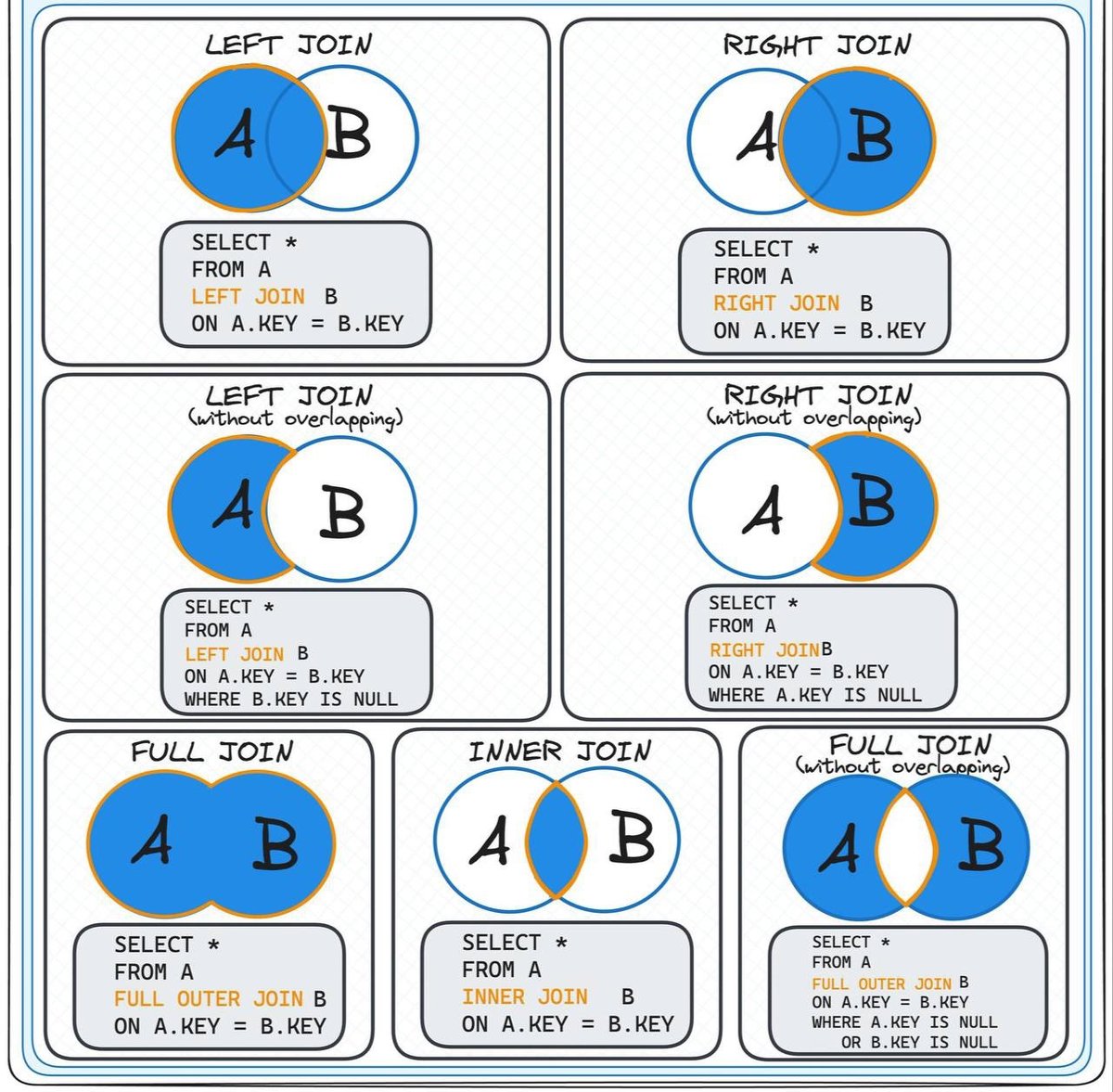
A Clear Visual Guide to SQL Joins 👇
#SQL #SQLJoins #DataScience #Database #TechTips #Coding #Programming #DataAnalytics #LearnSQL #TechEducation #DataManagement
7
301

3 Jul 2024
SQL Joins That Every Developer Should Know! Don’t forget to save and share this post.
Check out the threads below for the complete cheatsheet.
#SQLJoins #SQLCheatsheet
2
7
334
