
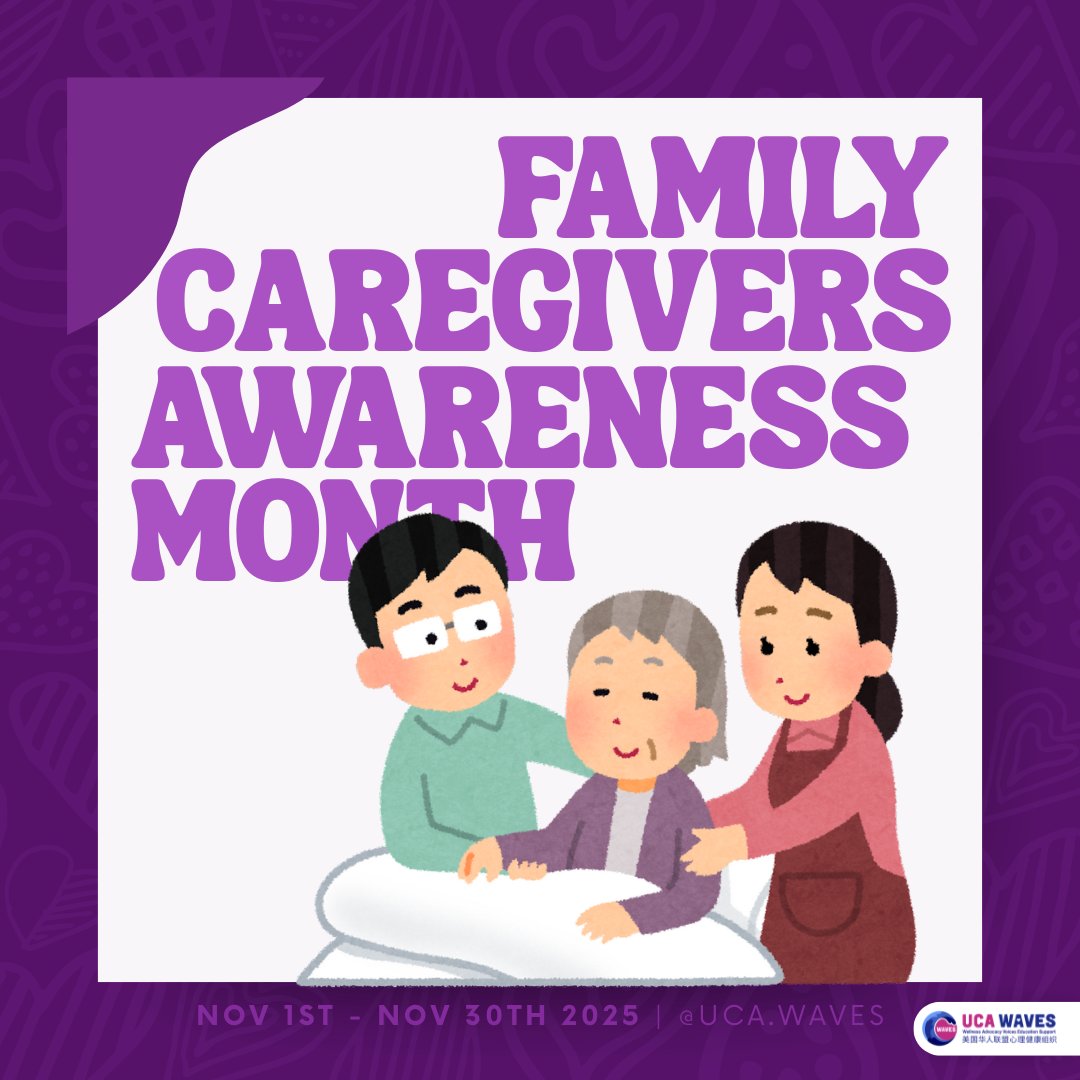
Every day, millions of #familymembers across the U.S. provide essential care and #support for loved ones living with illness, disability, or aging-related needs. #Caregiving is an act of love—but it can also be emotionally, physically, and financially demanding.
In many Asian American and Pacific Islander (#AAPI) families, caregiving is deeply rooted in cultural values like #filialpiety and collective responsibility. While these traditions foster closeness and #intergenerational connection, they can also lead to unique challenges, such as stigma around asking for help, limited access to culturally competent #resources, or pressure to balance caregiving with work and school.
Recognizing and supporting #familycaregivers is vital for community well-being. This month, we honor their resilience, compassion, and quiet strength, and we encourage open conversations about #mentalhealth, self-care, and shared responsibility in caregiving.
If you or someone you know is a caregiver, resources like the Family Caregiver Alliance (caregiver.org) and the National Alliance for Caregiving (caregiving.org) offer education, #supportnetworks, and culturally responsive tools to help lighten the load.
This #FamilyCaregiversAwarenessMonth let's take time to thank, support, and stand with those who look after others, because caregivers deserve care, too🌄💜
1
19

20 Oct 2025
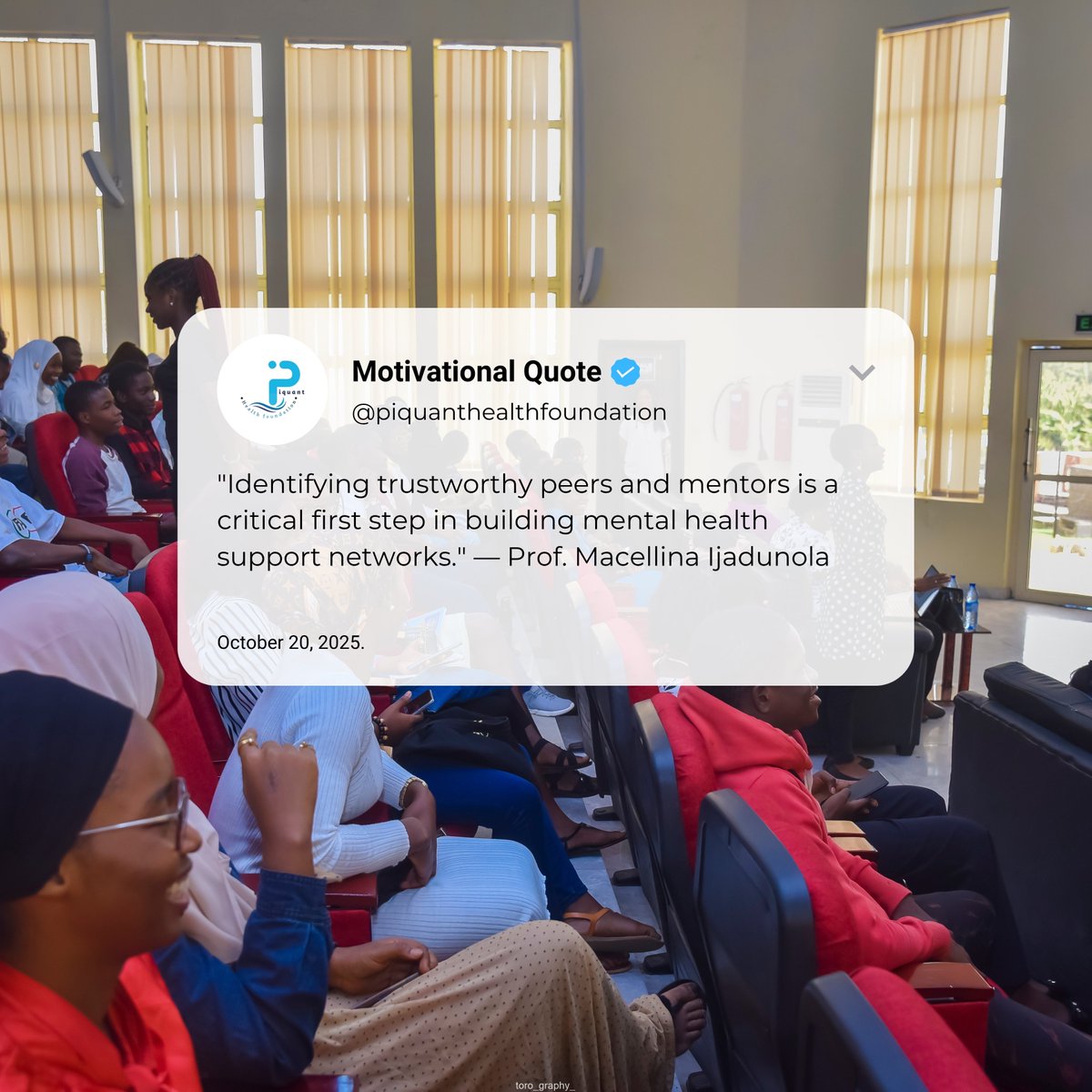
At Piquant Health Foundation, we believe in the power of community and connection. Building strong support networks is essential for mental well-being. Let's uplift each other and foster environments where we can thrive together!
#MentalHealthMatters #SupportNetworks
2
37

16 Sep 2025
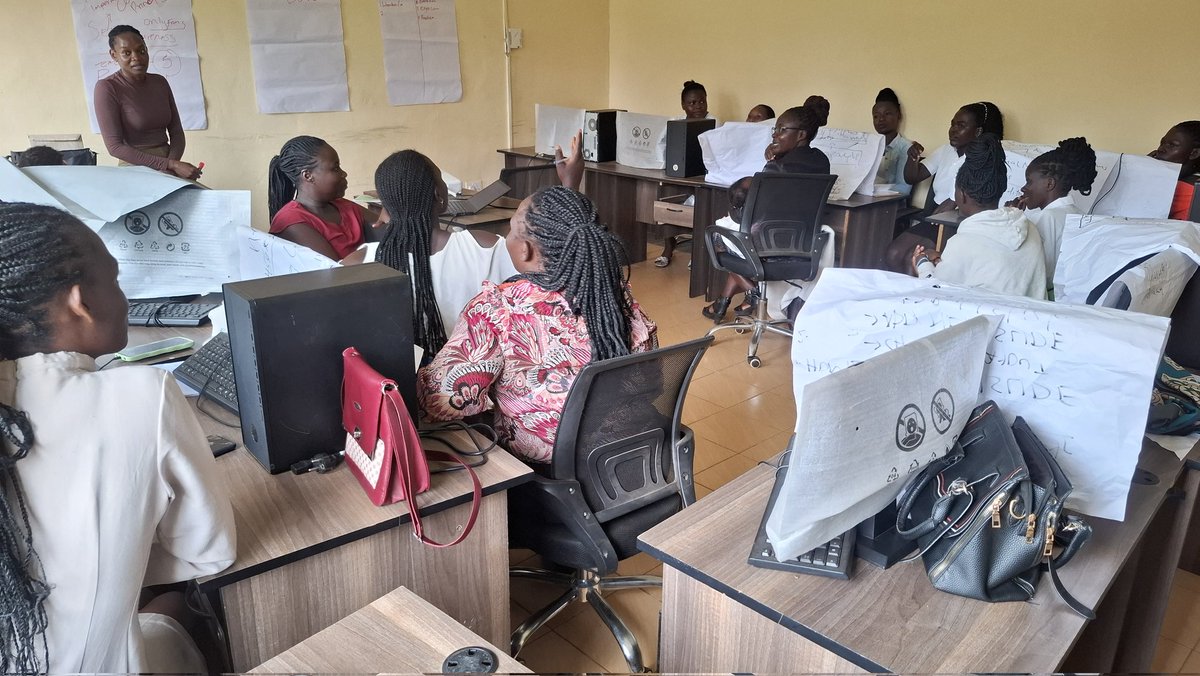
The self-awareness class wasn’t just training it was a truth-telling session.
Hearing young women open up about confidence struggles and their dream to inspire others was the heartbeat of the day. @PlanAULiaison
@GimacYouth #SheLeadsPoolgrant #SupportNetworks #SheLeads
2
3
54

14 Sep 2025
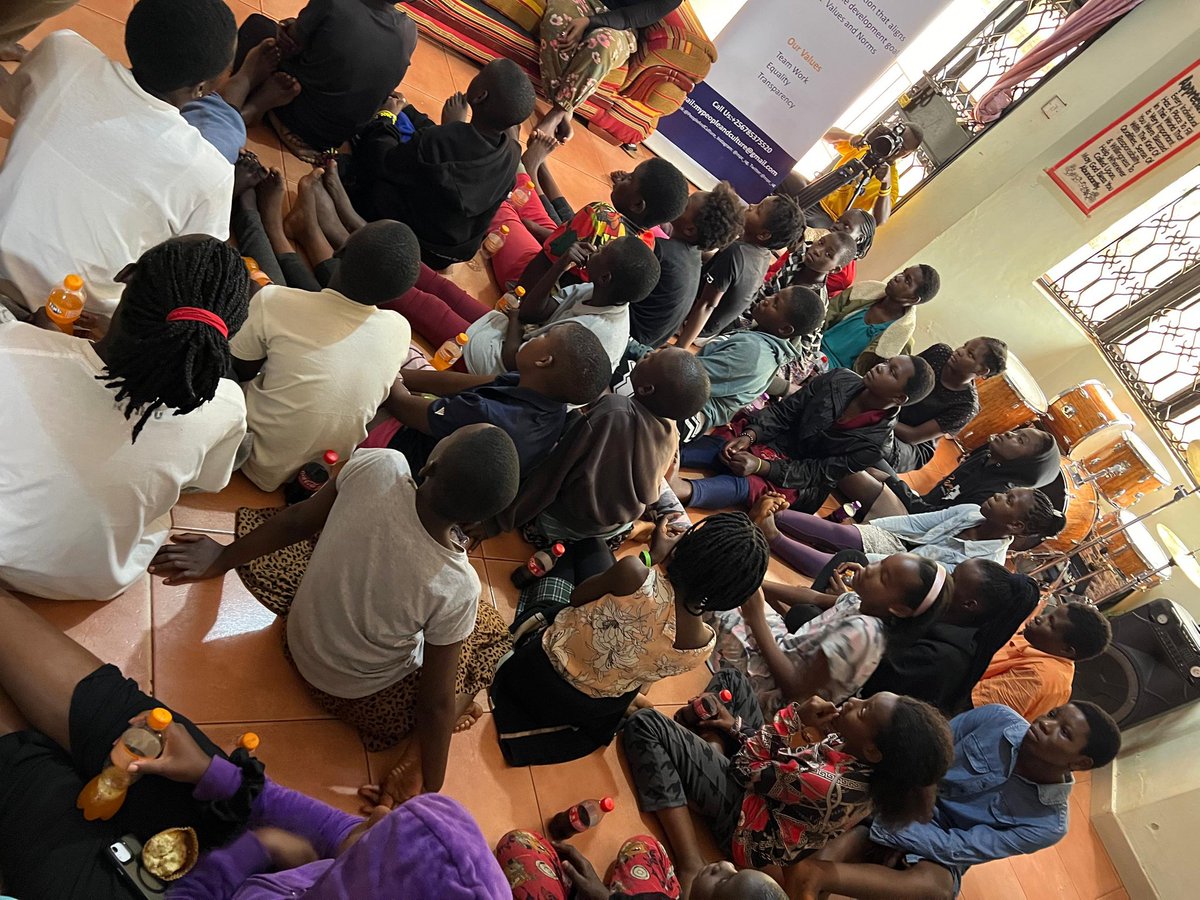
When community meets compassion,transformation happens. We created a safe space where girls could speak freely, learn boldly, and connect deeply. From body literacy to creative expression, this was sisterhood in action.
#SheLeadsPooledGrants #SupportNetworks #GirlsEmpowerment
1
2
8
93

11 Sep 2025
Mental Health in Aviation Act Clears U.S. House. —Legislation would make it easier for pilots and air traffic controllers to seek treatment. Via @FlyingMagazine
#mentalhealth #aerospacesafety #pilots #ATC #atco #supportnetworks
flyingmag.com/mental-health-…
2
11
184

3 Sep 2025
Patients with rare diseases face compounded medical trauma from diagnostic odysseys, fostering feelings of isolation. Patient advocacy groups provide essential community and validation. #RareDiseases #SupportNetworks
3
197

22 Jul 2025
The Importance of Support Networks.
•Social connection linked to improved health and reduced risk of early death.
#mentalhealth #supportnetworks
#socialconnection
30 Jun 2025

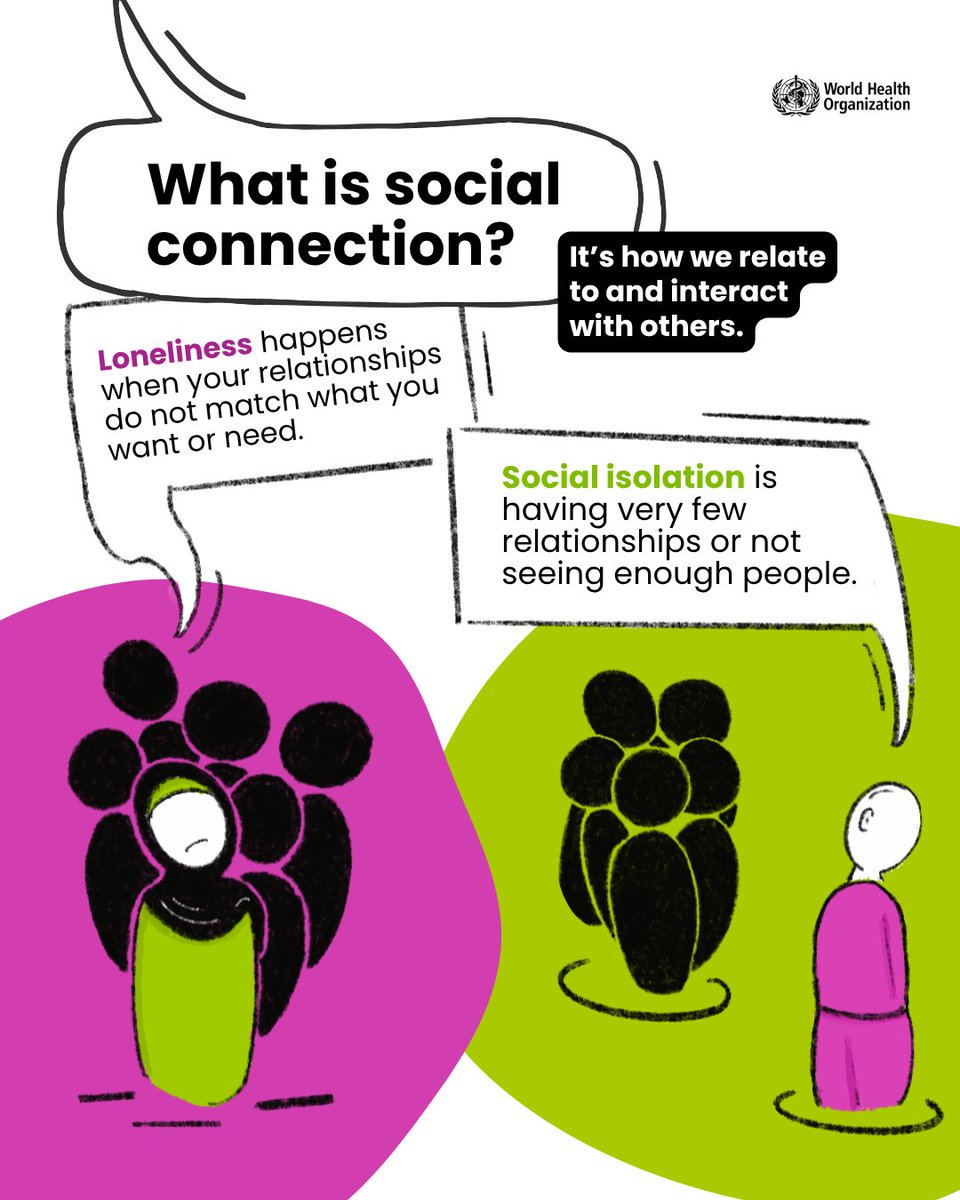
Feeling lonely, disconnected, or unsupported?
You’re not alone—and you don’t have to face it alone. 1 in 6 people on this planet feels lonely.
Read WHO’s new report to learn why social connection is important: bit.ly/3Gpw1zN
10
61

23 Mar 2025
5/ Online support groups and forums have created new opportunities for people to connect with others facing similar challenges. This community-driven approach helps foster understanding and reduces feelings of isolation. 🌍💞 #SupportNetworks #Community
1
34

4 Mar 2025
Secrets & Social Health: My Untold Story
#MentalHealthMatters #SocialHealth #HiddenSecrets #Wellbeing #PersonalExperiences #OpenCommunication #SupportNetworks #EmotionalHealth #Mindset #MentalWellness
2
88

16 Feb 2025
My Journey Through Homelessness in Brighton
#HomelessnessAwareness #BrightonLife #Resilience #SupportNetworks #Awakening #ChildhoodStories #MentalHealthMatters #CommunitySupport #LifeJourneys #Inspiration
2
17

5 Feb 2025
...&then WE have JD Vance (Thiel acolyte & provided #Project2025 foreword) lined up in the #RightWingTakeover ....after that is TrumpKissUp House Speaker Mike Johnson;
Guerilla Protests --town Halls everywhere, #Boycotts #NationalWalkout & #SupportNetworks form our #Resistance
1
2
3
62

28 Dec 2024
Being subjected to #degradation over an extended period can have profound & multifaceted psychological effects.
1. Diminished #SelfEsteem & Self-Worth:
- Chronic Low Self-Esteem: Constant degradation can lead to an internalization of negative feedback, where individuals begin to see themselves as inherently less worthy or capable.
- Self-Blame: Over time, victims might blame themselves for the mistreatment, believing they somehow deserve it or that it's a reflection of their intrinsic value.
2. Emotional Responses:
- #Depression: Prolonged degradation can lead to clinical depression, characterized by persistent sadness, loss of interest in activities, and feelings of worthlessness.
- #Anxiety: The anticipation of further degradation can cause chronic anxiety, with sufferers constantly on edge, fearing the next instance of belittlement.
- #Anger & #Resentment: These can also build up, sometimes leading to outbursts or, conversely, to internalized anger that manifests as self-destructiveness.
3. Cognitive Effects:
- Negative Cognitive Bias: There's a tendency to interpret ambiguous information negatively, assuming the worst about oneself or one's situation.
- Learned Helplessness: This is where individuals feel they have no control over the outcomes in their lives, leading to passivity & lack of initiative.
4. Social and Relational Impact:
- #Isolation: People might withdraw from social interactions to avoid further degradation or because they feel unworthy of relationships.
- #DifficultyTrustingOthers: The experience can make it hard to trust others, leading to difficulties in forming or maintaining close relationships.
5. Identity & Self-Concept:
- #IdentityErosion: One's sense of self can become overshadowed by the negative labels or roles imposed by others, leading to an identity crisis or confusion about one's true self.
6. Behavioral Changes:
- Compliance: To avoid further degradation, individuals might become overly compliant or submissive, losing their assertiveness or autonomy.
- #Aggression or #Hostility: Conversely, some might respond with increased aggression as a form of defense or to regain some semblance of control.
7. Long-term Psychological Trauma:
- Post-Traumatic Stress: In severe cases, degradation can lead to #PTSD, where individuals experience flashbacks, severe anxiety, or emotional numbness in relation to the degrading events.
- Complex Trauma: If degradation occurs in contexts like abusive relationships or oppressive environments, it might contribute to complex post-traumatic stress disorder (CPTSD), which includes additional symptoms like difficulty with emotional regulation.
8. Physical Health Implications:
- The psychological stress from long-term degradation can manifest physically, leading to issues like chronic stress, immune system suppression, & increased risk of various health conditions.
Mitigation & #Recovery:
- Therapy: Psychological counseling, particularly therapies like cognitive-behavioral therapy (#CBT), can help in reframing negative self-perceptions and building resilience.
- #SupportNetworks: Having supportive friends, family, or community can provide a counter-narrative to the degradation, offering validation and a sense of belonging.
- Self-Compassion Practices: Learning to treat oneself with #kindness and #understanding can counteract the internalized negative messages.
- #Empowerment Activities: Engaging in activities that promote a sense of mastery or achievement can rebuild self-esteem and identity.
The effects of long-term degradation are not uniform & can vary based on individual resilience, support systems, & the nature, intensity, & context of the degradation. However, with the right interventions, recovery & personal growth are possible.
1
1
1
193

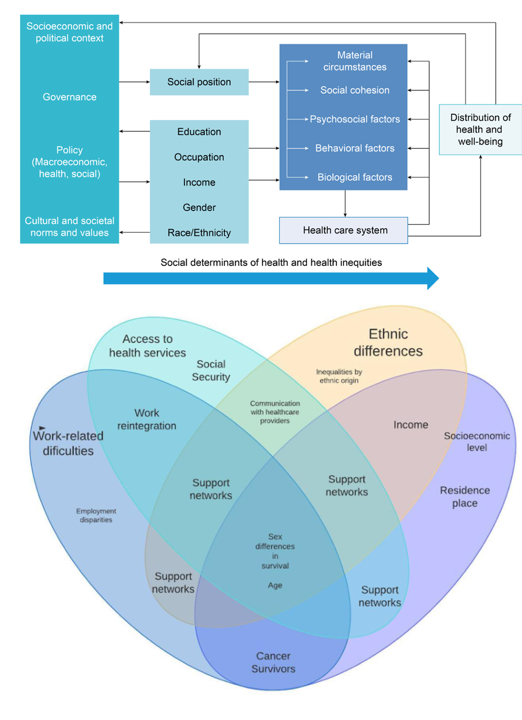
When I think of the social determinants of health, I'm thinking was it being shown in the top figure, however, for cancer survivors it's different especially in regard to post-treatment shown in the bottom figure. Cancer survivors have more factors to consider and more complexities to unravel. Understanding and being able to improve upon these outcomes underscores the need for survivorship programs to be holistically effective as much as possible. It's more than just lifestyle, it's everything altogether.
pubmed.ncbi.nlm.nih.gov/3879…
#cancer #cancersurvivors #socialdeterminantsofhealth #lifestyle #wellbeing #survivorship #cancersupportservices #publichealth #healthcare #health #access #accessibility #supportnetworks #cancerservices #disparities #inequities #healthdisparities #cancerprevention #cancertreatment #posttreatment #qol #qualityoflife #physicalactivity #exerciseismedicine #movement #cancerresearch #oncology #oncologist #cancercare #healthdeterminants #chronicdisease #disease #cancersurvivorship #physicalhealth #healthpromotion #preventionscience #exercisephysiologist #physicaltherapist #socialworker #nurse #doctor #physician #nutrition #dietician #acupuncture #massagetherapy #musictherapy #integrativeoncology @AmericanCancer @ASCO @CDC_Cancer
3
6
355

2 Dec 2024
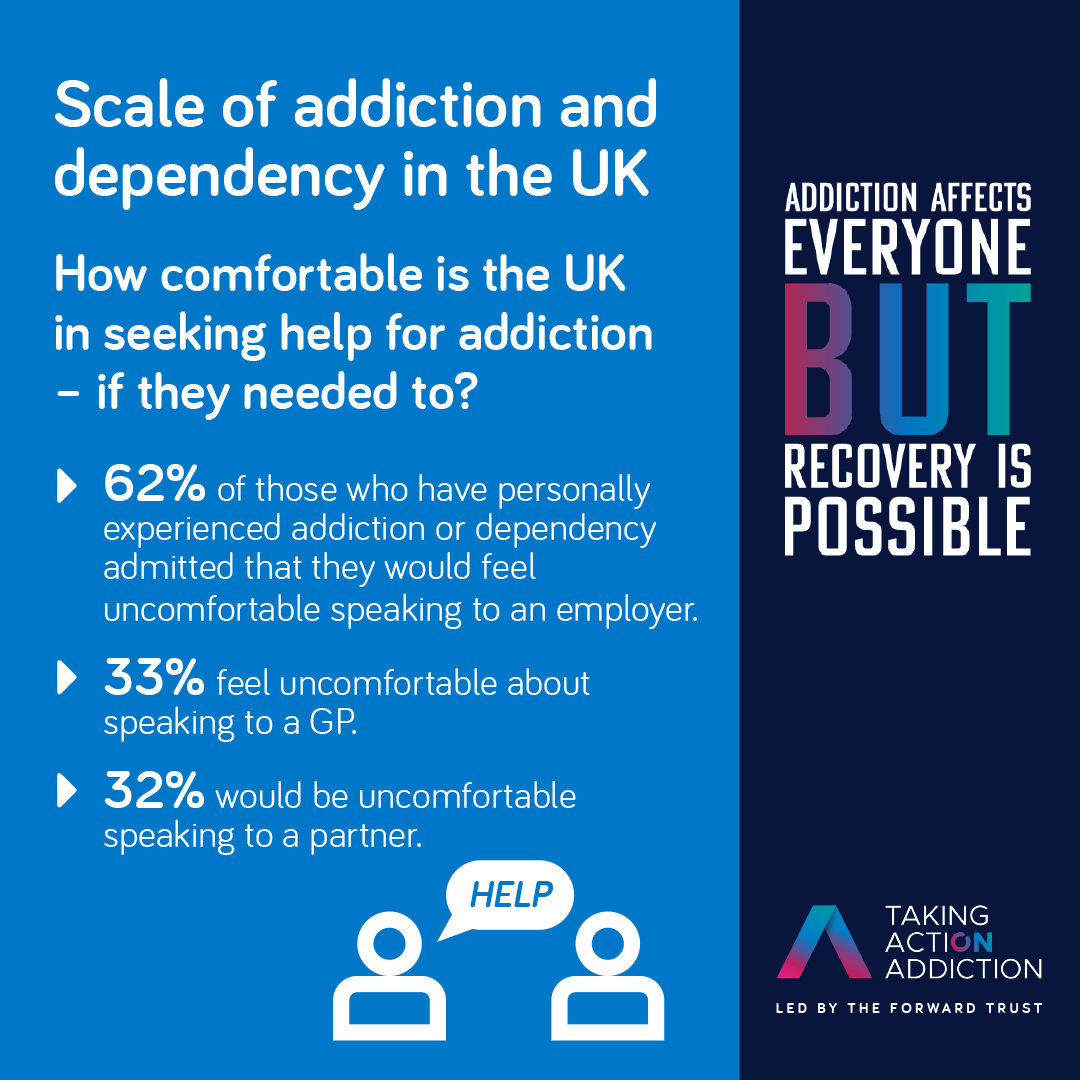
Shame still remains the main barrier preventing individuals from reporting worries about addiction. 💔
Our recent poll reveals that 33% of those with lived experience of addiction or dependency feeling of shame would stop them from seeking help from 9 support sources. Worryingly, this includes a partner, a GP and employers.
These poll results highlight a real urgency for change. We can remove the barrier of shame that is preventing people from accessing support.
Addiction is a serious mental health issue. By challenging stigma and fostering empathy, we can create a society where seeking help feels possible and safe for everyone.
Addiction Affects Everyone BUT Recovery Is Possible. 💙
Read our poll news story and find support on our new website.
takingactiononaddiction.org.…
#AddictionAwarenessWeek2024 #AddictionAffectsEveryone #Poll #HealthData #HealthStats #NewsWorthSharing #News #HealthNews #AddictionStats #Addiction #AddictionSupport #AddictionAwareness #Alcohol #Drugs #GettingHelp #SupportNetworks #AlcoholSupport #Alcoholism #AlcoholUse #AlcoholAdvice #Poll #Ipsos #RecoveryPosse #RecoveryIsPossible #TakingActionOnAddiction
1
3
192

6 Oct 2024
Right now for any one with #PTSD I said I would post this the other night so this is just a quick list!
#GriefCounseling
#SupportNetworks
#TraumaCounselors
#ChurchCounselors
#ChildGriefCounseling
#EmergencyRoomPsychiatric
Much more but this is what maybe available for free for family or friends in any community.
Right now people may not even first responders realize they are suffering with the onset of it!
Symptoms; Not being able to sleep, night terrors, easily startled, triggers (5 senses smell, taste, touch, sounds/hearing, sight) have been enacted and neurons are communicating with your brain and may shut down some memories temporarily!
The six stages are;
The Impact Stage (Fight, Flight, Freeze) ...
The Numbing Stage (Emotional Detachment) ...
The Intrusion Stage (Haunted by the Past) ...
The Hyperarousal Stage (Living on Edge) ...
Emotional Reintegration and Short-Term Recovery. ...
Long-Term Recovery and Integration.
1
2
39

18 Aug 2024
From Suppression to Expression: Men's Mental Health Journey
#MentalHealth #MensMentalHealth #MentalHealthAwareness #EmotionalWellbeing #TraumaIsExpensive #MentalHealthMatters #SupportNetworks #SelfCare #Mindfulness #MentalHealthStigma #MenOfColor #BreakingBarriers

2
21

7 Aug 2024
Incontinence is a tough subject but it’s an important conversation to have.
In this article we discuss how to talk to a family member about incontinence, and the steps you can then take.
bbuk.org.uk/how-to-talk-to-a…
@AttendsUK #Incontinence #IncontinenceAwareness #SupportNetworks
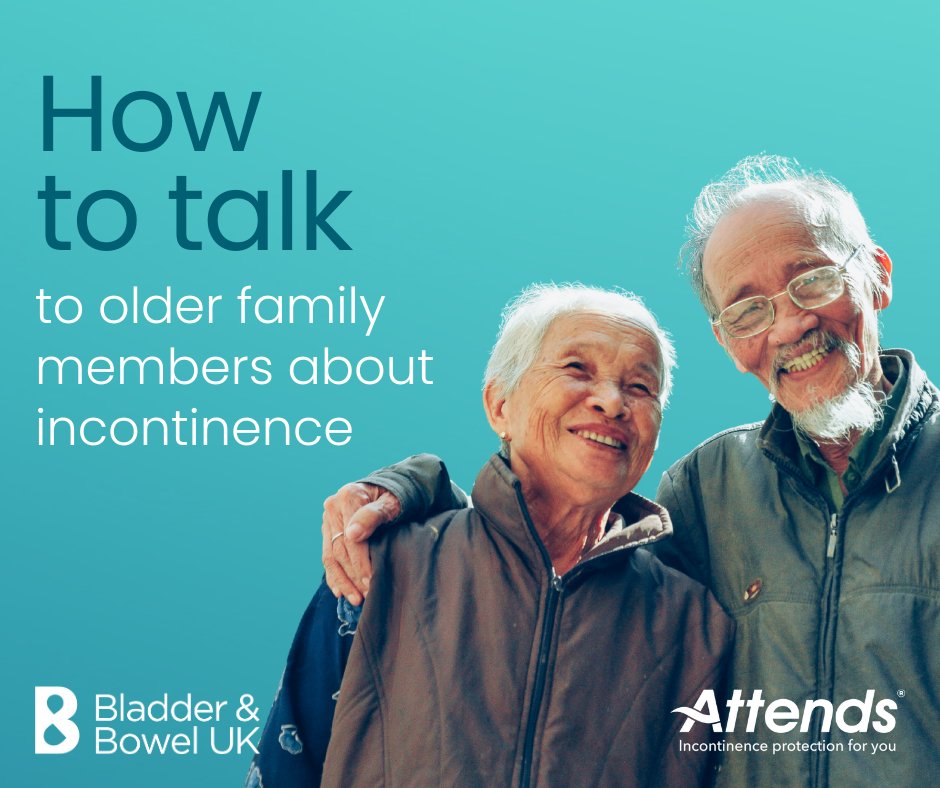
ALT An older family member and a younger relative engaging in a caring dialogue about incontinence, promoting comfort and trust. With a teal background and the BBUK and Attends UK logs in the bottom corners.
2
5
163

4 Aug 2024
This Friendship Day, 2050 Healthcare celebrates the unsung heroes of healing - our incredible support networks!
#FriendshipDay #HealingHeroes #SupportNetworks #SupportAndHealing #2050Healthcare
2
16

1 Aug 2024
Joining a PhD Support Network can provide valuable guidance, resources, and a sense of community throughout your research journey. Connect with fellow scholars, share insights, and navigate challenges together. #PhDlife #SupportNetworks
1
1
7
1,159

19 Jun 2024
The journey to mental well-being requires conscious effort and mutual support.
Our discussions underscored the critical need for mental health awareness and the positive impact it can have.
#StressManagement #AgricultureChallenges
#EconomicStrain #SupportNetworks
1
2
26