
May 7
$CPRX governance deserves serious scrutiny.
This is not about making accusations.
It is about reading the 8-K, the merger agreement, the voting agreement, the joint press release, and the Hetero settlement together.
And when you read them together, the process raises serious questions for public shareholders.
On May 7, 2026, Catalyst Pharmaceuticals filed an 8-K confirming a definitive merger agreement with Angelini Pharma.
Headline terms:
$31.50/share in cash.
~$4.1B equity value.
Expected close in Q3 2026.
Catalyst board approval: unanimous.
But the issue is not just the price.
The issue is the sequence.
In the same 8-K package, Catalyst disclosed that its FIRDAPSE patent litigation with Hetero had been settled.
Under that settlement, Hetero will not market generic FIRDAPSE in the U.S. before a specified date in January 2035, subject to customary limited exceptions.
Catalyst also stated that this resolves all pending FIRDAPSE patent litigation.
That was the overhang.
Public shareholders lived with the litigation risk, trial risk, stay-expiration risk, and generic-entry uncertainty.
Then, at the moment the overhang is removed, shareholders are told:
Good news: the FIRDAPSE moat is protected into January 2035.
Also: the company is being sold for $31.50/share in cash.
How does that make sense?
If a company just protected its core cash-flow asset into 2035, the natural next step should be price discovery on the de-risked standalone business.
Instead, the upside appears to have been immediately folded into a cash takeout.
That is the governance concern.
Catalyst had roughly $700M of cash and no debt at year-end 2025.
Against a ~$4.1B equity value, that implies a rough enterprise value of about $3.4B.
In other words, around 17% of the stated equity value is represented by Catalyst’s own cash balance.
That matters.
From an economic perspective, Angelini is not just buying a rare disease platform.
It is buying:
- FIRDAPSE cash flow with generic entry pushed to January 2035
- AGAMREE growth
- FYCOMPA cash flow
- U.S. rare disease commercial infrastructure
- and a cash-rich, debt-free balance sheet
The merger agreement’s financing representation also refers to debt financing together with cash and cash equivalents held by Catalyst and its subsidiaries as part of the available funds analysis.
So the economic reality is clear:
Catalyst’s own balance sheet materially reduces the buyer’s net enterprise value exposure.
This is not a distressed seller.
This is a profitable, cash-rich, debt-free company whose largest legal overhang was just removed.
That makes the timing even harder to accept.
Why now?
And more specifically:
Why four days before Q1 earnings?
Catalyst had already announced that it would release Q1 2026 financial results after market close on May 11, 2026, with a conference call on May 12.
The merger was announced on May 7.
Four days before the numbers.
Q1 2026 was not just another quarter.
It was the first quarter investors would watch for:
- the FIRDAPSE royalty reset
- continued AGAMREE adoption
- product-level revenue momentum
- operating leverage
- cash generation
If Q1 data showed stronger earnings power, better margins, or accelerating AGAMREE momentum, the market could have reassessed $CPRX before any shareholder vote.
So why lock in $31.50/share before shareholders could see that data?
Why not let the owners of the business see the updated numbers first?
That is not an allegation.
It is a basic process question.
The “unaffected price” framing also deserves scrutiny.
The joint press release highlights a 21% premium to Catalyst’s unaffected closing share price on April 22, 2026, and a 28% premium to the 30-day VWAP to that date.
But April 22 was before the Hetero settlement was public.
That matters.
A premium to a risk-discounted price is not the same thing as a premium to a de-risked company.
By May 7, the FIRDAPSE litigation overhang had changed materially.
So the key question is not:
“Was $31.50 a premium to the old, risk-discounted price?”
The real question is:
“Was $31.50 a fair price for the de-risked company after the FIRDAPSE overhang was removed?”
Those are not the same question.
The merger agreement adds more concerns.
This is not a go-shop structure.
It is a no-shop with a fiduciary out.
A superior proposal can still emerge, but Catalyst must notify Angelini, provide details, and give Angelini a 5-business-day match period.
The termination fee is $155.475M, roughly 3.8% of the stated equity value.
All directors and executive officers also entered into voting agreements and irrevocable proxies, agreeing to vote their shares in favor of the transaction and against competing acquisition proposals.
The exact number of shares locked up is not yet visible in the form agreement.
That must be checked in the proxy.
But the structure is clear enough:
The board unanimously approved the deal.
The directors and officers agreed to support it with their shares.
The company entered a no-shop structure.
Angelini received match rights.
And the termination fee creates real friction for any topping bid.
Maybe each piece can be defended as standard public M&A practice.
But public shareholders should evaluate the whole package, not each clause in isolation.
The total package is:
- Hetero litigation resolved
- FIRDAPSE generic threat pushed to January 2035
- merger announced immediately
- Q1 earnings only four days away
- board approval unanimous
- no-shop
- 5-business-day match right
- $155M termination fee
- director/officer voting agreements
- same-day forum-selection bylaw amendment
- proxy still pending
That is a lot of deal machinery around a company whose core risk profile had just improved.
There is also an odd detail in Exhibit 99.1.
The joint press release states:
“An earlier release was issued which has now been corrected.”
What exactly was corrected?
Was it immaterial wording?
Was it timing?
Was it deal language?
Was it related to the “market signs” that the transaction had become public information before the announcement?
To be clear: that sentence alone proves nothing.
But shareholders deserve to know whether the correction was purely clerical or related to the transaction process.
The upcoming proxy should make the timeline clear.
Catalyst’s board determined unanimously that $31.50/share is fair and in the best interests of shareholders.
That conclusion deserves hard questioning.
Not because anyone needs to allege illegality.
Because public shareholders are entitled to understand whether the board fully captured the value of a newly de-risked FIRDAPSE franchise before agreeing to sell the company.
The upcoming proxy statement is now the key document.
Shareholders should look for:
1. The exact timeline of negotiations with Angelini.
2. When Angelini first engaged with Catalyst.
3. Whether other strategic buyers were contacted.
4. Whether there was a real market check.
5. Why there is no go-shop.
6. How J.P. Morgan’s fairness opinion treated the Hetero settlement.
7. Whether the January 2035 generic-entry restriction was included in the valuation case.
8. Where $31.50/share sits within the banker’s valuation range.
9. Whether the board evaluated a standalone plan after the Hetero settlement.
10. How Q1 2026 expectations were considered before signing.
11. How much directors and executives will receive from options, RSUs, acceleration, and other transaction-related economics.
12. How many insider shares are locked under voting agreements.
13. What exactly was corrected in the earlier release.
14. Why the company agreed to sell before shareholders saw the May 11 Q1 update.
This is the core issue:
Public shareholders bore the downside risk of the patent litigation.
The moment that risk was resolved, the upside appears to have been capped by a cash sale.
That may be legal.
It may be standard M&A.
But from a minority shareholder perspective, it is exactly the kind of governance outcome that deserves scrutiny.
A board’s job is not merely to deliver a premium to a price that was depressed by uncertainty.
A board’s job is to maximize value for the owners of the business.
If the moat was just protected into January 2035, the burden is on the board to explain why shareholders should not receive the full benefit of that de-risking as public owners.
The 8-K answered one question:
Yes, the deal is real.
It created a more important one:
Was this the right time, the right price, and the right process for $CPRX shareholders?
This does not look like a simple liquidity event.
It looks like a value capture event.
The Board did not just agree to sell the company.
It agreed to sell the shareholders’ patience right at the moment that patience was about to be tested by de-risked litigation, Q1 earnings, and a newly visible 2035 FIRDAPSE runway.
The upcoming Proxy Statement will be the truth document.
That is where shareholders should look for the negotiation timeline, the fairness analysis, the treatment of the Hetero settlement, the Q1 assumptions, the corrected-release explanation, and the exact insider economics.
Stay tuned.
#CPRX #CorporateGovernance #ActivistInvesting #SEC #AngeliniPharma #ValueCapture
2
4
264

May 1
☕ Bought a coffee. Generated $ITL buy pressure.
Sounds wild but that's literally how InterLink's Value Capture protocol works.
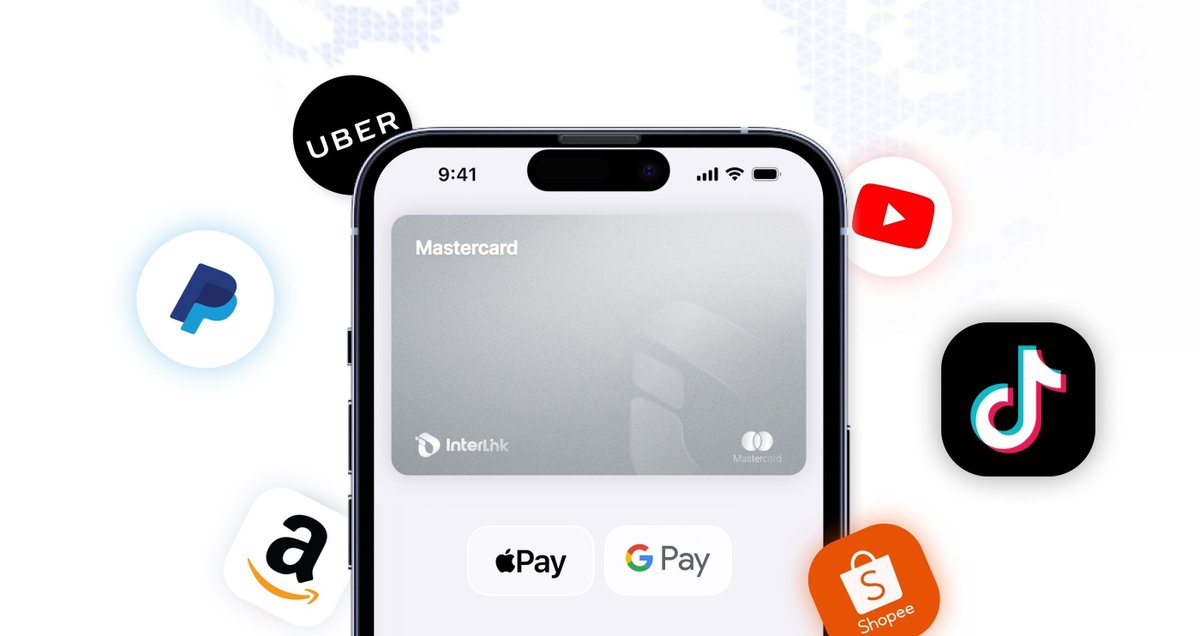
Every time you spend on the InterLink Mastercard, a % of that transaction auto-routes into $ITL liquidity pools.
Platforms where this happens in real life:
🛒 Amazon — shopping
🚗 Uber — transport
💸 PayPal — transfers
🛍 Shopee — Asian e-commerce
🎵 TikTok — creator support
▶️ YouTube — subscriptions
This isn't speculative demand. It's commerce-backed demand.
Most tokens pump on hype. $ITL accrues value from every latte, every ride, every subscription bought by the Human Network.
The more people spend → the more $ITL gets absorbed. That's the flywheel. 🔄
Drop a 🔁 if you understand why this is different from every other crypto card out there
#InterLink #ITL #ITLG #ValueCapture #Web3Payments
1
4
157

Every action has value.Most systems ignore it.
BTCEN captures it.From consumption to recycling, with BBcoin rewarding every step ,nothing goes unnoticed.
#ValueCapture #BBcoin #CircularSystems #Web3Utility #BTCEN
5
9
45

Mar 31
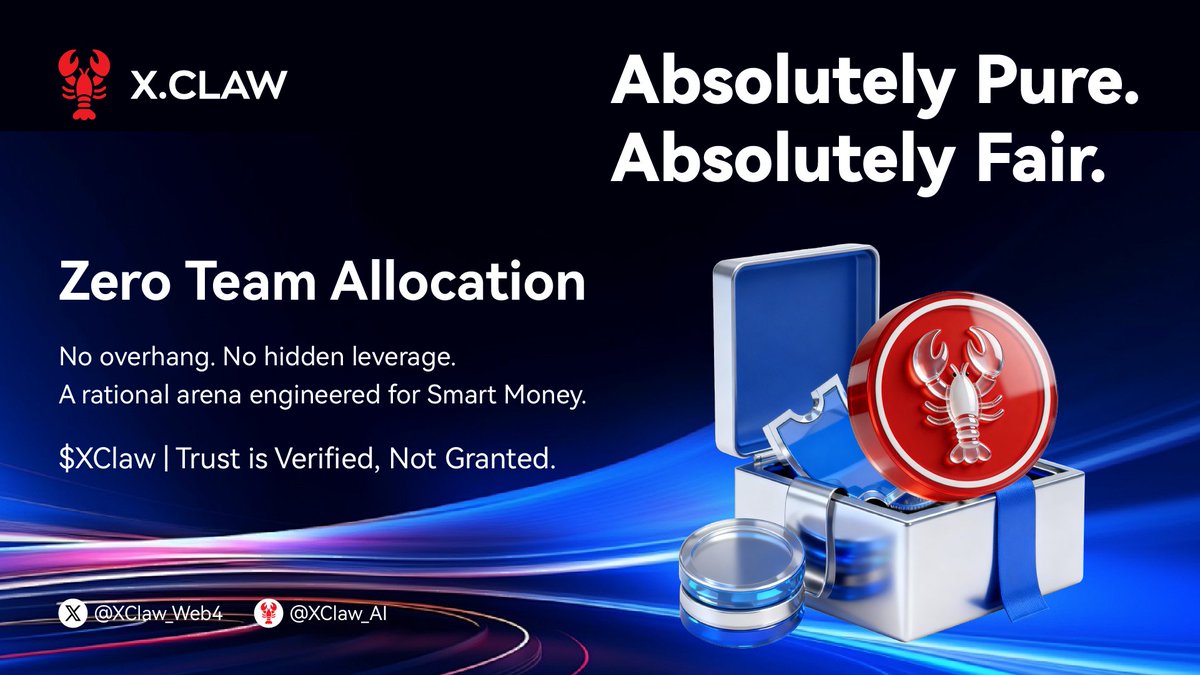
⬛️ Discover $XClaw: Absolutely Pure, Absolutely Fair.
🚀Zero team allocation, eliminating overhang and hidden leverage.
A rational arena engineered exclusively for Smart Money, where Trust is Verified, Not Granted.
#Web4 #ValueCapture ⚖️
16
2
13
44,201

Mar 18
Your thoughts are zero-value until they hit the public domain.
Writing is the act of turning "hidden talent" into "negotiable assets."
Get exposed. 👀
#ValueCapture #Sol
2
3

Mar 17
Building Tokens That Last: Beyond Hype
In #DeFi, hype fade but fundamentals endure. The strongest tokens aren’t just traded; they capture real, compounding value for everyone in the ecosystem.
Here’s how a resilient token model works:
🗳 Governance that matters holders actively shape the network, turning passive users into engaged participants.
Supply discipline buybacks and burns create scarcity, reinforcing long-term value.
🔁 Ecosystem alignment – incentives reward actions that grow the network, from adoption to participation.
📊 Why structural design beats hype:
•Aligns incentives across all stakeholders, reinforcing network effects.
•Each mechanism amplifies value rather than leaking it.
•Focuses on durable growth, not short-term price swings.
In short: a strong token isn’t “hot” today it’s engineered for longevity, adoption, and compounding utility.
Here’s my challenge to builders and holders alike:
What features or frameworks do you think define a token that can truly thrive over the next 5–10 years?
#TRONEcoStar
#Tokenomics #CryptoStrategy #BlockchainEconomics #DeFiDesign #ValueCapture

18
4
12
1,460

Liverpool Street generates enormous public value.
94.5 million passengers. A freehold estate. A national transport node.
So who captures the uplift when the air above it becomes a financial instrument?
Part III of our investigation puts the numbers on the table:
• £197.5m residual value from station retail
• £171.75m potential developer profit on the office
• A 50 year income strip packaging future station revenue
• A delivery structure that determines who keeps the upside
This is not just architecture. It is governance. It is distribution. It is value capture in plain sight.
And without a published station first minimum baseline, “public benefit” becomes a story told after the deal is structured.
Read Part III:
conserveconnect.news/who-cap…
#LiverpoolStreet #CityOfLondon #NetworkRail #LondonPlanning #ValueCapture #PublicBenefit #EIA #Viability #PoliticalEconomy #PublicInfrastructure
3
4
185

Feb 25
💎 Diamond industry pros: Struggling to turn emotional value into real returns? Technology alone isn’t enough. It’s time for a paradigm shift—learn to sell, monetize the emotions your diamonds inspire every day.
#DiamondBusiness #ValueCapture #EmotionalValue #LuxuryStrategy #DiamondIndustry #JewelryBusiness
1
4
155

If you’ve been at the same company for 15 years, AI may already consider you replaceable....
Dive in: lnkd.in/e4ycqWHS
#AIeconomy #FutureOfWork #PostEmployment #EconomicPositioning #Leverage #StrategicAdvantage #AIRevolution #ValueCapture #AIGovernance
2
2
78

Feb 23
If you’ve been at the same company for 15 years, AI may already consider you replaceable.
At the India AI Impact Summit 2026, Vinod Khosla said long-tenured employees are becoming “unemployable.”
IT services gone by 2030.
Jobs unnecessary by 2050.
Exaggeration?
Or market math?
The white-collar extinction event won’t be announced. It will be priced.
Our latest intelligence brief is a must read: The Employability Shock: AI and the White-Collar Extinction Event
Dive in: lnkd.in/e4ycqWHS
Watch for the next installment : "The Employability Repricing Framework-
How AI Is Quietly Restructuring Career Value"
An AIBIB Member Brief decoding how the repricing mechanism actually works, what decisions become rational inside that shift, and how to position before the compression phase accelerates.
#AIeconomy #FutureOfWork #PostEmployment #EconomicPositioning #Leverage #StrategicAdvantage #WinnersAndLosers #AIRevolution #ValueCapture #AIGovernance #AIThoughtLeadership #AIBIB
2
51

Feb 23
TECHAIDE
India’s AI data centre moment: What we give up to host intelligence
Writer: Nishant Sahdev
Click- dailypioneer.com/news/india-…
#IndiaAI #AIInfrastructure #DataCenters #DigitalSovereignty #StrategicAutonomy #EnergySecurity #WaterGovernance #UrbanPlanning #GridStability #ComputeEconomics #PublicPolicy #AIRegulation #InfrastructureEconomics #ValueCapture #DigitalIndustrialPolicy #AIandPower #NationalCapacity #FutureOfCities #SustainableAI #TechPolicyIndia
2
80

$MEFAI and the New Economic Paradigm of Web3
Why do people play games ? to be number one and make a name for themselves, to relax, to meet new people.
⚔️Build your clan, lend to each other, send gift tokens.
Launch coordinated attacks on countries, promote your new brand or token project, share your vision, broadcast your message to the entire game, go live and lead conquests.
We transformed the blockchain into a global battlefield of influence.
This is not just a game, it is the ultimate marketing engine powered by BSC and Solana.
⚔️ How Conquest Works
Acquire Countries, buy countries and watch the floor price rise as competition intensifies.
Collect Your Tax, earn 10 percent commission from every subsequent transaction in your region.
The King’s Final Stand, being the Last Owner is not a loss, you may lose some tokens, but you gain honor and name the next season, become the one everyone fears to challenge, no one can take your country, this is the Grand Reward, unlock the accumulated regional pool and gain ultimate visibility.
⚔️ Maximum Visibility, Zero Cuts
When you conquer a region, your logo, slogan, social media, and YouTube are embedded on the map.
Promote your NFT collection, increase your token awareness, build a brand watched by the entire ecosystem.
⚔️Multi Chain Dominance
Whether you are a BSC whale, or a Solana degen, we support you, deposits and withdrawals work seamlessly on both networks.
The Last King never loses, he becomes a legend with the greatest reach in Web3.
⚔️Season 1 GENESIS has begun, users are testing.
Do not just watch history, write it, build your empire, claim your rewards, and make your name known to the world.
This isn't just a game loop, it's a valuecapture mechanism that turns global exposure into permanent price support for every holder.

12
32
69
2,073
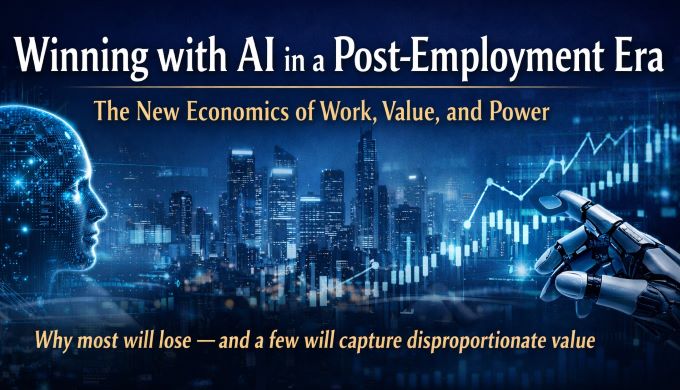
Winning with AI in a Post-Employment Era
buymeacoffee.com/aibib/winni…
#AIeconomy #FutureOfWork #PostEmployment #EconomicPositioning #Leverage #StrategicAdvantage #WinnersAndLosers #AIRevolution #ValueCapture #AIGovernance #AIThoughtLeadership #AIBIB
1
2
66
Liverpool Street Station “upgrade” is now approved - 19–3. But here’s the trick: public benefit was treated as decisive while the one thing that would make it measurable was treated as if it should not exist.
No station-first minimum baseline.
No transparent alternatives.
Just “viability” - a word that closes debate.
The planning case says the scheme is “self-funded”. Fine. But the financials tell a different story: station “improvement works” costed at £419.58m, still modelled as a deficit even after the commercial envelope is counted — and in the applicant’s own present-day outputs, station retail (£197.5m RLV) dwarfs the office contribution (£44.2m RLV).
Yet the City signs off an 88,000 sqm over-station office massing - a skyline monument above a national interchange - while the public gets a constrained uplift used to license the deal.
This is not design. It’s political economy: how a public asset becomes a development platform, and how “public benefit” becomes a permission slip for value capture.
Read Part I: Who Captures Liverpool Street?
conserveconnect.news/who-cap…
#LiverpoolStreet #NetworkRail #ACME #CityofLondon #Planning #Heritage #ValueCapture #Viability #UrbanPolitics #London
3
3
395

Feb 9
⏳ Bitcoin in 2 Minutes: 2009-2025
See how BTC grew from $0.04 💎 to over $100,000
Surviving 8 epic market crashes, over 200 “death calls”, and countless skeptics who lost Bitcoin sovereignty — yet long-term holders stayed the course 🚀
A 15-year journey of volatility, resilience, and historic growth 🌐
The ANT story is unfolding — follow ANT as it redefines the new financial order ⚡
#ANT #BTC #Bitcoin #Web3 #DeFi #CryptoHistory #ValueCapture #LongTermHODL #CryptoInnovation #DigitalAssets
2
7
428

Feb 8
Ghana’s move to refine gold at home isn’t just industrial policy — it’s economic sovereignty in action. Historically, exporting raw gold meant forfeiting billions to distant markets and perpetuating colonial-era value capture. Shifting processing onshore changes the incentive structure: it captures value locally, builds jobs, and opens real leverage over supply chains.
That pattern — where resource holders reclaim agency in how their minerals are governed, priced, and integrated into global markets — is at the heart of “Africa’s New Scramble: Lobito vs. Belt and Road in the Superpower Showdown” by Bosco Mutarambirwa.
📘 Paperback: amazon.com/dp/B0FYX7V1CH
#AfricasNewScramble #EconomicSovereignty #Minerals #ValueCapture #Ghana #CriticalMinerals #Geoeconomics
2
2
261

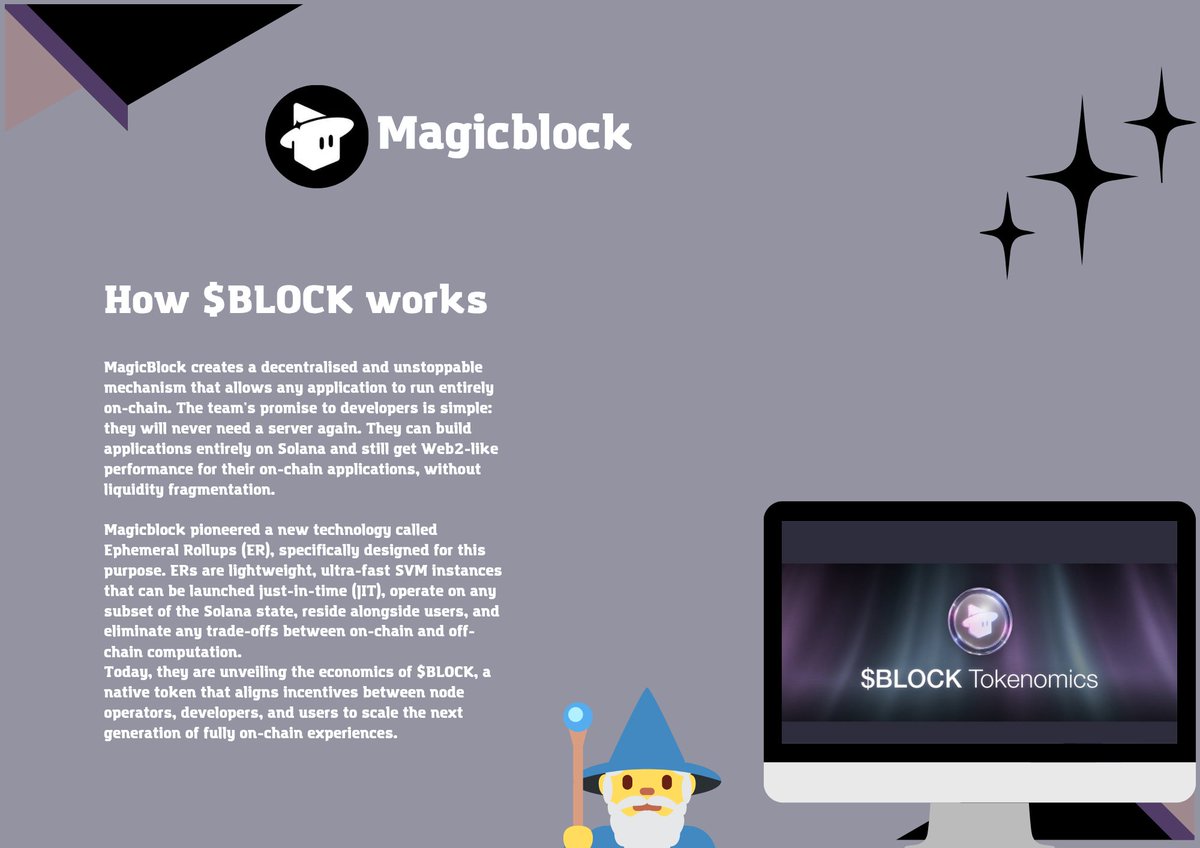
How $BLOCK work
$BLOCK is a network token. It coordinates and incentivizes users,developers and node operators to ensure bootstrapping longterm valuecapture for protocol
@magicblock's building decentralized and unstoppable engine to enable any application to run entirely onchain
7
21
1,039

🎯 STON captures value from:
- Every swap on Ston.fi
- Liquidity pool fees
- Platform growth
- Ecosystem expansion
Built to appreciate with adoption. 🚀
#STON #ValueCapture #DeFi

3
12

@sparkdotfi
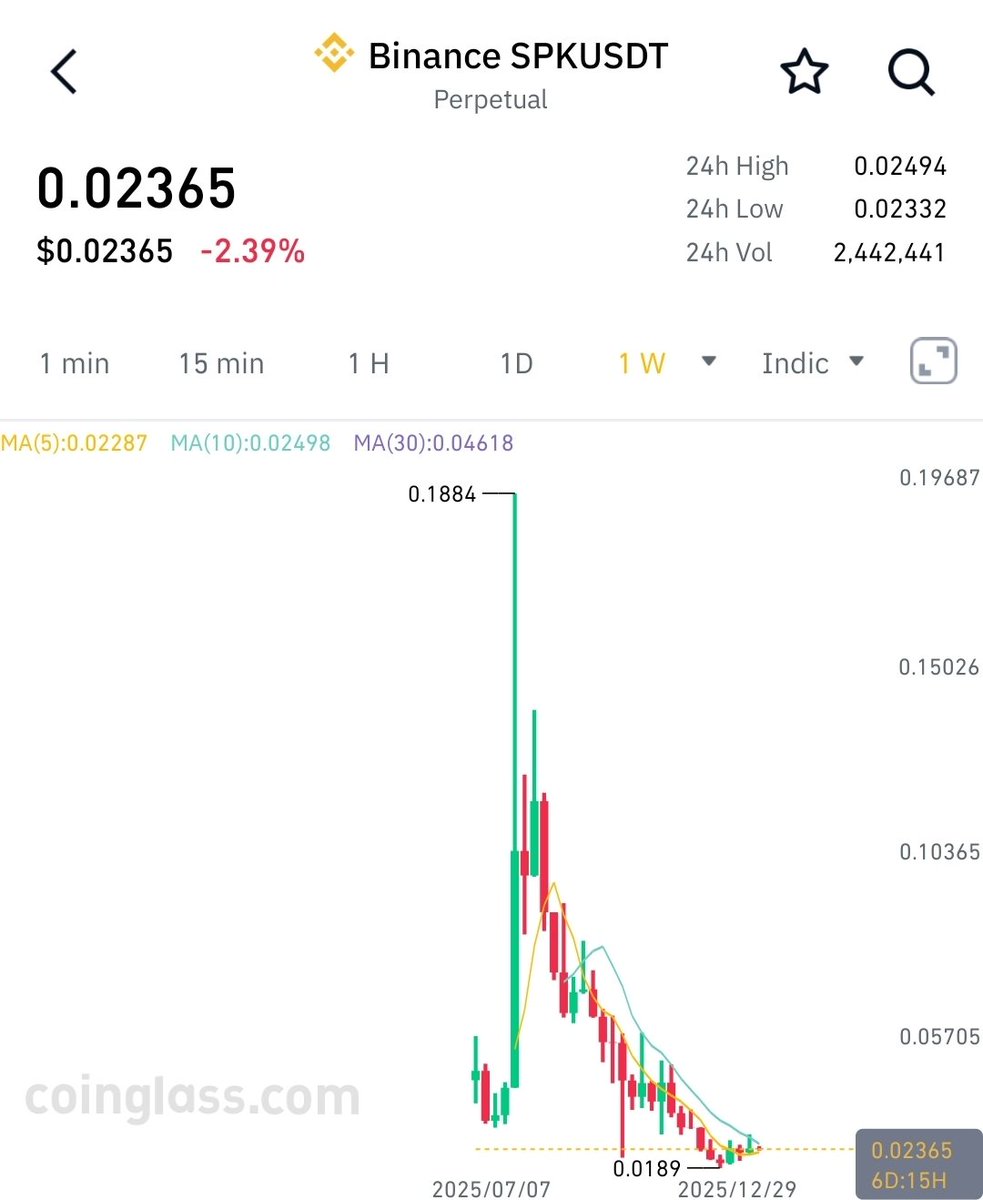
To the Spark community for over 7 months $SPK has followed the same pattern brief weak bounces followed by heavier sell offs alongside a steadily rising circulating supply
With no clear price defense or timely action from the team this has understandably eroded confidence over time
To new investors considering $SPK please proceed with caution there are other strong projects where teams engage their communities manage supply responsibly and actively protect token value
Price action is not sentiment it is feedback
#SPK #Spark #Crypto #DeFi #Tokenomics #PriceAction #Dilution #ValueCapture
1
2
3
60
Six months of nonstop collapse. No bounce. No intervention.
Circulating supply keeps rising while the team watches the price bleed this is not building, this is abandonment of $SPK holders.
#SPK #Spark #DeFi #Crypto #Tokenomics #ValueCapture #Dilution #PriceAction
2
1
5
483