
4 Nov 2025
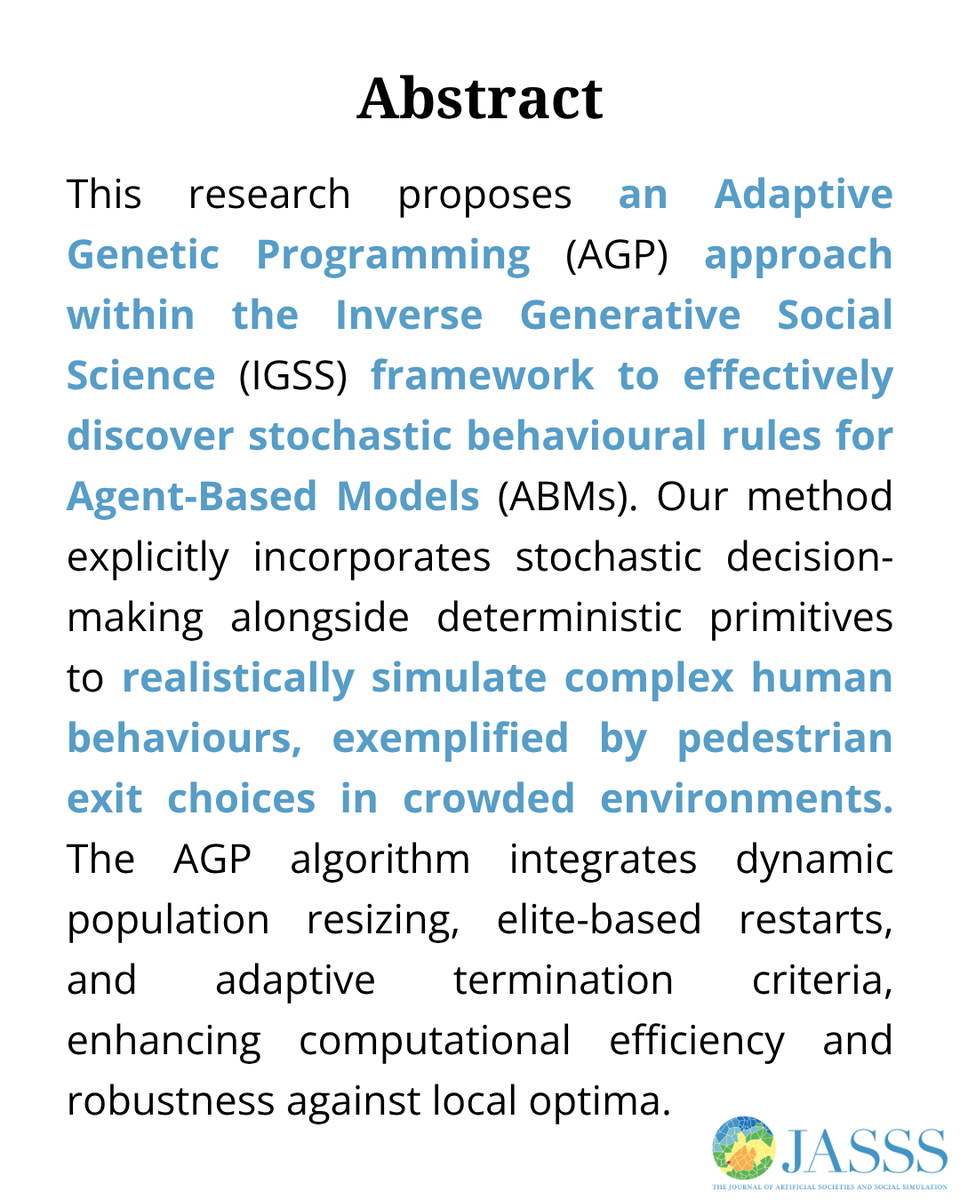
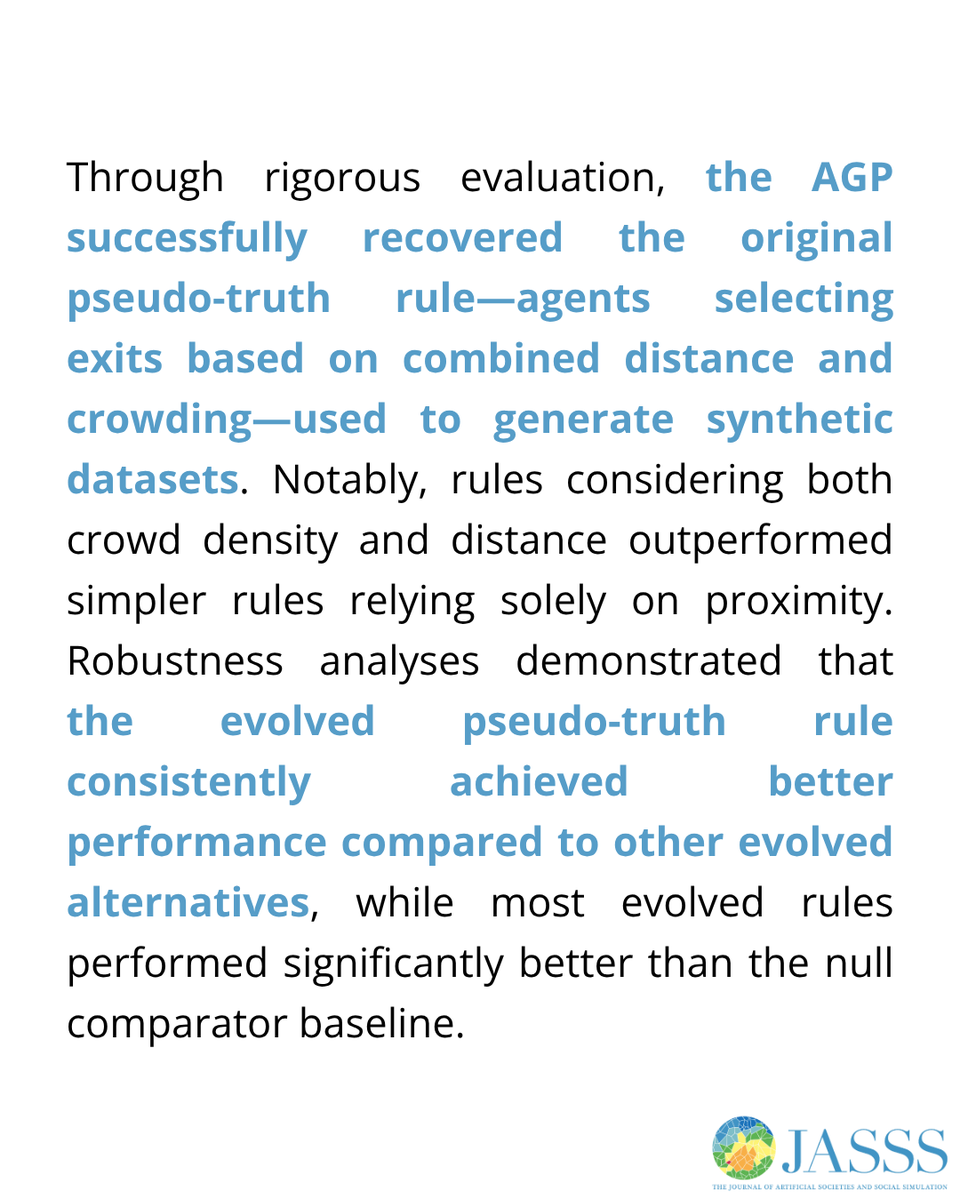
Can models learn realistic human behavior, such as #PedestrianDynamics? This new study applies #AdaptiveGeneticProgramming within #InverseGenerativeSocialScience to evolve stochastic rules in #AgentBasedModels.
Read the full #OpenAccess article in #jasss: jasss.org/28/4/1.html
4
6
310

18 May 2025
Artificial Intelligence Based in silico Clinical Trials for Vaccines
1.This paper explores how artificial intelligence can revolutionize vaccine development through in silico clinical trials (ISCTs)—simulations using virtual patient cohorts to evaluate safety and efficacy before actual trials begin.
2.AI significantly enhances ISCTs by automating trial design, optimizing patient selection, and simulating immune responses, enabling more accurate, efficient, and ethical alternatives to traditional approaches.
3.AI-powered ISCTs reduce the time and cost of development, simulate complex immune interactions, and predict antigenicity, efficacy, safety, and even long-term effects—dramatically improving preclinical decision-making.
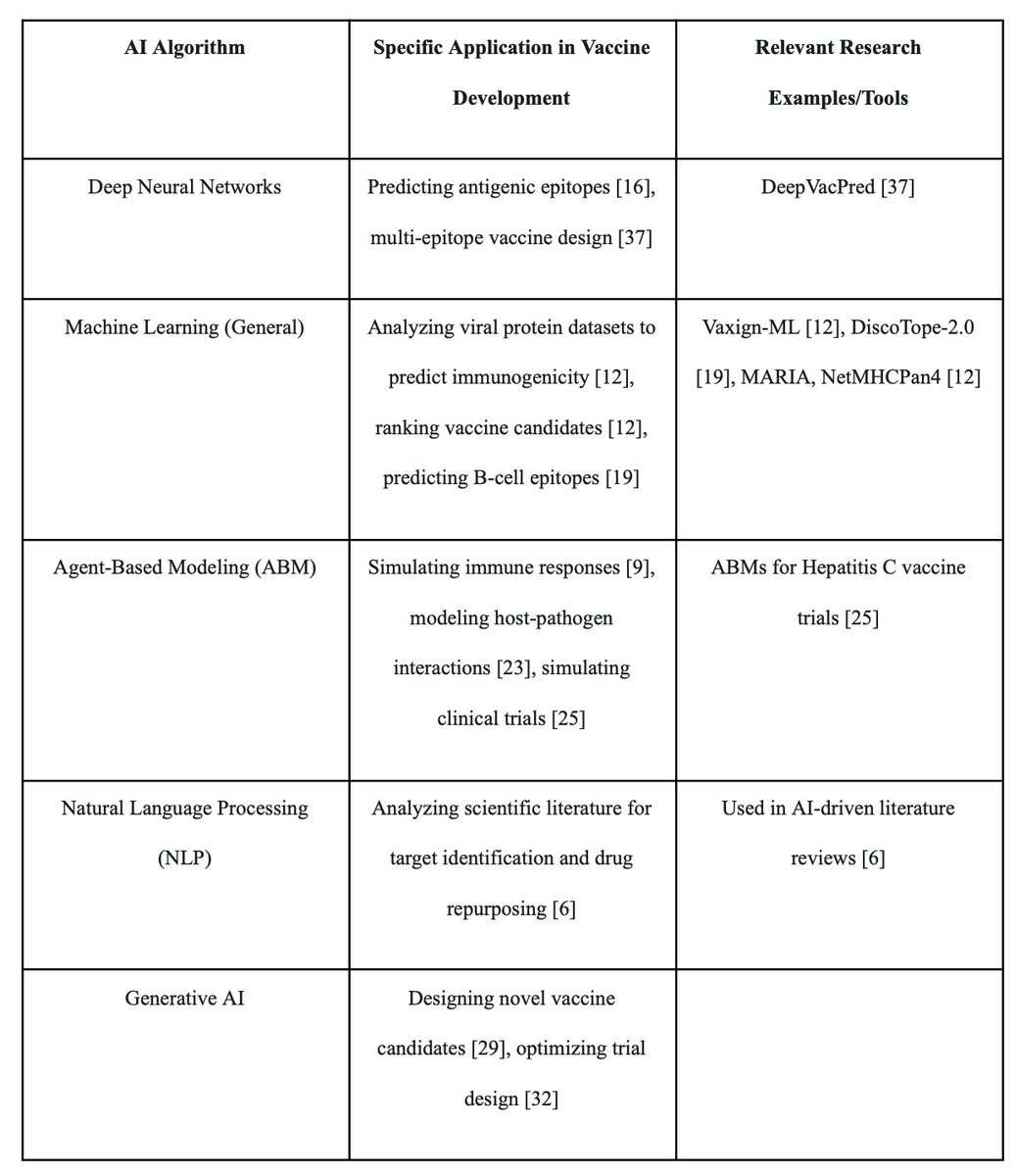
4.Machine learning tools like Vaxign-ML, MARIA, and NetMHCPan4 are already used to predict epitopes and antigenic targets, while DiscoTope-2.0 identifies B-cell epitopes based on structural geometry.
5.Agent-based models (ABMs) simulate immune cell interactions in silico, bridging the gap between in vitro models and real-world outcomes. They've been applied to vaccine trials for hepatitis C and tuberculosis.
6.AI aids in personalizing vaccines through codon optimization, 3D-printed formulations, and digital twins—virtual replicas of patients used to predict personalized immune responses and outcomes.
7.The approach also improves trial diversity by generating synthetic cohorts that represent underrepresented populations, ensuring broader generalizability and reducing real-world recruitment barriers.
8.AI models can forecast potential adverse effects using predictive toxicology, monitor viral mutations for proactive vaccine updates, and simulate years of trial data within minutes—dramatically accelerating R&D.
9.In silico models are gaining traction with regulatory bodies like the FDA and EMA. Frameworks such as Good Simulation Practice (GSP) aim to standardize validation and credibility of these AI-powered simulations.
10.Real-world applications include DeepVacPred for SARS-CoV-2, ABMs for hepatitis C, and AI-assisted epitope design for bovine coronavirus. Companies like Pfizer, Medidata AI, and Isomorphic Labs are integrating ISCTs into pipelines.
11.Despite their potential, ISCTs face challenges: ensuring model validity, managing data bias, navigating unclear regulatory frameworks, and requiring high-level interdisciplinary collaboration and infrastructure.
12.Future trends include integration with synthetic biology and single-cell omics, development of universal and personalized vaccines, and the use of LLMs and generative AI to automate trial design and document analysis.
13.Ultimately, AI-driven in silico clinical trials promise to streamline vaccine development, reduce ethical burdens, improve accuracy, and make vaccines faster, cheaper, and more adaptive to global health needs.
📜Paper: doi.org/10.26434/chemrxiv-20…
#VaccineDevelopment #InSilicoTrials #ArtificialIntelligence #DigitalTwins #ML4Health #Immunoinformatics #ComputationalBiology #AgentBasedModels #AI4Science #ClinicalTrials #GenerativeAI #Biotech #DrugDiscovery
4
10
1,321
18 May 2025
Artificial Intelligence Based in silico Clinical Trials for Vaccines
1.This paper explores how artificial intelligence can revolutionize vaccine development through in silico clinical trials (ISCTs)—simulations using virtual patient cohorts to evaluate safety and efficacy before actual trials begin.
2.AI significantly enhances ISCTs by automating trial design, optimizing patient selection, and simulating immune responses, enabling more accurate, efficient, and ethical alternatives to traditional approaches.
3.AI-powered ISCTs reduce the time and cost of development, simulate complex immune interactions, and predict antigenicity, efficacy, safety, and even long-term effects—dramatically improving preclinical decision-making.
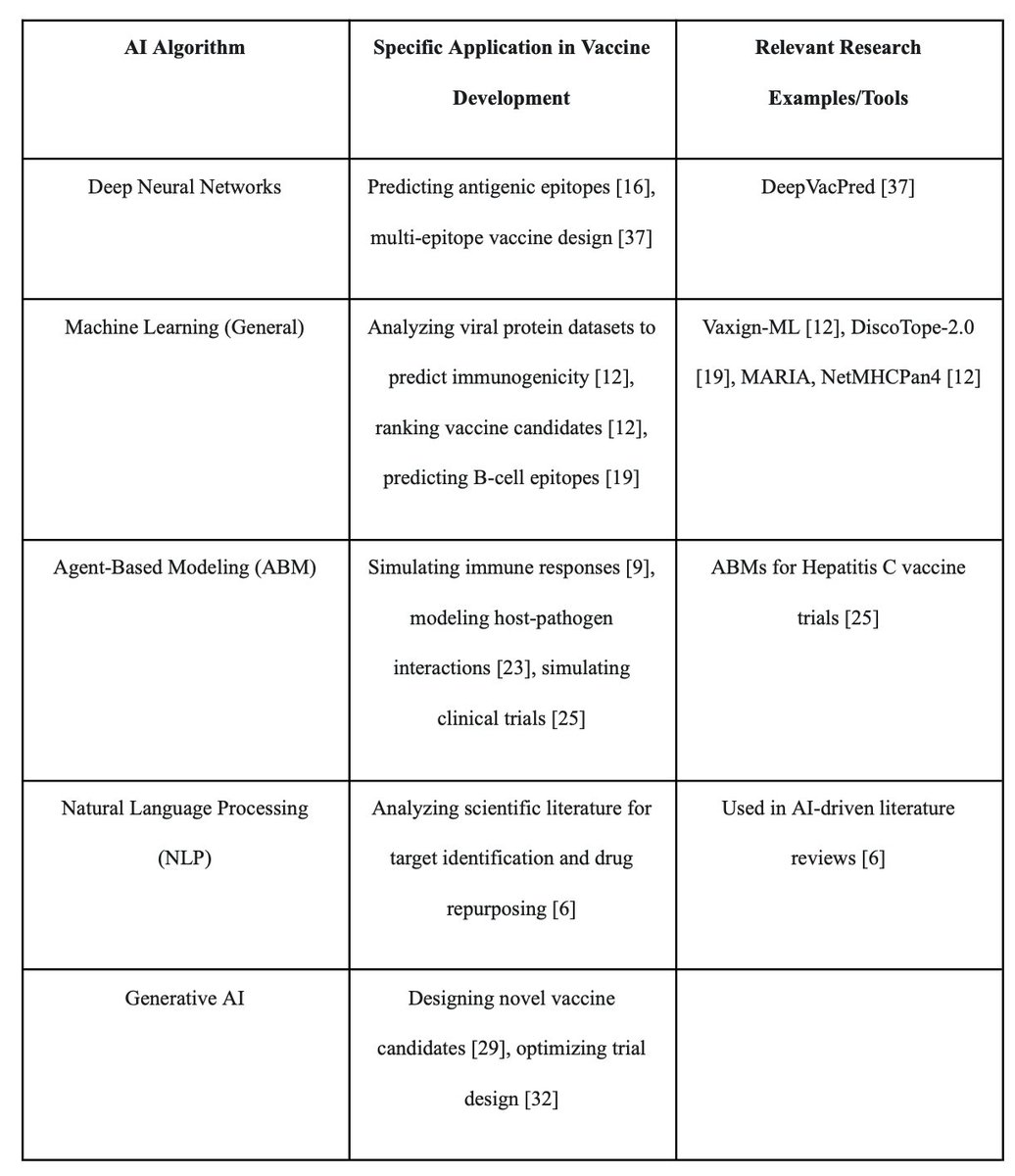
4.Machine learning tools like Vaxign-ML, MARIA, and NetMHCPan4 are already used to predict epitopes and antigenic targets, while DiscoTope-2.0 identifies B-cell epitopes based on structural geometry.
5.Agent-based models (ABMs) simulate immune cell interactions in silico, bridging the gap between in vitro models and real-world outcomes. They've been applied to vaccine trials for hepatitis C and tuberculosis.
6.AI aids in personalizing vaccines through codon optimization, 3D-printed formulations, and digital twins—virtual replicas of patients used to predict personalized immune responses and outcomes.
7.The approach also improves trial diversity by generating synthetic cohorts that represent underrepresented populations, ensuring broader generalizability and reducing real-world recruitment barriers.
8.AI models can forecast potential adverse effects using predictive toxicology, monitor viral mutations for proactive vaccine updates, and simulate years of trial data within minutes—dramatically accelerating R&D.
9.In silico models are gaining traction with regulatory bodies like the FDA and EMA. Frameworks such as Good Simulation Practice (GSP) aim to standardize validation and credibility of these AI-powered simulations.
10.Real-world applications include DeepVacPred for SARS-CoV-2, ABMs for hepatitis C, and AI-assisted epitope design for bovine coronavirus. Companies like Pfizer, Medidata AI, and Isomorphic Labs are integrating ISCTs into pipelines.
11.Despite their potential, ISCTs face challenges: ensuring model validity, managing data bias, navigating unclear regulatory frameworks, and requiring high-level interdisciplinary collaboration and infrastructure.
12.Future trends include integration with synthetic biology and single-cell omics, development of universal and personalized vaccines, and the use of LLMs and generative AI to automate trial design and document analysis.
13.Ultimately, AI-driven in silico clinical trials promise to streamline vaccine development, reduce ethical burdens, improve accuracy, and make vaccines faster, cheaper, and more adaptive to global health needs.
📜Paper: doi.org/10.26434/chemrxiv-20…
#VaccineDevelopment #InSilicoTrials #ArtificialIntelligence #DigitalTwins #ML4Health #Immunoinformatics #ComputationalBiology #AgentBasedModels #AI4Science #ClinicalTrials #GenerativeAI #Biotech #DrugDiscovery
1
1
872

6 Dec 2024
TALENT VERSUS LUCK: THE ROLE OF RANDOMNESS IN SUCCESS AND FAILURE | Advances in Complex Systems worldscientific.com/doi/abs/…
#Success #Innovation #Meritocracy #Luck #Talent #Serendipity #AgentBasedModels
1
1
126
6 Dec 2024
🚨 New Research: Why the Luckiest, Not the Smartest, Often Succeed
Ever wonder why some average people achieve extraordinary success while others with immense talent fall short? It might not be what you think—it is not just about hard work or skill.
Summary:
Title: Talent vs. Luck: How Randomness Shapes Success and Failure
Authors: A. Pluchino, A. E. Biondo, A. Rapisarda
Objective:
This study examines how talent and luck interact to determine success. It challenges the common belief that success is mostly the result of talent and hard work, showing instead that random events play a major role. By using a computer model, the researchers calculate how much randomness influences career outcomes over a lifetime.
Key Findings:
Talent and Success: Talent is evenly spread among people, while success is highly unequal. This gap suggests that external factors like luck are crucial in determining who becomes successful.
Importance of Luck: Luck often matters more than exceptional talent. The model shows that individuals with average talent but more good fortune tend to outperform highly talented individuals.
Problems with Meritocracy: Systems that reward individuals based on their achievements often favor those who were lucky, rather than those who were the most talented.
Better Strategies: Policies that distribute opportunities or funding more equally, or even randomly, are better at promoting innovation and helping talented individuals succeed.
Methodology:
The researchers used a computer simulation to mimic the working lives of 1,000 people over 40 years. Each individual had a fixed level of talent and faced random events, either lucky or unlucky, throughout their careers. The outcomes were analyzed to see how talent and luck affected success.
Conclusion:
The study reveals that luck is a bigger factor in success than many people realize. It also shows that rewarding people based solely on their achievements can make inequality worse. Instead, distributing resources more evenly or randomly gives more talented individuals a fair chance and leads to greater innovation and progress for society.
Citation:
Pluchino, A., Biondo, A. E., Rapisarda, A. "Talent vs Luck: The Role of Randomness in Success and Failure." (Link in reply).
#Success #Innovation #Meritocracy #Luck #Talent #Serendipity #AgentBasedModels

1
1
1
193

18 Nov 2024
🎬New highlights: Joshua Epstein tells us about the the creation of #Sugarscape, one of the first #agentbasedmodels #ABM applied to social sciences ⬇️
youtu.be/VpxmFoeJ4lk?si=U3UT…
1
3
3
206

30 Jul 2024
Amazing conference with great signal-to-noise ratio. Insightful reviews, focused tracks and decades of pioneering work!
@AAMASconf is the place to visit if you want to do frontier research in AI #Agents #MultiAgentSystems #AgentBasedModels.
Highly recommend submitting here!
30 Jul 2024

We invite you to submit your best work in the area of agents and multiagent systems to AAMAS 2025 #AAMAS2025, which will be held in Detroit, Michigan on May 19-25, 2025. Abstract submission: 9 Oct 2024, full paper submission: 16 Oct 2024. For details, see aamas2025.org/index.php/conf…
3
203

14 Jul 2024
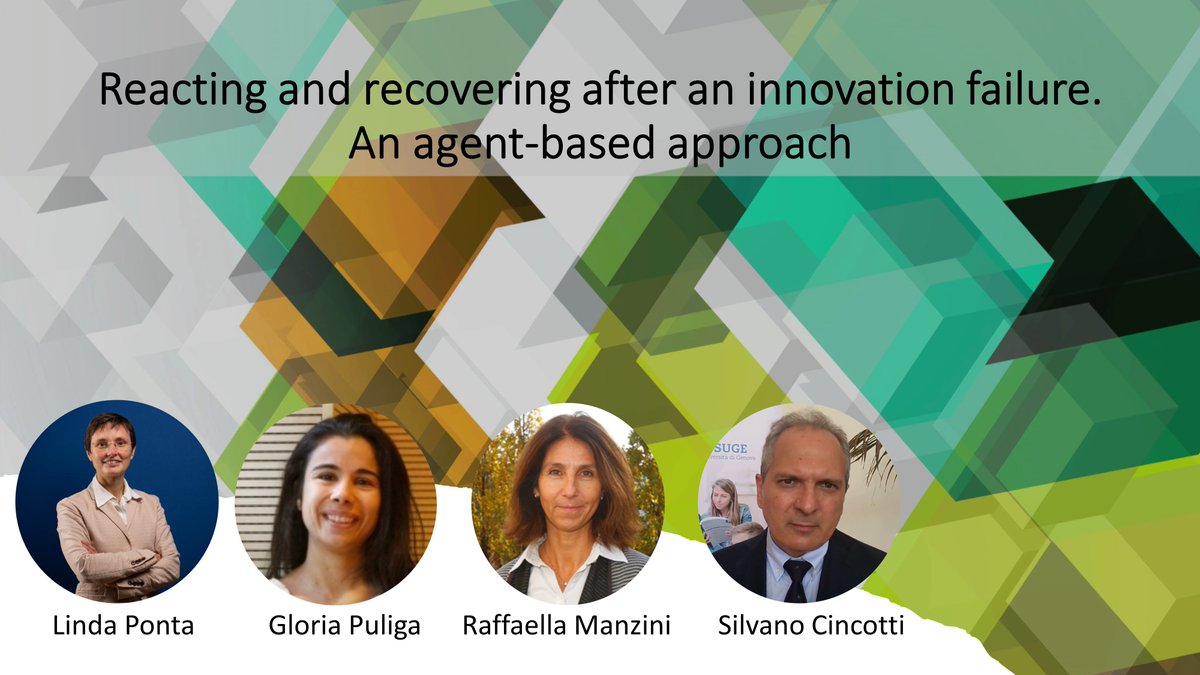
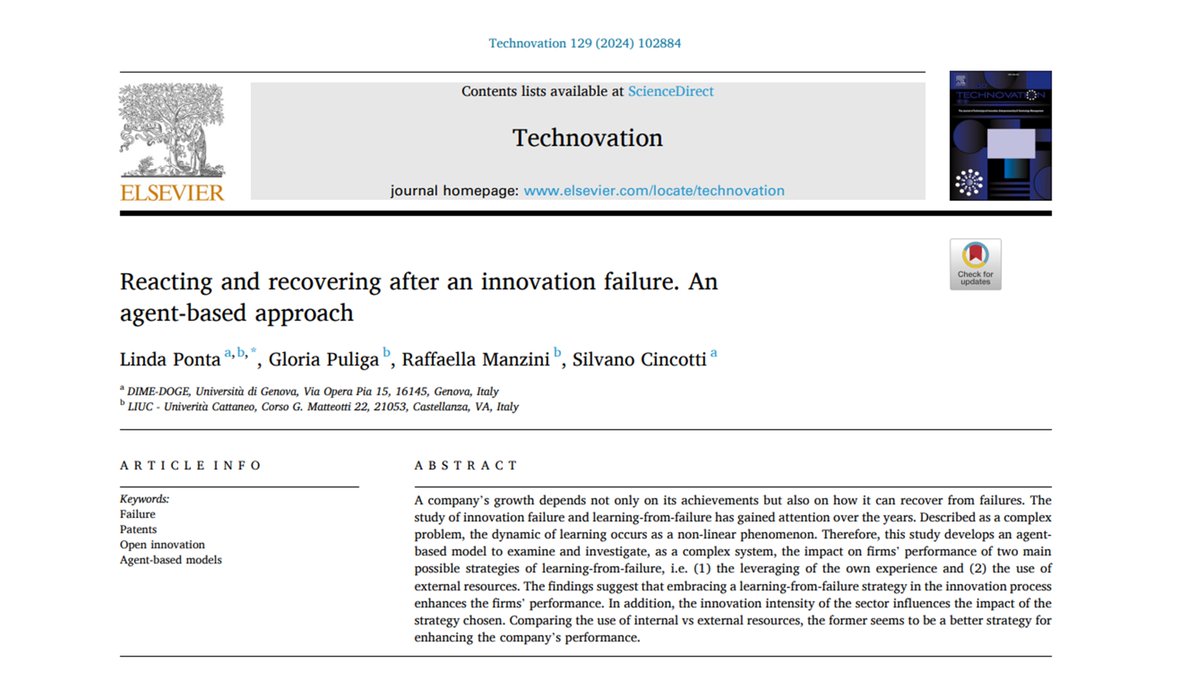
How to react and recover after an innovation failure? How to learn from failure so as to enhance firm performance🤔
New paper alert in @Technovation_J!!! 🚨
Read the full article 👇
doi.org/10.1016/j.technovati…
#Failure #Patents #OpenInnovation #AgentBasedModels
5
5
238

26 Jun 2024
📍Post-doc opportunity
Definitely worth working with a fantastic group of ABMers and Public Health Specialists! If you can use #agentbasedmodels, and are interested in #20minuteneighbourhood and #healthinequalities, apply now 👍🏽
18 Jun 2024

Are you interested in applying agent-based modelling (ABM) and data analysis to reduce health inequalities? Come work with us on the OPTIMA project, A systems science approach to 20-minute neighbourhood policy and evaluation: jobs.ac.uk/job/DHV100/resear… @theSPHSU @UofGSHW
4
7
680

28 Apr 2024
We then showcase approaches for validating agent-based models and provide an ambitious outlook toward rigorous and reliable calibration.
#CancerResearch #ComputationalModeling #SimulationCalibration #Biomedicine #AgentBasedModels
2
38

2 Oct 2023
📜Call for Abstracts #AAG2024. We (@ajheppenstall @GaryPolhill @AndyCrooks @ComplexityWise & others) are organizing a session(s) on Geosimulations for Addressing Societal Challenges. More details: gisagents.org/2023/09/call-f…
#agentbasedmodels #geosimulation #spatial
6
4
3,958

22 Sep 2023
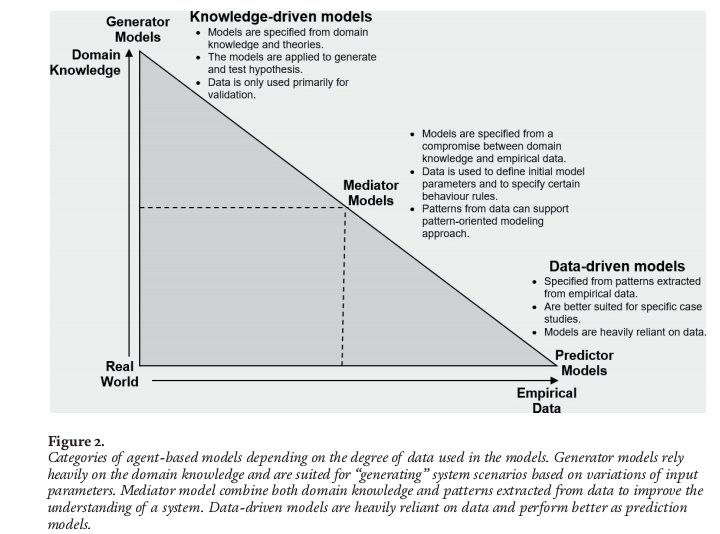
In the age of big data, Spatial Simulation Models offer the tools for filling the knowledge gaps in different social, ecological and spatial systems intechopen.com/chapters/6987… #AgentBasedModels #GIScience #GIS
1
16
721

3 Sep 2023
13/ For more details on #agentbasedmodelling listen to ep 5 of #simplifyingcomplexity: Melanie Moses (@UNM) on using #agentbasedmodels to model the spread of coronavirus in the lungs.
Apple: buff.ly/3Nqb2vC
Google: buff.ly/3NnOV9i
Spotify: buff.ly/3flMlnB

2
199

22 Jun 2023
1
3
85

19 Jun 2023
Before you start reviewing the paper, take some time to learn about the field. This will help you understand the main concepts and terminology used in the paper.
As I review the scientific paper, I adhere to these rules.
#ScientificAI #computing #Python #agentbasedmodels
4
91

29 May 2023
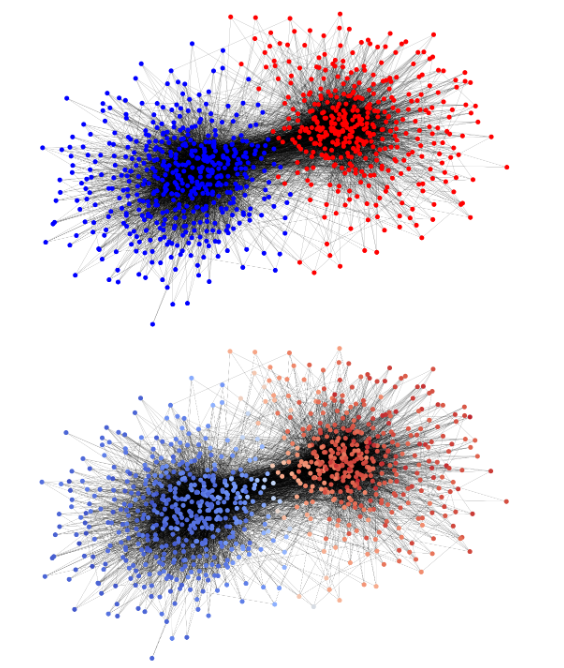
Read #FeaturePaper "Voter-like Dynamics with Conflicting Preferences on Modular Networks" from Filippo Zimmaro et al. mdpi.com/1099-4300/25/6/838
#sociophysics
#opiniondynamics
#agentbasedmodels
#networks
3
3
463

21 May 2023
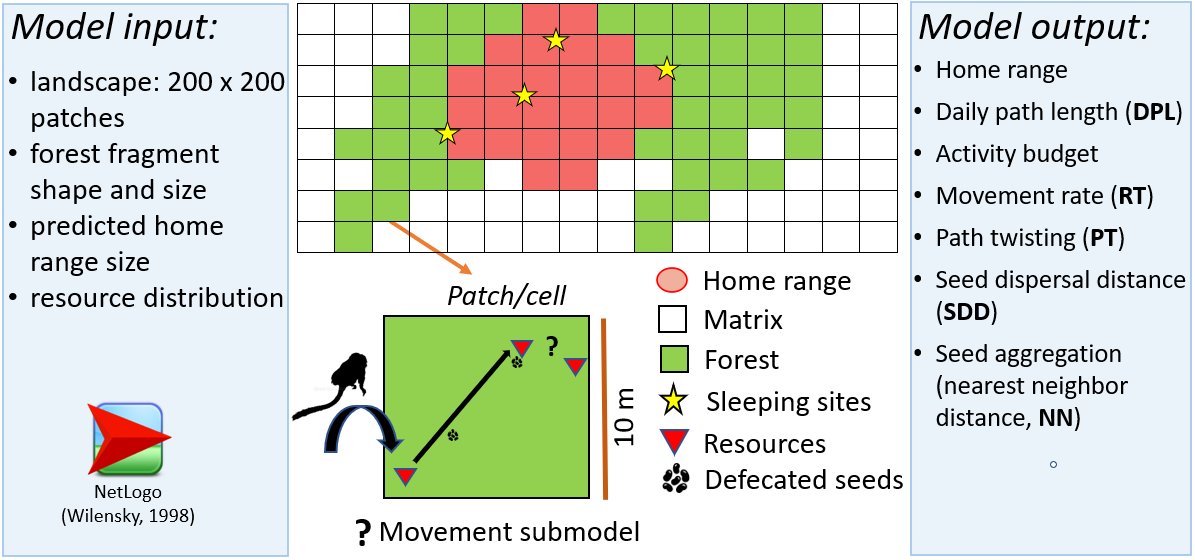
So, earlier this year I have finished my MSc thesis with #movementecology #seeddispersal and #agentbasedmodels. You can find an abstract here.
repositorio.unesp.br/handle/…
Some manuscripts to come. Stay tuned!
@LaurenceCulot @Unesp_Global
2
17
462

16 Apr 2023
This year I am happy to be co-organizing two tracks at the annual #SocialSimulationConference which will be held in Glasgow, 4-8th September.
If you are working with #agentbasedmodels have a look at the calls below and consider sending an abstract/ full paper by 28 April👇
1
4
9
724
22 Mar 2023
Hey #EconTwitter 👋 if you are working with #agentbasedmodels in #management #organization #economics please consider submitting an abstract or full paper to the Special Track that I am coorganizing alongside @sforstephan and @FriederikeWall at #SSC2023 Deadline 28 April 👇
1
6
8
1,181

Want the lowdown on this? @CElsenbroich @GaryPolhill educate, inform and intrigue us about #AgentBasedModels #SocialResearch and more over on our blog internationaljournalofsocial…
1
1
4
786