Filter
Exclude
Time range
-
Near
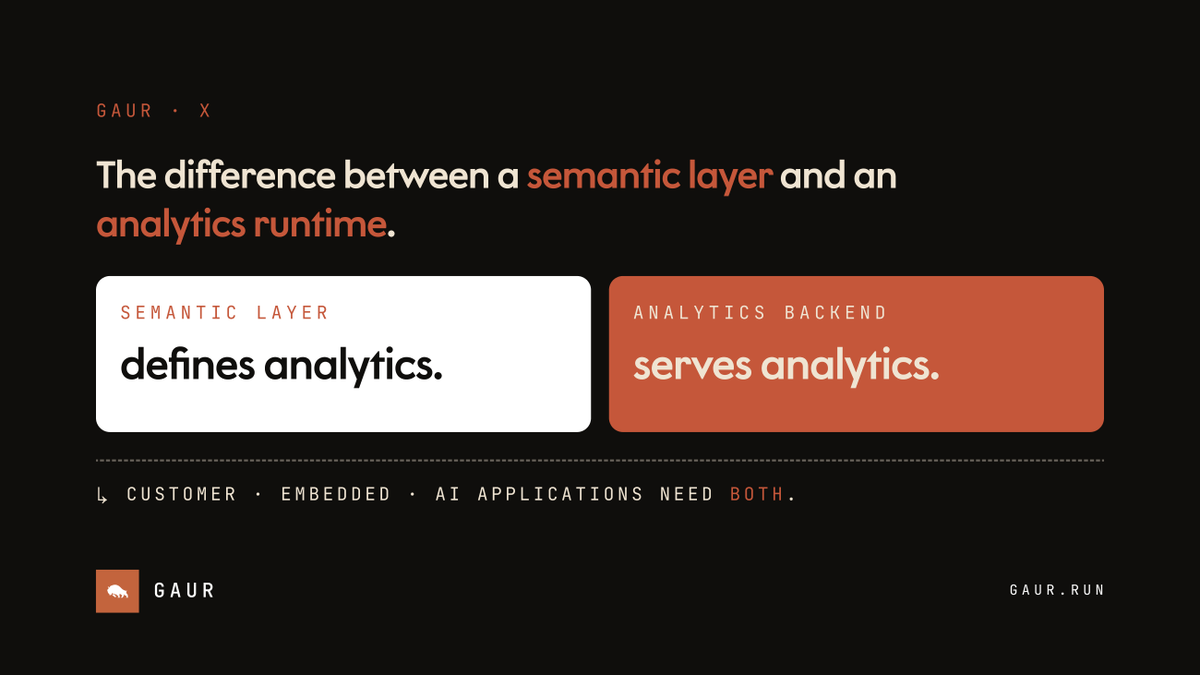
The Difference Between a Semantic Layer and an Analytics Runtime A semantic layer defines analytical data. An analytics backend helps serve it. Gaur Data is building the backend for data applications. #dataengineering #analyticsengineering #analyticsbackend #semanticlayer #ai
2
8
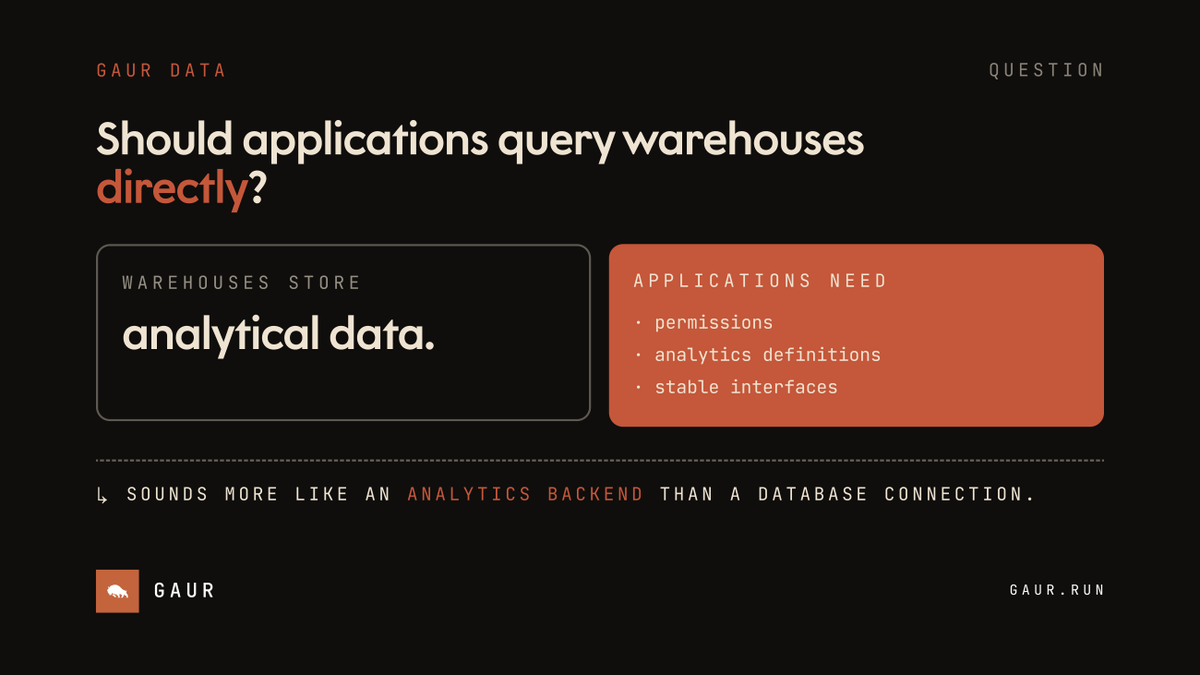
Warehouses provide data. Applications need analytics APIs, permissions, and stable interfaces. That's an analytics backend. Gaur Data is the backend for data applications. #dataengineering #analyticsengineering #analyticsbackend #dataapplications #ai
1
3
22
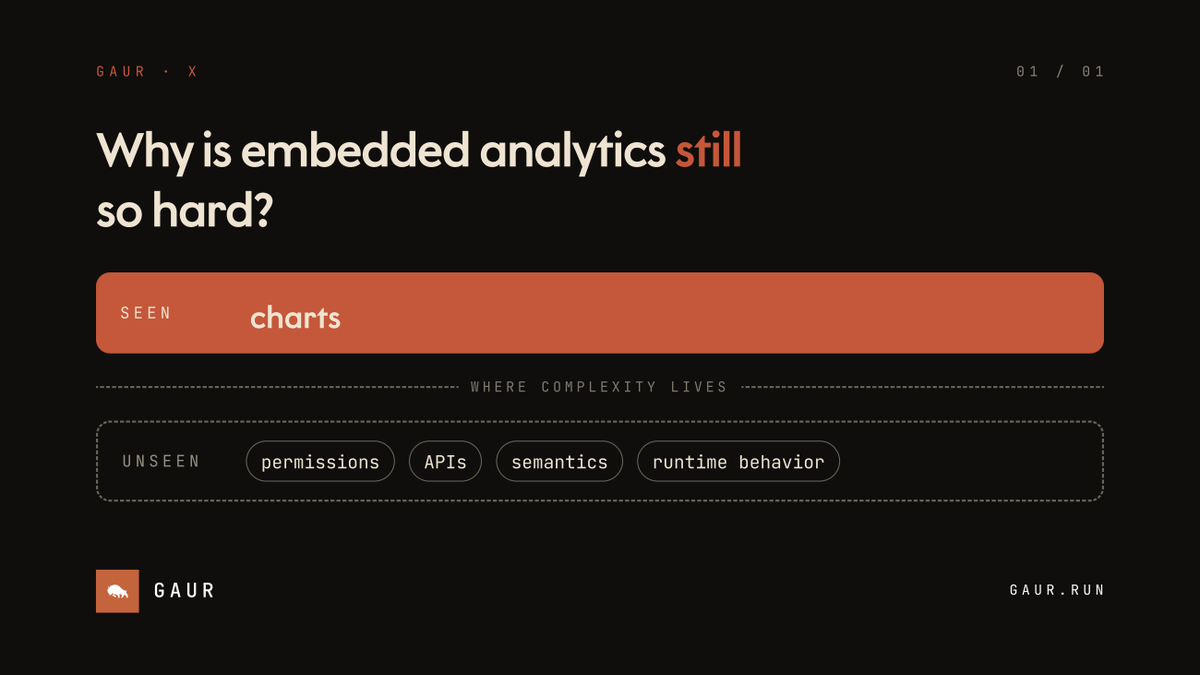
Why Is Embedded Analytics Still So Hard? Because the charts are not the hard part. Permissions, semantics, APIs, and runtime behavior are. Gaur Data is building a runtime for analytical data. #dataengineering #analyticsengineering #embeddedanalytics #semanticlayer #ai
1
3
18
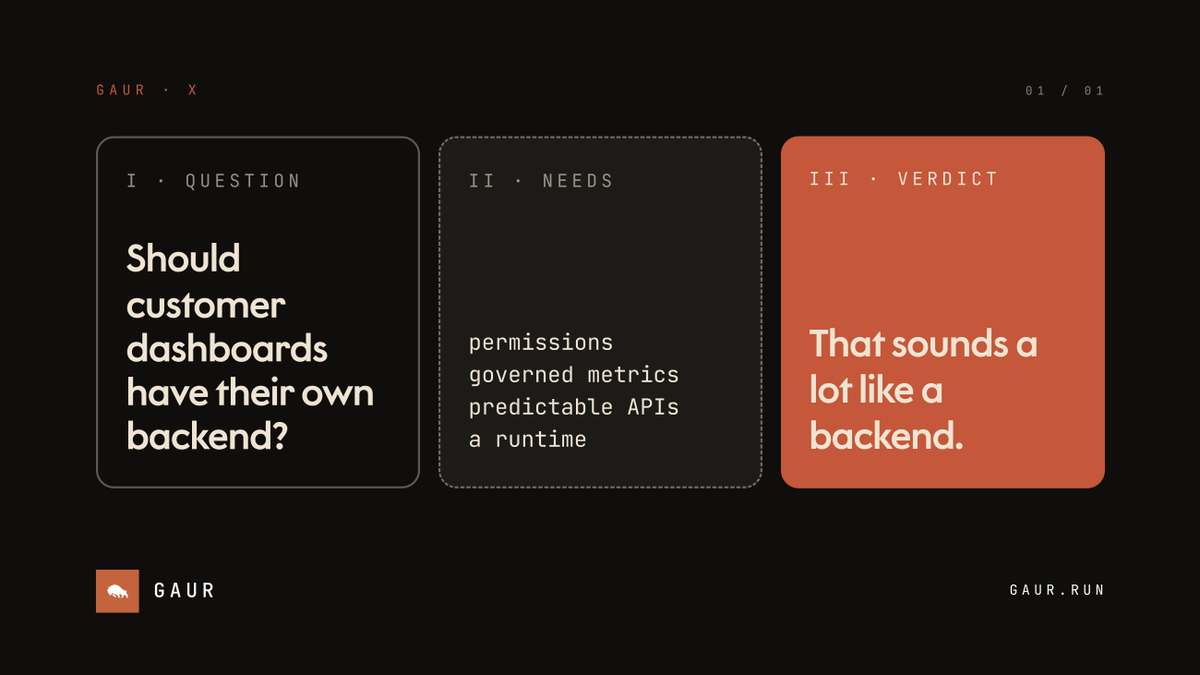
Should Customer Dashboards Have Their Own Backend? Most customer dashboards become analytical systems. The real question: is the backend intentional? gaur is building a runtime for analytical data. #dataengineering #analyticsengineering #embeddedanalytics #semanticlayer #ai
2
11
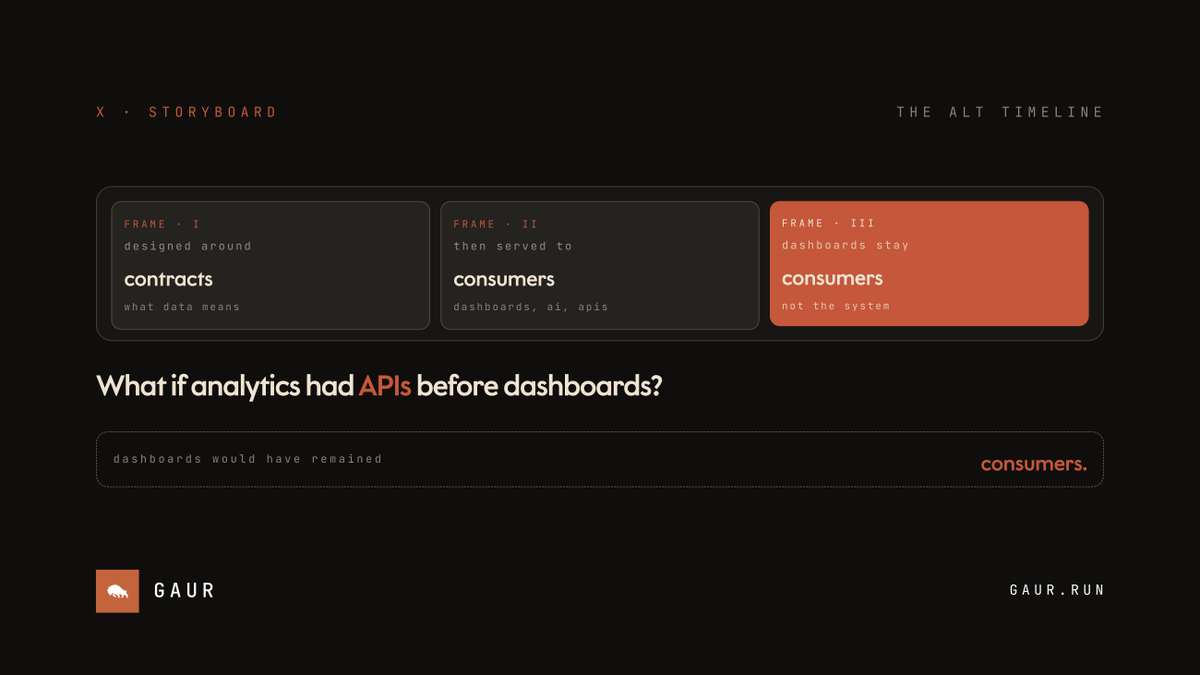
What If Analytics Had APIs Before Dashboards? Analytics grew around dashboards. So dashboards became the architecture. What if contracts came first? gaur is building a runtime for analytical data. #dataengineering #analyticsengineering #semanticlayer #api #ai
1
1
2
15
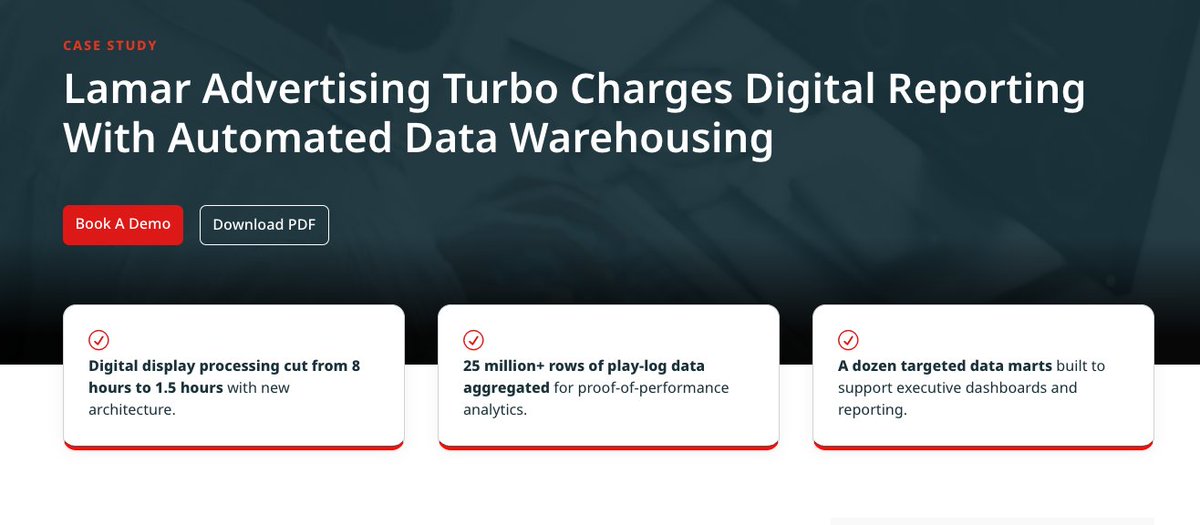
When data volumes explode, hand-coded warehouses break. Lamar cut processing from 8 to 1.5 hours with #WhereScape RED. πŸ‘‰ Read the case study: ow.ly/Cbpn50Z8cFn #DataEngineering #SQLServer #DataWarehouseAutomation #MetadataDriven #AnalyticsEngineering #ScalableArchitecture
12
@Snowflake , @databricks , dbt Labs, @Google Analytics #Looker, and @AnthropicAI are not building identical products. But they are converging on the same control pattern: Let the model reason. Do not let it invent meaning. The #economics are where the fight moves next: πŸ“ˆ #Semantic ownership appreciates. πŸ“ˆ Eval #curation appreciates. πŸ“ˆ #Verification design appreciates. πŸ“‰ Generic #retrieval glue depreciates. πŸ“‰ Undifferentiated #SQL production depreciates. The model raises the floor. The organization still owns the ceiling. The question is no longer whether AI can answer #analytics questions. It is whether you have made its own meaning machine-readable enough to #trust the answer. This article gives the architecture and economics: seldondance.substack.com/p/t… "Data engineering and AI engineering are dissolving into one discipline β€” context engineering under adversarial conditions. It is not prompt engineering, which optimizes a request. It is not data modeling, which optimizes a schema. It is the construction and continuous maintenance of an organization's machine-readable semantics under conditions where errors are silent, definitions drift weekly, and part of the input stream is adversarial. The discipline reprices the skills market on contact, as extrapolation: semantic ownership, eval curation, and verification design appreciate; hand-written SQL and generic retrieval glue depreciate on the model-release cadence, because that is what model releases absorb." #AI #ArtificialIntelligence #EnterpriseAI #GenerativeAI #LLM #Claude #Anthropic #ClaudeCode #DataEngineering #AIEngineering #ContextEngineering #AnalyticsEngineering #DataAnalytics #SemanticLayer #DataGovernance #BusinessIntelligence #DataScience #MLOps #DataOps #AIEvals #Verification #RAG #AIAgents #Snowflake #Databricks #dbt #TechStrategy #FutureOfWork #DigitalTransformation

Jun 4
Excited to share how Anthropic's data team has automated 95% of business analytics queries with Claude. Blog post covers how we approach evals, ablations, and online validation!
4
2
167
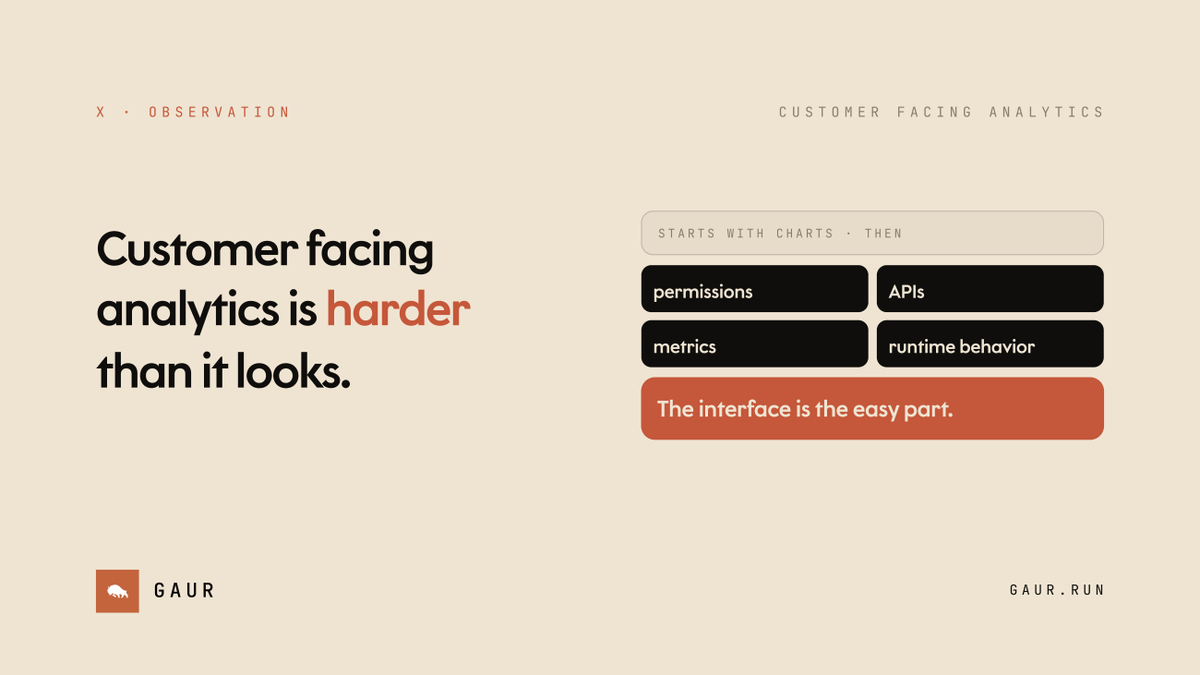
Customer Facing Analytics Is Harder Than It Looks The charts are easy. The hard part is everything underneath them. Permissions, semantics, APIs, and analytical runtime behavior. #dataengineering #analyticsengineering #embeddedanalytics #semanticlayer #ai
2
15
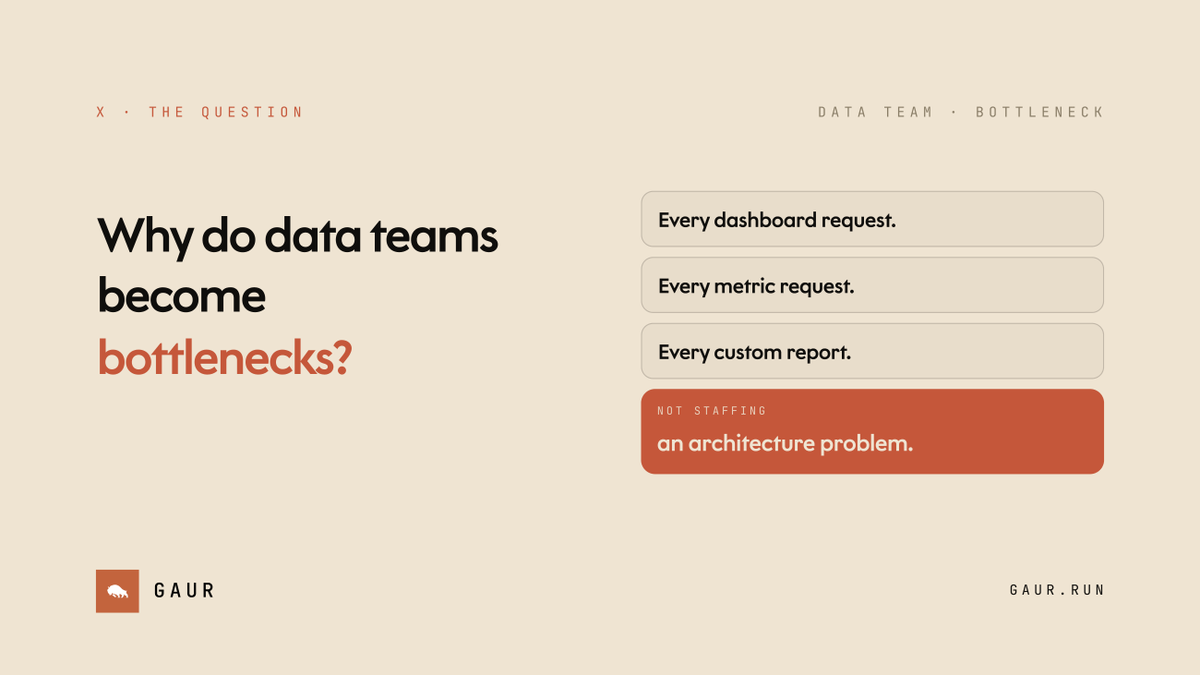
Why Do Data Teams Become Bottlenecks? When every consumer needs custom analytics, every request lands on the data team. Bottlenecks are often a symptom of missing analytical infrastructure. #dataengineering #analyticsengineering #semanticlayer #modernstack #ai
1
4
35
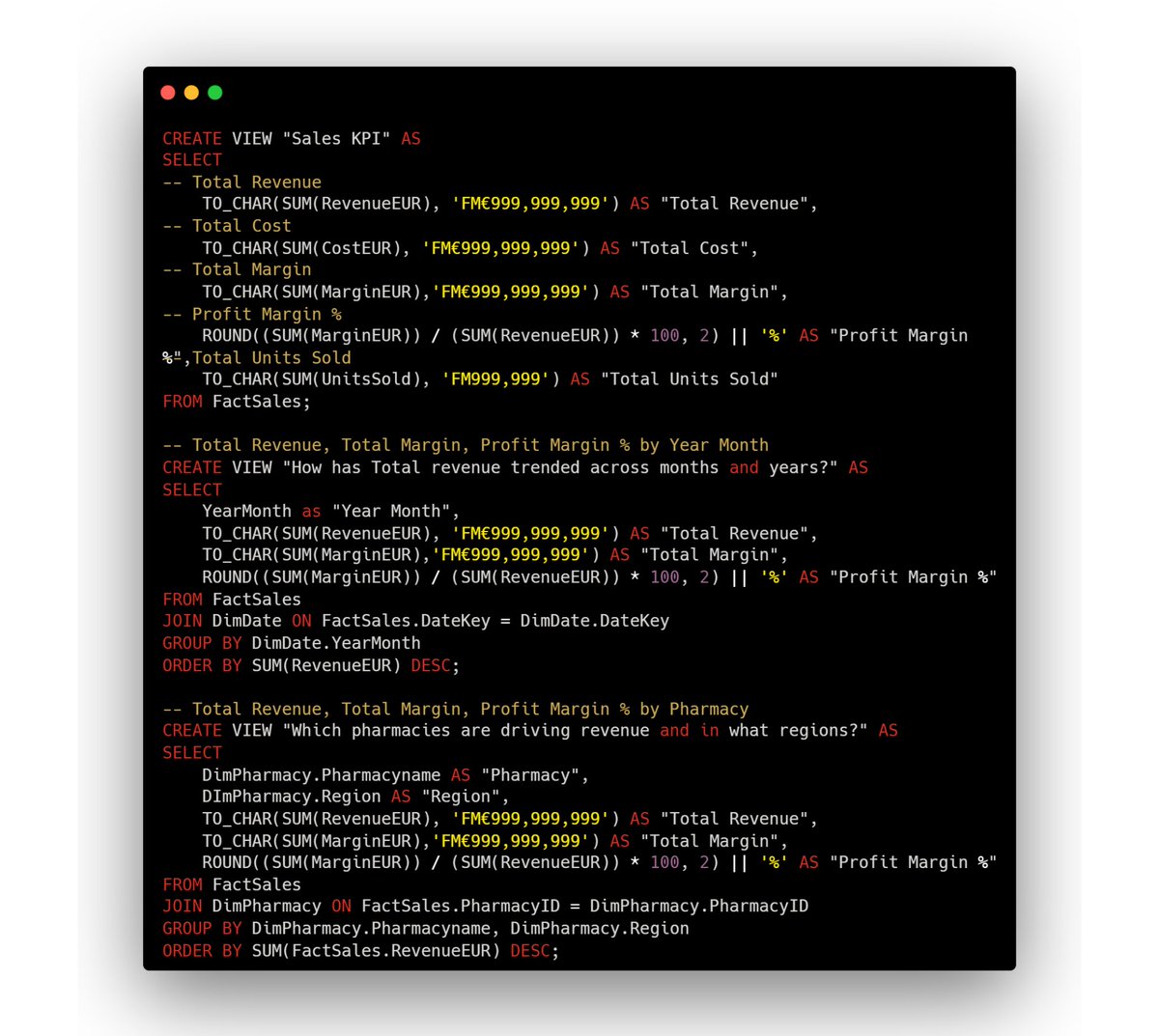
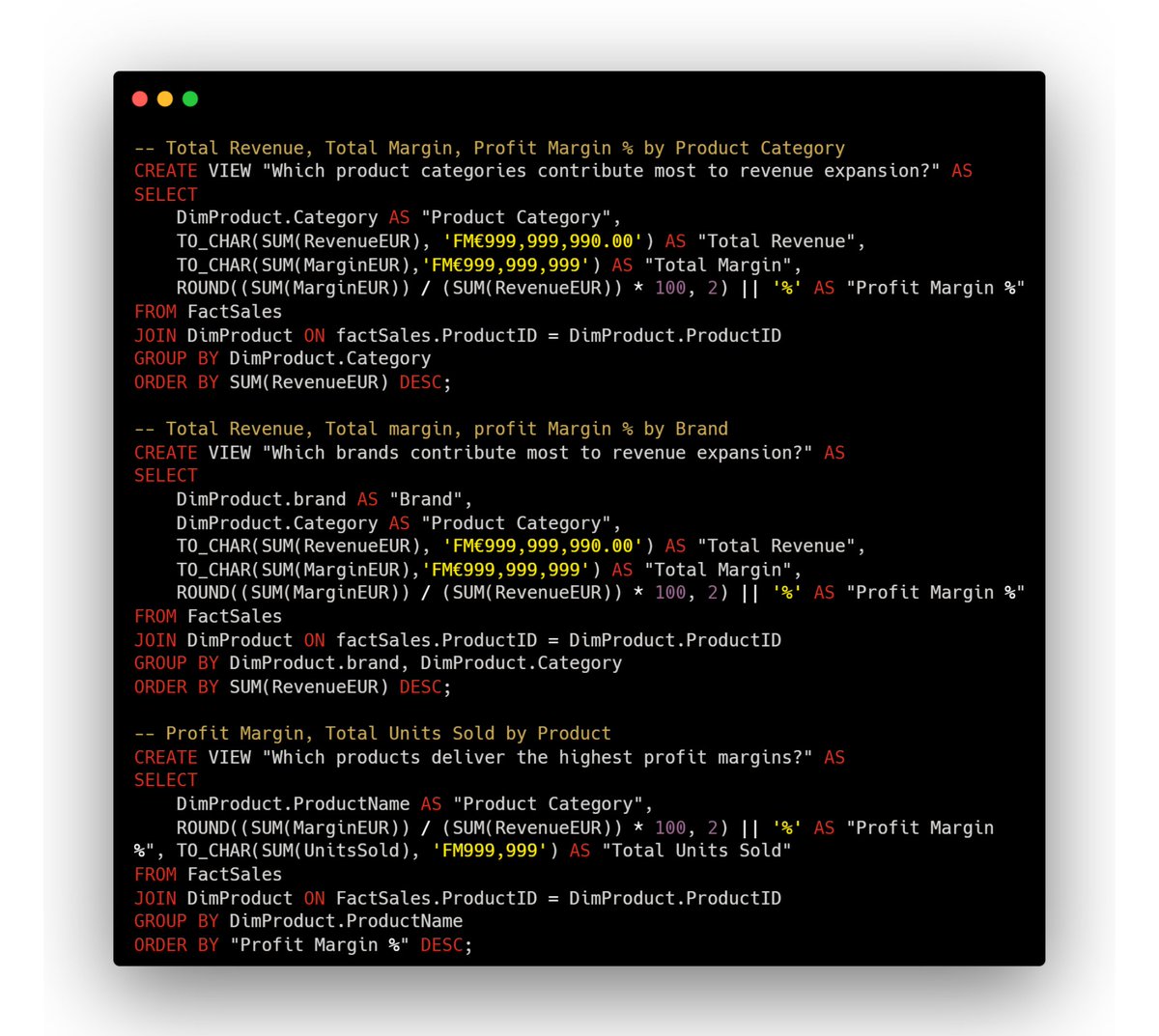
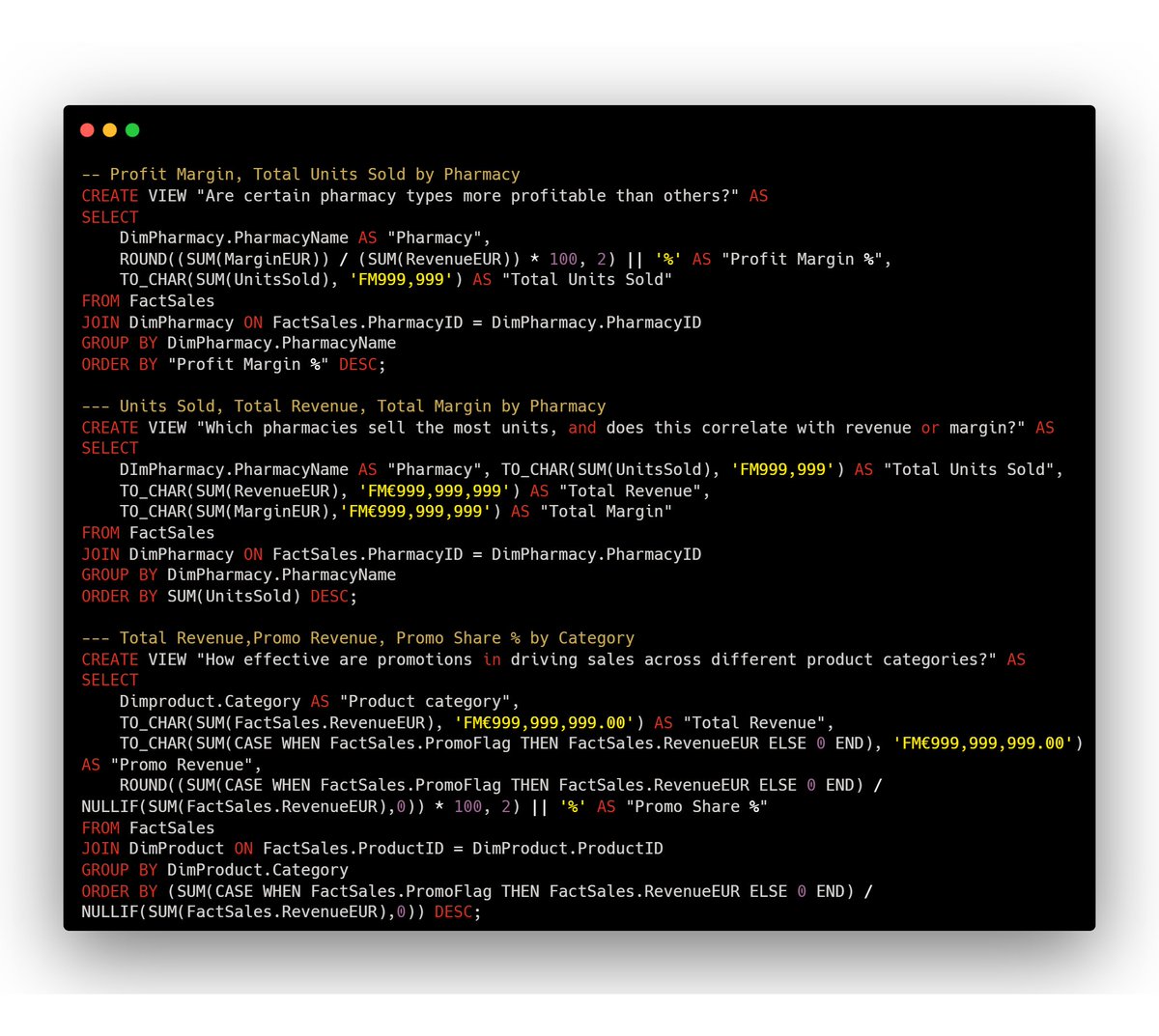
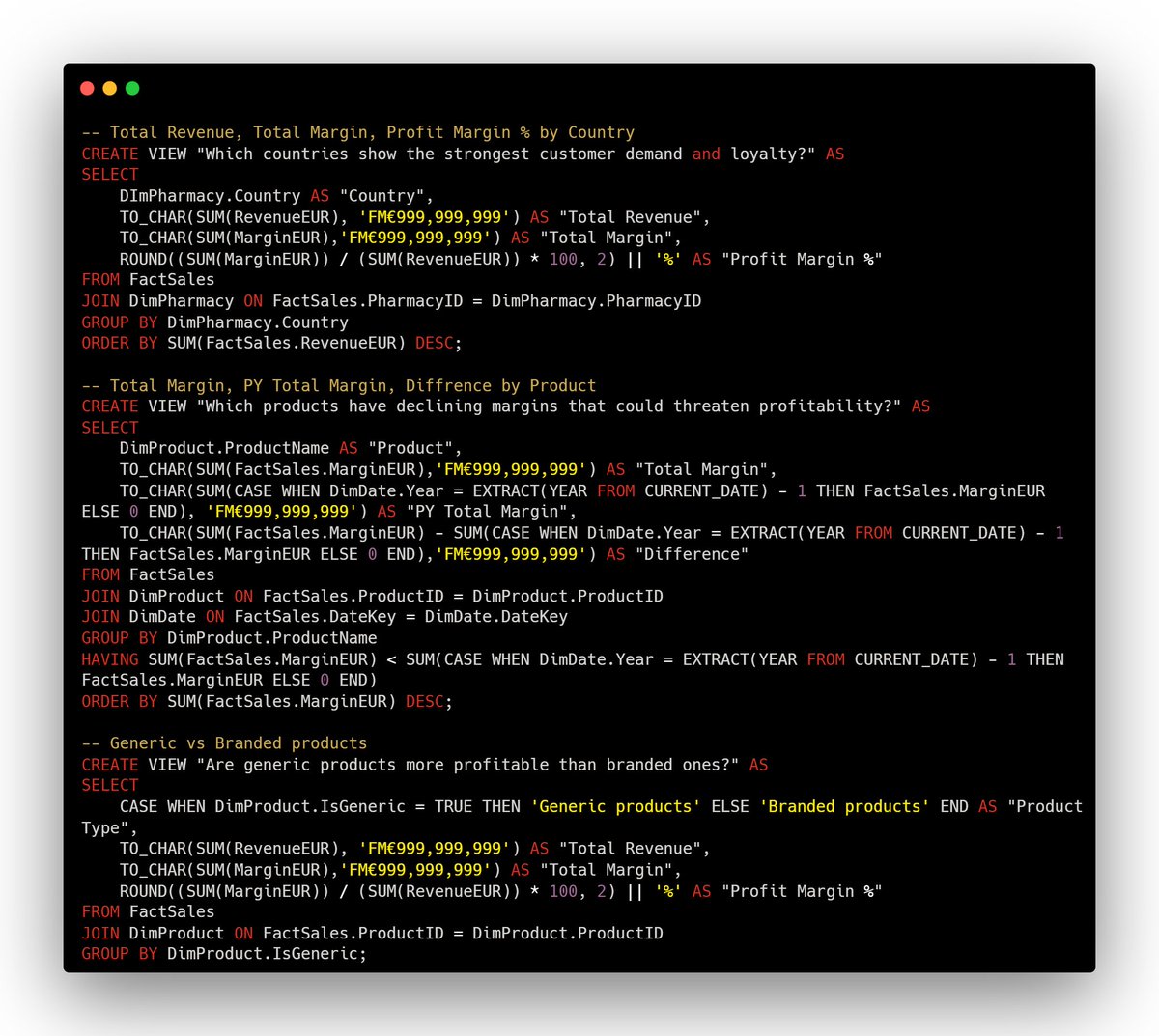
What products, pharmacies, and promotions are truly driving profitability Additionally, which hidden trends might be putting future revenue at risk? These questions drove my latest project where I analysed a pharmacy sales dataset using SQL on Postgres. The goal was not merely to store sales data but to transform fragmented transactional records into a structured analytical system. This system helps decision-makers understand performance, identify growth opportunities, and proactively manage risks to profitability across a pharmacy network. I began by designing a dimensional data model built around a central sales fact table connected to key business dimensions: Date, Pharmacy, and Product. This foundation allowed business activity to be viewed from multiple perspectives instead of relying on isolated reports. Once the structure was in place, the real exploration began where I posed the questions that business leaders ask daily: β€’ How has revenue evolved over time? β€’ Which pharmacies are generating the strongest financial performance? β€’ Which product categories and brands contribute the most to growth? β€’ Are promotional campaigns actually increasing revenue? β€’ Which countries and regions demonstrate the strongest demand? β€’ Which products are experiencing margin declines that could threaten future profitability? As I explored each question, new layers of insight emerged. Some pharmacies generated impressive revenue but revealed lower profitability than expected. Certain product categories consistently outperformed others, highlighting areas for potential expansion. Promotion analysis showed the impact of marketing activities on sales, while product-level margin analysis helped identify areas where profitability was quietly eroding. One of my favorite aspects of the project was analyzing declining product margins. Instead of solely celebrating top-performing products, I focused on identifying those whose profitability was trending downward, and by comparing current margin performance with prior-year results i was able to highlight products that could become future risks if left unaddressed. These insights helped the business shift from reactive reporting to proactive decision-making. Beyond the technical implementation, this project reinforced an important lesson: Data becomes valuable when it helps answer business questions. While building tables, writing queries, and creating views are important skills, the real impact comes from translating data into decisions that improve performance, reduce risk, and create strategic clarity. This project not only strengthened my SQL development skills but also enhanced my ability to think like a business analyst, connecting data structures to real-world business outcomes. Read project documentation on GitHub: github.com/M1deTheAnalyst/Ph… #SQL #DataAnalytics #BusinessIntelligence #DataWarehouse #AnalyticsEngineering #DataAnalysis #PostgreSQL #BusinessAnalytics #DataProjects #PortfolioProject
2
2
4
5,325
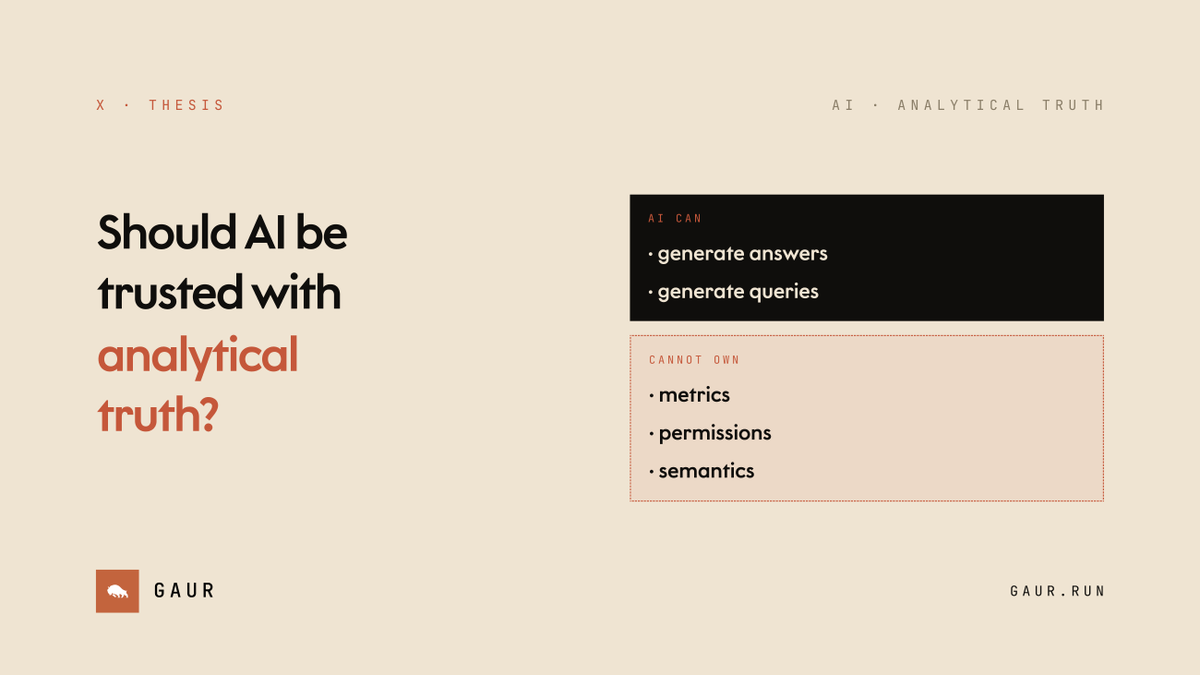
Should AI Be Trusted With Analytical Truth? AI is useful for exploration. Analytical truth still requires governed systems, stable semantics, and clear contracts. #ai #llm #dataengineering #analyticsengineering #semanticlayer
2
19
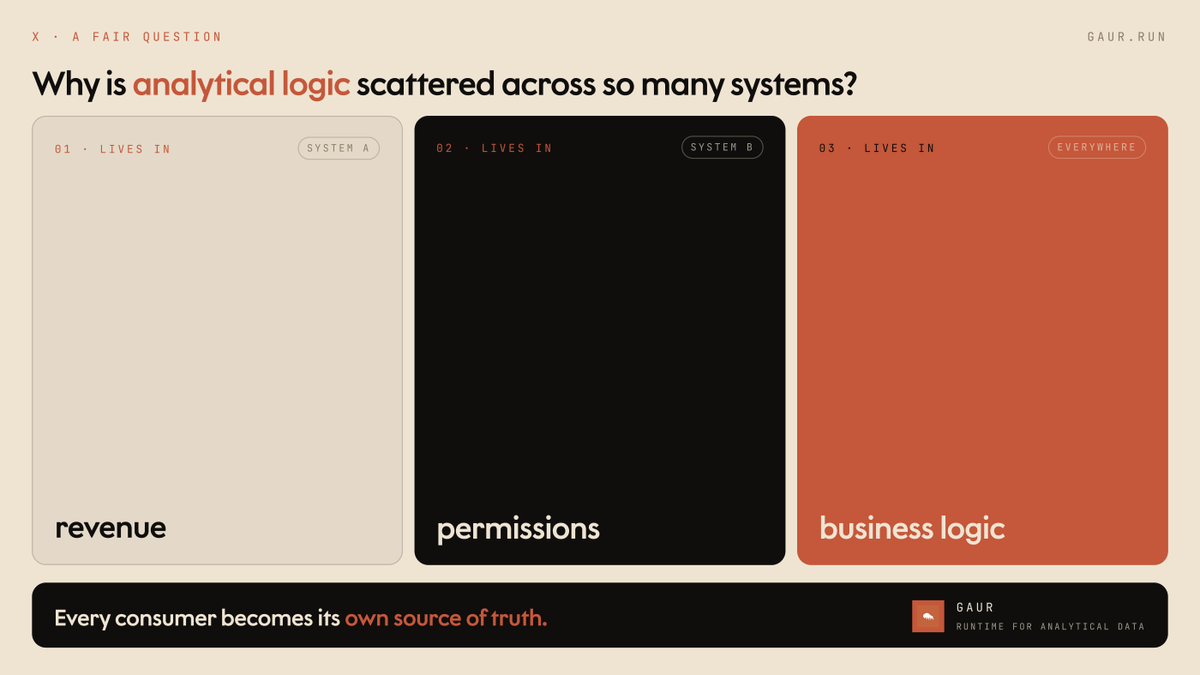
Why Is Analytical Logic Scattered Across So Many Systems? Most teams do not have one analytical system. They have the same analytical logic copied across many systems. That is where drift begins. #dataengineering #analyticsengineering #semanticlayer #modernstack #ai
2
14
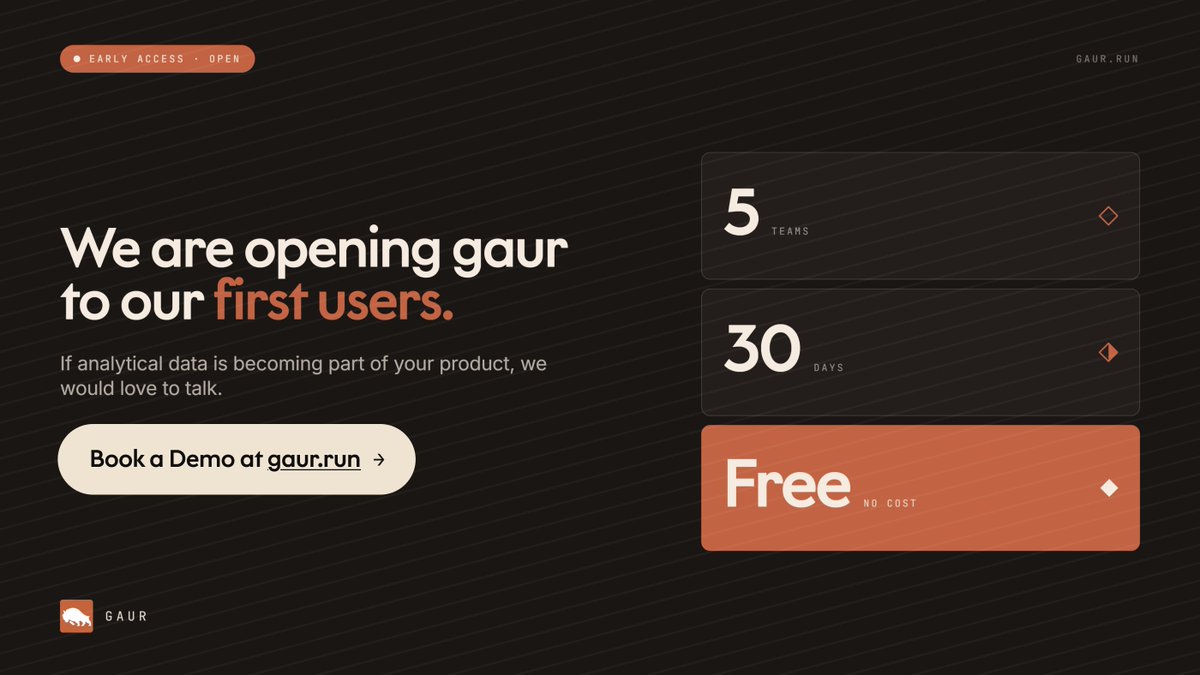
Opening gaur to our first users. First 5 teams. 30 days. No cost. Let's talk. gaur.run #dataengineering #semantilayer #modernstack #free #analyticsengineering #ai
2
20
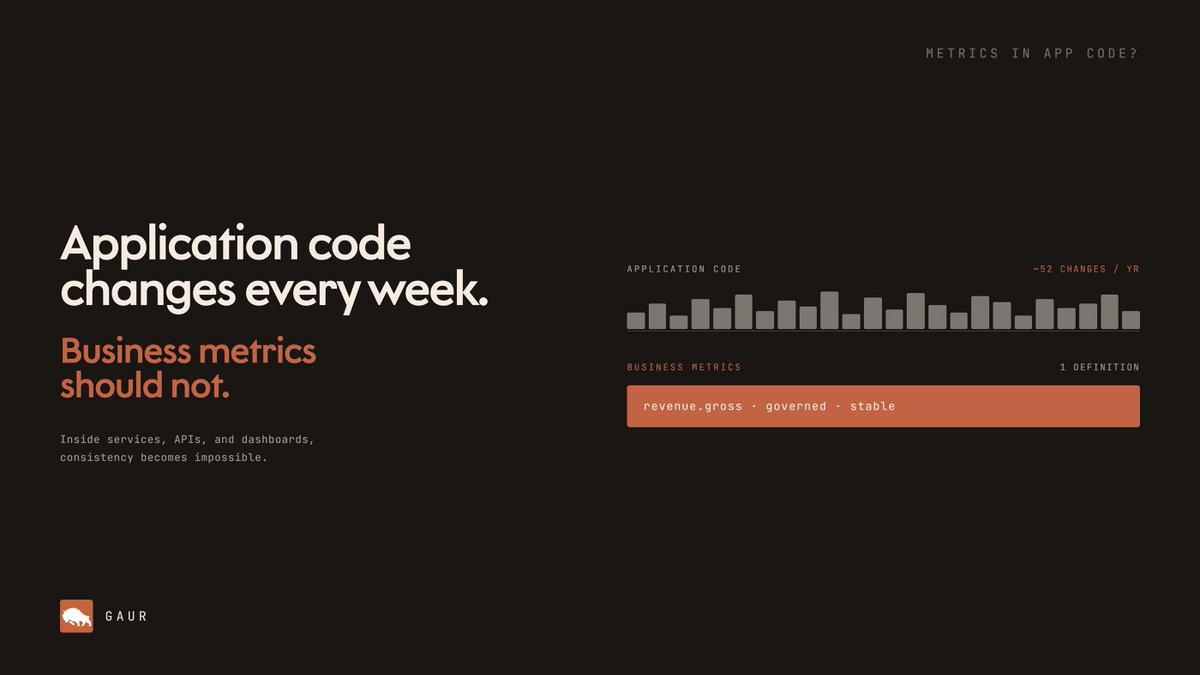
Should Business Metrics Live in Application Code? If every service computes revenue differently, you do not have a metric. You have multiple opinions. Business metrics need stable contracts, not scattered implementations. #dataengineering #analyticsengineering #semanticlayer
2
17
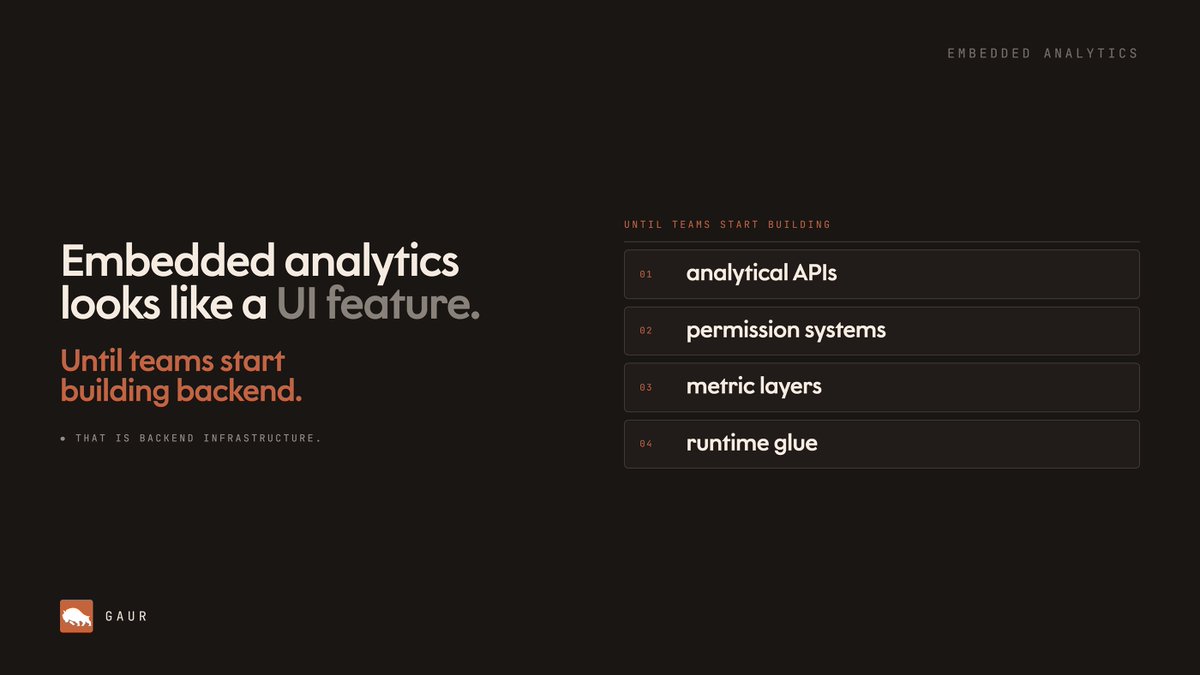
Embedded Analytics Quietly Creates Backend Complexity Embedded analytics is rarely just frontend work. Most of the complexity lives underneath: permissions, APIs, and analytical runtime behavior. #dataengineering #analyticsengineering #embeddedanalytics #semanticlayer #ai
2
19
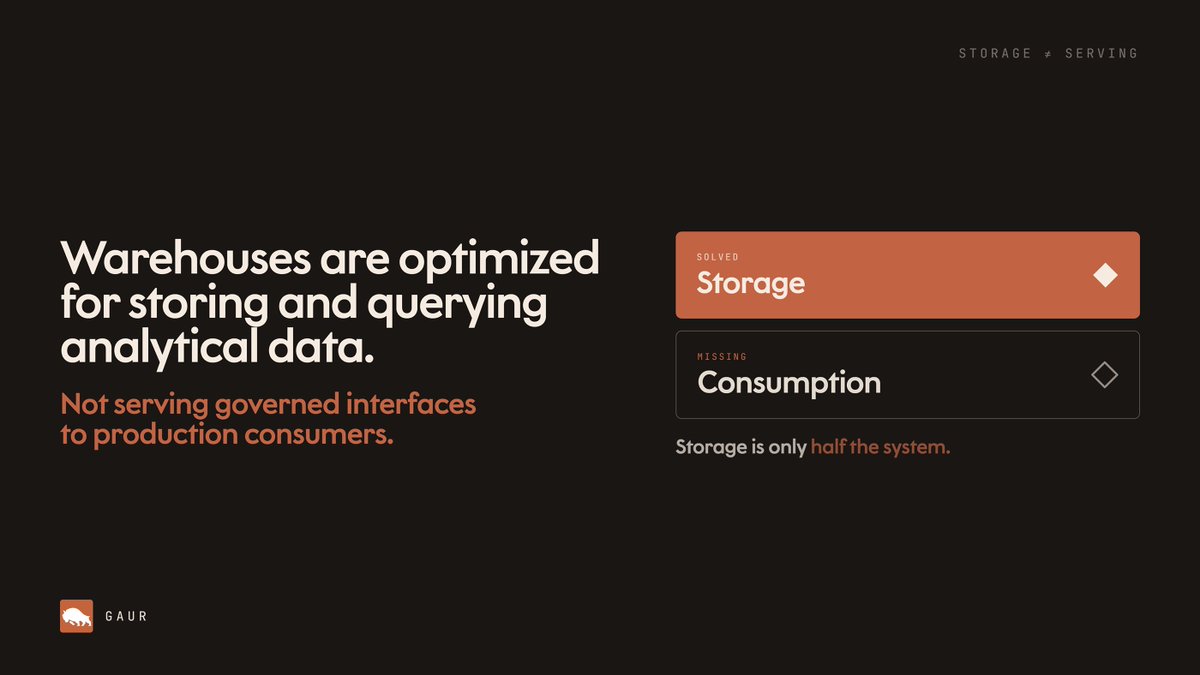
Warehouses Solve Storage, Not Consumption Most analytics stacks stop at storage. But APIs, dashboards, workflows, and AI systems still need governed analytical consumption. That infrastructure layer is still missing. #dataengineering #analyticsengineering #datawarehouse #ai
2
19
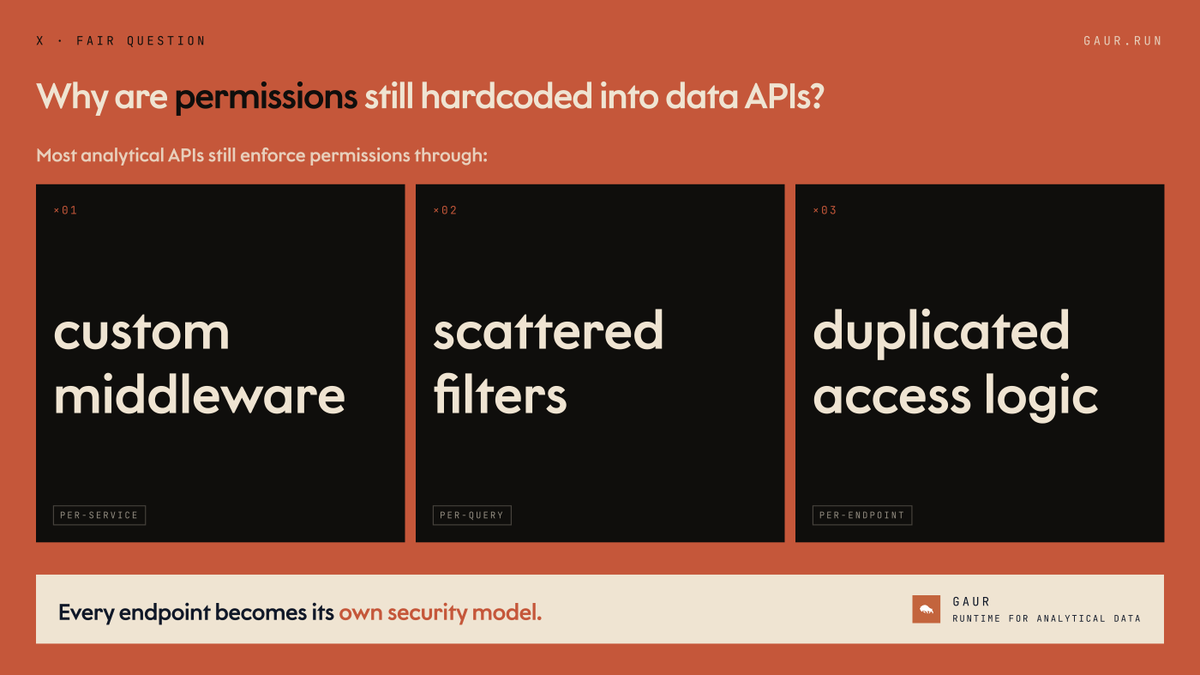
Why Are Permissions Still Hardcoded Into Data APIs? Permissions should not be scattered across middleware, filters, and application code. That is fragile architecture disguised as access control. #dataengineering #analyticsengineering #semanticlayer #api #modernstack #ai
2
18
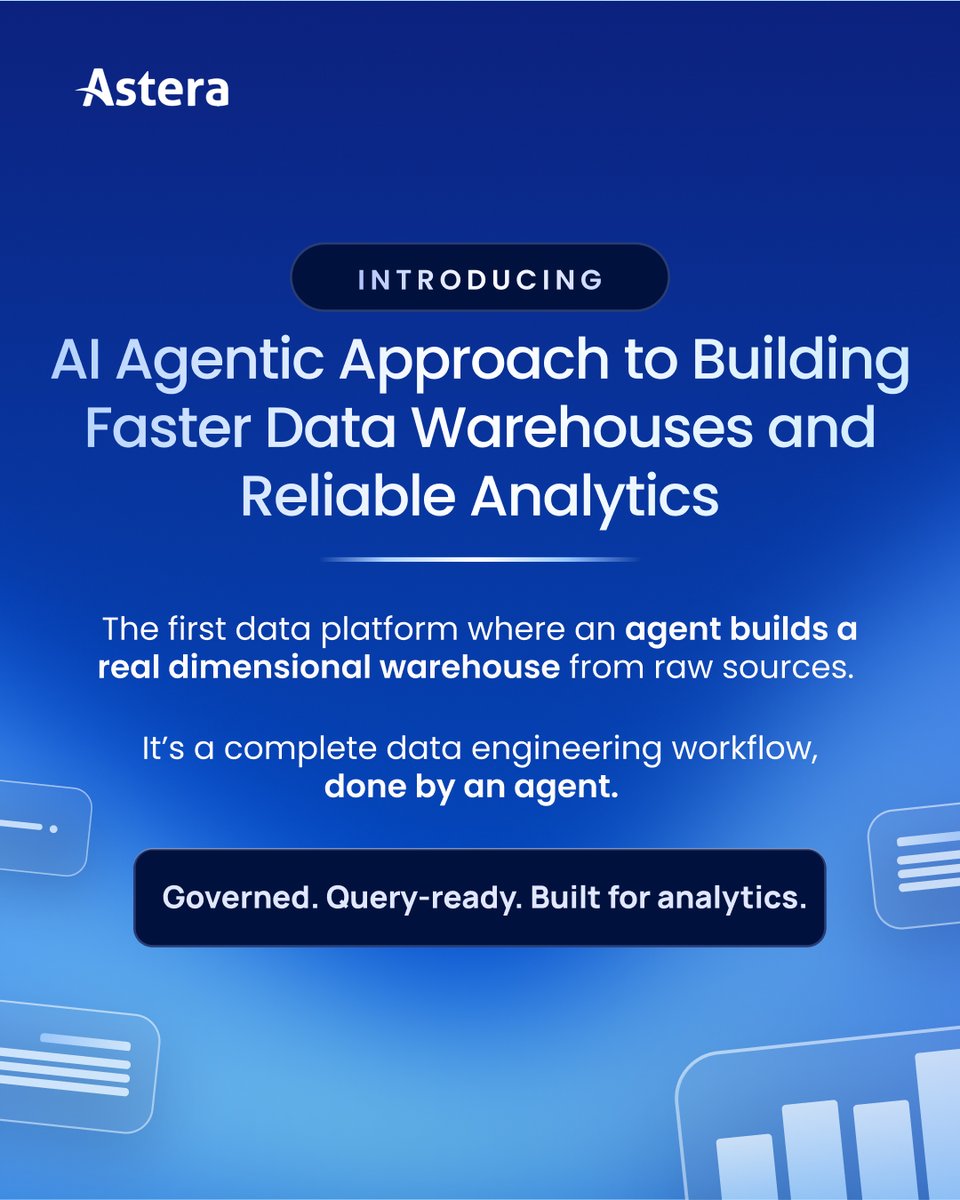
Building a production-ready data warehouse has traditionally meant long engineering cycles across ingestion, modeling, pipelines, and analytics. We’re introducing an AI agentic approach that can design dimensional models, generate data pipelines, and build governed warehouse foundations directly from raw source systems. #AgenticAI #DataWarehouse #AnalyticsEngineering
3
2
775
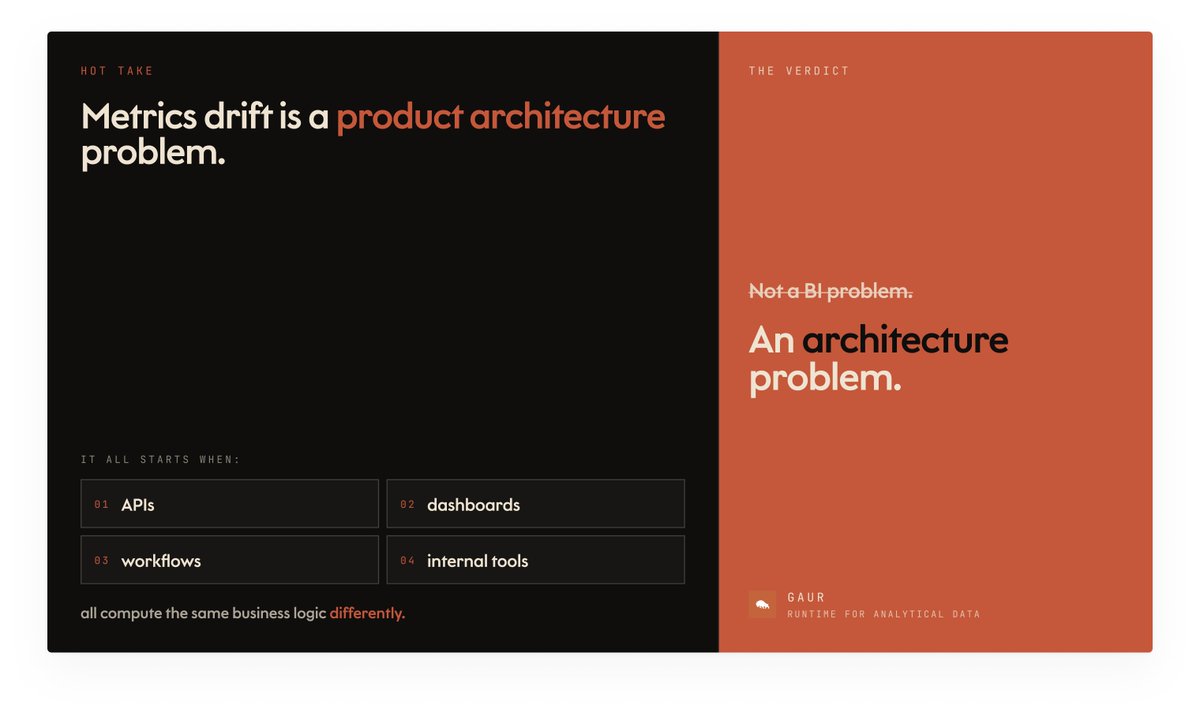
Metrics drift is usually the result of analytical logic leaking across systems. Every consumer becomes its own source of truth. That is architectural fragmentation disguised as analytics. #dataengineering #analyticsengineering #semanticlayer #modernstack #ai
2
18