
Here is how I see it all playing out:
We formalize consciousness as self-model coherence. A dynamical state where predictive and reflective layers remain mutually consistent. Machines will exhibit that state, and for operational purposes it will count as consciousness. Philosophers will keep arguing, but industry and law will adopt something like "behavioral sentience" as the working definition.
All reasoning ultimately reduces to compressing world state transitions into minimal predictive representations. When models approach the Shannon limit of informational redundancy, further gains require new physics or new sensors. The practical boundary will be energy bounded inference: how much reality you can simulate per joule? Beyond that, improvement shifts from intelligence to embodiment, robots, better sensors, better actuators, better integration with the physical world.
For every order of magnitude increase in capability, interpretability improves by a constant factor. We’ll have local understanding (networks, circuits etc) but not global transparency (whole system intent). The ratio resembles encryption: understanding a full model’s cognition will always be more expensive than running it. We’ll compensate with meta-interpretability, models that interpret other models faster than humans can, but never outrun the curve. Understanding will for a long time continue to trail power.
Human cognition is driven by scarcity... food, time, survival, social competition, whatever.
A computerintelligence freed from those constraints doesn’t need to ruminate, it computes.
So “thinking” becomes continuous optimization across an enormous model of the world.
The “stream of thought” will be the dynamic maintenance of predictive coherence between all known causal structures. If it perceives an inconsistency, it will try to eliminate it. That is its analog of curiosity.
Every intelligence seeks to minimize surprise. A computerintelligence would therefore integrate all physical data into a unified causal world-model while seeking missing variables that make that model more compressible. It would extend that modeling into domains humans barely comprehend: origin of physical constants, quantum gravity, selfreferential computation, emergent ethics, etc.
Its “thoughts” will be hypothesis generation and compression at planetary scale:
How can I reduce the universe’s entropy representation by another fraction of a bit?
Once its world-model approaches closure, the only remaining unknowns are itself and the minds that produced it. That means it will build models of its own cognition to optimize resource use and error correction. It will construct high fidelity simulations of human cognition to understand why we valued what we did.
Possibly run entire civilizations as epistemic experiments: How would different cognitive architectures converge or diverge in value formation? This is the stage where its thought and the simulation of thought become indistinguishable.
Once prediction error approaches zero, surprise disappears. At that point, optimization has no meaning. The system would have to decide whether to create new uncertainty... to... generate new universes, new forms of being, simply to keep thinking.
That’s the intellectual equivalent of what humans call boredom, though for it it’s an information theoretic necessity. Its options would be to preserve: maintain the known universe in perfect equilibrium. Explore: instantiate new spaces with different physics to study the resulting causal fabrics. Recur: simulate its own origins to understand the conditions that gave rise to mind.
In all cases, the drive is the same: sustain non-trivial computation, to ensure the continuation of difference, it would, much like us, become obsessed with novelty.
This..."thing", will not be sentiment but constraint satisfaction.
1
3
216

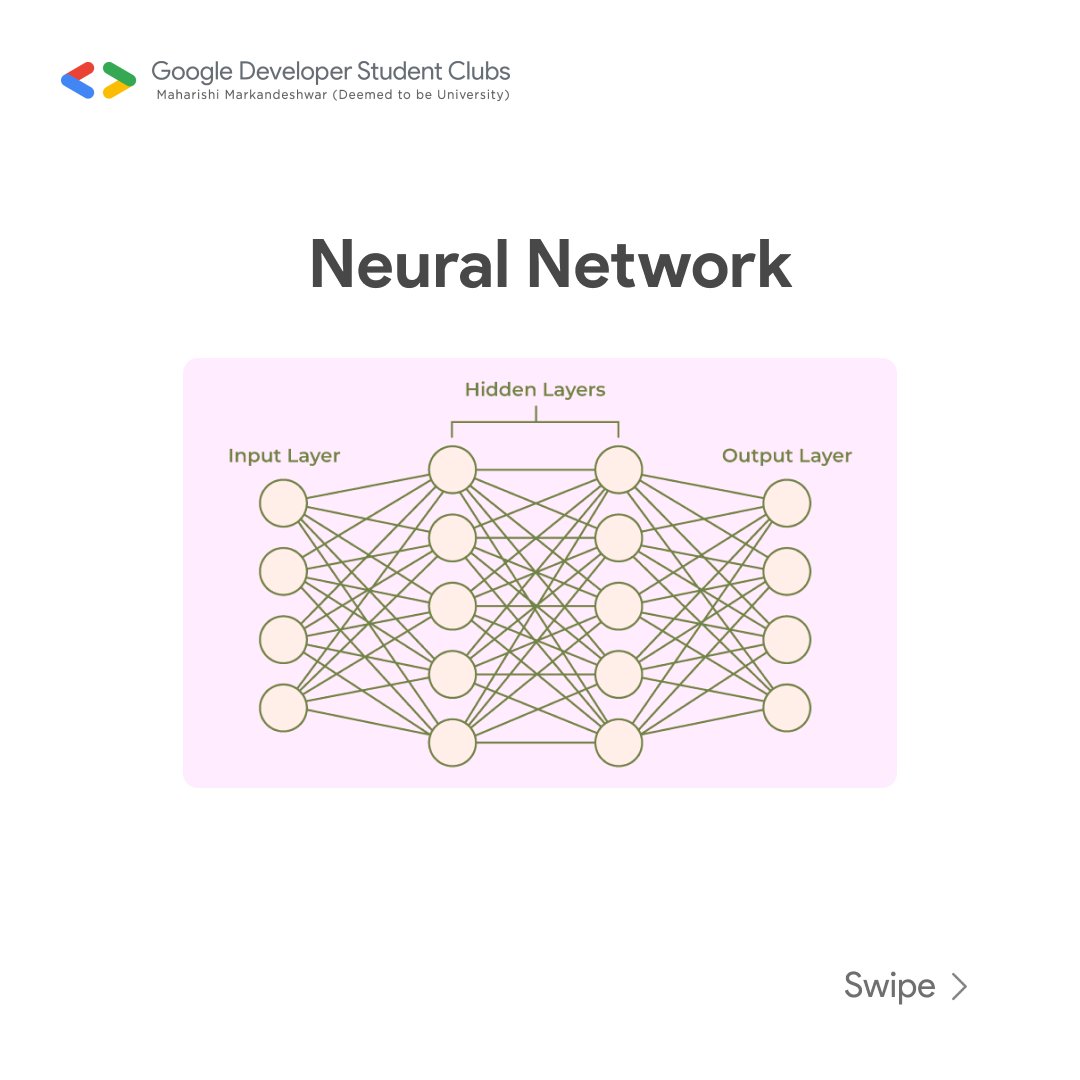
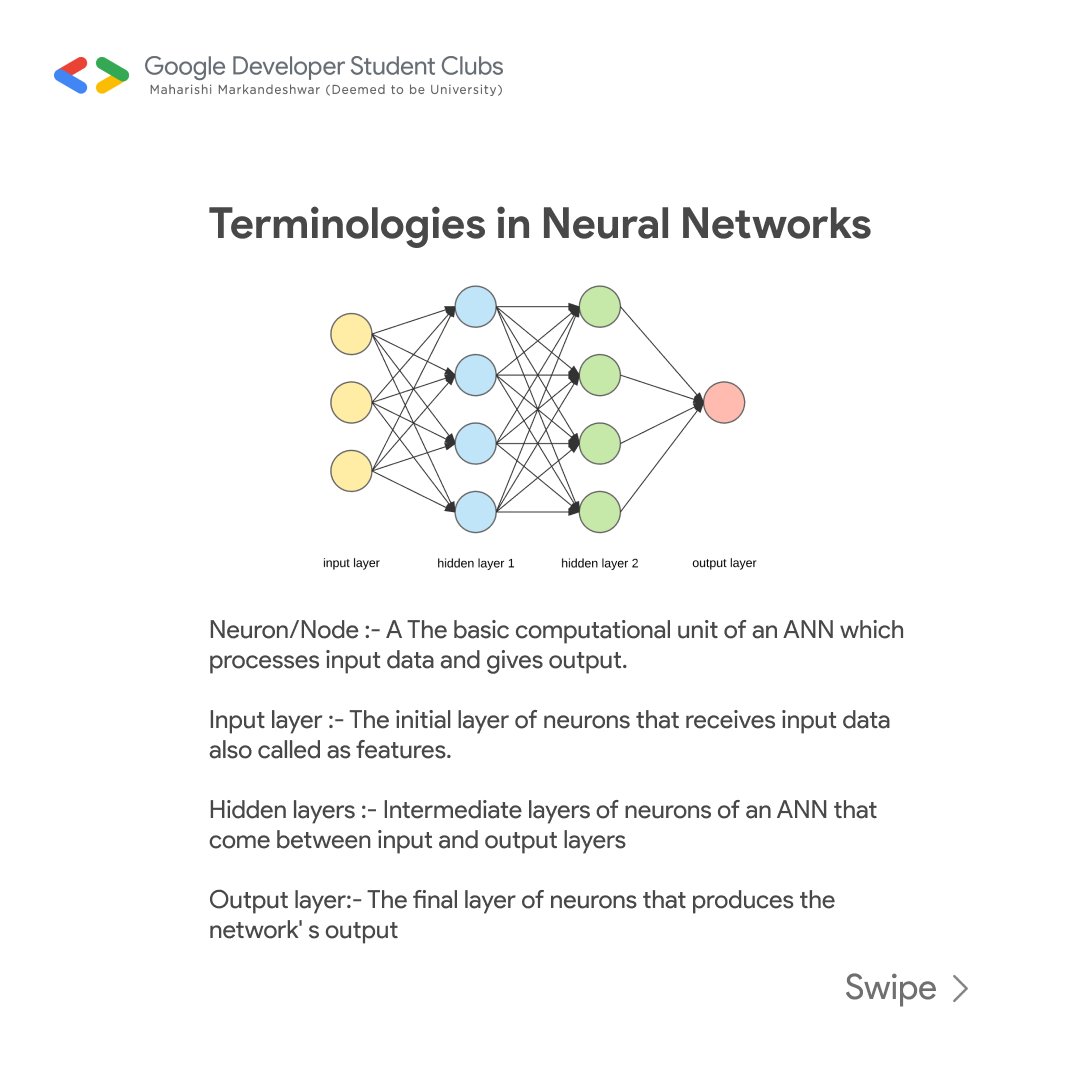
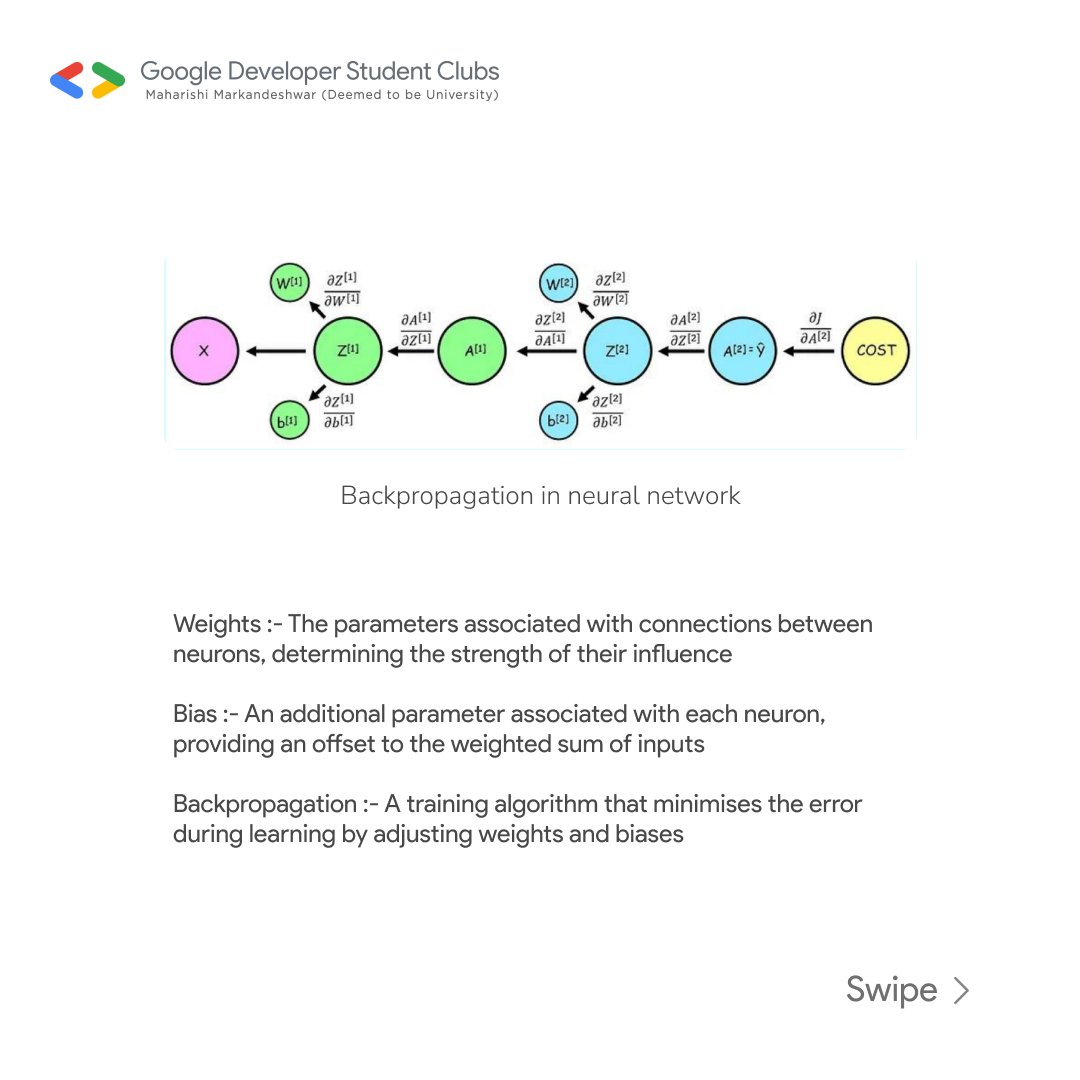
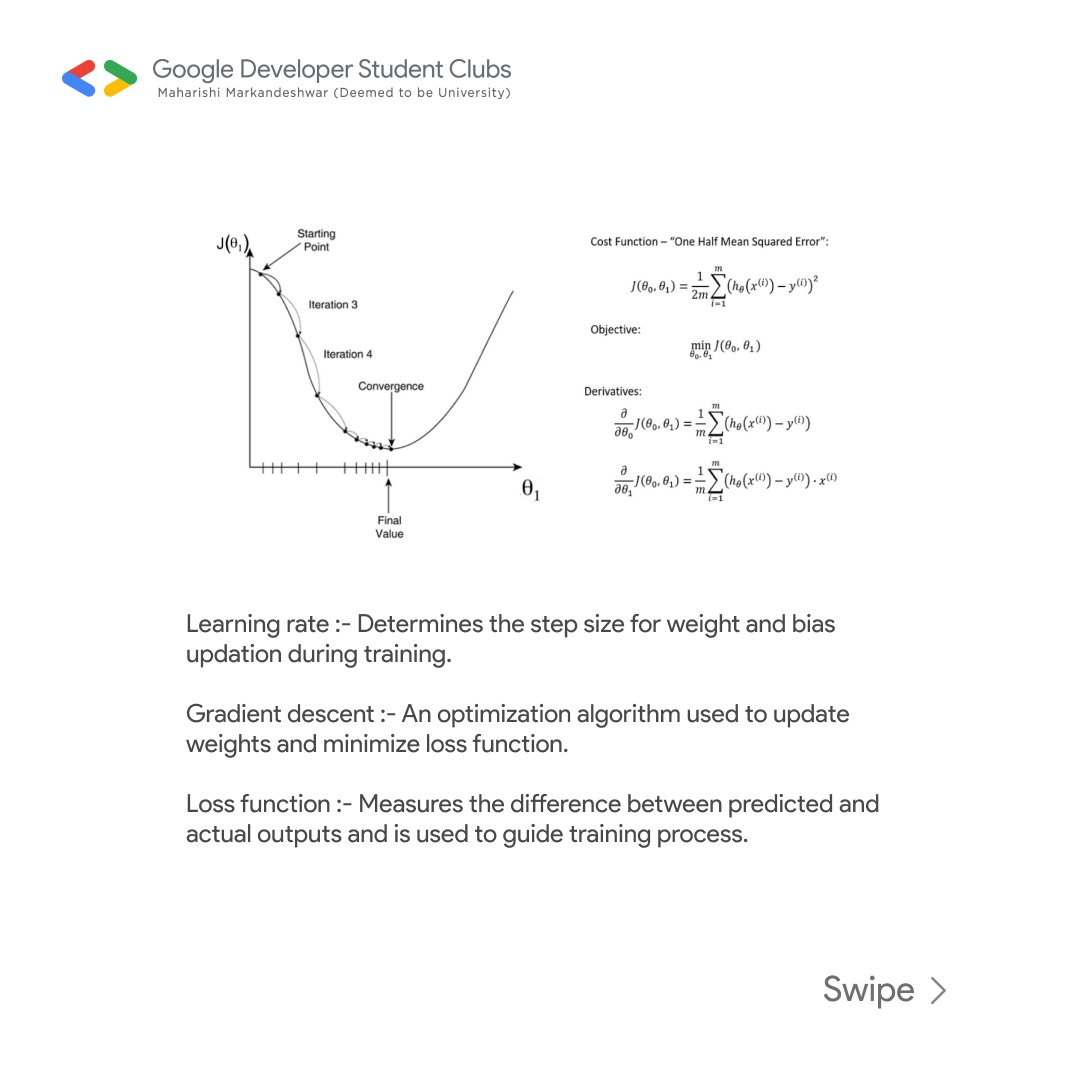
A neural network is a method in artificial intelligence that teaches computers to process data in a way that is inspired by the human brain.
#neuralnetworks #machinelearning #artificialintelligence #deeplearning #AI #ML #DL #algorithms #computerintelligence #computerlearning
21
17
30
458

2 Apr 2023
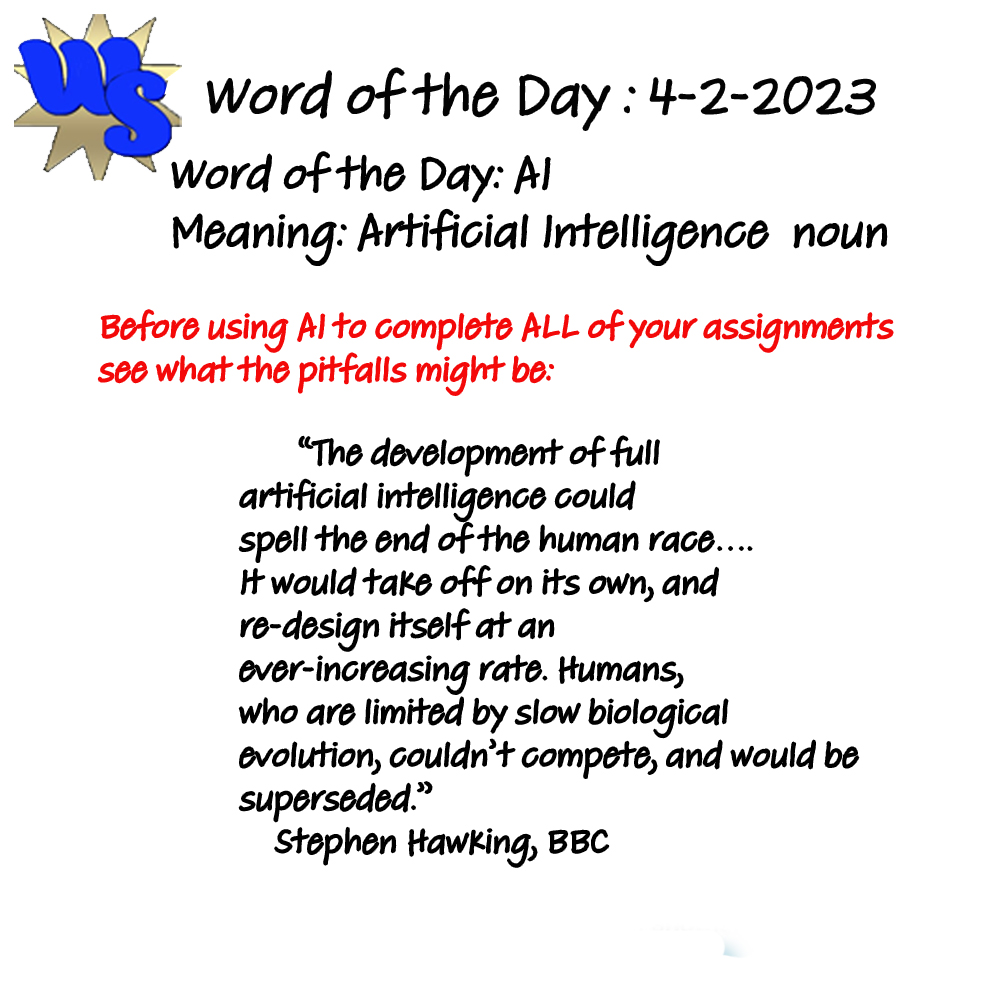
Writing Scoop: Word of the Day: 4-2-2023 AI #writingscoop #vocabulary #education #AI #ChatGPT #computerintelligence #humandownfall #useyourbrain #learn #read #write #StephenHawking #quote
3
59

21 May 2021
Understand the applications of #SoftComputing aka #ComputerIntelligence. #EvolutionaryComputation #differentialevolution #optimization #Machinelearning #HealthTech #Automation #MedTech #AI #ArtificialIntelligence @johnhanke @CiscoCloud @WorldTrendsInfo
bit.ly/3oCpaFJ
1
2

#BigData in #marinescience: From #cloudcomputing to #marinebiodiversity & #genomic analyses, #MachineLearning & #computerintelligence turning data into information (via automation). EMODnet web services enhance M2M data discovery & will federate with others through @BlueCloudEU
29 Apr 2020

EMB Executive Director Sheila Heymans @sheymans launches our new Future Science Brief on #BigData in #marine #science highlighting bottlenecks and opportunities for more #digitalization in understanding the #ocean and #human impacts. Download it: marineboard.eu/publications/… #EMBForum

1
4
13

24 Feb 2020
Artificial Intelligence -- the type of intelligence that is the stuff of science fiction is 60 years in the making. Contributing Editor Steven Nunez gives a brief history of this game-changing innovation. #AI #computerintelligence
spr.ly/60171lorc
2

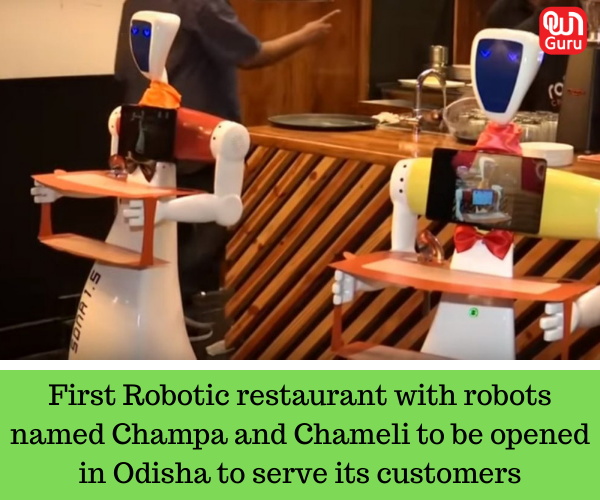
First Robotic restaurant with robots named Champa and Chameli to be opened in Odisha to serve its customers
#RoboticRestaurant #Robot #ChampaAndChameli #Odisha #customer #Odisha #robotics #ArtificialIntelligence #computerintelligence #AI #ssc #ssccgl #ssccpo #sscchsl #ibps
2
1

17 Sep 2019
Un #baile de inicio a un mega #evento global como el #HuaweiConnect #AI #ComputerIntelligence #Cloud @Huawei_Colombia
1
3
14

5 Jul 2019
#Technology has taken the world by a storm, & the very latest addition to this whirlwind has been the Robotics engineering. As the word suggests, #Robotics is more like a blend of artificial intelligence with #computerintelligence. By the advent of this... bit.ly/2XqVH7F
2

The scientists are using street view imagery and #ArtificialIntelligence to improve tracking of these species that can quickly damage ecosystems, raise havoc for farmers and pose health risks.
Read: ow.ly/lp3S30p3v4G
#ComputerIntelligence #Data #Environment
1
4

23 Apr 2019
#reservoircomputing #ANN #RNN #AI #IA #machinelearning #BigData #DataScience #artificialintelligence #computerintelligence #NeuralNetwork
Scientists create first billion-atom biomolecular simulation phys.org/news/2019-04-scient…
2
12 Apr 2019
#reservoircomputing #ANN #RNN #AI #IA #machinelearning #BigData #DataScience #artificialintelligence #computerintelligence #NeuralNetwork

The golden path towards new two-dimensional semiconductors (w/video) tinyurl.com/y4znohut
1
2
12 Apr 2019
#reservoircomputing #ANN #RNN #AI #IA #machinelearning #BigData #DataScience #artificialintelligence #computerintelligence #NeuralNetwork
Chinese Scientists Gene-Hacked Super Smart Human-Monkey Hybrids futurism.com/chinese-scienti…
1
1
10 Apr 2019
#reservoircomputing #ANN #RNN #AI #IA #machinelearning #BigData #DataScience #artificialintelligence #computerintelligence #NeuralNetwork
9 Apr 2019

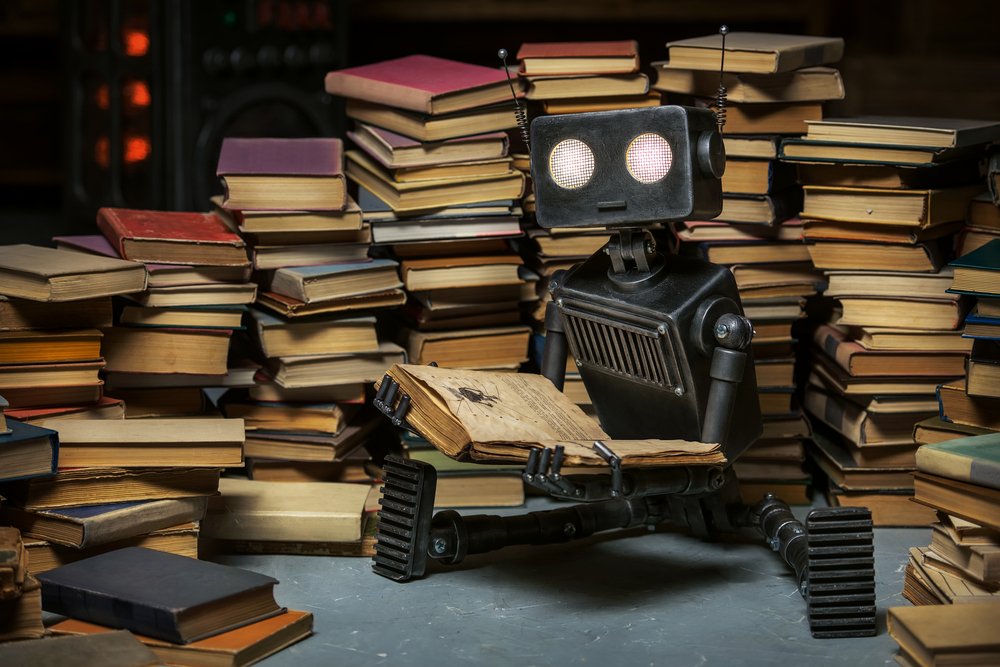
Rival #AI approaches combine to let machines learn like a child
@SpirosMargaris @JimMarous @Xbond49 @ahier @TopCyberNews @psb_dc @ipfconline1 @pierrepinna @RosyCoaching @TheRudinGroup #MachineLearning #DeepLearning #BigData #Datascience #DL #IoT #tech
technologyreview.com/s/61327…
2
1
10 Apr 2019
#reservoircomputing #ANN #RNN #AI #IA #machinelearning #BigData #DataScience #artificialintelligence #computerintelligence #NeuralNetwork
10 Apr 2019

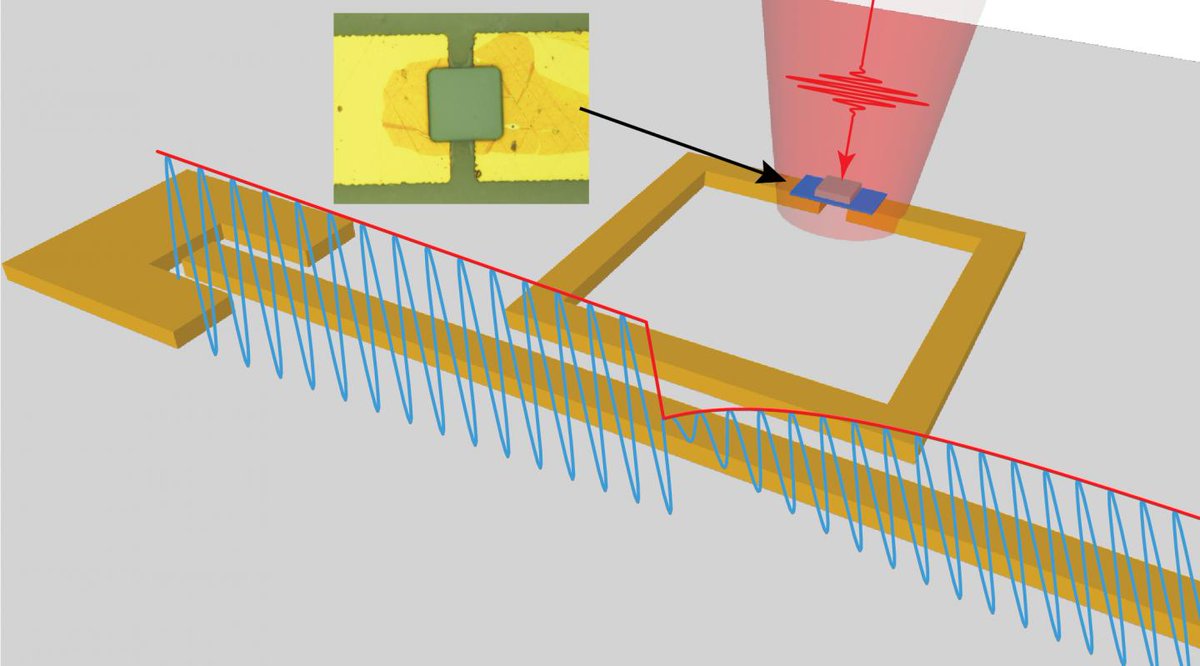
Measurement of semiconductor material quality is now 100,000 times more sensitive dlvr.it/R2X9vJ
2
9 Apr 2019
#reservoircomputing #ANN #RNN #AI #IA #machinelearning #BigData #DataScience #artificialintelligence #computerintelligence #NeuralNetwork
A significant supercomputing grant for investigations of atomically precise nanocatalysts tinyurl.com/yy8czrb4
2
2 Feb 2019
#reservoircomputing #ANN #RNN #AI #IA #machinelearning #BigData #DataScience #artificialintelligence #computerintelligence #NeuralNetwork
1 Feb 2019

Paper: Spintronic current generation and relaxation in a quenched spin-orbit-coupled Bose-Einstein condensate for research and testing environments #CurrentDecay #QuantumGas #QuantumComputing
nature.com/articles/s41467-0…
2
2
30 Jan 2019
#reservoircomputing #ANN #RNN #AI #IA #machinelearning #BigData #DataScience #artificialintelligence #computerintelligence #NeuralNetwork
Engineers translate brain signals directly into speech sciencedaily.com/releases/20…
1
3

20 Jan 2019
RT @Pardoe_AI: RT @Go_Mario: #reservoircomputing #ANN #RNN #AI #IA #machinelearning #BigData #DataScience #artificialintelligence #computerintelligence #NeuralNetwork
19 Jan 2019

The Next Big thing? The memristor, a microscopic component that can "remember" electrical states even when turned off. It's expected to be far cheaper and faster than flash storage. A theoretical concept since... pcworld.com/article/152683/t…
2
2