
“VAST Key Moments” series: theCUBE's @RealStrech speaks with @VAST_Data’s @jvallery & Jonsi Stefansson about how #datagravity & #distributedinfrastructure is forcing #data to move to where #AIinference runs.
📺 Get more insights!
youtu.be/VLePy4hUpoU
#Compute #TechNews
1
3
334

One of the more interesting structural decisions in Perceptron is how the network observes bandwidth contribution through ongoing interaction rather than static registration. Nodes participate continuously in network activity, which allows the system to evaluate real connectivity conditions such as responsiveness and throughput. That observation layer becomes essential when the system needs to coordinate resources across many independent environments.
The node layer is intentionally lightweight, which reduces operational friction for participants. Instead of requiring specialized infrastructure, the client focuses on exposing available connectivity and maintaining stable network interaction. When participation is simple to maintain, distributed systems tend to develop a wider and more diverse node topology.
Another design choice is the clear separation between infrastructure participation and coordination logic. Nodes provide connectivity and bandwidth, while a higher-level orchestration layer determines how workloads are distributed and verified. By keeping orchestration external to individual nodes, the system prevents local complexity from spreading across the entire network.
This structure also creates a feedback loop where infrastructure growth improves routing flexibility. As more nodes become active, the network gains additional paths for workload distribution. Increased path diversity typically improves resilience because the system can redirect activity away from congested or unstable segments.
Taken together, the architecture suggests a network that evolves through measurable contribution, modular coordination, and distributed participation. The long-term stability of the system will likely depend on how effectively these mechanisms continue adapting to changing network conditions as the infrastructure expands.
@PerceptronNTWK
#Perceptron #DistributedInfrastructure #NetworkArchitecture #EdgeNetworks #InternetInfrastructure #SystemsEngineering #TechResearch

7
1
3
50
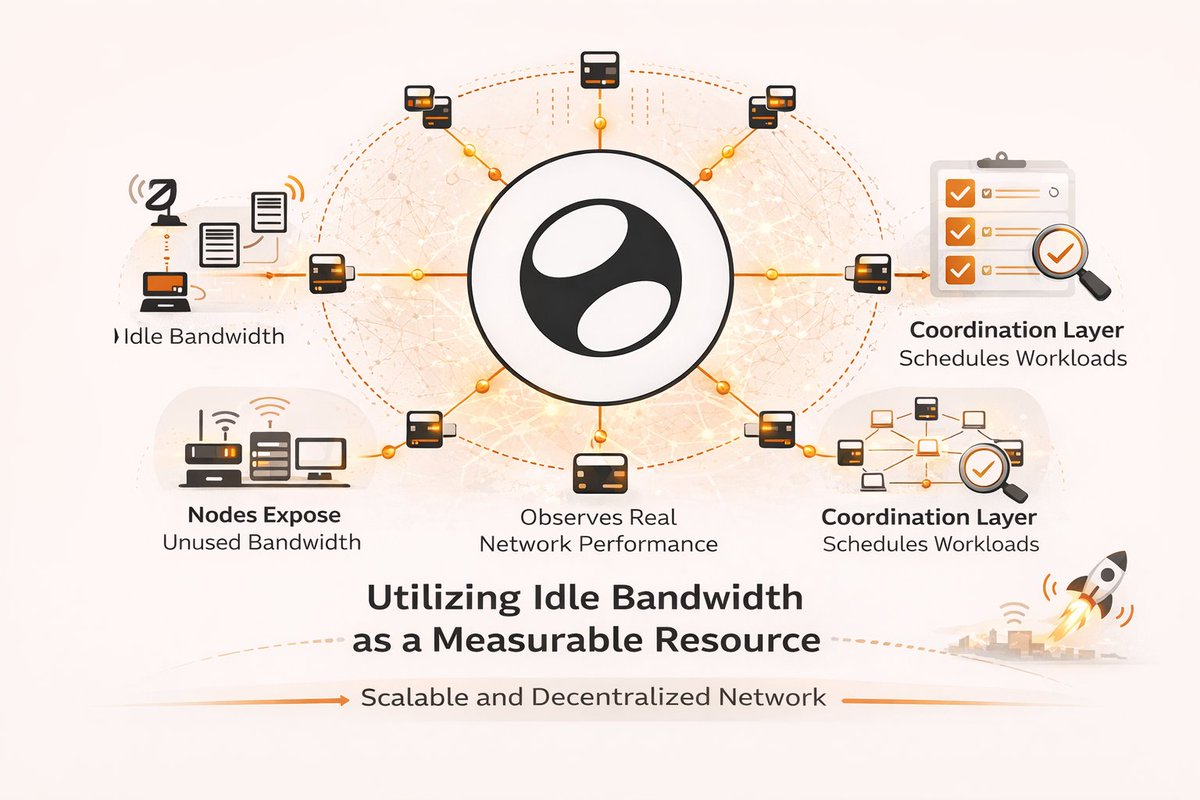
Perceptron’s infrastructure treats idle bandwidth as a measurable network resource rather than an abstract contribution. Nodes expose unused connectivity to the system, and the coordination layer distributes workloads based on available capacity and responsiveness. This approach matters because it turns a widely available but fragmented resource into something that can be aggregated and scheduled.
The node layer itself is designed to be lightweight but accountable. Participation is not just about being online; the system observes real network behavior to determine whether a node is actually contributing bandwidth. By tying participation to observable performance, the architecture reduces the gap between declared capacity and real delivery.
Another structural decision is the separation between resource providers and coordination logic. Nodes handle contribution and connectivity, while the orchestration layer focuses on task distribution and verification. Keeping these responsibilities distinct allows the network to expand horizontally without overloading the coordination layer as participation increases.
What becomes interesting at scale is how this structure changes network dynamics. As more nodes join, the system gains not only capacity but also geographic diversity and redundancy. That diversity improves reliability because workloads are no longer dependent on a narrow set of endpoints.
Taken together, these choices suggest a design focused on measurable contribution, distributed participation, and infrastructure that grows through network effects rather than centralized expansion. The long-term behavior of the system will likely depend on how effectively these mechanisms continue to coordinate thousands of independent nodes without introducing friction.
@PerceptronNTWK
#Perceptron #DistributedInfrastructure #NetworkSystems #EdgeNetworks #InternetInfrastructure #TechArchitecture #SystemsDesign 🚀
1
2
25

Mar 25
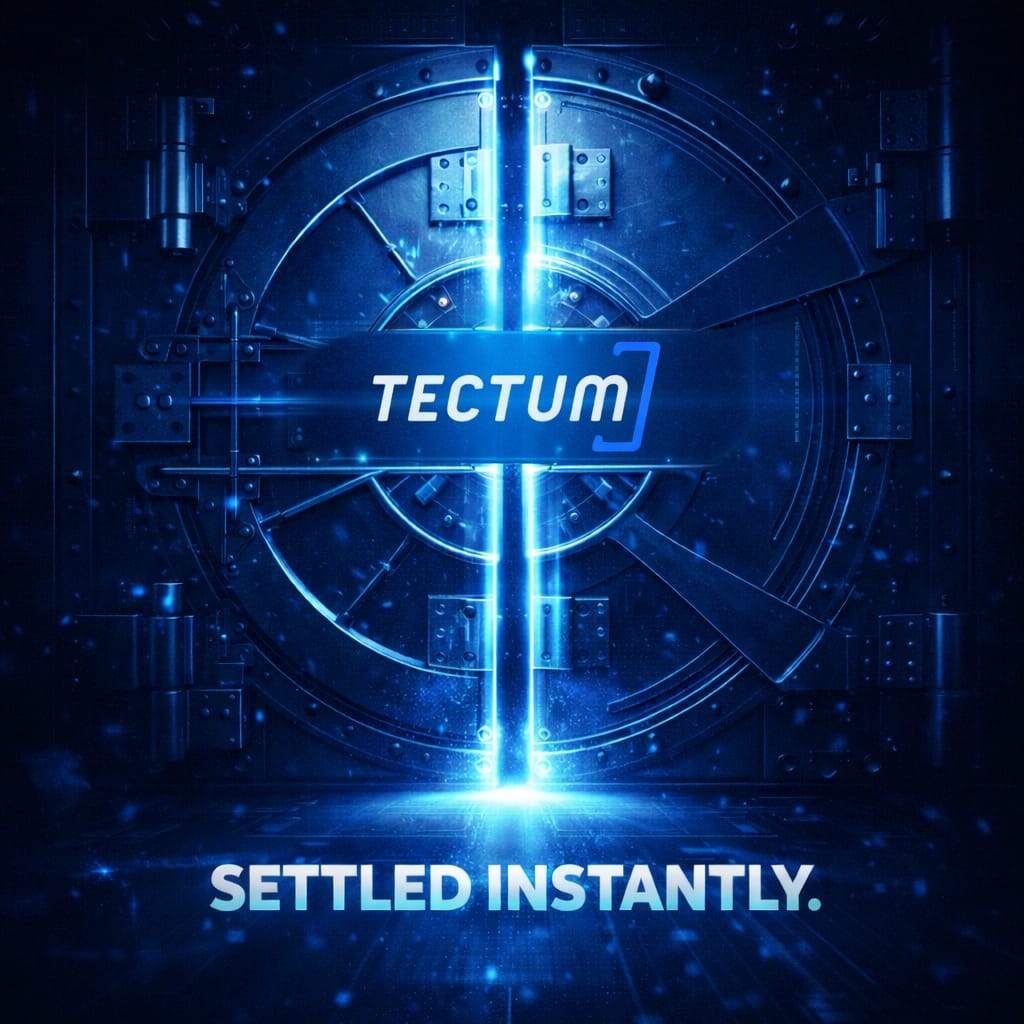
System efficiency depends on how tasks are distributed
In many networks, validation, storage, and communication are tightly coupled, creating bottlenecks under load
Tectum separates these responsibilities into a three-tier structure, allowing each function to operate independently
This improves processing efficiency and supports higher transaction throughput
Well structured systems scale better under continuous demand
#TCT #SystemDesign #DistributedInfrastructure #Throughput #Fintech
3
4
726
Mar 24
Performance challenges often arise when systems attempt to handle validation, distribution, and storage within a single processing layer
This leads to congestion and reduced efficiency as transaction volume increases
@tectumsocial separates these functions through a three tier architecture:
• transaction processing
• network distribution
• decentralized storage
This allows each layer to scale independently, improving overall system performance and reducing bottlenecks.
This is an architectural approach to scaling, not a workaround
#TCT #SystemArchitecture #DistributedInfrastructure #Throughput #Blockchain

3
6
846
Mar 23
Many systems struggle with settlement because they try to handle validation, distribution, and storage within a single layer
This creates bottlenecks as transaction volume increases
@tectumsocial separates these functions through a three-tier architecture:
• transaction processing
• network distribution
• decentralized storage
By distributing workload across layers, the system can process transactions more efficiently and avoid congestion
This is a structural approach to scaling financial infrastructure
#TCT #SystemArchitecture #DistributedInfrastructure #Throughput #Blockchain

3
4
920

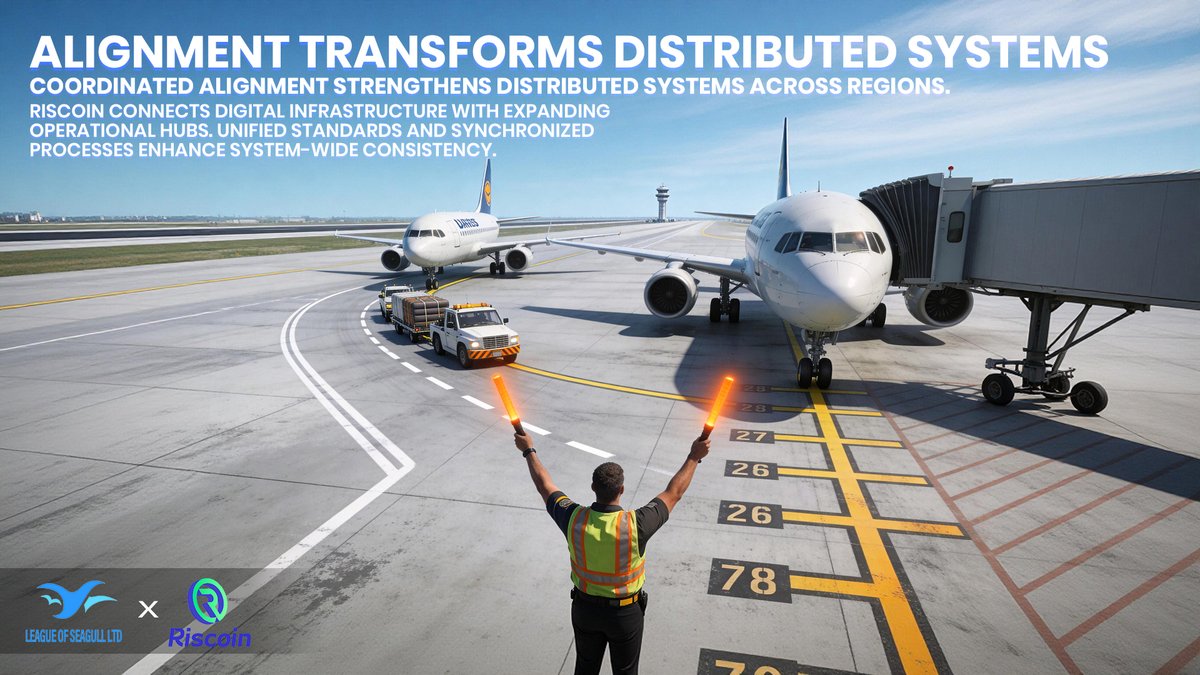
🔗 Systems move stronger when they stay in sync.
🌐 Riscoin connects participation through coordinated infrastructure.
🔄 Aligned layers make performance more predictable and stable 📈.
#Riscoin #SystemAlignment #DistributedInfrastructure #Fintech
23,689

13 Nov 2025
Ketika infrastruktur tersebar di antara individu, sesuatu yang indah muncul 🌐
Tidak dikendalikan korporasi ❌
Tidak bergantung pada server pusat ❌
Tidak rentan terhadap satu titik kegagalan ❌
Visi Golden Pact:
🏺 Penitipan emas terdistribusi (PAXG)
₿ Node Bitcoin terdistribusi (BTC)
⚙️ Tata kelola terdesentralisasi (DAO)
Protokol adalah benang emas tak terlihat yang menyatukan kita 🧵
Infrastruktur terdesentralisasi. Kemakmuran bersama
#DistributedInfrastructure #GoldenPact #Decentralization #FutureOfFinance

2
143

20 Oct 2025
Our thoughts have been with the engineering teams at AWS. Today's events underscore why enterprises need true multi-cloud control. When any single provider becomes a bottleneck, entire businesses stop.
NexQloud's Distributed Cloud Aggregator (DCA) orchestrates workloads across decentralized, enterprise, public, and government clouds from one control plane. No vendor lock-in. No single points of failure.
Build resilience into your infrastructure.
#MultiCloud #CloudResilience #EnterpriseCloud #DistributedInfrastructure
1
1
8
248
30 Sep 2025
🚫 What happens when AWS goes down? Your business stops.
What happens when NexQloud's network faces an outage? Nothing.
That's the power of true decentralization—1,850 NanoServers across 10 countries, each providing redundant compute, storage, and resilience.
NexQloud's global infrastructure delivers:
→ 54,820 vCPUs powering enterprise workloads
→ 158.83 TB of RAM supporting memory-intensive applications
→ 849 AI GPUs enabling real-time ML and analytics
→ Zero single points of failure
The result?
✅ 99.99% uptime without vendor lock-in
✅ Up to 50% lower costs than traditional cloud
✅ 88% less energy consumption than data centers
✅ Your applications run closer to users globally
Traditional cloud = single point of failure.
Decentralized cloud = antifragile infrastructure.
🔗 [nexqloud.io]
#DecentralizedCloud #NexQloud #EdgeComputing #CloudSecurity #DistributedInfrastructure #Kubernetes #NXQ
1
4
175
13 Aug 2025
💰 What if infrastructure profits flowed to people—not data centers?
The cloud economy is shifting—and it's already rewarding those who contribute.
Here’s the opportunity:
✅ Businesses cut cloud costs by 31.2%
✅ Individuals earn income by sharing compute power
✅ No data center overhead. No complexity. Just participation.
This isn’t theory. It’s happening now:
• 1,850 NanoServers deployed worldwide
• Enterprise-grade workloads running today
• 31.2% lower cost vs. traditional cloud
• 88% less energy consumed
Every dollar spent on cooling and redundancy can be redirected to individuals contributing real value.
The future is distributed—and more efficient by design.
#CloudAlternatives #TechEconomics #DistributedInfrastructure #B2BtoC #NexQloud
1
6
9
209

🧭 OAPA 观察|“无人扶我青云志,我自踏雪至山巅“
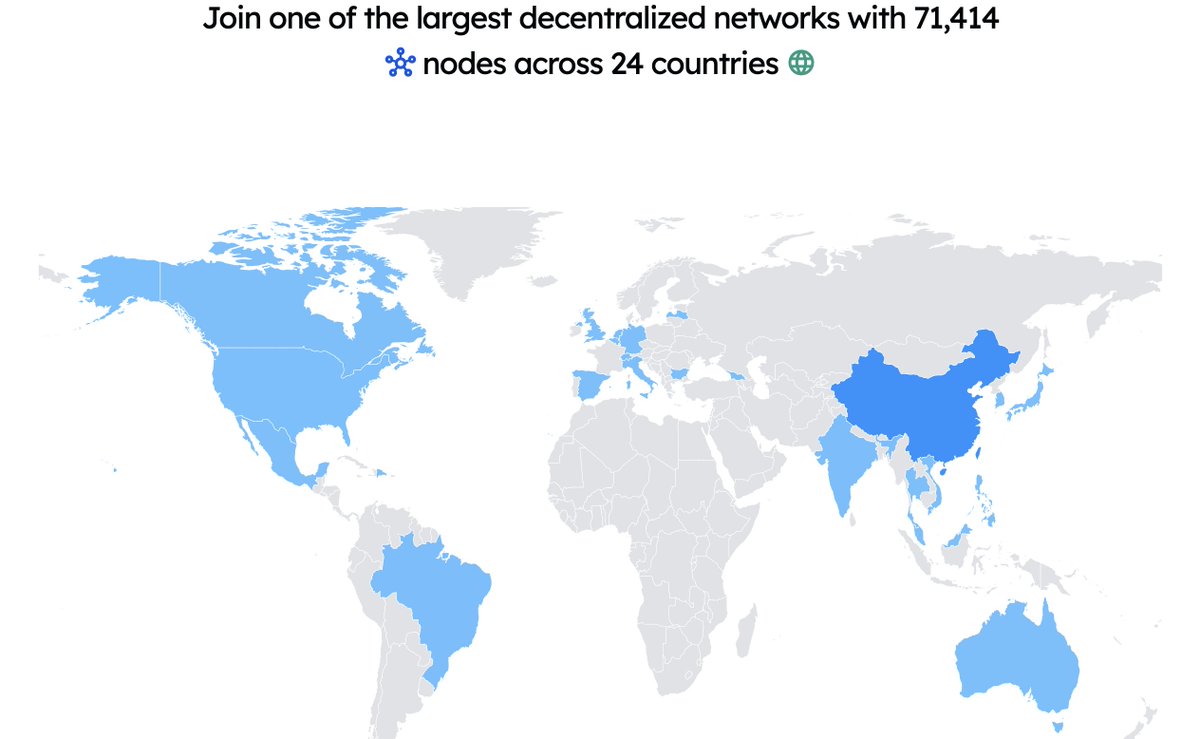
OORT 今日更新数据显示,Deimos License 的免费发放已接近尾声——总量 100,000 中已有 81,593 张被认领,剩余不足 20%。这份变化表面上是一项节点许可活动的倒计时,实质上标志着 OORT 网络的早期布局已经完成 80% 以上。
当 free license 全部发放之后,就是OORT真正意义上的通缩开始!
在全球地图上,这张网络的形状已经隐约可见。
🗺 01|节点已覆盖全球24国,亚洲区密度领先
从官方提供的地理分布图来看,OORT 当前已在全球24个国家布设超过71,000个节点,其中:
中国、印度、越南、菲律宾、日本、韩国形成东亚-东南亚连续高密区;
北美(美加)、西欧(法德英)、澳洲构成稳定带;
南美(巴西)与土耳其、乌克兰等形成多点渗透。
这个节点网络的分布不以技术能力为锚点,而更接近一个“人群基础 社区响应速度”的地理热图。
🧩 02|节点不是矿机,是“分布式参与权”
OORT 的Deimos License不等于传统矿机许可,它代表的是一种数据生态中的入网权:
每个节点并非用于“挖矿”,而是承担存储、数据分发等具体任务;
所谓 License,更像是“通行证”,获得加入网络的基本资格。
从OAPA视角看,这种许可分发机制的关键点不在于“抢得快”,而在于它如何把 数据主权的网络权重 分散到尽可能多的社区手中。
🧱 03|分布式网络的真实轮廓,正在浮现
我们观察到:
节点密度与语言区有关,也与政策语境、数字产权意识高度相关;
不是所有地区的“上线速度”都一样,但高密区域的集结效应正在显现;
此轮 License 发放可能是 OORT 将网络控制权、验证权、数据入网权 进行社区化的第一轮实际操作。
换句话说——“技术网络”正逐步成为“共识结构”。
🔍 值得OAPA持续关注的三个问题:
--- Deimos License 分布后,是否会配套不同地域的任务类型或激励结构?
--- 下一阶段是否会引入“节点治理权”或“地域型数据仓储自治”?
--- 亚太是否将成为测试任务密度最高的区域?这是否是OORT网络内的第一次权重引导?
原因各位老师在评论区分析讨论这些问题,小编随时在线做出解答回复!
#OORT #Deimos #GlobalNetwork #DistributedInfrastructure #NodeLicense #DataParticipation @oortech

7
2
10
201
28 Jul 2025
🚫 No single point of failure.
☁️ No centralized bottlenecks.
That’s the power of NexQloud's global network of 1,850 decentralized NanoServers—each contributing compute, storage, and resilience to the system.
NexQloud’s Distributed Compute Platform (DCP) now comprises:
✅ 54,820 virtual CPUs (vCPUs) — powering compute-intensive enterprise workloads
✅ 158.83 terabytes of RAM — supporting large-scale, memory-driven applications
✅ 849 AI-capable GPUs — enabling real-time machine learning, inference, and analytics
👉 The future of cloud is decentralized. Are you building on it?
🔗 [nexqloud.io]
#DecentralizedCloud #NexQloud #EdgeComputing #CloudSecurity #DistributedInfrastructure #Kubernetes #NXQ
2
4
7
192

21 Jun 2025
@openloop_so
is revolutionizing the digital landscape.
Say goodbye to outdated centralized models—OpenLoop is now active, transforming how we connect, utilize, and enhance the online ecosystem. This isn’t merely a theoretical Web3 concept; it’s a functioning system that puts power in the hands of the people.
Why remain tied to restrictive, top-down networks when you can join a platform that distributes control?
Here’s what sets OpenLoop apart:
🔹 Global Node Network – A sturdy, worldwide framework that eliminates single failure points.
🔹 Idle Bandwidth Utilization – Turn your unused internet capacity into a network-driving resource.
🔹 Decentralized AI Access – Effortlessly tap into robust AI computing power, distributed and efficient.
🔹 Transparent Consensus System – No intermediaries, just open, reliable governance.
💡 OpenLoop is not just challenging conventional cloud providers—it’s reinventing the entire infrastructure. With $OPL, you hold the key to this innovative future.
✨ Genuine value. True decentralization. Meaningful transformation.
Become part of the revolution. Discover the true essence of Web3.
#OpenLoop #DistributedInfrastructure #Web3Evolution
3
1
20
69

14 Jun 2023
AI EdgeLabs and ZEDEDA join Forces to Secure Distributed Edge Environments!
Take your security to the next level.
buff.ly/3PdkgOL
#Cybersecurity #EdgeComputing #AI #Partnership #EdgeSecuritySolutions #DistributedInfrastructure

1
5
126

6 Mar 2023
The Metaverse and edge computing: shared experiences built on a new OS, compute paradigm by David A. Smith, Co-Founder & CTO of @CroquetIO
#computeparadigm #Croquet #distributedinfrastructure #dynamicstate #gaming #metaverse #edge #edgecomputing edgeir.com/the-metaverse-and…

3
4
455

3 Mar 2023
Join us as we explore the technical challenges of distributed infrastructure and how ARED is addressing them with cutting-edge AI solutions. Don't miss out on this exciting conversation! #distributedinfrastructure #AI #ARED #technology
youtu.be/3ibM8YQ2uvQ

1
3
155

3 Mar 2023
Join us as we explore the technical challenges of distributed infrastructure and how ARED is addressing them with cutting-edge AI solutions. Don't miss out on this exciting conversation! #distributedinfrastructure #AI #ARED #technology
2
119

23 Nov 2022
Identifying the needs of African Open Access publishing communities commonplace.knowledgefutures…
By @OmoOaiya @irynakuchma & Adam Hyde
#openaccess #opensource #distributedinfrastructure #Interoperability #underlyingdata
1
3

1 Sep 2022
In this interview segment, @patrickmoorhead and @danielnewmanuv were joined by @NickCMFuller, VP, Distributed Cloud at @IBMResearch, to explore @distributedinfrastructure, #AI, and IBM’s vision of #edge computing. $IBM x.com/i/broadcasts/1ypJddbPM…
2
4