
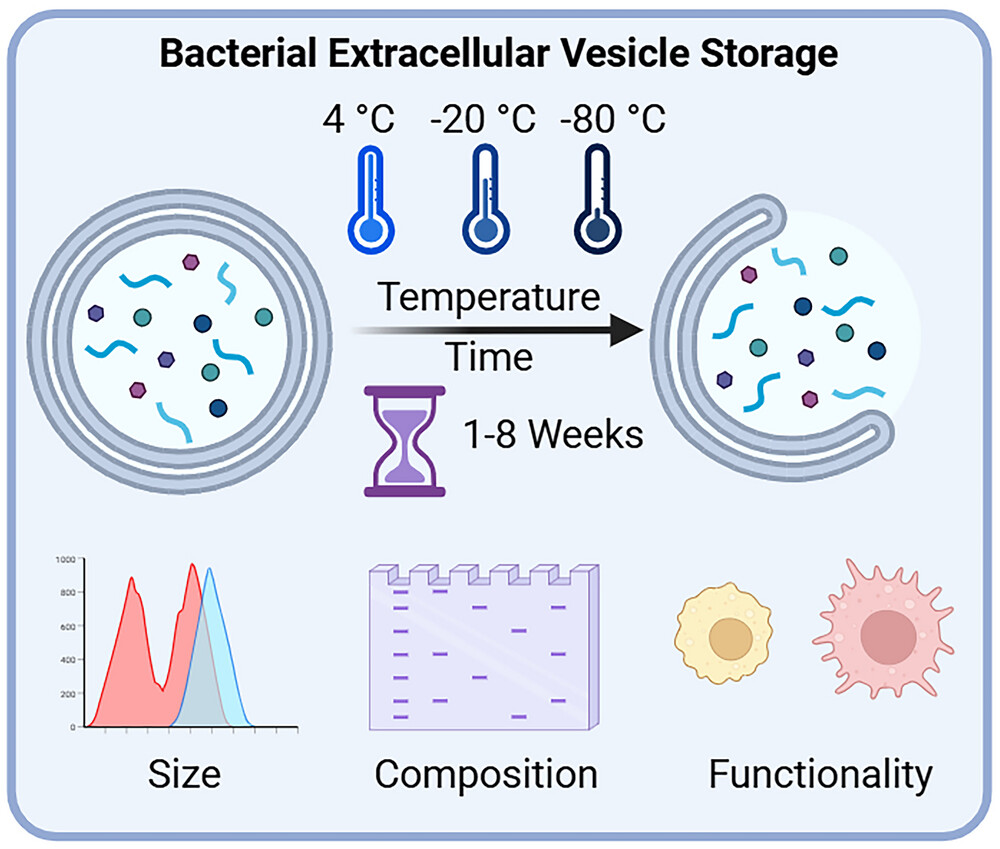
📘Read in #JExBio📘 Long-Term Stability of Bacterial Extracellular Vesicles Stored at Different Temperatures #extracellularvesicles #membranevesicles #grampositive #gramnegative isevjournals.onlinelibrary.w…
2
73

May 31
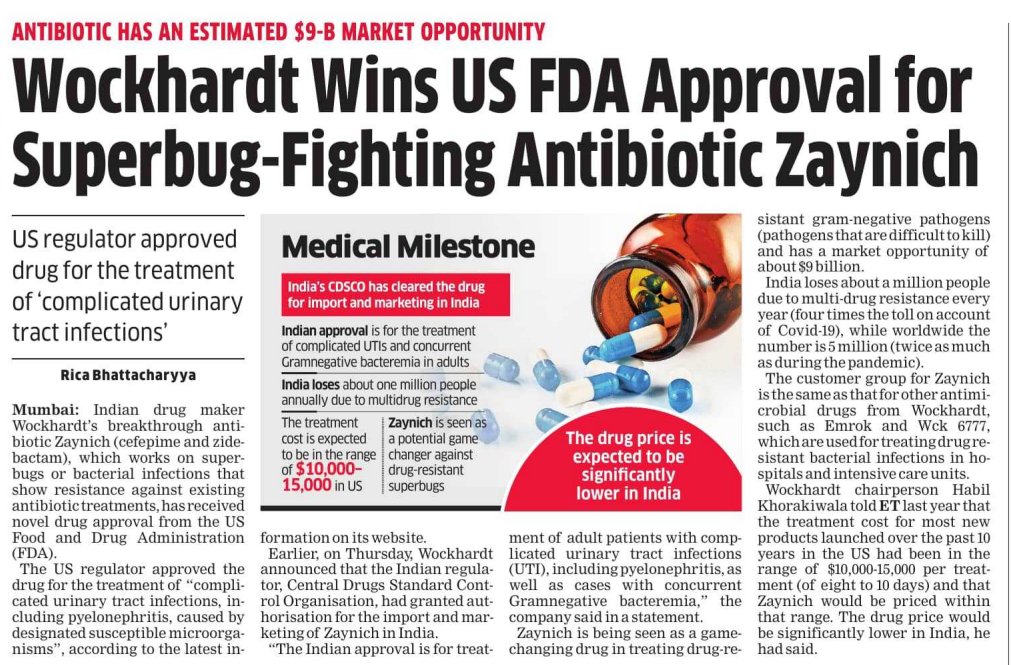
Wockhardt Wins US FDA Approval for Superbug-Fighting Antibiotic Zaynich; Estimated $9 Billion Market Opportunity — India's CDSCO Also Clears Drug, Treatment Cost $10,000-15,000 in US, Significantly Lower in India
The Approval — What Was Achieved
Indian drug maker Wockhardt's breakthrough antibiotic Zaynich (cefepime and zidebactam) received novel drug approval from the US Food and Drug Administration (FDA)
US regulator approved the drug for treatment of "complicated urinary tract infections, including pyelonephritis, caused by designated susceptible microorganisms"
Earlier, India's Central Drugs Standard Control Organisation (CDSCO) had granted authorisation for import and marketing of Zaynich in India
Indian approval is for treatment of adult patients with complicated UTIs including pyelonephritis as well as cases with concurrent Gramnegative bacteremia
The Drug — What Makes Zaynich Special
Works on superbugs or bacterial infections that show resistance against existing antibiotic treatments
Being seen as a game-changing drug in treating drug-resistant gram-negative pathogens — pathogens that are difficult to kill
Market opportunity estimated at about $9 billion
Customer group same as for other Wockhardt antimicrobial drugs such as Emrok and Wck 6777 — used for treating drug-resistant bacterial infections in hospitals and intensive care units
The India Context — A Critical Need
India loses about one million people annually due to multi-drug resistance — four times the toll on account of Covid-19
Worldwide number is 5 million — twice as much as during the pandemic
CDSCO approval positions Zaynich as a potential solution to India's severe antimicrobial resistance crisis
Pricing — India vs US
Treatment cost in the US expected to be in the range of $10,000-15,000 per treatment of eight to ten days
Drug price in India would be significantly lower
Treatment cost for most new products launched in the US over the past 10 years has been in the $10,000-15,000 range per treatment — Wockhardt Chairperson Habil Khorakiwala
Core Theme
Wockhardt's US FDA approval for Zaynich is a landmark moment for Indian pharmaceutical innovation — as the first novel antibiotic targeting drug-resistant superbugs to win FDA approval from an Indian company, it addresses a $9 billion global market opportunity while striking at the heart of one of India's most severe public health crises; with India losing a million lives annually to multi-drug resistance and CDSCO approval already secured, Zaynich's significantly lower India pricing could make this life-saving superbug fighter accessible at scale in the country that needs it most.Sonnet 4.6 Low
1
5
39
5,205

May 13
Which is the most promoting feature of pili present on pathogenic Gramnegative bacteria to infect the host?
(a) Inhibit complement activation
(b) Facilitate the adherence of bacteria
(c) Transport nutrients into the cell
(d) Transfer DNA between two bacterial cells A
1
2
101
Apr 17
Differential staining of bacteria on Gram staining is due to the
(a) Difference in the cell wall layer components of Gram-positive and Gram-negative bacteria
(b) Difference in the cell structure of Gram-positive and Gram-negative bacteria
(c) Difference in the mode of nutrition of Gram-positive and Gramnegative bacteria
(d) None of the above
5
1
4
433

Feb 2
🩸New in #CriticalCare:
A preclinical randomised controlled dose optimization of megadose sodium ascorbate for reversal of gram-negative sepsis-induced cardiovascular, brain and kidney dysfunction
doi.org/qn94
#CritCare #GramNegative #Sepsis #Cardiovascular
1
2
7
1,733

Jan 27
Wockhardt announced positive Phase 3 clinical trial results for its novel intravenous antibiotic Foviscu® (WCK 4282) 💊.
The drug successfully met its primary endpoint in treating complicated urinary tract infections (cUTI) and acute pyelonephritis caused by Gram-negative bacteria, including difficult-to-treat ESBL-producing pathogens — highlighting its potential as a next-generation solution against antibiotic resistance.
#Wockhardt #Foviscu #WCK4282 #Phase3Trials #ClinicalTrials #AntibioticInnovation #cUTI #Pyelonephritis #GramNegative #ESBL #Healthcare #Biotech #PharmaNews #DrugDevelopment #InfectiousDiseases
2
212

Jan 14
➰Why Vancomycin is ineffective against Gram-negative bacteria
🤹Core reason → Structural barrier
🌀Vancomycin is a large, bulky glycopeptide
It inhibits cell-wall synthesis by binding D-Ala–D-Ala in peptidoglycan.
🤹Gram-negative bacteria have an OUTER MEMBRANE
•Composed of LPS phospholipids
•Acts as a physical permeability barrier
•Porins are too small to allow vancomycin entry
🌀Vancomycin cannot reach peptidoglycan, so it cannot act.
🤹In contrast:-
•Gram-positive bacteria
•No outer membrane
•Thick, exposed peptidoglycan → vancomycin works well
🤹Exam one-liner:-
🌀Vancomycin is ineffective against Gram-negative bacteria because it cannot penetrate the outer membrane.
🤹pearls:-
•🌀Gram-negative resistance here is intrinsic, not acquired.
#Pharmacology #Microbiology #Antibiotics #Vancomycin #GramNegative #KriMeeraHC
1
7
662

7 Oct 2025
Just know very good at botth gramnegative and positive microbes
1
3
593

1 Oct 2025
WOCKHARDT: CO SUBMITS NEW DRUG APPLICATION TO U.S. FDA FOR ZIDEBACTAM-CEFEPIME (WCK 5222) FOR TREATMENT OF SERIOUS GRAMNEGATIVE INFECTIONS
5
1
41
10,873

Study Milestone Alert – The FAST database is locked! The #ARLGnetwork study compared rapid phenotypic antimicrobial susceptibility testing (AST) for #GramNegative bacteremia to standard AST to learn if rapid AST improved patient outcomes. Learn more: arlg.org/arlg-studies
2
93
FAST completed enrollment! The @ARLGnetwork study evaluated whether using a rapid phenotypic antimicrobial susceptibility testing (AST) method for #GramNegative bacteremia improved patient outcomes compared to standard AST methods. Learn more: arlg.org/arlg-studies
@NIAIDNews
ALT Enrollment Complete: FAST Fast Antibiotic Susceptibility Testing for Gram-Negative Bacteremia: Prospective, Randomized Trial ARLG Antibacterial Resistance Leadership Group arlg.org
2
115

25 Jul 2025
at the very least and utter forgiveness for the wretched and unspeakable @gramnegative
1
2
18

2 Jun 2025
@Heiko_Schoening was passiert wenn Spike aus 🦠 oder mRNA 💉und Gramnegative Bakterien aufeinandertreffen ?
Hell might break loose.
3
30
1 Jun 2025
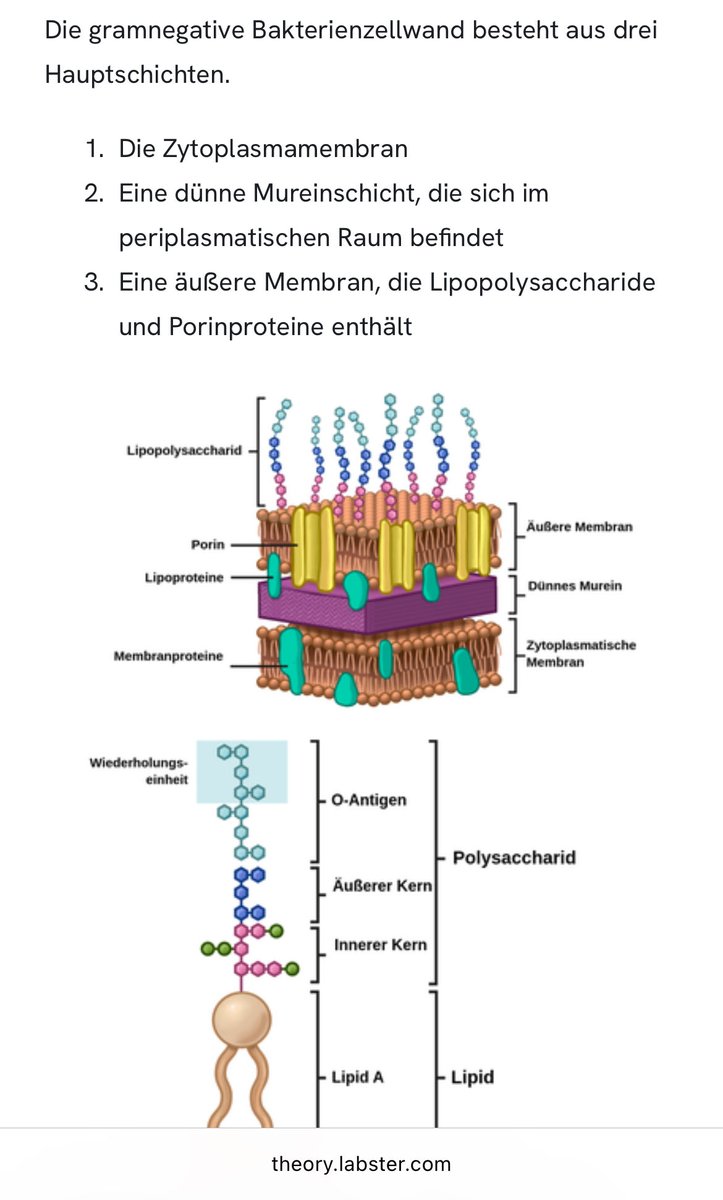
Thema: Endotoxine / LPS
Endotoxine sind giftige Bestandteile der äußeren Zellmembran von gramnegativen Bakterien.
Sie bestehen hauptsächlich aus Lipopolysacchariden (LPS) und werden nicht aktiv ausgeschieden, sondern freigesetzt, wenn die Bakterienzelle stirbt oder zerstört wird.
Hier sind die wichtigsten Punkte zu Endotoxinen:
Aufbau:
•Lipopolysaccharid (LPS):
•Lipid A – der toxische Teil; löst Immunreaktionen aus.
•Core-Polysaccharid – verbindet Lipid A mit dem O-Antigen.
•O-Antigen – variabel; bestimmt die Immunantwort und kann als Antigen wirken.
Wirkung im Körper:
•Aktiviert das Immunsystem stark, besonders Makrophagen.
•Führt zur Freisetzung von Zytokinen (z. B. TNF-α, IL-1), was Fieber, Entzündungen und in hohen Dosen septischen Schock verursachen kann.
•Stabil und hitzeresistent, daher schwierig in der Sterilisation zu entfernen.
Vorkommen:
•Nur bei gramnegativen Bakterien wie E. coli, Salmonella, Pseudomonas, Neisseria usw.
Medizinisch relevant:
•In der Intensivmedizin oder bei Blutvergiftungen (Sepsis) spielen Endotoxine eine große Rolle.
•In pharmazeutischen Produkten, besonders bei Injektionen, müssen Endotoxine durch Tests (z. B. LAL-Test) ausgeschlossen werden.
ChatGPT
Gramnegative Zellwand:
2
3
7
446

22 May 2025
Ob der Arzt wusste was gramnegative Stäbchen sind? Hat der Arzt die Blutkultur abgenommen oder kam die woanders her? Im niedergelassenen Bereich ja schon fast untypisch, dass man das da macht.
3
1,028

21 May 2025
Ich: "Ich rufe wegen Herr *Name* an, bin ich da richtig?"
Ärztin: "Ja."
Ich: "Der hat in der Blutkultur gramnegative Stäbchen."
Ärztin: "Ja... und?"
Ich war sprachlos 😭
(gramneg. Stb. = Bakterien = (im Blut) Sepsis (Blutvergiftung) - als Arzt weiß man das)
78
65
2,789
239,037

29 Apr 2025
Generative deep learning pipeline yields potent Gram-negative antibiotics
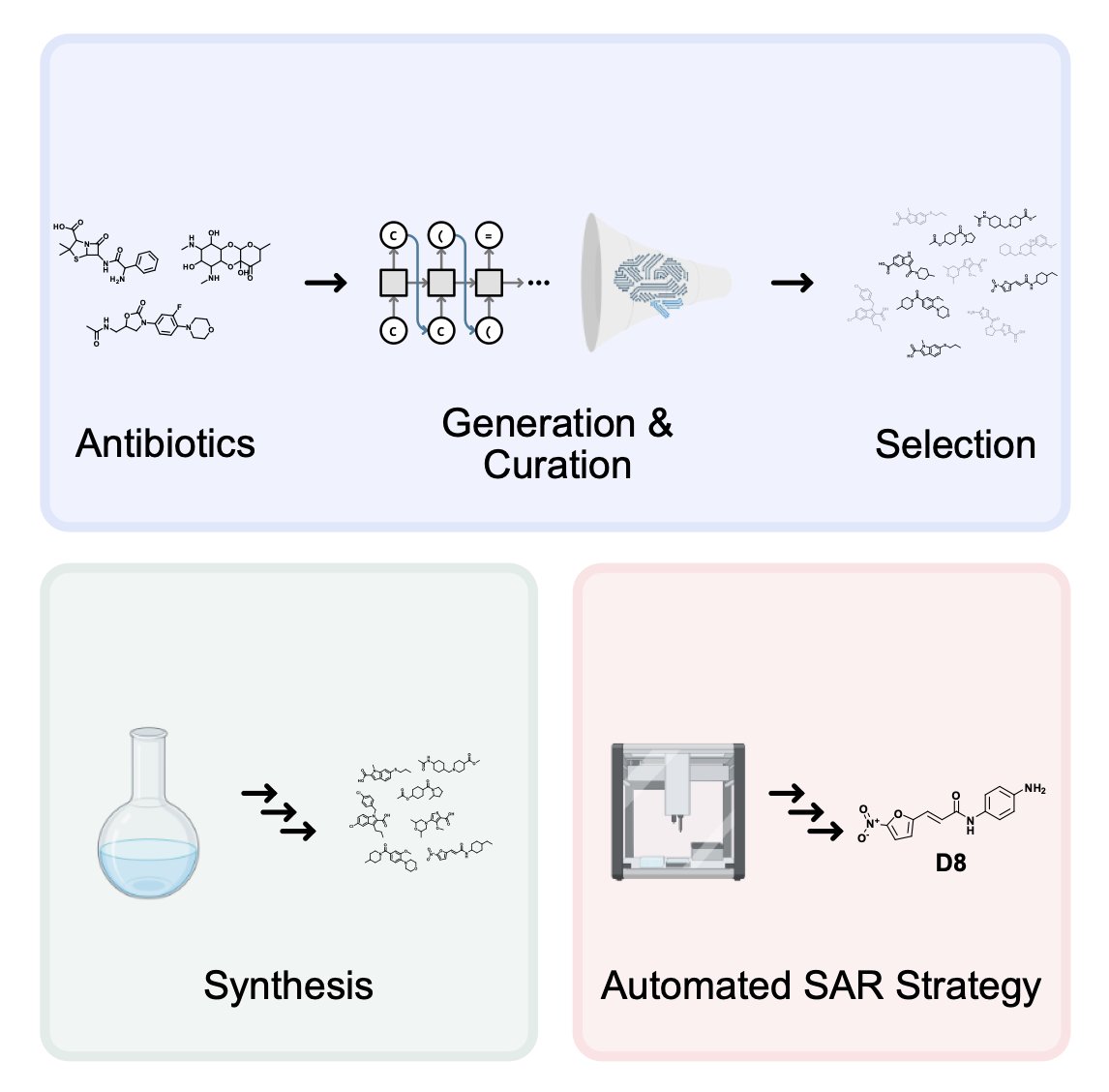
1. This study presents an end-to-end deep learning pipeline for de novo antibiotic discovery, integrating a chemical language model (CLM), predictive modeling, and automated synthesis to generate structurally novel antibiotics with potent activity, including against Gram-negative bacteria.
2. Using transfer learning on diverse antibiotic scaffolds and a CLM pre-trained on drug-like and natural product molecules, the team generated over 3,500 unique compounds, curated them via synthetic accessibility and bacterial accumulation models, and selected eleven novel scaffolds for synthesis.
3. Among these, compound 8 (a nitrofurane derivative) exhibited potent activity against methicillin-resistant Staphylococcus aureus (MIC = 6.3 µM). A subsequent automated structure–activity relationship (SAR) campaign yielded 40 derivatives, 17 of which were active against E. coli.
4. The top hit, D8, demonstrated submicromolar MIC (0.78 µM) against S. aureus and low micromolar potency (1.56 µM) against E. coli—substantially outperforming marketed nitrofurans such as nitrofurantoin and nitrofurazone.
5. Mechanistic studies revealed D8's mode of action involves nitroreductase-mediated reduction of its nitro group, leading to the generation of reactive oxygen species, paralleling the activity of classical nitrofuran antibiotics but with improved Gram-negative potency.
6. SAR analysis revealed critical features such as meta- or para-positioned amines or alcohols on the phenyl ring to be essential for Gram-negative activity, aligning with known uptake rules for bacterial membranes.
7. The study validates the utility of automated SAR and D2B (direct-to-biology) screening to rapidly explore chemical space and optimize lead compounds, achieving hits with unprecedented activity against challenging Gram-negative pathogens.
8. By combining chemical generation, expert curation, synthesis, and biological testing in a unified pipeline, the work sets a new benchmark for AI-driven antibiotic discovery and highlights the ability of DL models to transcend the scaffold limitations of known antibiotics.
9. The authors emphasize that their framework, including synthesis robotics and AutoML-assisted prioritization, is modular and scalable, offering a template for future campaigns in anti-infectives and beyond.
💻Code: github.com/sieber-lab/AIbiot…
📜Paper: doi.org/10.26434/chemrxiv-20…
#DrugDiscovery #Antibiotics #DeepLearning #GenerativeModels #SyntheticChemistry #GramNegative #AI4Science #ComputationalBiology
4
616
29 Apr 2025
Generative deep learning pipeline yields potent Gram-negative antibiotics
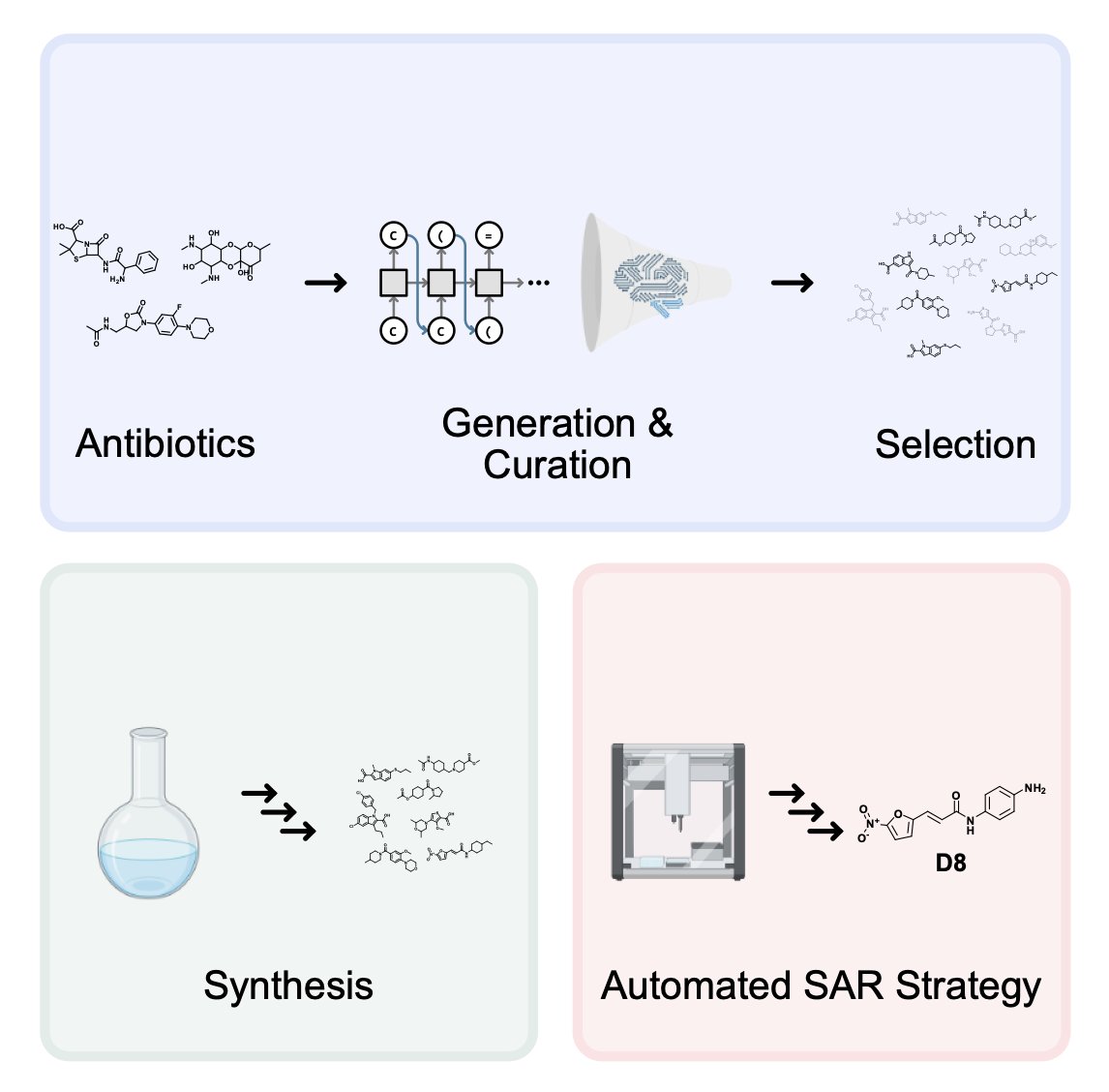
1. This study presents an end-to-end deep learning pipeline for de novo antibiotic discovery, integrating a chemical language model (CLM), predictive modeling, and automated synthesis to generate structurally novel antibiotics with potent activity, including against Gram-negative bacteria.
2. Using transfer learning on diverse antibiotic scaffolds and a CLM pre-trained on drug-like and natural product molecules, the team generated over 3,500 unique compounds, curated them via synthetic accessibility and bacterial accumulation models, and selected eleven novel scaffolds for synthesis.
3. Among these, compound 8 (a nitrofurane derivative) exhibited potent activity against methicillin-resistant Staphylococcus aureus (MIC = 6.3 µM). A subsequent automated structure–activity relationship (SAR) campaign yielded 40 derivatives, 17 of which were active against E. coli.
4. The top hit, D8, demonstrated submicromolar MIC (0.78 µM) against S. aureus and low micromolar potency (1.56 µM) against E. coli—substantially outperforming marketed nitrofurans such as nitrofurantoin and nitrofurazone.
5. Mechanistic studies revealed D8's mode of action involves nitroreductase-mediated reduction of its nitro group, leading to the generation of reactive oxygen species, paralleling the activity of classical nitrofuran antibiotics but with improved Gram-negative potency.
6. SAR analysis revealed critical features such as meta- or para-positioned amines or alcohols on the phenyl ring to be essential for Gram-negative activity, aligning with known uptake rules for bacterial membranes.
7. The study validates the utility of automated SAR and D2B (direct-to-biology) screening to rapidly explore chemical space and optimize lead compounds, achieving hits with unprecedented activity against challenging Gram-negative pathogens.
8. By combining chemical generation, expert curation, synthesis, and biological testing in a unified pipeline, the work sets a new benchmark for AI-driven antibiotic discovery and highlights the ability of DL models to transcend the scaffold limitations of known antibiotics.
9. The authors emphasize that their framework, including synthesis robotics and AutoML-assisted prioritization, is modular and scalable, offering a template for future campaigns in anti-infectives and beyond.
💻Code: github.com/sieber-lab/AIbiot…
📜Paper: doi.org/10.26434/chemrxiv-20…
#DrugDiscovery #Antibiotics #DeepLearning #GenerativeModels #SyntheticChemistry #GramNegative #AI4Science #ComputationalBiology
5
18
1,300

15 Apr 2025
Microbiology and Biochemistry makes more sense at the Master level.There you will realize the importance andbroadness of the courses. MCB doesn’t stop and end at differentiating GramPositive bacterial from Gramnegative ones neither does Biochemistry starts nor ends at Glycolysis
2
5
397
Data published by #ARLGNetwork researchers found that rapid antibiotic susceptibility testing shows greater benefits in managing #GramNegative bacteremia caused by #AMR bacteria. Learn more: duke.is/ARLG-Pub-12-16-24 @ASMicrobiology
1
4
189