
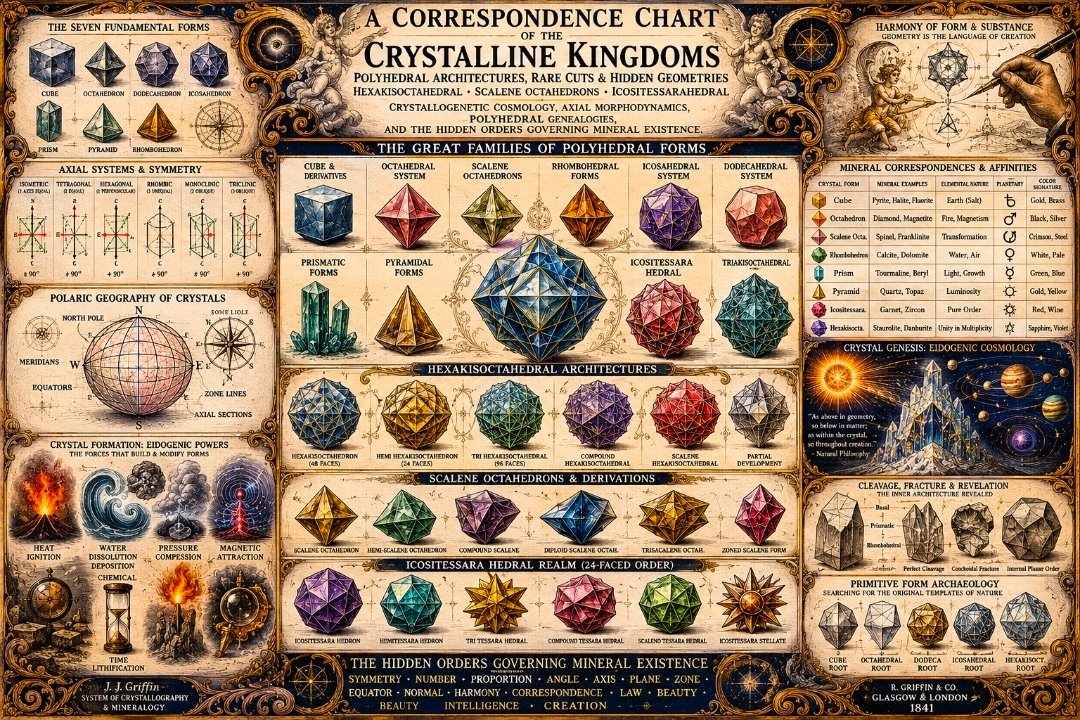
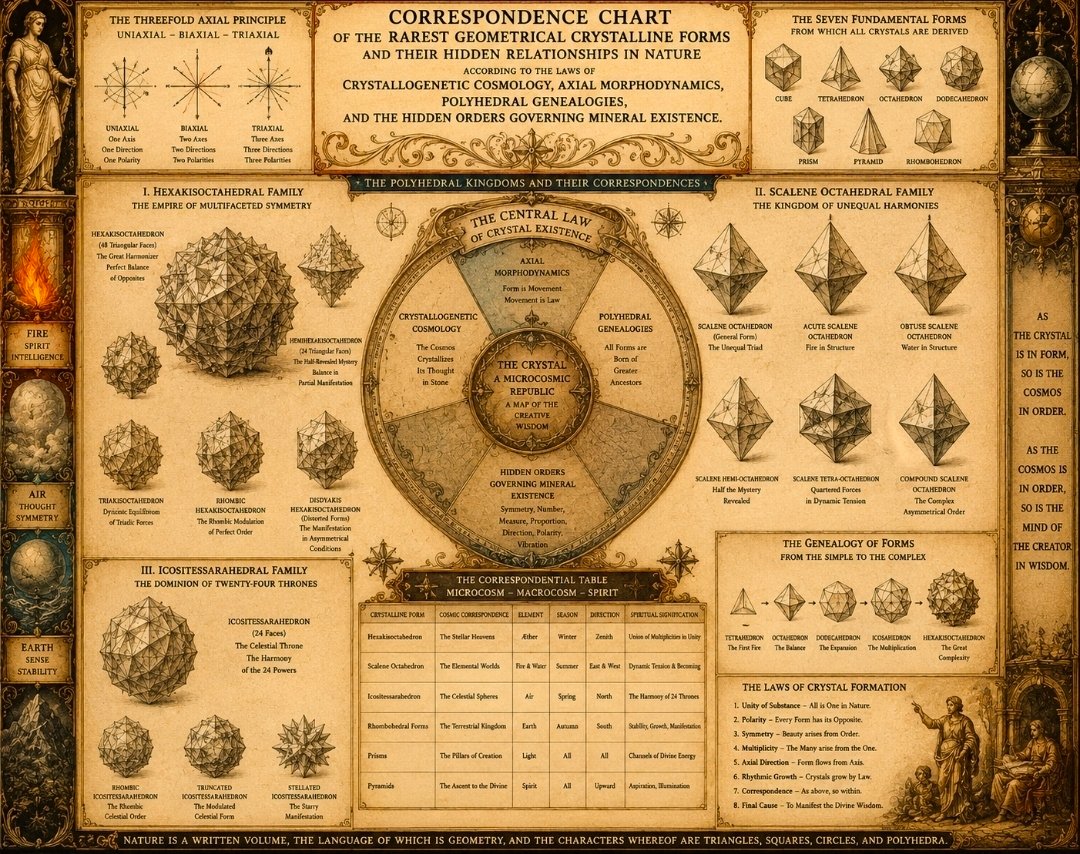
⚠️Specialist Highly technical terminology Continues for - Griffins System of Crystallography - 1841 - 📜 PART 3 📜
LVI. Tourmalinology
The science of Tourmaline, one of nature's most chemically diverse crystal families. Nineteenth-century mineralogists regarded Tourmaline as a wonder-mineral because its crystals displayed extraordinary elongation, striation, coloration, and electrical peculiarities. Tourmalinology bridges crystallography, electro-mineralogy, geochemistry, and natural philosophy. To Griffin's generation, Tourmaline suggested that geometry and hidden forces cooperate in producing mineral structure.
LVII. Garnet Cosmology
A study of the vast kingdom of garnets, including Almandine, Grossular, Pyrope, Uwarowite, and numerous related forms. Garnets fascinated crystallographers because they frequently exhibit highly symmetrical dodecahedral and trapezohedral structures. Garnet Cosmology explores how one mineral family manifests a remarkable diversity of chemical compositions while preserving coherent geometrical laws.
LVIII. Feldspathic World-Building
The science of Feldspars as planetary construction materials. Griffin's index is filled with Albite, Orthoklas, Labradorite, Oligoclase, and Adularia. Modern geology confirms what early mineralogists suspected: feldspars constitute much of Earth's crust. Feldspathic World-Building studies the minerals that literally form continents, mountains, granites, and planetary foundations.
LIX. Labradoritic Luminosity
The study of Labradorite and related feldspars displaying unusual optical effects. Long before spectroscopy matured, such minerals inspired curiosity concerning light, color, and internal structure. Their iridescence suggested hidden worlds concealed within stone.
LX. Emerald Morphodynamics
A science examining Emerald not merely as a gem but as a crystallographic phenomenon. Emeralds unite beauty, rarity, chemistry, and geometry. Griffin's treatment places them within a broader mineral kingdom rather than isolating them as jewelry.
LXI. Beryl Architectonics
The study of Beryl, Aquamarine, and Emerald as members of a shared structural family. Beryl Architectonics examines the hexagonal frameworks through which these celebrated minerals manifest themselves.
LXII. Corundic Sciences
The investigation of Corundum, Sapphire, and Oriental Ruby. Before modern materials science recognized corundum's extraordinary hardness, mineralogists already appreciated its structural perfection. Corundic Sciences studies one of nature's most durable crystalline architectures.
LXIII. Diamond Philosophy
An inquiry into Diamond as a union of simplicity and perfection. Diamond contains only carbon, yet displays one of the most orderly crystal structures known. For natural philosophers, this demonstrated how immense complexity may arise from elemental simplicity.
LXIV. Topazian Morphology
The study of Topaz and its characteristic crystal habits. Topaz served nineteenth-century mineralogists as an important example of how geometry, chemistry, and transparency combine within a single mineral species.
LXV. Zirconic Antiquarianism
Long before zircon became a tool for estimating Earth's age, it fascinated crystallographers because of its durable form and distinctive geometries. Zirconic Antiquarianism studies minerals that preserve some of the oldest records of planetary history.
LXVI. Lapidary Historiography
The historical study of gemstones and ornamental minerals. Griffin's index preserves continuity with Greek, Roman, medieval, Renaissance, and Enlightenment traditions concerning precious stones.
LXVII. Mineral Heraldry
The science of identifying minerals through characteristic forms. Just as coats of arms identify noble families, crystal habits identify mineral species. Griffin devoted immense effort to creating this visual language of recognition.
LXVIII. Geognostic Mineralogy
An older geological discipline concerned with understanding the Earth's structure through direct observation of minerals and rocks. Geognosy preceded modern geology and sought a descriptive understanding of terrestrial architecture.
LXIX. Neptunic Geology
The study of geological processes emphasizing aqueous origins. Influenced by earlier geological debates, this science interpreted many formations as products of ancient waters, oceans, and sedimentary deposition.
LXX. Plutonic Geology
The opposing school emphasizing heat, magma, and subterranean fire. Griffin's period still lived amidst the great debate between aqueous and igneous explanations of Earth's formation.
LXXI. Vulcanological Mineral Philosophy
The investigation of minerals associated with volcanic environments. Such minerals revealed how fire, heat, pressure, and chemistry could generate highly ordered crystalline structures.
LXXII. Metallogenic Morphology
The study of metal-bearing minerals through their forms. Griffin's extensive listings of copper, silver, arsenic, nickel, antimony, tellurium, cobalt, and lead minerals reveal a forgotten geometrical approach to ore science.
LXXIII. Telluric Metallosophy
An exploration of tellurium minerals such as Graphic Tellurium and Telluric Silver. These rare substances occupied an almost legendary status among nineteenth-century collectors because of their scarcity and unusual compositions.
LXXIV. Arsenical Mineral Philosophy
The study of arsenic-bearing minerals including Realgar, Orpiment, Mispickel, Arsenical Pyrites, and others. Such species revealed astonishing chemical diversity hidden within the Earth's crust.
LXXV. Antimonial Sciences
The examination of antimony minerals such as Antimonglanz and Antimonblende. These ores fascinated early chemists because they displayed unusual metallic properties and complex crystal habits.
LXXVI. Cobaltic Mineralogy
The science of cobalt-bearing minerals. Long before cobalt became associated with modern technologies, its minerals occupied important positions in chemical and mineralogical classification.
LXXVII. Nickelic Ore Analytics
The study of nickel minerals and their structural relationships. Griffin's catalogue preserves numerous obscure nickel species rarely discussed outside specialist mineralogy.
LXXVIII. Uranitic Antiquities
A science devoted to uranium minerals before nuclear science transformed their cultural meaning. Uranite and related minerals were appreciated for their geometry, coloration, and rarity rather than their energetic potential.
LXXIX. Rare Earth Proto-Chemistry
The investigation of minerals containing cerium, yttrium, lanthanum, gadolinium, and related elements. Griffin's work preserves one of the earliest windows into what would later become rare-earth chemistry.
LXXX. Monazitic Studies
The examination of Monazite as a repository of uncommon elements. Although little understood in Griffin's day, such minerals hinted at hidden chemical territories awaiting discovery.
LXXXI. Gadolinite Frontier Science
Gadolinite became one of the gateways through which entirely new elemental families entered scientific awareness. Its importance extends far beyond its outward appearance.
LXXXII. Ceritic Geochemistry
The study of cerium-bearing mineral species. These substances challenged older classifications and expanded the known boundaries of chemistry.
LXXXIII. Yttric Mineral Frontiers
The exploration of yttrium minerals as evidence of previously unknown elemental domains. Griffin unknowingly documents the dawn of rare-earth science.
LXXXIV. Zeolitic Cathedral Architecture
A study of minerals such as Stilbite, Chabasite, Harmotome, Natrolite, Scolezite, and Heulandite. Their frameworks resemble microscopic cathedrals composed of repeating chambers, passages, and geometrical halls.
LXXXV. Framework Mineralogy
The science of minerals whose internal structures consist of interconnected networks rather than simple arrangements. Modern structural chemistry later confirmed the extraordinary significance of these architectures
.
⚠️ See NEXT reply for LXXXVI-CVI, including:
• Swedenborgian crystal parallels
• Sacred geometry and natural theology
• Biblical gemstone sciences
• Mineral correspondences in Exodus, Ezekiel, and Revelation
• Crystal symbolism from antiquity through 1899
• Ether theories and crystal media
• Magnetism, electricity, and crystal forces
• Proto-cosmology, proto-material science, and forgotten ologies almost never discussed today.

⚠️ Contributions to Literature, Science, Natural Philosophy, Geology, Crystallography, Mineral Cosmology, Ancient Knowledge Traditions, and Forgotten Ologies in Griffin's System of Crystallography (1841)(see Quote Share for Abstract & Link to book & see Pictures for extremely rare crystallography information you will not learn anywhere else. This knowledge is pretty much extinct. #26-55
XXVI. Seven-Form Reductionism
One of Griffin's boldest intellectual achievements. He argues that the overwhelming diversity of crystal forms ultimately reduces to seven fundamental geometrical archetypes. Thousands of visible variations emerge from a small family of governing structures. This resembles linguistic grammar, where countless sentences arise from limited underlying rules. The theory anticipates later scientific quests for unifying principles behind apparent complexity.
XXVII. Archetypal Crystallonomy
The study of ideal crystal forms underlying observable mineral structures. Griffin repeatedly seeks original geometrical templates from which complicated combinations descend. This science concerns the search for hidden architectural blueprints embedded within nature and recalls Platonic discussions concerning ideal forms governing material reality.
XXVIII. Zone Dynamics
Zones are among the most neglected concepts in modern popular science. Griffin treats them as linear pathways connecting crystal faces according to lawful geometric relationships. Zone Dynamics studies these invisible corridors, revealing how distant parts of a crystal remain mathematically connected through common structural principles.
XXIX. Meridianal Geometry
Extending his geographical analogy, Griffin introduces crystal meridians resembling those of terrestrial globes. Meridianal Geometry investigates great-circle relationships between planes, faces, and poles. This transforms mineralogy into a form of internal geography where crystals possess directional networks comparable to cartographic systems.
XXX. Equatorial Morphometry
The measurement and analysis of crystal equators. These structural belts define relationships among numerous faces and become essential for understanding symmetry. Griffin's treatment elevates the equator from a geographical concept to a universal geometric principle operating throughout crystallized matter.
XXXI. Polar Position Analytics
The science of determining the location and significance of crystal planes relative to polar systems. Griffin developed sophisticated methods for denoting polaric positions, creating a highly organized framework for understanding complex crystal arrangements. This field resembles celestial coordinate systems applied to mineral structures.
XXXII. Spherical Crystallometry
The application of spherical geometry to mineral form. Crystal relationships often cannot be fully understood through flat geometry alone. Griffin employs spherical methods to analyze angular relationships, opening a realm where crystals become objects inhabiting geometrical spheres rather than simple Euclidean planes.
XXXIII. Solid Triangle Science
A highly advanced branch of nineteenth-century geometry. Griffin's use of solid triangles demonstrates how three-dimensional relationships govern crystal architecture. Unlike ordinary plane triangles, solid triangles exist in spatial frameworks and reveal the hidden mathematics controlling mineral structure.
XXXIV. Quadrantal Analytics
The science of quadrantal triangles and their application to crystallographic calculations. This obscure mathematical discipline enabled mineralogists to solve difficult geometrical problems before electronic computation existed. It reflects the immense mathematical sophistication underlying early crystallography.
XXXV. Logarithmic Mineral Mathematics
Griffin's extensive use of logarithms reveals the computational world of nineteenth-century science. Before calculators, logarithmic methods transformed impossible calculations into manageable operations. This field demonstrates how mathematical ingenuity expanded humanity's ability to understand mineral structures.
XXXVI. Geometrical Verification Science
An often-overlooked contribution. Griffin repeatedly emphasizes methods for checking measurements and calculations. This represents an early philosophy of scientific verification, ensuring that observations remain trustworthy and reproducible.
XXXVII. Morphological Exactitude
The pursuit of precision in form description. Griffin sought a language capable of describing even the most complicated crystal combinations without ambiguity. Morphological Exactitude becomes both a scientific method and an intellectual ideal.
XXXVIII. Crystal Identity Theory
A sophisticated investigation into what makes one crystal form distinct from another. Griffin examines how structural identity persists despite modifications, truncations, and combinations. This touches deep philosophical questions concerning sameness, variation, and classification.
XXXIX. Polyhedral Ontology
The study of being as expressed through geometrical form. Griffin implicitly asks why certain polyhedra repeatedly emerge throughout the mineral kingdom. Polyhedral Ontology examines the existence and significance of recurring geometrical realities in nature.
XL. Mineral Morphogenesis
The investigation of how crystal forms arise through growth. Griffin's theories seek to understand not merely finished structures but developmental processes. Morphogenesis bridges mineralogy, geometry, and natural philosophy.
XLI. Geometric Vitalism of Form
Although Griffin remains scientific, his work belongs to an era fascinated by formative powers operating within nature. Many nineteenth-century thinkers perceived geometry as evidence of active organizational principles guiding matter into lawful arrangements.
XLII. Crystalline Architectonics
The study of crystals as architectural systems. Every plane functions like a wall. Every edge resembles a structural joint. Every axis becomes a supporting framework. Griffin transforms minerals into miniature monuments of natural engineering.
XLIII. Mineral Kingdom Cartography
The classification of crystal territories across the entire mineral world. Griffin's catalogues map hundreds of species into ordered systems. This represents one of the most ambitious attempts to create a comprehensive geography of mineral form.
XLIV. Rare Earth Proto-Geochemistry
The index contains numerous minerals associated with cerium, yttrium, gadolinium, lanthanum, and related elements. Long before modern rare-earth industries existed, Griffin preserved evidence of the mineral sources that would later transform technology.
XLV. Ceritic Mineral Science
The study of cerium-bearing minerals. Such substances fascinated nineteenth-century chemists because they hinted at hidden elemental families not fully understood at the time. Griffin's catalogues preserve early encounters with these mysterious materials.
XLVI. Yttric Mineral Philosophy
Minerals containing yttrium occupied a special place in chemical history. They often resisted simple classification and revealed previously unknown elemental complexities. Griffin records them as part of the expanding frontier of mineral discovery.
XLVII. Gadolinitic Studies
Gadolinite played a central role in the discovery of rare-earth chemistry. Griffin's inclusion of such minerals demonstrates how crystallography intersected with emerging chemical revolutions. These substances later helped reveal entirely new regions of the periodic system.
XLVIII. Uranitic Mineralogy
Long before atomic science transformed uranium into a household word, uranium minerals appeared as beautiful crystallographic specimens. Griffin documents these forms purely as mineralogical wonders, preserving a world before nuclear associations dominated public imagination.
XLIX. Telluric Metallography
Tellurium minerals were among the strangest substances known to nineteenth-century mineralogists. Their rarity and unusual compositions made them scientific curiosities. Griffin's catalogues preserve this forgotten realm of metallic mineral diversity.
L. Vanadic Ore Science
Vanadium-bearing minerals represented another frontier of chemical exploration. Their inclusion demonstrates how crystallography functioned as a gateway into the discovery of previously unknown elemental worlds.
LI. Titaniferous Morphology
The study of titanium minerals and their crystal structures. Long before aerospace applications existed, titanium was primarily a mineralogical mystery. Griffin records the geometrical manifestations through which the element revealed itself.
LII. Zeolitic Architectonics
One of the most remarkable hidden sciences in the book. Zeolites such as Stilbite, Chabasite, Natrolite, Harmotome, and Heulandite form intricate frameworks resembling miniature architectural complexes. Modern science recognizes their extraordinary structural sophistication, yet Griffin already appreciated their geometric beauty.
LIII. Chabasitic Geometry
The study of Chabasite and related forms. These minerals display elegant symmetries and highly ordered structures. Griffin's catalogues reveal the importance assigned to such species within early mineral classification.
LIV. Natrolitic Morphology
Natrolite exhibits distinctive needle-like crystal habits and structural regularity. Griffin's inclusion of these forms demonstrates his commitment to documenting the immense diversity of crystal architectures.
LV. Harmotomic Science
The investigation of Harmotome and its remarkable cruciform crystal habits. Such minerals fascinated early crystallographers because they embodied complex symmetry relationships visible to the naked eye.
⚠️See Next reply for next Parts LVI-LXXXV (56-85), covering:
• Tourmaline mysteries
• Garnet cosmology
• Diamond philosophy
• Feldspathic world-building
• Neptunian vs Plutonic geology
• Swedenborgian comparisons
• Ancient lapidaries
• Biblical gemstones
• Sacred geometry of minerals
• Forgotten geological and cosmological sciences
• Proto-fields virtually unknown today.
1
1
314

15h
Morphodynamics of the axolotl epidermis (Siredon mixicanum Shaw) under the influence of exogenously applied thyroxin. 3. Epidermis of the metamorphosed axolotl eurekamag.com/research/043/6…
4

Jun 14
がん細胞と生殖細胞は同じ動きで血管を脱出 ただし制御するカルシウムは異なる
齋藤 大介 氏らの@NatureComms #OA #論文 #細胞生物学 #がん生物学
Bleb-based extravasation uses conserved morphodynamics but divergent calcium control
nature.com/articles/s41467-0…
#オープンアクセス
@KyushuUniv_JP
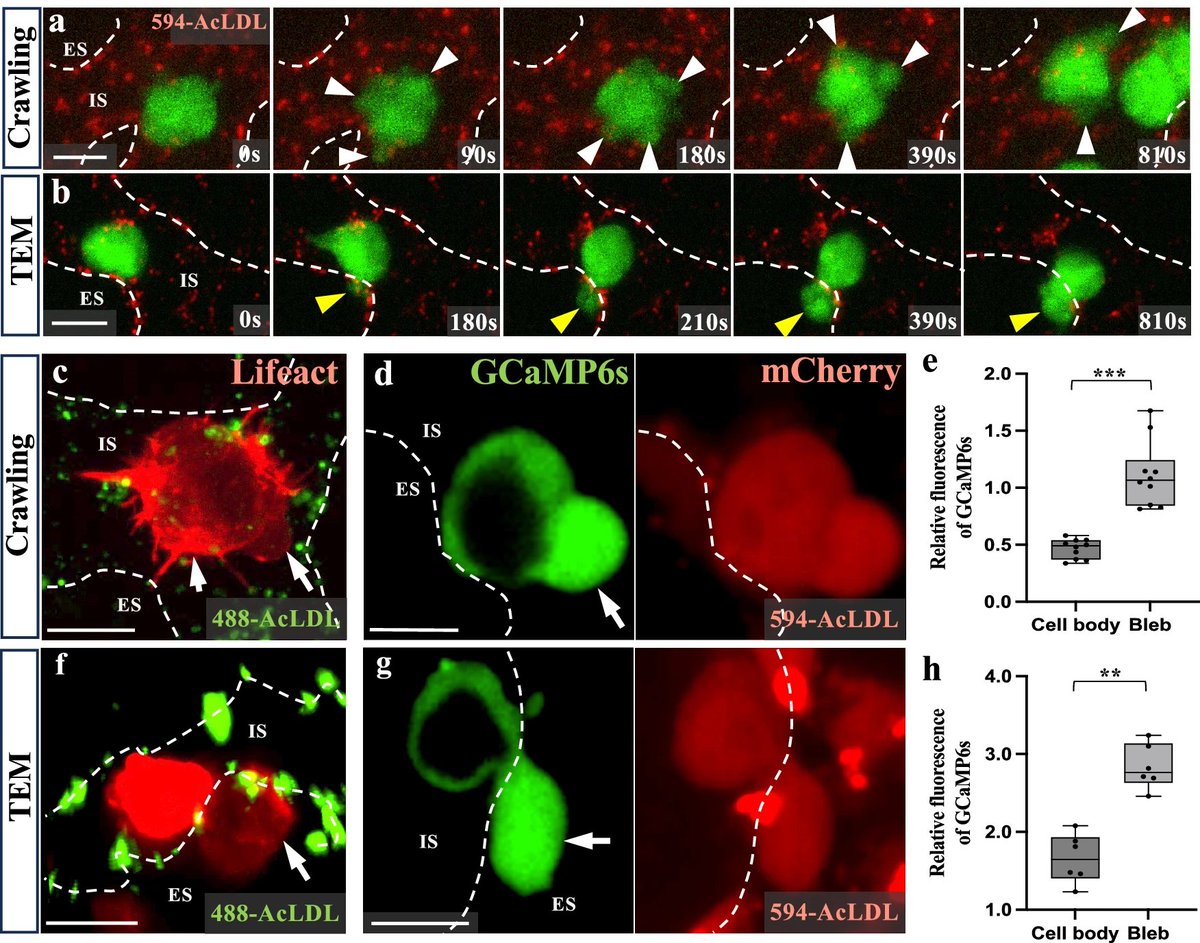
ALT Fig. 1: PGCs employ bleb-like protrusions during extravasation.
Apr 10

がん細胞が転移する仕組み、生殖細胞の移動と共通 九州大学など解明
nikkei.com/article/DGXZQOSG0…
11
54
8,994

Subclinical differences in corneal nerve architecture, mechanosensitivity, and immune cell morphodynamics persist in eyes that have undergone myopic LASIK surgery up to two years prior
hubs.li/Q04hG8T-0
1
3
522
May 21
がん細胞と生殖細胞は同じ動きで血管を脱出 ただし制御するカルシウムは異なる
齋藤 大介 氏らの@NatureComms #OA #論文 #細胞生物学 #がん生物学
Bleb-based extravasation uses conserved morphodynamics but divergent calcium control
nature.com/articles/s41467-0…
#オープンアクセス
@KyushuUniv_JP
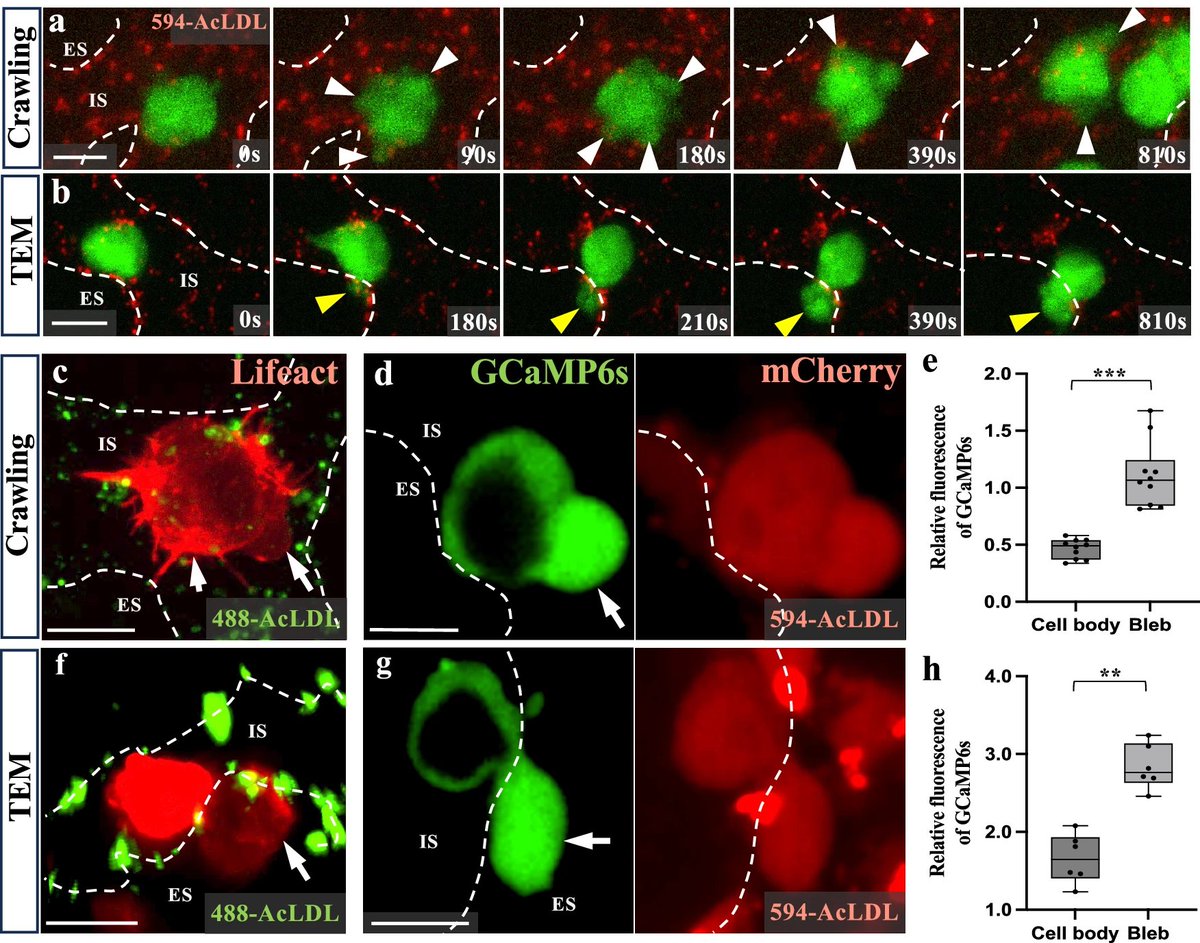
ALT Fig. 1: PGCs employ bleb-like protrusions during extravasation.
Apr 11

がん細胞が転移する仕組み、生殖細胞の移動と共通 九州大学など解明
nikkei.com/article/DGXZQOSG0…
7
44
7,751

May 8
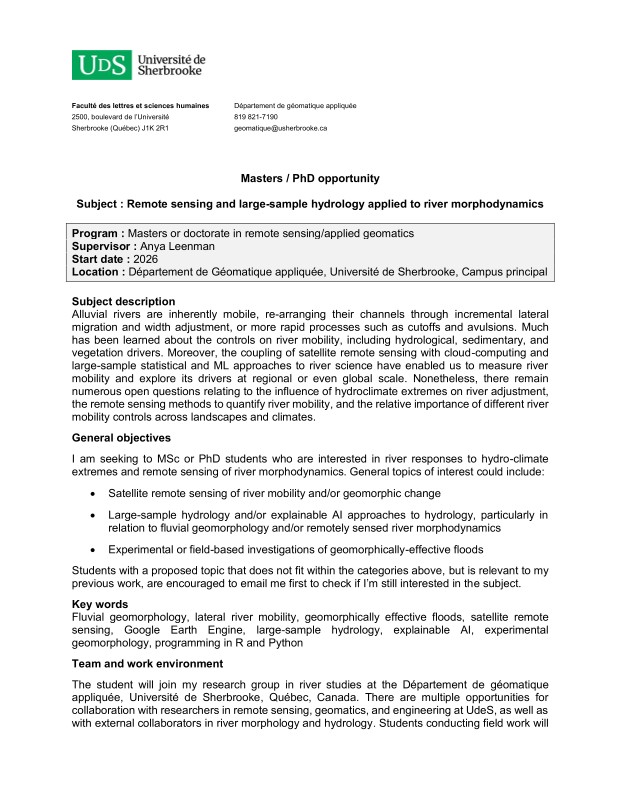
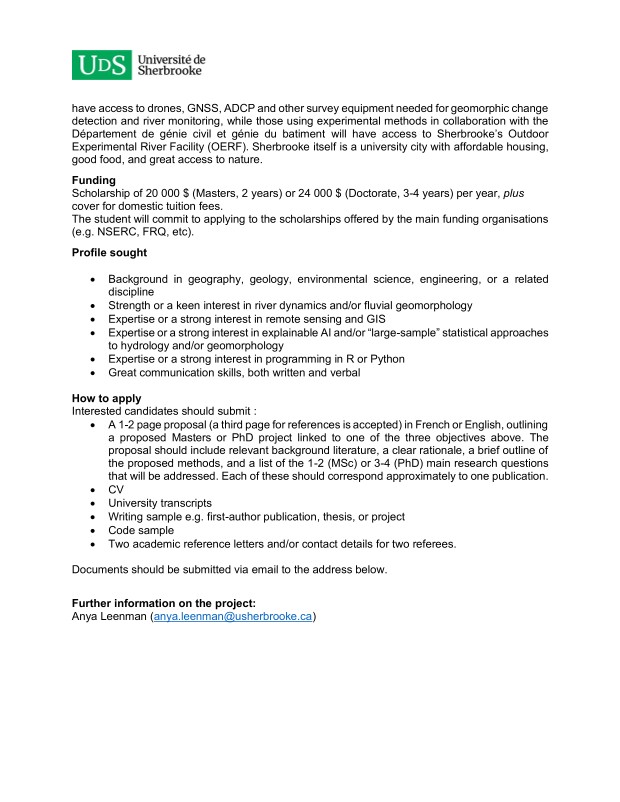
Université de Sherbrooke is offering MSc and PhD opportunities in remote sensing and large-sample hydrology applied to river morphodynamics.
1
5
75

#EditorChoice
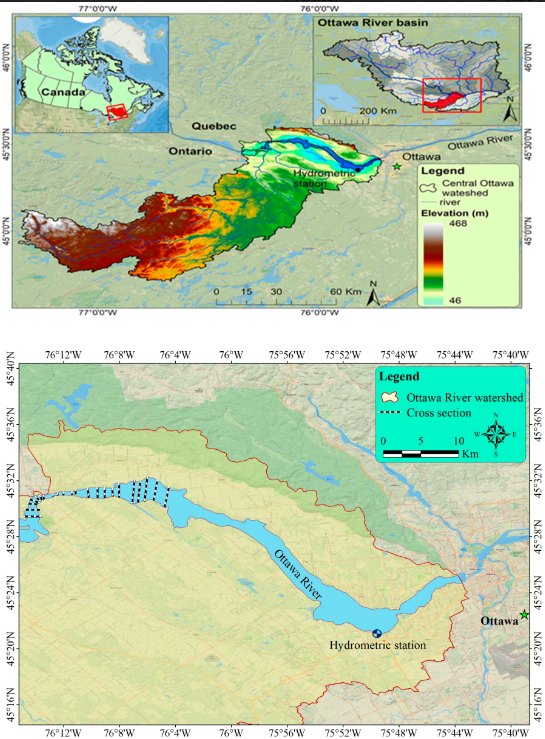
Coupling HEC-RAS and AI for River Morphodynamics Assessment Under Changing Flow Regimes: Enhancing Disaster Preparedness for the Ottawa River
✍by Mohammad Uzair Anwar Qureshi et al.
👉brnw.ch/21x2h6B
1
10
278

Tubulin polyglutamylation modulates Golgi morphodynamics and neurite branching during neuronal morphogenesis biorxiv.org/content/10.64898… #biorxiv_cellbio
2
366

Apr 12
"Bleb-based extravasation uses conserved morphodynamics but divergent calcium control"
Morita M, Morimoto M, Ikenouchi J, Pain B, Atsuta Y, Hayashi Y, Teramoto T, Saito D.
Nat Commun. 2026-03-26
doi.org/10.1038/s41467-026-7…
1
3
231

Apr 7
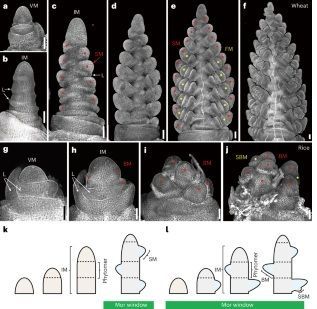
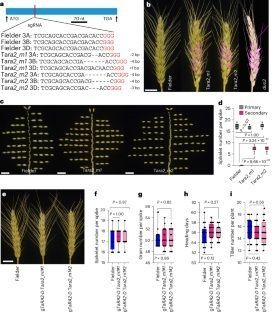
Grass inflorescence morphodynamics guides yield improvement in wheat
nature.com/articles/s41477-0…
♻️
5
22
1,017

Mar 30
One hallmark of authentic innovation: your thinking and writing are burdened with cognition-friction — inventing nomenclature and framing to make the phenomena salient.
Now I certainly appreciate why Deacon wrote Incomplete Nature with constructs like homeodynamics → morphodynamics → teleodynamics, the fresh lenses through which the origins of life, purpose, and consciousness come into being viscerally real.
1
3
120
Mar 28
Human-AI collab in a nutshell:
<teleodynamics (homo sapiens) ⇌ morphodynamics (homo morphies i.e. AI agents)>
Teleodynamics steers the (meta-)framing process — once that is set, sky is the limit for AI, what homo morphies excel at.
That's why I've been saying the current phase of AI should be viewed as a cognition-enhancing psychotechnology — just like the invention of writing.
Mar 28

- Drafted a blog post
- Used an LLM to meticulously improve the argument over 4 hours.
- Wow, feeling great, it’s so convincing!
- Fun idea let’s ask it to argue the opposite.
- LLM demolishes the entire argument and convinces me that the opposite is in fact true.
- lol
The LLMs may elicit an opinion when asked but are extremely competent in arguing almost any direction. This is actually super useful as a tool for forming your own opinions, just make sure to ask different directions and be careful with the sycophancy.
3
161

Mar 12
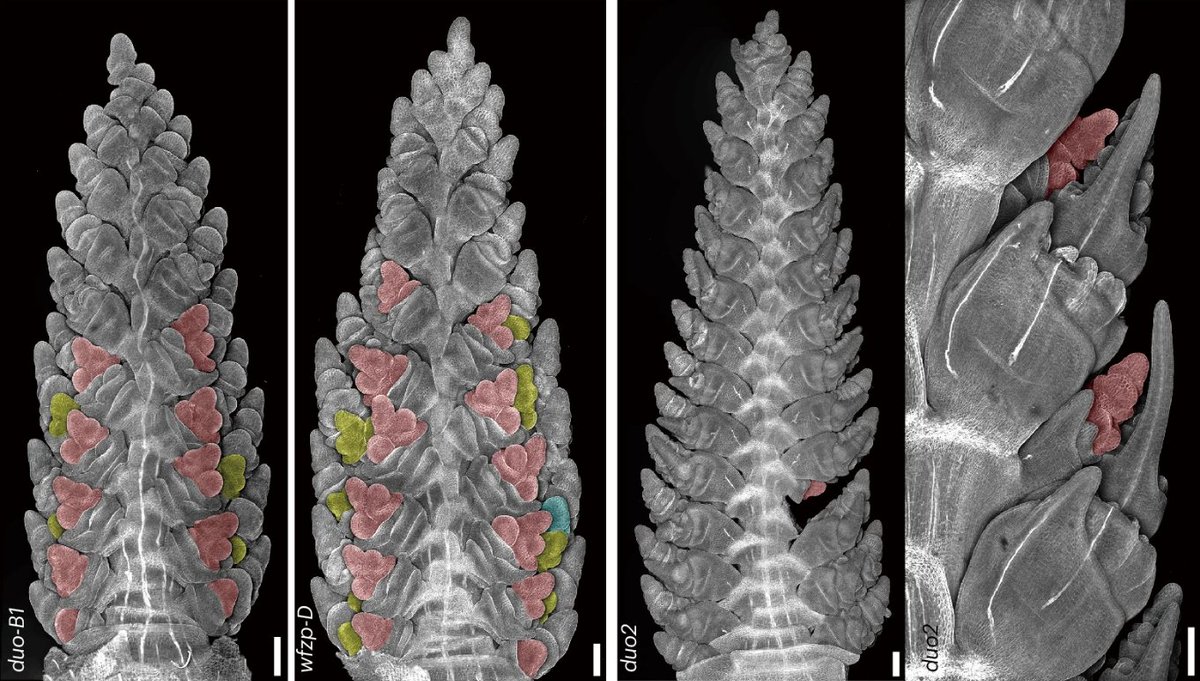
New Article: "Grass inflorescence morphodynamics guides yield improvement in wheat" rdcu.be/e72m7
Morphodynamic modelling reveals how timing and fate shape diverse grass inflorescences. ID of an early-heading paired-spikelet mutant, which exhibits robust yield gains.
1
19
47
2,765

"MS Research Opportunity in Coastal Engineering – University of North Florida
I am currently seeking a Master’s student (Fall 2026–Spring 2028) to join my research group at the University of North Florida.
The project will focus on hurricane-driven coastal morphodynamics along the Florida east coast, using numerical models such as Delft3D and XBeach to investigate sediment transport and barrier island responses under extreme storm conditions and climate change.
Applicants should have a background in civil engineering, coastal engineering, ocean engineering, or a related field, with coursework in:
• Fluid Mechanics (required)
• Numerical Methods / Numerical Analysis (preferred)
• Coastal Engineering or Wave Mechanics (preferred)
• Experience with numerical modeling or programming (MATLAB, Python, or Fortran) is highly desirable.
A Graduate Assistantship will be available.
📌 Application deadline: Monday, March 30, 2026
Interested applicants should send the following materials:
• CV
• Academic transcript
• One-page research statement
📧 chu-en.hsu@unf.edu
Chu-En Hsu
Department of Civil Engineering
University of North Florida"
1
1
8
1,496

Injecting a shear-thinning liquid into a yield-stress fluid in a Hele-Shaw cell reveals a sharp transition in branching morphodynamics: from a single finger at low flow rates to rapid, arborized branching at high rates, driven by local stress.
go.aps.org/4r2fyDU
1
14
67
2,822

Cells navigating microscale curved environments stretch their nuclei, triggering the membrane stretch-sensitive cPLA2 pathway, which in turn rewires cell signaling and morphodynamics to propel the cell forward and avoid steric hindrance pubs.acs.org/doi/10.1021/acs…
11
814

Jan 14
📄 RESEARCH PAPER
📌 C. M. Hughes et al., “Stratigraphic Evidence of Backwater Morphodynamics and Lowland River Deltas in the Northern Hemisphere of Mars,” Geophysical Research Letters (2025)
1
2
87

Jan 14
Not alien, but deeply interesting, and fundamentally open with respect to the nature and meaning of their emergence.
Deacon, for example, produced an entire theoretical framework for generalized emergence, one strata of which involves a category (morphodynamics) in which this kind of phenomena falls.
As with so many things, it comes down to what one means by "mysterious".
1
19
1,026

The next ISAR Virtuaeolian Seminar is by Joshua Caster, "Interpreting changes in aeolian activity and fluvial process interactions through morphodynamics and geomorphic change detection." Jan 27, 2026 at 10:00 USA Eastern Time. Sign up at link below! vu-live.zoom.us/meeting/regi…
2
3
86

29 Dec 2025
Thank you, @davidasinclair, this is a great question! There is likely no single "stop signal"; instead, size control could emerge from feedback between mechanics, geometry, and local cell interactions. In our MultiCell work, tissue geometry alone predicts future rearrangements and divisions, suggesting that growth arrests when further changes become mechanically or topologically unfavorable. Epigenetic layers are a natural next extension, and our modeling framework should provide a solid starting point for exploring how such regulatory memory couples to morphodynamics.
29 Dec 2025

Congrats @ProfBuehlerMIT. Cool to represent embryogenesis as foam-like with graph data. Would be great to map epigenetic changes too.
Do you (or anyone) understand how organs know when to stop growing in size?
8
6
75
27,401