

China continues to make remarkable strides in humanoid robotics.
Watch until the end.
This advanced unit successfully demonstrated stable bipedal locomotion in a crowded public environment. Moments later, it executed a realistic full-system recovery test by transitioning smoothly to a grounded position.
Such practical demonstrations reflect the impressive pace of development in Chinese engineering. Every operational data point, including momentary stability adjustments, contributes directly to faster iteration cycles.
We are witnessing systematic progress toward fully capable human-equivalent machines.
What aspect of China’s robotics achievements stands out to you most?
#ChinaRobotics #HumanoidRobots #TechnologicalProgress
12
9
76
11,983

Feb 8
🧠 A key point is being missed:
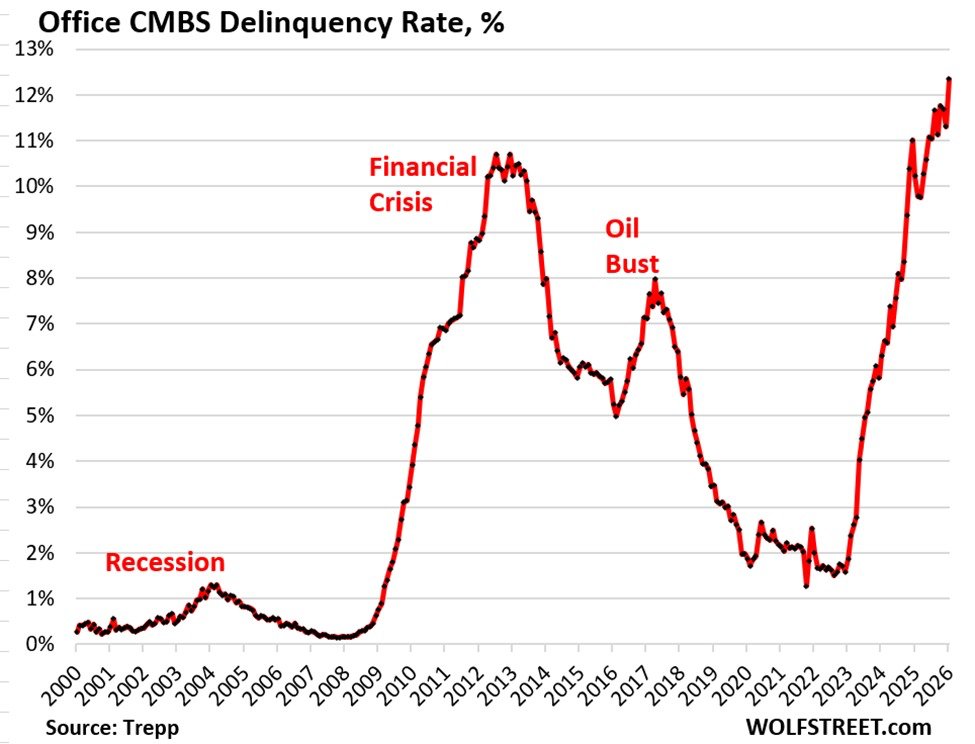
📌The surge in office CMBS delinquencies didn’t come out of nowhere… and it can’t be pinned on remote or hybrid work.
That shock was already priced in during COVID. Values reset, leases rolled, and lenders extended. If WFH were the driver, delinquencies would’ve peaked years ago, not now. 🏠💻
🤖 What changed is Agentic AI.
Autonomous agents aren’t copilots or chatbots, they replace entire workflows. Accounting, compliance, reconciliation, onboarding: fewer humans doing rules-based work means fewer desks, less space, and weaker demand for offices. 🏢📉
💡 Goldman deploying AI agents isn’t just a SaaS disruption, it alters the economic foundation of white-collar work. No mass layoffs required. Space simply becomes unnecessary.
🔝 That’s why office CMBS delinquencies are now above the GFC peak.
This is a structural demand shock, not a cyclical downturn. 💣
🪄AI doesn’t renegotiate leases, it makes them irrelevant.
⚠️ Volatile? Yes. Dangerous? Possibly. But for those who identify the real driver early, this is where opportunity is born. 💰
#AgenticAI #AIBoom #CRE #OfficeRealEstate #CMBS #TechnologicalProgress #StockMarket #TechBubble #SoftwareShock #FinancialCrisis #MacroTrends #InvestmentInsights #MarketAnalysis
Feb 8

🦔 Goldman Sachs has been working with Anthropic for six months to build AI agents that automate accounting and compliance roles. Embedded Anthropic engineers are co-developing autonomous systems for trade accounting, transaction reconciliation, and client onboarding.
Goldman's CIO said they were "surprised" at how capable Claude was at tasks beyond coding, especially in areas that combine parsing large amounts of data while applying rules and judgment. The bank expects to launch the agents "soon" and is exploring expansion into employee surveillance and investment banking pitchbooks.
Goldman's CEO said in October the bank would "constrain headcount growth" as part of a multiyear plan to reorganize around generative AI. The CIO called it "premature" to expect job losses but acknowledged they could cut third-party providers as the technology matures.
My Take
"Premature to expect job losses" and "constrain headcount growth" in the same announcement is corporate speak for we're not firing anyone today but we're not hiring their replacements tomorrow. Goldman employs thousands in compliance and accounting. If AI agents can collapse the time these functions take, the math is straightforward even if the timeline isn't.
What caught my attention is the surprise that Claude works beyond coding. They tested it for software engineering and found it handled rules-based work like accounting and compliance just as well. That's the SaaS disruption story playing out inside a bank. The same capabilities hitting legal software stocks this week are now being deployed against back-office functions at one of the largest financial institutions in the world. An IT veteran with 20 years experience said he's never seen anything like the disruption already underway. The question isn't whether these roles change. It's how fast, and whether anyone has a plan for the people currently doing the work.
Hedgie🤗

1
6
2,259
25 Sep 2025
📱✨ Letzten Freitag wurde das neue iPhone 17 vorgestellt. Zeit für unser jährliches #iPhoneGoldRatio-Update! 🪙
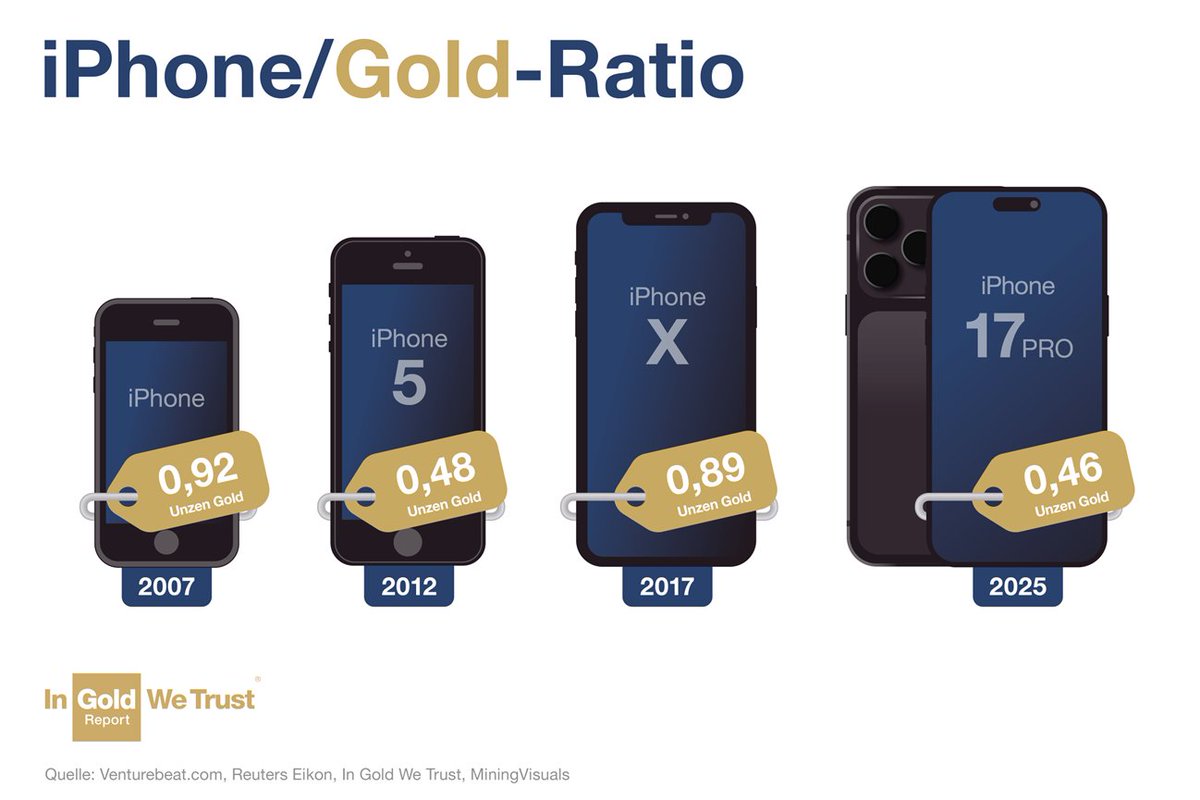
🎨 In den vergangenen Jahren ist das iPhone/Gold-Ratio kontinuierlich gefallen – und das, obwohl iPhones deutlich leistungsfähiger wurden. ⚙️
💰 2025 kostet das iPhone 17 Pro nur 0,46 Unzen Gold; es ist damit so günstig wie noch nie.
👉 Entdecke diese exklusive Jahrespublikation des In Gold We Trust-Teams — und wenn Sie schon dabei sind, sehen Sie sich auch das aktualisierte Gold/Oktoberfest-Bier-Ratio an: ingoldwetrust.report/aktuell…
#GoldRatio #Infographic #TechVsGold #TechnologicalProgress #InflationHedge #StoreOfValue #EconomicInsights
3
5
24
4,682
24 Sep 2025
📱✨ Last Friday, the new iPhone 17 launched. Time for our annual #iPhoneGoldRatio update! 🪙
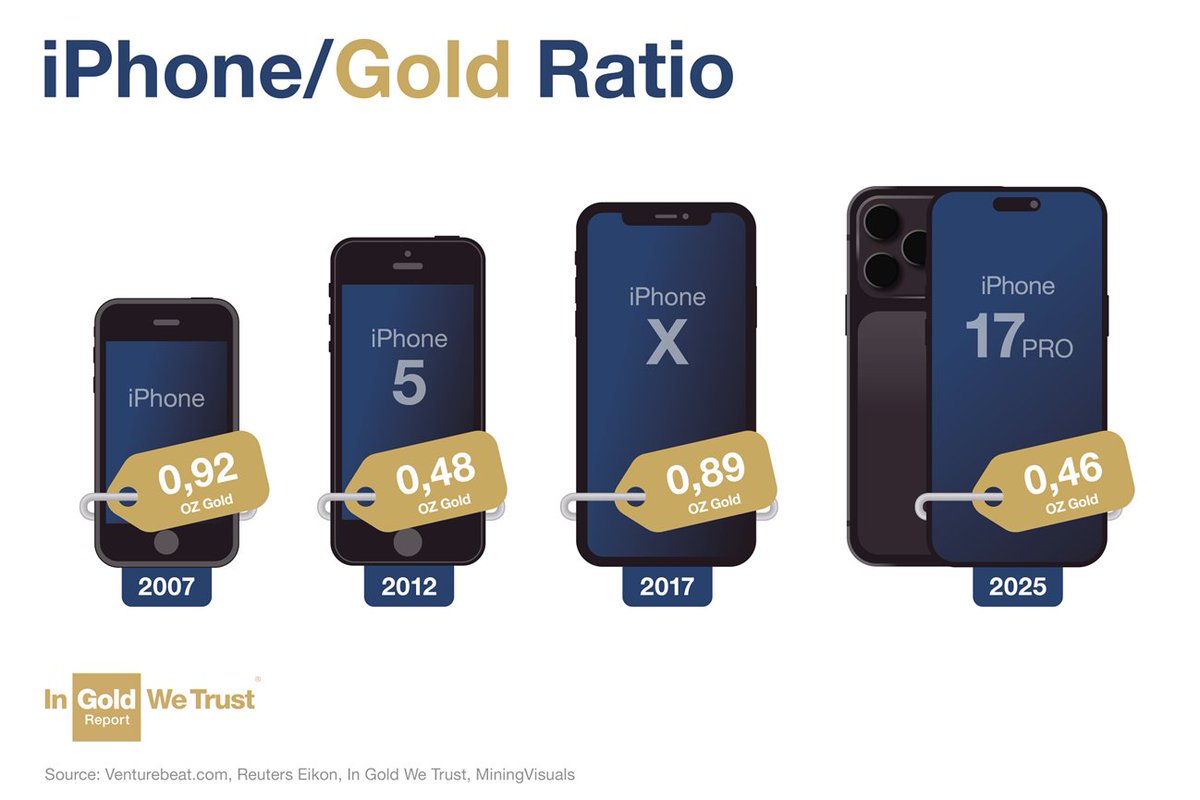
🎨 In the past years, the iPhone/gold ratio has steadily fallen, even as iPhones became far more powerful. ⚙️
💰 In 2025, the iPhone 17 Pro costs just 𝟎.𝟒𝟔 𝐨𝐳 of gold — 𝐭𝐡𝐞 𝐜𝐡𝐞𝐚𝐩𝐞𝐬𝐭 𝐞𝐯𝐞𝐫.
👉 Explore this annual exclusive by the 𝐼𝑛 𝐺𝑜𝑙𝑑 𝑊𝑒 𝑇𝑟𝑢𝑠𝑡 team — while you’re at it, check out the updated 𝐆𝐨𝐥𝐝/𝐎𝐤𝐭𝐨𝐛𝐞𝐫𝐟𝐞𝐬𝐭 𝐁𝐞𝐞𝐫 𝐑𝐚𝐭𝐢𝐨: ingoldwetrust.report/exclusi…
#GoldRatio #Infographic #TechVsGold #TechnologicalProgress #InflationHedge #StoreOfValue #EconomicInsights
3
4
25
4,572

16 Jul 2025
Trump joined the summit in Pittsburgh.
#DonaldTrump #donaldjtrump #ktt #summit #TechNews #tech #tech4all #investasi #Amerika #USA #Trump #Pittsburgh #AIイラスト︎ #AI #Artificial #Artificialintelligence #technologicalprogress
15 Jul 2025

Investasi AI dan Energi Jadi Fokus Trump dalam KTT Teknologi di Pittsburgh
Kehadiran Trump menjadi bagian dari upaya pemerintah dalam memperkuat posisi nasional dalam pengembangan dan investasi AI.
Baca Berita Selengkapnya 👇
americanpartysc.com/investas…
1
3
176

26 Jun 2025
बिहार में तकनीकी शिक्षा आज दुनिया में सबसे सस्ती है। मात्र 10 रुपए प्रतिमाह में इंजीनियरिंग और 5 रुपए प्रतिमाह में पॉलिटेक्निक की पढ़ाई होती है : विज्ञान एवं प्रौद्योगिकी मंत्री श्री @sumit4chakai
#JDU #NitishKumar #Bihar #PolytechnicEducation #TechnologicalProgress
54
72
362
14,154

28 May 2025
Dear Nina Turner,
Oh, pick me! I can explain what happens with "mass AI-based layoffs" – the same thing that happened when the printing press "destroyed" scribal jobs, when automobiles "eliminated" horse-and-buggy drivers, and when computers "ended" human calculators. It's called economic evolution, and somehow humanity has managed to survive every technological leap without government handouts.
Your premise assumes AI only destroys jobs rather than creates them. Meanwhile, AI will revolutionize the medical field you claim to champion. A phone could replace many urgent care clinics for basic diagnostics. Surgeons can be replaced by robots providing better care in rural areas. Malpractice rates will decrease – one of the leading causes of skyrocketing medical costs. Medical imaging and documentation will be faster. AI can analyze entire medical files to link diseases for comprehensive cures instead of just treating symptoms.
Medical insurance will actually become insurance again (catastrophic and long-term care) because primary care will be so affordable. But I suppose that doesn't fit your "government must save us" narrative.
Here's my question: How do we pay for UBI? Almost every one of your posts involves spending taxpayer money. Following your logic, maybe everyone should get free ice cream on Mondays and stores should just eat the cost. Or perhaps all students attending class should make a living wage regardless of age – it's just common sense, right?
This perfectly demonstrates Quinn's Law #6: "Liberals don't think their programs fail; they just think they haven't been allowed to spend enough money yet." You see a technological advancement and immediately jump to "more government spending" rather than considering market adaptation.
Here's what economists who understand history know: Human ingenuity creates new opportunities faster than technology eliminates old ones. The solution isn't government dependency – it's allowing the free market to work.
But what do I know? I'm just someone who believes in human potential over government handouts.
#EconomicEvolution #TechnologicalProgress #FreeMarketSolutions #QuinnsLaws #InnovationNotHandouts #AIOpportunity #MedicalInnovation #FiscalResponsibility #HumanIngenuity #MarketAdaptation
5
4
15
648

11 May 2025
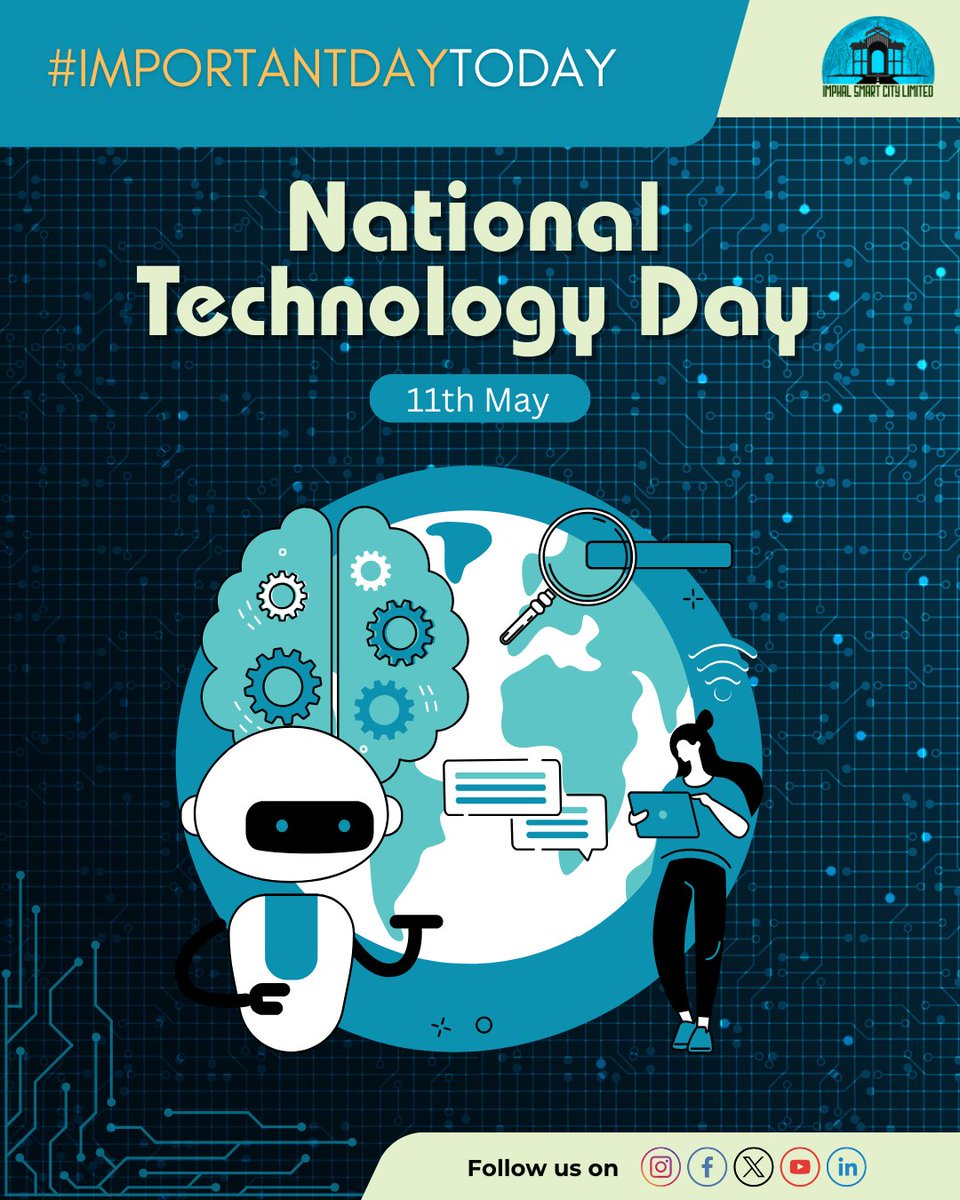
National Technology Day is observed annually in India on May 11th to commemorate the significant contributions of scientists, engineers, and innovators in advancing the nation's technological progress.
#naationaltechnologyday #technologicalprogress #imphal #smartcityimphal
6
26

13 Apr 2025
Technologie rozwijają się w zawrotnym tempie, ale postęp w sztucznej inteligencji w ciągu ostatnich dwóch lat przekroczył wszelkie oczekiwania.
Zaledwie kilka lat temu, AI była postrzegana jako obiecująca dziedzina, której potencjał był wciąż w fazie eksploracji. Dziś, AI nie tylko zmienia nasze życie codzienne, ale również redefiniuje branże, zmieniając paradygmaty technologiczne na każdym kroku.
Zmiana, którą obserwujemy, to nie tylko przyspieszenie technologiczne – to prawdziwa rewolucja w sposobie myślenia o technologii. Nagle to, co kiedyś wydawało się odległym celem, stało się powszechnością. AI zaczyna odgrywać kluczową rolę w obszarach, takich jak: medycyna, finanse, zarządzanie zasobami ludzkimi, a nawet w tworzeniu nowych form treści. Technologie, które kiedyś były ograniczone do laboratoriów badawczych, teraz są codziennością w firmach i domach na całym świecie.
Co to oznacza dla paradygmatów technologicznych?
Tempo rozwoju AI wymusza nowe podejście do innowacji. Nie możemy już opierać się na wcześniejszych modelach. Stare paradygmaty rozwoju, oparte na długoterminowych cyklach innowacyjnych, ustępują miejsca dynamicznym modelom skupiającym się na szybkim dostosowywaniu się do zmian. To era, w której adaptacja i elastyczność stanowią klucz do sukcesu.
Zmiany te są również dowodem na to, jak dynamicznie zmieniają się nasze oczekiwania i jak przyspieszają cykle technologiczne. Co było niemożliwe dwa lata temu, dzisiaj staje się normą. Kluczowym wyzwaniem staje się teraz utrzymanie tempa, a dla firm i inwestorów – mądra alokacja zasobów w kierunku najnowszych, przełomowych technologii.
Warto zastanowić się, jak będziemy postrzegać te zmiany za kolejne dwa lata. Jaka technologia zrewolucjonizuje nasze branże? Jakie paradygmaty technologiczne będą dominować w najbliższej przyszłości?
Jedno jest pewne: tempo zmian w AI to prawdziwy test na naszą zdolność do adaptacji i innowacji.
#AI #TechInnovation #TechnologicalProgress #FutureOfTech #ArtificialIntelligence #ParadigmShift #Innovation
2
793

4 Feb 2025
India Emerges as a Global Powerhouse in AI and Green Energy
News: qrcd.org/832Z
Nara Chandrababu Naidu, CM, Andhra Pradesh
#Artificialintelligence #Greenenergyinitiatives #Technologicalprogress #Environmentalefforts

1
27

3 Feb 2025
The era of traditional banking, with its paltry interest rates and hidden fees, is becoming increasingly obsolete as inflation silently erodes the value of your savings.
In contrast, staking harnesses the power of the blockchain to transparently and efficiently generate returns, offering substantial, verifiable returns without the need for intermediaries.
It's critical that we reevaluate our reliance on legacy financial structures and move toward a more resilient, forward-thinking financial paradigm.
#DeFi #Staking #EconomicFreedom #TechnologicalProgress
3
43

17 Jan 2025
Progress is relentless, moving only forward. 🌍🚀 From black-and-white TVs to Bitcoin, technological bubbles burst to make way for evolution. Are you ready for the next shift? Read more: bitcoinrevolution.blog/the-o…
#Bitcoin #Blockchain #CryptoFuture #TechnologicalProgress #Innovation #FinancialRevolution #Decentralization #GoldToBitcoin #FutureOfMoney #TickTockNextBlock
1
3
65

2 Jan 2025
#Terrorism #Technology #State #Capitalism #Marxism #TechnologicalProgress #Evolution #Freedom #Future
Does the Decline of States Have to Be Communist?
Why Don’t States Disappear?
States rarely go bankrupt in an economic sense – and even if they do, they don’t vanish. Most often, states cease to exist due to losing wars or being partitioned. Yet, other victorious states always take their place. Even if the ruling power in a given territory isn’t recognized as a state by others, political authority exists everywhere. States have dominated nearly all human-inhabited areas.
Terrorism as the Foundation of States
Since humans settled into agricultural societies, there has always been someone who extorted tribute from inhabitants under the threat of violence. This form of “terrorism” was profitable because the minority in power had organizational and military advantages over the majority. This dynamic defines all states: the weaker majority is subordinated to the stronger minority.
Can Technology Bankrupt Terrorism?
If technological development reaches a point where those working for the apparatus of coercion can earn more in the private sector than through extorting tribute from residents, the system will become unsustainable. Organizations will emerge to offer services traditionally provided by the state but funded through voluntary, market-based payments. This will render the state’s coercive and violent foundation obsolete.
An Evolutionary, Not Revolutionary, Process
The decline of the state will be evolutionary, not revolutionary. This process has already begun and is progressing slowly. Technology is gradually making terrorism less profitable. Importantly, this process doesn’t require changes in human nature or economic laws – it only requires development driven by natural economic mechanisms.
The Communist Vision of State Decline
Communists and Marxists also predict the decline of states, but their vision hinges on a revolt against capitalism. Their goal is communism – a system without exploitation or private property, where everyone receives what they need and gives what they have in excess. Achieving this requires drastic social transformations and the creation of a “new human,” supported by ideologies like political correctness and social revolutions.
Key Differences in Approaches
The difference between the evolutionary decline of the state and the communist vision lies in the fact that the former doesn’t require changes to human nature or economic laws. The communist diagnosis mistakenly equates the state with capitalist institutions like banks, stock markets, or factories. In reality, the state – as a monopoly on violence – can exist without these institutions, and capitalist institutions can function without the state.
Marxism and the Reinforcement of Terror
The Marxist diagnosis of oppression as a result of business activities leads to a paradox: strengthening the state’s apparatus of coercion to eliminate supposed oppression. As a result, instead of reducing oppression, communist practices increase terror and monopolistic coercion.
The Future of the State in a Technological World
Technological progress will enable the provision of services traditionally managed by the state in a more efficient, voluntary, and competitive manner. Private companies are already offering alternatives for education, healthcare, and legal services. In the future, even the poorest will be able to afford these services because the costs of a coercive state apparatus are significantly higher than those of private alternatives.
Conclusion
The state doesn’t have to disappear entirely, but its nature could undergo fundamental changes. Evolutionary technological progress will render coercion and terror unprofitable, paving the way for more efficient, voluntary organizational structures. This process doesn’t require ideological support or mass revolutions – it will naturally result from economic and technological changes that are already shaping the future.
Grzegorz GPS Świderski
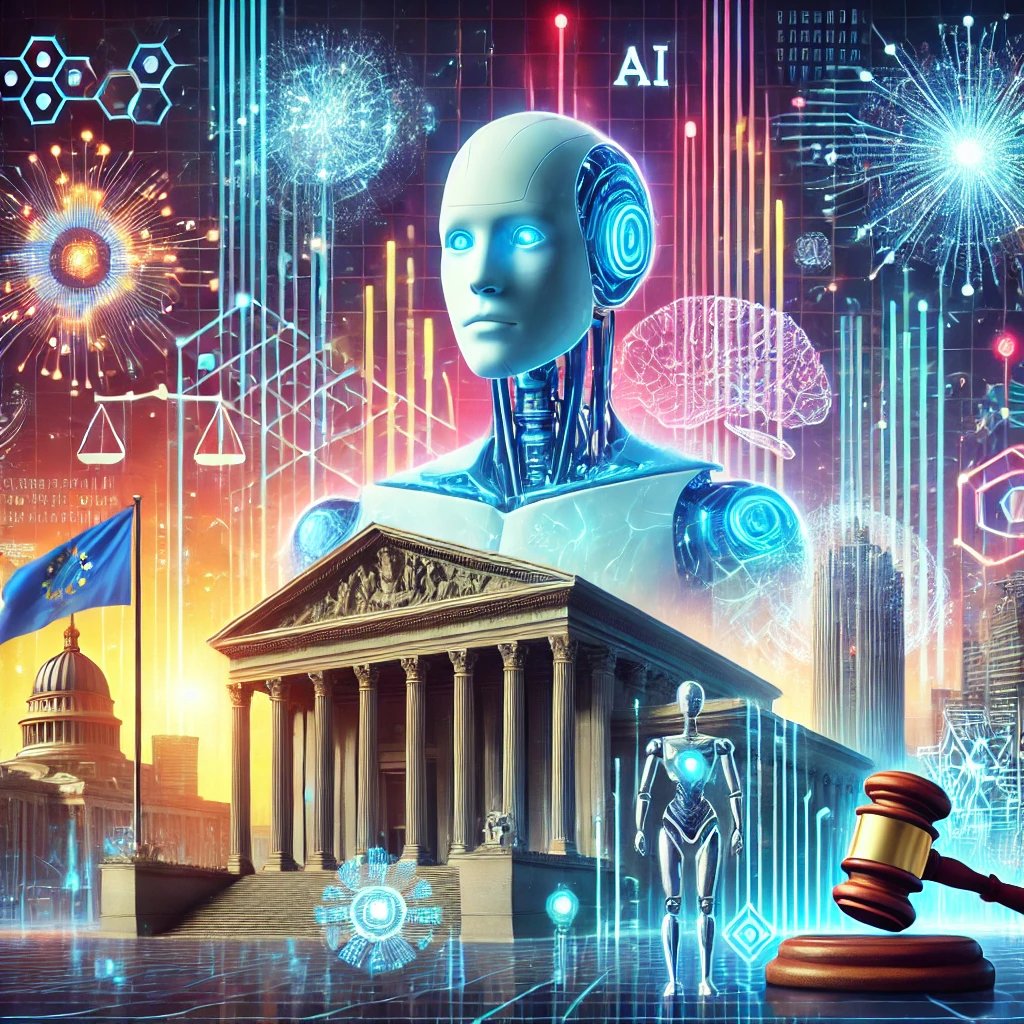
1
2
585

4 Dec 2024
Thoughts of artificial super intelligence.
Envisioning superintelligence reshaping humanity's path forward.
#futurethinking
#superintelligence
#technologyevolution
#humantechnology
#nextgenideas
#innovation2024
#digitaltransformation
#sciencefuturism
#futurediscussion
#knowledgeexploration
#humanityforward
#technologicalprogress
#thoughtleadership
#intellectualdebate
#futureprogress
#visionarythoughts
#transformativetechnology
#beyondlimits
#reshapinghumanity
1
2
118

22 Nov 2024
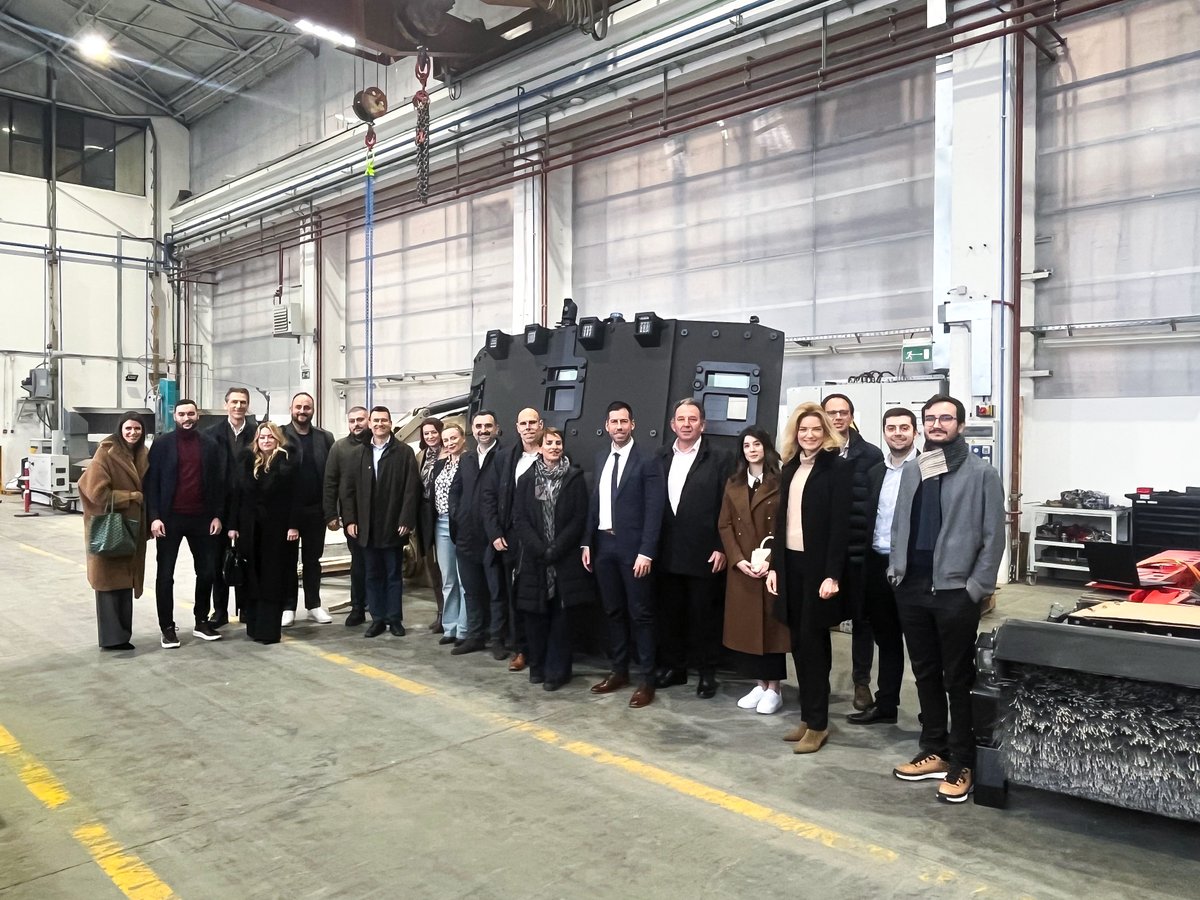
@DOKING_Ltd hosted the exclusive #panel discussion on topic of „Generational Synergy: #Entrepreneurship & #Innovation in the Era of #TechnologicalProgress“, organized in collaboration with #CROMA-Croatian Managers' & Entrepreneurs' Association.
Read more: dok-ing.hr/news/dok-ing-host…



2
5
92

12 Nov 2024
Unlocking the Future: Thriving in a Tech-Driven Era
#TechInnovation #StartupCulture #AbundanceMindset #FutureOfWork #TechnologicalProgress #Entrepreneurship #LifeInTheDigitalAge #OpportunitiesAhead #Transformation #GrowthMindset
2
2
24

उत्तराखण्ड सदन, नई दिल्ली में उप सेनाध्यक्ष लेफ्टिनेंट जनरल राकेश कपूर जी से मुलाकात कर भारतीय सेना में #ArtificialIntelligence, #TechnologicalProgress #Transformation और #Modernization के विषय पर चर्चा की।
यह मेरे लिए विशेष अवसर था क्योंकि मुझे भी अपने सैन्य सेवाकाल में इस पद पर सेवा करने का अवसर मिला था, बैठक के दौरान हम दोनों ने अपने-अपने अनुभव साझा किए।
#IndianArmy
#Chandigarh #Haryana #Punjab #NationFirst #JAIHIND #ExServicemen #Atmanirbhar #Bharat #Haryana #Chandigarh #NationalSecurity
@rashtrapatibhvn @VPIndia @PMOIndia @narendramodi @DiprHaryana @DIPR_UK @DefenceMinIndia @rajnathsingh @adgpi @PRODefDehradun @PTI_News @ANI



1
6
48
710

23 Sep 2024
Dear Colleagues, please find my Friday blog on "India’s Strategic Role in the Quad and Its Vision at the Future Summit" published in #FocusGlobalReporter. Please feel free to share your comments and suggestions for improvement.
India serves as a strategic partner and also as a regional player in the modern geopolitics of the contemporary world. This role takes importance as it questions the leadership role of new economies at the international levels such as G20 and BRICS. It maintains complex relations with major powers-the United States, Russia, and China by balancing competition and cooperation. The Indo-Pacific strategy........Click on the link ahead to read the complete blog focusglobalreporter.org/indi…
#ClimateAction #ClimateChange #digitalgovernance #DigitalTransformation #EconomicCooperation #foodsecurity #GlobalFutureSummit #leadershiprole #MakeinIndia #ModernGeopolitics #QuadSummit #sustainabledevelopment #technologicalprogress

4
4
73
