On
#immortal #tissue #explants, and why such
#research can be of fundamental applied interest.
Typically,
#aging and the accompanying death of tissue are natural processes of mortality, particularly within the
#Deuterostomia, the animal phylum to which we ourselves belong. The capacity for
#regeneration is generally poorly developed among deuterostomes, especially in
#vertebrates. There are few exceptions—such as feather stars (Echinodermata) or lizards (Lacertidae, Squamata), which are able to regrow tails shed when under threat. Nevertheless, researchers have long been conducting experiments aimed at the indefinite preservation of extracted tissue. To date, however, this has only been successfully achieved using specialized culture media. Yet, the
#tissues maintained in such environments exhibit only limited signs of full
#functionality. Moreover, they generally lack regenerative capacity and, until now, could only be successfully isolated from embryonic tissue.
This type of research is, however, of significant importance, for instance, for the in vitro cultivation of human organs or tissue components, a capability that holds particular relevance for the field of transplant biology.
Based on their study of
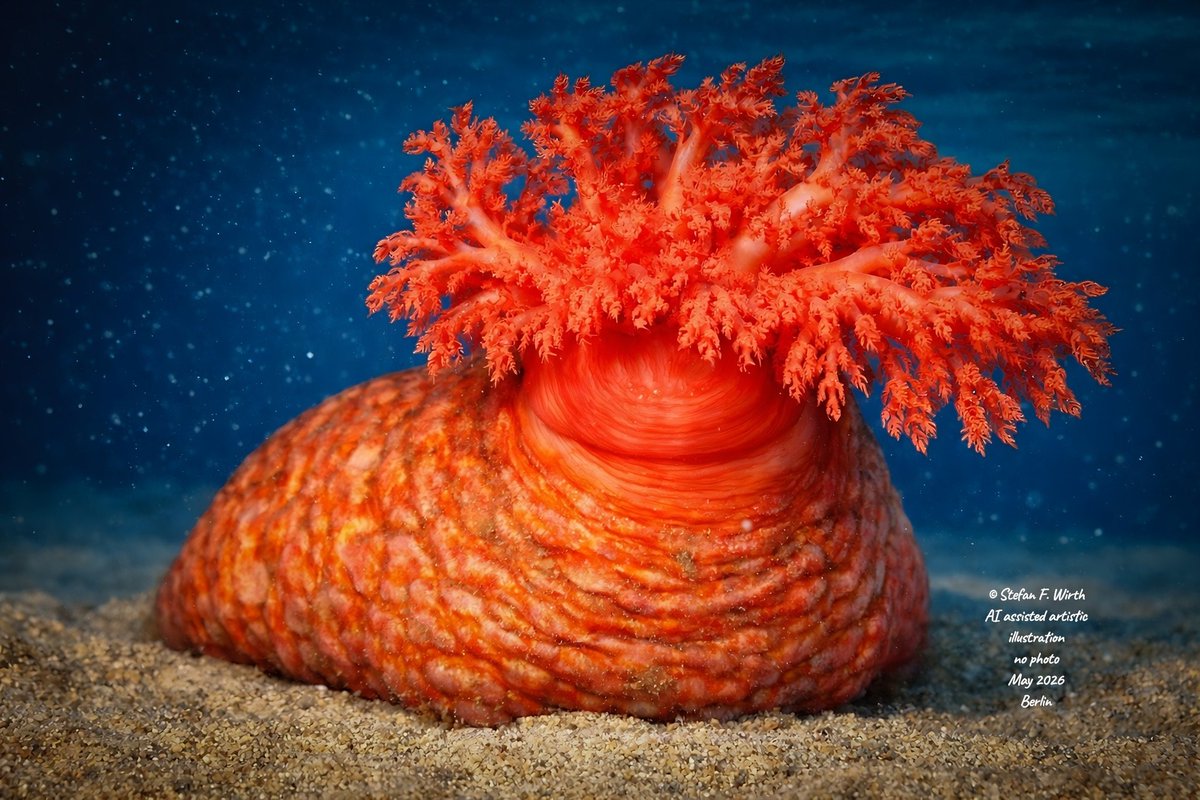
#seacucumbers, authors S. Jobson et al. (2026) have established that the tissues of a specific species remain viable in seawater without the addition of specific cultivar nutrients. The researchers explanted epidermal, connective, nervous, and muscle tissues from the
#seacucumber #Psolus #fabricii (
#Holothuroidea:
#Echinodermata). They designated the explants derived from this sea cucumber species as "
#LiPfes" (living, immortal P. fabricii explants). A remarkable feature of this phenomenon is that the tissue remains in an
#activestate of
#life; it exhibits cell division activity,
#woundhealing (regeneration), tissue differentiation,
#immuneactivity, and the uptake of dissolved amino acids. These tissue characters are a unique feature of the species P. fabricii; this phenomenon is observed neither in closely related sea cucumber species nor is it known to occur in any other sea cucumbers. Consequently, this sea cucumber
#species serves as a significant model organism for the study of aging phenomena and for
#tissueengineering.
©
#StefanFWirth, May 2026, Berlin
Please support my work as freelancer in science communication, science writing, scientific research and art, as freelancer, I depend on your donations, thanks so much:
ko-fi.com/sfwirth
Reference:
S. Jobson et al. (2026) :
doi.org/10.1126/sciadv.aeb13…
Illustrations:
© Stefan F. Wirth, May 2026, Berlin, AI assisted artistic illustrations, based on my hand-drawn sketches, manually edited:
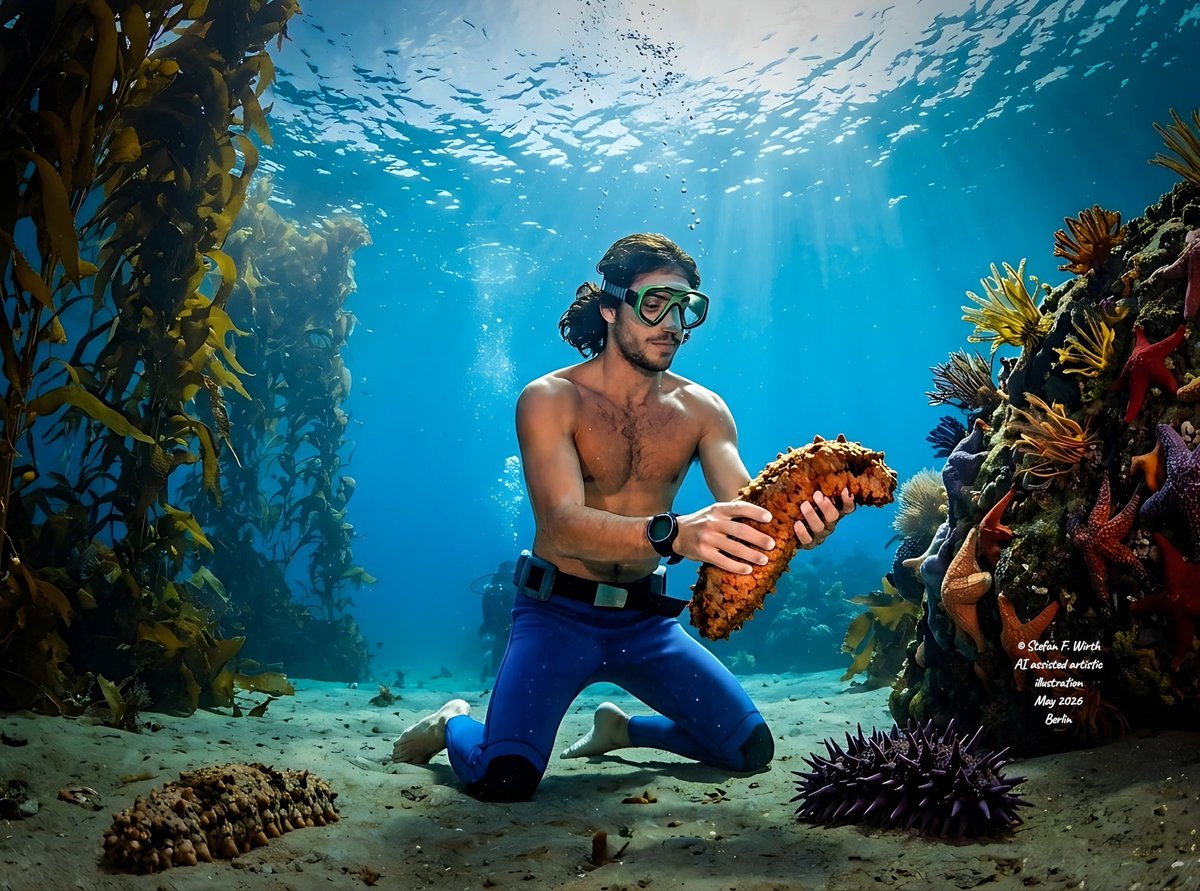
1) Diver and three undefined sea cucumber species
2) diver and undefined sea cucumber isolated
3) illustration of Psolus fabricii