
Connecting dots between public goods funding x impact | prev. Grants Steward @cartesiproject | @Kernel0x KB8 Fellow.
Joined May 2017
- Tweets 739
- Following 832
- Followers 969
- Likes 7,194
20 Photos and videos






May 16
watching ep 2 of off campus and i had to pause to listen to this banger
1
93
May 11
WhatsApp is really the default tool for businesses in Kenya.
My dentist just sent me a WhatsApp message to remind me about tomorrow’s appointment.
It just works.
1
59
May 11
Web3 grant programs often treat talent and strong use cases as the main constraints.
But in emerging markets like Africa, the bigger constraint is often distribution.
If a project has to use grant money to build the product and find users from the beginning, it is already starting at a disadvantage.
@Celo’s stronger move was solving distribution first through @minipay
That makes funding builders more strategic. Projects have 14M activated wallets to plug into
53
hellenstans.eth retweeted

Apr 29
Why Link is a big step forward for consumer crypto
- 250 million consumers have a Link wallet with a stored fiat payment method.
- It supports a global set of payment methods like cards and bank accounts, as well as UPI, PIX, etc.
- It now stores stablecoins (on Tempo!) in a consumer-friendly UX. No complicated addresses required. Just a digital dollar balance that can be spent at 5 million merchants.
- It’s agent-native. The 5 million Stripe customers (as well as anyone who supports MPP) can immediately accept payments from agents using Link with no additional work. Virtually *every* leading AI company is a Stripe customer and works with Link.
Ultimately, this is crypto as plumbing providing faster, cheaper and global without any consumer behavior change necessary.

27
41
427
43,729
Apr 29
Fintechs are now using stablecoins purely as a settlement layer.
Users get faster and cheaper transfers without ever dealing with on/off-ramps of stablecoins.
I wrote a short article on how companies like @MoneyGram @NALAmoney and @theflutterwave are already doing this across Africa and Asia:
hellenstans.substack.com/p/h…
2
190
Mar 25
CharmVerse built one of the most practical and effective tools for grants programs.
It brought real structure to workflows for operators, reviewers, and the broader community.
Sad to see it go, grateful for what they built!
Mar 25

Today, we’re sharing that CharmVerse will be shutting down operations on April 30.
We’re incredibly grateful for everyone who built, contributed, and experimented with us. We saw a lot happen together, and we’re proud of what we built as a community.
1
1
227
Feb 27
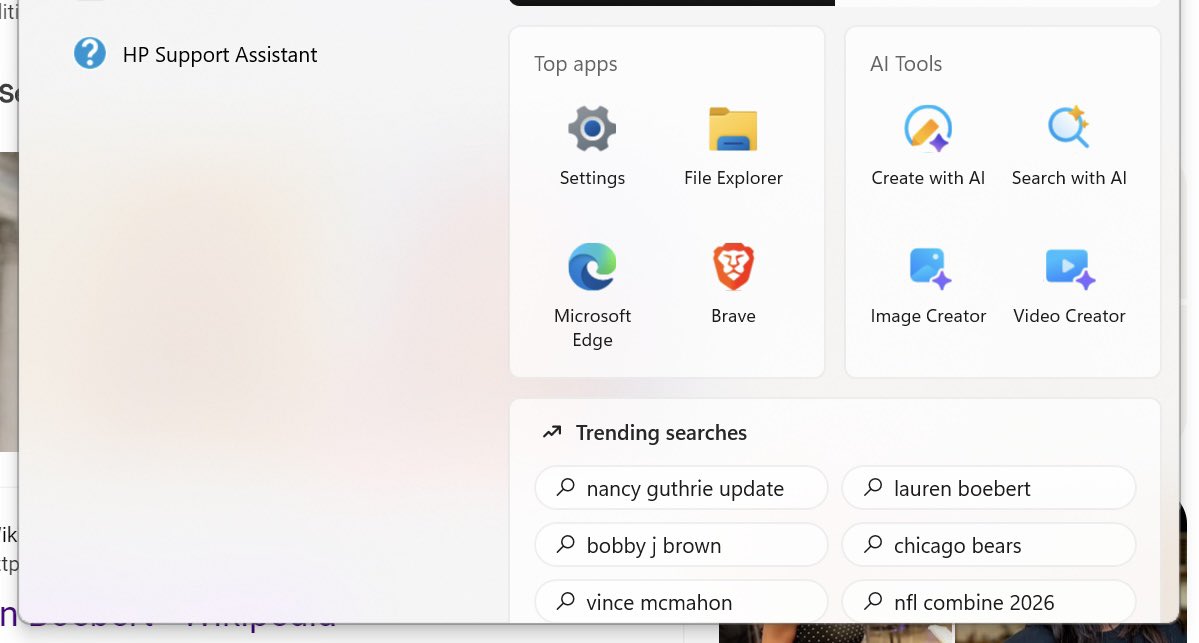
Setting up a new laptop for my nephew and noticing how AI is now integrated directly into the Windows interface and browser by default.
AI is becoming less optional.
145
Feb 23
Spent the weekend thinking about how much fintech has evolved since I went crypto full-time.
Stablecoins will continue to scale in emerging markets.
But for the average user, the default interface probably won’t be exchanges or self-custody wallets.
It will just look like the fintech apps they already use every day.
95
hellenstans.eth retweeted

10 Dec 2025
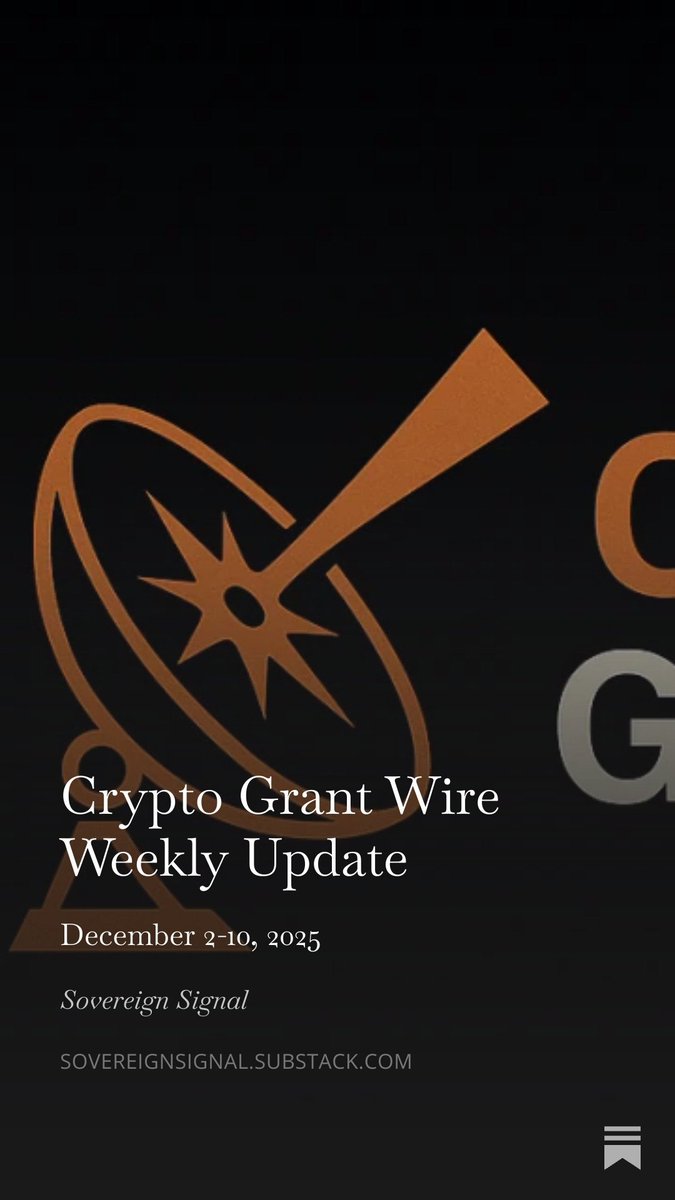
Just dropped the latest Crypto Grant Wire weekly update
(link below)
2
6
15
789
hellenstans.eth retweeted
3 Dec 2025
Hey 👋
I've decided to start publishing a weekly update of all the happenings from the Crypto Grant Wire on my Substack. Here's a rundown, you'll find a link at the end where you can check out the Substack (and subscribe, ofc)
2
5
29
3,908
30 Nov 2025
In your 20s, you’ll meet someone who introduces you to crypto trading, and you’ll wonder if that’s really all there is. It’s very important you follow that curiosity
1
2
87
hellenstans.eth retweeted

26 Nov 2025
I agree wholeheartedly with Kevin's analysis around the shrinking of the PGF & funding mechanism space
The 2021-24 era (RPGF, QF, etc) were an aberration rather than norm that many of us were lucky to have experienced
I'll now call out specific incidents from that time, not to target any project but as a post-mortem of that era.
Broadly, we need 10x improvements in 3 areas around funding collection, division & evaluation before we are ready for a return of that time
1. Top of funnel funding
Many of the 2021-24 ecosystems have not had any RoI from their PGF spend. Optimism got little from their RPGF outlay except marketing or mindshare, while Arbitrum DAO gave significant funds via QF which provided little benefit to their ecosystem
I see 2 areas to improve in how we collect funds from PGF programs;
a. Solve the free-rider problem
Many of the PGF programs felt like charge of the light brigade ('into the valley of death rode the 600') since other ecosystems didn't join but still enjoyed the benefits of what got funded by OP RPGF or Arbitrum QF.
To unblock ecosystem funding, we need to innovate mechanisms where the majority can coerce the minority into joining funding coalitions
For eg, @clesaege idea that if over 51% of validators indicate their interest to channel a portion of staking rewards to ecosystem growth, all 100% of validators are forced to join
Or @RaymondCheng00 idea around new software licenses that create legal obligations to donate to open source from profits or revenue, which could address Optimism's @okx problem where they are not part of the 15% revenue sharing arrangement but still use OP stack and its improvements as its MIT license based
b. Eliminate distinction between institutional and individual giving
Something I've learnt recently is how easy it is for individuals to simply yeet any money into a @dripsnetwork list or PGF mechanism, while institutions have requirements to either mitigate or transfer risk.
So they either KYC/KYB every recipient (expensive and impractical for mechanisms giving funds to many grantees) or structure it as a grant to another entity taking on that risk
@vinayvasanji is thinking deeply around how we might build vehicles that unblock institutional giving while also making it more transparent, something I'm excited to work on in 2026. because make no mistake, institutions hold vastly more money than individuals.
2. Allocation or splitting funds between projects once received
The majority of focus in the PGF space & at @schellingpoint_ this year was around algorithms that split a pot of funds between projects. quadratic funding based on wisdom of the crowds, badgeholder voting from experts, deep funding with AI etc all focus on credit assignment or figuring out who should get how much
What doesn't get enough love is decentralized eligibility. All these mechanisms make projects fill out grant applications & Optimism or Gitcoin then made centralized (& fairly lenient) decisions on who got to participate in the funding round
If we move from the PGF framing to one of connecting cost and revenue centers, deciding what is a cost center and what isn't will become more important than deciding funding between them
As i often like to say, if only good & relevant projects take part in your funding round, it doesn't matter if your allocation isn't perfect
@carl_cervone has done some phenomenal work on dependency graphs listing out repos used by an ecosystem, which is a good starting point to map out cost centers using algorithms instead of humans
I've also found that framing this exercise as a security one (uniswap v3 should have a map of the repos it depends on) receives a more favorable reception than as a PGF tool
3. Accountability
Now we come to the issue Owocki pinpointed in his post - well intentioned mediocrity by grantees in past funding rounds
The meta question here is, how can we cut out non-performers so they don't get to keep participating round after round?
Similar to how companies either listen to customers or go out of business, we need to ensure that public good projects have a way of dying out if unused. It is expensive for the web3 world to waste precious talent on a project going nowhere, simply because funding mechanisms keep them alive
for eg, one feedback i heard was on how the @soliditylang v2 roadmap doesn't take into account user demands on faster compile times, instead prioritizing features they read about in Rust academic papers which they want to implement in solidity
The final boss to defeat before we see the comeback of funding mechanisms in full is ensuring funders putting money into these things get the full bang for the buck, regardless of whether it was given as a grant or via an algorithm.
2 examples stood out to me as hard problems that we still need to somehow solve;
a. Despite @ETHGlobal receiving significant OP RPGF funds, they didn't even list optimism as a sponsor or give bounties because "oh that was retroactive it doesn't count"
so optimism could have got greater benefit by giving away the same amount of money but structuring it as a bounty/sponsorship to eth global instead of giving it to them through their RPGF program
b. @wevm_dev received large RPGF funding but not only haven't listed optimism as a funder on their website but also reportedly sent them a quotation when requested to integrate new chains or features
So if Optimism could have got greater value from funding them if they had simply not given wagmi/viem the money as RPGF but instead as conditional on executing features they wanted
Solving the additionality of funding in mechanisms is hard, but i see github based governance as a good path to explore. Create an issue on a recipients repo listing funds received which gets closed after required deliverables are submitted
Excited to work on these issues going into 2026! I love how Devcon always helps with priority setting for the next year 😊

Leaving Devconnect, I felt the weight of being in a niche that might be stagnating.
Public goods funding in Ethereum has lost mindshare. PGF is seen as a cost center to many ecosystems, Vitalik is focused elsewhere. Builder energy is real, but attention has drifted.
Discussing this with @carl_cervone, we focused on one core issue. Most teams failed to execute well. There is a lot of well-intentioned mediocrity. In a rising market, mediocrity gets hidden. CT has an immune system for obvious scams now, but not for pervasive mediocrity.
Some bright spots:
- Its been great to see the rise of @OctantApp - they are focusing on the demand side with their new vault play - which I think is super smart. I want them (and their vault users) to raise a shit ton of funds and then be discerning about how to spend it.
- I love what @SilviProtocol is doing with bioregional financing. Peer to peer proof of tree planting is very cool, this model could completely bypass the existing middleman-ridden NGO structure for reforestation.
- @deep_funding is doing great work attracting talent from new places (AI). And scaling human judgement to fund OSS dependancies.
- I like how @devanshmehta thinks about connecting revenue centers & cost centers for ecosystems. Just like how its hard to survive in nature w/o energy, its hard to survive in business without revenue. By connecting cost/revenue centers. we are able to finance ecosystem public goods in tandem with their growth.
- IMO The clearest direction for @gitcoin GG25 is to focus on keeping our own spend (relatively) low while proving out our ability to build coalitions that have impact (and get upside) in 1 to 2 frontier metas with real momentum (maybe x402, AI, stablecoins, DePIN, interop, infofi privacy). Tangibly this means running public goods funding rounds there, and pairing it with token investments to build dealflow and treasury longevity. The PGF rounds build dealflow for the investment engine.
- There are others that are doing great things I likely missed. Shill them in the comments and Ill RT the best takes.
Thanks @carl_cervone for helping me sensemake here!
23
13
100
16,397
30 Oct 2025
as someone who used to work in fintech solving cross-border payments this made me so happy!

Polygon becomes the default chain of @theFlutterwave, Africa's largest payment processor that enables Netflix, Uber, Bookingcom, Microsoft, Audiomack and so many more in the region to enable low-cost onchain transactions in the African continent🚢
For millions of Africans facing currency volatility or remittance bottlenecks, there is no better solution than stablecoins.
Does’t matter if you’re an entrepreneur or a student, a driver or an engineer, a salesperson or a doctor: if you’re in an emerging market, instant, fraction-of-a-penny transactions can be seriously life changing. Trust me, I’ve been there.
So we’re teaming up with Flutterwave, Africa’s largest payments infra, to enable instant, affordable stablecoin payments across 30 countries on the continent.
As I said above, Flutterwave works with companies including Netflix, Uber, Bookingcom, Audiomack and Microsoft to name a few - $31B in volume last year, to be precise.
Polygon processes half of all U.S. USDC transfers in the $100-$1,000 range. This year, small USDC transfers on Polygon went up 141%, a large part of that being in Argentina and Brazil. I can’t wait to see the value it can bring to Africa, similar to what it has unlocked in Latin America.
Many African businesses face settlement times taking days and fees reaching 8% of the transaction value. Enough.
It’s time to tackle economic barriers in emerging markets. The shipping won’t stop!
1
3
355
17 Oct 2025
even with the tech being decentralized, there’s still a risk that big tech corporations can acquire the developers who build and maintain ethereum’s open source infrastructure.
more than ever, ethereum needs to make public goods funding sustainable
17 Oct 2025

gotta hand it to stripe. the other major fintech players (robinhood, ant) are building on ethereum, and stripe is just working to acquire ethereum’s talent instead.
100% a web2 playbook that would have worked back when technology was centralized
2
230

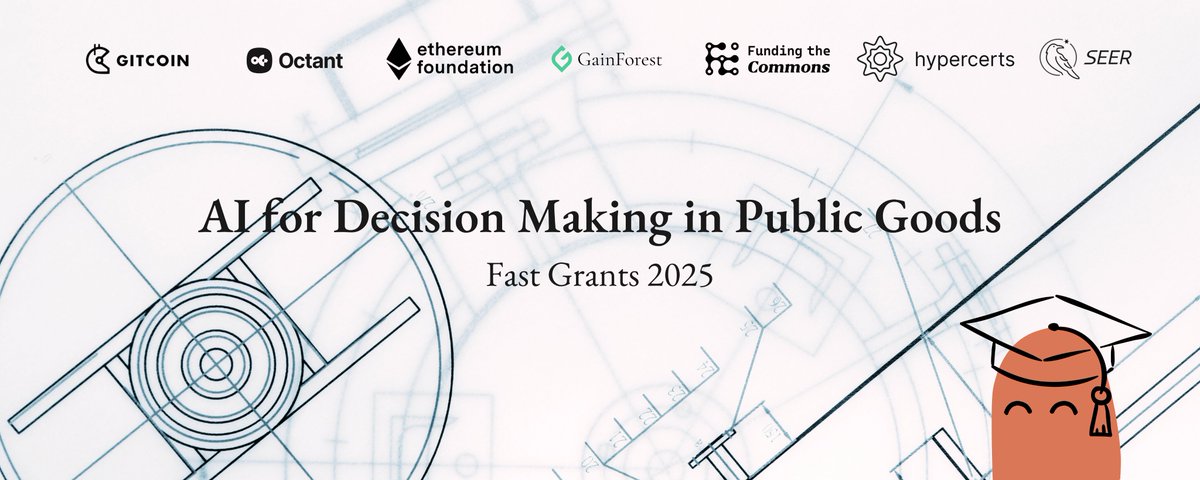
Announcing AI for Public Goods Fast Grants (AI4PG) - Up to $10K for AI research improving public goods funding.
Fast review (2-3 weeks), simple applications (4 pages 1 budget page), open to any researchers worldwide. Call for reviewers now open!
recerts.org/ai4pg2025
37
83
267
85,181
16 Oct 2025
dear algorithm, show this tweet to people who have joined @aboutcircles
looking for someone who can trust me, i will trust u back
app.metri.xyz/p/0xC13552D681…
1
2
79
15 Oct 2025
Gitcoin #GG24 is live and the first experiment in a pluralistic funding model with multiple domains each using its own mechanism to fund what really matters for Ethereum.
If you’re building for Ethereum, there are lots of funding opportunities available for you.
🧵
1
1
79
15 Oct 2025
3/
Ethereum’s multi-chain ecosystem still lacks shared standards, data formats, and infra. Builders waste time reimplementing the same tooling instead of building together. If you are advancing the Open Intents Framework, this domain is for you.
QF round with $100k in matching a follow-up retro round for funded projects.
giveth.notion.site/GG24-Inte…
@sovereignsignal x @RohitMalekar
1
79
15 Oct 2025
4/
To scale public goods funding on Ethereum, we need data-driven funding mechanisms and research that improve how capital is allocated today.
If you’re researching or building new mechanisms, this domain is for you.
Up to $150k available for funding.
x.com/dwddao/status/19781487…
@dwddao x @sejal_rekhan

Announcing AI for Public Goods Fast Grants (AI4PG) - Up to $10K for AI research improving public goods funding.
Fast review (2-3 weeks), simple applications (4 pages 1 budget page), open to any researchers worldwide. Call for reviewers now open!
recerts.org/ai4pg2025
1
71