
Cards catalyzing stories, Conversations that mind and matter, Digital communities and collaborative narratives
Joined September 2007
- Tweets 33,043
- Following 3,908
- Followers 1,742
- Likes 31,778
727 Photos and videos






johnkellden retweeted

15 Jul 2025
Thinking Machines Lab exists to empower humanity through advancing collaborative general intelligence.
We're building multimodal AI that works with how you naturally interact with the world - through conversation, through sight, through the messy way we collaborate. We're excited that in the next couple months we’ll be able to share our first product, which will include a significant open source component and be useful for researchers and startups developing custom models. Soon, we’ll also share our best science to help the research community better understand frontier AI systems.
To accelerate our progress, we’re happy to confirm that we’ve raised $2B led by a16z with participation from NVIDIA, Accel, ServiceNow, CISCO, AMD, Jane Street and more who share our mission.
We’re always looking for extraordinary talent that learns by doing, turning research into useful things. We believe AI should serve as an extension of individual agency and, in the spirit of freedom, be distributed as widely and equitably as possible. We hope this vision resonates with those who share our commitment to advancing the field. If so, join us. thinkingmachines.paperform.c…
634
670
7,652
2,351,065
johnkellden retweeted

2 Mar 2025
i am inspired by the men and women pursuing greatness , remaining kind , staying focused , being true to themselves
2
18
174
3,749
johnkellden retweeted

4 Jan 2025
Cells aren’t robots executing their DNA as code. They are better understood inferential learning systems, with expression levels of DNA in the gene regulatory network roughly corresponding to the weights and activations of a transformer or neural net.
30
17
215
18,640
johnkellden retweeted

6 Jan 2025
It's a beautiful thing to have faith that all parts of yourself, all of your relationships, experiences, and interests, no matter how seemingly disparate, disjointed, and dysfunctional, are forming an organic and essential divine unity that will be revealed in due time
10
10
197
14,885
johnkellden retweeted

29 Dec 2024
When did elite institutions shift from being largely embedded local & national entities into international & global ones?
Think of elite law, capital, medicine, business, education?
When local ties that bind (“religio”) were attenuated, it was only a matter of time until the implicit A/B testing would illuminate the real (unnamed) value.
You can bury it for a time, but once you move into the spreadsheet imaginary, you forfeit the value of the personal, the local, the familial.
3
4
19
1,402

johnkellden retweeted

28 May 2021
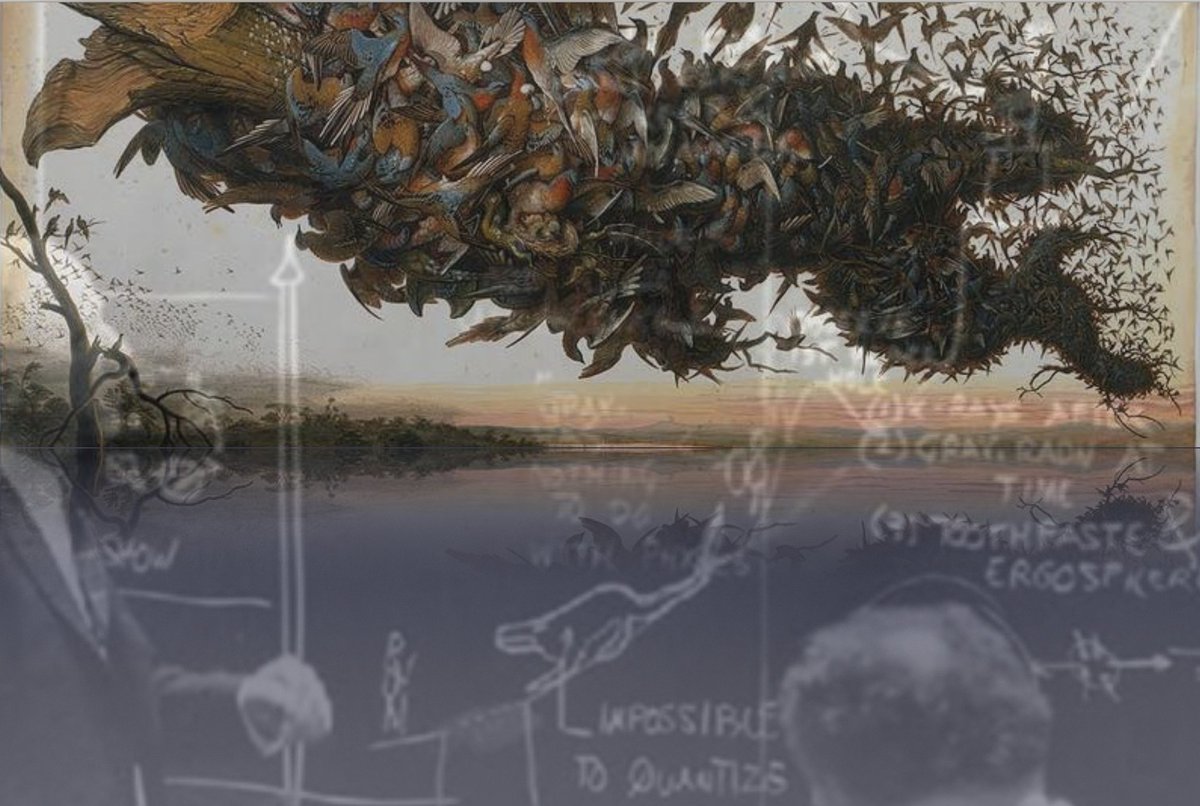
The physicist John Wheeler, inventor of the phrase, "it from bit" at a Princeton blackboard discussing what in nature can be quantized but as if he were looking at Walton Ford's, "Falling Bough," a fantastic depiction of collective behavior.
8
54
249
johnkellden retweeted

12 Nov 2024
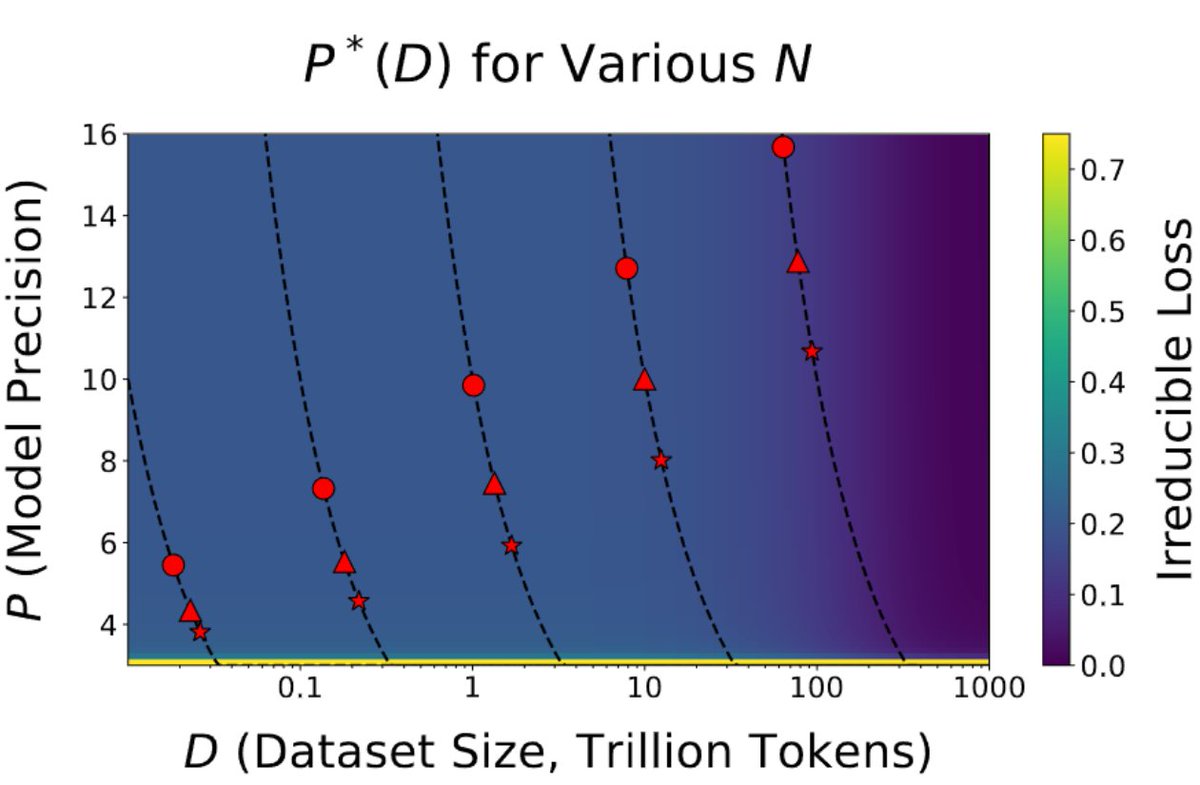
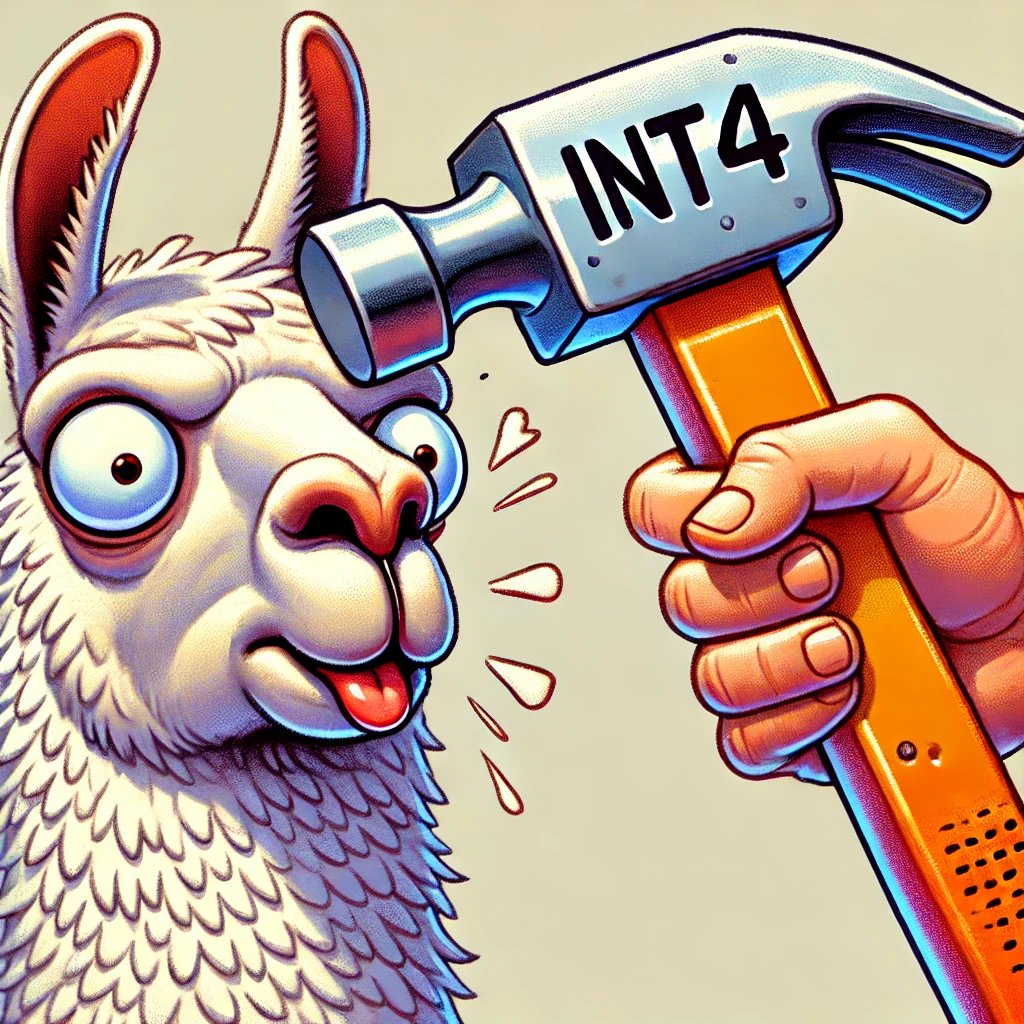
This is the most important paper in a long time . It shows with strong evidence we are reaching the limits of quantization. The paper says this: the more tokens you train on, the more precision you need. This has broad implications for the entire field and the future of GPUs🧵
11 Nov 2024

[1/7] New paper alert! Heard about the BitNet hype or that Llama-3 is harder to quantize? Our new work studies both! We formulate scaling laws for precision, across both pre and post-training arxiv.org/pdf/2411.04330. TLDR;
- Models become harder to post-train quantize as they are overtrained on lots of data, so that eventually more pretraining data can be actively harmful if quantizing post-training!
- The effects of putting weights, activations, or attention in varying precisions during pretraining are consistent and predictable, and fitting a scaling law suggests that pretraining at high (BF16) and next-generation (FP4) precisions may both be suboptimal design choices!
Joint work with @ZackAnkner @bfspector @blake__bordelon @Muennighoff @mansiege @CPehlevan @HazyResearch @AdtRaghunathan.
64
467
2,918
696,581
johnkellden retweeted
12 Nov 2024
All of this means that the paradigm will soon shift from scaling to "what can we do with what we have". I think the paradigm of "how do we help people be more productive with AI" is the best mindset forward. This mindset is about processes and people rather than technology.
14
28
303
22,304
johnkellden retweeted

20 Mar 2024
you’re not building a product
you’re engineering culture
15
92
444
63,624
johnkellden retweeted

8 Nov 2024
In 2024, I had the opportunity to attend (and speak at) a handful of industry machine learning conferences. Whenever there was a break, I'd jot down some insights and lessons in apple notes. Here are 39 lessons I took away from conferences this year.
eugeneyan.com/writing/conf-l…
6
36
200
31,938
johnkellden retweeted

7 Nov 2024
💡 How to Build an Experimentation Machine and Where Most Go Wrong with @rameshjohari (Stanford, Airbnb, Uber, Bumble, and more) 🎙️
In this episode of High Signal, I talk to Ramesh Johari—Stanford professor and advisor to platforms like Airbnb, Uber, and Bumble—about building systems for experimentation that drive innovation and avoiding the traps most organizations fall into.
We explore practical takeaways like:
- ⚡ How to combat risk aversion by running faster, smaller tests that reduce stakes while increasing learning.
- 🔄 Why a successful experimentation strategy requires learning across tests instead of treating experiments as one-offs.
- 🌟 How to create a self-learning organization, where experimentation fuels continuous improvement and innovation.
🎬 Watch the clip where Ramesh shares how organizations can build a "learning flywheel" to stay adaptive in dynamic environments.
💻 Check out the full episode via the link in the comments!
1
1
8
765
johnkellden retweeted

3 Nov 2024
Peter Thiel making the case for open source, decentralized AI
"The real AI risk is a totalitarian world government... Global compute governance would be very heavy-handed, creating a dystopian one-world nanny-state government."
youtu.be/42iVcEg5SOM?si=qp07…
49
109
781
148,653

7 Nov 2024
RT @DrJeffMasters: Important finding: atmospheric rivers shifted 6-10 degrees (400-700 miles) toward the 2 poles over the past 4 decades, m…
36
johnkellden retweeted

27 Sep 2024
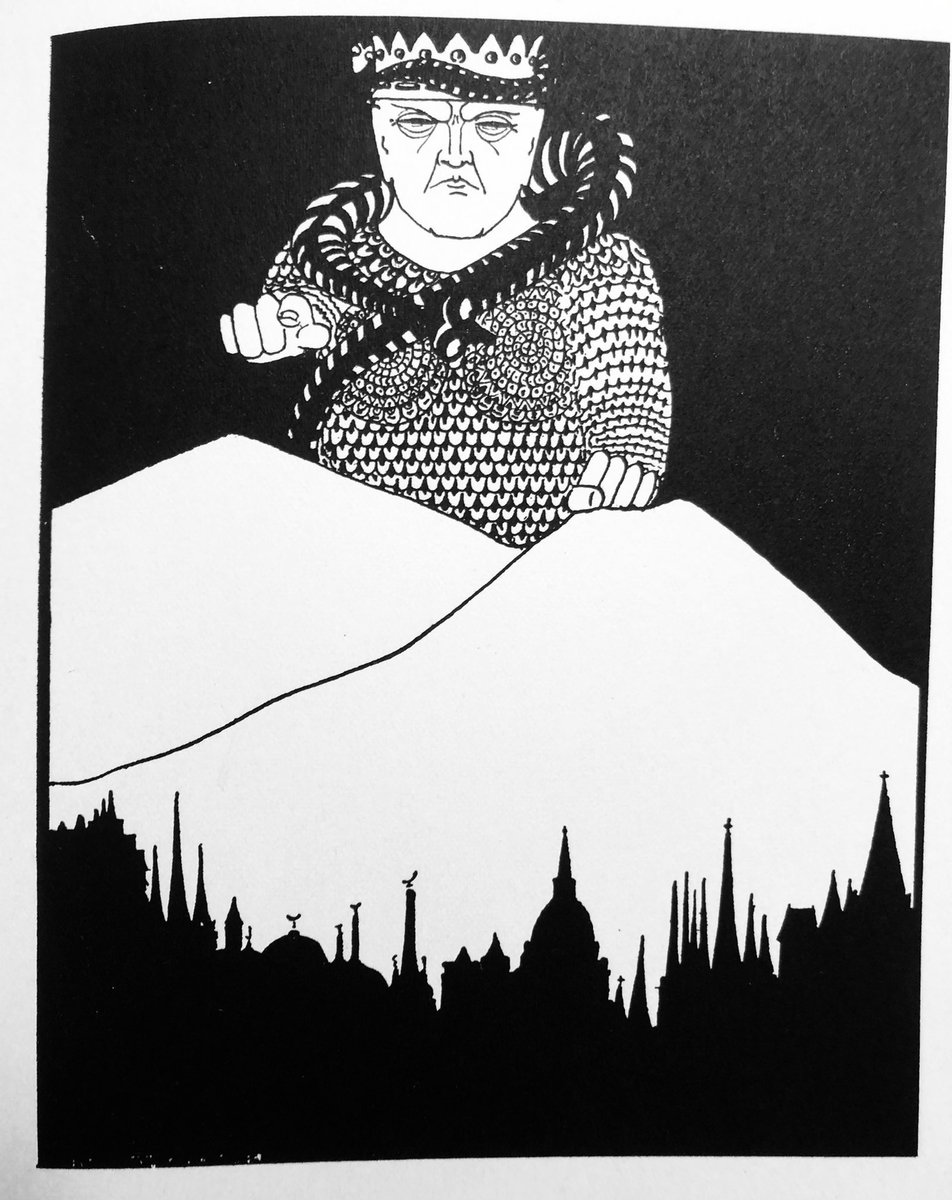
‘No man can serve two masters... Ye cannot serve God and Mammon’
Matthew 6:24
Art: Mammon from A Book of Images, by William Thomas Horton (1898), a mystical artist. Mammon here is a personification of materialism. the worship of money and political power, towering over a city. He has crowned himself king. The serpent winding round his neck is his demonic advisor.
14
48
228
15,923
6 Nov 2024
RT @threadreaderapp: @SteB777 @SteB777 Hi, you can read it here: threadreaderapp.com/thread/1… Have a good day. 🤖
2
6 Nov 2024
RT @SteB777: This is the basic problem, the dilemma that confronts us. Our leadership, being in deep denial of reality, because acknowledgi…
17
johnkellden retweeted

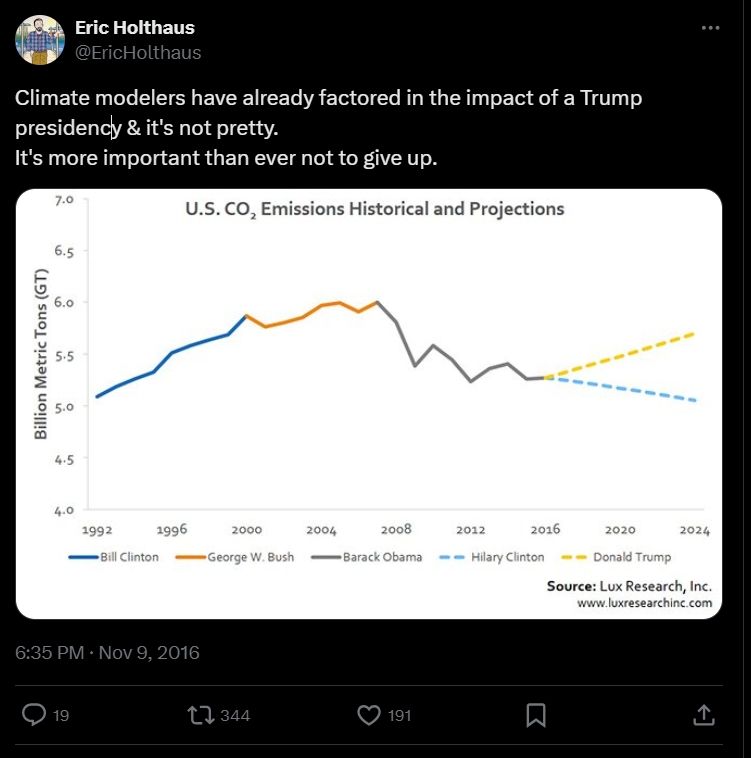
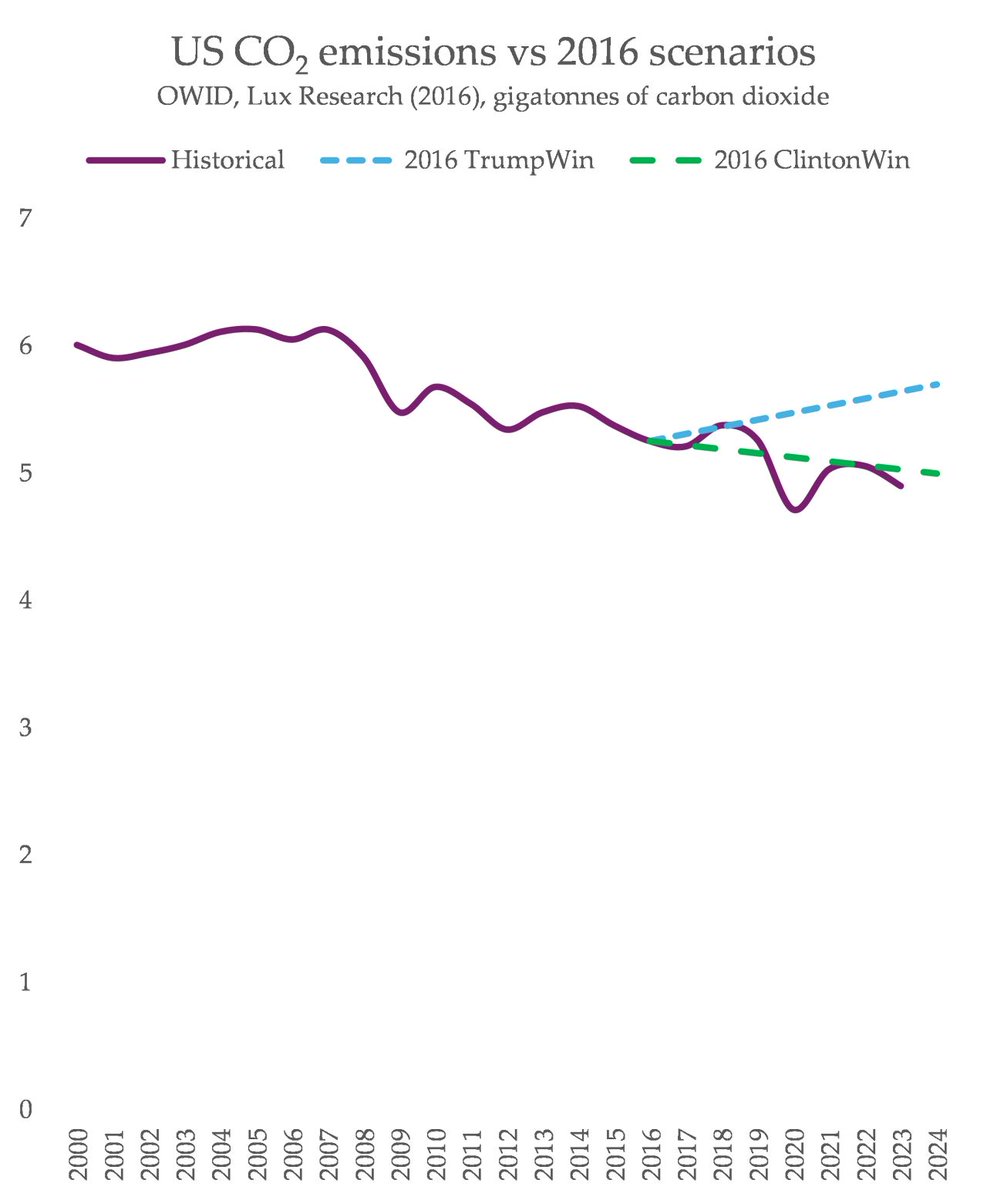
US emissions after 2016 tracked the trajectory predicted for a Clinton presidency, despite Trump winning
The energy transition is underway and irreversible. It can be slowed but it can't be stopped
From @KetanJ0 on a better site
2
3
16
1,283
johnkellden retweeted
21 Jul 2024
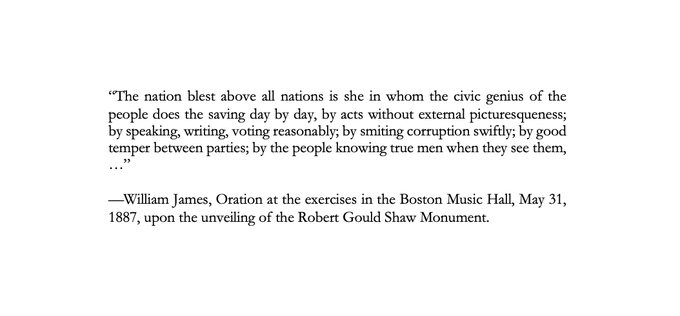
William James, one of the founders of pragmatism and American cognitive science, on civic duty "knowing true" individuals.
Louis Menand discusses this quote the role pragmatism has played in shaping American values in his book, "The Metaphysical Club."
It seems like a good time to recommit to civility, integrity, innovation flourishing.
3
3
10
5,962
johnkellden retweeted
10 Jul 2024
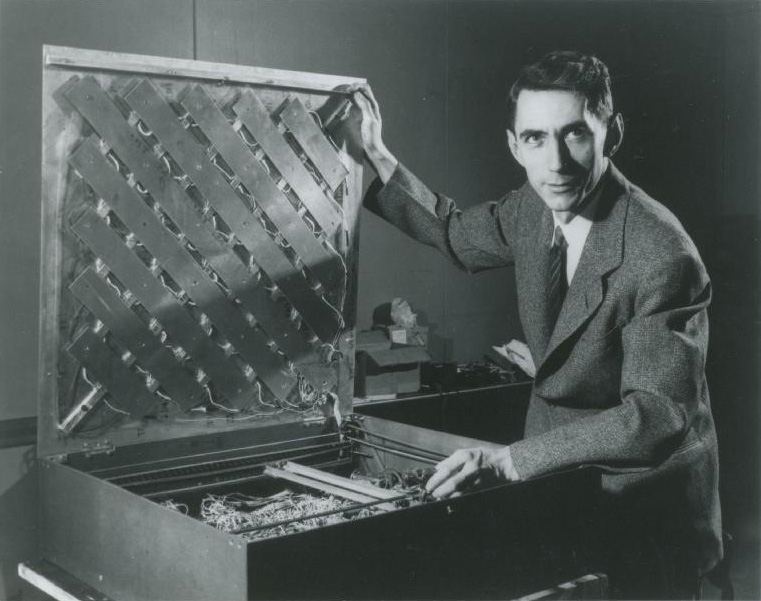
The implications of Shannon's work do indeed continue to reverberate but it is somewhat misleading to ascribe the implications for basic science our daily lives to his genius alone. Rather the implications are due to delicate synergies.
It is Shannon's work in synergistic combination with Turing's, von Neumann's, Jaynes', Hofstader's, Gell-Mann's, Hopfield's, Hartle's, Wheeler's and many others that provides the foundations for the science of information, computation and emergence that is just beginning to flourish.
And it is places like Bell Labs (traditionally) The Santa Institute that in providing a "common now"—to channel Jim—facilitate the collision of minds and ideas that allow this instrumental synergy to grow.
The concepts of synergy higher order interactions—and our ability to formalize them—is itself an outcome of these collisions.
What is the character of institutions, of policies, of our collaborations that allows synergies to flourish? What is the nature of environments that crush synergies? The key to enriching the present future lies in no small part on this understanding what we *choose* do with it.
28 Jun 2021

In one single groundbreaking paper, Claude Shannon laid the foundation for the entire communication infrastructure underlying the modern information age. quantamagazine.org/how-claud…
6
35
160
32,986