134 Photos and videos

Luiss retweeted

21h
The stupidity of these @Stanford students to take the greatest opportunity for equality in humanity ever and to really free humanity and go walk out on @google and @sundarpichai that's pioneered that. Biased, idiotic, short-sighted and very selfish. Selfish because they ignored the bottom 3 billion people on this planet that could benefit from AI and they are worried about their misinformed selfish self-interest.
youtube.com/watch?v=wf74VXKT…
Jun 14

Stanford grads walk out as Google CEO Sundar Pichai takes the stage as commencement speaker. No mention of AI, unlike other uni speakers getting booed down this year. Story for @sfgate shortly
778
520
6,583
1,449,806
Luiss retweeted

Mar 25
Jerome Powell is wrong to hold rates and even more wrong to suggest he can stay on past his term. The Fed is misreading a weakening economy and overstepping its authority when leadership and clarity are needed most. forbes.com/sites/steveforbes…
10
28
97
2,318
Luiss retweeted

Mar 12
The full Alex Karp interview from the American Dynamism Summit.
18
76
645
61,505
Luiss retweeted

Feb 16
RIP Robert Duvall, one of the greats. The Godfather. Apocalypse Now. Lonesome Dove. Honored that I had the chance to work with him on Thank You For Smoking.
162
180
5,705
438,428
Luiss retweeted

Feb 17
There are still too many Californians who hope for the best instead of fighting all out. Make no mistake, 2026 is the year that will determine whether we lose our state to incompetence, suicidal empathy, corruption, waste, and socialist capture. Fight now or lose.
51
29
455
23,911
Luiss retweeted

Feb 10
With Zuck’s move to Florida, California’s total taxable wealth from billionaires has plummeted to well under $1T from over $2T just a few weeks ago.
The loss of this tax revenue was totally avoidable but is now forever. All because Gavin Newsom stood motionless as this stupidly written bill, from a fringe union and a handful of socialist academics with an axe to grind, meandered its way into the public conversation without any action from him and freaked everyone out.
These were all people that were paying 13% in state income tax every year WITH NO COMPLAINTS UNTIL A FEW WEEKS AGO.
And now, for the rest of time, the lost tax revenues from these folks will have to be paid for by the middle class because they are the only group left in California large enough that you can tax to fill the hole.
He’s forsaken the middle class instead of managing the budget, managing the deficit, eliminating even a portion of California’s gargantuan waste and abuse. He could have done any of these things at any point over the past 7 years.
But he was silent.
And now California’s budget will implode and he wants to run for President.
Insane.
Feb 9

That California billionaire tax idea backfired in the most spectacular fashion
1,347
5,579
39,993
3,369,593

Luiss retweeted

Jan 9

17
52
892
138,364

In many parts of the world, WhatsApp is the core operating layer for daily life, where families communicate, businesses run, and increasingly, healthcare is delivered. But WhatsApp wasn’t built for healthcare, and physicians can lose hours navigating disorganized threads.
Leona is building the fix: an AI-native operating system for providers, built directly into WhatsApp to bring clarity and clinical structure to patient communication.
Since launching its Latin America beta in April, they have expanded organically to thousands of physicians, processing millions of patient interactions across more than a dozen countries.
We’re leading Leona’s $14M seed round to build the world’s first AI copilot for doctors. Cofounders @merinsay, Tom Chokel, and Arela Solis bring deep operational and technical expertise, and we’re proud to partner with the team as they redefine how care is delivered across Latin America and beyond.
16 Dec 2025

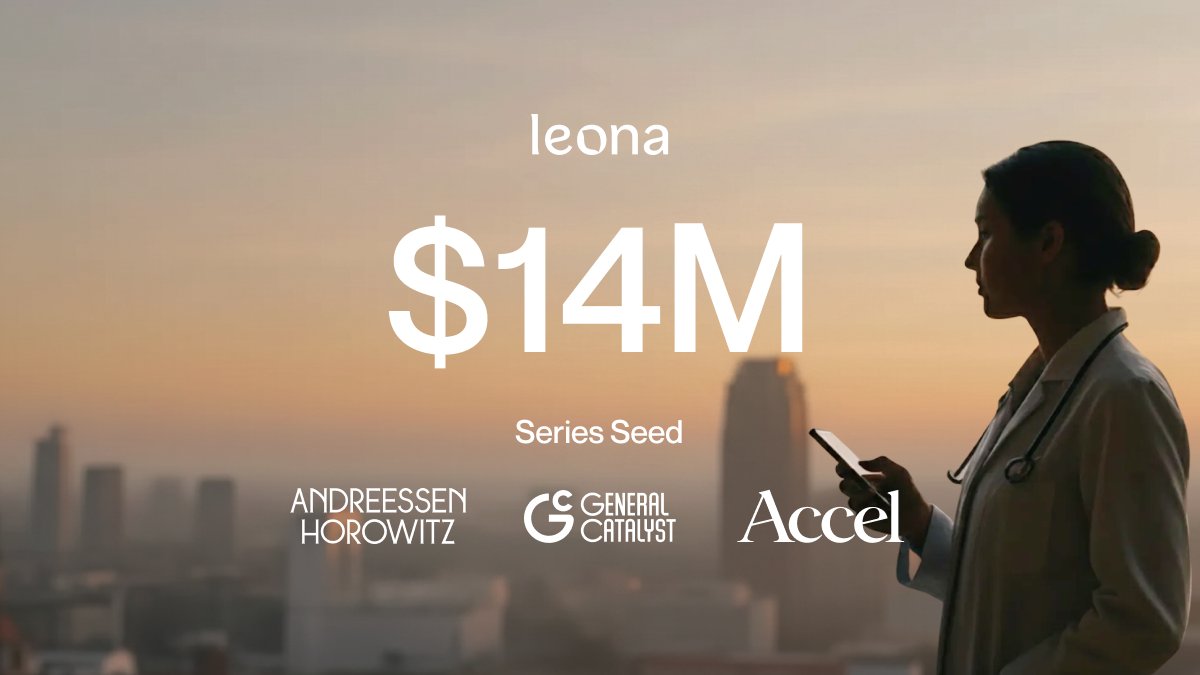
Today, we are launching @Leona_health to scale human connection in healthcare.
Leona is the world’s first AI co-pilot for the millions of doctors who use WhatsApp to manage patient care.
We're proud to be backed by @a16z, @generalcatalyst, and @Accel powering our $14M seed and pre-seed rounds.
We're hiring, come join us! Read more here: leona.health/en/blog
18
20
173
42,191
Luiss retweeted

13 Nov 2025
The counter-narrative just went mainstream.
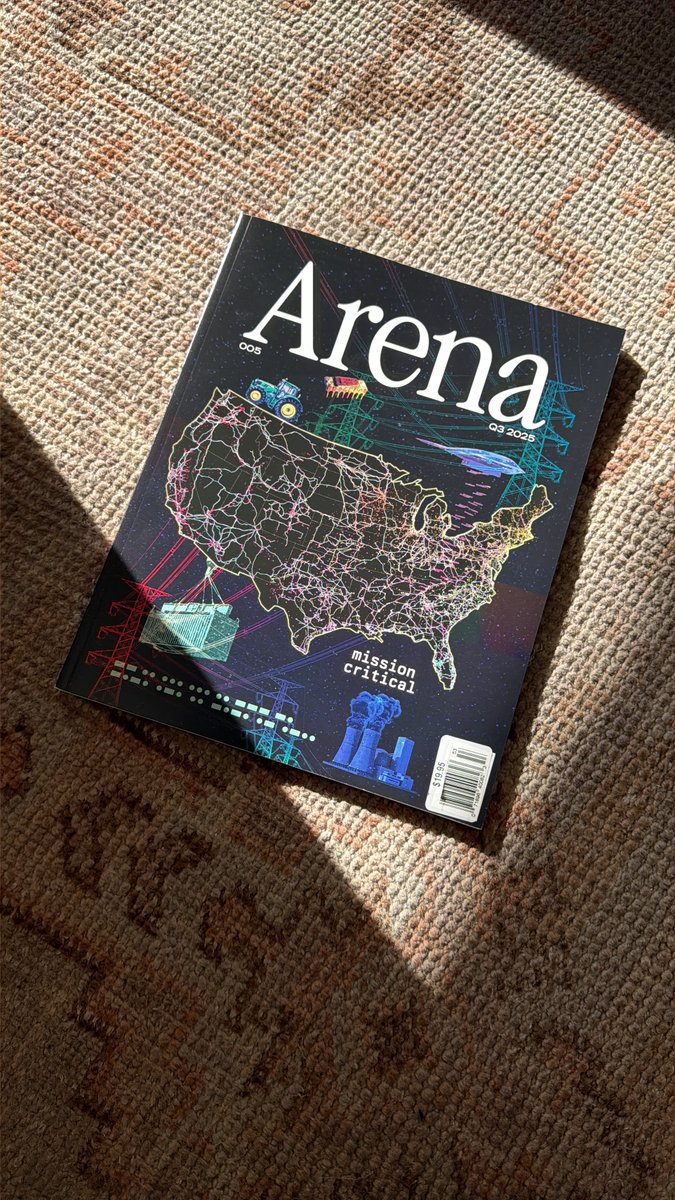
America’s premier techno-capitalist magazine just landed on Barnes & Noble shelves across the nation!
Head to your local store and pick up your copy of Arena today 🇺🇸
3
8
87
7,711
Luiss retweeted
9 Nov 2025
The secret’s out!
Arena Magazine is now rolling out for purchase at Barnes & Noble locations across the country.
🇺🇸📚


I started a digital subscription to @arenamagdotcom @mualphaxi then this happened. Walked into my local Barnes & Noble saw the actual physical magazine. I couldn’t believe it! Bought it, went straight back home cancelled the digital subscription, ordered the three previous issues and subscribed to the annual magazine. I’m not kidding! It’s that good!
11
5
120
19,545

I started a digital subscription to @arenamagdotcom @mualphaxi then this happened. Walked into my local Barnes & Noble saw the actual physical magazine. I couldn’t believe it! Bought it, went straight back home cancelled the digital subscription, ordered the three previous issues and subscribed to the annual magazine. I’m not kidding! It’s that good!
1
18
19,237
Luiss retweeted
6 Oct 2025
Two moments stick out to me in the story of The Free Press. The first is me opening my phone to see @bariweiss’s resignation letter in 2020. It felt shocking. Not her leaving the New York Times, but what she wrote, how she said it and when, during a summer of hysteria when very few people were speaking the truth.
I had never met Bari though I enjoyed her writing. It felt like an event, a major moment in America’s cultural revolution that would lead to something big. I texted Chris Best at Substack and said “I think you saw the news.” He had. Everyone in media had.
Common Sense was born and I was hooked, not because of what @TheFP would become, but because of her uncommon courage in a moment when few people in positions of power were displaying any courage at all.
The second moment won’t get as many nods today. It was late 2021. I was putting my son down for a nap and opened the Honestly podcast to hear a 25-minute speech from @AbigailShrier. I listened to the speech again last night and still can’t believe Bari had the guts to publish it: a canceled mother, whose book Irreversible Damage had been banned from Target for noting that teen girls were transitioning at much higher rates than boys. She asked the obvious question parents weren’t allowed to ask then: why?
At the time, the ACLU was pushing to get the book banned from libraries across America, but here was Abigail on Honestly reading a speech about what it’s like to be cancelled for telling the truth; what it’s liked to be hated and finding freedom in that hate.
Bari was one of the few people who gave Abigail a real platform. In 2021, when Big Tech was issuing listener warnings if podcasters criticized Covid vaccine mandates, questioning elective mastectomies for teens was unthinkable in the mainstream press. The Free Press published Abigail.
It’s very easy to forget what courage looks like. In hindsight, none of these things seem that groundbreaking. The Overton window has shifted so far that these acts of resistance look quaint now.
But they set the stage for where we are today: a golden age of new media and free speech in America. Bari is an important part of this shift, as she was among the first of her cohort to leave and build something new, what investors like to call early and right.
She was among the first to call out censorship in mainstream institutions, not as an outsider critic but as a true insider with everything to lose. She called it out from the vaunted New York Times editorial page and it took time before others in her world followed.
But she wasn’t just courageous for quitting. Most importantly, she didn’t give up on building. She didn’t blackpill. She wanted to build a new media institution and she did. The Free Press has been growing the newsroom from day one with the ambition to build an institution that outlasts them.
Very few people in media today aspire to this vision. Media has become a collection of personalities, albeit a needed one. But The Free Press is different. I’ve watched the team recruit writers, thinkers and unknown voices that openly disagree with one another in an effort to build an enduring institution that remakes the news for the better.
The disagreement is encouraged. The newsroom chose not to endorse a presidential candidate in 2024 because it was so evenly split among itself. No other newsroom can claim this kind of political diversity. The ability to hold conflicting views in one institution is unique. It’s what makes Bari a capable newswoman, a worthy editor-in-chief and a builder who can shepherd The Free Press to new heights, while also shepherding a legacy newsroom in dire need of voices that don’t rebuke half the country for their beliefs.
The best predictor of future success is past success. And the best predictor of future courage is past courage. I look forward to watching this newsroom shine at their new home at CBS News.
Congratulations to The Free Press. What a timeline we’re living in.
6 Oct 2025

An announcement from @BariWeiss: The Free Press is joining Paramount.
Read more: thefp.pub/4gW8N21
155
415
3,421
528,229
Luiss retweeted

23 Jun 2025
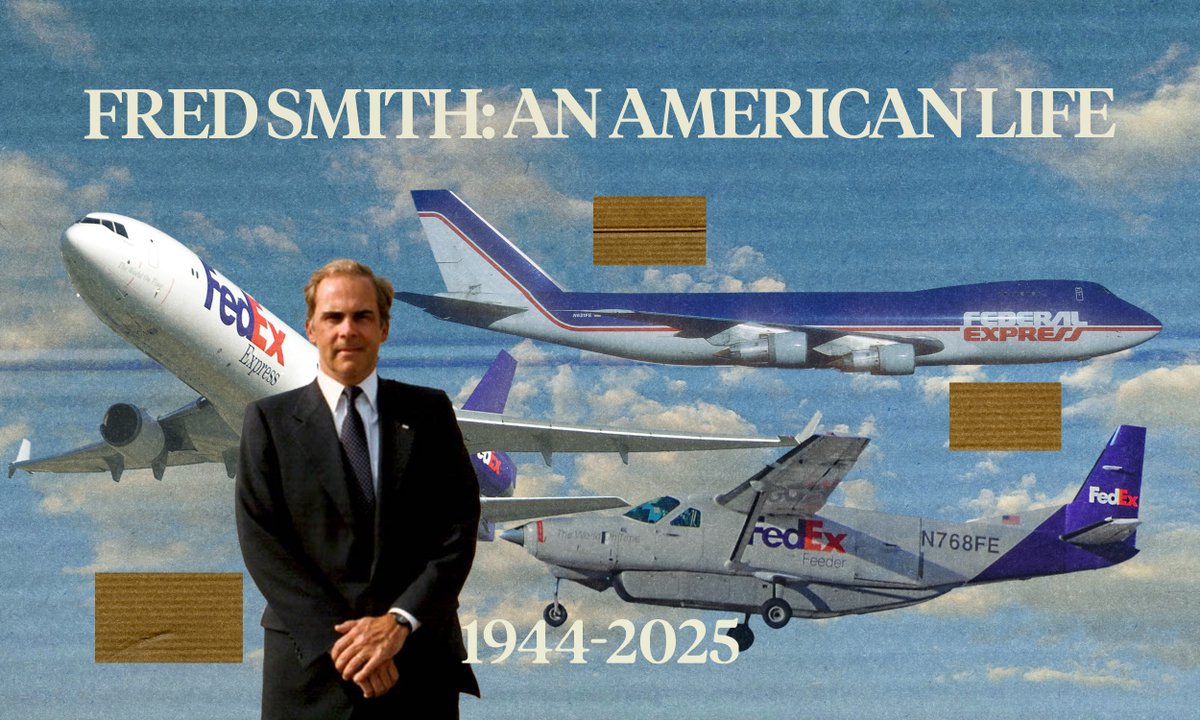
FRED SMITH: AN AMERICAN LIFE. By me, for @arenamagdotcom
Fred Smith died on Saturday, June 21. He was the founder of Federal Express, which became FedEx, one of the largest logistics companies on Earth. Smith was an entrepreneur in the truest sense of the word, and an American patriot. He bent reality and created something entirely new. And he ran toward an extremely difficult problem.
The fruits of Fred’s work are as follows: if you give a box or document to FedEx by 6:00 p.m., you can have it delivered almost anywhere in the U.S. or Canada by 8:00 a.m. the next morning. If you give FedEx a package on a Monday, it can be in Paris by Wednesday morning, or in Shanghai by Thursday (for a few hundred dollars).
Most of us take overnight delivery for granted. But take a step back, and the fact that we can essentially air-drop physical packages anywhere in the world is mind-boggling. Smith’s death is a reminder not to take the miracles of modern life for granted; they were built by people like Fred Smith. These are a few words about the man himself, and the dazzling system that is FedEx.
***
Frederick Wallace Smith was born in 1944 in Mississippi. Fred’s grandfather, James Buchanan Smith, captained Mississippi River steamboats. Fred’s father, James Frederick Smith, was the founder of the Smith Motor Coach Company, which would go on to become Dixie Greyhound Lines after an acquisition in 1931. From steamboats to buses to jumbojets in three generations, the family stayed on the cutting edge of motorized transportation.
In 1925, the elder Smith, seeking to create a transportation line out of Memphis, converted a truck into a small bus and drove it himself. Within a few years, James Smith had dozens of coaches; by the time he died suddenly in 1948, he commanded over two-hundred. According to James Smith’s obituary, those two-hundred coaches each came to a halt during their regularly scheduled routes for one minute when the funeral began. The young Fred was just four years old when his father died.
In 1962, the young Smith enrolled at Yale University, where he was fraternity brothers with the future President George W. Bush (Bush asked Smith to serve as secretary of defense twice, and Smith declined twice). He was a member of the infamous Cloak and Dagger secret society. It was at Yale that he first wrote a paper about his concept for using airplanes to deliver packages with a hub and spoke system — i.e. that instead of point-to-point package transport, everything would be brought to a single hub by air and then redistributed, by air. Repeat that cycle every night while turning a profit and you have a viable system for overnight delivery. The paper is said to have earned an average grade.
In 1966, Smith graduated from Yale, and volunteered to receive a commission in the Marine Corps. He served two tours in Vietnam. For his service in Vietnam, President Nixon decorated Smith with a Silver Star and a Bronze Star. The Silver Star citation read, in part:
“Unhesitatingly rushing through the intense hostile fire to the position of heaviest contact, Lieutenant Smith fearlessly removed several casualties from the hazardous area and, shouting words of encouragement to his men, directed their fire upon the advancing enemy soldiers, successfully repulsing the hostile attack. Moving boldly across the fire-swept terrain to an elevated area, he calmly disregarded repeated North Vietnamese attempts to direct upon him as he skillfully adjusted artillery fire and air strikes upon the hostile positions to within fifty meters of his own location and continued to direct the movement of his unit.”
In 1973, at twenty-nine years old, Smith launched Federal Express in Memphis. Smith had studied military procurement and been working on the idea for nearly ten years after writing the Yale paper. The company launched with a fleet of fourteen French Dassault jets, which delivered a few hundred packages on their first day of service. According to FedEx lore, Smith named his new service “Federal Express” because he hoped to attract the attention of the Federal Reserve Bank, a prospective customer.
The system that Smith had conceived at Yale worked. It really worked. And nothing like it existed. The USPS existed principally to deliver letter-mail, and didn’t have aircraft. UPS was a giant of ground delivery throughout the US. Federal Express, though, would specialize in rapid air delivery. Just five years after the first Federal Express flights, the company was listed on the New York Stock Exchange. Today, the FedEx fleet consists of nearly 700 aircraft and about 200,000 vehicles, and FedEx employs 500,000 workers around the world.
Every night at the Fedex “Superhub” at Memphis International Airport, hundreds of jets land at the airport, bringing packages to its many sorting machines. A few hours later, the jets take back off to every corner of the United States and the world. At their destinations, the other half of the fleet awaits: feeder aircraft to take packages to smaller airports and the FedEx Express trucks that take packages to their final destinations.
Not only is the system that Fred Smith built incredibly impressible, but “FedEx” is practically synonymous with reliability. FedEx is so reliable that our culture has now reached a point where anything other than 2-day delivery can be dismissed as “slow.” In the rare instance that FedEx misses its own delivery goals, people feel that they can justifiably be upset. It is the true mark of a brilliant entrepreneur that in addition to creating new realities, Fred Smith and FedEx created new expectations. Overnight? No problem. Global delivery? No problem. As long as you’re willing to pay. And pay they do! Revenues are nearly $100 billion annually.
Today, FedEx’s market capitalization sits around $55 billion. And in addition to creating wealth for his family and employees, Smith created new possibilities for the hundreds of thousands of businesses that couldn’t exist without reliable overnight delivery. As is the case with most great enterprises, the value of that is much greater than any money FedEx itself made. That is not an unusual story; it’s the whole story of American capitalism.
***
Smith retired from FedEx in 2022, after almost 50 years leading the company. He is survived by nine of his ten children, and his wife, Diane. His daughter Windland Smith-Rice died in 2005 of a terminal cardiac condition. One has to think that his father Mr. Smith, who died with 200 vehicles to his name, would be impressed that his son died with 200,000 vehicles to his name, and a fleet of jets to match.
6
23
135
20,672
Luiss retweeted
22 Jun 2025
We mourn the loss of war hero, history buff, family friend and FedEx founder Fred Smith, who died yesterday at age 80. At Yale, his economics professor nearly flunked his paper outlining the concept of what became FedEx. The early years were hard but he persisted, even using winnings from playing blackjack in Las Vegas to meet payroll. In an essay he wrote for FORBES, Smith said: “No business school graduate would recommend gambling as a financial strategy, but sometimes it pays to be a little crazy early in your career.”
17
164
1,245
66,548
Luiss retweeted

6 Jun 2025
“If you think the world is selfish and rotten, go to the cemetery at Colleville-sur-Mer overlooking Omaha Beach. See what one group of men did for another on D-Day, June 6th, 1944.” — Andy Rooney
374
8,148
38,528
1,419,712
1
490
Why is it so hard to find the downloaded music from @SpotifyUSA on the iOS app. Why isn’t there a simple line that says “downloaded music”? The app is definitely turning more difficult to use than ever.
4
2
755
Luiss retweeted

23 Jul 2023
The infatuation of @elonmusk with the name X.com goes way back. Here are some excerpts from my upcoming book, amazon.com/Elon-Musk-Walter-…
"When his cousin Peter Rive visited in early 1999, he found Musk poring over books about the banking system. “I’m trying to think about what to start next,” he explained. His experience at Scotiabank had convinced him that the industry was ripe for disruption. So in March 1999, he founded X.com.
His concept for X.com was grand. It would be a one-stop everything-store for all financial needs: banking, digital purchases, checking, credit cards, investments, and loans. Transactions would be handled instantly, with no waiting for payments to clear. His insight was that money is simply an entry into a database, and he wanted to devise a way that all transactions were securely recorded in real time. “If you fix all the reasons why a consumer would take money out of the system,” he says, “then it will be the place where all the money is, and that would make it a multitrillion-dollar company.”
Musk was able to entice the influential head of Sequoia Capital, Michael Moritz, to make a major investment in X.com. Moritz then facilitated a deal with Barclay’s Bank and a community bank in Colorado to become partners, so that X.com could offer mutual funds, have a bank charter, and be FDIC-insured.
One of Musk’s management tactics, then as later, was to set an insane deadline and drive colleagues to meet it. He did that in the fall of 1999 by announcing, in what one engineer called “a dick move,” that X.com would launch to the public on Thanksgiving weekend. In the weeks leading up to that, Musk prowled the office each day, including Thanksgiving, in a nervous and nervous-making frenzy, and slept under his desk most nights. One of the engineers who went home at 2 a.m. Thanksgiving morning got a call from Musk at 11 a.m. asking him to come back in because another engineer had worked all night and was “not running on full thrusters anymore.” Such behavior produced drama and resentments, but also success. When the product went live that weekend, all the employees marched to a nearby ATM, where Musk inserted an X.com debit card. Cash whirred out and the team celebrated.
One driver of growth was a feature that they originally thought was no big deal: the ability to send money by email. That became wildly popular, especially on the auction site eBay, where users were looking for an easy way to pay strangers for purchases.
[After a merger, with a company cofounded by Peter Thiel and Max Levchin, the company became known as PayPal.] "Musk insisted that the company’s name should be X.com, with PayPal as merely one of its subsidiary brands. He even tried to rebrand the payment system X-PayPal. There was a lot of pushback, especially from Levchin. PayPal had become a trusted brand name, like a good pal who is helping you get paid. Focus groups showed that the name X.com, on the contrary, conjured up visions of a seedy site you would not talk about in polite company. But Musk was unwavering, and remains so to this day. “If you want to just be a niche payment system, PayPal is better,” he said. “But if you want to take over the world’s financial system, then X is the better name.”
Levchin and Musk soon clashed on an issue that sounded technical but was also theological: whether to use Microsoft Windows or Unix as the main operating system. Musk admired Bill Gates, loved Windows NT, and thought Microsoft would be a more reliable partner. Levchin and his team were appalled, feeling that Windows NT was insecure, buggy, and uncool. They preferred using various flavors of Unix-like operating systems, including Solaris and the open-source Linux.
One night well after midnight, Levchin was working alone in a conference room when Musk walked in primed to continue the argument. “Eventually you will see it my way,” Musk said. “I know how this movie ends.”
“No, you’re wrong,” Levchin replied in his flat monotone. “It just isn’t going to work in Microsoft.”
“You know what,” said Musk. “I will arm-wrestle you for it.”
Levchin thought, correctly, that this was the stupidest imaginable way to settle a software-coding disagreement. Plus, Musk was almost twice his size. But he was loopy from working late hours and agreed to arm-wrestle. He put all his weight into it and promptly lost. “Just to be clear,” Levchin told him, “I’m not going to use your physical weight as any sort of a technical decision input.”
Musk laughed and said, “Yeah, I get it.” But he prevailed.
[Musk told me, even before he took control of Twitter, that he planned to rebrand it X.com and to try to make it a platform that would fulfill his original vision from 1999. A passage from later in the book:]
In the days leading up to his takeover of Twitter at the end of October 2022, Musk’s moods fluctuated wildly. “I am very excited about finally implementing X.com as it should have been done, using Twitter as an accelerant!” he texted me out of the blue at 3:30 one morning. “And, hopefully, helping democracy and civil discourse while doing so.” He said that he would turn it into the combination of financial platform and social network he had envisioned twenty-four years earlier for X.com, and he added that he planned to rebrand it with that name, which he loved. A few days later, he was more somber. “I will need to live at Twitter HQ. This is a super tough situation. Really bumming me out :( Sleep is difficult.”
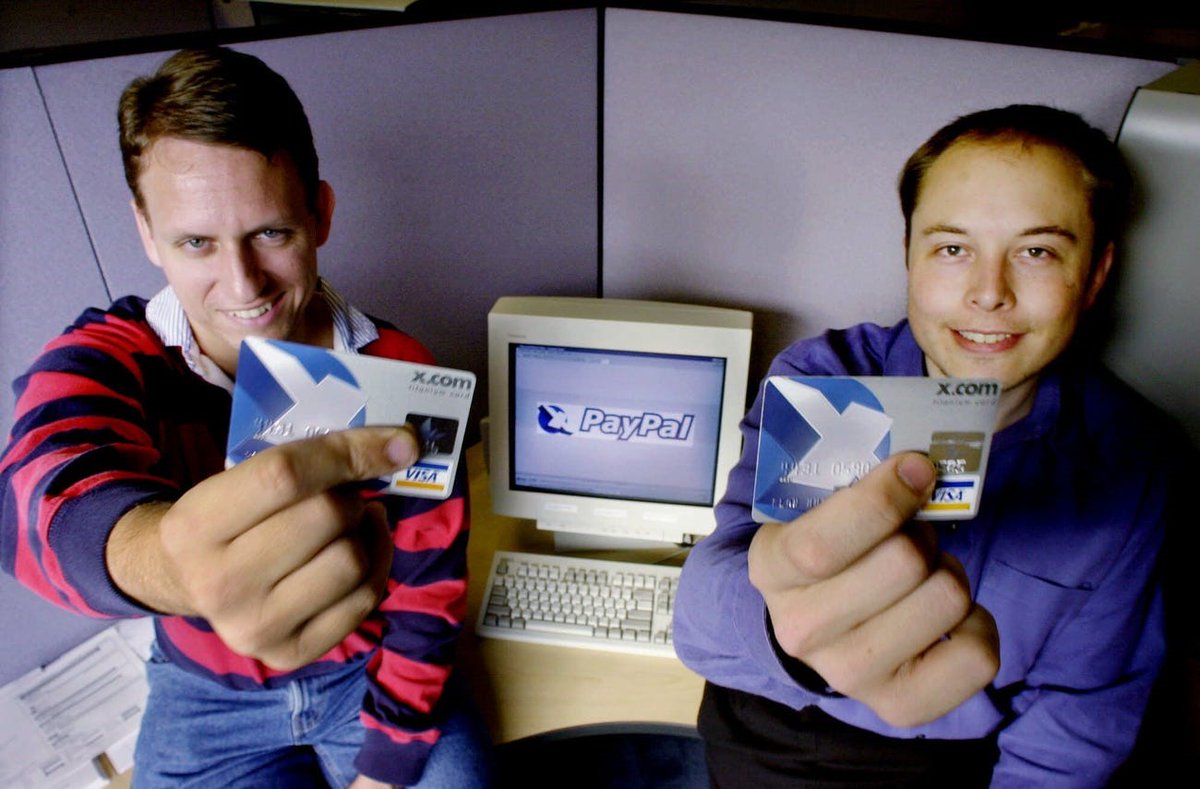
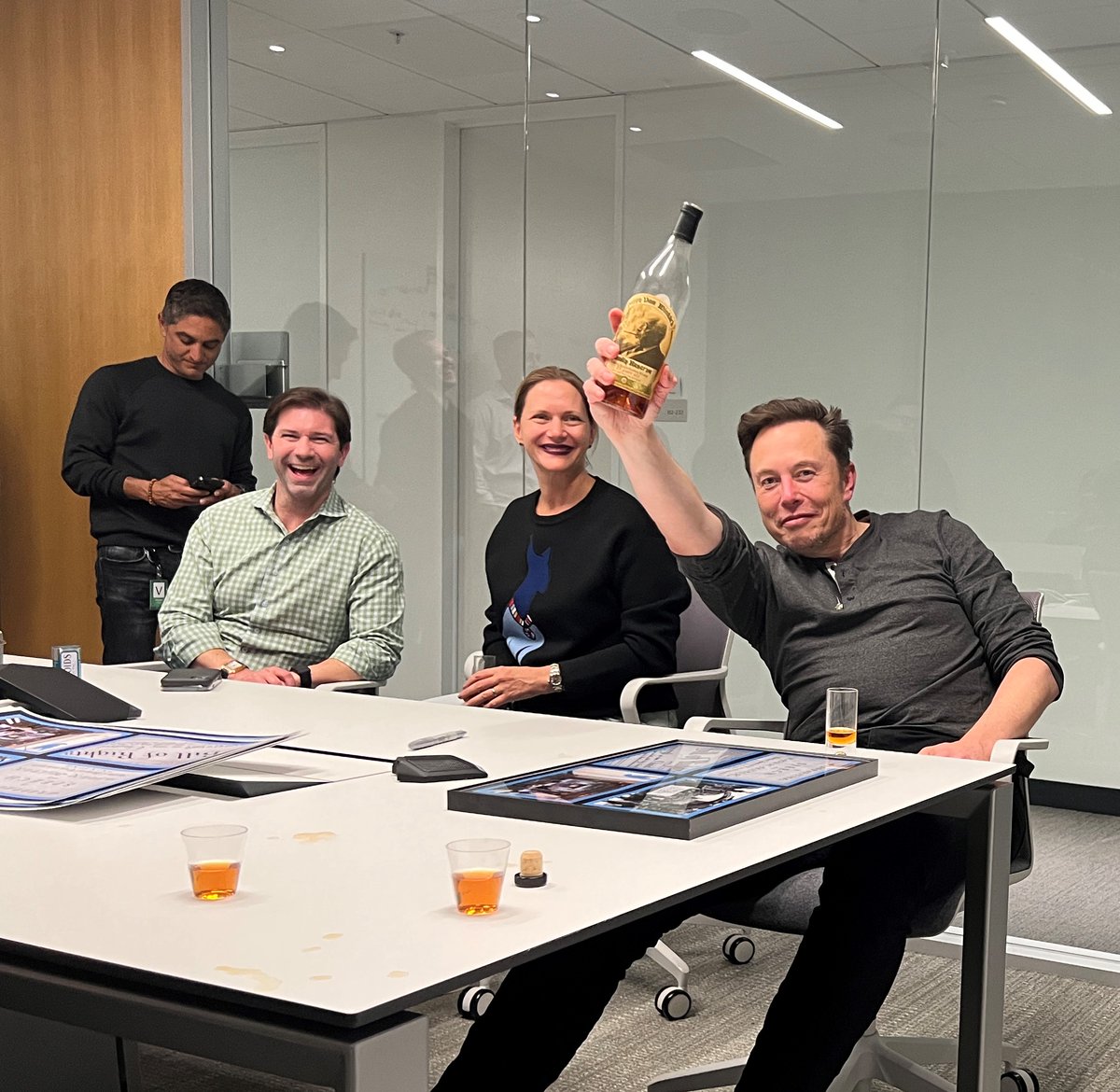
Here is Musk with Peter Thiel and the X.com card in 1999, and celebrating with Pappy van Winkle, @pappyvanwinkle , the world's best Bourbon, on the day he bought Twitter:

397
1,632
9,889
6,135,332