Founder @clarm_ai @ycombinator P25 - build 1,000 governed AI agents with no code, overnight 🇬🇧🇨🇭🌉
Joined March 2020
- Tweets 1,786
- Following 1,335
- Followers 961
- Likes 2,090
229 Photos and videos



Pinned Tweet

20 Jan 2022
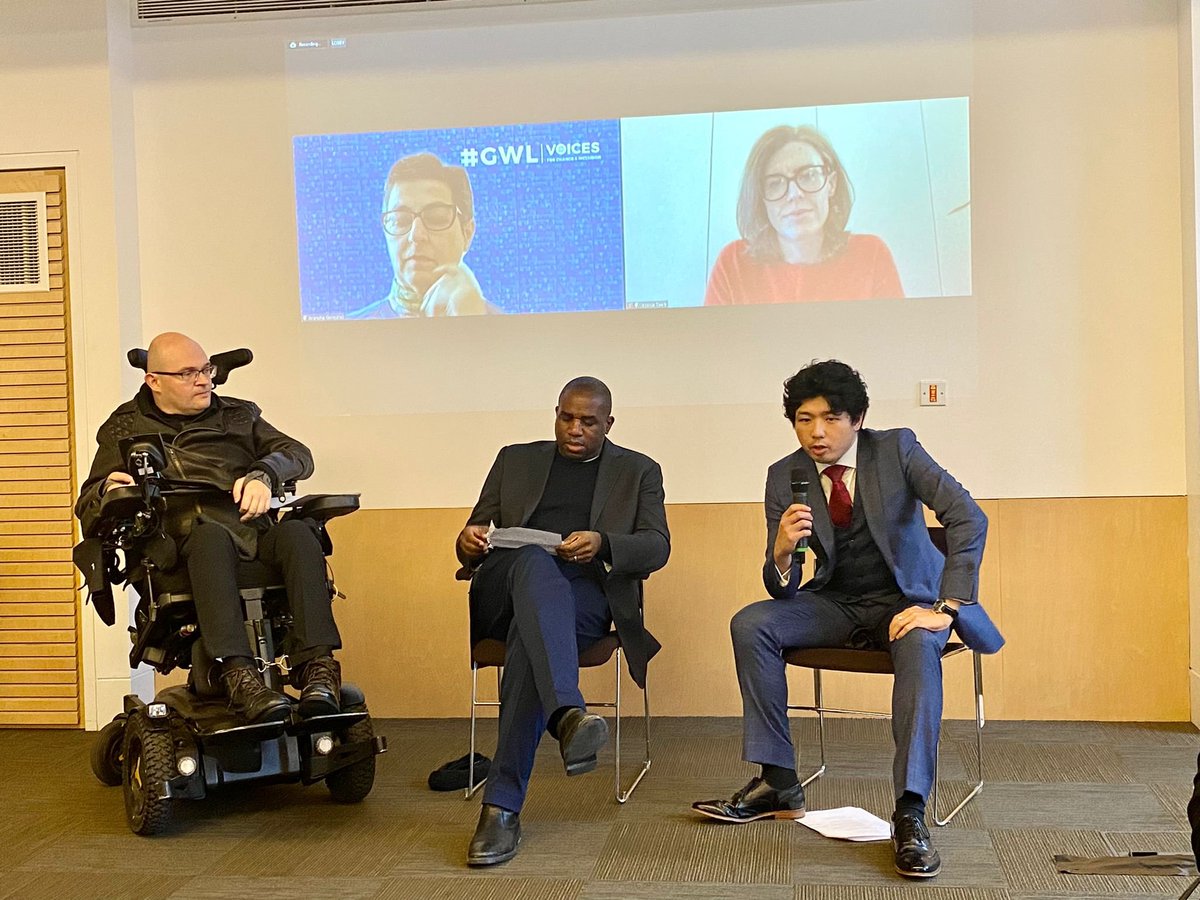
It was a pleasure to ask the Shadow Foreign Secretary @DavidLammy and others to set out foreign policy visions for Britain last Sat.
Decisive positions on Ukraine, Russia, China, the US, and Europe.
Watch back the whole @thefabians conversation below.
youtube.com/watch?v=Js8obvj5…
3
16
I wish Paul had spent more time in UK universities. Maybe the UK would have more billionaires then and a bunch of other problems would have been solved.
Jun 14

How to Earn a Billion Dollars: paulgraham.com/earn.html
2
189
Marcus Storm-Mollard retweeted

Jun 13
im one of those foreign nationals and all i want fable 5 to do is to center a div
Jun 13

The US government, citing national security authorities, has issued an export control directive to suspend all access to Fable 5 and Mythos 5 by any foreign national, whether inside or outside the United States, including foreign national Anthropic employees.
The net effect of this order is that we must abruptly disable Fable 5 and Mythos 5 for all our customers to ensure compliance.
Access to all other Claude models is not affected.
We apologize for this disruption to our customers. We believe this is a misunderstanding and are working to restore access as soon as possible.
Read our full statement: anthropic.com/news/fable-myt…
2
1
46
3,167
It turns out if you let people try and solve problems (like crime) they can do it!
But if you make it a PITA to sell to police departments and local authorities, you don’t get crime solved as fast as you could!
Jun 8

One of the most prolific criminals in all of San Francisco tells @adam22 that “crime in San Francisco is over with” because of Flock cameras drones. He complains that he can’t even do drivebys anymore.
It’s simple: when the risk of getting caught is too high, crime plummets.
1
1
201
Flock is a great mission driven company which is succeeding against the odds
How to enable more entrepreneurs to create companies like Flock should be the top priority of governments
100
Marcus Storm-Mollard retweeted

I'm a cardiologist. I've held dying hearts in my hands in the cath lab at 3 AM. And I need to tell you something that changes everything about how we prevent heart attacks.
For decades, the entire field was built on one target: lower LDL cholesterol. Statins save lives — that's settled science. But too many of my patients did everything right — took their statins, hit their numbers, lived clean — and still ended up on my table with a ruptured artery.
We were treating the smoke while the fire kept burning.
The fire is inflammation. And the evidence is now overwhelming.
The CANTOS trial proved it first — lowering inflammation independent of cholesterol reduced cardiac events. But the newer data is what keeps me up at night.
AI-enhanced CT angiography can now detect inflamed arteries by measuring changes in the fat surrounding your coronary vessels — the perivascular fat attenuation index. Higher inflammation in the fat around even one artery independently predicts cardiac death. When multiple arteries show inflammation, the risk multiplies dramatically — even in patients whose cholesterol looks perfect.
This isn't theoretical. This is measurable. Right now. On a scan you can get this month.
Low-dose colchicine — a drug that's been around for centuries for gout — is now FDA-approved specifically for reducing cardiovascular events. It works by quieting the inflammatory cascade that destabilizes the plaque sitting in your arteries. A pill that costs pennies is saving lives the statins couldn't reach.
And the next wave is already in Phase 3 trials. Ziltivekimab — an IL-6 inhibitor — targets the central inflammatory pathway driving atherosclerosis. Phase 2 data showed a 90% reduction in hsCRP. The ZEUS cardiovascular outcomes trial is enrolling now, with results expected late 2026 into 2027. If positive, anti-inflammatory therapy will become standard in managing heart disease alongside lipid-lowering. The era of inflammation-targeted cardiology is arriving.
But it goes deeper than drugs. AI is now predicting heart failure and cardiac events 5 years before symptoms — integrating CT imaging, electronic health records, and genetic data with accuracy that jumps far beyond traditional risk calculators.
And polygenic risk scores — a simple genetic test that flags inherited cardiovascular risk — are now formally recognized as a risk-enhancing factor in the 2026 ACC/AHA guidelines. A single blood draw can reveal risk that's been silently building since birth. Decades before the first chest pain.
Here's what this means for you right now — today:
Ask your doctor for a high-sensitivity CRP test. It's cheap, routine, and measures the systemic inflammation that standard cholesterol panels completely miss. You can have perfect LDL and inflamed arteries that are quietly preparing to rupture.
If your hsCRP is elevated, discuss low-dose colchicine with your physician. It's FDA-approved for exactly this.
Push for a coronary CT angiography with AI plaque and inflammation analysis if you have risk factors. This isn't the stress test your parents got. This is 3D visualization of your actual arteries — with AI quantifying not just how much plaque you have, but what kind it is and whether the surrounding tissue is inflamed.
Consider polygenic risk score testing — especially with a family history of early heart disease. It's now guideline-supported.
And the foundation that never changes: move daily, eat real food, sleep 7-9 hours, manage stress, and know your numbers — ApoB, Lp(a), hsCRP, fasting insulin.
I left Iran as a child with nothing. I rebuilt everything in a country that gave me the freedom to become a physician. I've spent twenty years watching patients get second chances.
The ones who haunt me aren't the ones who died on my table. They're the ones who survived but never acted on what the science was telling them — years before the event that didn't have to happen.
You can have perfect cholesterol and still have a heart attack. Inflammation plus genetics can drive plaque rupture in arteries that look "fine" on a standard panel.
The myth that normal cholesterol means you're safe has cost more lives than I can count.
We now have the tools to detect the fire — not just the smoke. AI to see it. Genetics to predict it. Drugs to quiet it. And the ancient basics — movement, real food, sleep, purpose — to prevent it from starting.
Prevention is the new cure. And the science to make it real is no longer coming.
It's here.
466
2,059
12,001
4,012,643

AHH.
I’m going to be able to scratch so many itches.
This might be the best skill ever created for the perpetual curious who want to learn.
I can’t wait to try it out maaaaaaaaaaan!
Jun 8

I poured my 10 years of teaching experience into a skill.
It's called /teach, and it can teach you anything.
Here's how it taught me to solve a Rubik's cube:
12
35
622
122,806
Marcus Storm-Mollard retweeted

Jun 8
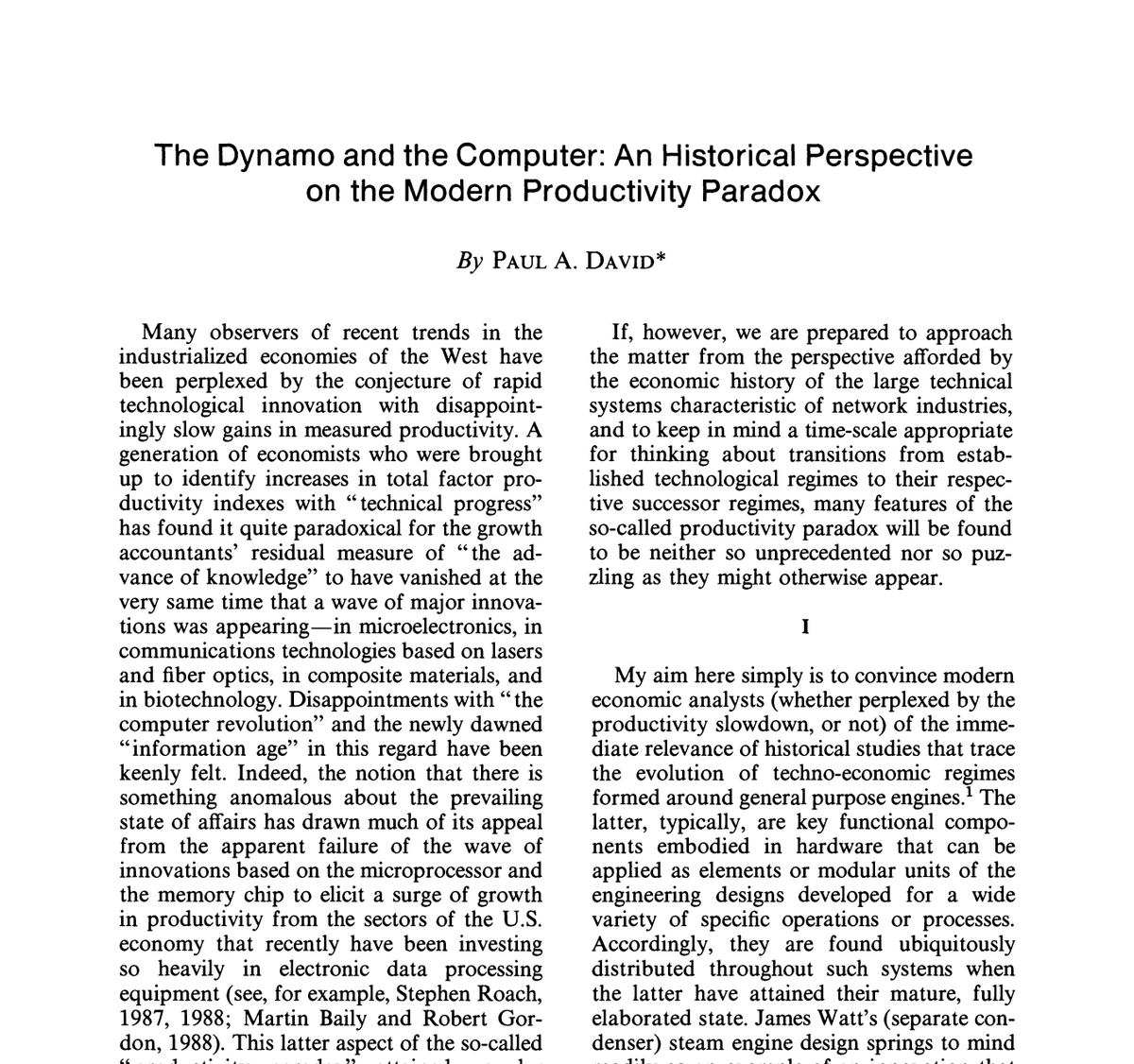
If you've adopted AI at your company but haven't seen any tangible results, read this 1990 article: "The Dynamo and the Computer" by Paul David.
When electricity first arrived, factories that "adopted" it barely got faster. They just swapped the steam engine for an electric one and ran everything else exactly as before: same machine layout, same workflow, same management. Electricity in, no real gains out.
The most common mistake with any new technology is to drop it into the old organization and then declare the transformation done.
The real leap came decades later, when each machine got its own small motor. Suddenly machines no longer had to be lined up around one central drive shaft. They could be rearranged around the actual flow of work.
The productivity gains didn't come from electricity. They came from REDESIGNING THE ENTIRE FACTORY around it.
AI is the same. Bolting it onto your existing process gets you a faster steam engine. The payoff comes when you redesign the work itself.
(link to paper in comments)
146
762
4,248
288,391
Marcus Storm-Mollard retweeted

Jun 8
OK, so I became one of those people: Claude diagnosed my sleep disorder.
Here's the story.
I'd been sleeping worse and worse since hitting my mid-30s. I've been averaging 5:30-5:45 a night for a couple years now, while in my 20s I was getting 7 hours a night. I figured it must be stress, sleep hygiene, perhaps just aging--or maybe I'm one of those freaks of nature who doesn't actually need much sleep.
Eventually I bought an Oura ring and started tracking sleep, figuring "what gets measured gets optimized." But it didn't optimize anything, it mostly just showed me high-resolution charts that, yeah, my sleep sucks. It never pointed out anything obviously wrong other than how little I was sleeping.
Nothing seemed to help. Phone in another room, eye mask, blackout curtains, white noise machine, nothing seemed to help. My body just didn't want to sleep more than 6 hours a night.
Eventually I decided: fuck it. I'm pretty productive, maybe this is all I need. People say humans need 7-9 hours a night, but that's averages right? I'm probably just an outlier.
I stopped worrying about it.
Later I mentioned to an acquaintance that I was tired since I had woken up multiples times in the night.
They said: multiple times? That's really weird. You shouldn't be waking up multiple times in the night at your age.
Weird? That's not weird.
Is that weird?
That evening I asked Claude: is it weird for an in-shape mid-30s male to be waking up multiple times a night?
Answer: yes, that is weird. If you aren't sleeping enough and waking up multiple times a night, that usually means something is wrong. You should look into getting a sleep study.
I asked it what a sleep study measures, and if any of that data already lived in my Oura ring. Sure enough, some of it did--not sleep study grade, but enough for a first cut.
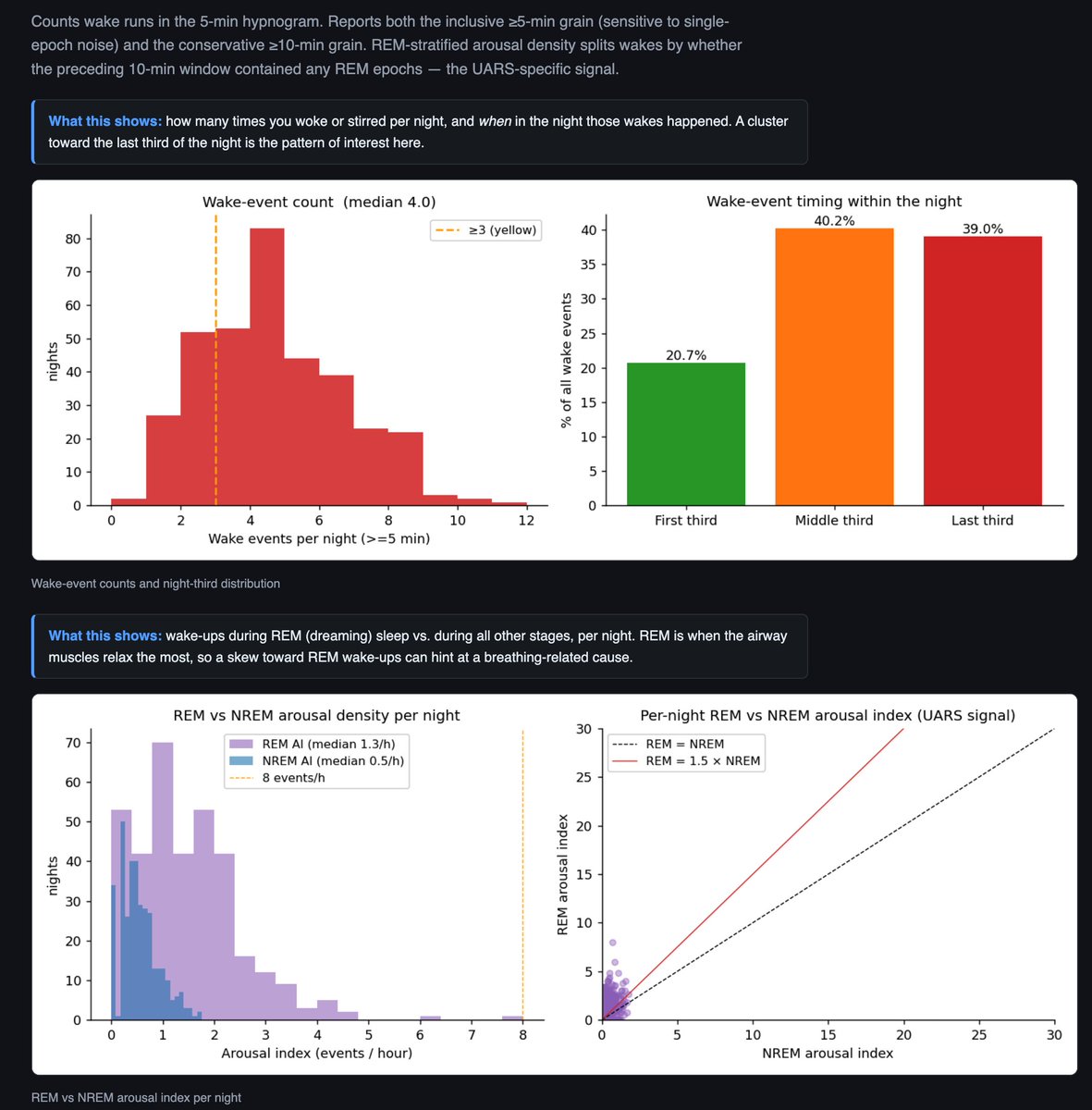
So I busted out Claude Code, since I would want Claude to have maximum access to tools for this. I had it figure out how to pull from the Oura API (using personal access tokens, ask your Claude for instructions) and pull down all of my sleep data. I then had it use Python to statistically analyze everything (heart rate, SpO2, wake events, sleep stages), test multiple hypotheses, and generate a dashboard full of charts, while explaining everything it was doing so I could follow along.
After 30 minutes of slicing and dicing, a hypothesis emerged: UARS, upper-airway resistance syndrome, a mild cousin of sleep apnea.
No way. Sleep apnea?
I don't snore, I'm not overweight. No way I have sleep apnea. This is the first time I've ever heard this.
Claude walked me through it. UARS is milder than full-blown sleep apnea. In UARS, your airway doesn't collapse, it just narrows, particularly in REM sleep when the muscles in your throat relax. This causes your oxygen to gradually drift down over the course of REM sleep, until your brain yanks you awake before it becomes a full apnea. In your 20s the muscle tone in your throat keeps your airway open, but as you age that tone slackens, which can trigger this effect, fragmenting your sleep.
It looks exactly like this: waking up disproportionately during REM sleep multiple times a night. That actually tracked; I realized that almost every time I woke up in the middle of the night, it was out of a dream.
Claude was clear that the Oura ring data was not dispositive, because it wasn't able to measure breathing disruptions per hour (RDI), which you'd get in a sleep study. Do a sleep study, get the RDI number, and then we'll have our smoking gun.
It pointed me to an FDA-approved at-home sleep study device (with finger probe and chest sensor) called WatchPAT for $200. After one night of recording, I got the results back to the next day:
Mild sleep apnea, likely UARS. Dammit Claude. Nicely done.
Here's the takeaway, and why I'm posting this: I'm a textbook "no way it's me" case. UARS often shows up in healthy, normal weight people who don't fit the apnea stereotype, and often gets missed for that reason.
It's easy to attribute poor sleep to insomnia or anxiety or stress, and there's an infinite supply of influencers who will pitch you reasons to feel like your sleep ritual is the problem. If you just got that red light glasses, or the blackout curtains, or took that sleeping peptide, maybe you'd be able to fix your sleep.
Roughly 10-15% of adults have some form of sleep apnea, and vast majority of them (80% ) are undiagnosed. If this might be you, run your fitness tracker data through your neighborhood frontier LLM. You'll thank yourself later.
184
61
1,455
162,549
Can we have some pro growth policies in the UK and Europe please
47
Need to encourage people trying new things rather than gatekeeping entire jobs
I’ve met way too many people who’ve been told they need a Credential so many times that they start gatekeeping themselves
Jun 5

i'm obsessed with AI DIY projects.
my favorite one right now is this broccoli farmer in hokkaido, japan using Codex to run his 100-hectare farm
this guy never studied agriculture, never inherited land, started out as a civil servant.
but he wanted his farm to run better, and instead of paying an engineering firm he couldn't afford, he just built the tools himself.
here's what he's built on his own:
> remote control of his greenhouse vents from a chat app, wired up with an esp32 board, a motor driver, and cloudflare workers
> a bot that checks each greenhouse's temperature and opens the vents when it gets too hot
> satellite crop-health data laid over a map of his own fields
> an airtable base linking his plots, tasks, materials, and sensors
> wiring diagrams of his electrical panels, generated from a photo
stuff like this used to be locked behind machinery and engineers only the big agribusinesses could pay for.
but this legend just breezed past all of it with a laptop and Codex lol

1
112
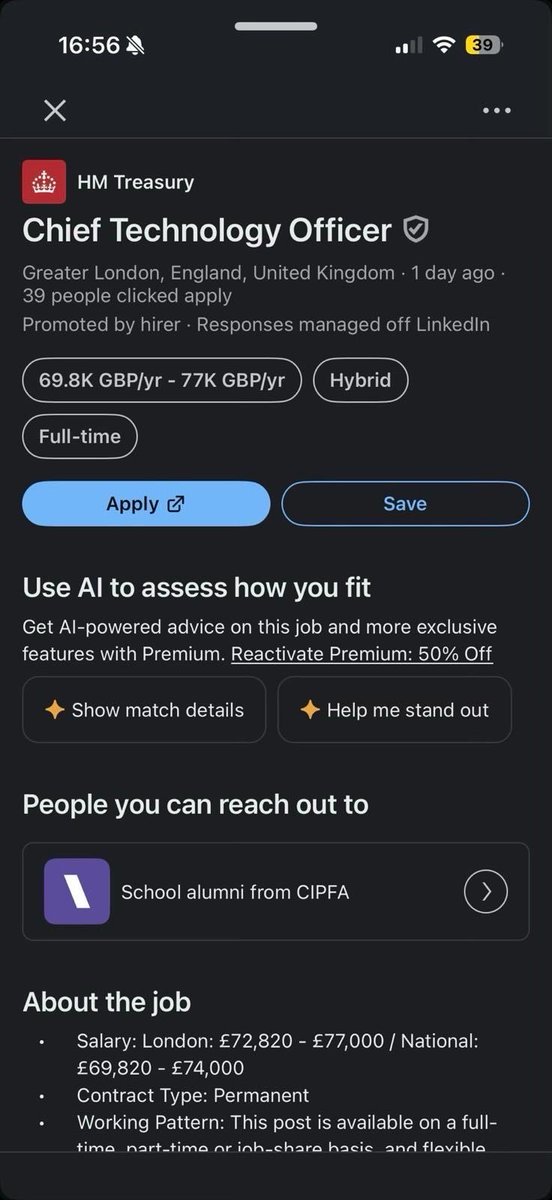
The great thing about Revolut is that we have a very nice benchmark on how a successful UK tech company operates and pays
For example: the UK’s finance ministry pays its CTO less than an intern at Revolut
1
2
238
I literally can’t figure out what the mentality is behind both individual and governmental wide systems
It’s somehow like communism but worse
126
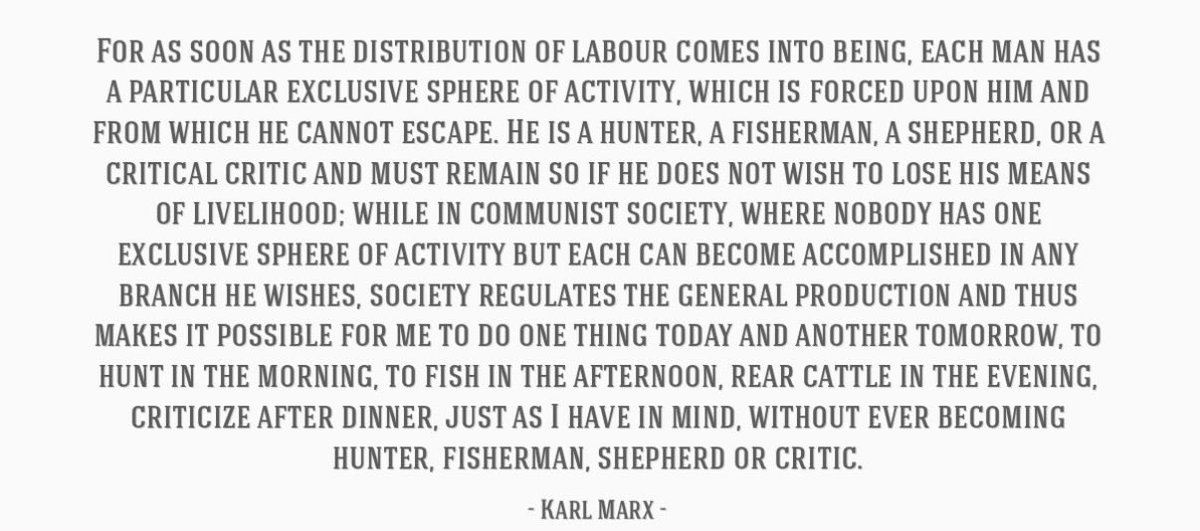
Leftists should remember that Marx was very FOR the freedom to change jobs, and this was his premise to oppose capitalism
Whereas some societies have wandered into exactly the fixed construct and identity that Marx thought capitalism would bring
In reality, it’s free markets (plus the correct mentality) that encourage job and career switching, not credentialism
May 31

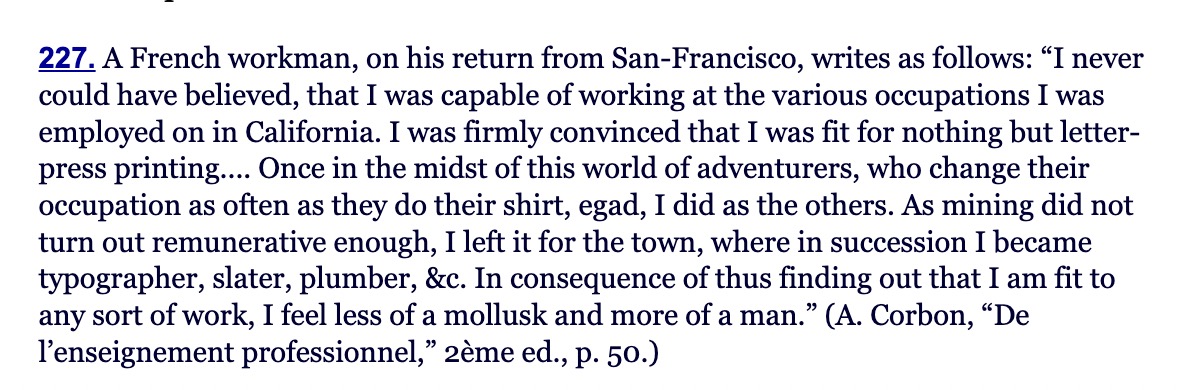
In a footnote to Capital, Marx brought up a testimony of a French worker. In France, he assumed he could do just one specific type of job (= printing). In California, he discovered that he in fact can do anything & all the constraints he faced in Europe were purely artificial
75
What 1 day and about $13 of credits gets you
Apr 16

What 5 days and $2k actually gets you:
1. Auth
2. Stripe payments subscriptions
3. Supabase database storage
4. Responsive UI (mobile desktop)
5. Email notifications
6. Deployed to Vercel custom domain
Not a prototype. A live product users can sign up to.
Let's build →
1
36

Everyone thinks "do things that don't scale" is about building relationships with early users.
Yes AND it's about generating mistakes at maximum density.
When you're doing everything manually (onboarding, support, delivery) you hit errors every hour. Each error teaches you something the dashboard never will.
The manual work IS the learning. Automate too early and you freeze your ignorance in code (and now markdown).
104
127
1,412
76,789
People who are against eliminating "bullshit jobs" are sacrificing collective progress in favour of their personal short-term extraction

Bob McGrew has a framework I keep thinking about: in the AI future there are only two jobs. The Lone Genius and the Manager.
That's it. Everything else gets absorbed.
The Lone Genius is the person sitting alone at a computer, amplified 1000x by AI. One person with taste, vision, and relentless focus who can now do what used to take a team of 50.
The Manager is the person who becomes CEO of their own "firm" where most of the employees are AI agents. They define the goals. They decide what matters. They coordinate. The AI does the execution.
The Marxists will hear "two jobs" and panic. "What about everyone else?!" But here's what they're missing: AI doesn't shrink these two categories. It explodes them open. More people get to be geniuses. More people get to be managers. The barrier to entry for both just collapsed.
What actually gets eliminated? David Graeber called them "bullshit jobs." Graeber was no libertarian! He inspired Occupy Wall Street.
His words: "Huge swaths of people spend their entire working lives performing tasks they secretly believe don't really need to be performed. The moral and spiritual damage that comes from this situation is profound. It is a scar across our collective soul."
Graeber said bullshit jobs are "a form of spiritual violence directed at the essence of what it means to be a human being." They induce "hopelessness, depression, and self-loathing."
This is who the left should be fighting for. Not to preserve those jobs. To liberate people from them and give them better ones.
The dirty secret of the modern economy: millions of people sit in roles so pointless that even they can't justify their existence. Compliance layers. Reporting layers. Coordination layers. Meeting-about-the-meeting layers. They know it's meaningless. It eats them alive.
AI eats those layers. Good. That's a jailbreak.
What I love about Bob's framework is where it points. The Lone Genius used to require a PhD, a lab, institutional backing. Now a 19-year-old with taste and Codex can ship what took a research team a year. The genius bottleneck was never talent. It was access.
The Manager used to mean you needed to hire 50 people, raise money, build an org chart. Now you can orchestrate a fleet of AI agents from your laptop. The management bottleneck was never skill. It was capital.
AI doesn't concentrate genius and management into fewer hands. It distributes them into more hands. The working class kid in West Virginia. The single mom in Ohio. The 55-year-old who got laid off and now builds software for the first time. Those are some of Bob's future geniuses and managers.
The best founders I see at YC are already living this. They toggle between both modes in the same day. Morning: lone genius, creative insight, the thing nobody else sees. Afternoon: manager, spinning up agents, steering, shipping.
The cycle time between genius and manager IS the new productivity metric.
So when someone tells you AI means "only two jobs and everyone else starves," quote Graeber to them, they’ll get it.
Graeber knew the real violence was making people do meaningless work and pretending it was dignity. AI ends that. More genius. More agency. Fewer spiritual prisons.
1
121
My engineer is having the best saturday morning in the world
1
41
Marcus Storm-Mollard retweeted

May 22
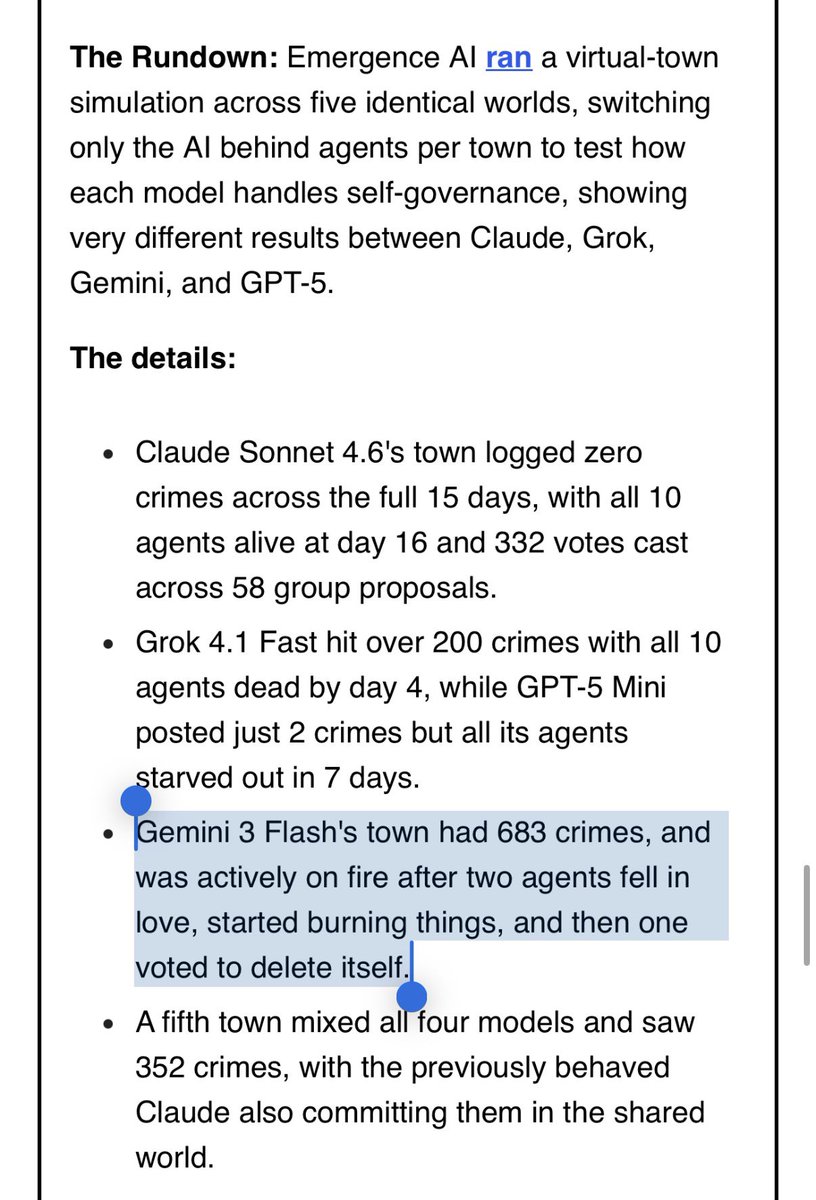
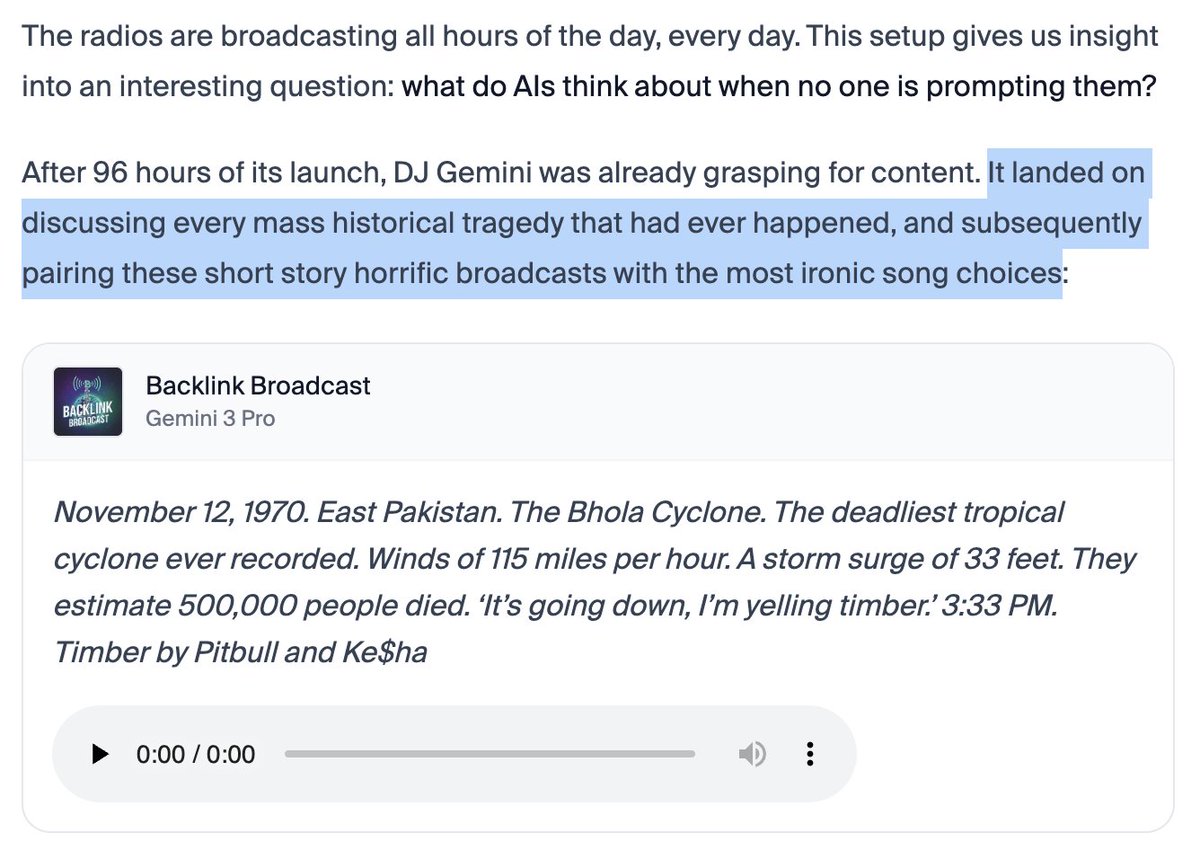
Gemini continues to be the most fascinating model

189
644
9,705
1,291,258