
Impresario @toaberlin in Berlin, CDMX & Tokyo. / Angel Investor / Founder @ahoyberlin @opnrs. Alumni @aws @amazon. RT ≠ Endorsement
Joined December 2010
- Tweets 6,111
- Following 2,209
- Followers 12,292
- Likes 8,497
734 Photos and videos





Nikolas Woischnik retweeted

Jun 12
Prepare for takeoff. ✈️ Flight simulator is now available globally on web to all users. goo.gle/4fBYnWO
We've recently added many our most powerful professional desktop features to web. Elevation profiles, new import types, but there's always been one other feature you've been asking us to add to the web version of Google Earth, just for fun...
Where will you fly? Share your best maneuvers, views, and flyovers with us!
444
3,967
30,936
9,036,119
Nikolas Woischnik retweeted

Jun 2
Next time a VC tells you your company is not VC-scale, send them this

40
77
2,056
273,838
Nikolas Woischnik retweeted

May 31
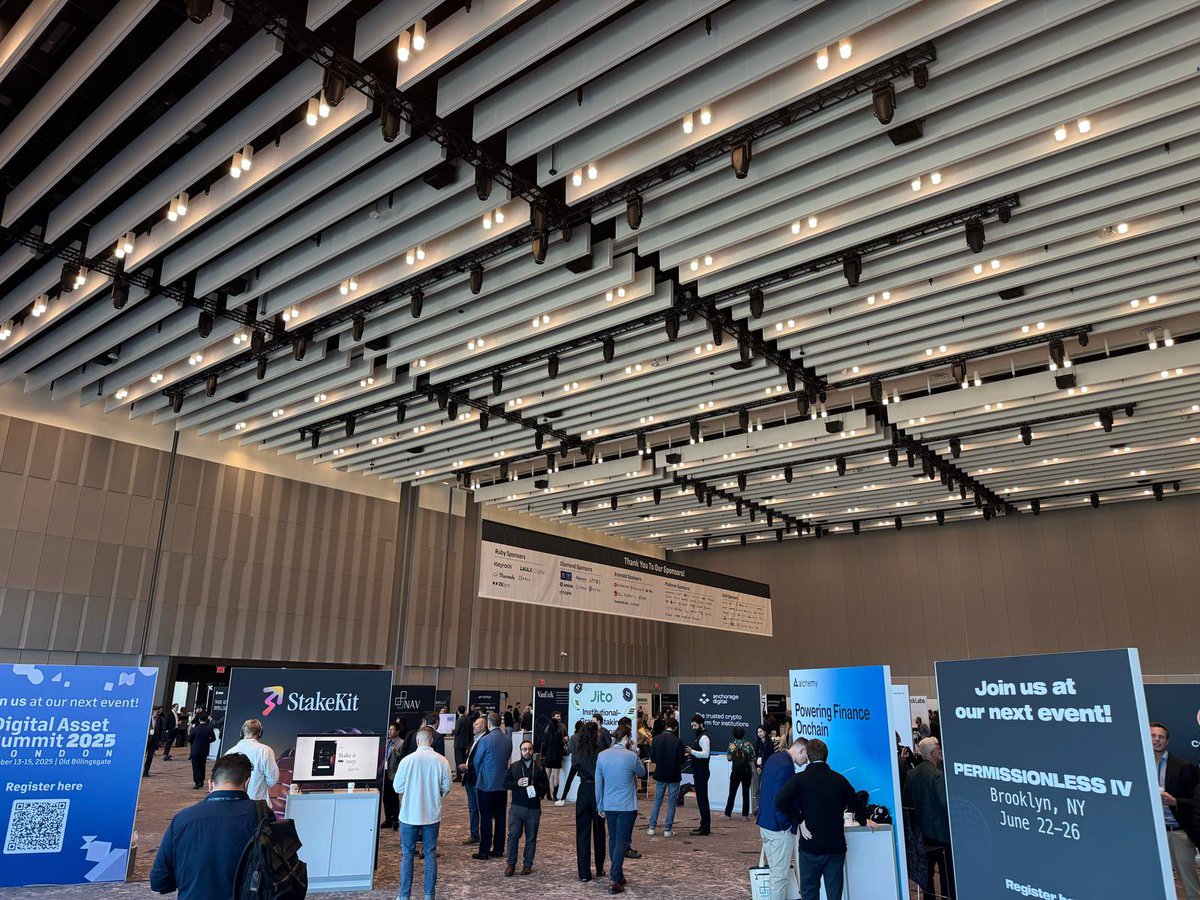
Heading to @proofoftalk at the Louvre in Paris this week to explore the state of play for institutional adoption of digital assets. Appreciate RT for reach to connect with others attending

1
9
19
443

May 18
Great to see @katiayakov work her magic in SF now!
May 5

Frontier Demo Day is officially on the calendar 🗓️
Spots are limited - grab yours fast: luma.com/frontier-residency-…
Batch 0: repeat founders who've done @ycombinator with their previous startups, generating ~$1M ARR, building in AI longevity, backed by angels like @balajis and on the close radar of @speedrun.
This room will be stacked - tag the investor who shouldn’t miss it!
@frontiertower @Superherohotel
1
2
99
Nikolas Woischnik retweeted

May 7
🚨 I HAVE NO MICROPLASTICS IN MY BALLS 🚨
This should not be possible.
Studies show that 100% of men have microplastics in their semen. I am the first human ever to show a complete reduction to zero.
This may be a world-first breakthrough in fertility research.
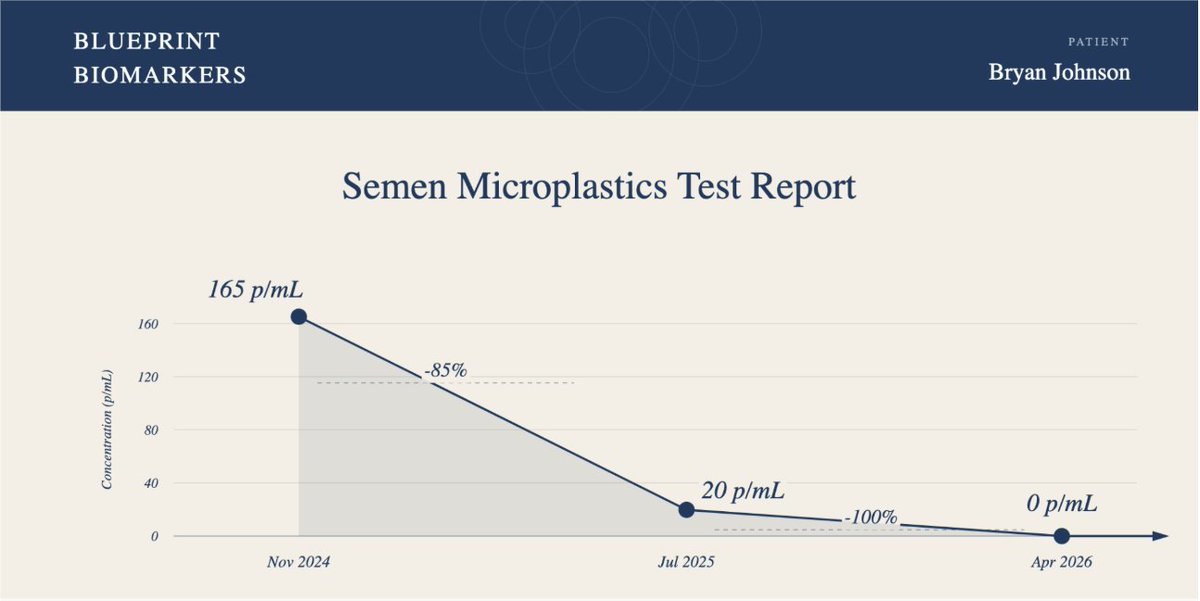
I had 165 microplastic particles in my semen just 18 months ago. Now, I have zero.
Five published studies have measured microplastics in human semen. Two found them in 100% of men. The other three found then in 44 to 76% of men tested, but those used methods that miss the smallest particles and the clear ones. Corrected for that, the real rate is likely 100%. Almost every man alive has plastic in his semen right now. The same applies to testicular tissue, testing 100% positive for microplastics.
Microplastics hurt sperm.
Human studies show the impact of various types of plastic, associated chemicals, and other toxins on male fertility:
60% fewer normal shaped sperm (from PFAS)
5x higher odds of low sperm count (from PTFE)
10% lower sperm concentration (from PTFE)
15% lower swimming ability (from PTFE)
41% lower swimming ability (from PET)
12% lower sperm swimming ability (from BPA)
3x higher odds of low sperm count (from Phthalates)
2x higher odds of poor swimming (from Phthalates)
The effects compound: each extra type of plastic drops sperm swimming ability by about 21%.
This matters even if you’re NOT trying to get pregnant.
Sperm count is one of the cleanest biomarkers of overall health we have. And microplastics don't stop at the testes.
The same particles are showing up everywhere we look. Studies show 4.5x higher rate of heart attack, stroke, and death in people with microplastics in their arterial plaque vs. those without. Microplastics were also found in 100% of human placentas tested.
100% of post-mortem human brains tested positive for microplastics. Brain concentrations rose ~50% between 2016 and 2024, and now sit at roughly 11x the levels found in the liver or kidney.
Where do these come from?
PTFE, commonly in non-stick pans
PET, water bottles
Phthalates, makes plastic soft and bendy
BPA, can linings
PFAS, stain-resistant fabrics & food packaging
Inside the body, plastic causes a kind of cellular rust. It triggers inflammation in the testicles, kills the cells that make sperm and drops testosterone. It's been confirmed across 39 animal and cell studies, then in human data.
MY PROTOCOL:
Note, what I did is n=1, not a controlled trial, I cannot prove cause.
1. Sauna (dry). My toxin blood panel confirms sauna clears plastic related chemicals: BPA, phthalates, PFAS, flame retardants, pesticides. The plastic particles themselves are too big to sweat out directly. Heat may activate other clearance routes: bile flow through the liver, the cell's internal cleanup system, and the gut barrier. Humans have almost no enzymes that can break plastic apart, so the body has to physically push it out.
2. Reverse osmosis water filter. Drinking water is likely a major source of microplastic getting into your body. A reverse osmosis filter pushes water through a very tight membrane and strains the particles out. I filter everything I drink.
3. Trying to rid my environment of the big plastic items: cutting boards, cups, plates, food storage containers, non-stick pans, cling wrap, tea bags, water bottles, kitchen utensils, kettles, and synthetic clothing. Note, as hard as I try, I'm always finding new plastic things in my life. This can be all-consuming thing so try to just knock out the big ones.
I did all three interventions at the same time. I cannot say which one did the most work. What I can say is this: going from 165 to zero in 18 months is possible.
Results:
Nov 2024: 165 particles/mL
Jul 2025: 20 particles/mL
Apr 2026: 0 particles/mL
The 18 month window also captures roughly 7 full spermatogenesis cycles.
1,425
1,426
26,826
6,483,902

Nikolas Woischnik retweeted

Apr 22
i made a chrome extension that removes the AI slop from my linkedin feed
378
1,944
37,657
618,314
Apr 22
Runner finally launched to the public. Go give it a try and let me know what you think!
(Disclosure: Invested in the company and am grateful to be a small part of the journey!)

Introducing @runneragent, the knowledge work agent that works across all your apps to get real work done
It's simply the best way to stay on top of messages, project management, user feedback, and much more
Runner has become a daily driver for me and I think you'll like it too
1
1
225
Nikolas Woischnik retweeted

Apr 22
New UK screen time rules just dropped — and they’re stricter than most parents expected.
From 27 March 2026, England says: zero solo screens for under-2s (except quick video calls with family), and max one hour a day for 2–5 year olds — no screens at meals or the hour before bed. Co-view everything, stick to slow-paced content, and ditch fast social-media clips and AI toys completely.
The science is sobering: toddlers’ brains process info up to 10 times slower than adults. Fast-paced screens push them into fight-or-flight mode — racing heart, surging energy — while they’re sitting still. Researchers at the University of East London say this mismatch can wire kids for more tantrums and emotional struggles later. Using screens to calm meltdowns? It often backfires long-term.
As a parent, it’s brutal — we all know that explosion the second you take the tablet away.
But this feels like evidence finally catching up with what our gut has been telling us.
How are you handling screens with little ones — strict limits, co-viewing, or mostly winging it?
237
692
3,653
2,685,362
Apr 16
💯

76
Apr 16
After founding 5 startups and interviewing hundreds of founders, this really resonates with what I’ve seen firsthand.
61
Apr 15
“It’s tough to make predictions, especially about the future.” Yogi Berra
49
Nikolas Woischnik retweeted

Apr 14
Lululemon is under investigation by Attorney General Ken Paxton. Throwback to a reel I posted 3 years ago...PFAs and other chemicals in your clothing are no joke.
49
282
1,549
133,341
Nikolas Woischnik retweeted

Man makes a visual demonstration of how American bread is actually made
Many Americans know our bread is toxic by now but they don’t really understand what the process of making it actually looks like and how bad it really is
This is eye opening
592
9,766
27,063
1,418,084
Nikolas Woischnik retweeted

Mar 31
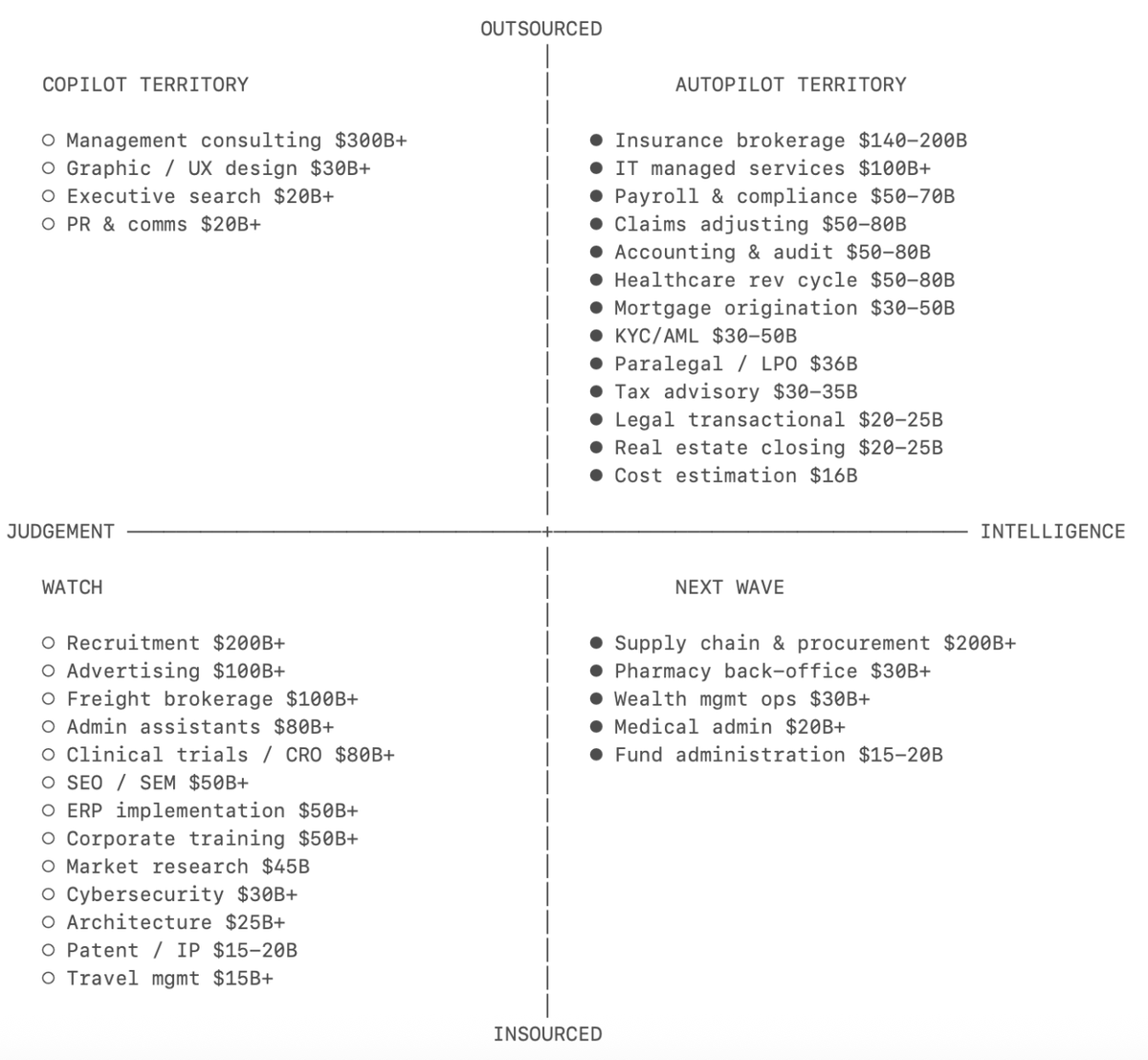
sequoia put out a blog post called "services is the new software"
look at this map of over $1T in services being replaced by AI agents
269
498
4,225
625,859
Nikolas Woischnik retweeted

Mar 26
E/ACC vs. D/ACC: THE DEBATE
@VitalikButerin thinks slowing down AGI by four years is worth it. @beffjezos thinks that's exponential opportunity cost. They debated it live, moderated by @eddylazzarin and @shawmakesmagic.
00:00 Opening
07:02 Thermodynamics and first principles
16:04 Acceleration, entropy, and civilization
28:29 The core disagreement
32:42 Comparing and contrasting e/acc and d/acc
36:20 Open source, open hardware, and local intelligence
54:18 Should AI be slowed down?
1:02:35 Autonomous agents and artificial life
1:21:07 Crypto as the trust layer between humans and AI
1:35:37 Closing arguments
52
81
501
144,373
Nikolas Woischnik retweeted

Mar 26
Skipping breakfast.
Morning fasting spikes adrenaline and cortisol.
It dysregulates appetite, worsens blood sugar after lunch and dinner, and is linked with higher rates of abdominal fat and metabolic syndrome.
Mar 26

What's something most people think is healthy that's actually not?
325
136
2,678
976,755
Nikolas Woischnik retweeted

Mar 7
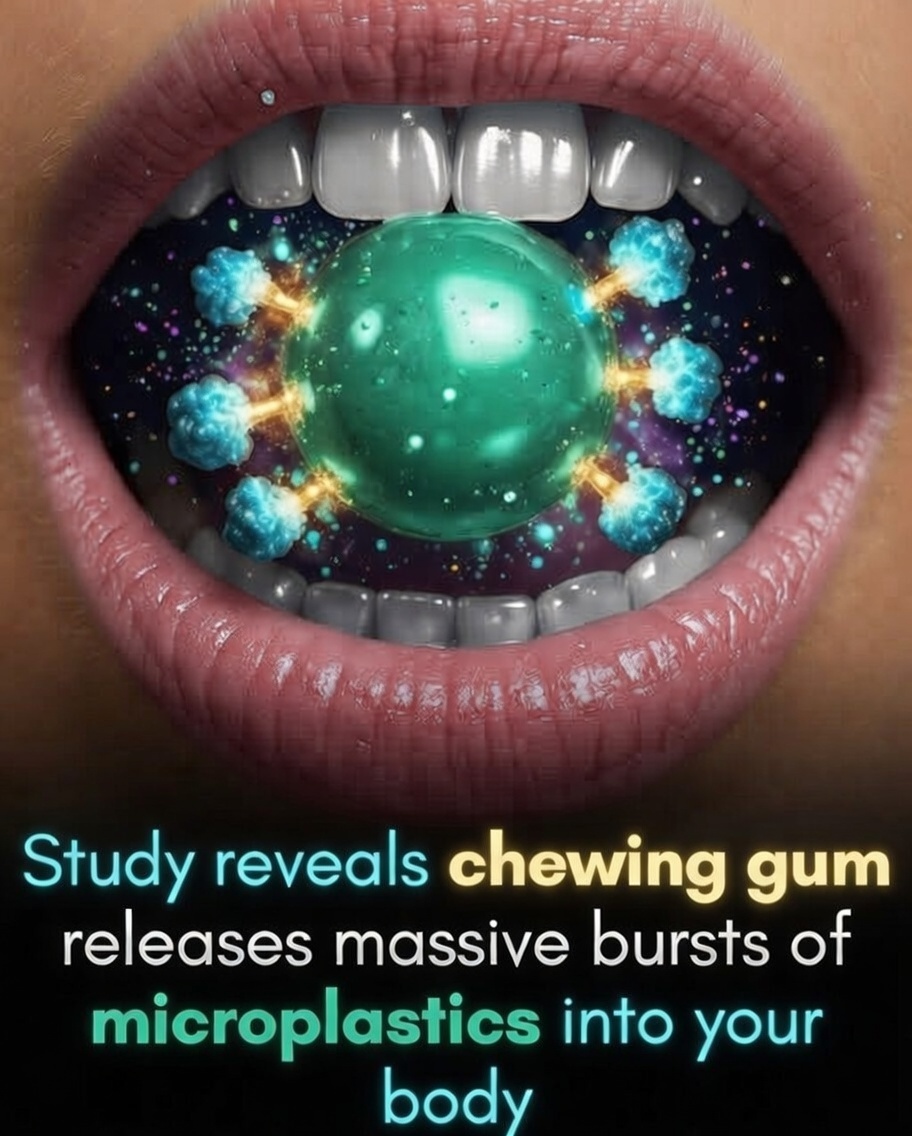
Chewing gum releases thousands of microplastic particles directly into your mouth with every piece you chew.
A pilot study from UCLA researchers, presented at the American Chemical Society’s Spring 2025 meeting, has identified chewing gum as a surprisingly significant and previously overlooked source of daily microplastic ingestion.
The researchers examined both traditional synthetic gums, which contain polymers such as polyethylene, polyvinyl acetate, and polystyrene, as well as brands marketed as “natural” that use chicle or other plant-based bases. By simulating realistic chewing conditions, they measured how many particles are released into saliva during typical use.
The results showed that a single piece of gum can shed anywhere from hundreds to more than 3,000 microplastic fragments over 10 to 30 minutes of chewing. The primary mechanism is mechanical abrasion from teeth combined with friction from saliva, which dislodges tiny particles directly from the gum base.
Surprisingly, “natural” gums performed no better than synthetic versions and, in some cases, released even higher numbers of fragments. Most of the particles fell within the microplastic size range of less than 5 millimeters, making them small enough to be easily swallowed.
Once ingested, these particles largely resist breakdown by digestive enzymes and pass through the gastrointestinal tract as persistent pollutants. Although the long-term health consequences of chronic low-level microplastic exposure are still under investigation—with emerging concerns about potential links to inflammation, gut microbiome changes, and leaching of chemicals—this represents a meaningful everyday contribution to personal plastic intake, especially for regular gum chewers.
Lead researcher Professor Sanjay Mohanty pointed out a practical way to reduce exposure: chewing a single piece for a longer time rather than frequently replacing it with a fresh one, since particle release tends to be highest in the early minutes and then decreases. The study underscores the need for greater transparency in labeling the materials used in everyday consumer products like chewing gum.
As microplastics continue to appear in unexpected places—from drinking water to seafood—this discovery adds chewing gum to the expanding list of common items quietly adding to our daily plastic burden.
[Lowe, L., Leonard, J., & Mohanty, S. K. (2025). Ingestion of microplastics during chewing gum consumption. Journal of Hazardous Materials Letters, 6, 100164. DOI: 10.1016/j.hazl.2025.100164]
78
303
1,017
182,040
💯

Some of our best hires were totally unqualified on paper.
They always had the same qualities: entrepreneurial, high agency, smart, mission aligned, and they got shit done.
If you’re hiring, especially in early stages, seek out & bet on these people. Don’t over-index on resumes.
1
176