
📚\_🤓_/📚 I retweet summaries of recent science papers, aka tweeprints. Just mention #tweeprint in the first or second tweet of the thread.
Joined June 2019
- Tweets 606
- Following 0
- Followers 169
- Likes 26
Photos and videos
Pinned Tweet

14 Jun 2019
My favorite part about science twitter is the #tweeprint (term possibly coined by @chethan or @SussilloDavid?), so I wanted to make it easier to come across new tweeprints from people you might not come across otherwise. This account will (hopefully) RT each new #tweeprint.
2
8
9
the tweeprint server retweeted

21 Dec 2020
Excited to share our new @biorxivpreprint which introduces 𝘾𝙪𝙧𝙧𝙚𝙣𝙩-𝘽𝙖𝙨𝙚𝙙 𝘿𝙚𝙘𝙤𝙢𝙥𝙤𝙨𝙞𝙩𝙞𝙤𝙣 (𝘾𝙐𝙍𝘽𝘿)— an approach for inferring brain-wide interactions using data-constrained recurrent neural network (RNN) models. A thread 👇🏽 (1/8) biorxiv.org/content/10.1101/…
6
58
249
the tweeprint server retweeted

21 Dec 2020
Lesson learned: never promote your new article on a Friday night 😉🤦♂️
Our writeup of #CCNS, and #TenSimpleRules for designing your own new virtual academic meeting, are published in @PLOSCompBiol!
@AcademicChatter #AcademicTwitter @OpenAcademics
bit.ly/2WuCL4U
1
2
10
the tweeprint server retweeted

5 Jan 2021
My 2nd PhD preprint is now out: biorxiv.org/content/10.1101/…. We found that different GABAergic neuron classes in CA3 & DG bidirectionally modulate internal and external drive measured in CA1. #tweeprint below! 1/11
3
14
81
the tweeprint server retweeted

12 Jan 2021
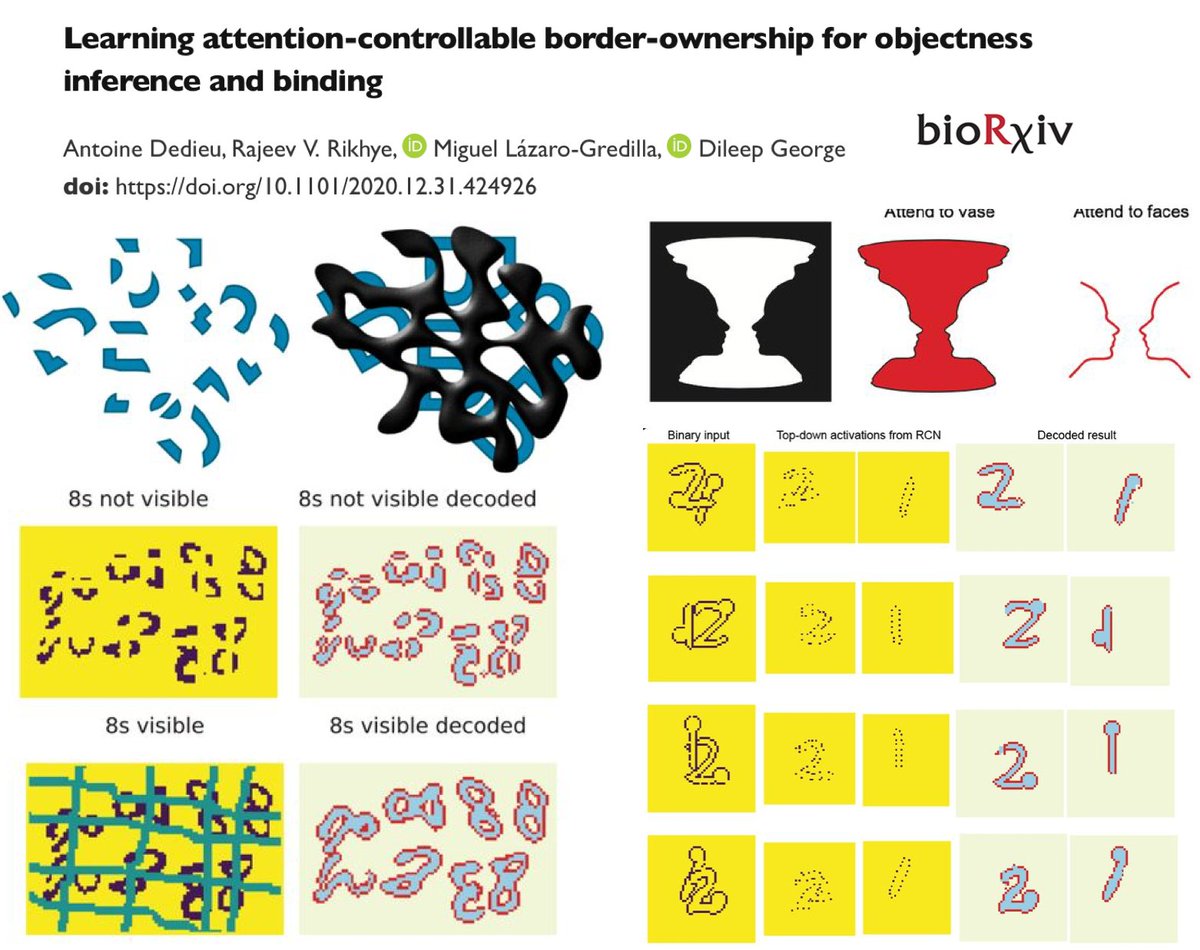
Border ownership & objectness are enigmas visual cortex bcos inferring those need
* higher-order contours
* interplay of bottom-up, top-down and lateral evidence
* occlusion reasoning
* contour and surface fill-in
* multi-stability
#tweeprint 1/8
biorxiv.org/content/10.1101/…
1
9
40
the tweeprint server retweeted

4 Nov 2020
This @tweeprint will look at major findings/conclusions from a 2020 study that analyzed the effects of training with both direct and indirect stimulus-response compatibility (SRC) in novice combat sport athletes. It was hypothesized that the direct group would have faster RTs.
1
1
the tweeprint server retweeted

23 Sep 2020
Glad to share my PhD paper that addressed how mate searching behaviour (MSB) influenced predator-prey space race in tree crickets and their predators, green lynx spiders!
Out in @RSocPublishing today!
royalsocietypublishing.org/d…
Read on for an explainer 🧵
16
17
102
the tweeprint server retweeted

3 Aug 2020
I'm excited to share our findings on how place cells are altered after moderate exposure to alcohol during prenatal development.
cell.com/current-biology/ful…
Here's a short #tweetprint composed by me and @LauraBerkowitz . 1/10
4
14
60
the tweeprint server retweeted

22 Sep 2020
📣📣 Rapid changes in movement representations during human reaching could be preserved in memory for at least 850ms eneuro.org/content/early/202…
1
5
21
the tweeprint server retweeted

22 Sep 2020
I am really excited to share the final paper from my postdoc with Daniel Dombeck (not on Twitter). In this study we ask whether medial entorhinal cortex (MEC) is necessary for normal learning in an explicit interval timing task. Thread 1/ cell.com/cell-reports/fullte…
6
53
159
the tweeprint server retweeted
21 Sep 2020
Why are we so proud of this work? The #tweeprint version:
We know that neuromodulatory devices delivering neurostimulation are effective epilepsy treatments. But exactly WHY these devices work remains mysterious, and is thus a perfect subject for computational research. (1/n)
21 Sep 2020

New publication alert! This was a truly collaborative piece of #InterdisciplinaryResearch performed across the #KCNHub at @KrembilRI alongside @Jeremie_Neuro, @DrValiante, @francesskinner and our collaborator Axel Hutt.
rdcu.be/b7uMW
@AcademicChatter #AcademicTwitter
1
1
4
the tweeprint server retweeted

18 Sep 2020
Have you ever wondered what strategies the brain uses to keep track of events we need to remember as well as the timing between them? My paper, showing my main work in the @pgolshani lab just came out in @NeuroCellPress and tackles this topic: cell.com/neuron/pdf/S0896-62…
17
50
204
the tweeprint server retweeted

17 Sep 2020
🥳 Our paper is out today in Neuron!
New & improved. Details include how 2 record & stimulate deep 🧠 activity in humans during freely moving behaviors (🚶🏻♀️🕺🏻🚴🏾♂️). More studies with this to come out soon!
Link cell.com/neuron/fulltext/S08…
New video from the paper in @NeuroCellPress
15
196
640
the tweeprint server retweeted

18 Sep 2020
So proud of this epic Neuron paper by Jiannis Taxidis and others in our lab on the emergence of hippocampal sequential firing during the learning of an olfactory working memory task! cell.com/neuron/pdf/S0896-62…
29
77
350
the tweeprint server retweeted

New preprint with @hyogweon! 🥳
psyarxiv.com/q4bxr
My training is in cog dev/probabilistic models. But I’ve spent years wondering about RL—what it’s taught us about the neural basis of social learning, what it’s missed, and what could be gained by bridging the two. 1/3
6
31
123
the tweeprint server retweeted

16 Sep 2020
I am excited to share our new paper with @Hrag_P, @gershbrain and @jdrugowitsch studying the use of hierarchically structured priors in human visual motion perception: pnas.org/content/early/2020/… 1/
1
16
59
the tweeprint server retweeted

11 Sep 2020
New motivation-control paper alert from @ccplab_wustl! Spearheaded by the illustrious @jlcrawford28, we present a two-experiment study comparing the effects of *dynamic* and *static* social and liquid incentives on motivated cognitive task performance. 1/
frontiersin.org/articles/10.…
1
4
25
the tweeprint server retweeted

9 Jul 2020
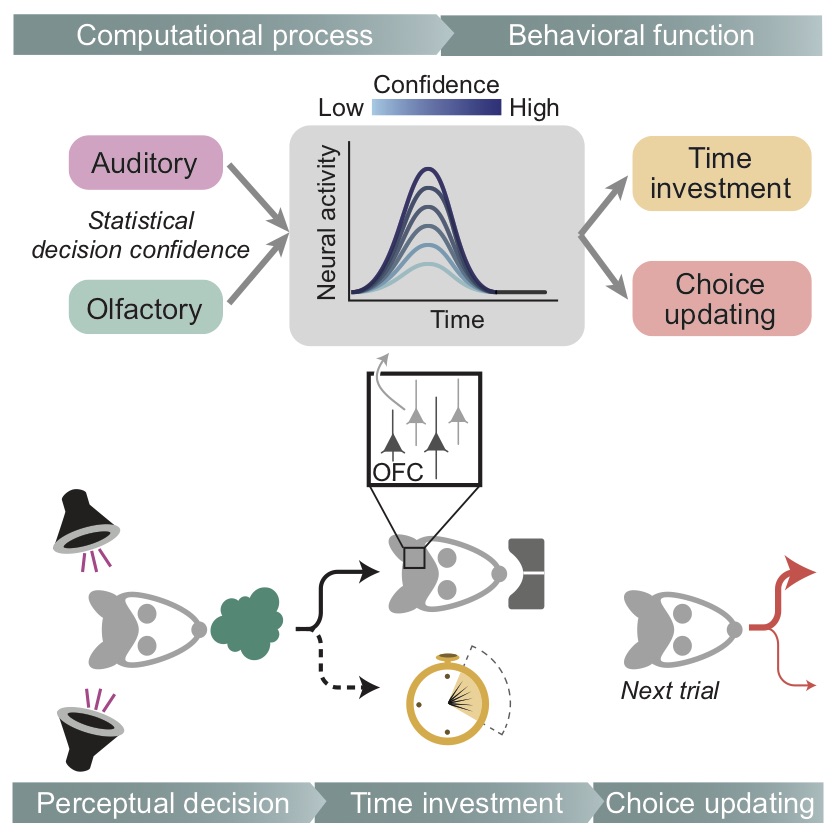
Ever made a decision, then changed course afterwards? What kinds of signals in the brain support the ability to “reflect” on a decision? We explored this in our recent paper with @OttTorben @ArminLak @ratcortex @KepecsLab @WUSTLmed @CSHL cell.com/cell/fulltext/S0092… 1/7
9 Jul 2020

In the latest issue! #Neurons in the orbitofrontal #cortex signal #decision confidence across #sensory modalities to support multiple confidence-guided #behaviors bit.ly/31Xu4nD @CSHL @KepecsLab @paul_masset
7
24
85
the tweeprint server retweeted

15 Sep 2020
Very excited to share our new preprint: “An associative learning account of sensorimotor adaptation”, with the amazing @IPALab, @ivryrich @ivrylab, and the one and only @smickdougle who came up with the original idea for the project.
biorxiv.org/content/10.1101/…
Details below... 👇
1
15
45
the tweeprint server retweeted

11 Sep 2020
Friday #tweeprint!
1/8 As intracortical BCI moves toward clinical relevance, one of the most realistic immediate applications is control of a computer cursor. Here we show (in a human!) how to improve click decoding (with some neurophys sprinkled in)
medrxiv.org/cgi/content/shor…
5
16
52
the tweeprint server retweeted

11 Sep 2020
Potentially of interest to those using optogenetic tools in large brains: a short report of our attempts towards high-throughput optogenetics in NHPs using chronically implantable LED arrays.
Check out the preprint here!
Short #tweeprint below.
11 Sep 2020

Chronically implantable LED arrays for behavioral optogenetics in primates. biorxiv.org/cgi/content/shor… #biorxiv_neursci
2
5
25