
Postdoc in Doudna Lab (UC Berkeley). Previously PhD in Bartel lab (MIT/Whitehead). Biochemical biophysical principles of protein/RNA mechanisms.
Joined June 2014
- Tweets 86
- Following 453
- Followers 345
- Likes 883
17 Photos and videos

Pinned Tweet

Mar 19
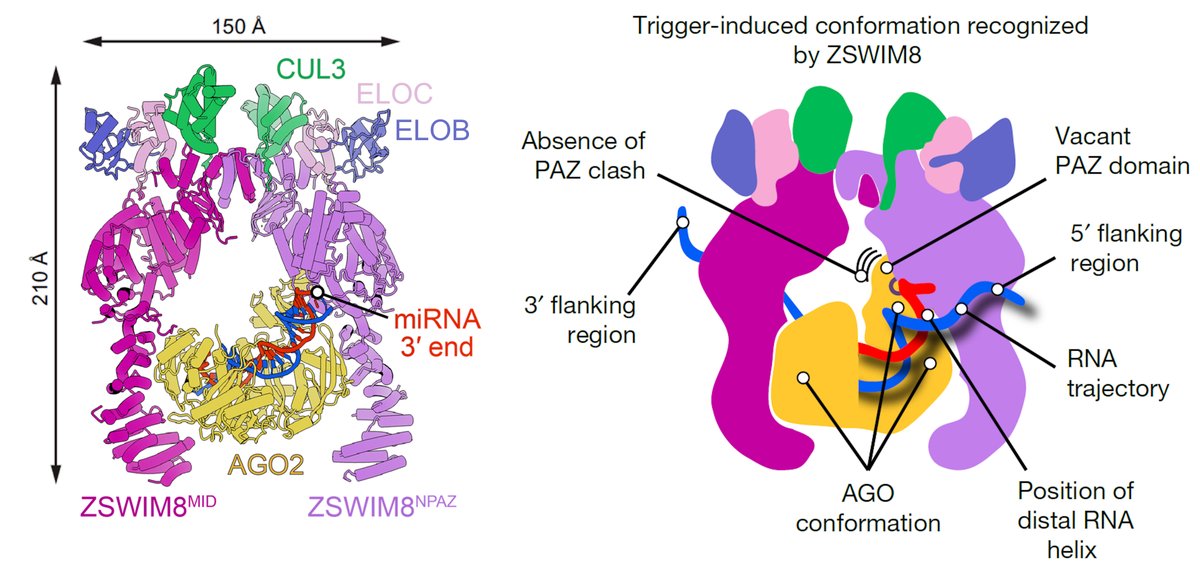
Excited to share the published version of our work @Nature! We revealed the mechanism structural basis of microRNA degradation, and showed how ZSWIM8 defines a novel class of Cullin–RING E3 ligases targets an asymmetric substrate as a dimer uses RNAs in recognition. [1/2]
1
20
110
8,671
Peter Wang retweeted

May 27
Today we're announcing ESMFold2, an open scientific engine to power prediction, design, and discovery across protein biology.
The new model delivers state of the art performance on protein interactions, especially antibodies, a critical modality for therapeutics.
We have designed and validated miniprotein binders and single chain antibodies across five therapeutic targets that are important in cancer and immunology. We are seeing very high success rates, and affinities at levels consistent with therapeutic activity.
We’re also releasing an atlas of 6.8 billion proteins, and 1.1 billion predicted structures.
ESMFold2 is built on a state of the art language model that has been trained on billions of protein sequences.
A world model of protein biology emerges through language modeling.
We’ve used the techniques of mechanistic interpretability developed to understand large language models to understand the concepts ESM uses to represent proteins.
The model’s representation space has a compositional organization of features across scales, levels of complexity, and abstraction, that reflects and mirrors the understanding of protein biology developed through a century of empirical science.
This understanding emerges without prior knowledge, just from language modeling of protein sequences.
Language models are becoming a powerful substrate to understand and program biology.
The design of protein interactions is one of the most fundamental problems in biophysics, and has critical implications for the discovery of new medicines. A simple gradient based search with the model was able to discover high-affinity protein binders.
I'm excited by the potential this has to accelerate basic science and the understanding of proteins. And especially for the new avenues it opens up for therapeutic design and medicine.
74
448
1,612
599,264
Peter Wang retweeted

Apr 30
Our lab is proud to present our latest work harnessing Bridge Recombinase for genome-scale editing in diverse bacteria, microbiome editing, and programmable horizontal gene transfer.

Bridge recombinase enables versatile rewriting of bacterial genomes biorxiv.org/content/10.64898… #biorxiv_synbio
4
56
179
22,266
Peter Wang retweeted

Apr 27
Saying it because @kenjmloi didn't:
This is really close to a RNA system that targets protein sequences because of wobble bases in codons.
Truly amazing discovery!
Apr 27

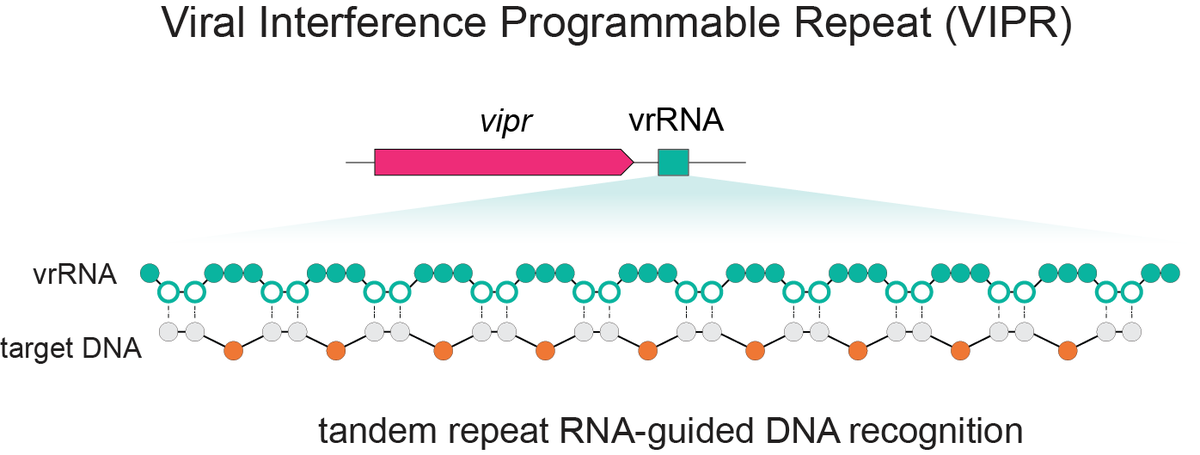
Excited to share our discovery of a new programmable RNA-guided DNA-targeting system hiding inside bacteriophages that predates CRISPR.
We call it VIPR (Viral Interference Programmable Repeat), and it uses an entirely new logic to find its targets.
Thread link below.
4
20
178
21,628
Apr 27
Check out this awesome discovery of the RNA-guided VIPR RNP by the Doudna lab. Everything about the system, from its functional context to its targeting code and structural geometry, is truly remarkable. Congrats to the team!
Apr 27
Excited to share our discovery of a new programmable RNA-guided DNA-targeting system hiding inside bacteriophages that predates CRISPR.
We call it VIPR (Viral Interference Programmable Repeat), and it uses an entirely new logic to find its targets.
Thread link below.
3
322

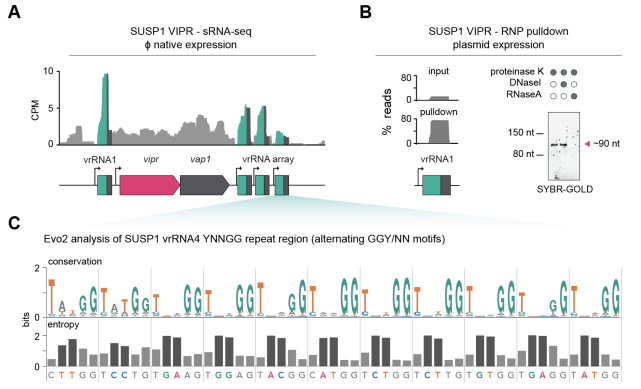
A beautiful story on the origins of CRISPR -- congrats to @PeterHYoon @kenjmloi and team!
Cool to see the Evo 2 likelihoods being useful for identifying a tricky repeat region.
biorxiv.org/content/10.64898…
30
172
20,319

MicroRNAs control gene expression by modulating the output and stability of messenger RNAs. How are these crucial regulators kept in check?
go.nature.com/4bvDc4T
45
241
42,650
Mar 19
Excited to share the published version of our work @Nature! We revealed the mechanism structural basis of microRNA degradation, and showed how ZSWIM8 defines a novel class of Cullin–RING E3 ligases targets an asymmetric substrate as a dimer uses RNAs in recognition. [1/2]
1
20
110
8,671
Mar 19
This was an incredibly fulfilling collaborative effort between Bartel (Whitehead/MIT) and Schulman (Max Planck) labs, led by @jakobfarnung & Elena. Congrats to the team! [2/2] nature.com/articles/s41586-0…
2
622
Peter Wang retweeted

The E3 ubiquitin ligase mechanism specifying target-directed microRNA degradation biorxiv.org/content/10.64898… #biorxiv_biochem
1
4
348
Peter Wang retweeted

10 Oct 2025
Thrilled to share our work on transcription initiation and termination being spatially coordinated out today in Science! science.org/doi/10.1126/scie…
7
51
279
22,819
Peter Wang retweeted

26 Sep 2025
Excited to share our work with @DMSabatini & @JswLab. How do lysosomes change with age? We present a metabolic atlas of lysosomal aging, and reveal a lysosomal “aging clock” of metabolites linked to lysosomal storage disorders. Grateful to all co-authors!
biorxiv.org/cgi/content/shor…
9
52
200
42,912
Peter Wang retweeted

5 Sep 2025
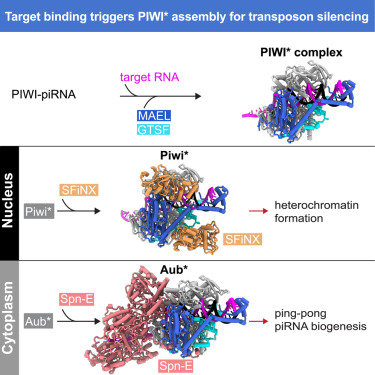
Target RNA recognition drives PIWI∗ complex assembly for transposon silencing dlvr.it/TMvgMj
1
12
69
5,276
Peter Wang retweeted
6 Sep 2025
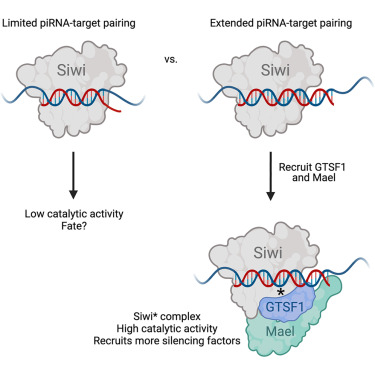
A conserved PIWI silencing complex detects piRNA-target engagement dlvr.it/TMwC69
9
51
4,444
Peter Wang retweeted

25 Jul 2025
I am so incredibly excited to share our latest work, on the exploration of #RNA secondary structure ensembles and discovery of RNA regulatory structural switches in bacteria and human cells, out today in @NatureBiotech: nature.com/articles/s41587-0…. A short tread! (1/n)
8
42
189
22,633
Peter Wang retweeted

25 Mar 2025
New preprint countdown!
Mitochondria are cells within our cells. They need the same core activities - replication, transcription, translation. How do cells enable these diverse activities in both compartments? We uncover an unexpected strategy with ancient origins. Stay tuned!
2
25
125
18,823
13 Mar 2025
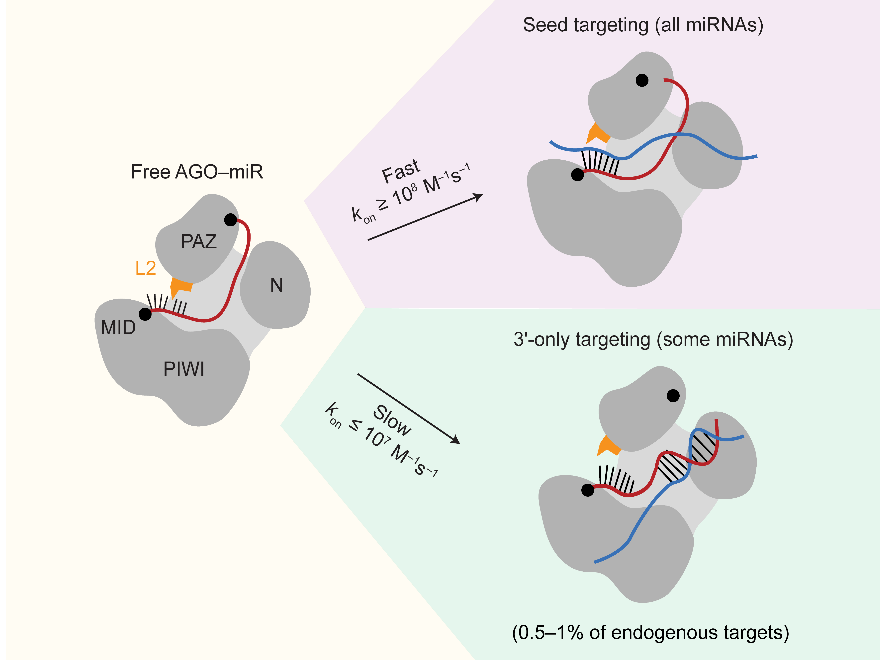
Check out the latest work led by @MatthewHarryHa1 in the Bartel lab! Matt solved a long-standing mystery about miRNA targeting, and drove the story to impressive mechanistic detail (1/2)
1
8
64
12,748
Peter Wang retweeted

26 Feb 2025
My PhD project from @daSpliceIsRight Lab/@MITBiology is out now in @NAR_Open! Thanks for great feedback & pleasant review process. Absolutely thrilled to be sharing this work w the world 🥰🤪 now onto the next chapter... 🐈🐈⬛😸😻academic.oup.com/nar/article…
4
25
1,591
Peter Wang retweeted

5 Feb 2025
Happy to announce that our paper on systematically discovering peptides to inhibit protein-protein interactions in living cells is out now @PNASNews: pnas.org/doi/10.1073/pnas.23….
@MITBiology @ScienceMIT @HHMINews
See quoted thread on the updated preprint for details:
27 Sep 2024

Excited to share our updated manuscript on FragFold, the massively parallel AlphaFold-based approach we’ve developed to discover protein fragment inhibitors at scale -- w/ @SassSeabass, @keating_lab, and @GeneWeiLiLab. biorxiv.org/content/10.1101/… (1/n)
4
11
59
8,811
Peter Wang retweeted

5 Feb 2025
Thrilled to announce the final version of our paper on computational discovery of protein fragments that can inhibit cellular protein interactions, led by Andrew Savinov (@bioSavinov), now published in @PNASNews.
@MITBiology @ScienceMIT @HHMINews
5 Feb 2025
Happy to announce that our paper on systematically discovering peptides to inhibit protein-protein interactions in living cells is out now @PNASNews: pnas.org/doi/10.1073/pnas.23….
@MITBiology @ScienceMIT @HHMINews
See quoted thread on the updated preprint for details:
1
5
37
5,342