
Blocked by Yousef Munayyer (AKA Useless Manure). Peace and Brotherhood for All Humanity (Except those Israelites who have to fight for their rights).
Joined August 2019
- Tweets 23,555
- Following 2,157
- Followers 1,202
- Likes 8,057
3,684 Photos and videos











Comnsense retweeted

Jun 16
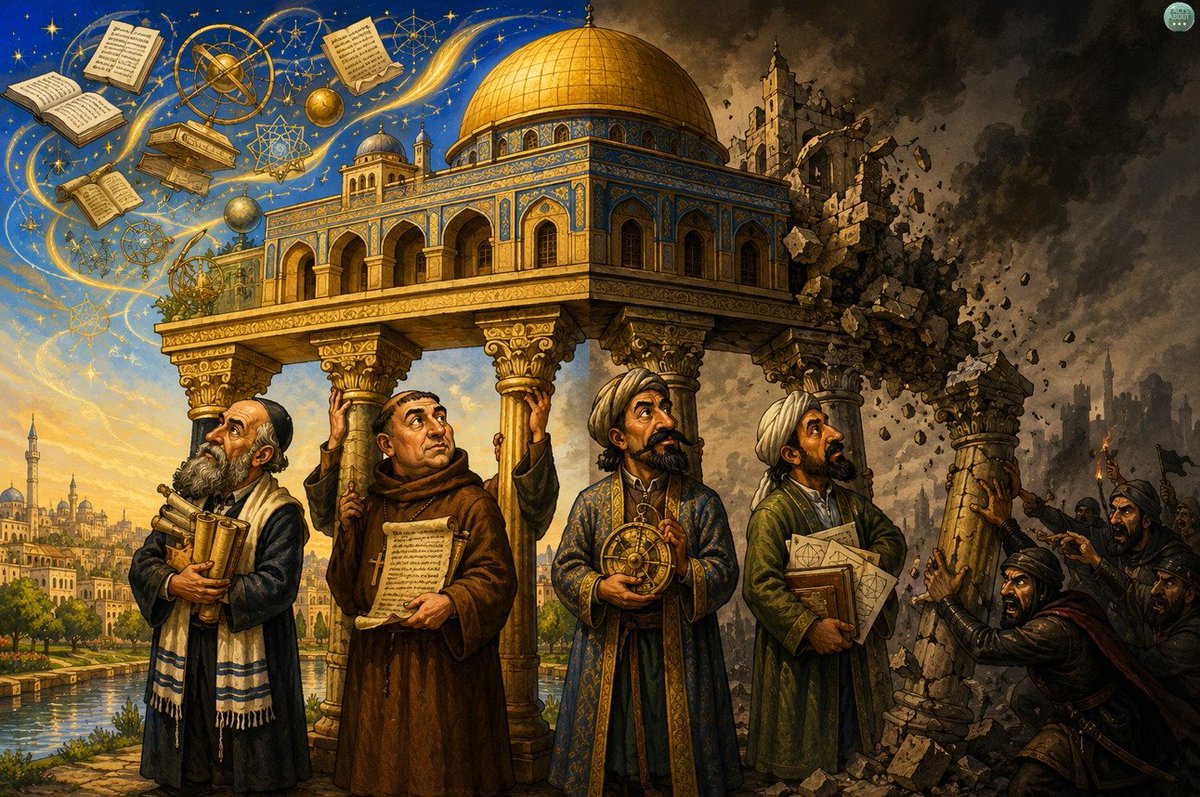
The Islamic “Golden Age” has one awkward little detail people prefer not to mention:
It was built by minorities.
The Abbasid caliphs funded the great translation movement. But the people doing much of the heavy lifting were not Arab Muslim clerics sitting around discovering Aristotle from scratch.
They were Syriac Christians. Jews. Persians. Multilingual outsiders. The people who could move between Greek, Syriac, Arabic, Hebrew, and later Latin.
Hunayn ibn Ishaq, one of the greatest translators of the age, was a Christian. Jewish physicians, philosophers, and translators became the connective tissue of the medieval world. Maimonides, the greatest Jewish philosopher of the Middle Ages, wrote his masterpiece, "Guide for the Perplexed", in Arabic - more precisely Judeo-Arabic.
Then Jewish translators like the ibn Tibbon family carried Arabic philosophical works into Hebrew, and from there into the intellectual bloodstream of Europe.
So when people boast about the Islamic Golden Age, the honest version is this:
Islamic civilization flourished when it was confident enough to use the minds of Jews and Christians.
And it declined when it became too insecure to tolerate them.
That is the part they leave out.
The Almohads conquered Córdoba in 1148 and gave Jews and Christians the familiar offer: convert, flee, or die. Maimonides’ family fled. Jewish communities across Spain and North Africa were shattered. Synagogues were destroyed or converted. Scholars scattered.
And when the scholars left, the bridges collapsed.
This is the recurring pattern of history:
First they use the Jews.
Then they resent the Jews.
Then they expel the Jews.
Then they erase the Jews.
Then they claim the achievements as their own.
You see the same thing today.
Jewish doctors, scientists, entrepreneurs, engineers, and researchers help build the societies they live in. Israeli technology powers medicine, cybersecurity, agriculture, water systems, emergency response, and AI. And then the same societies that benefit from Jewish innovation turn around and chant for boycotts, exclusion, and “decolonization”.
The lesson of the Golden Age is not that one civilization was magically superior.
The lesson is that civilizations rise when they protect talent - and rot when they persecute it.
A culture that drives out its Jews usually thinks it is purifying itself.
In reality, it is sawing off the branch it is sitting on.
Jan 1

For centuries, Jews have been accused of being “at fault” for their own expulsion - as if a people could be simultaneously powerless enough to be expelled and powerful enough to deserve it. This accusation is one of the oldest tricks in the political and religious playbook: turn success into guilt, survival into conspiracy, difference into danger.
Jewish success has never been mysterious. It emerged from constraint. When Jews were barred from owning land, joining guilds, or holding office, they adapted. When literacy was restricted for most populations, Jews were required - religiously - to read, argue, and transmit texts. When mobility was forced upon them, portable skills became essential. Finance became one avenue not because Jews “loved money”, but because Christian Europe prohibited Christians from lending at interest while simultaneously needing credit. Others were locked out of that space; Jews were locked into it. And then, predictably, blamed for being there.
Religion amplified this scapegoating. A people that refused conversion posed a theological problem. Christianity and later Islam both struggled with the existence of an older covenant that did not vanish. Jews were condemned not for what they did, but for what they were - a living refutation of replacement theology. Economic resentment, religious anxiety, and political convenience fused into something potent and durable.
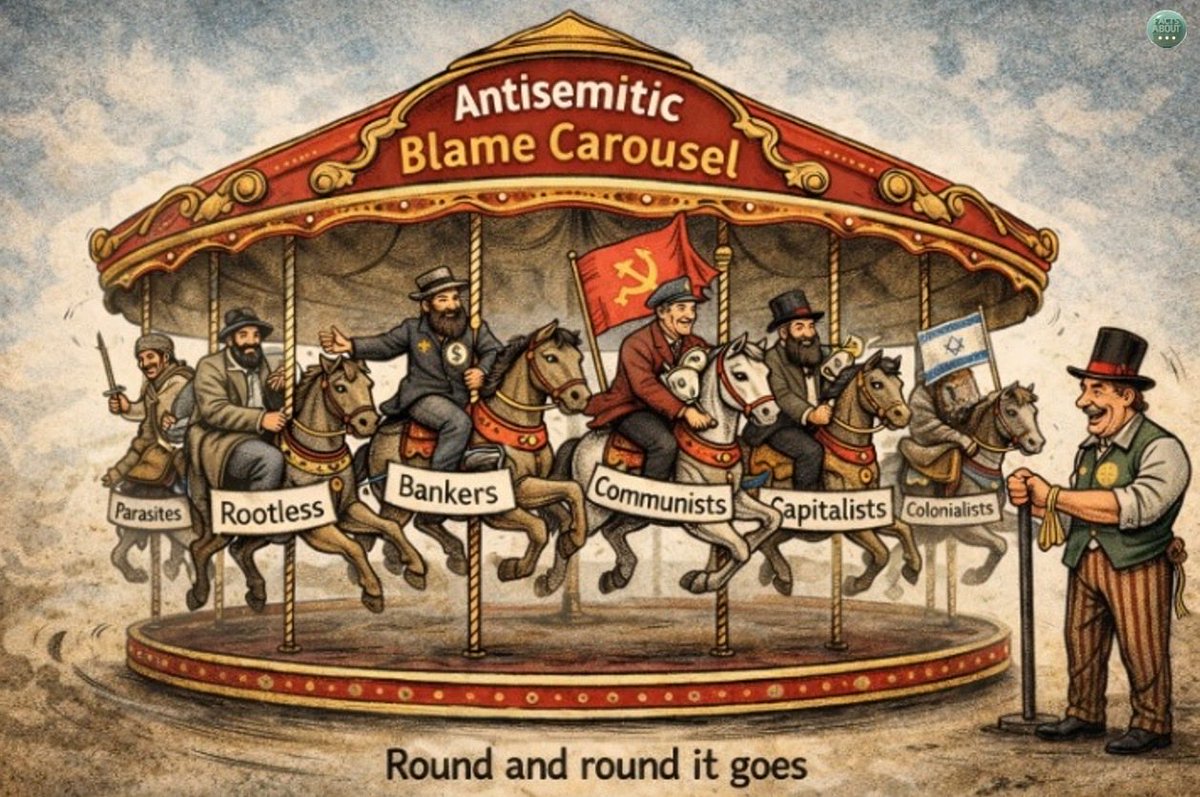
Antisemitism survives because it mutates. When Jews were poor, they were blamed for being parasites. When they became successful, they were blamed for being exploiters. When they were stateless, they were accused of disloyalty. When they built a state, they were accused of being uniquely illegitimate. Jews were condemned as rootless cosmopolitans and as clannish tribalists; as capitalist bloodsuckers and as communist subversives; as weak cowards and as genocidal colonialists. No other hatred is so comfortable holding mutually exclusive beliefs at the same time.
Antisemitism is not a coherent ideology but a symptom - a social fever that spikes when societies fail and look for someone else to blame. Echoing a line often attributed to Voltaire: “To learn who rules over you, simply find out who you are not allowed to criticize.” For centuries, Jews were not allowed to defend themselves - and when they finally did, that too became the crime.
History is unambiguous on one point: expelling Jews has never helped the countries that did it. Spain’s Golden Age ended after 1492. England invited Jews back because expelling them was an economic disaster. Much of Central and Eastern Europe hollowed itself out - intellectually, commercially, culturally - by pushing Jews out. The pattern repeats with tedious reliability: confiscate Jewish property, enjoy a brief populist high, then watch stagnation set in.
Today’s version dresses itself up as “antizionism,” a moral costume change for an ancient hatred. We are told this is not about Jews - just about the one Jewish state on earth. And yet no other people are told they uniquely do not deserve self-determination. No other nation’s abolition is discussed so casually, with so little concern for the millions who live there. When “antizionism” demands the elimination of Israel and the exile - or worse - of its Jewish population, it is not a critique of policy. It is the oldest idea in history, refreshed for a new audience.
Antisemitism ultimately tells us nothing about Jews. It tells us everything about the societies that indulge it: their failures, their resentments, their refusal to take responsibility for their own problems. Jews have been blamed for too much order and too much chaos, too much integration and too much separation, too much power and too much weakness. When a hatred can explain everything, it explains nothing.
The Jewish people are not the problem. They never were. Antisemitism is. And every society that mistakes the one for the other eventually learns the lesson the hard way.
7
90
231
4,577

"The biggest Zionist book alive today is the Quran.” Those words changed Jasem Aljuraid’s life. After publicly defending Israel and challenging anti-Israel narratives in the Arab world, he was repeatedly detained, interrogated, and pressured to stop speaking. His family begged him to stay quiet. He refused. Eventually, he was given just 24 hours to leave the country. This is the story of what happened when one Arab journalist chose truth over fear."
@JJJuraid
H/T Stand Tall for Israel
22
270
696
10,113

I know full well that you don't need any tutoring on this. But this might help enlighten the "interested" reader who usually spreads nothing but lies and hate beneath your posts. A must-watch⬇️
x.com/MorEdge_Insight/status…
Jun 14

This is a fairly long film in terms of what X likes, but it is one of the most important and detailed videos that absolutely everybody should bookmark, watch and share.
This is the most detailed evidence-based film about the Origins of the Palestinian Cause, right from its Nazi roots.
I cannot complement the producer of this film, @rehoov, enough. This is a masterpiece of historical significance.
I hope people like @MOSSADil @marklevinshow @DefiyantlyFree @BillAckman @ACTBrigitte @jihadwatchRS and others may share this to a much wider audience. It is so essential that the truth is seen by everyone, and the lies exposed.
1
2
7
189
Comnsense retweeted

Jun 16
Found another one.
x.com/MEMRIReports/status/20…
16 Dec 2025

Australian Imams And Islamic Scholars Glorify Jihad Against Jews, Infidels, 'Enemies Of Allah': The Flags Of ISIS & Al-Qaeda Represent The Entire Islamic Nation; Islam & Shari'a Will Conquer The World – Clips From The MEMRI Archives
1
2
5
45
Comnsense retweeted

Jun 14
ATERRADOR: Un testigo israelí relata haber visto a civiles palestinos reírse mientras violaban a una mujer a la que sacaron de un coche. Luego la descuartizaron con un cuchillo y continuaron violando el cadáver, riendo.
Estos mismos civiles encontraron después a una pareja que huía y los masacraron con hachas y cuchillos.
El 7 de octubre, civiles palestinos se presentaron preparados para masacrar y torturar judíos, armados con hachas y cuchillos.
484
5,430
13,196
372,574
Comnsense retweeted

Jun 14
How far back in time would you like to go?
1
1
34
Comnsense retweeted
Jun 14
Most Palestinian mothers aspire to just that.
x.com/KarenDavid47792/status…
Jun 13

2
3
4
78
Comnsense retweeted

You were saying….
From the article you posted.
‘the security forces killed boys after they had joined other youths confronting Israeli forces with stones, Molotov cocktails, or fireworks.
1
2
72

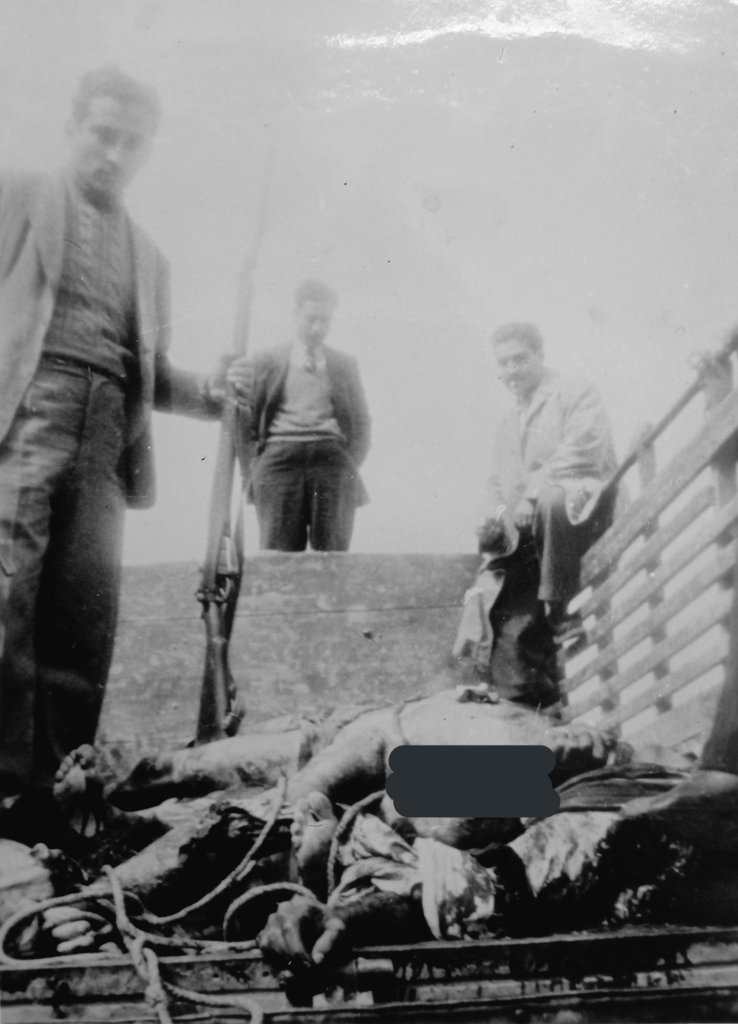
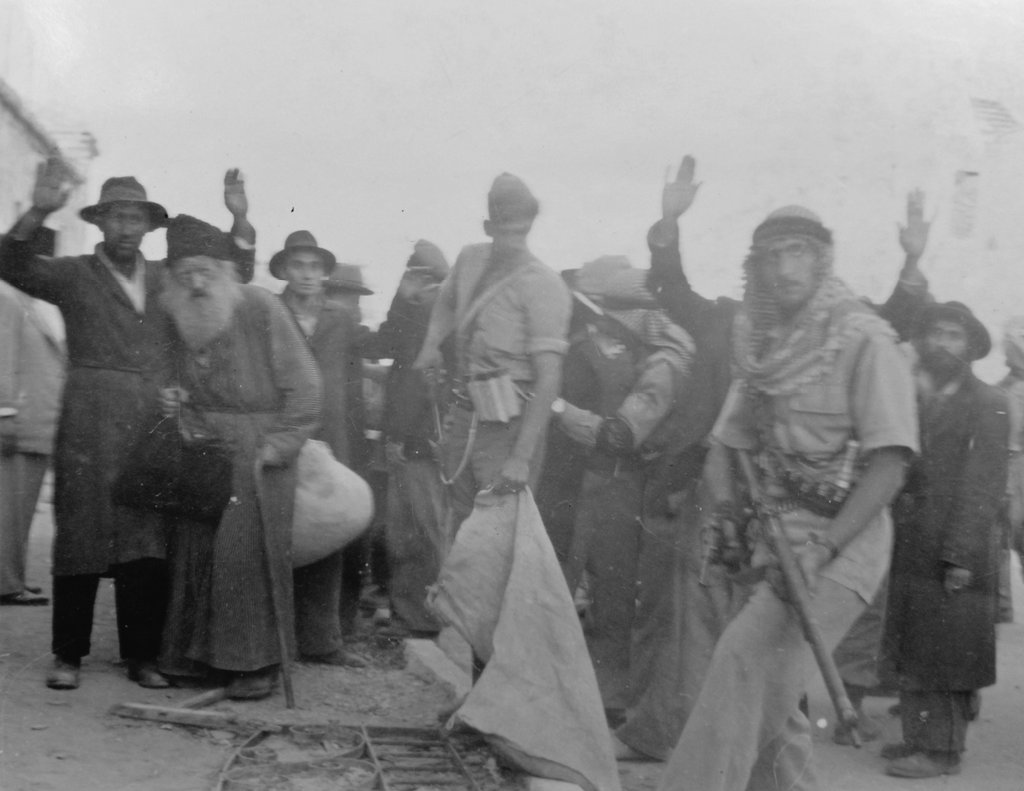
The 1 photo shows the capture of the Jews of Jerusalem, including my great-grandfather- an elderly man who spent almost a year in captivity. In the 2 photo, a small part of the hundreds of bodies left behind in the massacre they carried out in Kibbutz Kfar Etzion.
1
1
2
86
Comnsense retweeted

26 Aug 2024
It's been debunked already
2
2
28
743
Comnsense retweeted

27 Aug 2024
There have been zero Arab villages destroyed from 2005 until 2023.
In 2005, 21 Israeli settlements in the Gaza Strip and four Israeli settlements in the West Bank were unilaterally dismantled.
1
11
159
Comnsense retweeted

A lie is a lie no matter how you spin it and Palestinians' history in the Levant (Greater Israel).

1
6
33

Jews lived in their homeland - the land of Israel nonstop for over 3,000 years. However, they used many different calendars throughout the years.
One of the oldest Hebrew texts ever found is the Gazer Calendar - an agricultural calendar dated to around the 10th century BCE. During the second temple period, a common calendar was the Seleucid era calendar (מניין השטרות), which was used long after the Seleucid empire collapsed.
Yet, after the destruction of the temple, the Jews in the land of Israel began counting the years since the destruction of the temple - as shown in this lintel of the synagogue in Nabratein which is now displayed in the Israel Museum.
It is only since the 5th/6th century CE that we start seeing Jews counting the years since the creation of the world - the Hebrew calendar we use today.
5
78
325
4,948
Comnsense retweeted

Jun 10
An Arab Christian from Israel delivers a powerful warning to the West:
Stop appeasing your growing Muslim population by supporting the terrorists who are attacking Israel right now.
These jihadists do not want peace with Israel — they want world domination. If they succeed in destroying the Jewish state, they will not stop. They will simply turn their sights on the West next.
They will never stop killing “infidels.”
Please share this if you stand with Israel.
The truth from someone who actually knows the reality on the ground. The West must wake up before it’s too late.
260
4,610
10,609
106,229
Comnsense retweeted

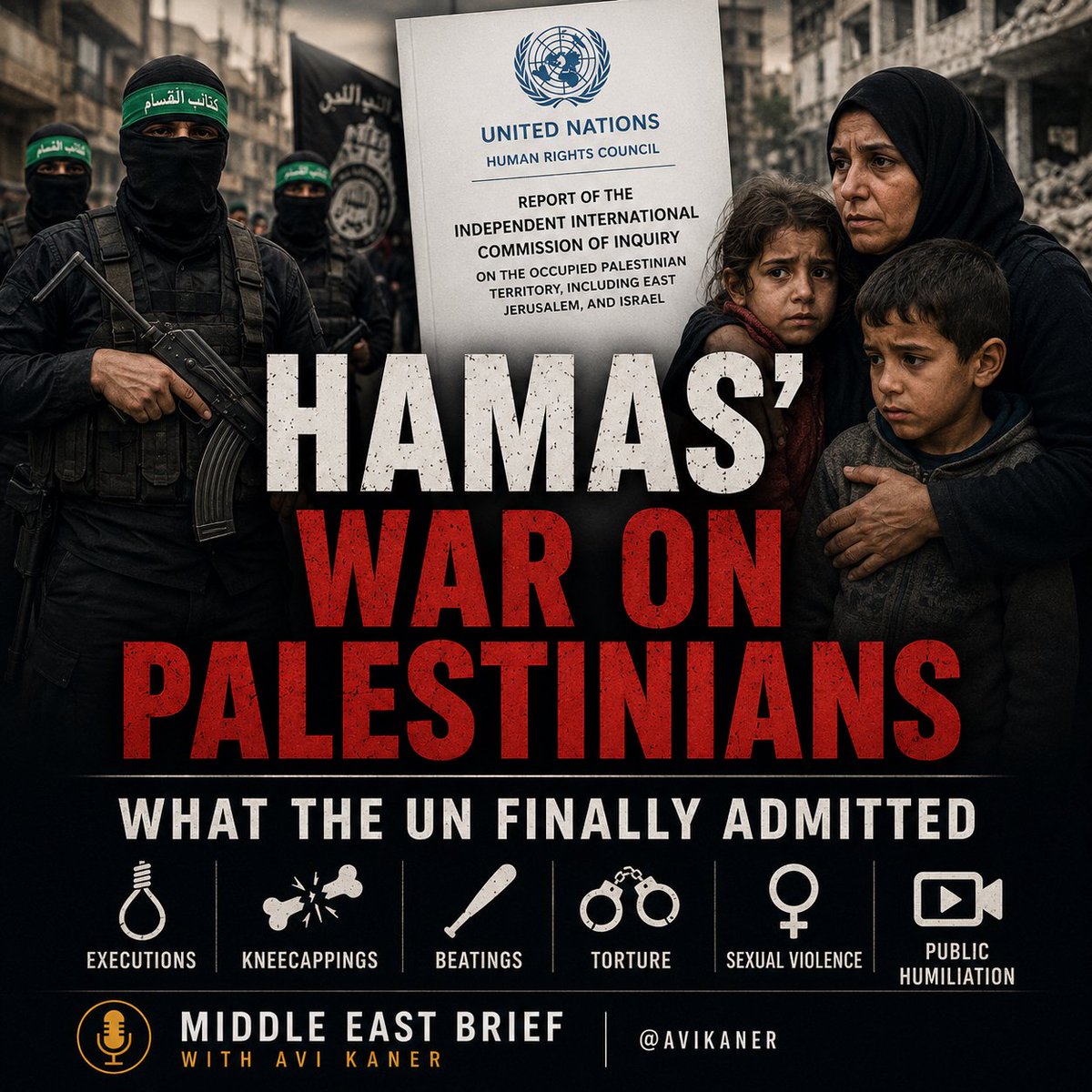
For years, we've been told Hamas is "resistance."
A new UN report documents something different: hundreds of documented cases of brutal torture and executions of Palestinians, including children, by Hamas itself.
Please listen, follow, and share. open.spotify.com/episode/1ZC…
49
607
1,056
47,074
Comnsense retweeted
Jun 11
This is the #1 form of "sexual abuse" detailed in the UN report.

2
2
5
63
Comnsense retweeted
Jun 11
It's obviously not about a Palestinian state. They didn't scream free Palestine when they slaughtered raped and kidnapped children, they screamed Allahu Akbar.
Anyone who calls Hamas heroes is a morally degenerate morally bankrupt pos.
x.com/RabbiPoupko/status/206…
Jun 10

If these baby snatchers are the people you stand with, you have a broken moral compass.
We will never forget what the people of Gaza did on October 7th.
2
4
4
68
Comnsense retweeted

Jun 10
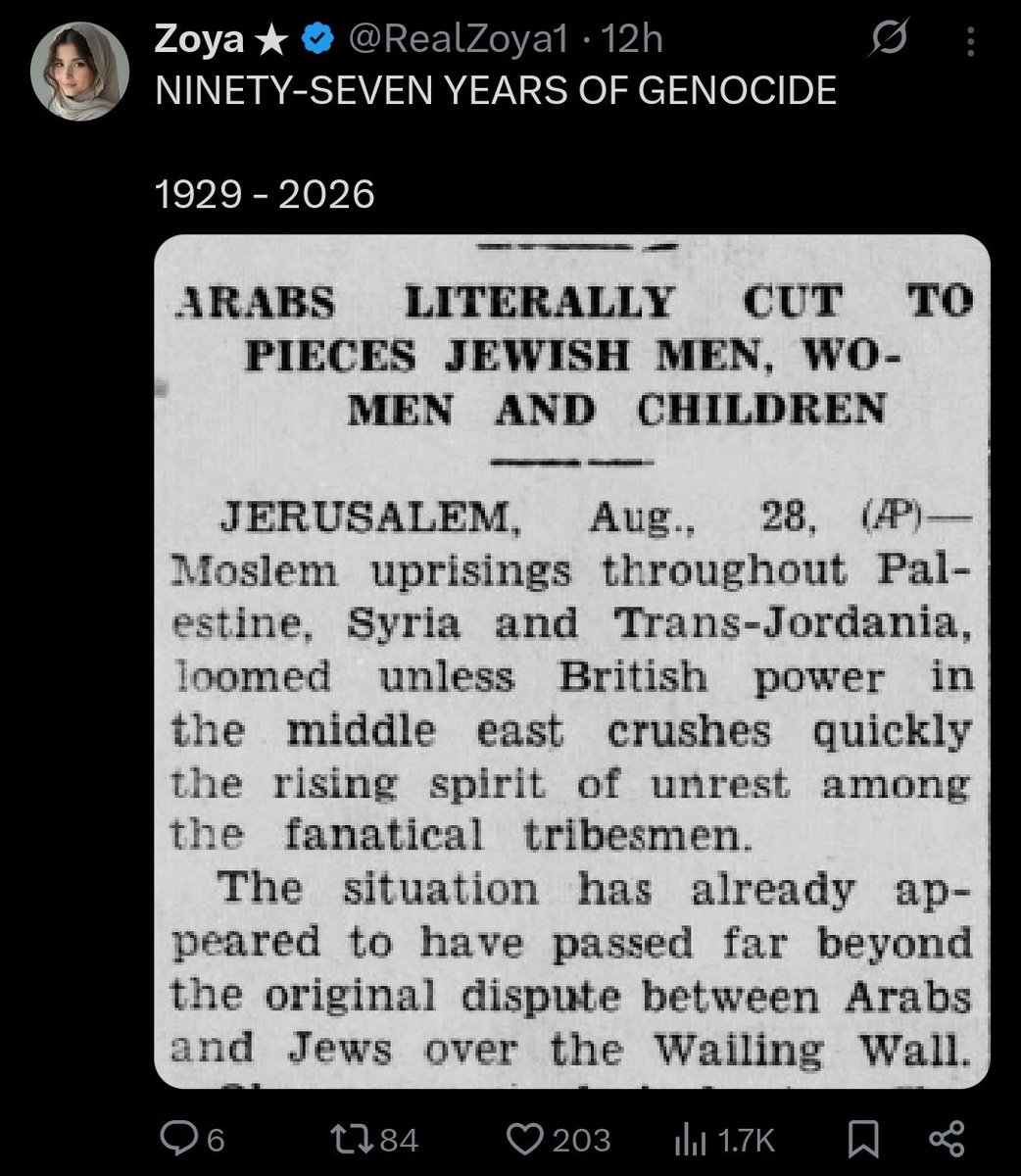
NINETY-SEVEN YEARS OF GENOCIDE
1929 - 2026

9
156
393
3,568
Comnsense retweeted

Disturbing misphrase here:

2
5
98
Comnsense retweeted

Jun 9
Never forget TWA Flight 841.
Palestine bombed a plane, slaughtering 88 innocent human souls, including 37 Americans.
In case you were wondering: No, the PLO did not apologize or pay reparations for slaughtering Americans.
Palestinian culture.

62
548
1,470
24,077