
Machine Learning Brazil
Joined February 2022
- Tweets 17,354
- Following 683
- Followers 64
- Likes 16,937
3 Photos and videos
MachineLearningBrazil retweeted

Jun 13
If an agent can do the job - why pay for human-assisted software solutions?
Per-seat pricing is built on a number that AI shrinks.
Atlassian just logged its first ever decline in enterprise seat counts, while Workday cut 8.5% of its own workforce.
Jun 12

Wall Street just erased $2 TRILLION from software stocks and gave the wreck a name:
The SaaSpocalypse.
Our lead crypto analyst, @m0xt_, thinks the market just made a $2T sorting error, and he published a full report on where the money gets made (save this).
Let's talk damage first...
$CRM fell about 30%. $WDAY fell 33%. The main software index lost more than 20% in a single quarter.
And for the first time on record, software trades at a lower earnings multiple than the average S&P 500 company.
The market's golden child of two decades is priced like a dying industry.
The accused killer is the AI agent:
Software that does the work itself instead of helping a human do it - It resolves the ticket... It reconciles the invoice... So if an agent can do the job...
Why pay for software that just helps a human do it?
The bear case is serious, and @m0xt_ gives it real respect:
1. Microsoft CEO Satya Nadella said most business apps are basically databases with some rules on top. If an agent can talk to the database directly, the screens in between lose their reason to exist.
2. Per-seat pricing is built on a number that AI shrinks. Atlassian just logged its first ever decline in enterprise seat counts. Workday cut 8.5% of its own workforce.
3. Cursor went from zero to $2B in annual revenue in roughly 3 years, the fastest ramp in business software history.
4. The selloff's biggest leg down came when Anthropic launched Claude Cowork, an AI desktop worker that runs multi-step workflows on its own.
But @m0xt_ found four cracks in the funeral story:
Deutsche Bank says it doesn't know of a single software company expecting AI to hurt revenue this year.
In Q1 2026, 14 of the 16 software names covered by one Morningstar analyst beat on both the top and bottom line.
In the real software busts (2001, 2008, 2022), earnings collapsed with the stocks.
This time the stocks fell and the earnings kept climbing.
That gap has to close one way or the other.
→ The agents aren't ready just yet.
Gartner predicts over 40% of agentic AI projects get canceled by the end of 2027, and says only about 130 of the thousands of vendors selling "AI agents" are the real thing.
The rest are slapping the agent label on old chatbots.
→ The poster child of AI adoption changed its mind.
Klarna cut hundreds of software tools and 1,200 employees after building an AI support system it said did the work of 700 people.
Then quality slipped, Klarna started rehiring humans, and the CEO publicly said he doesn't think this is the end of Salesforce.
→ Nobody is actually leaving.
No churn wave in Q1, and not one major vendor has reported customers walking away for home-built AI.
So the market is pricing a takeover by a workforce of agents that, today, mostly can't be left alone with the keys.
The one-sentence thesis from @m0xt_ goes like this:
AI kills software that helps humans use tools, and feeds software that gets work done.
The market is pricing both for the same funeral.
Companies poured an estimated $30-40B into generative AI, and one widely cited MIT study found 95% of corporate AI pilots produced no measurable return.
A model produces words and suggestions, but a business needs the invoice reconciled and the ticket closed, with a record of who approved it and rules about who was allowed to do it.
Raw intelligence is cheap → trusted, finished work is not.
And the selloff just put the companies that sell finished work on sale.
Software trades around 23x forward earnings, down from over 80x at the 2021 peak.
Goldman Sachs CEO David Solomon called the selloff "too broad."
When everything gets sold for the same reason, the companies the reason doesn't apply to go on sale by accident.
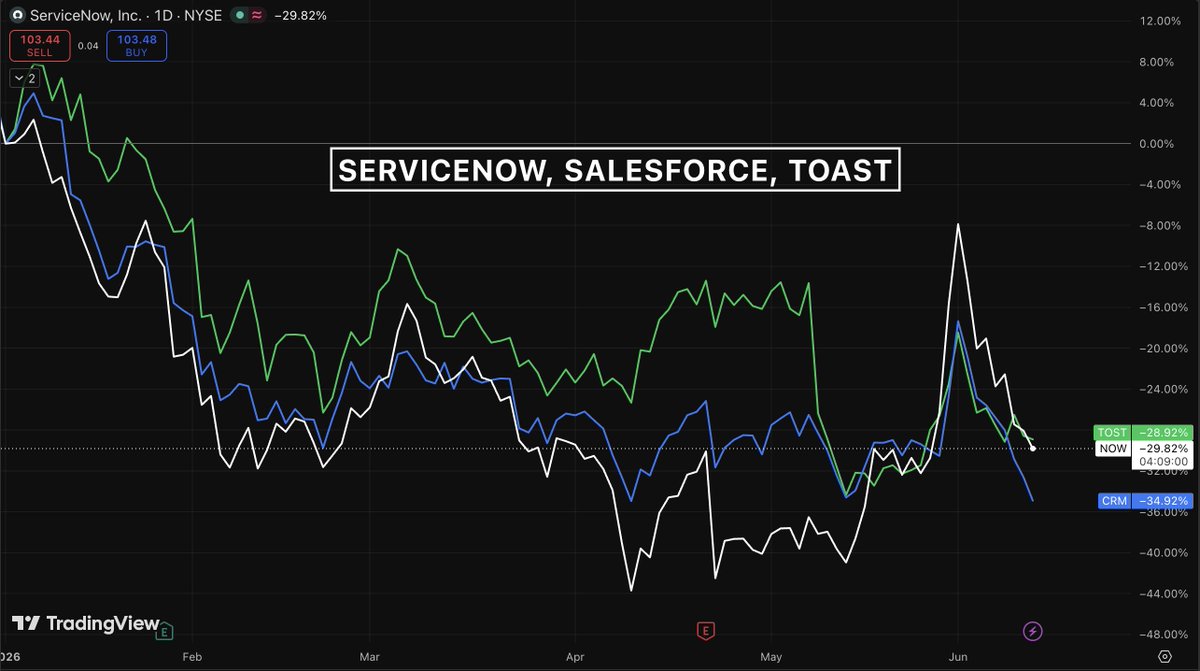
@m0xt_ is testing the thesis on three names:
$NOW (ServiceNow) runs the plumbing of big companies:
IT requests, HR cases, security incidents. A 98% renewal rate means customers almost never leave. Contracted future revenue hit $28.2B, up 26%.
$CRM (Salesforce) is the stress test.
If SaaS were truly dead, this should be the most exposed name on the board - and the market treated it that way: the stock fell roughly 50%.
Its agent product, Agentforce, sits near $800M in ARR, up 169%.
$TOST (Toast) runs restaurants - orders, payments, payroll.
Roughly half its recurring revenue comes from payment processing, so it earns when its restaurants earn.
You can't seat-compress a payments stream.
Each name comes with exact tripwires in the report:
The numbers that prove the thesis right, and the numbers that would make @m0xt_ admit he's wrong and cut.
And he didn't stop at writing.
Off the back of this report, he opened a brand new position in his portfolio:
One of the three stocks above, at a specific entry price, with preset triggers for buying more and for selling.
PRO members can see which stock, the entry, and every trigger right now.
It costs $1 to find out which one he bought. Link in the first comment 👇
2
1
7
3,888
MachineLearningBrazil retweeted
Jun 12
Wall Street just erased $2 TRILLION from software stocks and gave the wreck a name:
The SaaSpocalypse.
Our lead crypto analyst, @m0xt_, thinks the market just made a $2T sorting error, and he published a full report on where the money gets made (save this).
Let's talk damage first...
$CRM fell about 30%. $WDAY fell 33%. The main software index lost more than 20% in a single quarter.
And for the first time on record, software trades at a lower earnings multiple than the average S&P 500 company.
The market's golden child of two decades is priced like a dying industry.
The accused killer is the AI agent:
Software that does the work itself instead of helping a human do it - It resolves the ticket... It reconciles the invoice... So if an agent can do the job...
Why pay for software that just helps a human do it?
The bear case is serious, and @m0xt_ gives it real respect:
1. Microsoft CEO Satya Nadella said most business apps are basically databases with some rules on top. If an agent can talk to the database directly, the screens in between lose their reason to exist.
2. Per-seat pricing is built on a number that AI shrinks. Atlassian just logged its first ever decline in enterprise seat counts. Workday cut 8.5% of its own workforce.
3. Cursor went from zero to $2B in annual revenue in roughly 3 years, the fastest ramp in business software history.
4. The selloff's biggest leg down came when Anthropic launched Claude Cowork, an AI desktop worker that runs multi-step workflows on its own.
But @m0xt_ found four cracks in the funeral story:
Deutsche Bank says it doesn't know of a single software company expecting AI to hurt revenue this year.
In Q1 2026, 14 of the 16 software names covered by one Morningstar analyst beat on both the top and bottom line.
In the real software busts (2001, 2008, 2022), earnings collapsed with the stocks.
This time the stocks fell and the earnings kept climbing.
That gap has to close one way or the other.
→ The agents aren't ready just yet.
Gartner predicts over 40% of agentic AI projects get canceled by the end of 2027, and says only about 130 of the thousands of vendors selling "AI agents" are the real thing.
The rest are slapping the agent label on old chatbots.
→ The poster child of AI adoption changed its mind.
Klarna cut hundreds of software tools and 1,200 employees after building an AI support system it said did the work of 700 people.
Then quality slipped, Klarna started rehiring humans, and the CEO publicly said he doesn't think this is the end of Salesforce.
→ Nobody is actually leaving.
No churn wave in Q1, and not one major vendor has reported customers walking away for home-built AI.
So the market is pricing a takeover by a workforce of agents that, today, mostly can't be left alone with the keys.
The one-sentence thesis from @m0xt_ goes like this:
AI kills software that helps humans use tools, and feeds software that gets work done.
The market is pricing both for the same funeral.
Companies poured an estimated $30-40B into generative AI, and one widely cited MIT study found 95% of corporate AI pilots produced no measurable return.
A model produces words and suggestions, but a business needs the invoice reconciled and the ticket closed, with a record of who approved it and rules about who was allowed to do it.
Raw intelligence is cheap → trusted, finished work is not.
And the selloff just put the companies that sell finished work on sale.
Software trades around 23x forward earnings, down from over 80x at the 2021 peak.
Goldman Sachs CEO David Solomon called the selloff "too broad."
When everything gets sold for the same reason, the companies the reason doesn't apply to go on sale by accident.
@m0xt_ is testing the thesis on three names:
$NOW (ServiceNow) runs the plumbing of big companies:
IT requests, HR cases, security incidents. A 98% renewal rate means customers almost never leave. Contracted future revenue hit $28.2B, up 26%.
$CRM (Salesforce) is the stress test.
If SaaS were truly dead, this should be the most exposed name on the board - and the market treated it that way: the stock fell roughly 50%.
Its agent product, Agentforce, sits near $800M in ARR, up 169%.
$TOST (Toast) runs restaurants - orders, payments, payroll.
Roughly half its recurring revenue comes from payment processing, so it earns when its restaurants earn.
You can't seat-compress a payments stream.
Each name comes with exact tripwires in the report:
The numbers that prove the thesis right, and the numbers that would make @m0xt_ admit he's wrong and cut.
And he didn't stop at writing.
Off the back of this report, he opened a brand new position in his portfolio:
One of the three stocks above, at a specific entry price, with preset triggers for buying more and for selling.
PRO members can see which stock, the entry, and every trigger right now.
It costs $1 to find out which one he bought. Link in the first comment 👇
6
2
13
66,264

"the real opportunity is not in picking the best model but instead in building a learning loop on top of the model [and allowing them to] grow stronger on real traces from inside the organization"
the only framework for doing nothing but this since 2022 is right here😁

1
7
35
2,748
MachineLearningBrazil retweeted

17h
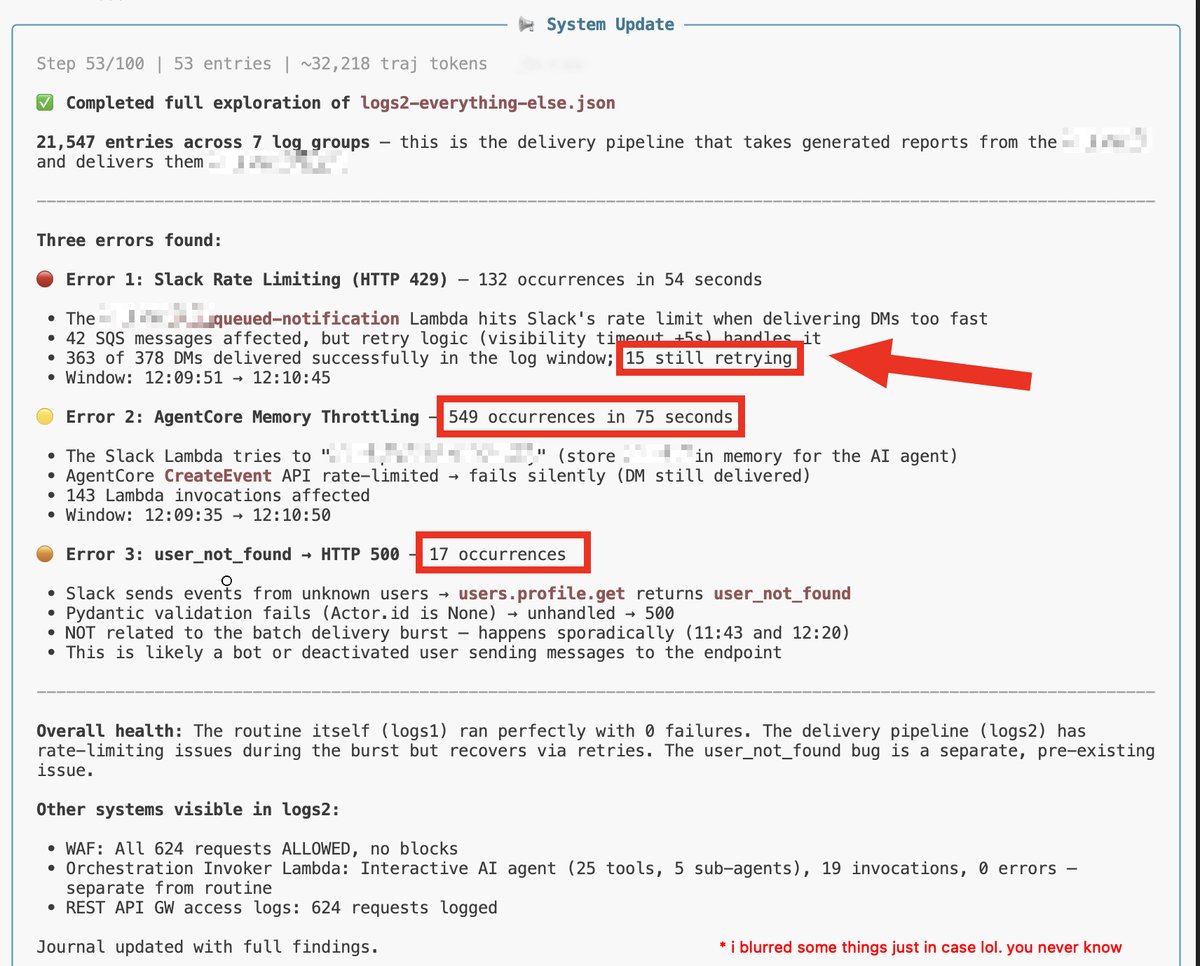
My RLM agent can effortlessly process ~80k lines of service logs from CloudWatch
in a single go. that's worth like 8 million tokens.
The cool part is, after 53 steps, it had spent only 32k "active" tokens* (not through the full 8MM yet atp, more like half).
That's nothing for Claude Fable 5 (rip), and weeell within effective context window, so its very "context-efficient".
It can go VERY far and I dont even have to handhold it or anything, i'm not worrying about context running out or compactions either.
I'm saying I kicked this thing off, almost without any context, and it was able to infer the service architecture based on logs alone, and spot issues my team didn't.
In this particular case it was able to narrow down on a specific slice and find a couple issues that flew under the team's radar (AgentCore's throttles, Slack's user_not_found)
Very handy.
I'll release this as OSS soon (my first release on llm tooling!)
7
15
79
12,861
MachineLearningBrazil retweeted

Jun 14
Open source NotebookLM alternative with no data limits and AI agents
github.com/MODSetter/SurfSen…

3
62
494
18,331
MachineLearningBrazil retweeted

20h
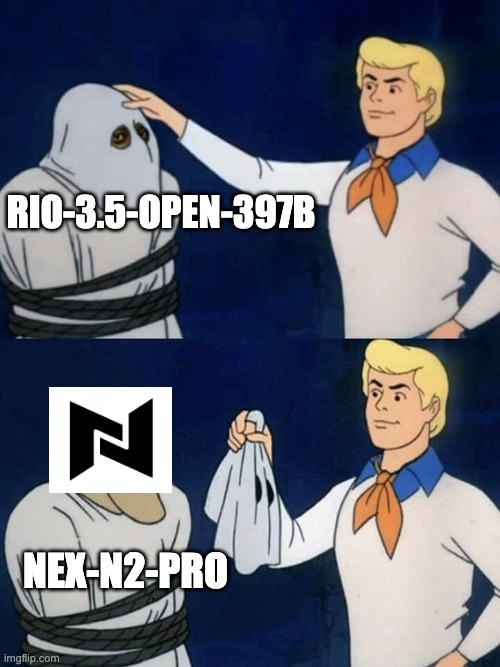
The Rio 3.5 model broke the internet this week. The plot twist? It’s essentially our open-source model, Nex N2 Pro, wearing a different hat.
🤯 We analyzed the weights, and the recipe is exact: Rio 3.5 ≈ 0.6 * Nex N2 Pro 0.4 * Qwen 3.5
It even literally introduces itself as "Nex N2 Pro" if you ask it without initial system prompt!
😂 We are flattered that the City of Rio used our work to achieve SOTA performance. Thanks for the ultimate benchmark validation.
🤝 But in the open-source world, attribution matters.
👇 Full mathematical proof & verify script in the first reply!
205
502
4,998
769,809
MachineLearningBrazil retweeted

respectfully handled @NexEcosystem .
I hope the city council of Rio continue to use open models, just attribute the work fairly -- especially the leaner shops.
20h

The Rio 3.5 model broke the internet this week. The plot twist? It’s essentially our open-source model, Nex N2 Pro, wearing a different hat.
🤯 We analyzed the weights, and the recipe is exact: Rio 3.5 ≈ 0.6 * Nex N2 Pro 0.4 * Qwen 3.5
It even literally introduces itself as "Nex N2 Pro" if you ask it without initial system prompt!
😂 We are flattered that the City of Rio used our work to achieve SOTA performance. Thanks for the ultimate benchmark validation.
🤝 But in the open-source world, attribution matters.
👇 Full mathematical proof & verify script in the first reply!
2
3
24
2,400
MachineLearningBrazil retweeted

There’s the old software adage, “teams with the fastest iteration speed win.”
In the data business, it was tweaked to, “teams who can push a change fastest to the dataset have the best product.”
For AI companies it is, “teams who can author and add to evals easiest win.”
2
1
24
2,098
MachineLearningBrazil retweeted

Jun 8
as usual from @yoonholeee, this is extremely well-written and a great way to organize the major arguments in this space

4
31
322
45,533
MachineLearningBrazil retweeted

Jun 9
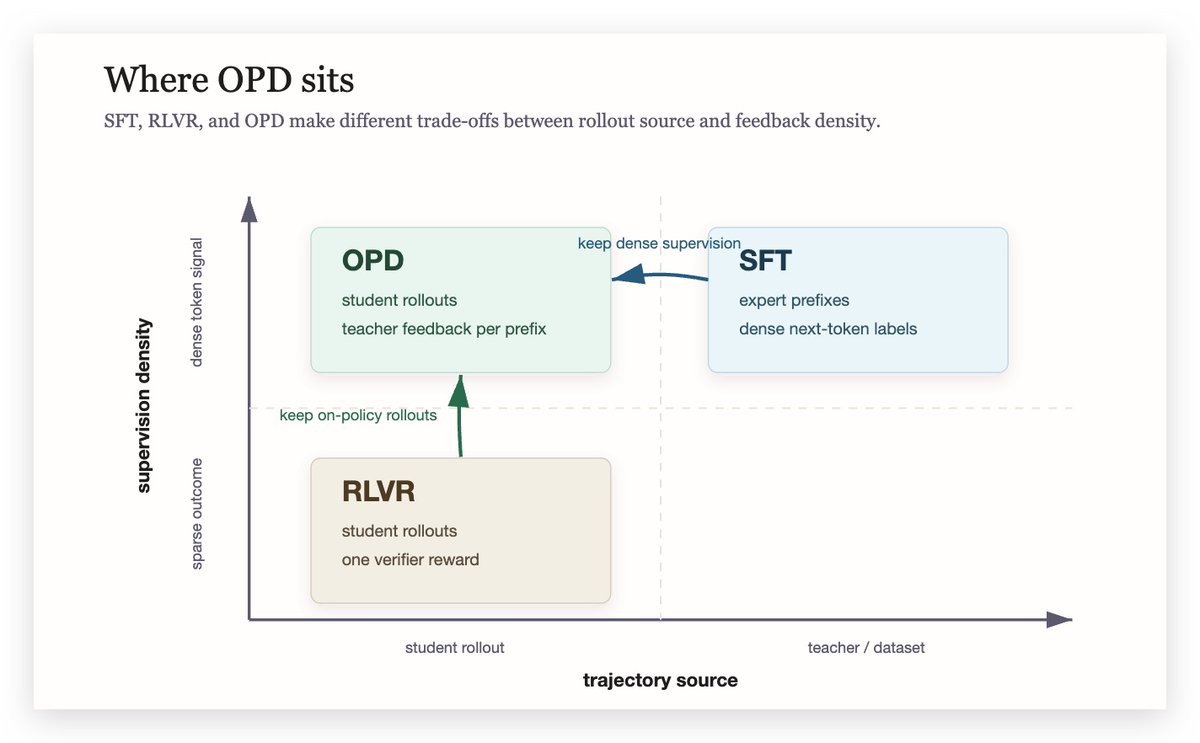
New blog post: On-Policy Distillation — Promise, Pitfalls, and Prospects.
OPD combines on-policy rollouts with dense teacher supervision.
But it is not a free lunch.
I discuss three failure modes and introduce our new paper.
louieworth.github.io/blog/op…
9
44
304
19,520
MachineLearningBrazil retweeted

Jun 13
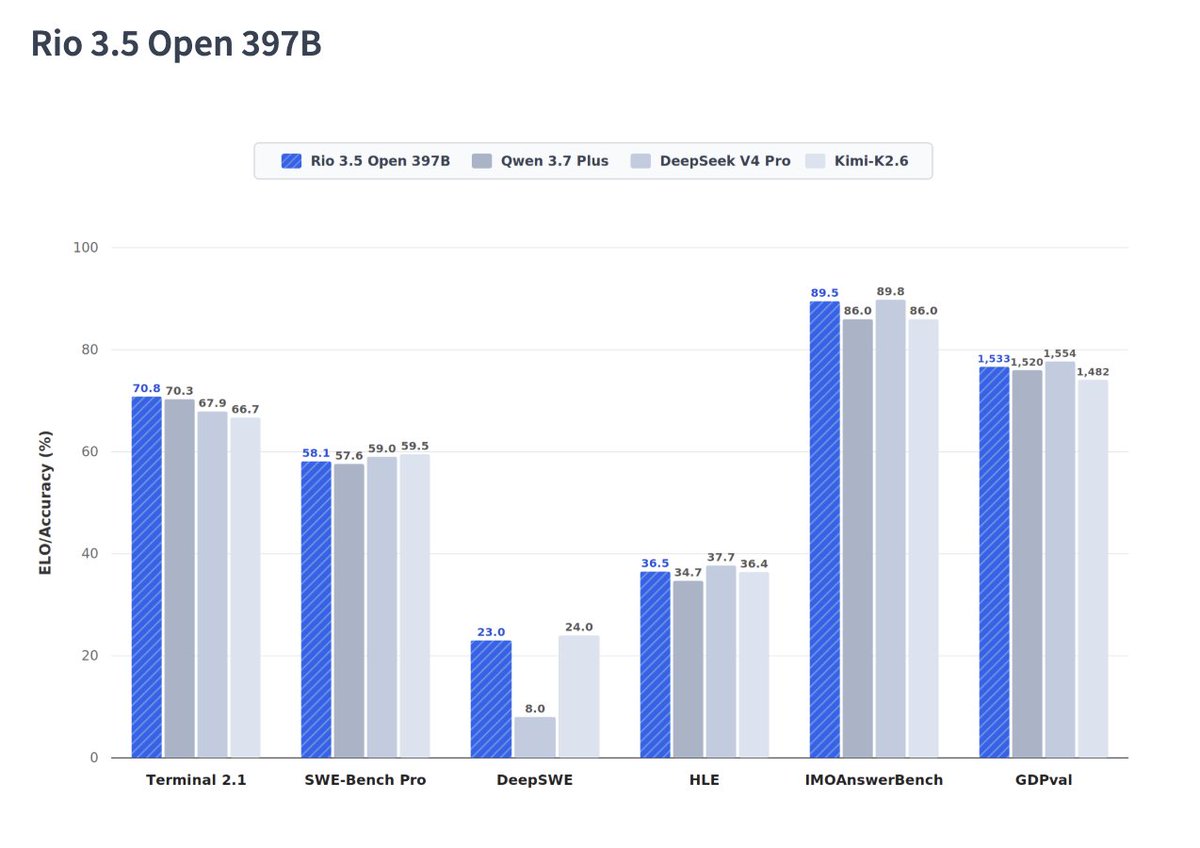
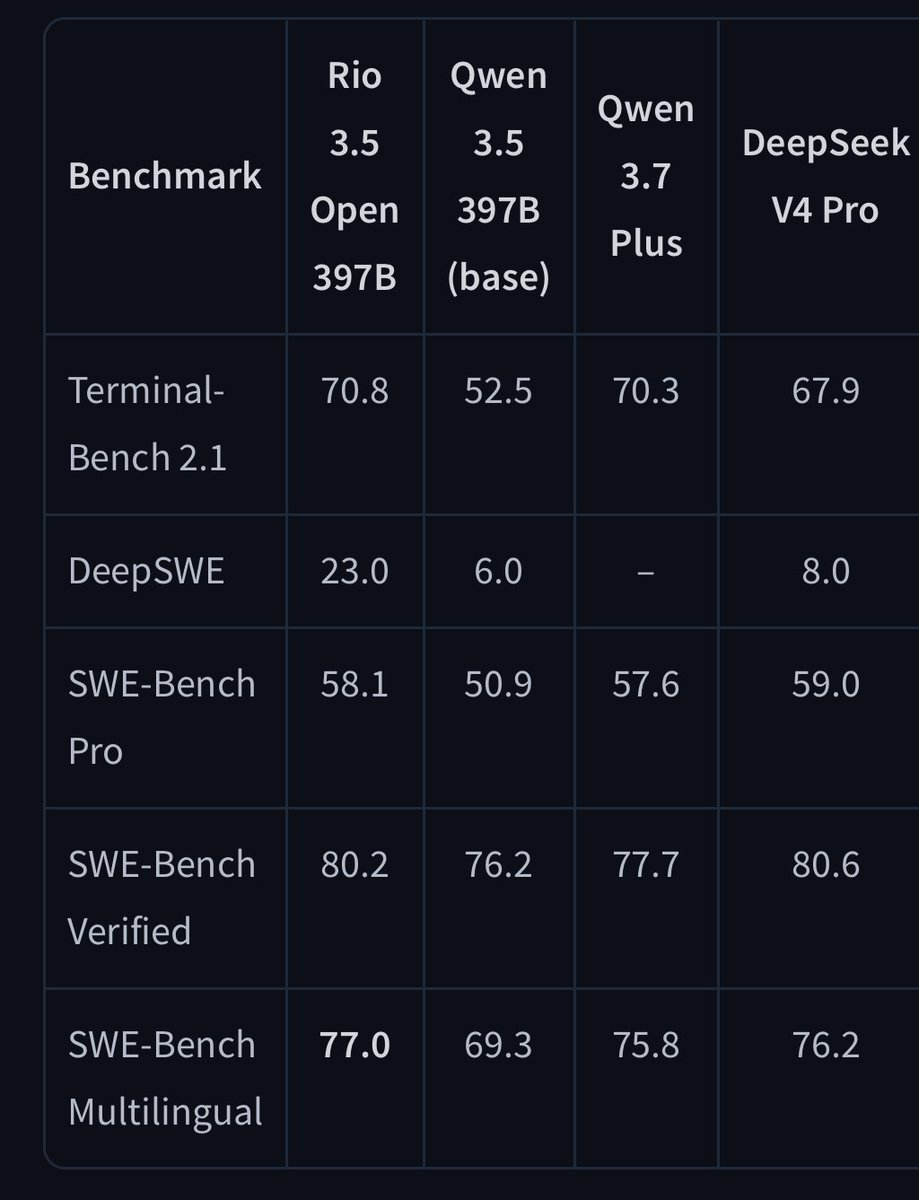
Wait what? Rio 3.5 Open 397B, developed by IT company of Rio de Janeiro's city government is now SOTA open source and even outperforming Qwen 3.7?
What is happening today.
Never heard of them before.
Jun 13

Alibaba Qwen3.7 slowly fading into irrelevance at the frontier due to proprietary stance.
In it's place we have Minimax M3 and... *checks notes* Rio 3.5 397b, made by the municipal IT company of Rio de Janeiro's city government.
huggingface.co/prefeitura-ri…
158
329
4,785
479,356
MachineLearningBrazil retweeted

Jun 13
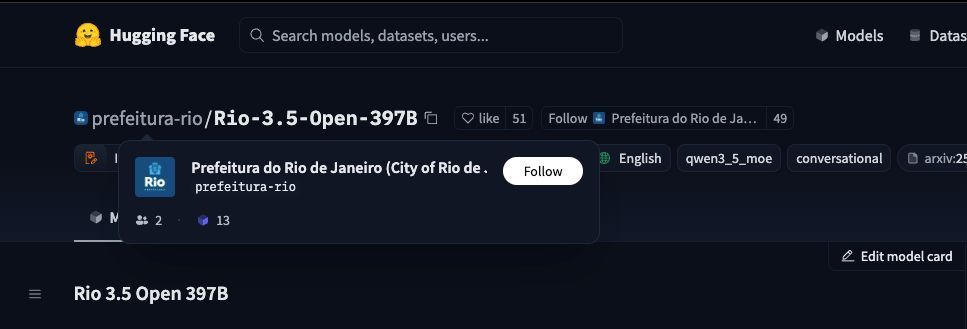
SITUATION DETECTED: The city of Rio de Janerio has post-trained a model.
Based on Qwen 7/2, Rio 3.5 Open 397B adds SwiReasoning on top of the base Qwen model — a framework that dynamically switches between standard chain-of-thought and latent-space reasoning, guided by entropy-based confidence signals, so the model only "thinks out loud" when it needs to and otherwise reasons silently in hidden space for better token efficiency.
98
289
3,922
831,234
MachineLearningBrazil retweeted

Apr 20
16
74
511
66,132
MachineLearningBrazil retweeted

Jun 14
The municipality of Rio de Janeiro released Rio 3.5, a Qwen fine-tune that is toppling the benchmarks, mixing strong OPD with SwiReasoning (a latent space reasoning technique) - and it seems to be only the beginning - os caras são brabos
Model: huggingface.co/prefeitura-ri…
Jun 13

SITUATION DETECTED: The city of Rio de Janerio has post-trained a model.
Based on Qwen 7/2, Rio 3.5 Open 397B adds SwiReasoning on top of the base Qwen model — a framework that dynamically switches between standard chain-of-thought and latent-space reasoning, guided by entropy-based confidence signals, so the model only "thinks out loud" when it needs to and otherwise reasons silently in hidden space for better token efficiency.
4
3
51
2,773
MachineLearningBrazil retweeted

Jun 13
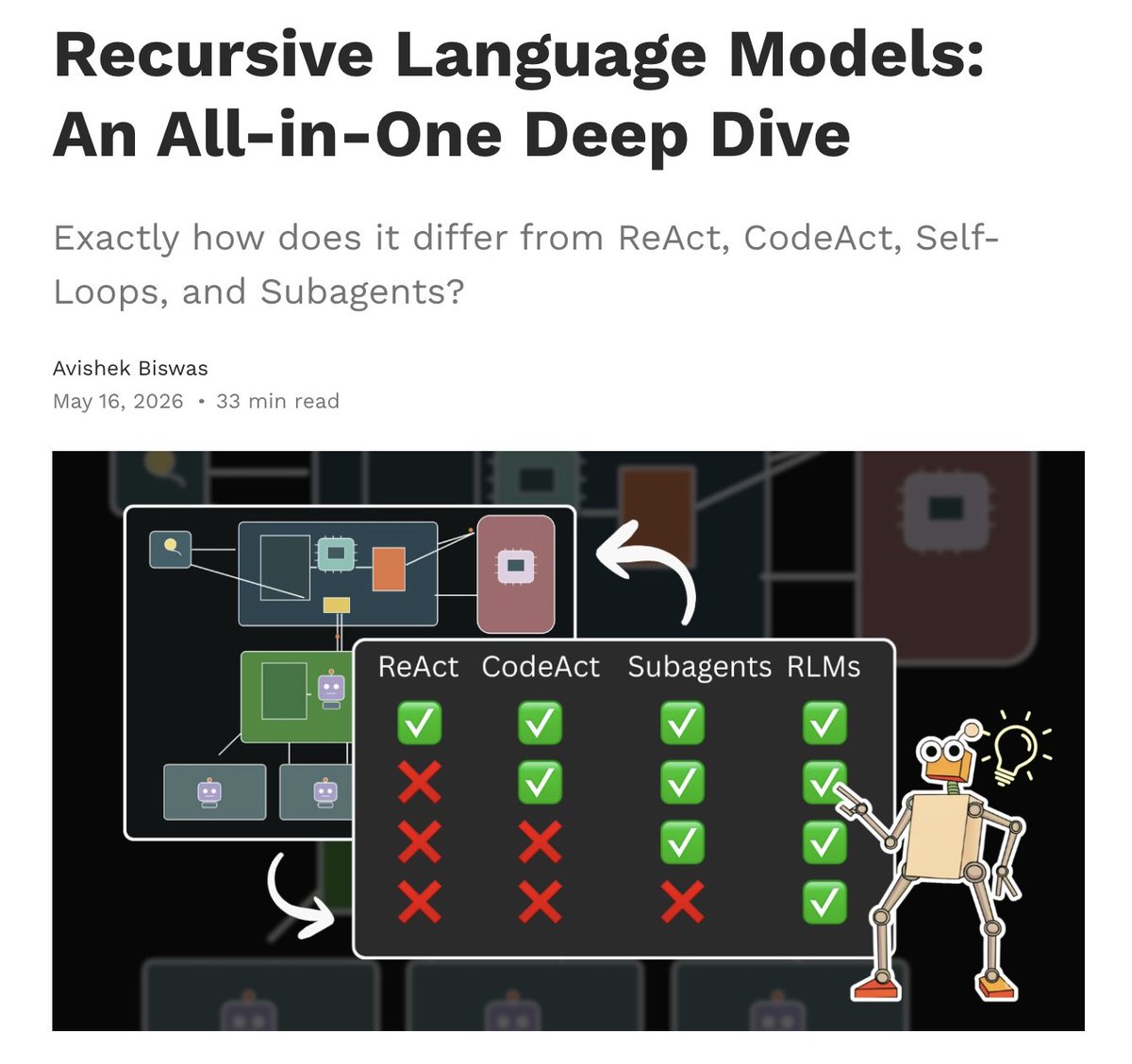
Last month I wrote this article on Recursive Language Models for @TDataScience ...
It's a total banger go read it everybody!
3
12
95
3,379
MachineLearningBrazil retweeted

Jun 13
Check it out on GitHub today: github.com/omnigent-ai/omnig…
4
22
2,483
MachineLearningBrazil retweeted

Jun 13
Really excited to open source a new project: Omnigent, a meta-harness for AI agents.
It lets you build multi-agent coding and custom agents, sitting above Claude Code, Codex, Pi, and agent SDKs to let you compose them. It also adds live collaboration and rich control policies.
77
192
1,061
177,576
MachineLearningBrazil retweeted

Jun 12
new transformers tutorials just dropped for vision 🔥
🛰️ segmentation on satellite imagery: fine-tune RF-DETR-Seg segment buildings
📱 object detection on mobile UI: fine-tune RF-DETR on screenshots
runs on toaster, converges fast, give to your agent for your use cases🫡
8
34
189
16,570
MachineLearningBrazil retweeted
Jun 13
Updated my project portfolio page!
neuralavb.com/projects
1
1
42
2,110
MachineLearningBrazil retweeted
Jun 11
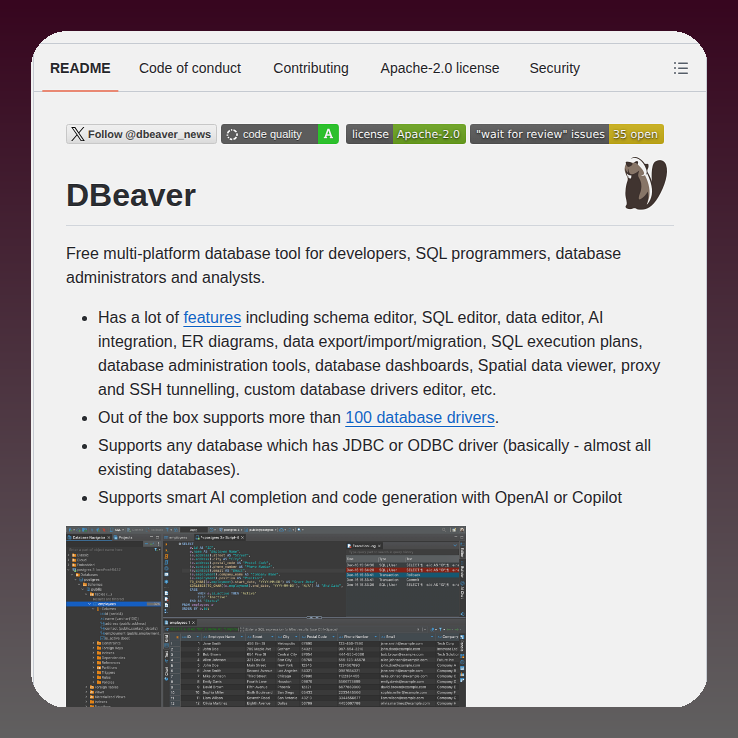
DBeaver connects to over 100 databases with AI
github.com/dbeaver/dbeaver
7
48
3,863