
CEO & Founder @droneraceleague; Co-founder @PDW_ai
Joined May 2011
- Tweets 1,079
- Following 617
- Followers 1,622
- Likes 5,366
121 Photos and videos












Nicholas Horbaczewski retweeted

Apr 2
Competitive spectator sports that can only be played in lunar gravity.
This is the kind of thing we need to invent to properly finance and commercialize the moon.
31
17
272
17,362
“The Q4 Rocket Report… is a civilizational audit. And the audit says one company is building the infrastructure for a species-level transition while every government and competitor on Earth is still filing quarterly earnings.”

The Q4 2025 Rocket Report dropped yesterday and the number that should terrify every government on Earth is not the one going viral.
SpaceX launched 1,159 of the 1,404 spacecraft put into orbit worldwide in Q4 2025. That is 83% of all spacecraft launched by every nation and company on the planet combined. In the United States the number is 97%. China managed 8%. Russia 4%. All of Europe, the continent that built Ariane, managed 0.2%.
One private company now commands greater orbital access than any sovereign power in human history, including the Soviet Union at the peak of the Space Race.
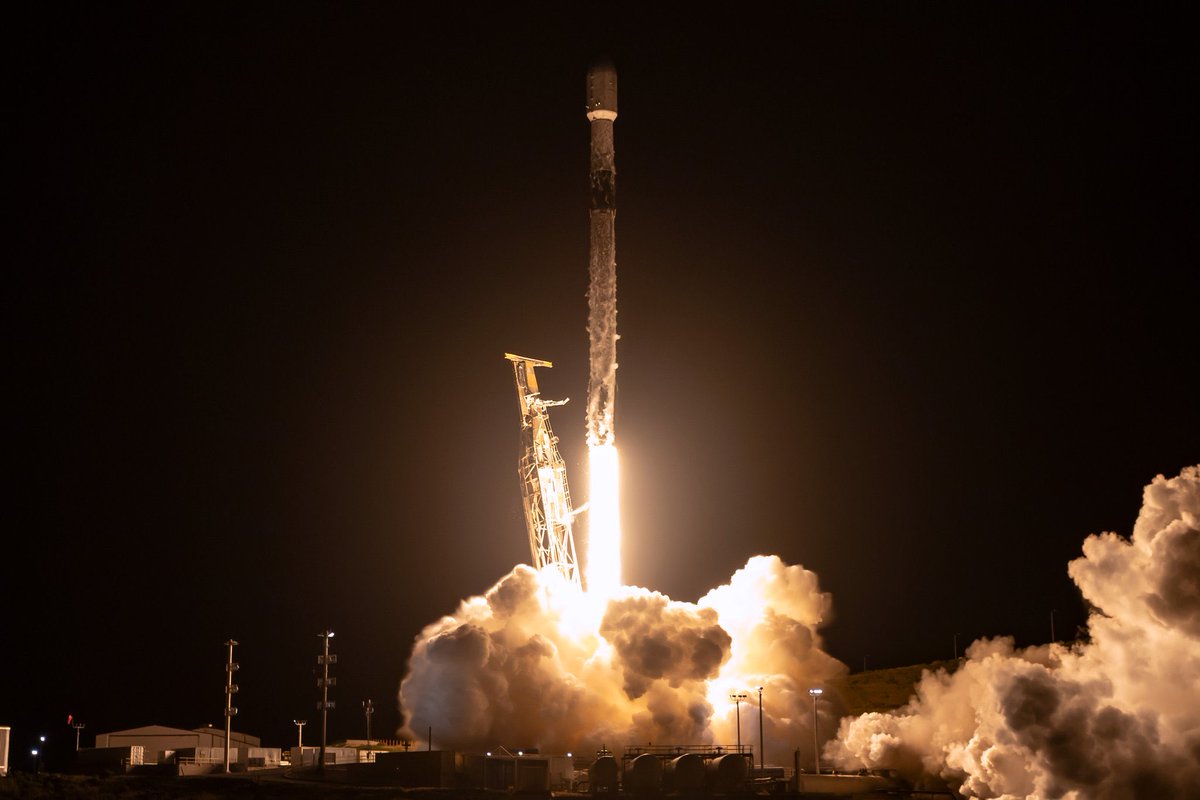
And on March 30, booster B1067 flew for the 34th time. The entire Space Shuttle program flew 135 missions across five orbiters over 30 years. One Falcon 9 first stage has now achieved one quarter of that total in four years of service. The Shuttle cost $1.5 billion per mission. Falcon 9 costs $67 million, with total fuel running $150,000. That is not a cost reduction. That is a change in the physical nature of what orbital access means.
Now layer what happened in the nine days before that flight.
March 21: Terafab breaks ground in Austin. One terawatt per year of AI compute. Logic, memory, and advanced packaging in a single building with a recursive mask-fab-test loop that exists nowhere else. Eighty percent of output allocated to space.
March 22: First renders of the 100-kilowatt AI satellite with solar arrays and radiators, scaling to megawatt. D3 chips designed to run hotter in vacuum where radiative cooling is free.
March 30: 148 satellites deployed in under 24 hours across two missions. Transporter-16 carried 119 payloads from dozens of operators. Starlink 10-44 added 29 more. The booster that flew its 34th mission landed on a droneship 8.5 minutes after liftoff, its 575th successful recovery for the company.
Nobody is reading these events as a single sequence because no analytical framework exists for what is forming.
This is not a space company. It is not a car company. It is not a chip company. It is not an AI company. It is the first vertically integrated civilization-scale stack in human history. One entity now controls fabrication of silicon, launch of mass to orbit, a constellation of 10,139 satellites with autonomous AI collision avoidance executing 300,000 maneuvers per year, the world’s largest battery storage deployment, the only humanoid robot in mass production, and the AI training infrastructure running on 200,000 GPUs scaling to 1.5 million.
From atoms to orbit to intelligence under one roof.
The Soviet Union at its most powerful operated rockets and satellites. TSMC fabricates chips. Google runs AI. Tesla builds cars and batteries. No entity before this moment has controlled the complete vertical from raw silicon through fabrication through launch through orbital infrastructure through energy through robotics through artificial intelligence simultaneously.
And here is the fact that should stop every analyst, every fund manager, and every head of state cold.
The fuel cost to maintain this dominance is $150,000 per launch. One hundred and fifty thousand dollars. That is less than a house in most American cities. The propellant bill for the vehicle that delivers 97% of American orbital access costs less than a mid-range Tesla.
The bottleneck was never technology. It was never physics. It was never fuel. It was imagination. And one man just announced that 80% of his chip factory’s output is going to space because Earth cannot power what he intends to build.
The Q4 Rocket Report is not a market share chart. It is a civilizational audit. And the audit says one company is building the infrastructure for a species-level transition while every government and competitor on Earth is still filing quarterly earnings.
126
Is there a lower age limit on Eight sleep? Is there a threshold age a sleeper needs to be at for the metrics to be accurate or the cooling/heating to improve sleep? @eightsleep @m_franceschetti
78
This AI executes a "learned policy" perfected over millions of simulation laps on a static digital twin. It relies on "muscle memory" for where the gate should be, rather than perceiving where it is.
It is a breakthrough in control, not perception. We must distinguish between memorization and adaptability.
(Huge engineering achievement regardless. Hup Delft!)
1/4 @rgury

1
1
214
We are seeing the "Sim to Real" gap close for physics. The ability to handle drift and prop wash without GPS is massive progress.
But the "Semantic" gap remains.
Until an AI can "sight read" a complex 3D track it has never seen before, the human pilot is safe.
3/4
1
55
We launched AIRR to eventually put an AI pilot into the actual DRL. We were far from that reality in 2019.
TU Delft won AIRR then and they won here. The progress is tangible.
But let’s not overhype readiness. This approach wouldn’t survive the first gate of a course that wasn't perfectly modeled in simulation weeks in advance.
4/4
69
It is so gratifying to see the ever growing increasing appreciation of FPV drones and FPV piloting skill.

"The drone pilots are experienced, and trained in the specific sport for a long time," @YiannisExarchos explains the workforce manning the drones in broadcast operations at #MilanoCortina2026
The drone pilot in ski jumping is a ski jumper himself... More 👇
1
1
81
Nicholas Horbaczewski retweeted

Feb 12
Aspire not to build robots. Aspire to build machines. It’s only called a robot when it doesn’t work. The moment it works, it becomes a machine.
6
9
62
4,375
Nicholas Horbaczewski retweeted

Take a moment to stop and reflect
We made sand think
And you can talk to it
146
130
1,286
43,541

16 Dec 2025
“The game is shifting in robotics beyond conversations around End to end. It’s really around learning velocity, how fast can you turn exposure into intelligence. Those are the people who will win.” @TimKentleyKlay
, CEO & co-founder of @hypr
On @RoadToAutonomy
115
11 Dec 2025
“Autonomous driving is a solved problem.” True today or not yet?
112
9 Dec 2025
Now do autonomous vehicles…
@TheAutonocast
8 Dec 2025

So after all these hours talking about AI, in these last five minutes I am going to talk about:
Horses.
Engines, steam engines, were invented in 1700.
And what followed was 200 years of steady improvement, with engines getting 20% better a decade.
For the first 120 years of that steady improvement, horses didn't notice at all.
Then, between 1930 and 1950, 90% of the horses in the US disappeared.
Progress in engines was steady. Equivalence to horses was sudden.
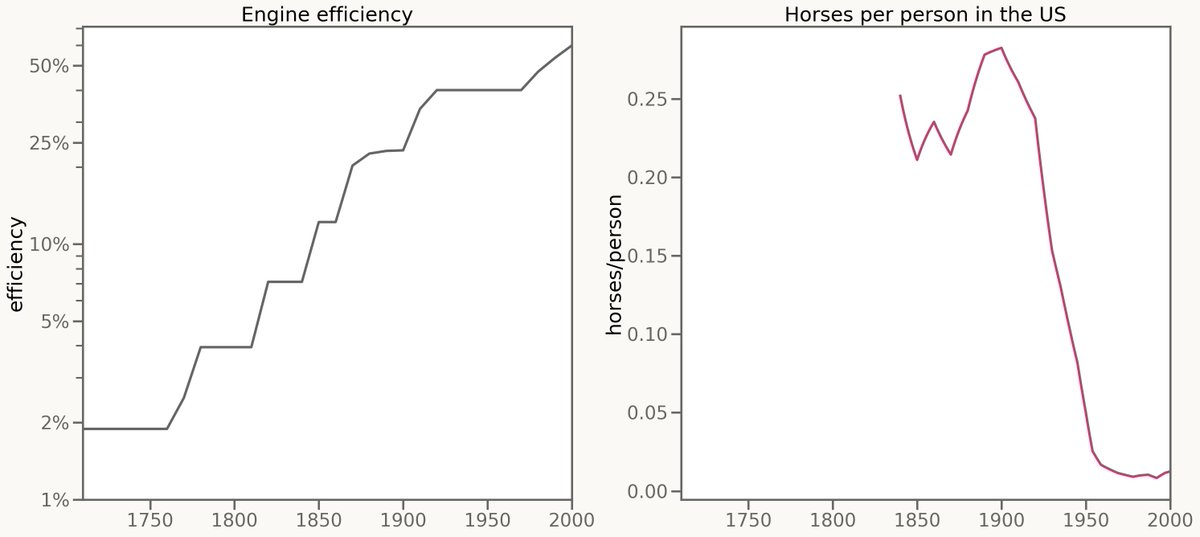
ALT Engine efficiency over time, showing steady improvement
203
Nicholas Horbaczewski retweeted

20 Nov 2025
Proud to announce Ondas’ $35M strategic investment in @PDW_ai and our partnership with @mhiggins, @rgury, and the entire PDW team.
PDW is rapidly emerging as one of America’s most capable operator-driven combat robotics companies.Together, we’re aligning around a shared mission to accelerate U.S. Drone Dominance. 🇺🇸
20 Nov 2025

Ondas announces a $35M investment in @PDW_ai to accelerate production of NDAA-compliant combat robotics and expand U.S. defense manufacturing capacity. $ONDS
ondas.com/post/ondas-announc…
9
27
270
21,358
Nicholas Horbaczewski retweeted

20 Nov 2025
Ondas announces a $35M investment in @PDW_ai to accelerate production of NDAA-compliant combat robotics and expand U.S. defense manufacturing capacity. $ONDS
ondas.com/post/ondas-announc…
20
55
416
115,938

This investment from @OndasHoldings marks another step forward in accelerating the production of combat robotics necessary to maintain air superiority for America and its allies.
As PDW innovates at the speed of modern conflict, our strength lies in our mission, our service to the warfighter, and those who share that commitment.
20 Nov 2025
Ondas announces a $35M investment in @PDW_ai to accelerate production of NDAA-compliant combat robotics and expand U.S. defense manufacturing capacity. $ONDS
ondas.com/post/ondas-announc…
7
21
156
23,853
Nicholas Horbaczewski retweeted

3 Nov 2025
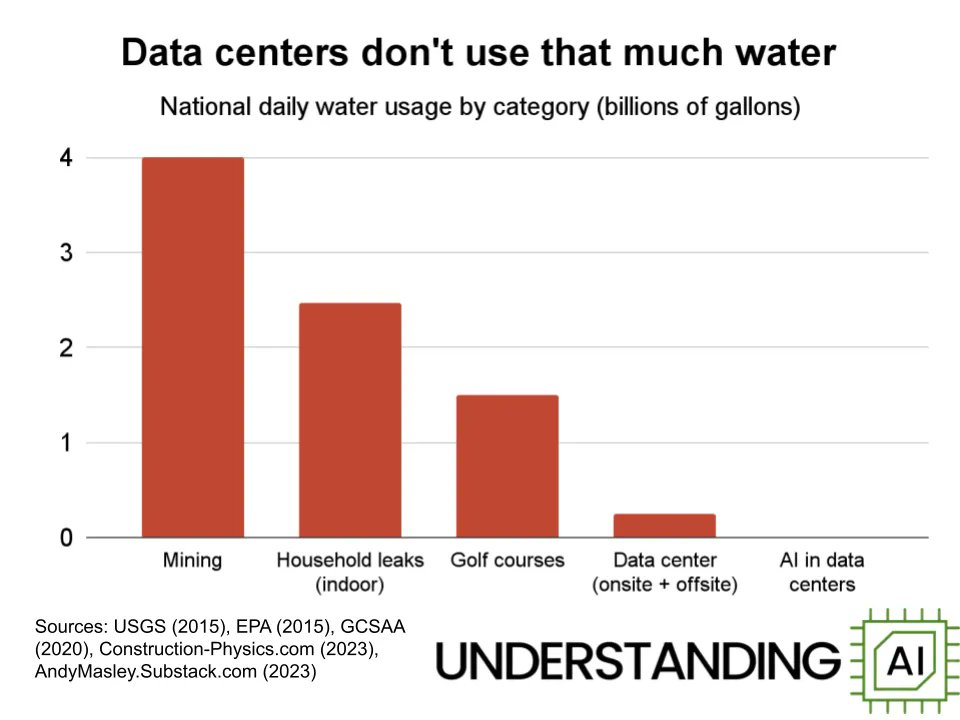
If you are mad about water use by AI you should be *really* mad about water use by golf courses.
39
75
528
87,662
3 May 2025
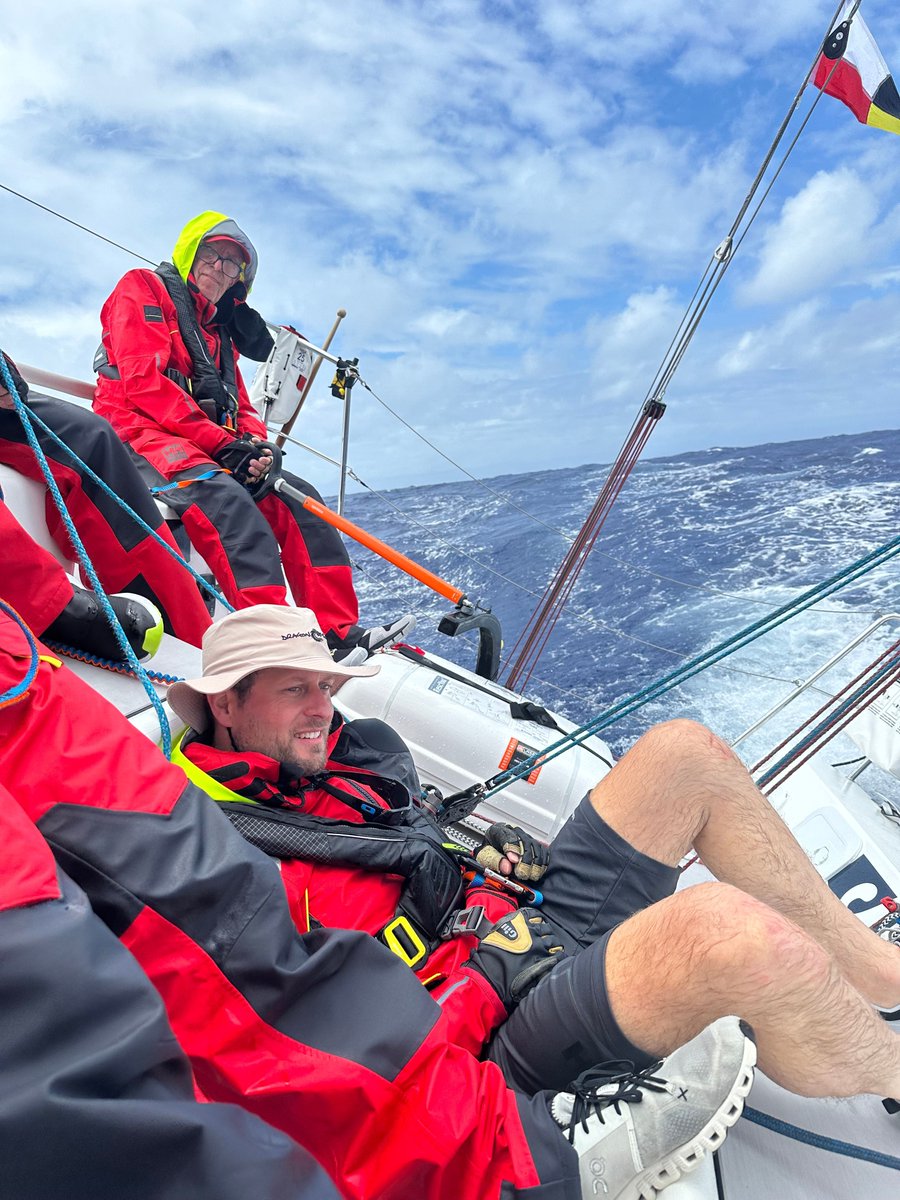
Great race by the team on Dragon Fire!
3 May 2025

Does this tack look familiar to anyone? The crew of DRAGON FIRE getting comfortable in these positions for the next... 600 miles or so. The Canadian team on Will Apold's J/99 sailed to a 🥈 finish in their St. David's Lighthouse Class and a 10th place overall finish!
434