
Partner @Venrock, Investor/Director @Altruist, @_MomentHQ, @GetVanilla, @FinnyAI, @Dataminr, @PercipientAI, @InterosInc, @CFR_org @Endeavor_Global
Joined May 2009
- Tweets 287
- Following 749
- Followers 2,263
- Likes 4,336
23 Photos and videos




Nick Beim retweeted

Feb 16
𝐁𝐑𝐄𝐀𝐊𝐈𝐍𝐆: 𝐌𝐨𝐬𝐭 𝐀𝐈 𝐬𝐭𝐚𝐫𝐭𝐮𝐩𝐬 𝐰𝐨𝐧’𝐭 𝐟𝐚𝐢𝐥 𝐛𝐞𝐜𝐚𝐮𝐬𝐞 𝐭𝐡𝐞 𝐭𝐞𝐜𝐡 𝐢𝐬 𝐛𝐚𝐝.
They’ll fail because they never had a moat.
Let me explain.
In my recent conversation with Nick Beim, one point kept resurfacing—quietly, but decisively:
General intelligence is becoming cheap.
Context is not.
That’s the central mistake most founders (and investors) are making.
They’re racing to build horizontal AI— models, copilots, wrappers, “smart” features.
And wondering why differentiation evaporates.
Here’s the paradox:
The smarter AI gets, the less valuable intelligence alone becomes.
Let that sink in.
What actually compounds isn’t the model.
It’s where the model lives.
In workflows.
In regulated environments.
Inside messy, human, high-stakes decisions.
That’s why vertical AI matters.
Not because it’s sexier.
But because it’s harder.
Horizontal platforms want to win everything.
But they can’t:
• They don’t own the data
• They don’t sit inside the workflow
• They don’t have trust or relationships
• And they can’t absorb infinite edge cases
That friction is the moat.
Here’s the reframing most people miss:
Moats don’t come from intelligence.
They come from context distribution trust.
An AI that understands your business,
your incentives,
your constraints
will outperform a “smarter” model every time.
Practical takeaway for founders and investors:
If your AI product can be replicated by a prompt,
you don’t have a business.
If your advantage disappears when the API price drops,
you don’t have leverage.
But if your product is embedded in decisions people can’t afford to get wrong?
That’s where asymmetry lives.
Thank you Patrick Ewers for the kind introduction!
We’d like to thank @AlphaSenseInc for sponsoring this episode!
#AI #Startups #Investing #Leadership #Founders

2
2
4
622

Excited to invest in @FINNYAI, a "shortcut to the Holy Grail" in wealth management, which has seen explosive growth since launch. Great article by @martina__elena @Forbes. @Eden__Ovadia @victoria_toli @Venrock
forbes.com/sites/martinacast…
3
7
9,643

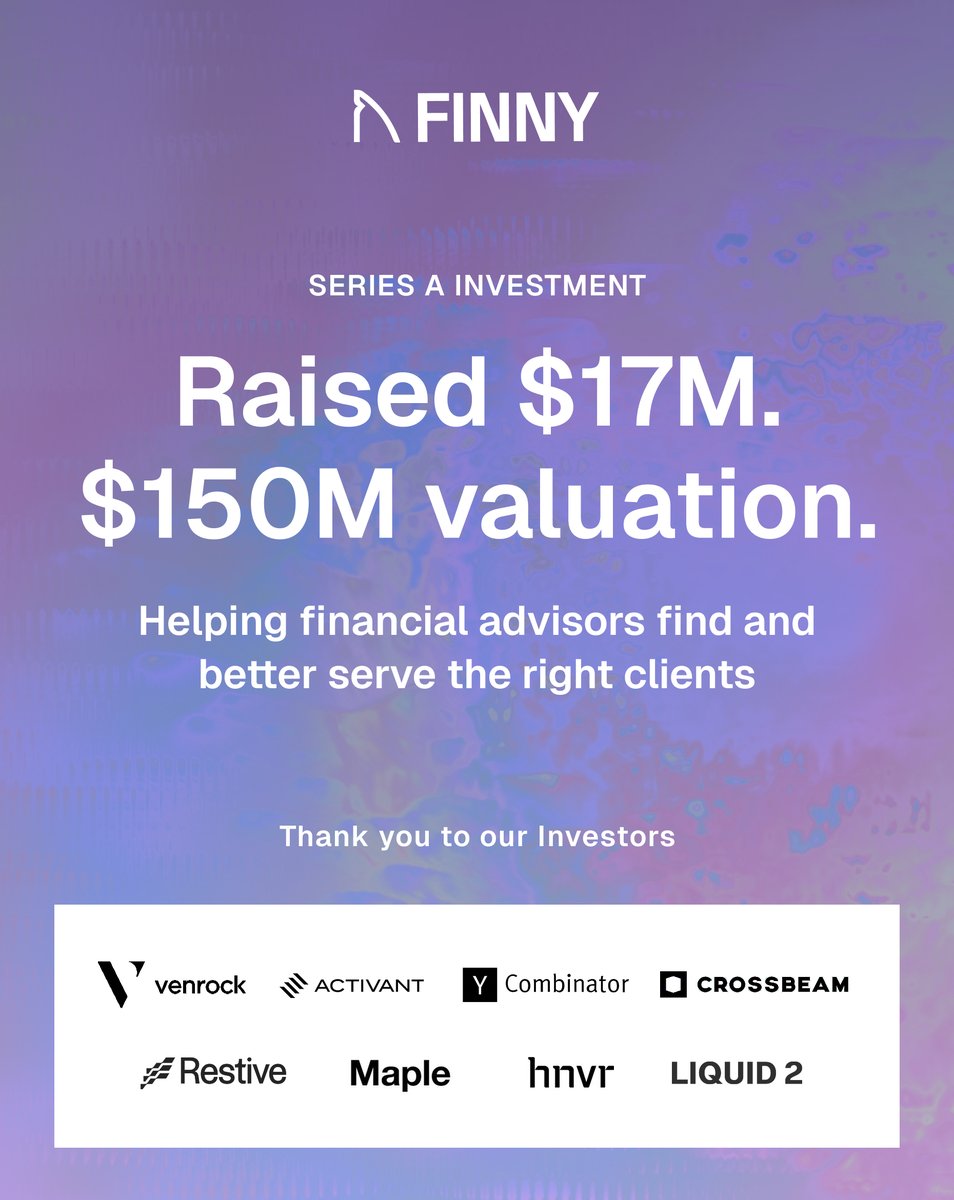
FINNY has raised $17M Series A led by @Venrock.
We're building the organic growth engine for financial advisors - helping them find the right clients at the right time, with the right message.
400 firms. 50x growth. Just getting started.
12
7
39
29,005
Nick Beim retweeted

23 Sep 2025
Really fun conversation with @chrishughes, @jessbrandt, and @NickBeim on how the U.S. government has shaped markets in the past and present
Grateful to @CFR_org for hosting this thoughtful discussion. Watch here: youtube.com/live/yS6NhPAvpx0…
1
7
1,741
Nick Beim retweeted

3 Sep 2025

🎙We’re back on the #RunningThroughWalls mic with @djacksonparker of @_MomentHQ and @NickBeim on the future of fixed income. Their conversation is a master class in how a startup can move quickly to get things done even in the most established industries. bit.ly/46i0bPw

1
2
10
1,013
Nick Beim retweeted
9 Jul 2025
First tweet ever. Hopefully the Series C won’t be the second.
@_MomentHQ has raised a $36M Series B led by @indexventures to automate the $150T fixed income market.
We're also announcing our partnership with LPL Financial, the largest broker-dealer in the U.S.
Our team automated bond trading at Citadel and Jane Street - now we’ve assembled a world-class team to power every mission-critical workflow in fixed income.
Thanks @PaigeSmithNews for the write-up in @business, and to @a16z, @lightspeedvp, @Venrock, @neo & @contrary for the continued support.
And welcome, @janatindex to the board.
16
31
82
56,329
Excited to double down on our investment in Moment, a company rewriting fixed income infrastructure that was founded by the team that built the automated credit desks at Citadel and Jane Street. Off to an exceptional start. linkedin.com/posts/dylan-par…
2
1
8
1,125
Great to see @Dataminr weigh in at #7 on the #NatSec100, the top 100 companies driving forward national security. Outstanding work @TedBailey & team. natsec100.org/ @Venrock
2
3
635

Altruist is now valued at $1.9B as over 4,700 advisors choose a platform built for modern, independent firms.
@barronsonline covers the latest:
🔗 barrons.com/advisor/articles…
2
5
1,169
Excited to speak with Josh Lipton on @YahooFinance about the defense technology boom and how emerging technology is changing the character of modern warfare. @Venrock #DefenseTech finance.yahoo.com/video/why-…
2
3
742
Great story about how @jasonwenk founded @altruist and the entrepreneurial lessons he'd learned from his previous companies that shaped his thinking. endeavor.org/stories/the-big…
1
3
8
1,238
Great to see the blowout progress of @Altruist, the newcomer RIA custodian with cutting-edge tech in an industry dominated by a legacy duopoly. Raised $169m at a $1.5bn valuation, growing revenue 550%. Congrats @jasonwenk & team. bloomberg.com/news/articles/…
1
12
692
Nick Beim retweeted

26 Jan 2024
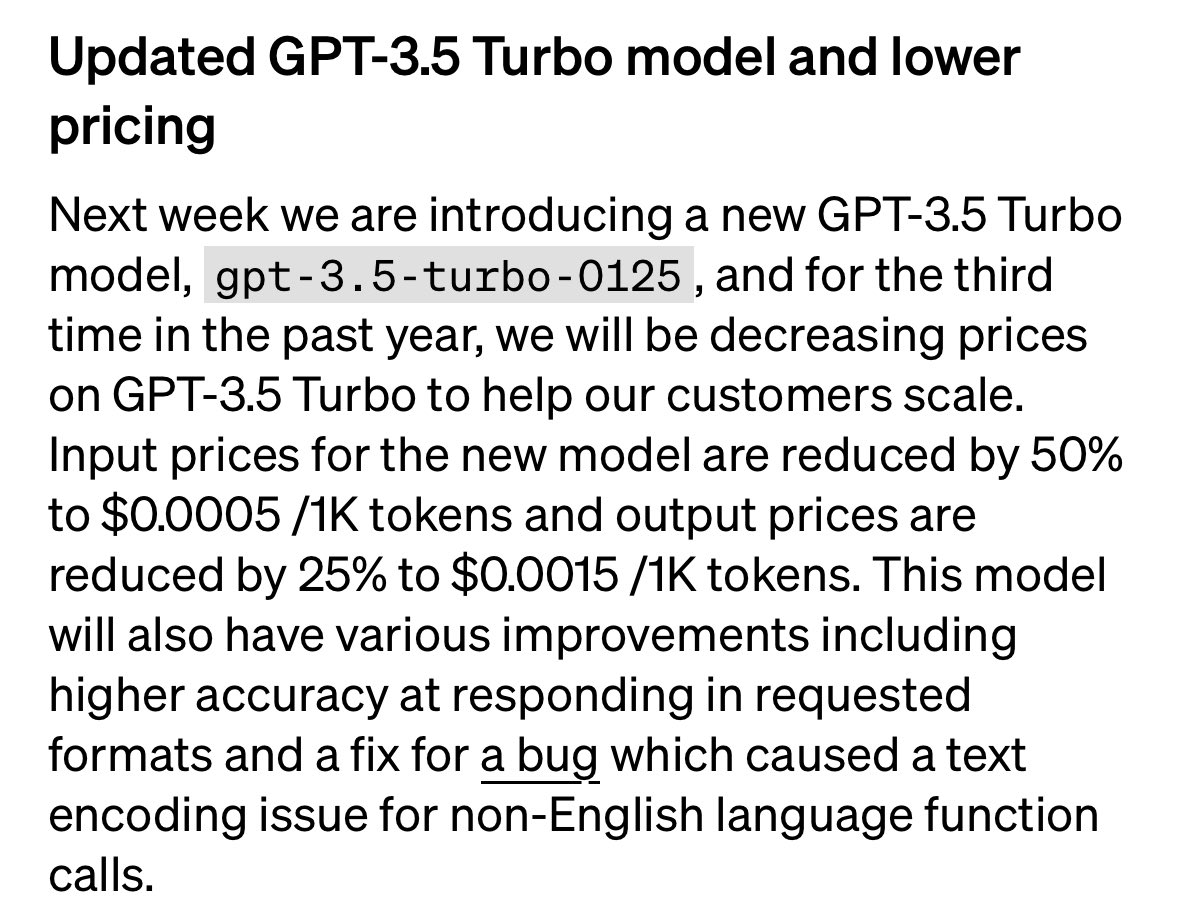
What’s incredible about AI is the rate of cost reduction and efficiency improvements. You can build things that are cost prohibitive today knowing they’ll become economically viable shortly.
22
58
420
230,188
Nick Beim retweeted

8 Jan 2024
Exclusive: @Venrock ups its fund size for the first time in a decade, raising $650 million for its tenth fund. trib.al/vad0FbW
3
4
6,015
Fixed income demand has exploded since 2022, creating an opportunity to bring next-gen infrastructure to a mkt that has seen little innovation for 10 yrs, We’re excited to be investing in Moment to take advantage. Killer team w/huge opportunity. @Venrock axios.com/pro/fintech-deals/…
3
505
It’s great to learn from industry legends & even better to team up with them. Couldn't be more excited that Bill McNabb, former CEO of @Vanguard_Group, is joining @Venrock as an advisor to help build leading fintech co's of tomorrow. @altruist @getvanilla investmentnews.com/ex-vangua…
1
1
8
963
Hard to capture @altruist's momentum in a tweet, but in 4.5 years, it's become the 3rd largest RIA custodian, w/organic AUM tripling over past year and rev growing 1700%. New $112m funding will help them accelerate further. Hats off to @jasonwenk & team. wealthmanagement.com/technol…
1
1
17
2,279
More big fintech news: weeks after announcing its own self-clearing platform, @Altruist acquires Shareholders Services Group, giving it a total of 10% market share of RIA firms. Impressive start for a company founded just 4 1/2 yrs ago. @jasonwenk wealthmanagement.com/technol…
2
8
1,187
Big news in fintech: @altruist goes self-clearing today, becoming the only full-service custodian built exclusively for RIA's. This is a big swing and an impressive technical achievement by @jasonwenk & team. wealthmanagement.com/technol…
1
2
18
2,154

🎙@OpenAdvisor, founder of 5 successful #WealthManagement companies, most recently @GetVanilla, talks about lessons learned as a serial #entrepreneur and the need for more digestible information in #estate planning with @NickBeim on #RunningThroughWalls. vnrk.co/3XG1ErF
2
5
885