Assistant Professor, Department of Biotechnology, IIT Madras
Joined May 2019
- Tweets 566
- Following 703
- Followers 479
- Likes 1,040
20 Photos and videos


Shantanu Pradhan retweeted

Jun 10
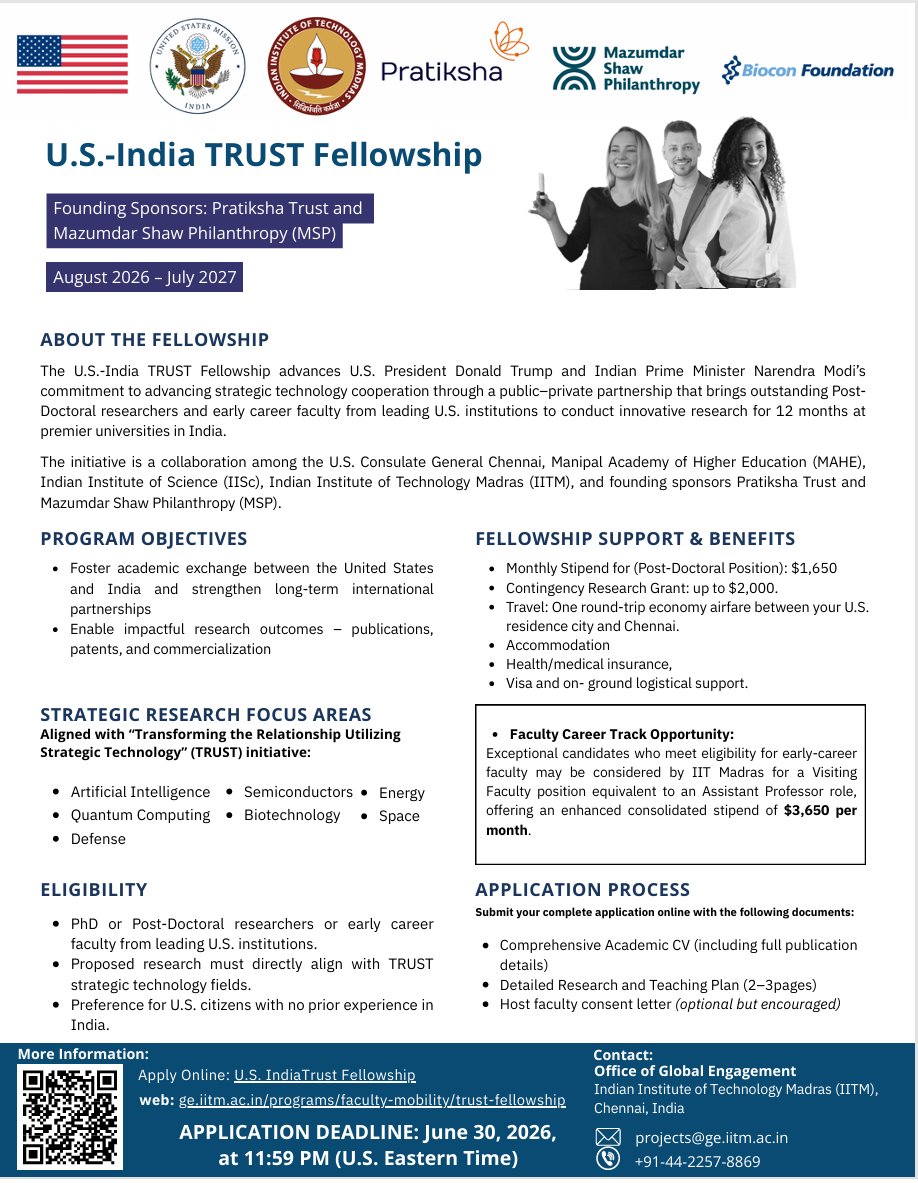
I look forward to supporting initiatives such as the U.S.-India TRUST Fellowship.
It will foster academic exchange between the United States and India, strengthen long-term international partnerships, and enable impactful research outcomes including publications, patents, and commercialization.
2
14
83
5,270
Shantanu Pradhan retweeted

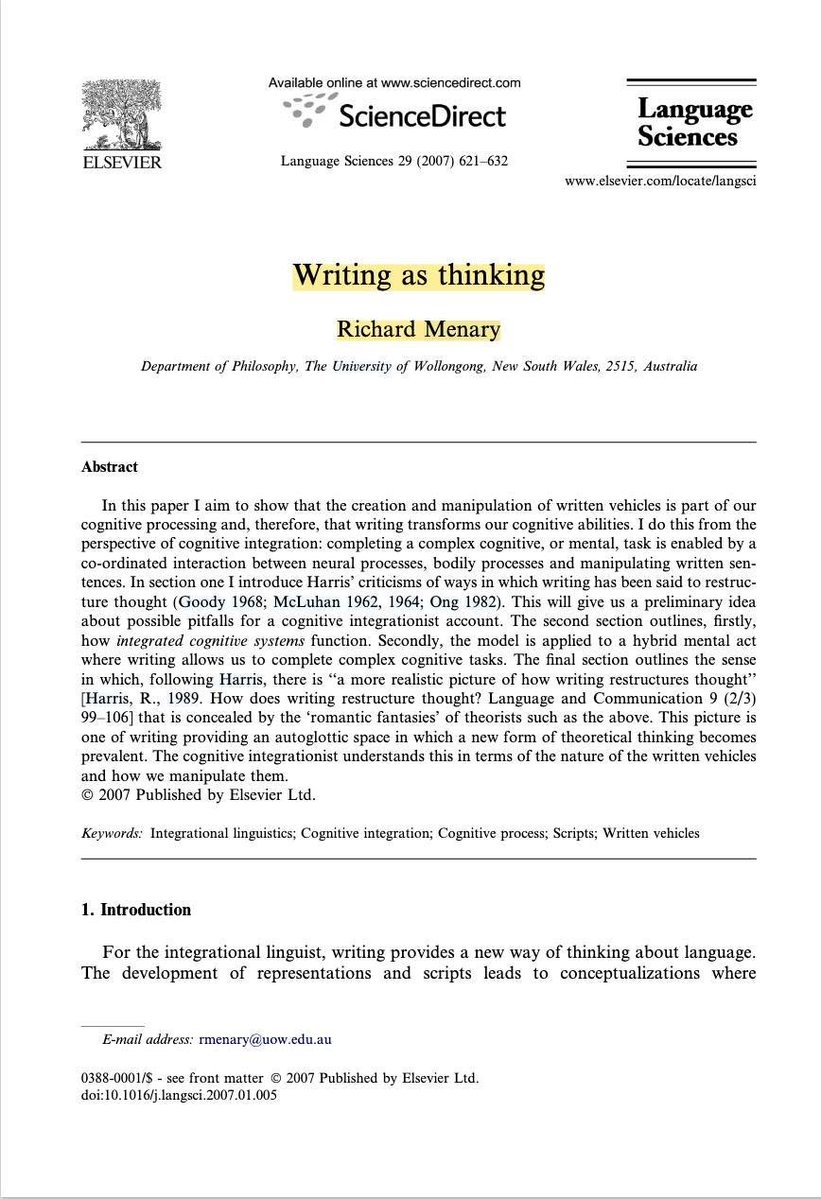
Does “writing is thinking” still hold when AI can do most of the writing?
If writing has long been one of the main vehicles of thought, what happens when AI starts carrying much of that cognitive labour?
I have been thinking about this after reading Richard Menary’s paper Writing as thinking.
His argument is powerful. Writing is part of thinking. We do not simply think first and write later. We think through the act of writing itself.
Drafting, revising, deleting, moving sentences around, rereading a paragraph, seeing a gap in an argument, finding a clearer way to say something. All of that is cognitive labour.
But generative AI changes the conditions around this argument.
Before AI, writing carried much of the heavy lifting. It was one of the main ways students externalized thought, struggled with ideas, organized meaning, and developed judgement.
Now AI can produce the paragraph, polish the sentence, restructure the argument, summarize the reading, and generate the reflection.
So the question becomes serious: what happens to the thinking that used to happen through writing?
I still believe writing matters deeply. But I also know people, including people close to me, for whom writing creates anxiety. They think better through sketching, diagramming, drawing, speaking, mapping, or building.
So maybe the old mantra “writing is thinking” belonged to an age when writing carried far too much of the burden.
This also explains part of our current assessment problem. For years, education has leaned heavily on the written product as the main evidence of learning.
Generative AI has disrupted that assumption.
A polished text can still tell us something, but it can no longer carry learning assurance by itself. We need process evidence, oral explanation, drafts, diagrams, annotations, design choices, and moments where students show how their thinking developed.
Literacy is a situated practice. Pre-AI literacy and post-AI literacy belong to different conditions. Now what we need to think about is whether our students can think across tools, modes, contexts, and constraints?
6
92
289
13,935
Shantanu Pradhan retweeted

Jun 8
I want to do a public service announcement for people who are desperate to come to Europe. I have seen many, many desperate Indian students doing 12 hours of delivery/ restaurant / gig work, extremely underpaid and abused in Berlin and this really bothers me.
Please don’t take out huge loans and go
into debt to get admitted to third rate private universities here. You will face extreme hardship, both mental and financial, for little to no reward.
There many universities in Germany which are essentially visa mills. They sell you a dream- that if you manage to somehow get to Europe, you will be financially sorted for life and there will be an abundance of job offers for you to pick and choose from, once you graduate.
These universities are very scammy, have a low barrier to entry (you can more or less buy a seat), and extremely low teaching standards. Students who come here are forced to take up underpaid and often illegal gig work to survive and they are easy targets for shady companies.
And then they realize that their university degree is pretty much worthless. Both in Germany and in India.
If you do want to come to Germany, apply
to the state run universities here. These are usually cheap but very competitive and have usually quite high standards.
Please don’t take out a 30 lakh loan, or sell family land to fall for a scam. If something sounds too good to be true, it probably is not true.
Also the Indians on X who are relentlessly advising young people to get out of the country by hook or by crook, should perhaps exercise some caution knowing that there are impressionable young people out there who might do stupid things.
72
275
1,530
104,271
Shantanu Pradhan retweeted

Jun 7
Doctors are not asking for integration of alternative medicine into the standard of care. Patients are not asking for integration of alternative medicine into the standard of care. The public is not asking for integration of alternative medicine into the standard of care. The only people asking for integrative medicine are alternative medicine practitioners, their promoters and sympathizers for survival and business opportunities. The only way alternative medicine can survive into the distant future is by integration into standard medical care and these quacks know it. Don't fall for this nonsense.
32
224
1,112
38,228
Shantanu Pradhan retweeted

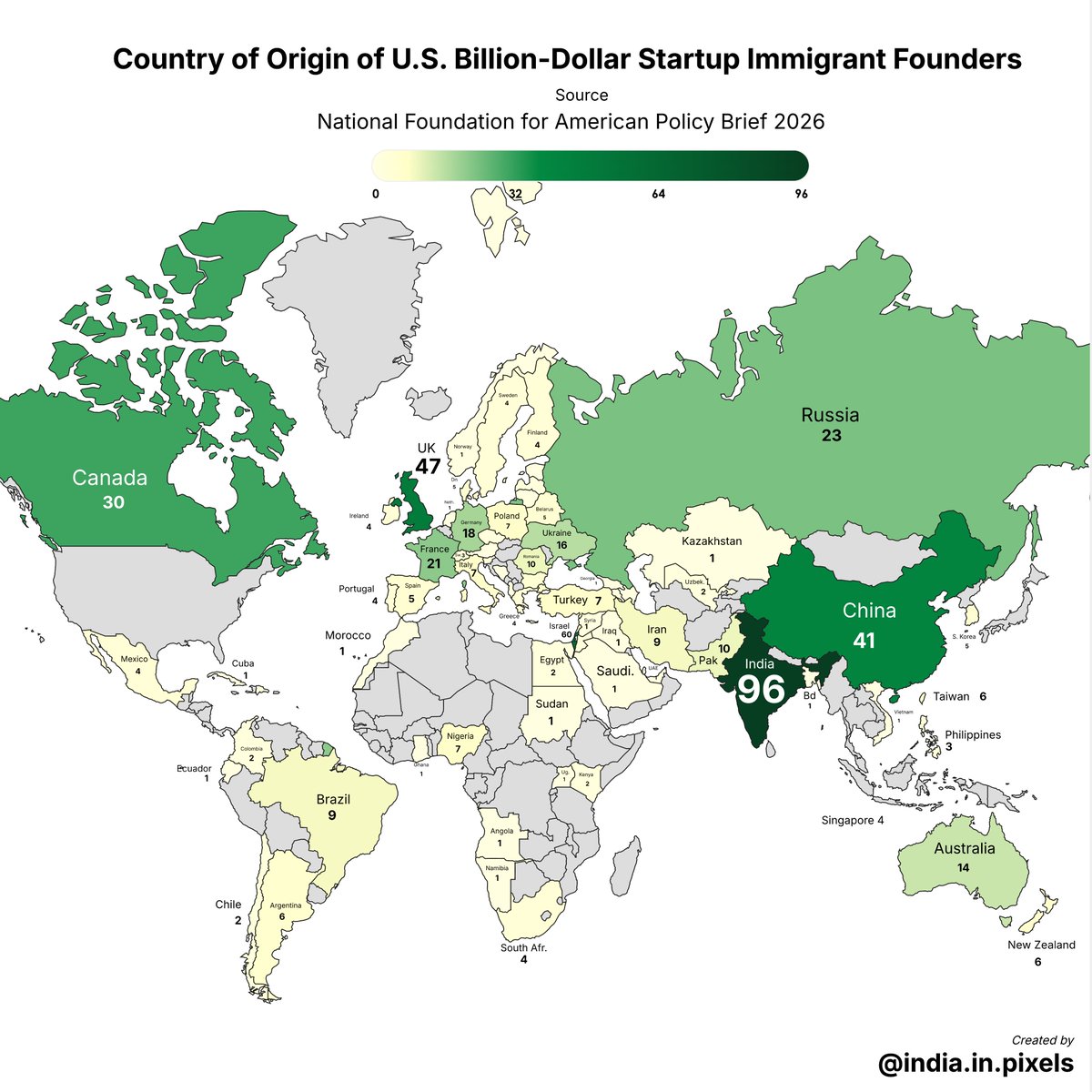
Immigrant Founders of Billion Dollar US startups by Country of Origin (2026)
14
58
483
41,303
Shantanu Pradhan retweeted

Jun 5
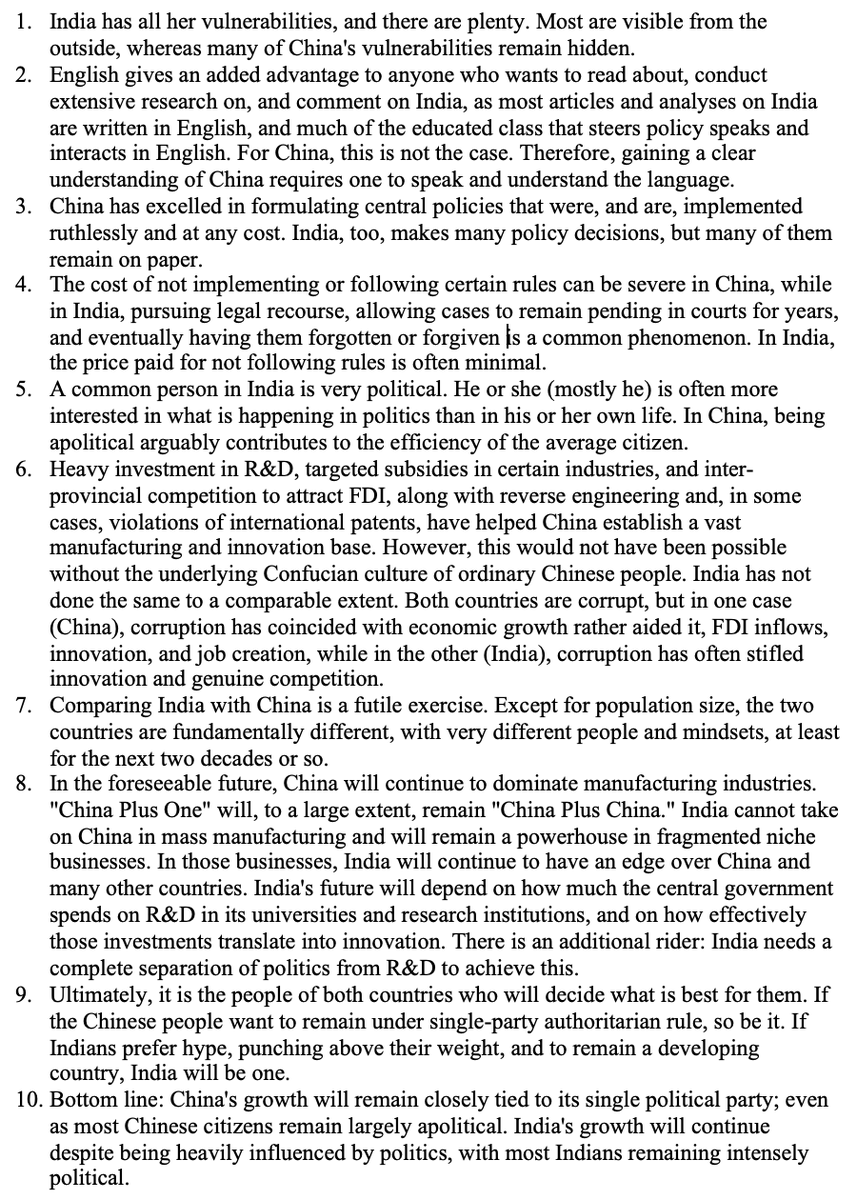
your interest on #India & #SEAsia is welcome. for an #Indian #Academic who studied/lived/worked in #USA, #Europe & #Japan for good part of 2 decades & came back, here is my take on #India & #China. interactions w many #Chinese in #USA/Eur & during my visits to #China shaped this.
1
4
465
Shantanu Pradhan retweeted

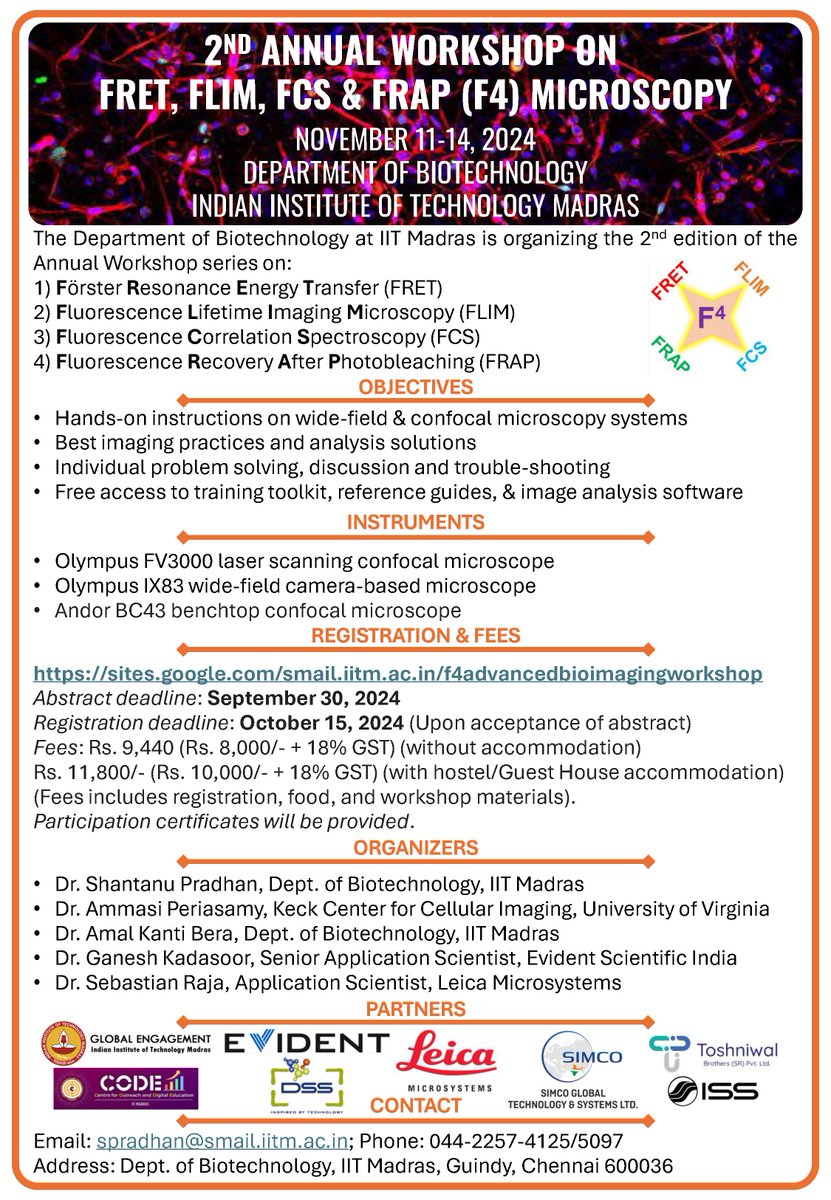
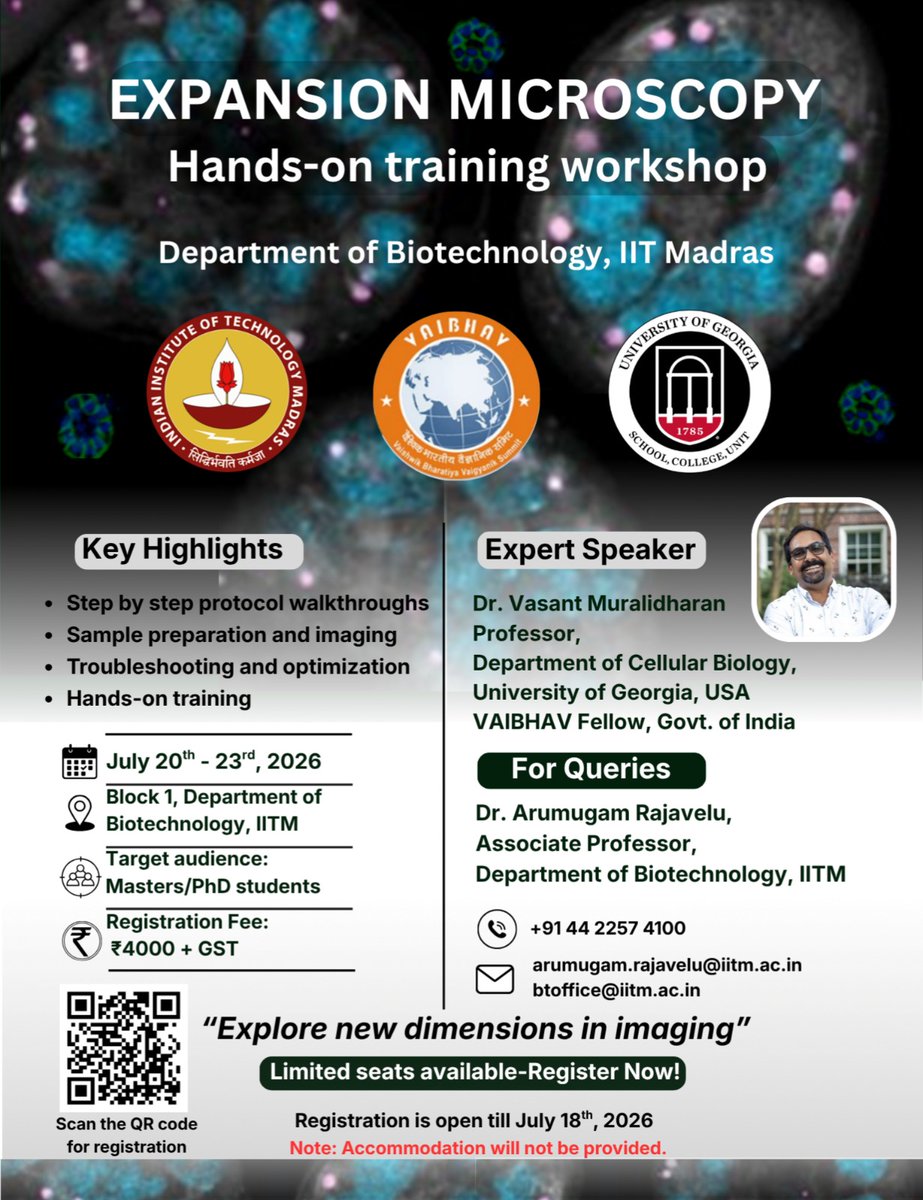
Dept. of Biotechnology at IIT Madras is organizing a hands-on training workshop on Expansion Microscopy from July 20-23. Register soon for this exciting opportunity!
9
23
1,372
Shantanu Pradhan retweeted

May 28
While India has its fair share of issues in science funding and management, the pursuit of basic (theoretical) science is not one of them.
In its many publicly funded research and teaching institutions and universities, as faculty, we get full time salary across the year (unlike most US universities where you have to earn your summer salary from external grants). We have to teach, often perform some administrative duties, but we have complete freedom on pursuing our own research problem. In principle, therefore, India is a great place to do basic science if you do not need a lot of money and resources for it.
The latter is the heart of the issue. Large-scale public funding for science is becoming more and more restricted to few areas which are thought to be of immediate relevance in terms of applications, or societal relevance. So if your basic science pursuit needs expensive instruments or computational facilities - you are compromised. This is where the real problem is. This is also why India has produced many outstanding theoreticians over time, but very few top class experimentalists and computational modelers in the modern era.
While we will always desire that Government funding for science increases, careful consideration should also be given to balance the distribution of funds to maximise impact, given the existing talent pool.
A mistake we have often repeated over decades, in my opinion, is following trends established elsewhere in a different country; allocating disproportionately high funding through various agencies to those few specific areas - without first creating the talent necessary to efficiently exploit that funding.
On the one hand, this has allowed a lot of mediocrity to creep in and be funded without producing anything significant for the nation. On the other hand, the reduced allocation to general (open) science has compromised genuinely talented individuals - who already exist within the Indian scientific ecosystem, and could have scaled major grounds with additional support and put genuinely Indian innovation on the global map.
It is great to see a private foundation support the creation of a new theoretical science institute in Mumbai this week. In India, this continues to be a rarity, with private philanthropic funding and industry involvement in science remaining below par. We hope to see more philanthropic pioneers enter this space and support high end instrumentation and computational centers that are the pillars of modern scientific developments.
Concurrently, the central and state governments must work on enhancing and nurturing the scientific talent pool - the single most critical factor in the whole ecosystem is this human resource. There is, no alternative to this anywhere in the world over history. Governments have always been the scientists' closest ally. That bridge must not be broken.

#WATCH | Mumbai, Maharashtra: At an event hosted on 'Quantum Research', German Physicist and Nobel Laureate, Klaus von Klitzing says, "... I am fascinated to see that a basic research laboratory, privately funded, will be created here in India, like a Max Planck Institute. I am coming from Germany, and we have the Max Planck Society, which is free to do basic science, to generate new knowledge, and to have a higher understanding of our world. If you look in Germany, nearly all Nobel Prize winners work in the Max Planck Society, and the result of basic research is visible only after a certain time. Today in our hectic world, everyone is looking for results in the next year or the next three years; only a few people have the long‑term vision. I’m happy that the Lodha* Foundation has this vision to support basic science..." (26.5)
4
48
275
29,110

May 23
Congratulations to Srashti Birla from Dept. of Biotechnology, IIT Madras for getting selected for the Bangalore Microscopy Course 2026! Wish her the best!
3
142
May 23
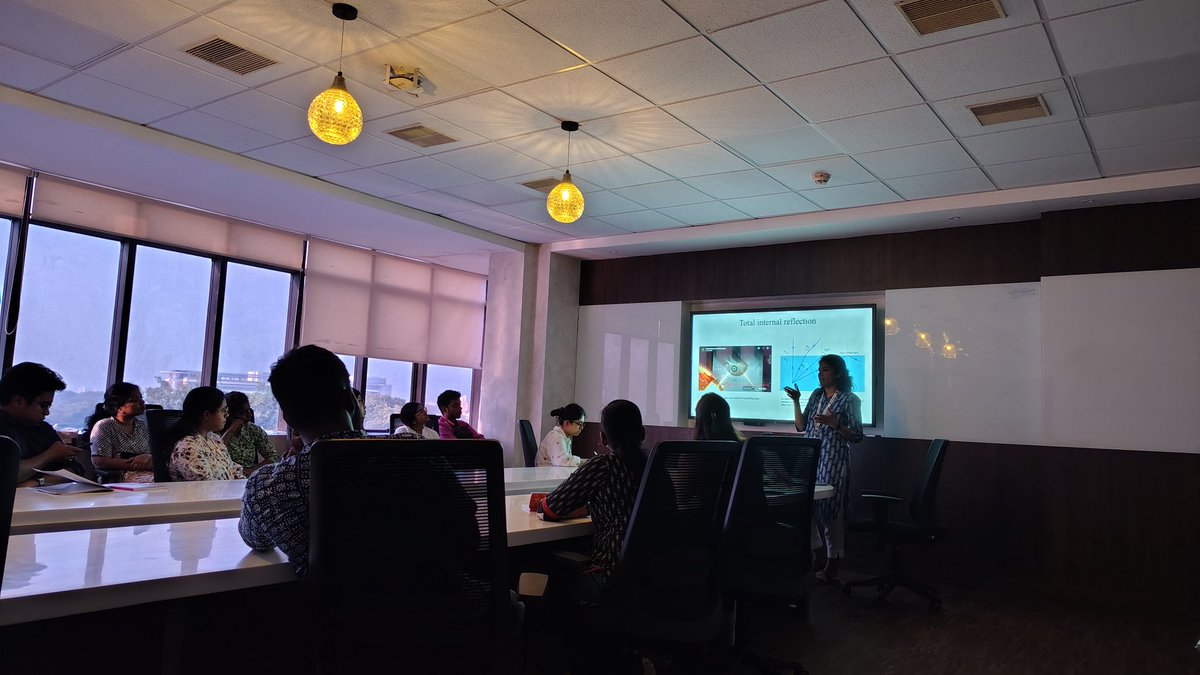
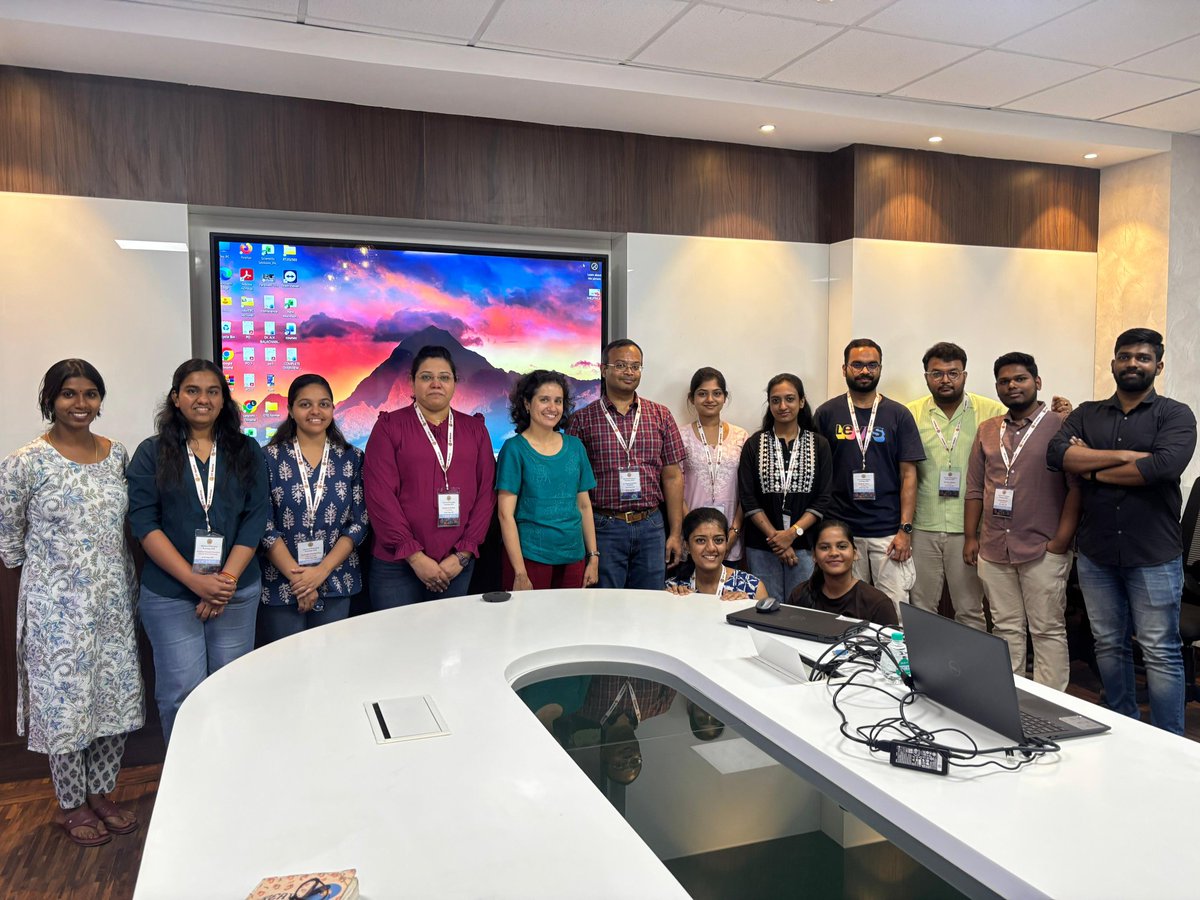
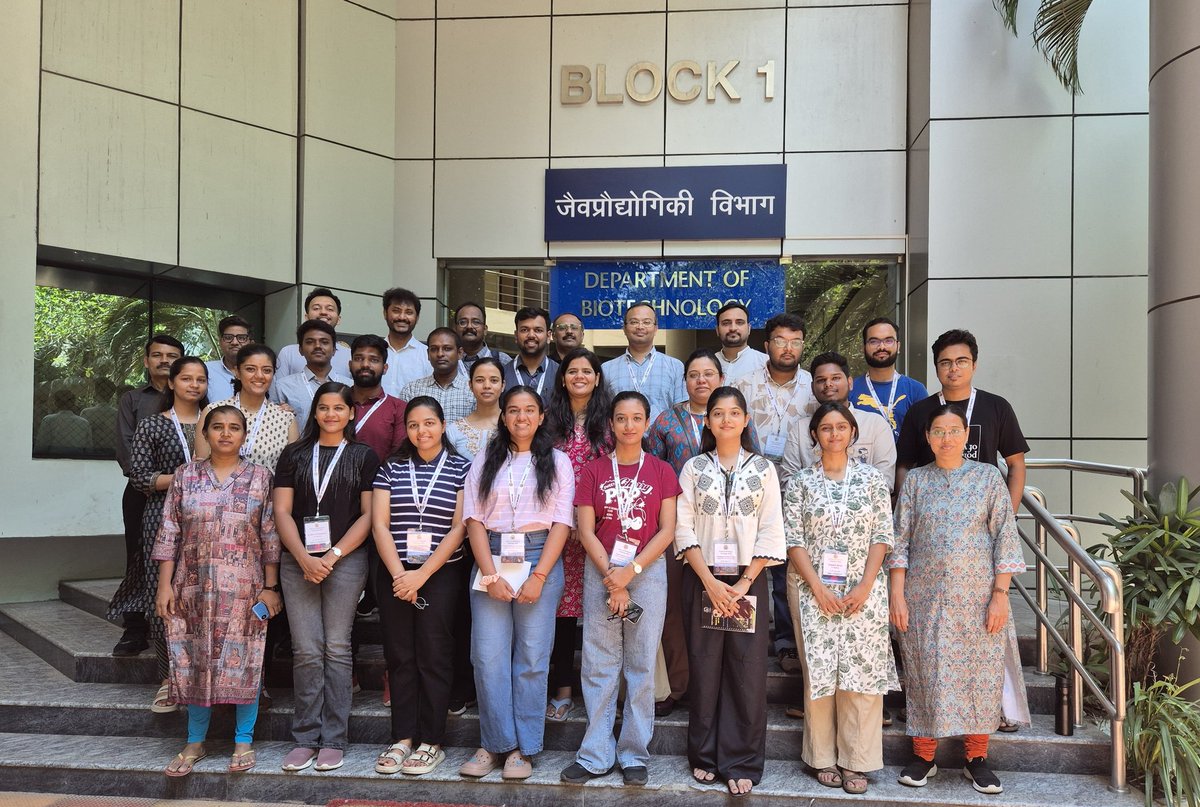
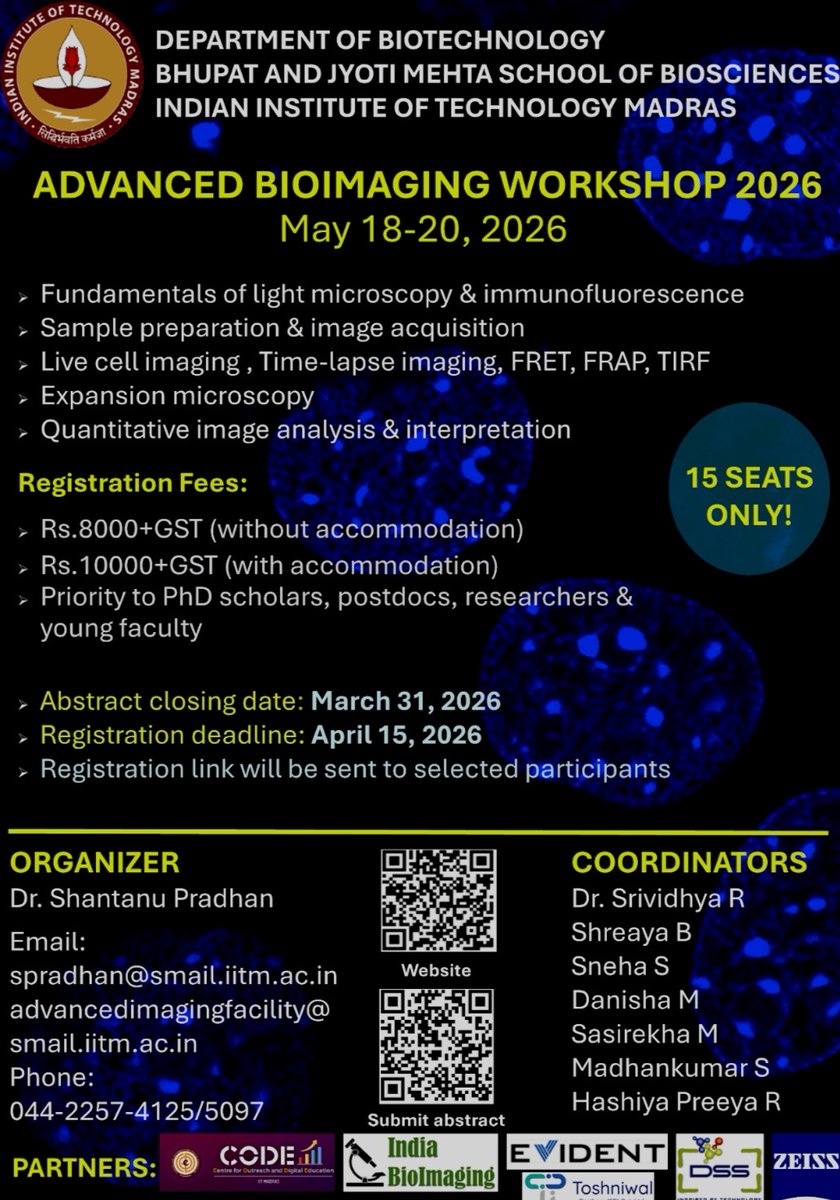
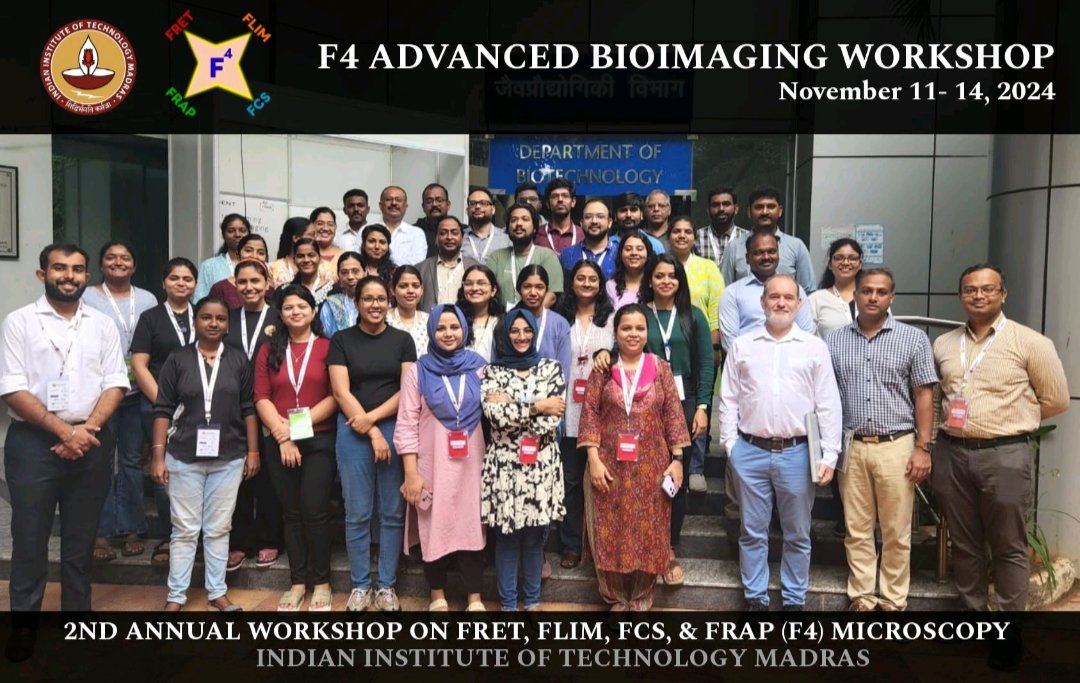
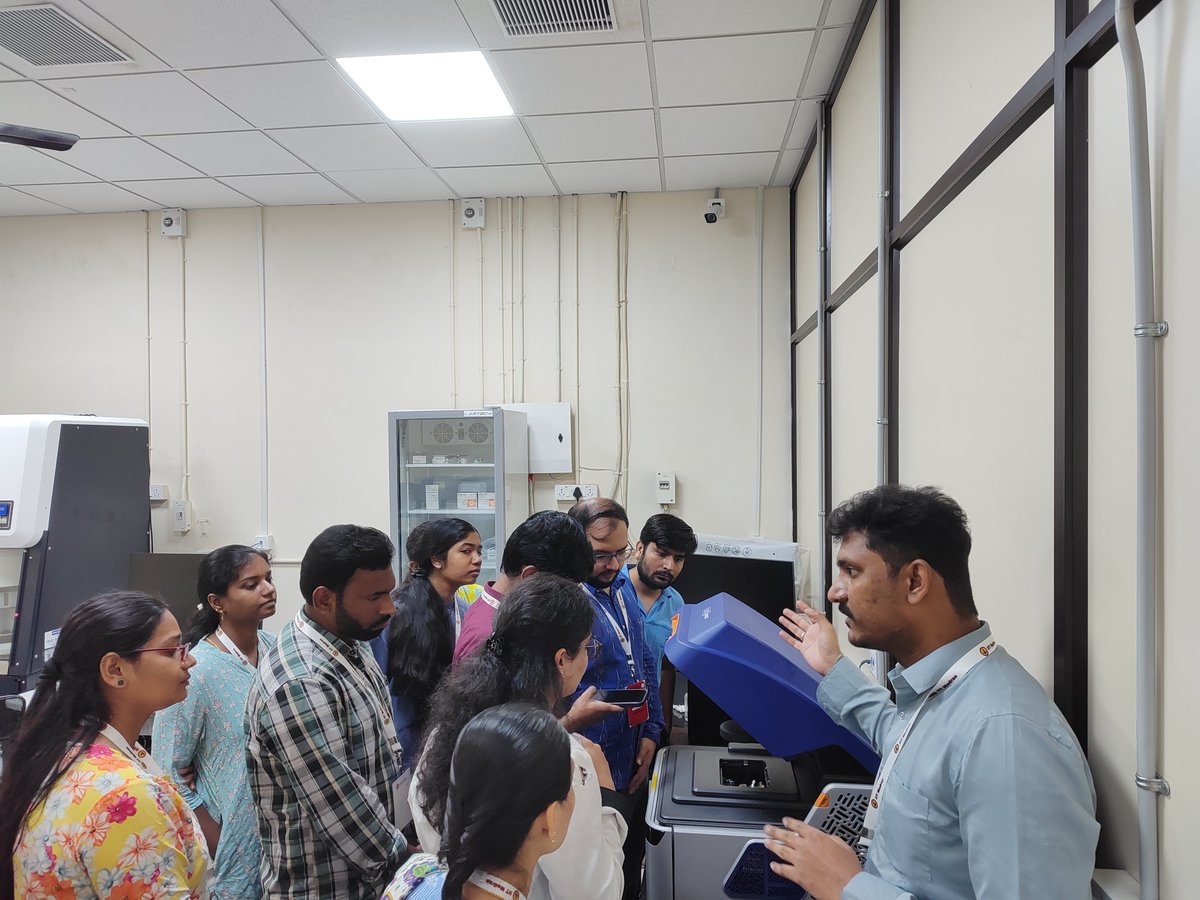
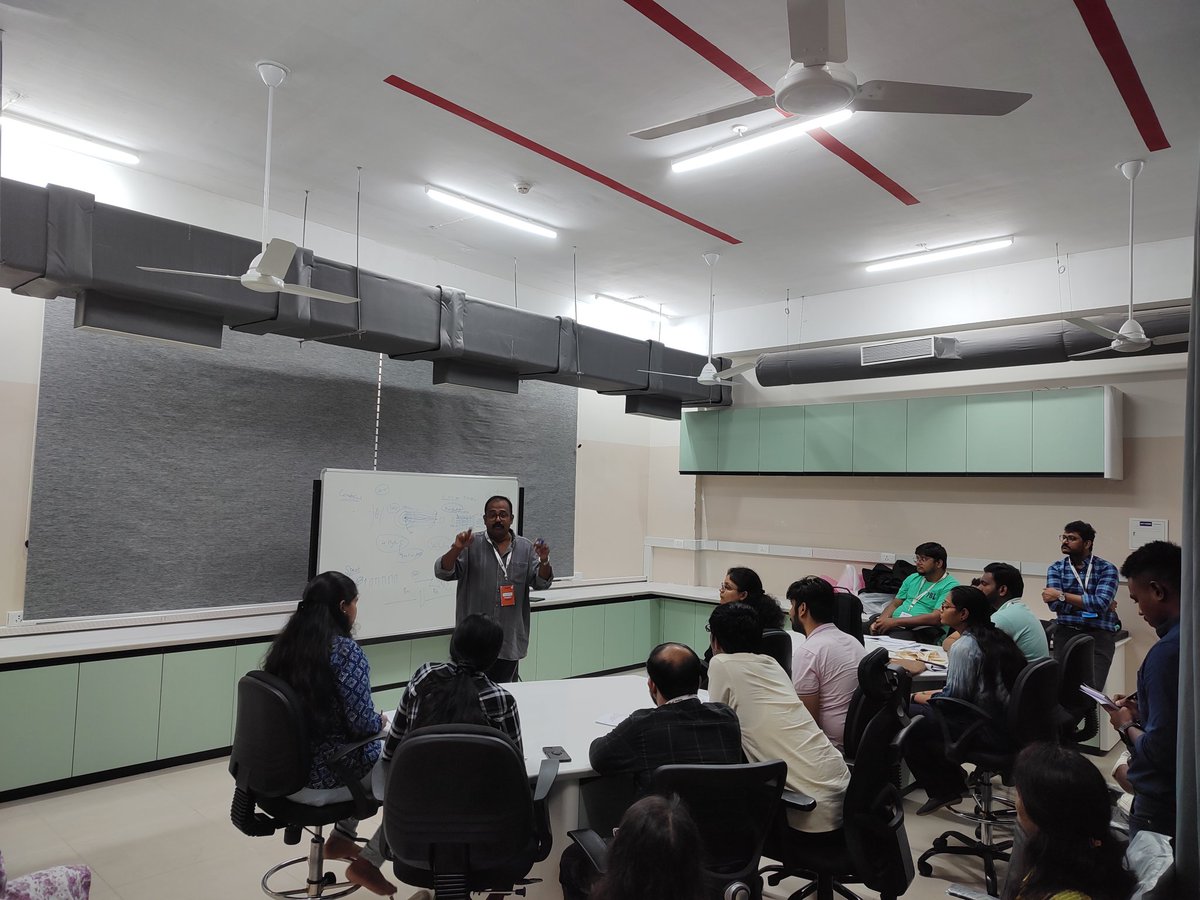
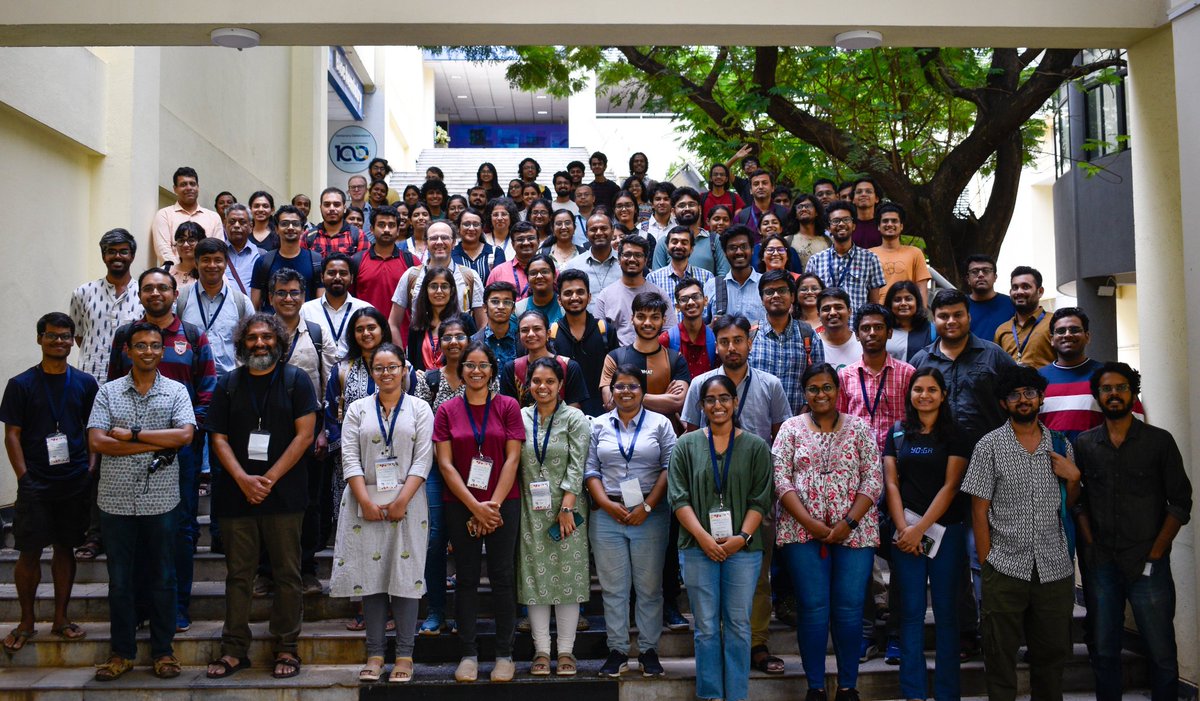
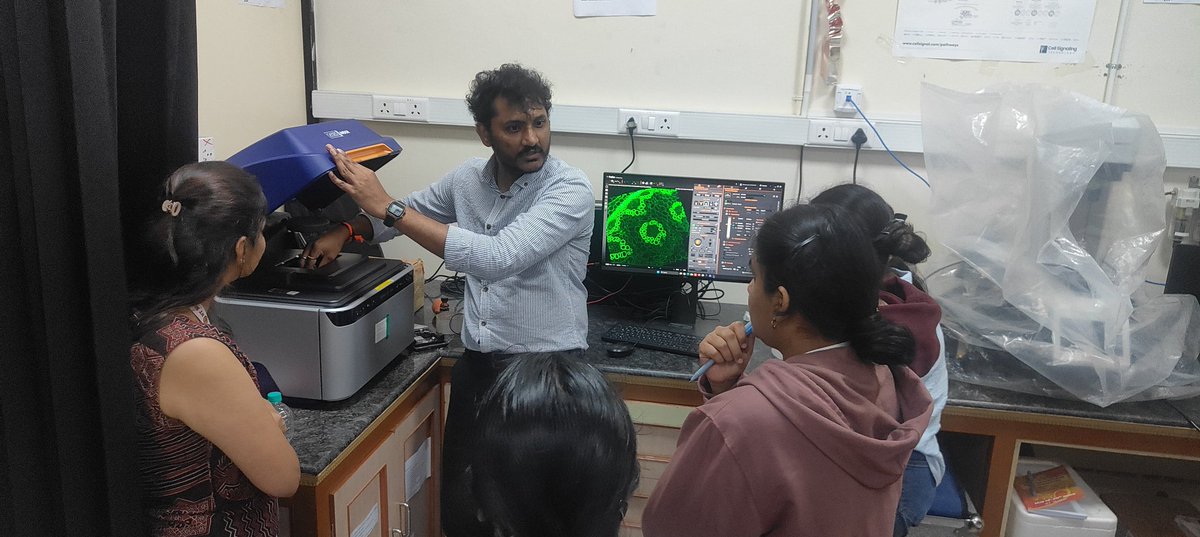
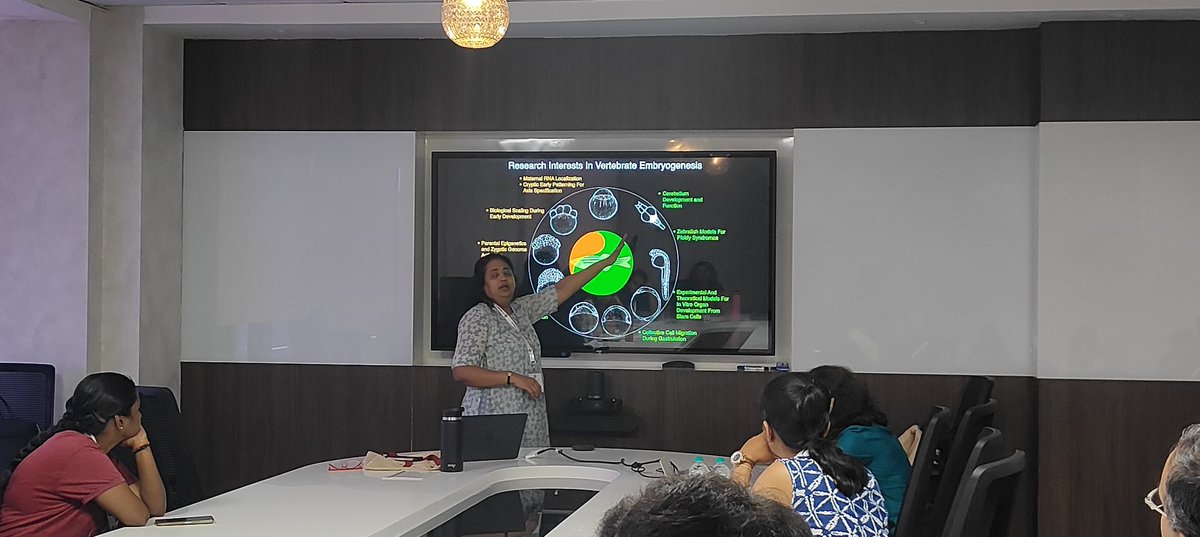
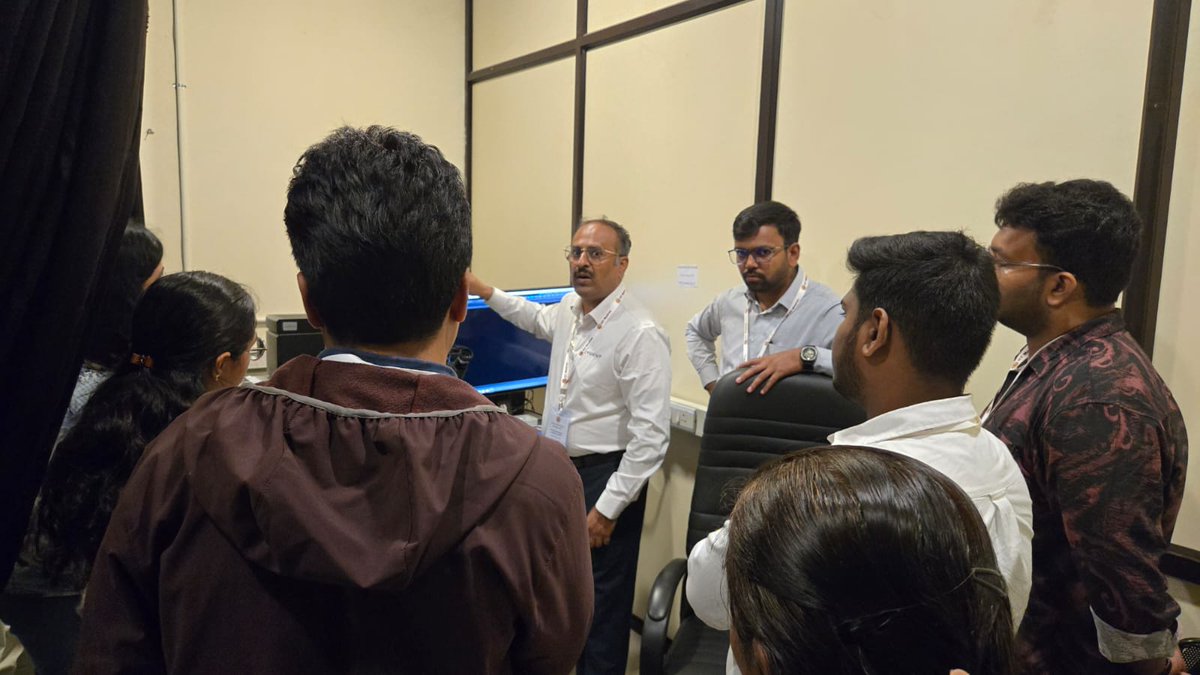
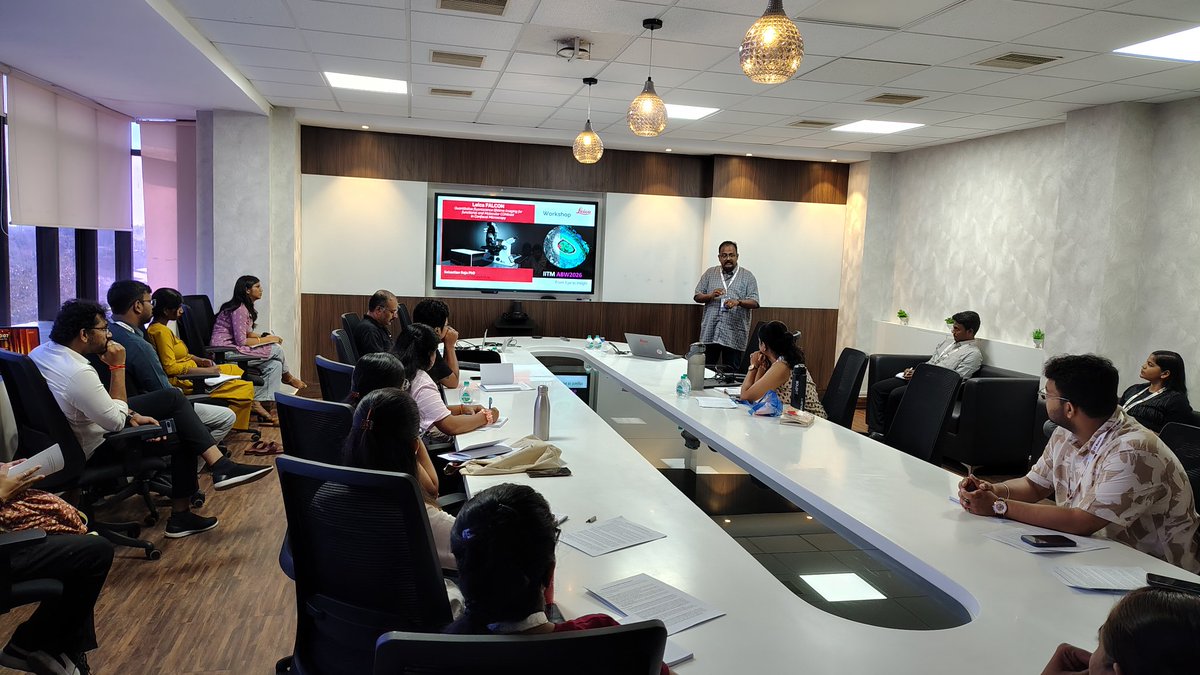
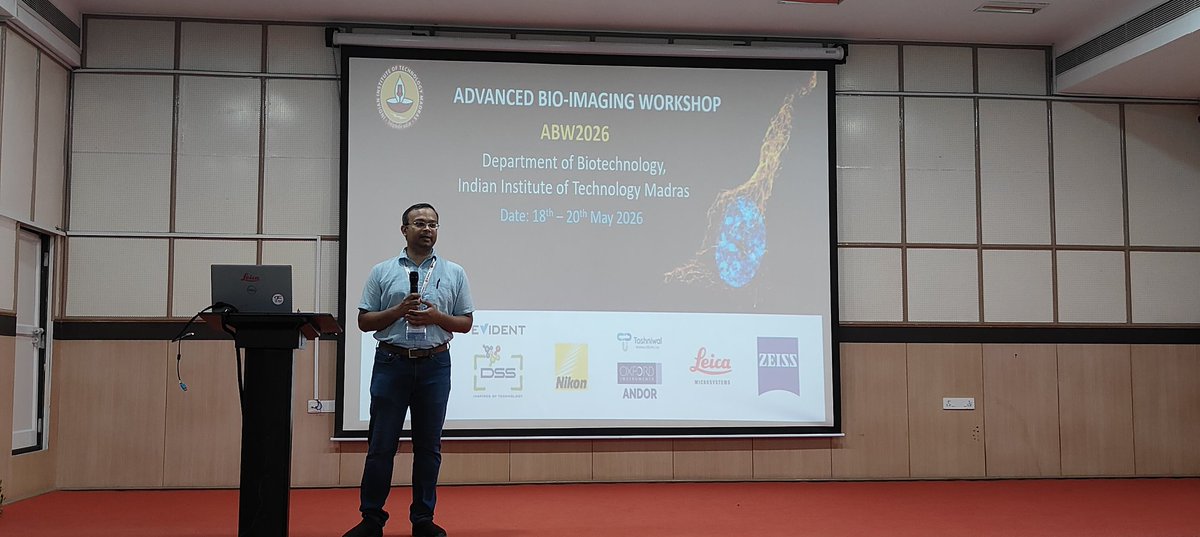
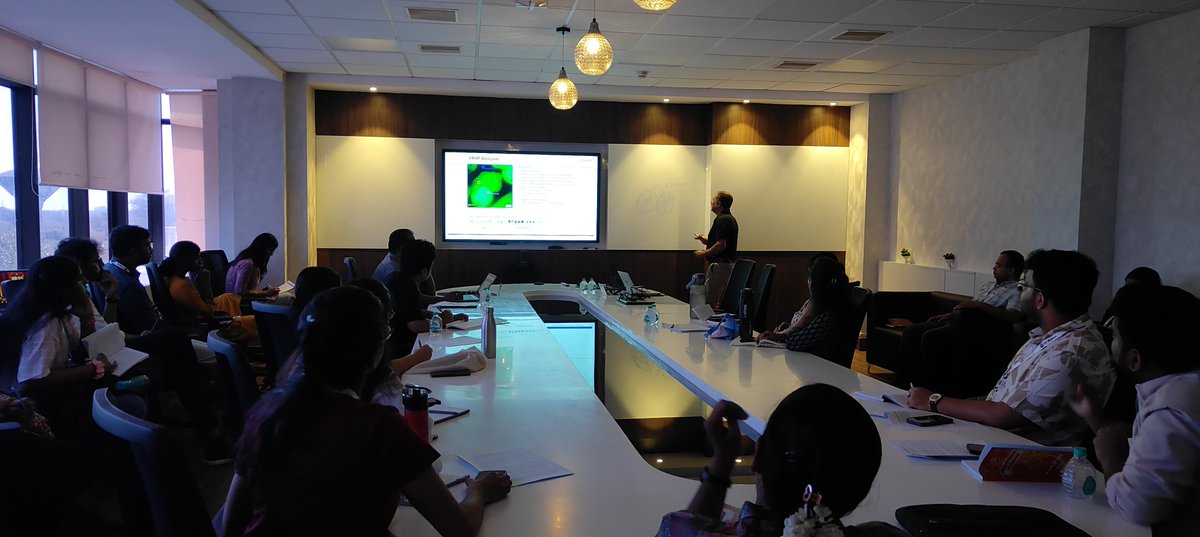
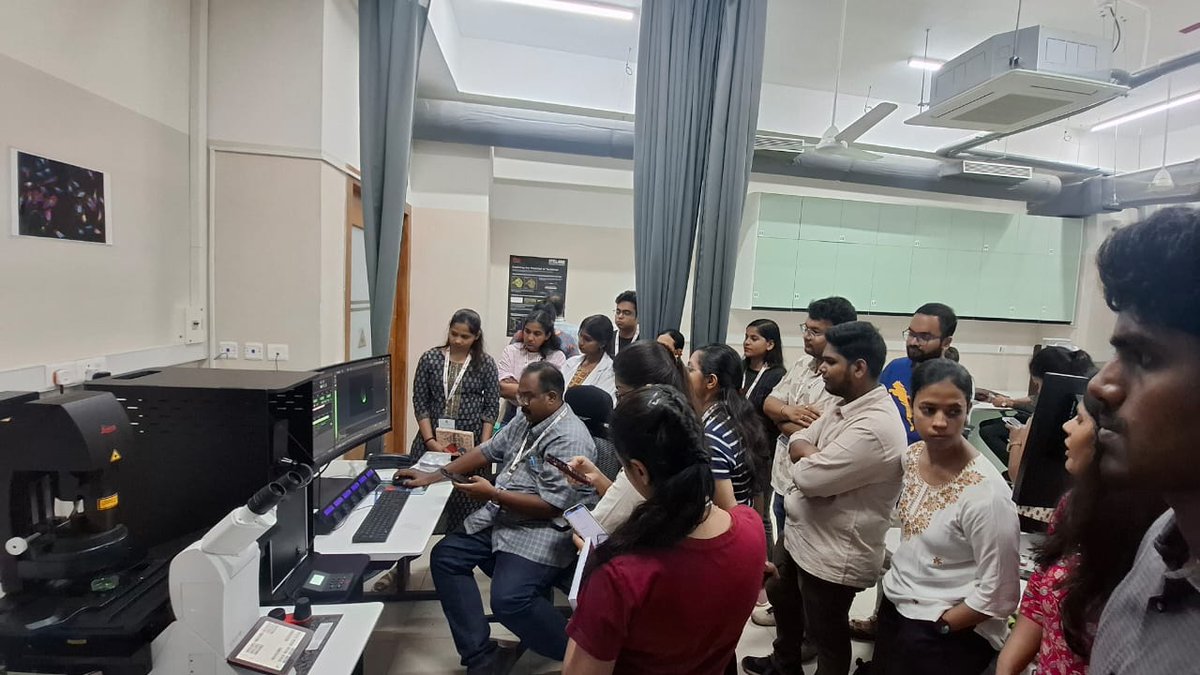
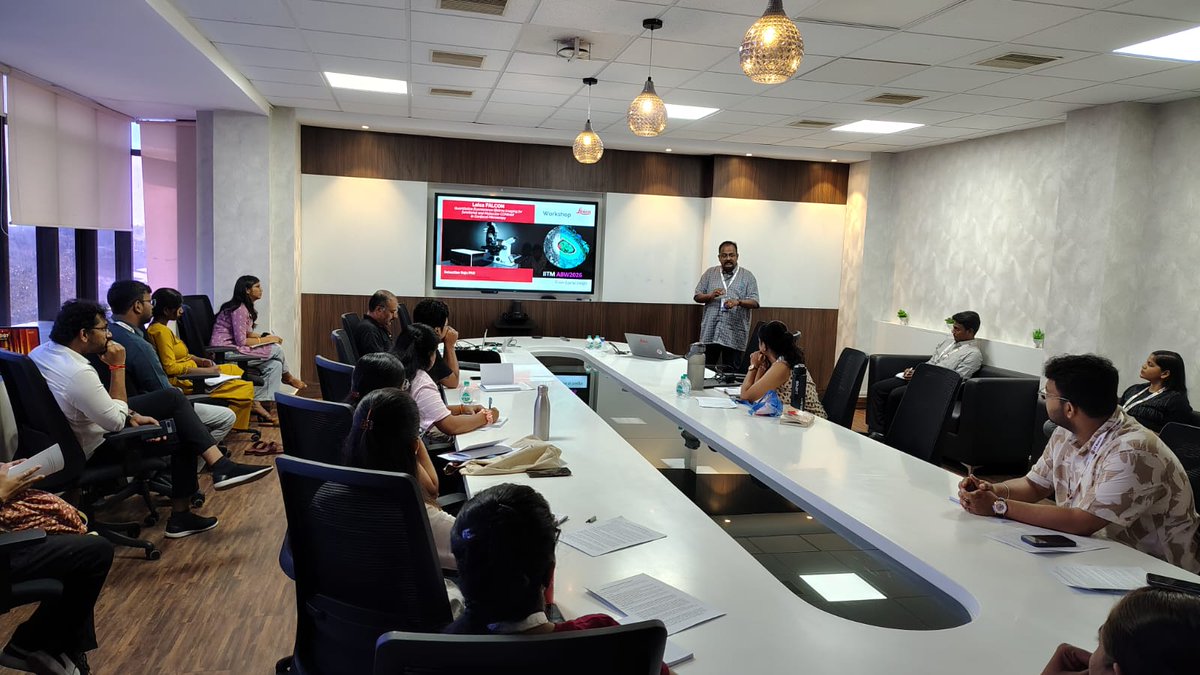
We conducted the Advanced Bioimaging Workshop 2026, May 18-20, in Dept. of Biotechnology, IIT Madras. Thank you to all the participants, speakers, trainers, sponsors and volunteers for making this a successful and educative event. @iitmbt
2
2
12
829
Shantanu Pradhan retweeted
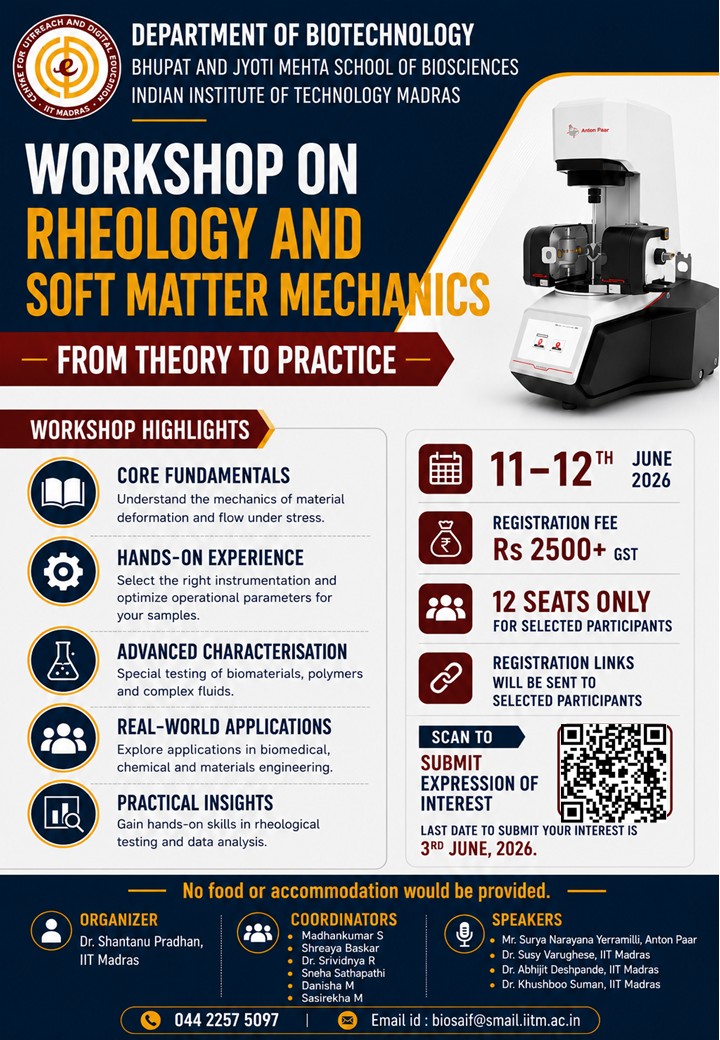
Dept. of Biotechnology, IIT Madras is organizing Workshop on Rheology and Soft Matter Mechanics in collaboration with Anton Paar. Register soon for this exciting hands-on-training opportunity!
3
6
350
Shantanu Pradhan retweeted

May 22
MOSAIC: a versatile multimodal microscopy that seamlessly transitions between light-sheet, 2-photon, label-free and super-resolution modalities. @Eric_Betzig @ABCUCBerkeley @legant_lab
nature.com/articles/s41592-0…
24
89
15,755
Shantanu Pradhan retweeted

May 16
This is why "skin in the game" is such an important filter.
May 15

.@GadSaad agrees with Orwell: it takes an intellectual to come up with truly stupid ideas. When academics are disconnected from reality or accountability, bad ideas spread like parasites. While STEM professionals have to answer for their mistakes, humanities professors build theories that no one ever has to test. That lack of accountability is exactly how toxic ideas take over a university and eventually a culture. If these professors can't survive the scrutiny of their own ideas, should they be teaching our children? Watch here 👉l.prageru.com/49RBlY7
23
205
1,056
54,013
Shantanu Pradhan retweeted

May 7
I got so, so much to say about this man. This is going to be long, so buckle up.
There is a mental block in Indians that stems from the British rule. Someone who sits in a cabin, surrounded by papers and constantly looking busy has historically been associated with power, intelligence, and importance. During the colonial era, this perception made perfect sense.
The people occupying those offices were not merely employees - they were extensions of the administrative machinery that governed the country. The clerk, the officer, the babu, the man behind the desk with stamps, files, and authority, represented access to power itself. Entire lives could be altered based on what happened inside those rooms. Naturally, generations grew up internalizing the idea that proximity to paperwork and administration equated to status.
The British left decades ago, but cultural conditioning does not disappear with a flag change. The structure survives long after the rulers are gone. Even today, Indians subconsciously associate office environments with success and dignity in a way they rarely do with industrial or technical labor.
A BPO employee wearing a formal shirt, sitting in an air-conditioned office and speaking English into a headset often commands more social respect than a CNC machinist capable of manufacturing components with tolerances tighter than a human hair. One is perceived as “corporate,” the other as “factory labor,” despite the latter possessing an extraordinarily specialized and economically valuable skillset.
And that disconnect says something deeply uncomfortable about how we value work.
A skilled machinist can take a raw block of metal and convert it into high-precision components that may end up in automobiles, aircraft, industrial robots, medical devices, or defense systems. That requires mathematical understanding, spatial reasoning, knowledge of materials, tooling strategy, machine behaviour, thermal expansion, tolerance stack-ups, feeds, speeds, vibration control, and process discipline. Mistakes are expensive.
Precision is unforgiving. The work has tangible consequences in the real world. Yet socially, this individual is often viewed as somehow “below” someone doing process documentation for a foreign client in an outsourcing firm.
India developed an economy where appearing professional became more important than producing something real. Entire generations were taught that escaping physical or industrial work was the ultimate marker of upward mobility. Parents wanted their children in offices because offices symbolized safety, cleanliness, English-speaking environments, and social elevation.
Factories, workshops, shop floors, and machine environments became associated with struggle rather than expertise. The tragedy is that this mindset emerged precisely in a country that desperately needed strong manufacturing capability to become economically self-sufficient.
You can see the consequences everywhere. We celebrate startup founders making apps that optimize food delivery by 3%, but rarely admire the people who understand tooling, fabrication, embedded systems, production engineering, process automation, or manufacturing reliability. We romanticize “corporate culture” while ignoring the fact that nations become powerful through industrial competence, not PowerPoint presentations.
A society that cannot respect the people capable of building and maintaining physical systems eventually becomes dependent on those who can.
The irony is almost absurd. The CNC machinist, the welder, the industrial technician, the maintenance engineer, the assembly line specialist - these are the people who convert engineering from theory into reality.
Without them, designs remain drawings and simulations remain fantasies. They are the interface between ideas and existence itself. Yet because their expertise exists on a shop floor instead of inside a glass office cabin, society often treats them as lesser.
And honestly, it makes me sick to witness.
May 7

India doesn't have a manufacturing problem. India has a respect problem.
We respect the guy who cracked CAT more than the guy who can build an engine from scratch.
And that concludes the whole story.
23
69
434
26,925
Shantanu Pradhan retweeted

Apr 22
Very pleased that after a rigorous (and lengthy) review process, our paper visualizing how myosin generated forces modulate actin filament structure for mechanosensitive recogntion by α-catenin has appeared in @Nature
nature.com/articles/s41586-0…
4
24
91
7,233
Shantanu Pradhan retweeted

Apr 9
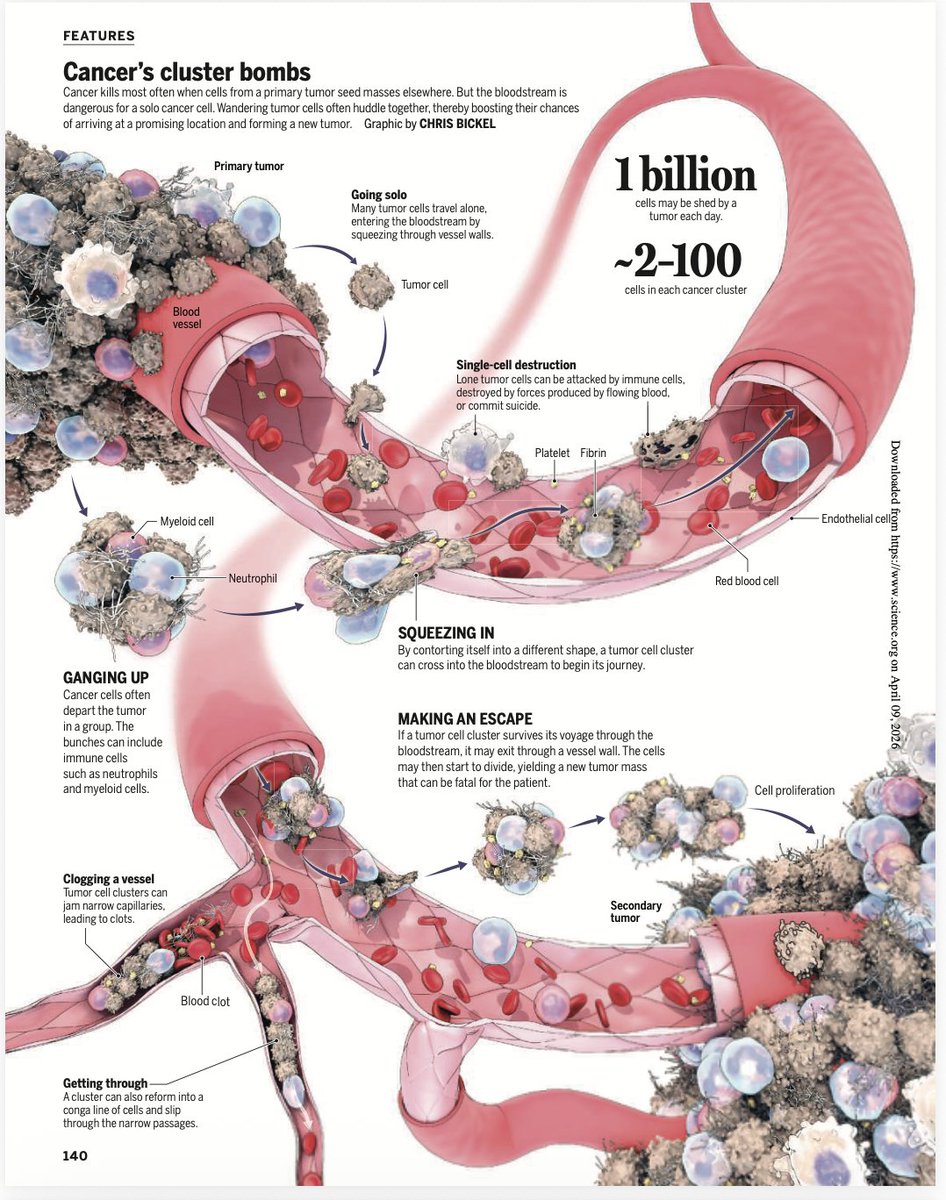
A new feature @ScienceMagazine on the clusters of cells that enhance the spread of cancer, and what can be done to break them up @ScienceVisuals
science.org/content/article/…
11
206
711
69,191
Shantanu Pradhan retweeted

Apr 11
Something small happened on my flight yesterday.
IndiGo flight. Sitting next to a guy, well put together, well dressed. The kind of person you’d point to and say “educated, aware.”
He finishes his snack. Looks at the trash in his hand. And places it on the floor under the seat in front. Not accidentally. Deliberately.
The cabin crew came through for trash collection. Did their job perfectly. Collected from everyone’s hands, every tray table. The stuff on the floor, easy to miss from that angle, stayed.
We landed. His cups and food box were still sitting there on the aircraft floor.
And I just sat with this feeling I couldn’t quite name.
It wasn’t anger. It was something closer to disappointment. Or maybe exhaustion.
Because we’ve been having this conversation about civic sense in India for decades now. And nothing moves.
Here’s what I’ve come to believe. It’s not an awareness problem. It’s not an education problem. It’s not even an income problem.
It’s a “whose problem is it” problem.
Most people in India have unconsciously decided that shared spaces, flights, roads, parks, footpaths, are not their responsibility. Someone is paid to clean it. Someone will handle it.
Me? I’m just passing through.
And that mindset is exactly where the problem begins.
Because civic sense isn’t just about what you do. It’s about what you normalize.
Every time someone litters and nobody reacts, the bar drops a little lower.
Every time someone cleans up after themselves in a space nobody’s watching, the bar rises.
We are all, quietly, setting the standard for each other.
Choose the standard you want to live in.

247
372
1,634
180,334
Shantanu Pradhan retweeted

Apr 8
Academics are not known for their EQ, but there are some scenarios where they put in all their effort to make it seem otherwise.
1) Responses to referee reports, which by decree, must be sufficiently obsequious, lest someone change their opinion for the worse. You cannot LLM your way out of this, the obsequiousness must come from your own heart.
2) Trying to gauge the emotional state of your dean (akin to an abusive relationship). Did we put in enough tit to receive that tat? Are we responding to all whims with sufficient joyful deference?
3
2
39
9,507